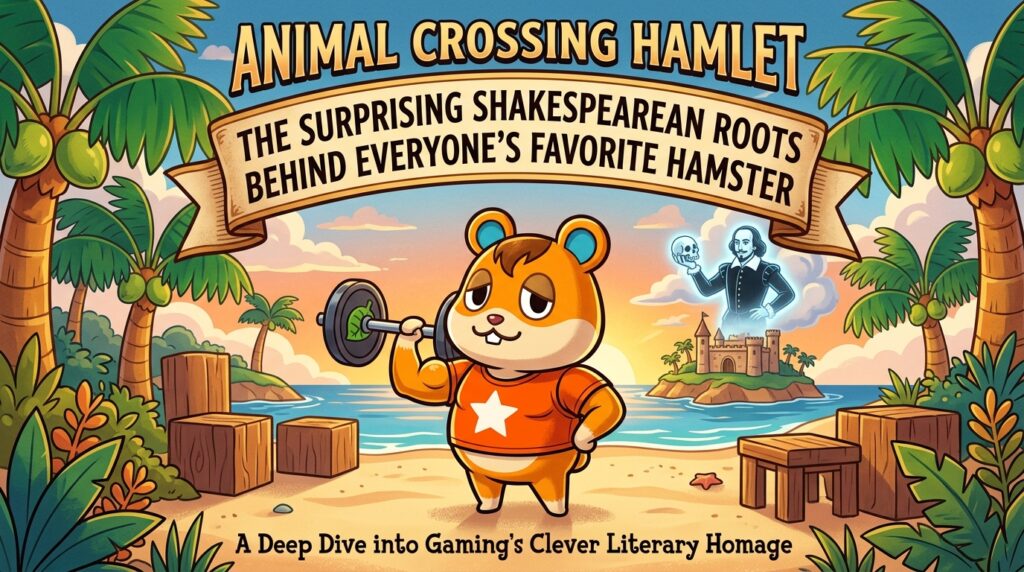
Imagine William Shakespeare’s tragic Prince of Denmark stripped of his gloomy velvet cloak, shrunk down to four inches tall, dressed in a bright orange workout shirt, and doing push-ups on a sunny tropical beach. It sounds like an absurd literary parody, but for millions of gamers playing Nintendo’s hit franchise, animal crossing hamlet is a beloved daily reality. At first glance, a cozy life-simulation video game and the dark, existential dread of a 17th-century revenge tragedy seem to have zero common ground. Yet, behind this tiny, fitness-crazed hamster lies one of the most clever, multi-layered literary homages in modern gaming history.
Far from being a random naming decision, Nintendo’s localization team deliberately anchored this energetic villager in rich literature and theatrical lore. By examining Hamlet’s character design, in-game quotes, catchphrases, and broader environmental context, we discover how modern interactive media keeps 400-year-old classical drama alive, accessible, and entertaining for a brand-new generation of readers and gamers alike.
1. The Anatomy of a Homage: Deconstructing “Animal Crossing Hamlet”
To appreciate how deeply Nintendo’s writers drew from William Shakespeare’s masterwork, one must look closely at how the character is constructed across multiple iterations of the game, including Animal Crossing: New Leaf and Animal Crossing: New Horizons.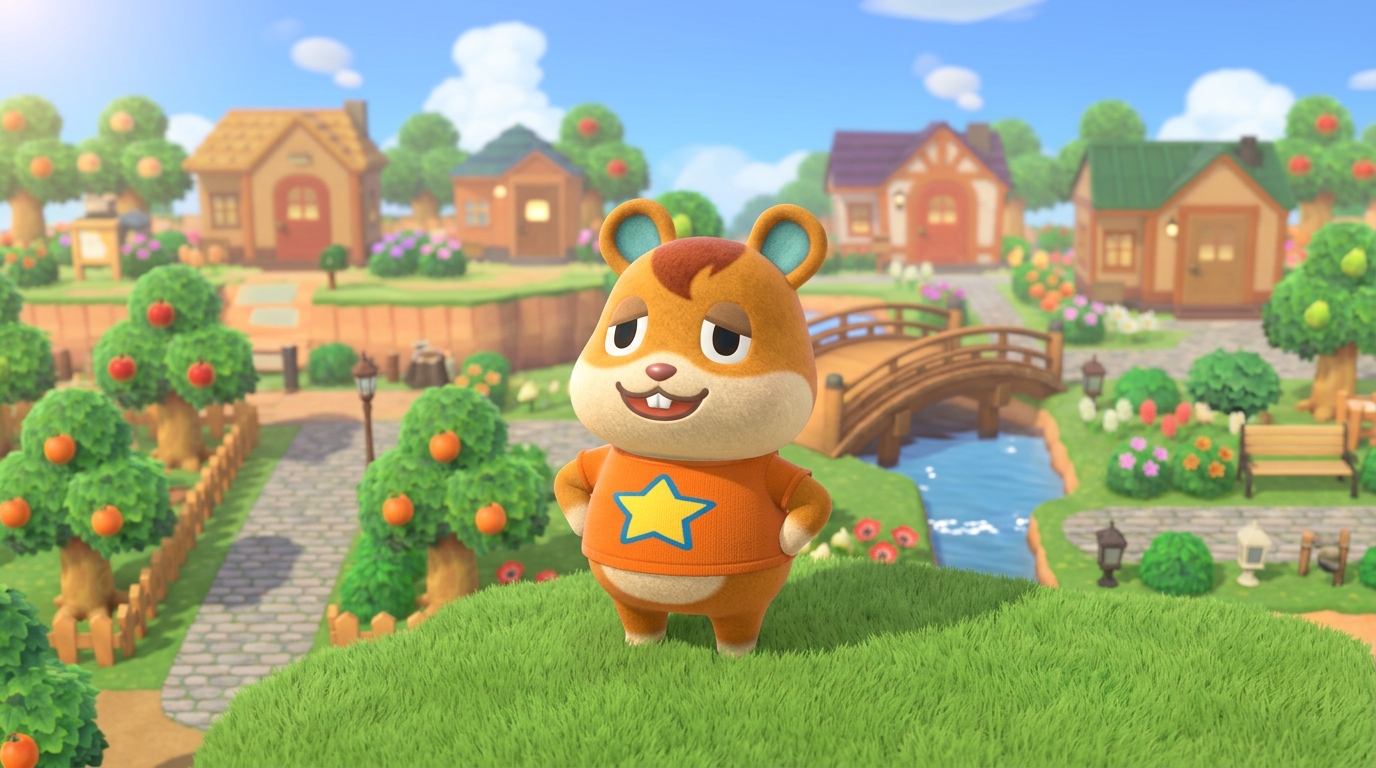
                    ┌─────────────────────────────────────────┐
                    │    "Animal Crossing Hamlet" Homage      │
                    └────────────────────┬────────────────────┘
                                         │
         ┌───────────────────────────────┼───────────────────────────────┐
         │                               │                               │
┌────────┴────────┐             ┌────────┴────────┐             ┌────────┴────────┐
│  Etymology &    │             │ Textual Proof   │             │ Subverted       │
│  Wordplay       │             │ & In-Game Quotes│             │ Archetype       │
└────────┬────────┘             └────────┬────────┘             └────────┬────────┘
         │                               │                               │
 ├─ "Ham-" (Hamster)             ├─ "The ear's the thing"        ├─ Gloomy Prince vs.
 ├─ "Hamlet" (Small Village)     │   (Act II, Scene 2 Twist)     │   Hyperactive Jock
 └─ Shakespeare's Prince         └─ "To run, or not to run"      └─ Action over
                                     (Act III, Scene 1 Parody)       Indecision
The Etymology: Why a Hamster Named Hamlet?
Nintendo’s Treehouse localization team is renowned for embedding puns, cultural references, and literary Easter eggs into villager names. When it comes to Hamlet, the name functions as a brilliant triple-wordplay:
-
Species Puns: The prefix “Ham-“ immediately connects to his identity as a hamster.
-
Scale and Setting: In geographic terms, a hamlet is a small human settlement or village—a tongue-in-cheek nod to his diminutive physical size and the village setting of the game.
-
Literary Anchor: It directly invokes Prince Hamlet of Denmark, the iconic protagonist of Shakespeare’s 1599–1601 tragedy.
This clever naming convention ensures that whether a child plays the game for its cute animal aesthetics or an English literature professor plays it for relaxing downtime, the name resonates on multiple intellectual levels.
The In-Game Quotes: Textual Proof of the Shakespearean Connection
Beyond his name, the strongest evidence of Hamlet’s Shakespearean heritage lies in his dialogue, official villager quotes, and collectible photo frame inscriptions.
“The ear’s the thing.”
In both Animal Crossing: New Leaf and New Horizons, Hamlet’s official favorite quote listed in his villager profile is: “The ear’s the thing.”
To the casual player, this might sound like a simple joke about a hamster’s large, round ears. However, to anyone familiar with early modern drama, it is an unequivocal parody of one of the most famous lines in English theater:
“The play’s the thing / Wherein I’ll catch the conscience of the King.”
— Hamlet, Act II, Scene 2
Furthermore, this line holds a darker, more specific connection to the plot of Shakespeare’s play. King Hamlet (the Prince’s father) was murdered by his brother Claudius, who poured a lethal poison (hebona) directly into the King’s ear while he slept in his orchard. By choosing “the ear’s the thing,” Nintendo’s writers created a subtle, macabre Easter egg that ties directly into the inciting incident of the original tragedy.
“To run, or not to run. That is the question.”
When players build a high enough friendship level with Hamlet, he gifts them a framed picture of himself. Interacting with the back of the photo reveals his personal motto: “To run, or not to run. That is the question.”
This is a direct play on Prince Hamlet’s celebrated soliloquy in Act III, Scene 1:
“To be, or not to be, that is the question: / Whether ’tis nobler in the mind to suffer / The slings and arrows of outrageous fortune…”
While the original Prince contemplates existence, mortality, and the burden of action, the hamster reinterprets this existential weight through the lens of daily cardio workouts and treadmill routines.
2. Irony and Contrast: The Brooding Prince vs. The Energetic Jock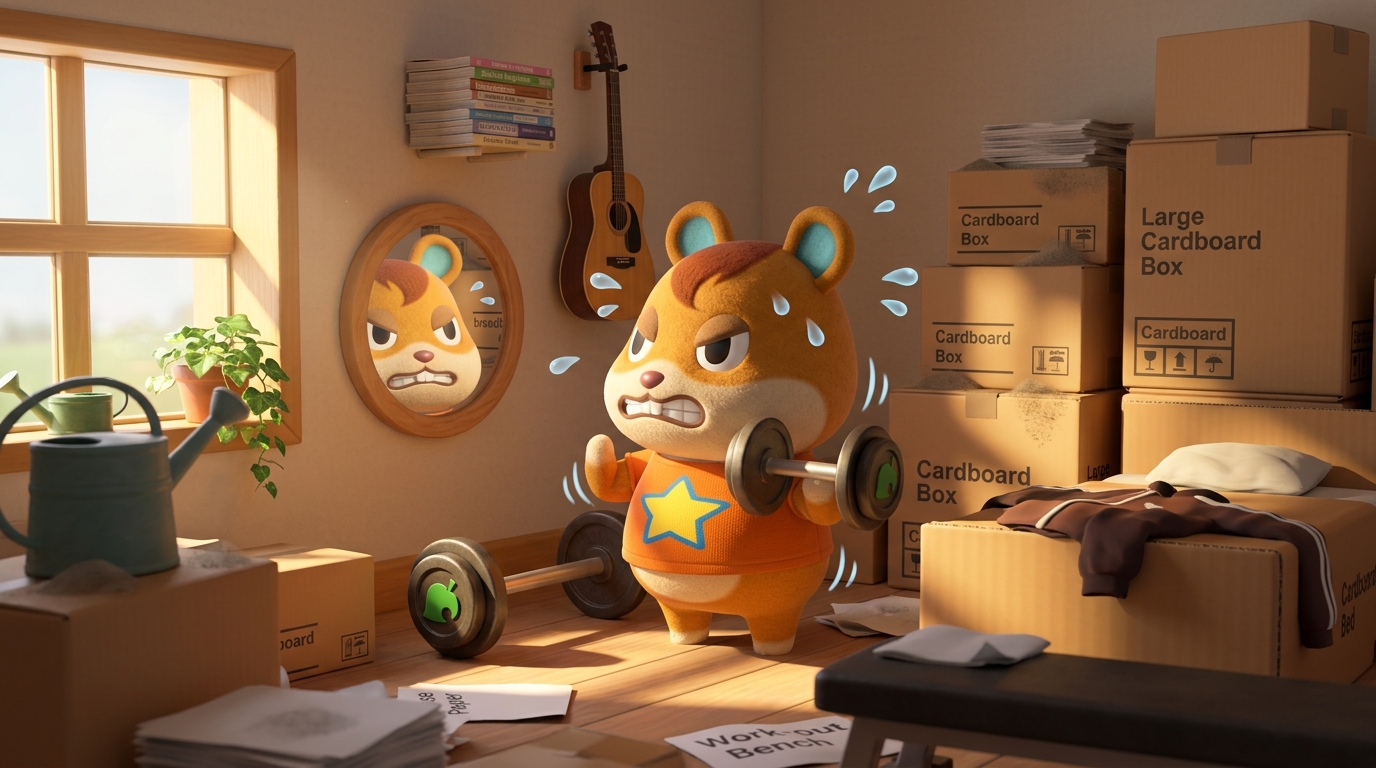
The humor and charm of Hamlet in Animal Crossing rely on a deliberate subversion of classical character tropes. By placing a heavy, tragic literary identity onto an upbeat, workout-obsessed character, Nintendo creates a comedic contrast known as stylistic dissonance.
+-----------------------------------+-----------------------------------+
| Shakespeare's Prince Hamlet       | Animal Crossing's Hamlet          |
+-----------------------------------+-----------------------------------+
| * Melancholic, brooding, dark     | * Energetic, optimistic, bright   |
| * Overthinks every decision       | * Acts first, thinks later        |
| * Obsessed with mortality & fate  | * Obsessed with abs & muscle gains|
| * Dressed in mourning clothes     | * Dressed in a bright Big Star Tee|
| * Solitary philosopher            | * Social, competitive Jock        |
+-----------------------------------+-----------------------------------+
The Melancholy Prince
In Shakespeare’s play, Prince Hamlet is defined by inaction, internal torment, and deep existential dread. He mourns his father, despises his uncle, and spends five acts agonizing over the moral implications of taking revenge. His speeches are filled with metaphors of decay, sickness, and death (“O, that this too too solid flesh would melt…”).
The Hyperactive Hamster
In contrast, Animal Crossing’s Hamlet belongs to the Jock personality archetype. He is hyperactive, intensely positive, and obsessed with physical fitness, protein shakes, and flexed biceps. Where the theatrical Prince is paralyzed by overthinking, the rodent Hamlet preaches constant physical motion.
This contrast is intentional. By subverting expectation—turning a character known for tragic hesitation into an unstoppable ball of physical energy—the writers make Hamlet instantly memorable among the game’s cast of more than 400 villagers.
3. Beyond Hamlet: Shakespeare’s Wider Presence in Animal Crossing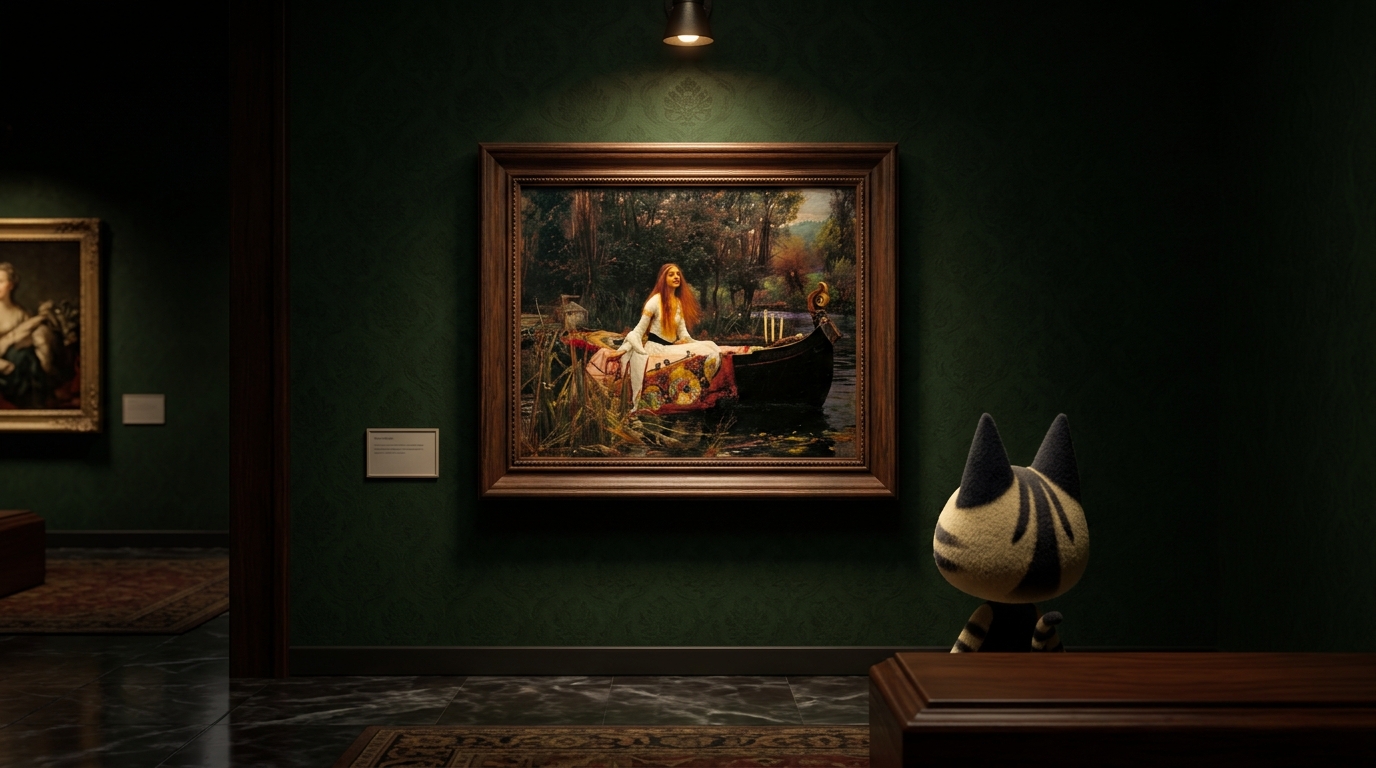
Hamlet is not an isolated incident of literary borrowing within Nintendo’s universe. The Animal Crossing series frequently draws from classical art, theater, and history to enrich its world-building.
Tybalt the Tiger: The Prince of Cats
Another clear Shakespearean homage in Animal Crossing is Tybalt, a tiger villager who also sports the Jock personality.
-
Literary Origin: Tybalt is named after Juliet’s fiery, short-tempered cousin in Romeo and Juliet.
-
The Secret Reference: In Act III, Scene 1 of Romeo and Juliet, Mercutio mocks Tybalt by calling him the “Prince of Cats” (referencing Tibert, the cat character from medieval Reynard the Fox fables).
-
Nintendo’s Execution: Nintendo took Mercutio’s insult literally, designing Tybalt as an actual feline (a tiger) within the game. Furthermore, both Hamlet and Tybalt share the “Play” hobby in New Horizons, a delightful double-meaning that references both child-like recreational play and theatrical performance.
The Sinking Painting and Ophelia’s Fate
Players visiting the art merchant Jolly Redd can purchase the “Sinking Painting” to donate to Blathers’ museum.
-
Artistic Origin: This item is the real-world masterpiece Ophelia (1851–1852) by Pre-Raphaelite painter Sir John Everett Millais.
-
Literary Connection: The painting depicts the tragic death of Ophelia, Prince Hamlet’s love interest, who falls into a stream while gathering flowers and drowns while singing snippets of ancient tunes (Act IV, Scene 7).
                      ┌─────────────────────────────────┐
                      │ Shakespeare in Animal Crossing  │
                      └────────────────┬────────────────┘
                                       │
         ┌─────────────────────────────┼─────────────────────────────┐
         │                             │                             │
┌────────┴────────┐           ┌────────┴────────┐           ┌────────┴────────┐
│ Hamlet          │           │ Tybalt          │           │ Sinking         │
│ (The Hamster)   │           │ (The Tiger)     │           │ Painting        │
└────────┬────────┘           └────────┬────────┘           └────────┬────────┘
         │                             │                             │
 ├─ "The ear's the thing"      ├─ "Prince of Cats"           ├─ Millais' *Ophelia*
 └─ "To run, or not to run"    └─ Romeo & Juliet reference   └─ Hamlet's tragic love
Flick’s Dramatic Soliloquies
During seasonal events like the Bug-Off, or when rating a player’s island layout, the bug-collecting chameleon Flick delivers dramatic, poetic speeches about the beauty and majesty of arthropods.
Flick’s grandiloquent cadence directly parodies the dramatic soliloquies of Elizabethan theater. On high-rated islands, his elevated speech mirrors dramatic passages like John of Gaunt’s famous “This royal throne of kings, this sceptered isle” monologue from Shakespeare’s Richard II (Act II, Scene 1).
4. Why Video Games Need Classical Literature
The inclusion of Shakespearean themes within video games serves a vital educational and cultural function: it acts as a modern bridge between highbrow classical literature and mainstream digital entertainment.
Video Games as Modern Cultural Translators
For many young players, classical literature can feel distant, intimidating, or overly academic when confined to high school textbooks. By embedding historical, literary, and artistic references inside a relaxed, highly engaging game like Animal Crossing, players develop passive familiarity with world culture.
When a student eventually reads Hamlet in an English class and encounters the line “The play’s the thing,” or reads Romeo and Juliet and sees Mercutio call Tybalt the “Prince of Cats,” the cognitive spark of recognition often traces directly back to their virtual island experience.
Gamifying the Great Works
Using literary figures in pop culture is not new, but modern gaming offers an interactive dimension that traditional media cannot match:
-
Ownership: Players invite Hamlet to live on their personal island, design his yard, and interact with him daily.
-
Contextual Learning: By associating art and literature with positive, self-directed gameplay, the cultural material feels rewarding rather than forced.
-
Subtle Intellectual Humor: It rewards knowledgeable players with subtle jokes while keeping the content light and charming for younger audiences.
5. Frequently Asked Questions (FAQ)
Is Hamlet in Animal Crossing directly based on Shakespeare’s play?
Yes. While his physical appearance as a cute hamster and his Jock personality fit Animal Crossing‘s gameplay mechanics, his name, catchphrases, and official quotes directly parody Shakespeare’s Hamlet.
What is Hamlet’s favorite saying in Animal Crossing: New Horizons?
His official quote is “The ear’s the thing,” which parodies Hamlet’s famous line “The play’s the thing wherein I’ll catch the conscience of the King” (Act II, Scene 2).
What other Animal Crossing characters have literary or historic names?
Several villagers feature historical or literary origins, including:
-
Tybalt (a tiger named after the “Prince of Cats” in Romeo and Juliet)
-
Julius (a eagle referencing Julius Caesar)
-
Cleo (a horse named after Cleopatra)
-
Leonardo (a tiger referencing Leonardo da Vinci)
When was Hamlet first introduced in the Animal Crossing franchise?
Hamlet made his debut appearance in Animal Crossing: New Leaf (2012) for the Nintendo 3DS and has returned in subsequent titles, including Animal Crossing: Pocket Camp and Animal Crossing: New Horizons (2020).
6.The Eternal Relevance of the Bard
The presence of Hamlet in Animal Crossing demonstrates that William Shakespeare’s legacy is far from confined to theatrical archives or dusty library shelves. Instead, his works continue to adapt, evolve, and inspire creators across all mediums—including modern digital entertainment.
Whether brooding over tragic destiny in Elsinore Castle or doing morning push-ups on a digital island, Hamlet remains one of literature’s most versatile and enduring figures. Through clever localization, witty dialogue, and intentional subversion of literary tropes, Nintendo proves that 400-year-old classical drama still has a place in the hearts—and islands—of millions of players worldwide.