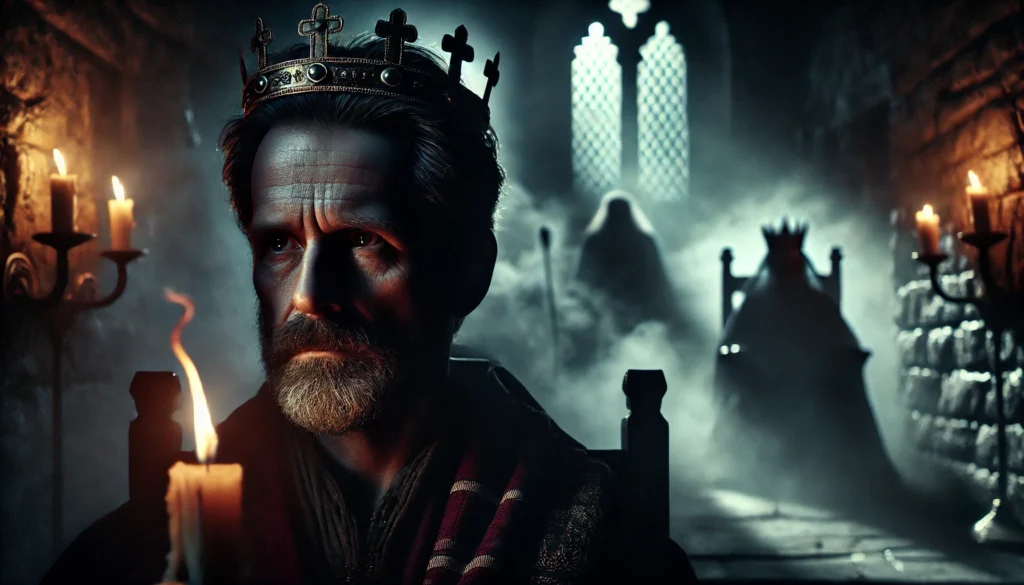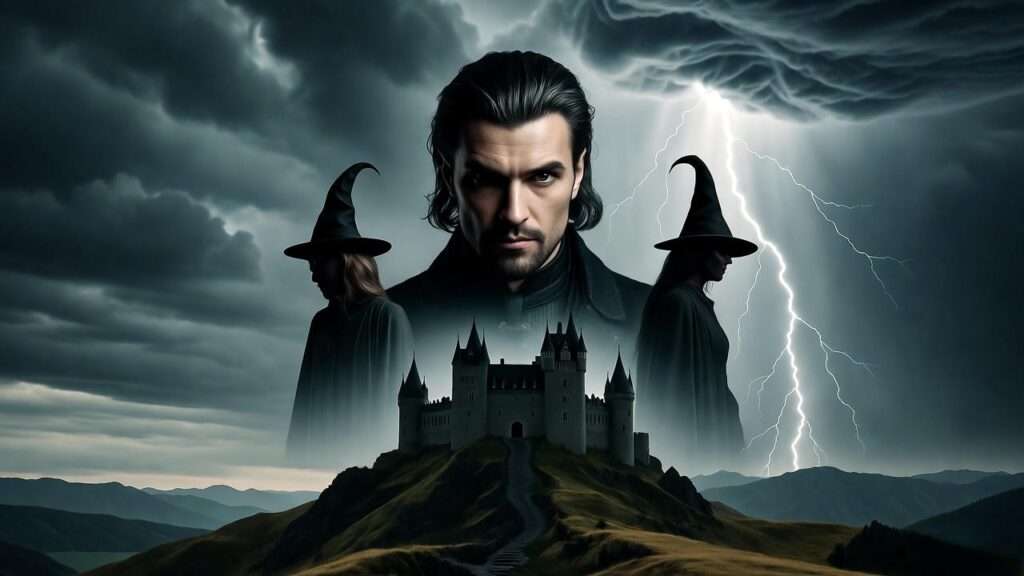
Shakespeare’s tragic masterpiece hinges entirely on a single pivotal sequence: act 2 of macbeth. Having listened to the chilling prophecies of the Weird Sisters and succumbed to his wife’s relentless prompting, Macbeth stands at a terrifying precipice. In Act 1, ambition was merely a dark thought whispering in the corners of his mind. By Act 2, that thought manifests into physical violence, moral ruin, and regicide.
Setting the Stage: Where Act 2 Fits in the Tragedy
Act 1 laid the supernatural foundation. The witches planted the seeds of royal ambition, while Lady Macbeth crafted the blueprint for treason. Act 2 strips away all hesitation, taking the audience into Inverness Castle under the cloak of pitch-black darkness. Here, the play transitions from psychological anticipation to irreversible physical action, forever altering the destiny of Scotland and the souls of its protagonists.
Why Act 2 is the Psychological Heart of Macbeth
Though it is the briefest act in the play, Act 2 carries immense theatrical and emotional weight. It contains the central crime—the murder of King Duncan—around which the entire drama revolves. Rather than focusing merely on political plot points, Shakespeare uses this act to chart the psychological fracture of the human conscience. The act demonstrates how ambition, once freed from moral boundaries, instantly transforms into overwhelming paranoia, spiritual alienation, and unquenchable guilt.
2. Scene-by-Scene Breakdown & Critical Analysis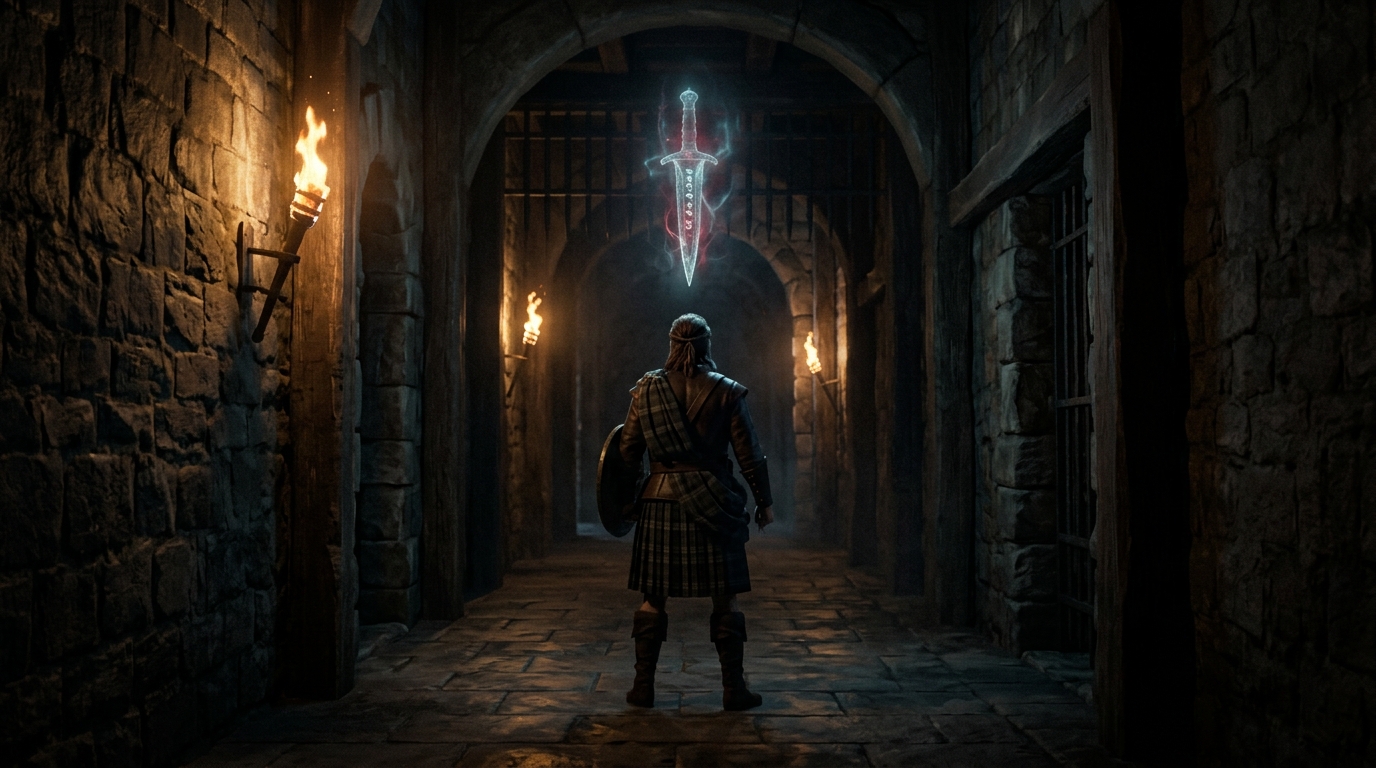
Act 2, Scene 1: The Floating Dagger and Moral Hesitation
Setting and Context
It is past midnight at Inverness. The atmosphere is heavy, suffocating, and unnatural. Fleance notes that “there’s husbandry in heaven; / Their candles are all out,” signaling a starless night that mirrors the darkness enveloping the castle.
Key Interaction: Macbeth and Banquo
Banquo, accompanied by his son Fleance, struggles with disturbing dreams about the three witches. Unlike Macbeth, Banquo seeks divine help to restrain his dark thoughts (“Restrain in me the cursed thoughts that nature / Gives way to in repose!”). When Macbeth appears, Banquo admits he dreamed of the Weird Sisters. Macbeth lies, claiming he gives them no thought, yet subtly tests Banquo’s loyalty by offering him future honors. Banquo accepts conditionally, specifying that his conscience must remain clear (“In my bosom I franchised and allegiance clear”). Banquo serves as a direct moral foil to Macbeth, proving that temptation can be resisted.
The Central Soliloquy: “Is this a dagger which I see before me?”
Left alone, Macbeth experiences one of literature’s most famous hallucinations. The “dagger of the mind” points him toward Duncan’s bedchamber.
Is this a dagger which I see before me,
The handle toward my hand? Come, let me clutch thee.
I have thee not, and yet I see thee still.
Art thou not, fatal vision, sensible
To feeling as to sight? or art thou but
A dagger of the mind, a false creation,
Proceeding from the heat-oppressed brain?
Shakespeare crafts this soliloquy to highlight Macbeth’s severe psychological strain. The dagger begins as a clean visual hallucination, but as Macbeth stares, “gouts of blood” appear on its blade and dudgeon. The hallucination does not compel him to commit murder; rather, it externalizes his existing subconscious intent. As the bell tolls—a signal prearranged with Lady Macbeth—Macbeth snaps out of his trance and moves toward Duncan’s room, describing his actions in terms of witchcraft, murder, and Tarquin’s ravishing strides.
+-------------------------------------------------------------------------------+
|                        ACT 2, SCENE 1 AT A GLANCE                             |
+-------------------+-----------------------------------------------------------+
| Primary Setting   | Court of Inverness Castle, midnight (pitch black)         |
+-------------------+-----------------------------------------------------------+
| Key Characters    | Macbeth, Banquo, Fleance                                  |
+-------------------+-----------------------------------------------------------+
| Core Motif        | Visual hallucinations, darkness, moral choice             |
+-------------------+-----------------------------------------------------------+
| Critical Outcome  | Macbeth accepts his fate and proceeds to murder King Duncan |
+-------------------+-----------------------------------------------------------+
Act 2, Scene 2: The Murder of Duncan and the Birth of Eternal Guilt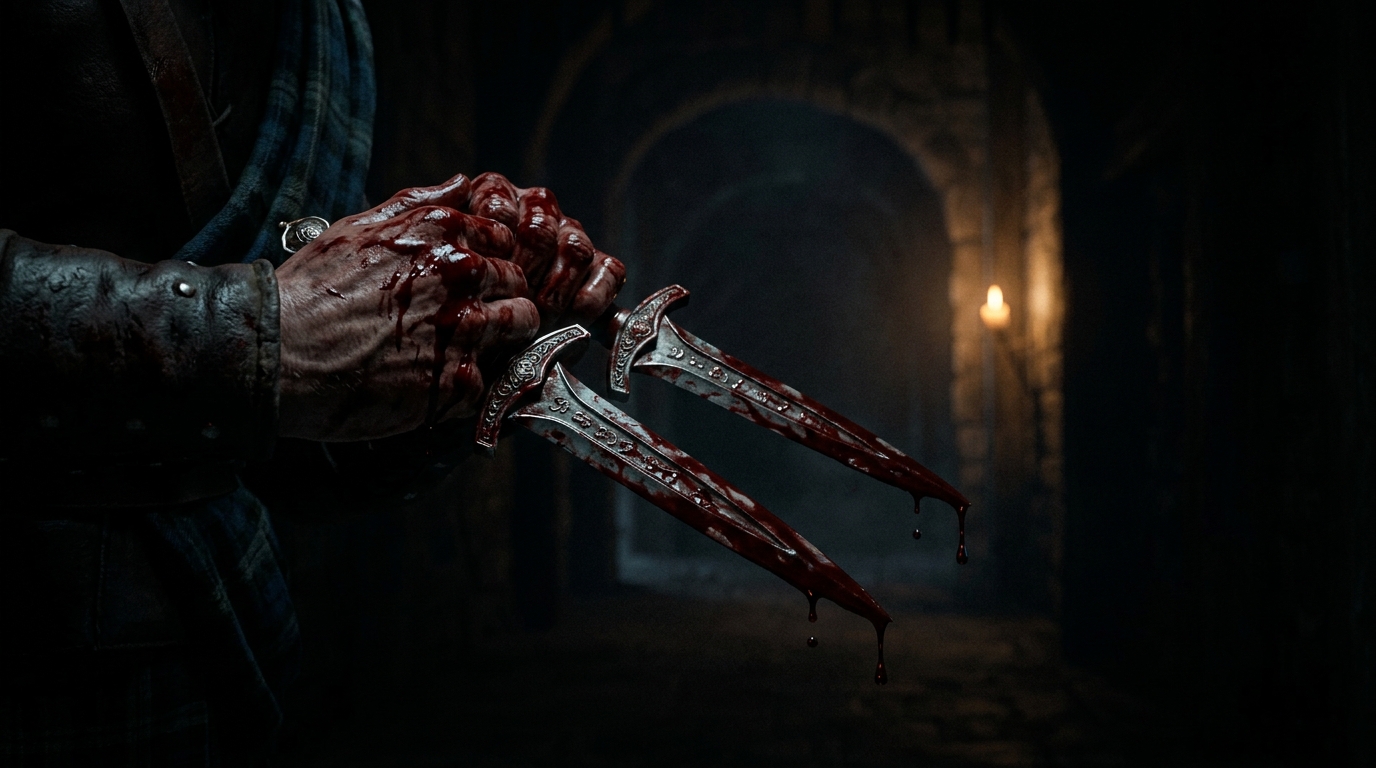
The Off-Stage Regicide
In a masterclass of Jacobean dramatic craft, Shakespeare keeps the actual murder of King Duncan off-stage. This choice aligns with Classical conventions while placing the audience’s attention firmly on the psychological aftermath rather than physical gore. The horror occurs within the minds of the perpetrators.
Lady Macbeth’s Resolve and Flaws
Lady Macbeth waits nervously in the courtyard, fueled by wine (“That which hath made them drunk hath made me bold”). Her composure, however, reveals subtle cracks. She admits that she would have killed Duncan herself had he not resembled her sleeping father. This brief admission reveals that despite her desire to be “unsexed” in Act 1, her human empathy remains intact—a vulnerability that eventually destroys her in Act 5.
The Immediate Aftermath
Macbeth emerges from the chamber carrying two bloody daggers, his hands stained crimson. He is profoundly shaken, speaking in fragmented, panicked sentences.
-
Spiritual Alienation: Macbeth recounts hearing Duncan’s grooms wake from a nightmare, calling “God bless us!” and “Amen.” Macbeth found himself completely unable to speak the holy word: “I had most need of blessing, and ‘Amen’ / Stuck in my throat.” His crime has fractured his relationship with the divine.
-
The Murder of Sleep: Macbeth hears a prophetic voice echoing through the castle hall:
"Methought I heard a voice cry 'Sleep no more!
Macbeth does murder sleep'—the innocent sleep,
Sleep that knits up the ravell'd sleave of care..."
Sleep in Shakespearean tragedy symbolizes peace, restoration, and innocence. By killing a sleeping guest and king, Macbeth permanently destroys his own internal peace.
               [ The Psychological Fracture of Macbeth ]
                                   │
       ┌───────────────────────────┴───────────────────────────┐
       ▼                                                       ▼
Spiritual Isolation                                 Psychological Torment
(Inability to say "Amen")                           ("Macbeth does murder sleep")
       │                                                       │
       └───────────────────────────┬───────────────────────────┘
                                   ▼
                        Permanent Moral Ruin
The Clashing Responses to Blood
Noticing that Macbeth brought the murder weapons out of the room, Lady Macbeth commands him to return them and frame the grooms. Terror-stricken, Macbeth refuses to look at Duncan’s body again. Exasperated, Lady Macbeth takes the bloody daggers herself: “Infirm of purpose! / Give me the daggers.”
When she returns, her hands are coated in Duncan’s blood, yet her reaction stands in stark contrast to her husband’s:
-
Macbeth: “Will all great Neptune’s ocean wash this blood / Clean from my hand? No, this my hand will rather / The multitudinous seas incarnadine, / Making the green one red.”
-
Lady Macbeth: “A little water clears us of this deed: / How easy is it, then!”
This exchange creates deep dramatic irony. While Lady Macbeth views the blood as a minor physical inconvenience easily removed with water, Macbeth understands that blood represents an indelible spiritual stain.
Act 2, Scene 3: The Porter’s Comic Relief and the Discovery of Chaos
The Function of the Porter
Following the intense emotional pitch of Scene 2, Scene 3 opens with knocking at the castle gate. The Porter stumbles onto the stage, playing a classic comedic role. However, his speech is far more than simple slapstick; it functions as a dark allegory.
The Porter imagines he is guarding the gates of Hell, admitting a series of sinners:
-
An Over-ambitious Farmer: Killed himself expecting a high harvest yield (hoarding/greed).
-
An Equivocator: A liar who swore on both sides of the scale against God (directly referencing the 1605 Gunpowder Plot trials).
-
An English Tailor: Stole cloth out of a French hose.
By framing Inverness Castle as Hell, Shakespeare signals that Macbeth’s crime has turned a noble home into a demonic realm.
The Discovery of the Regicide
Macduff, Thane of Fife, enters with Lennox to awaken King Duncan. Upon entering the royal chamber, Macduff discovers the bloody scene and rushes out in horror: “O horror, horror, horror! Tongue nor heart / Cannot conceive nor name thee!”
Macduff rings the castle alarm bell, waking the household. Lady Macbeth appears, feigning shock, followed by Banquo, Malcolm, and Donalbain.
+-------------------------------------------------------------------------------+
|                       KEY DRAMATIC REACTION COMPARISON                        |
+-------------------+-----------------------------------------------------------+
| Character         | Immediate Reaction to Duncan's Murder                     |
+-------------------+-----------------------------------------------------------+
| Macduff           | Pure outrage and grief; views it as sacrilege             |
+-------------------+-----------------------------------------------------------+
| Macbeth           | Over-poetic, manufactured grief; murders the guards       |
+-------------------+-----------------------------------------------------------+
| Lady Macbeth      | Faints (real or calculated) to divert suspicion           |
+-------------------+-----------------------------------------------------------+
| Malcolm &         | Suspicious of everyone; flee to England and Ireland       |
| Donalbain         |                                                           |
+-------------------+-----------------------------------------------------------+
Macbeth’s Rash Execution of the Guards
When Macduff asks why Macbeth killed Duncan’s two sleeping chamberlains, Macbeth claims he was overcome by righteous fury and love for Duncan (“Who can be wise, amazed, temp’rate and furious, / Loyal and neutral, in a moment? No man”).
This rash double murder is a tactical error. While meant to silence potential witnesses, it raises immediate suspicion in Macduff and Banquo. Sensing their lives are in danger, Duncan’s sons make a quick strategic decision: Malcolm flees to England, and Donalbain escapes to Ireland.
Act 2, Scene 4: Unnatural Portents and the Coronation of Macbeth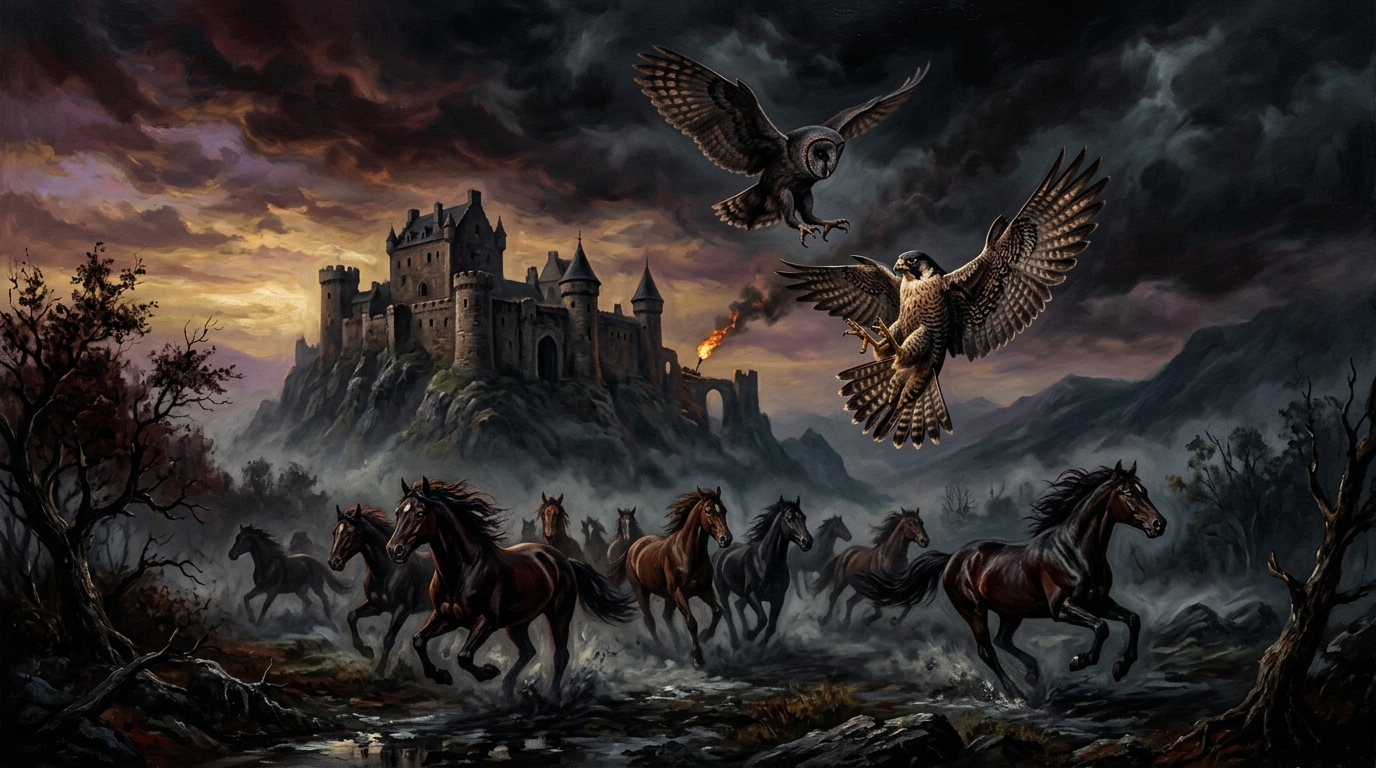
Macrocosmic Disturbance
Scene 4 takes place outside the castle, where Ross converse with an Old Man. The Old Man, representing communal memory and natural order, notes that in his eighty years he has never witnessed such terrifying disturbances.
Jacobean society believed in the Great Chain of Being—a cosmic hierarchy where royalty held a divine mandate. Murdering the king disrupted the natural world:
-
Eternal Dark: Daytime appears as dark as night, as if “dark night strangles the travelling lamp.”
-
Predatory Inversion: A falcon, flying high in its pride, was killed by a mousing owl.
-
Cannibalistic Horses: Duncan’s prized, gentle horses turned wild, broke their stalls, and ate one another.
       [ Disruption of the Great Chain of Being ]
                           │
       ┌───────────────────┼───────────────────┐
       ▼                   ▼                   ▼
Solar Eclipse        Predatory Inversion    Animal Madness
(Day turns to night) (Owl kills falcon)     (Horses eat each other)
Political Consequences
Macduff enters with news. Suspicion for the murder has fallen on Duncan’s fled sons, Malcolm and Donalbain. As a result, the throne falls to Macbeth, who has already traveled to Scone to be crowned King of Scotland.
However, Macduff drops a subtle hint of rebellion: he chooses not to travel to Scone to witness Macbeth’s coronation, opting instead to return home to Fife. His absence marks the first overt sign of political opposition to Macbeth’s usurpation.
3. Deep-Dive Character Transformations
Macbeth: From Reluctant Hero to Paranoid Regicide
At the start of Act 1, Macbeth was the noble Thane of Glamis, praised for his bravery on the battlefield. By Act 2, his internal moral compass is completely destroyed.
The transformation occurs in distinct stages across the act:
-
Moral Hesitation (Act 2, Scene 1): He hallucinated the dagger, struggling with the horror of what he was about to do.
-
Immediate Remorse (Act 2, Scene 2): He is paralyzed by horror, unable to look at his hands or carry the daggers back.
-
Calculated Deception (Act 2, Scene 3): He takes control of the situation, killing the guards to protect himself and putting on an act for the noblemen.
By the end of Act 2, Macbeth has crossed his moral threshold. He realizes that having committed regicide, returning to innocence is impossible.
Lady Macbeth: The Iron Facade vs. Fragile Reality
In Act 2, Lady Macbeth appears to be the dominant, ruthless architect of the plot. She directs Macbeth’s actions, takes back the bloody daggers, and washes her hands of the crime.
However, Shakespeare embeds early signs of her ultimate psychological collapse:
-
She requires alcohol to maintain her composure.
-
She is unable to kill Duncan herself because he resembles her father.
-
She must fake a fainting spell in Scene 3 to cover for Macbeth’s stumbles.
Her claim that “a little water clears us of this deed” turns out to be tragically wrong. The guilt she suppresses in Act 2 returns as sleepwalking and madness in Act 5.
+-------------------------------------------------------------------------------+
|                      LADY MACBETH: ACT 2 VS. ACT 5                            |
+-------------------+-----------------------------------------------------------+
| Trait             | Act 2 Behavior            | Act 5 Reality                 |
+-------------------+-----------------------------------------------------------+
| Guilt             | Dismissed ("A little      | Overwhelming ("Out, damned   |
|                   | water clears us")         | spot!")                       |
+-------------------+-----------------------------------------------------------+
| Nighttime         | Uses darkness for cover   | Needs a candle by her side    |
|                   |                           | constantly                    |
+-------------------+-----------------------------------------------------------+
| Control           | Directs Macbeth's steps   | Completely loses mind         |
+-------------------+-----------------------------------------------------------+
Banquo: The Moral Foil Who Resists Temptation
Banquo faces the exact same prophecies as Macbeth, yet his response is completely different. Where Macbeth embraces dark ambition, Banquo turns to prayer and moral discipline. Even when plagued by nightmares, he refuses to compromise his loyalty to King Duncan. Banquo proves that fate and prophecy do not force a person to act evil; choice remains paramount.
4. Core Themes in Act 2
The Destruction of Sleep and Psychological Torment
Throughout the tragedy, sleep is portrayed as a sacred, restorative state. By stabbing Duncan in his sleep, Macbeth strikes at innocence itself. Consequently, sleep is stripped away from both Macbeth and Lady Macbeth. From Act 2 onward, their lives are marked by nightmares, insomnia, and terrifying visions.
Blood, Guilt, and the Impossibility of Cleansing
Blood functions as a physical manifestation of guilt in Act 2. Macbeth’s lament that his hands will redden all the oceans of the world highlights the permanent nature of his crime. Blood is not merely a stain to be washed off; it is a permanent mark on the soul.
Microcosm vs. Macrocosm: Nature Reflects Human Sin
In Shakespearean drama, the physical world reflects the moral state of the human heart. The regicide breaks the cosmic order, causing the natural world to unravel. Darkness swallows the sun, animals turn vicious, and the earth shakes—demonstrating that Macbeth’s treason offends not just Scotland, but nature itself.
5. Essential Literary Motifs & Symbolism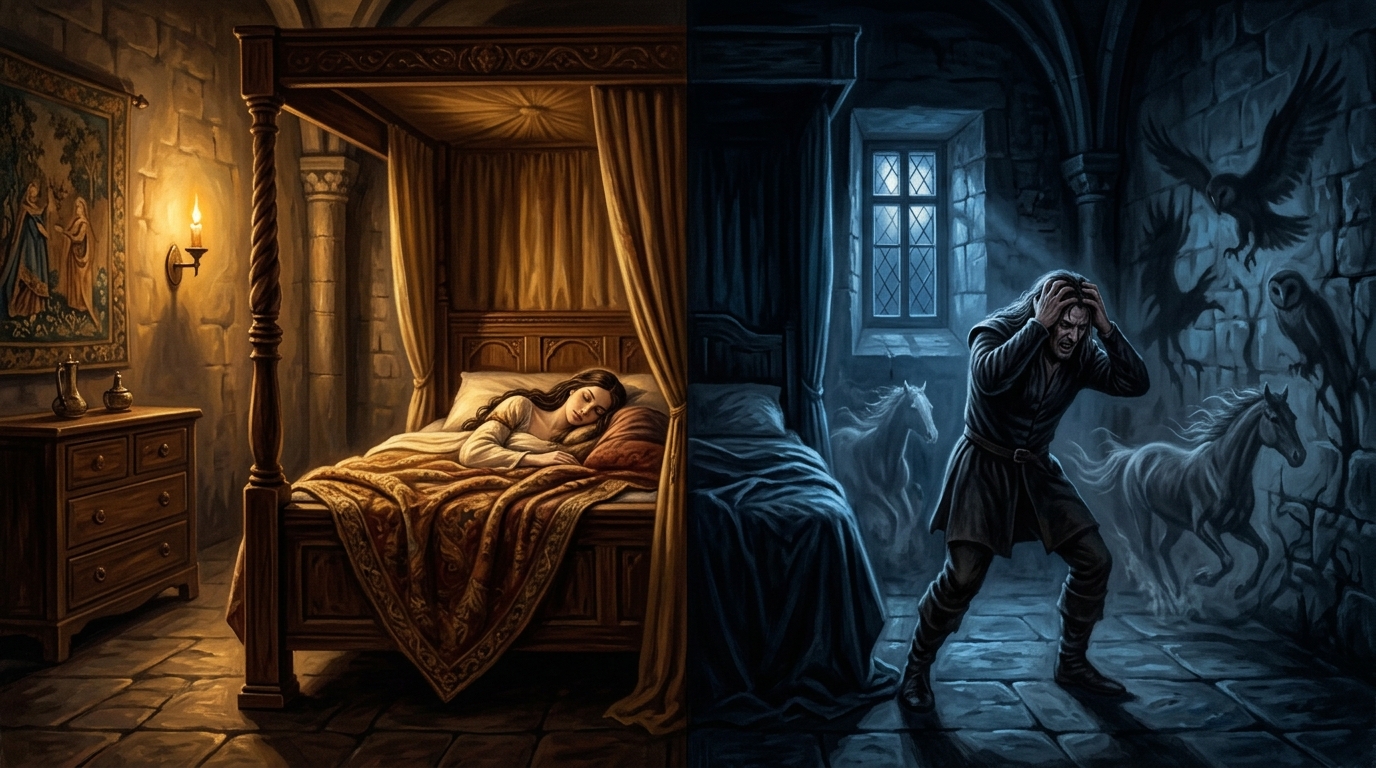
The Dagger of the Mind
The floating dagger in Scene 1 serves as one of Shakespeare’s most potent psychological symbols. It bridges the gap between inner desire and outer action. Is it a demonic manifestation sent by the witches, or a hallucination produced by a “heat-oppressed brain”? Shakespeare deliberately leaves this ambiguous. The dagger symbolizes the tipping point where latent ambition converts into bloody intent—a physical projection of Macbeth’s moral collapse before the blade ever touches Duncan.
Water and Washing Hands
Water represents purification, absolution, and the desire to erase moral accountability. Lady Macbeth’s famous assertion, “A little water clears us of this deed,” treats regicide as a simple physical mess easily wiped away. In contrast, Macbeth understands the psychological depth of their crime:
“Will all great Neptune’s ocean wash this blood / Clean from my hand? No, this my hand will rather / The multitudinous seas incarnadine, / Making the green one red.”
This thematic clash sets up the tragic reversal later in the play. While Macbeth becomes desensitized to blood in later acts, Lady Macbeth is ultimately destroyed by it, endlessly washing her hands in her sleep during Act 5.
The Knocking at the Gate
The rhythmic, insistence of the knocking immediately following Duncan’s murder signals the return of the real world. During the murder, time and moral reality felt suspended inside the dark castle walls. The knocking shatters that horrific vacuum, bringing external judgment, divine justice, and time itself crashing back in. It signals to both the characters and the audience that the crime cannot remain hidden; punishment is already at the door.
6. Expert Study Tips & Essay Prompts for Students and Educators
Key Quotes to Memorize and Analyze
+---------------------------------------------------------------------------------------------------+
|                                 MUST-KNOW ACT 2 QUOTES                                            |
+-------------------------------------------------------------------+-------------------------------+
| Quote & Citation                                                  | Core Significance             |
+-------------------------------------------------------------------+-------------------------------+
| "Is this a dagger which I see before me,                          | Externalization of guilt and  |
| The handle toward my hand?" (2.1.33–34)                           | internal bloody ambition.     |
+-------------------------------------------------------------------+-------------------------------+
| "I had most need of blessing, and 'Amen'                          | Total spiritual alienation    |
| Stuck in my throat." (2.2.31–32)                                  | caused by regicide.           |
+-------------------------------------------------------------------+-------------------------------+
| "Methought I heard a voice cry 'Sleep no more!                    | The permanent destruction of  |
| Macbeth does murder sleep.'" (2.2.34–35)                          | peace and innocent rest.      |
+-------------------------------------------------------------------+-------------------------------+
| "Will all great Neptune’s ocean wash this blood                   | The irreversible nature of    |
| Clean from my hand?" (2.2.59–60)                                  | moral stain and guilt.        |
+-------------------------------------------------------------------+-------------------------------+
| "A little water clears us of this deed." (2.2.66)                 | Lady Macbeth's initial        |
|                                                                   | tragic underestimation of guilt|
+-------------------------------------------------------------------+-------------------------------+
High-Scoring Essay Prompts
-
The Contrast of Conscience: Compare and contrast how Macbeth and Lady Macbeth react to King Duncan’s murder in Act 2, Scene 2. How do their differing views on the blood on their hands foreshadow their respective character arcs across the rest of the play?
-
Cosmic Inversion and the Natural Order: Analyze how Shakespeare uses atmospheric conditions, animal behavior, and unnatural phenomena in Act 2 to mirror the moral corruption occurring within Inverness Castle.
-
The Role of Equivocation: How does the Porter scene in Act 2, Scene 3 serve as more than just comic relief? Examine how the themes of deception, hell, and double-meaning function in this scene and across Act 2.
7. Frequently Asked Questions (FAQs)
Why doesn’t Shakespeare show the murder of King Duncan on stage?
Shakespeare keeps the murder off-stage for several artistic and context-driven reasons:
-
Psychological Focus: By omitting the physical act of violence, the audience’s focus remains entirely on the moral horror and psychological trauma experienced by Macbeth and Lady Macbeth.
-
Jacobean Sensitivity: Showing the murder of an anointed monarch was considered treasonous and blasphemous in Elizabethan and Jacobean theater, especially during the reign of King James I (who believed in the Divine Right of Kings).
-
Imaginative Power: Off-stage horror forces the audience to construct the scene in their own minds, often making it far more terrifying than any stage prop could render.
What is the significance of the Porter scene in Act 2, Scene 3?
The Porter scene serves a crucial dual purpose:
-
Dramatic Tension: It breaks the unbearable emotional tension built up during the murder in Scene 2 before plunging the audience into the chaotic discovery of the crime.
-
Thematic Depth: By pretending to be the gatekeeper of Hell, the Porter highlights that Macbeth’s castle has literally become a place of damnation. His references to “equivocation” directly mirror Macbeth’s self-deception and the misleading prophecies of the Weird Sisters.
Why does Macbeth kill King Duncan’s guards?
Macbeth kills the guards out of sheer panic and preemptive self-preservation. When Macduff discovers Duncan’s body, Macbeth realizes the guards might deny being bribed or drugged by Lady Macbeth. By slaughtering them on the spot and claiming he was overwhelmed by “furious love” for King Duncan, he silences the only potential witnesses who could dispute the frame-up. However, this impulsive action raises immediate suspicion among noblemen like Macduff and Banquo.