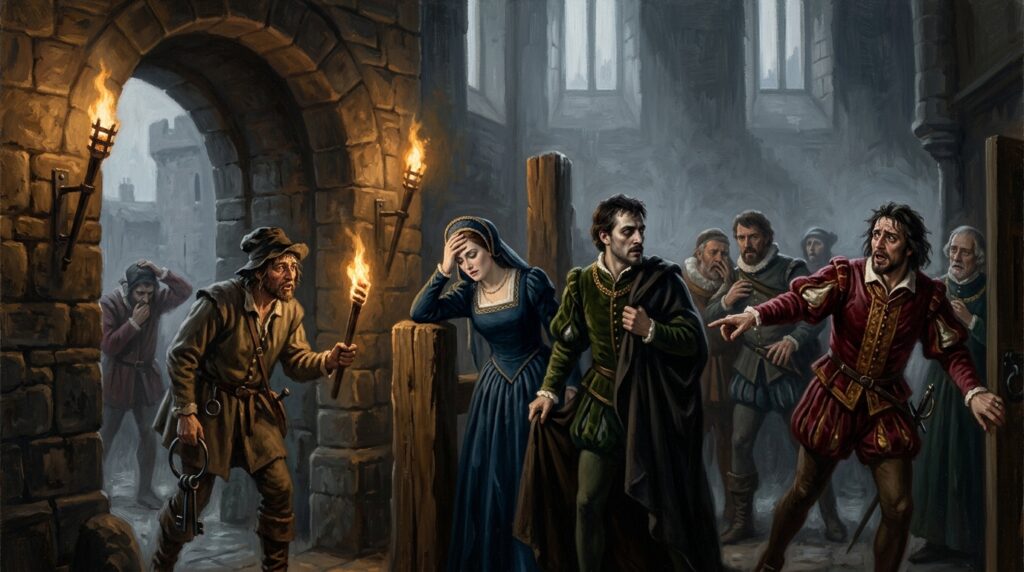
Few moments in English literature combine dark comedy, unbearable tension, and monumental political crisis as seamlessly as Macbeth Act 2 scene 3. Occurring immediately after the cold-blooded assassination of King Duncan in the quiet hours at Inverness, this scene marks the decisive turning point of Shakespeare’s tragedy. Private treason explodes into public calamity as the morning light exposes the corpse of Scotland’s sovereign. From the infamous, booze-fueled soliloquy of the Hell-gate Porter to Macduff’s visceral discovery of regicide, Act 2, Scene 3 shatters the moral order of the play and sets Macbeth’s blood-soaked reign into motion.
Whether analyzing the text for an advanced literature paper, preparing a classroom lesson plan, or directing a stage production, understanding the dramatic architecture, historical context, and linguistic depth of this scene is essential. This comprehensive guide provides an exhaustive scene breakdown, structural analysis, thematic breakdown, and line-by-line quote examination to master one of William Shakespeare’s greatest dramatic achievements.
Scene Overview & Quick Reference
Before diving into detailed analysis, the following matrix summarizes the essential structural elements of Act 2, Scene 3:
| Structural Element | Scene Profile |
| Setting | Inverness (Macbeth’s Castle), courtyard inside the main gate; early morning. |
| Key Characters Present | The Porter, Macduff, Lennox, Macbeth, Lady Macbeth, Banquo, Malcolm, Donalbain. |
| Primary Plot Motifs | The Porter’s hell-gate soliloquy, arrival of Macduff, discovery of Duncan’s body, murder of the grooms, princes’ flight. |
| Core Themes | Equivocation, comic relief/dramatic tension, natural vs. unnatural order, political murder, duplicity. |
| Key Literary Devices | Dramatic irony, metaphor, pathetic fallacy, hypocrisy, dark comedy. |
Detailed Plot Breakdown: Step-by-Step Summary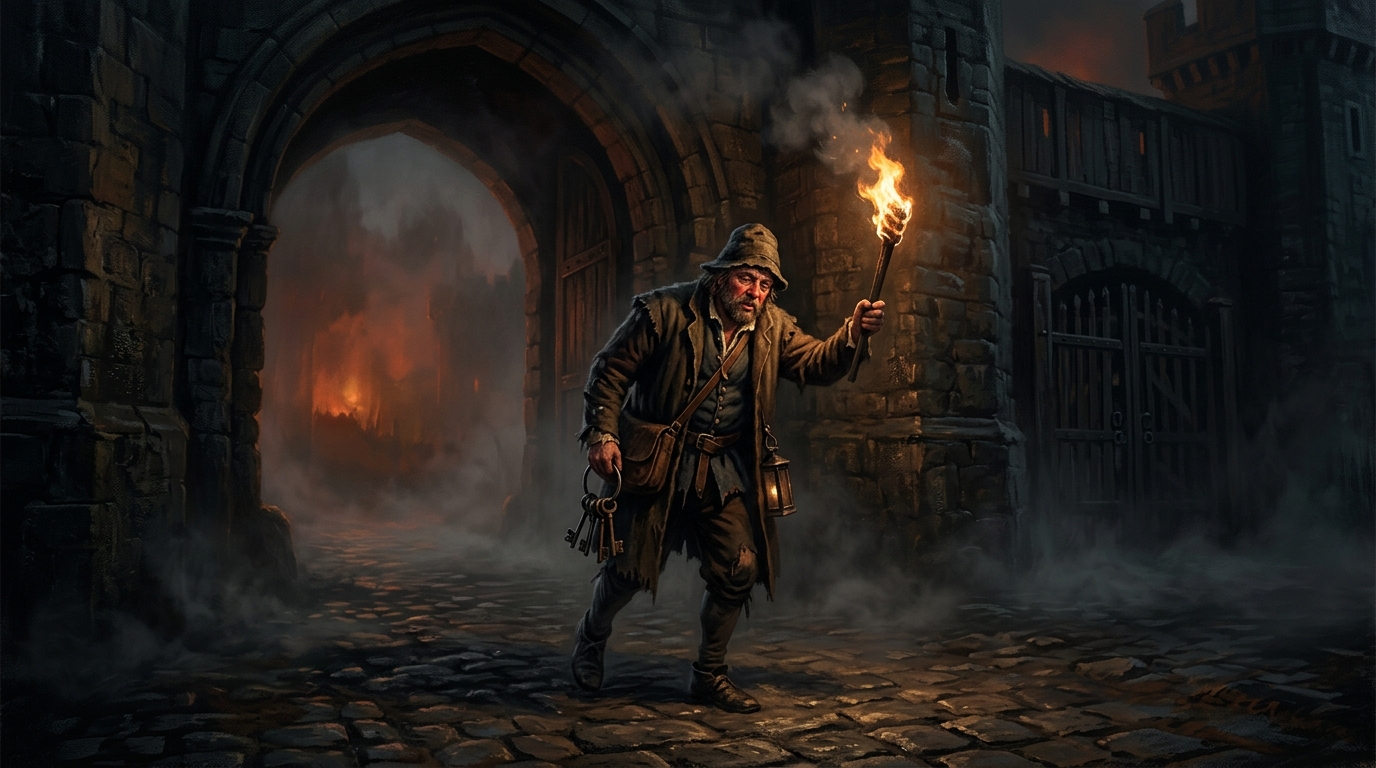
                       [ DUNCAN'S MURDER (Offstage) ]
                                     │
                                     ▼
                     ┌───────────────────────────────┐
                     │   Part 1: The Porter's Gate   │
                     │  - Knocking & Comic Relief    │
                     │  - The Allegory of Hell-Gate  │
                     └───────────────┬───────────────┘
                                     │
                                     ▼
                     ┌───────────────────────────────┐
                     │  Part 2: Arrival & Omens      │
                     │  - Macduff & Lennox enter     │
                     │  - Unnatural storm described  │
                     └───────────────┬───────────────┘
                                     │
                                     ▼
                     ┌───────────────────────────────┐
                     │ Part 3: Duncan's Discovery    │
                     │  - Macduff discovers body     │
                     │  - The Alarum-Bell sounded    │
                     └───────────────┬───────────────┘
                                     │
                                     ▼
                     ┌───────────────────────────────┐
                     │  Part 4: Cover-Up & Flight    │
                     │  - Macbeth slays the guards   │
                     │  - Lady Macbeth's faint       │
                     │  - Malcolm & Donalbain flee   │
                     └───────────────────────────────┘
Part 1: The Porter’s Knocking and Comic Relief (Lines 1–40)
The scene opens with a sharp contrast in tone. The heavy, insistent pounding heard at the end of Act 2, Scene 2 continues to echo against the iron gates of Inverness. Enter the Porter—intoxicated, sluggish, and complaining bitterly about the early morning disruption.
       KNOCKING AT THE GATE
                │
                ▼
       PORTER'S SOLILOQUY
    (Pretends to tend Hell)
                │
     ┌──────────┼──────────┐
     ▼          ▼          ▼
  FARMER    EQUIVOCATOR  TAILOR
  (Greed)   (Treason)   (Theft)
In a celebrated prose soliloquy, the Porter imagines himself as the gatekeeper of Hell, welcoming souls who have walked the “primrose way to the everlasting bonfire.” He envisions three distinct sinners entering through his gate:
-
The Greed-Driven Farmer: A man who hoarded grain hoping for high prices, only to hang himself when bumper crops caused market prices to collapse.
-
The Equivocator: A deceptive figure who could swear on both sides of a scale against either scale, committing perjury for personal gain yet finding that his clever wordplay cannot equivocate his way into heaven.
-
The English Tailor: A thief who stole cloth while cutting out tight French hose (breeches), skimping on material to line his own pockets.
When Macduff and Lennox finally enter, the Porter engages in bawdy double-entendres with Macduff, explaining that excessive alcohol triggers three things: “nose-painting, sleep, and urine,” while playing a paradoxical trick on “lechery”—it provokes the desire but takes away the performance.
Dramatic Function: Why Comic Relief Heightens Tension
Far from being simple filler, the Porter’s scene serves two crucial structural functions:
-
Offstage Practicality: It gives the actors playing Macbeth and Lady Macbeth vital time offstage to wash the king’s blood from their hands and change into nightgowns to conceal their complicity.
-
Dramatic Tension Amplification: By shifting from blood-soaked murder to grotesque comedy, Shakespeare places the audience in a state of hyper-awareness. We know Duncan lies slaughtered in the adjacent room; the Porter’s crude humor creates a horrific juxtaposition between mundane ignorance and catastrophic reality.
Part 2: The Arrival of Macduff and Lennox (Lines 41–80)
Macbeth enters the courtyard, dressed for bed, playing the role of the gracious host awakened by early visitors. Macduff explains that King Duncan specifically commanded him to call early in the morning to prepare for departure. Macbeth directs Macduff to the King’s royal chamber.
While Macduff leaves offstage to wake Duncan, Lennox engages Macbeth in conversation, describing the terrifying, apocalyptic storm that battered the castle overnight:
“The night has been unruly. Where we lay,
Our chimneys were blown down, and, as they say,
Lamentings heard i’ th’ air, strange screams of death,
And prophesying with accents terrible
Of dire combustion and confused events
New hatched to the woeful time. The obscure bird
Clamored the livelong night. Some say the earth
Was feverous and did shake.”
Macbeth’s reply is notoriously terse: “’Twas a rough night.”
This dynamic showcases pathetic fallacy—the literary device where nature reflects human moral corruption. Duncan’s assassination has disrupted the cosmic and political hierarchy, causing creation itself to shudder in protest.
Part 3: The Discovery of Duncan’s Murder (Lines 81–125)
The atmospheric dread breaks into chaos when Macduff re-enters the courtyard, completely shattered by what he has seen.
                       MACDUFF DISCOVERS REGICIDE
                                   │
                                   ▼
                 "O horror, horror, horror! Tongue nor heart
                    Cannot conceive nor name thee!"
                                   │
                                   ▼
                   RINGING OF THE ALARUM-BELL
                                   │
      ┌────────────────────────────┼────────────────────────────┐
      ▼                            ▼                            ▼
 LADY MACBETH                   BANQUO                MALCOLM & DONALBAIN
 (Appears in shock)       (Calls for truth)           (Informed of murder)
Macduff struggles to express the magnitude of the crime, crying:
“O horror, horror, horror! Tongue nor heart
Cannot conceive nor name thee! …
Confusion now hath made his masterpiece!
Most sacrilegious murder hath broke ope
The Lord’s anointed temple, and stole thence
The life o’ th’ building!”
Macduff demands that the castle alarum-bell be rung to wake the sleeping household. He commands Banquo, Malcolm, and Donalbain to rise as if witnessing the apocalypse: “Shake off this downy sleep, death’s counterfeit, / And look on death itself!”
Lady Macbeth enters, demanding to know what has caused the commotion. In a moment rich with irony, Macduff refuses to tell her, declaring that the news is too fragile for female ears:
“O gentle lady,
’Tis not for you to hear what I can speak:
The repetition in a woman’s ear
Would murder as it fell.”
Banquo enters immediately after, and Macduff delivers the brutal truth: “Our royal master’s murdered.”
Part 4: Macbeth’s Cover-Up & The Princes’ Escape (Lines 126–160)
Macbeth and Lennox return from Duncan’s chamber. Macbeth delivers an elaborate, poetic speech lamenting Duncan’s death:
“Had I but died an hour before this chance,
I had lived a blessed time; for from this instant
There’s nothing serious in mortality.
All is but toys. Renown and grace is dead…”
King Duncan’s sons, Malcolm and Donalbain, arrive and learn of their father’s death. Lennox reports that Duncan’s chamber guards appear to have committed the murder, as their hands and daggers were smeared with blood.
Macbeth then drops a bombshell: he admits he killed the guards on the spot.
                         MACBETH'S IMPULSIVE CONFESSION
                                       │
                                       ▼
                   "O, yet I do repent me of my fury,
                          That I did kill them."
                                       │
                    ┌──────────────────┴──────────────────┐
                    ▼                                     ▼
           MACDUFF'S SUSPICION                  LADY MACBETH'S FAINT
       ("Wherefore did you so?")             ("Help me hence, ho!")
When Macduff suspiciously questions him (“Wherefore did you so?”), Macbeth delivers a frantic, overwrought explanation, claiming he was driven by uncontrollable love for Duncan and hatred for his killers:
“Who can be wise, amazed, temp’rate, and furious,
Loyal and neutral, in a moment? No man.
…Here lay Duncan,
His silver skin laced with his golden blood…
Who could refrain
That had a heart to love, and in that heart
Courage to make ’s love known?”
At this precise moment, Lady Macbeth cries out: “Help me hence, ho!” and faints.
While the nobles tend to Lady Macbeth and Banquo calls for a solemn investigation into the treason, Malcolm and Donalbain step aside to confer privately. Recognizing that the murderer sits among the Scottish court, they decide to flee immediately:
-
Malcolm heads to England.
-
Donalbain escapes to Ireland.
Donalbain delivers the famous closing insight of the scene:
“There’s daggers in men’s smiles; the near in blood,
The nearer bloody.”
Key Themes & Literary Devices in Act 2, Scene 3
1. Equivocation and Deception
Equivocation—the practice of using ambiguous language to conceal the truth or mislead without technically lying—is the central thematic pillar of Act 2, Scene 3.
                         THE DUAL FACES OF EQUIVOCATION
                                       │
             ┌─────────────────────────┴─────────────────────────┐
             ▼                                                   ▼
   HISTORICAL EQUIVOCATION                             LITERARY EQUIVOCATION
Father Henry Garnet & Gunpowder Plot             Macbeth's performative grief vs.
(Jesuistical oath-taking tricks)                 Porter's hell-gate commentary
Historical Context: The Gunpowder Plot of 1605
When Shakespeare wrote Macbeth around 1606, King James I was still reeling from the failed Gunpowder Plot of November 5, 1605. A key figure in the trial was Father Henry Garnet, a Jesuit priest who wrote A Treatise of Equivocation. Garnet argued that a Catholic could lawfully lie under oath to Protestant interrogators to preserve their life or faith.
When the Porter references the “equivocator that could swear in both the scales against either scale… yet could not equivocate to heaven,” Shakespeare was making a direct, highly topical reference to Garnet. Macbeth embodies this exact spiritual trap: he attempts to use language, noble appearances, and public grief to cover his treason, only to damn his own soul in the process.
2. Cosmic Disruption: The Divine Right of Kings
In Jacobean political theory, the monarch was chosen directly by God (The Divine Right of Kings). Regicide was not merely murder—it was a sin against the divine order of the universe (The Great Chain of Being).
                                GOD / DIVINE ORDER
                                        │
                                        ▼
                                 THE MONARCH (Duncan)
                                        │
                                        ▼
                                 SCOTTISH NOBLES
                                        │
                                        ▼
                                NATURE / PHYSICAL WORLD
When Duncan is killed, nature rebels. Lennox’s description of screaming owls, howling winds, and an earthquake symbolizes the universe responding to the slaughter of God’s anointed representative.
3. Blood, Guilt, and Hypocrisy
Blood functions as both a physical marker of crime and an indelible symbol of guilt throughout the scene:
-
Physical Blood: Duncan’s blood stains the guards, their daggers, and Macbeth’s memory.
-
Metaphorical Blood: Macbeth describes Duncan’s “silver skin laced with his golden blood,” revealing his poetic attempts to gild a horror he brought about.
Character Analysis & Motives in Act 2, Scene 3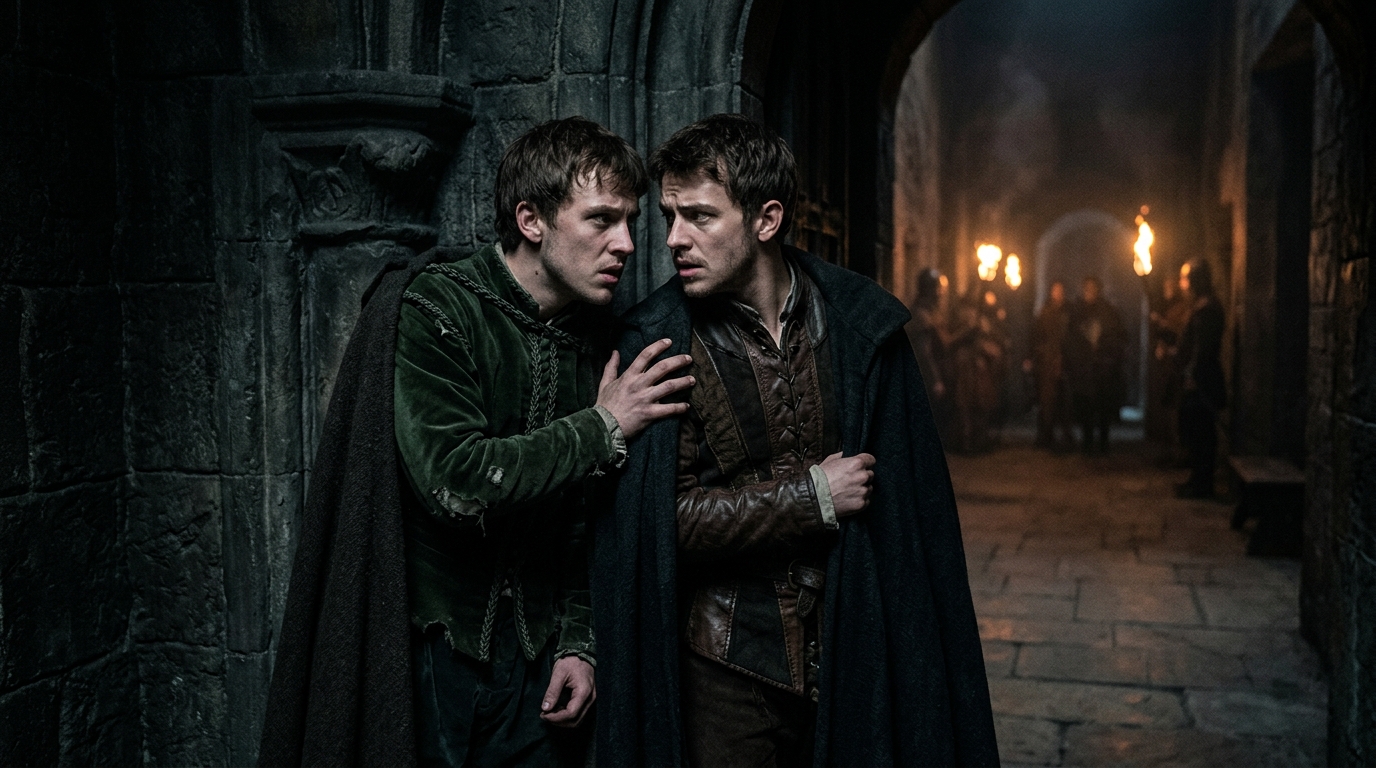
                       CHARACTER TRAJECTORIES IN ACT 2 SCENE 3
                                          │
       ┌──────────────────┬───────────────┴───────────────┬──────────────────┐
       ▼                  ▼                               ▼                  ▼
    MACBETH          LADY MACBETH                      MACDUFF            BANQUO
Passes point of     Forces a distraction;            Emerges as moral    Demands truth;
no return (kills    shows first signs of             foil to Macbeth's   vows to fight
innocent guards)    psychological strain             corruption          treason
Macbeth: Passing the Point of No Return
Act 2, Scene 3 presents Macbeth’s transition from a reluctant murderer into a calculating tyrant. Up to this point, he relied on his wife’s planning. However, when he kills Duncan’s guards offscript, he acts independently for the first time.
His performative grief is elaborate, almost over-rehearsed. By murdering the only potential witnesses before they can speak, Macbeth seals his commitment to deceit.
Lady Macbeth: Crisis Control and Vulnerability
Lady Macbeth displays sharp tactical thinking during the discovery. When Macbeth’s rambling explanation of why he killed the guards threatens to arouse suspicion, her collapse draws everyone’s focus away from her husband.
                       LADY MACBETH'S FAINT IN SCENE 3
                                      │
           ┌──────────────────────────┴──────────────────────────┐
           ▼                                                     ▼
 LITERARY INTERPRETATION A                             LITERARY INTERPRETATION B
 Calculated Distraction                                Genuine Psychological Shock
 (Staged collapse to rescue                            (Overwhelmed by blood and
 Macbeth from interrogation)                           unplanned guard murders)
Literary scholars remain divided on her faint:
-
The Calculated Distraction View: It is a staged collapse executed to prevent Macbeth from ruining their alibi.
-
The Genuine Shock View: The reality of the murder—and Macbeth’s unprompted execution of the guards—overwhelms her control, prefiguring her ultimate mental breakdown in Act 5.
Macduff: The Moral Foil
Macduff enters the play as a figure of untainted moral clarity. He is the first to express pure, unselfish grief for Duncan, describing the king’s body as “The Lord’s anointed temple.”
His immediate skepticism regarding Macbeth’s killing of the guards (“Wherefore did you so?”) establishes Macduff as Macbeth’s primary antagonist.
Banquo: The Voice of Caution
Banquo stands as the moral center during the chaos. Unlike the frantic nobles, Banquo remains composed, demanding a structured investigation into the conspiracy:
“In the great hand of God I stand, and thence
Against the undivulged pretense I fight
Of treasonous malice.”
Detailed Quote Analysis & Exam Breakdown
For students writing critical essays or preparing for literature exams, the following key quotes from Act 2, Scene 3 offer prime material for close reading.
Quote 1: The Equivocator in Hell
“Faith, here’s an equivocator that could swear in both the scales against either scale, who committed treason enough for God’s sake, yet could not equivocate to heaven.”
— The Porter (Lines 8–11)
-
Context: The Porter is speaking to himself while stumbling toward the castle gate.
-
Analysis: This line directly references the Gunpowder Plot and Father Henry Garnet. Shakespeare uses the Porter’s dark humor to establish the play’s core moral warning: while human beings can manipulate words to fool earthly judges, divine justice cannot be misled.
Quote 2: Pathetic Fallacy & The Storm
“The night has been unruly. Where we lay, / Our chimneys were blown down… The obscure bird / Clamored the livelong night. Some say the earth / Was feverous and did shake.”
— Lennox (Lines 53–60)
-
Context: Lennox describes the terrible weather to Macbeth just before Duncan’s body is discovered.
-
Analysis: Shakespeare uses pathetic fallacy to show that regicide fractures the natural order. The “obscure bird” (the owl) acting aggressively represents the breach in the natural hierarchy. The Earth suffering a “fever” mirrors the moral sickness spreading across Scotland.
Quote 3: The Destruction of the Sacred
“Most sacrilegious murder hath broke ope / The Lord’s anointed temple, and stole thence / The life o’ th’ building!”
— Macduff (Lines 68–71)
-
Context: Macduff rushes into the courtyard after discovering King Duncan’s body.
-
Analysis: Macduff uses religious metaphor to frame Duncan’s murder as a sin against God. Referencing the King as “The Lord’s anointed temple” reinforces the belief in the Divine Right of Kings. Calling the crime “sacrilegious” elevates Duncan from a political figure to a holy icon.
Quote 4: Empty Words and Performative Grief
“Had I but died an hour before this chance, / I had lived a blessed time; for from this instant / There’s nothing serious in mortality.”
— Macbeth (Lines 91–93)
-
Context: Macbeth speaks to the gathered nobles after returning from Duncan’s bedchamber.
-
Analysis: This statement functions with deep dramatic irony. To the nobles, Macbeth sounds like a devastated subject mourning his sovereign. To the audience, Macbeth is unknowingly speaking the absolute truth: by killing Duncan, he has destroyed his own inner peace, leaving his remaining life meaningless and empty.
Quote 5: Treason Among Smiles
“There’s daggers in men’s smiles; the near in blood, / The nearer bloody.”
— Donalbain (Lines 139–140)
-
Context: Donalbain whispers to his brother Malcolm as they prepare to flee Inverness.
-
Analysis: Donalbain recognizes the deceptive atmosphere of the Scottish court. The visual image of “daggers in men’s smiles” echoes Lady Macbeth’s earlier advice to “look like the innocent flower, but be the serpent under ’t” (Act 1, Scene 5). The second half of the quote points to their blood relation to Duncan, which makes them prime targets for the assassin.
Performance Insights & Stagecraft Notes
                        STAGECRAFT CONSIDERATIONS FOR SCENE 3
                                          │
       ┌──────────────────────────────────┼──────────────────────────────────┐
       ▼                                  ▼                                  ▼
 ACOUSTICS & SOUND DESIGN        LIGHTING & ATMOSPHERE               ACTING DYNAMICS
 Continuous, jarring knocks     Transitions from pitch-black       Contrast between Porter's
 build visceral panic           predawn to cold morning gray       sluggishness & panicked nobles
1. Sound Design: The Knocking at the Gate
The knocking in Act 2, Scene 3 must feel relentless and oppressive. Directorially, the sound serves as the heartbeat of fate, breaking into the private nightmare of Duncan’s murder and demanding accountability from the real world outside.
2. Lighting Transitions
The scene begins in atmospheric darkness, illuminated only by torches. As the scene progresses and Macduff sounds the alarum-bell, the lighting typically shifts toward a cold, harsh morning gray, symbolizing the exposure of hidden sin.
3. Staging Lady Macbeth’s Faint
Directors must choose how to stage Lady Macbeth’s collapse:
-
Option A (Physical Collapse): She falls heavily to the stone floor, requiring Banquo and Macduff to catch her. This stresses her physical vulnerability under pressure.
-
Option B (Calculated Exit): She sways theatrically, calling for assistance to force the men to carry her out, clearing a path for Macbeth to recover his composure.
Frequently Asked Questions (FAQ)
Why did Shakespeare include the Porter scene right after Duncan’s murder?
Shakespeare uses the Porter to provide comic relief after the intense horror of Duncan’s murder in Act 2, Scene 2. More importantly, the Porter’s drunken monologue about “Hell-gate” and “equivocation” offers a dark thematic commentary on Macbeth’s actions, while giving the actors offstage time to wash their hands and change costumes.
Why does Macbeth kill King Duncan’s guards in Act 2, Scene 3?
Macbeth kills the guards to eliminate the only witnesses who could proclaim their innocence and implicate him or Lady Macbeth. While he claims he acted out of impulsive rage and love for Duncan, his primary motive is self-preservation and cover-up.
What does “equivocation” mean in Macbeth Act 2, Scene 3?
Equivocation means using misleading or ambiguous language to conceal the truth without telling a direct lie. In Act 2, Scene 3, Shakespeare references Father Henry Garnet and the Gunpowder Plot, using equivocation to highlight how Macbeth and Lady Macbeth deceive the Scottish court while damning their own souls.
Why do Malcolm and Donalbain flee Scotland after Duncan’s death?
Malcolm and Donalbain flee because they suspect their father’s murderer is among the Scottish nobles present at Inverness. Realizing that as royal heirs they are likely the assassin’s next targets, Malcolm flees to England while Donalbain escapes to Ireland for safety.
How does Macduff’s reaction to Duncan’s death contrast with Macbeth’s?
Macduff displays immediate, unfeigned horror and deep grief, viewing Duncan’s murder as a sacrilegious attack on God’s anointed king. In contrast, Macbeth offers poetic, over-rehearsed speeches that sound performative, attempting to hide his guilt beneath elevated rhetoric.
Summary Checklist: Key Takeaways
                      ACT 2 SCENE 3 CORE TAKEAWAYS
                                    │
 ┌──────────────────┬───────────────┴───────────────┬──────────────────┐
 ▼                  ▼                               ▼                  ▼
HELL-GATE PORTER    UNNATURAL STORM                 GUARD MURDERS      PRINCES' FLIGHT
Symbolizes moral   Reflects cosmic                 Macbeth's first    Malcolm & Donalbain
damnation and      breach of Divine                unprompted, independent flee to England
equivocation.      Right of Kings.                 crime.             and Ireland.
-
The Dramatic Turning Point: Act 2, Scene 3 transitions Macbeth from private conspiracy to public chaos.
-
The Porter’s Function: Combines essential practical wardrobe time with dark, symbolic commentary on treason and equivocation.
-
The Disruption of Nature: Lennox’s report of the storm illustrates how Duncan’s murder fractures the natural universe.
-
Macbeth’s Evolution: By murdering the guards offscript, Macbeth crosses a moral threshold into independent violence.
-
The Flight of the Heirs: Malcolm and Donalbain’s escape leaves the Scottish throne vacant, opening the way for Macbeth to claim the crown in Act 2, Scene 4.