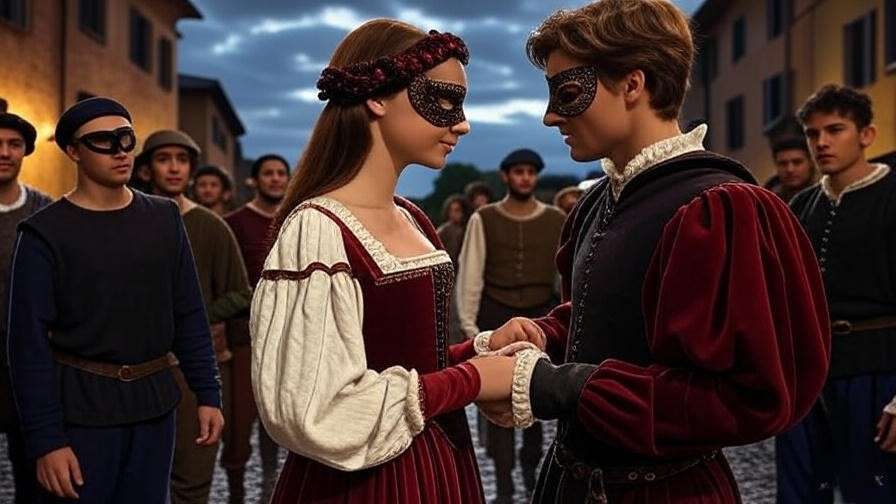
When stepping into the world of Elizabethan and Jacobean drama, even the briefest character name or offhand oath carries centuries of historical weight. A reader encountering references to Saint Sampson—or searching for the origins of Shakespeare’s combative servant Sampson in Romeo and Juliet—is immediately thrust into a fascinating intersection of medieval hagiography, Old Testament myth, and Early Modern stagecraft. At first glance, the name appears to be a simple choice for a minor street fighter. However, looking closer at the cultural landscape of 16th-century London reveals how deeply Shakespeare’s language was steeped in religious memory and historical allusion.
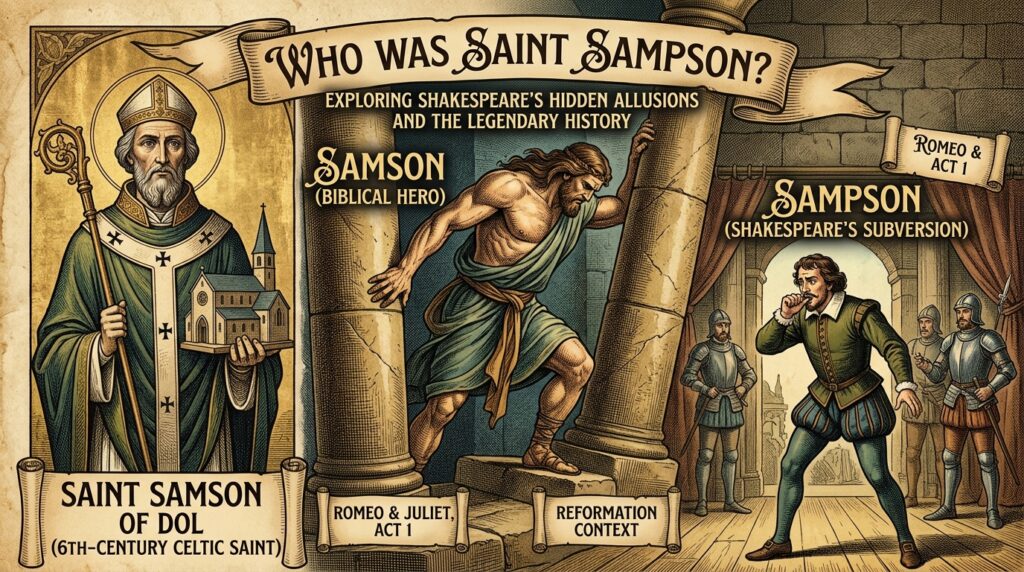
Understanding these references requires untangling three distinct historical and literary strands: the historical 6th-century Celtic bishop Saint Samson of Dol, the legendary Old Testament judge Samson whose brute strength became a Renaissance archetype, and Shakespeare’s deliberate subversion of both figures on stage. Readers, students, and theater professionals often struggle to pinpoint why a playwright would invoke such a name in the middle of a street brawl or a comic sub-plot. Was Shakespeare referencing a Catholic saint whose veneration survived the Protestant Reformation, or was he poking fun at human vanity through biblical irony?
Shakespeare’s engagement with the name Sampson bridges classical biblical strength, Christian hagiography, and Early Modern comedic irony, serving as a masterclass in subverting audience expectations. By analyzing the historical origins of Saint Sampson alongside Shakespeare’s explicit textual citations, we unlock a richer understanding of how Early Modern audiences experienced theater—where every name carried a hidden story, and every insult echoed with biblical significance.
Historical & Biblical Foundations
To fully appreciate Shakespeare’s wordplay and thematic depth, one must first distinguish between the historic Celtic saint and the biblical strongman. Because spelling was unstandardized in Early Modern English, “Samson” and “Sampson” were frequently used interchangeably in folios, quarto prints, and parish records.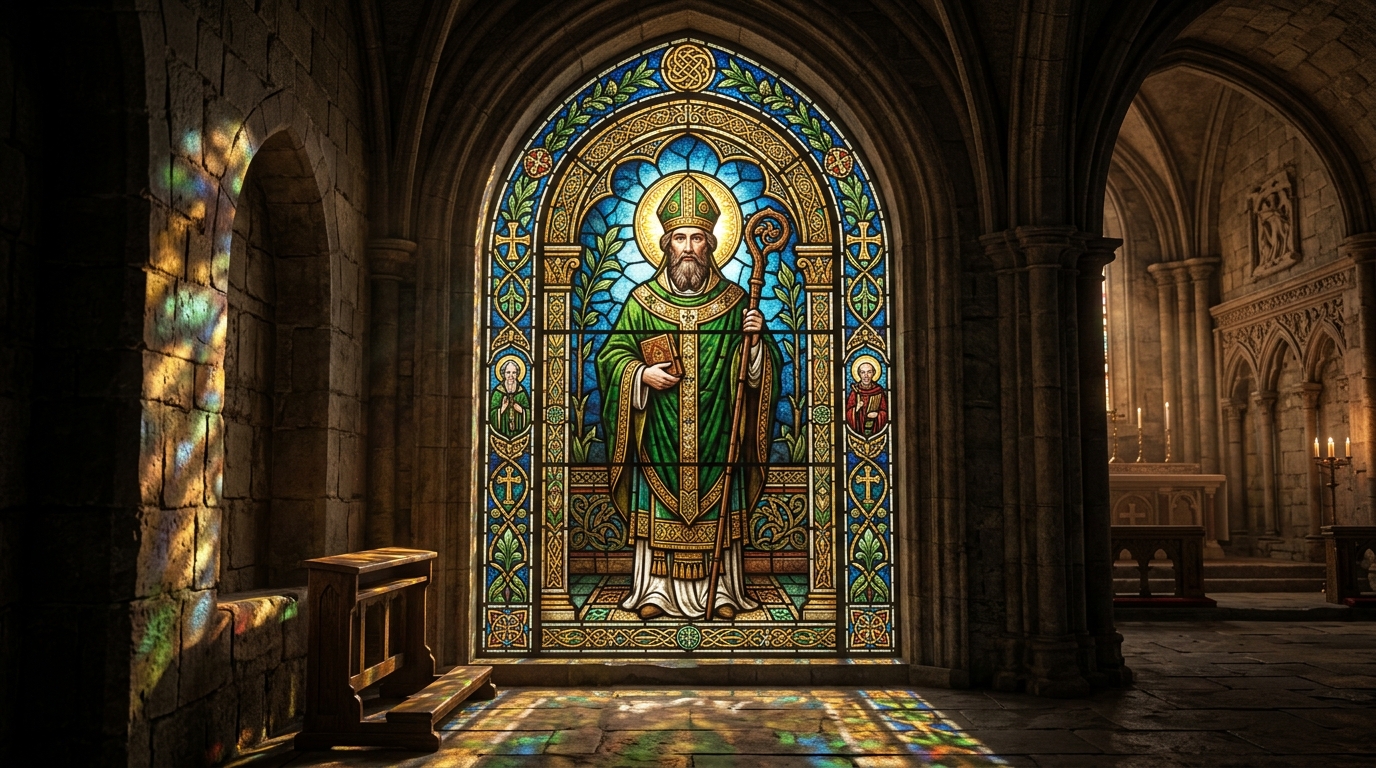
The Biblical Samson (Old Testament Hero)
The story of Samson, found in the biblical Book of Judges (chapters 13–16), was one of the most widely known narratives in Early Modern England. Blessed by God with superhuman strength contingent upon his Nazirite vow—symbolized by his uncut hair—Samson slew a thousand Philistines with the jawbone of an ass and carried away the gates of Gaza. However, his ultimate downfall came through his betrayal by Delilah, who discovered the secret of his strength and cut his hair while he slept.
In Renaissance literature and Christian typography, Samson was viewed through a dual lens:
-
A Type of Christ: His sacrificial death, pulling down the pillars of the Dagon temple to destroy his enemies, was seen by medieval theologians as a precursor to Christ’s victory over sin and death.
-
An Emblem of Tragic Pride (Hubris): To moralists of the 16th century, Samson represented the danger of physical power unguided by moral wisdom, particularly how strong men are easily brought low by earthly temptation.
Saint Samson of Dol (The Celtic Bishop & Wonderworker)
While the biblical figure dominated popular sermons, Saint Samson of Dol (c. 490 – c. 565 AD) occupied a revered place in British and Continental church history. Born in Glamorgan, Wales, Samson became a prominent Celtic bishop and one of the seven founding saints of Brittany (Armorica).
Educated at the famous monastery of Saint Illtud at Llantwit Major, Saint Sampson was renowned for his austere asceticism, missionary zeal, and miraculous deeds—including driving serpents from the countryside and founding key monasteries such as Dol-de-Bretagne. His veneration spread rapidly across South Wales, Cornwall, Brittany, and Anglo-Saxon England. King Athelstan of England even acquired several of Saint Sampson’s relics in the 10th century, placing them in Milton Abbey, Dorset.
Despite the Protestant Reformation’s suppression of saint cults and feast days in the 1530s, the memory of Saint Sampson persisted throughout the English countryside via local place names, holy wells, and parish churches dedicated to his honor (such as St Sampson’s Church in Guernsey or Golant, Cornwall).
Deep-Dive Analysis — Sampson in Romeo and Juliet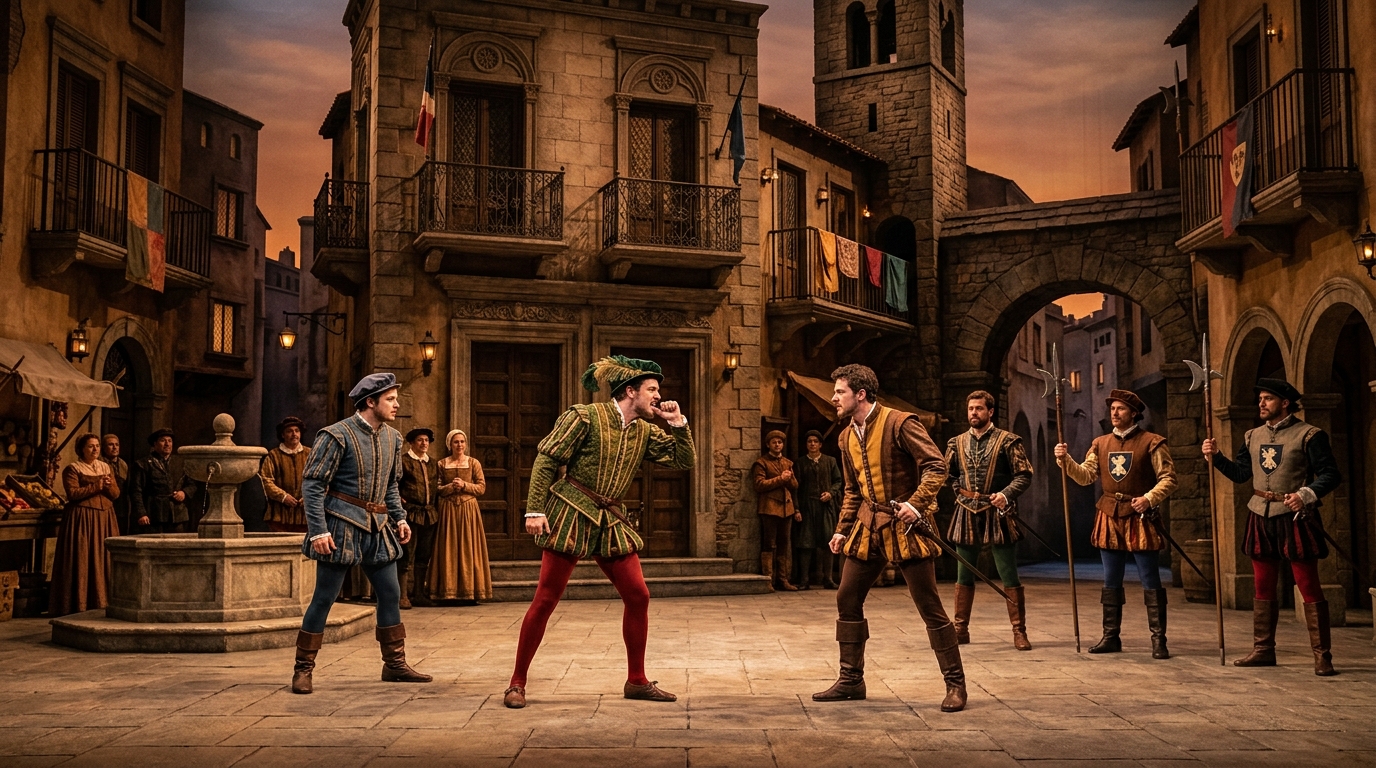
Shakespeare’s most famous usage of the name occurs in the very opening lines of Romeo and Juliet. The decision to introduce a tragic masterpiece not with royal figures or sweeping speeches, but with two armed servants named Sampson and Gregory, is a brilliant dramatic strategy.
SAMPSON: Gregory, o' my word, we'll not carry coals.
GREGORY: No, for then we should be colliers.
SAMPSON: I mean, an we be in choler, we'll draw.
GREGORY: Ay, while you live, draw your neck out o' the collar.
Character Breakdown & Thematic Role
Naming this low-status Capulet servant “Sampson” creates an instant ironic tension for the audience. The legendary Samson of scripture defeated armies single-handedly; Shakespeare’s Sampson is an insecure household retainer who relies on crude puns to build up his own confidence.
By bestowing a heroic, saintly, and biblical name upon a servant who is terrified of actually starting a real fight, Shakespeare establishes a key theme of the play: the emptiness of violent posturing. Sampson boasts of his prowess, claiming he will “take the wall of any man or maid of Montague’s,” yet the moment actual combat threatens, his courage evaporates into legal technicalities.
Key Scene Deconstruction: Biting the Thumb
The comedic brilliance of Act 1, Scene 1 lies in Sampson’s reluctance to take actual responsibility for initiating violence. When the Montague servants, Abraham and Balthasar, enter the square, Sampson desperately seeks to provoke them without technically breaking the law or risking his own neck:
SAMPSON: I will bite my thumb at them; which is a disgrace to them, if they bear it.
ABRAHAM: Do you bite your thumb at us, sir?
SAMPSON: I do bite my thumb, sir.
ABRAHAM: Do you bite your thumb at us, sir?
SAMPSON: [Aside to GREGORY] Is the law of our side, if I say ay?
GREGORY: No.
SAMPSON: No, sir, I do not bite my thumb at you, sir, but I bite my thumb, sir.
Biting the thumb—placing the thumbnail behind the upper teeth and flicking it forward—was an insulting gesture across Renaissance Europe. Yet, notice Sampson’s hesitation. He wants the prestige of a warrior without the peril. This cowardly hesitation directly parodies the legendary fearlessness associated with the name Samson. Rather than pulling down temples, Shakespeare’s Sampson worries about municipal ordinance violations.
Gender, Violence, and False Masculinity
Sampson’s dialogue is filled with aggressive sexual innuendo and threats toward women, boasting that he will be “cruel with the maids” and “cut off their heads.” This toxic bravado serves a vital thematic function. It demonstrates how the feud between the Capulets and Montagues has infected every stratum of Veronese society, reducing chivalric honor to crude street violence and predatory posturing.
The contrast between the heroic archetype of Samson and the petty reality of the servant shows how the ancient feud has degraded the nobility of the community. Sampson’s empty aggression sets off the spark that ultimately leads to the tragic deaths of the star-crossed lovers.
The Historical & Religious Context of Early Modern England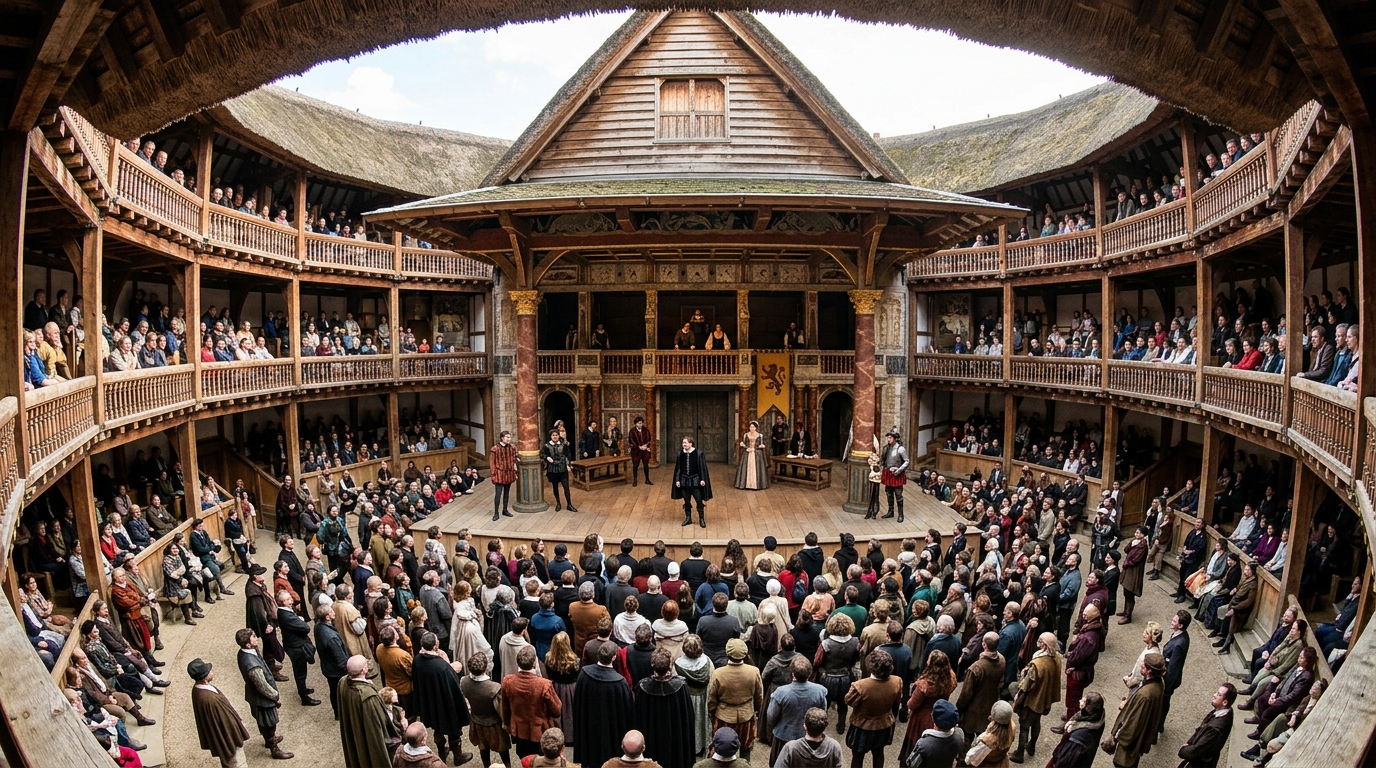
To understand why references to saints and biblical names resonated so strongly with Shakespeare’s contemporary audience, we must examine the cultural climate of post-Reformation London.
Invoking Saints on the Elizabethan Stage
When Henry VIII broke with Rome and established the Church of England, the public veneration of saints was officially outlawed. Images were removed from churches, shrines were destroyed, and saint feast days were struck from the official calendar. However, popular culture changes slowly. Decades after the Reformation, ordinary citizens still used oaths invoking saints, maintained folk traditions linked to saintly miracle workers like Saint Sampson, and named their children after local patron saints.
By the time Shakespeare was writing in the 1590s and early 1600s, dramatic censorship was strictly enforced by the Master of the Revels. The passage of the Act to Restrain Abuses of Players (1606) made it illegal to profanely speak the holy name of God, Christ, or the Holy Ghost on stage. Consequently, playwrights frequently used saintly invocations, Old Testament references, or pagan mythologies as clever workarounds to explore moral and religious themes without triggering government censors.
Popular Folk Beliefs & Name Symbolism
To an Elizabethan theatergoer, names were rarely arbitrary. Audiences were attuned to “charactonym”—the practice of naming a character to reflect their traits or to create deliberate irony.
When a character named Sampson walked onto the stage, the audience immediately anticipated strength, conflict, and tragic consequences. By subverting these expectations—making Sampson a bumbling servant who gets flustered over a thumb-bite—Shakespeare tapped into a rich tradition of Early Modern satire that delighted both the groundlings in the pit and the educated elites in the galleries.
Other Allusions to Samson in Shakespeare’s Canon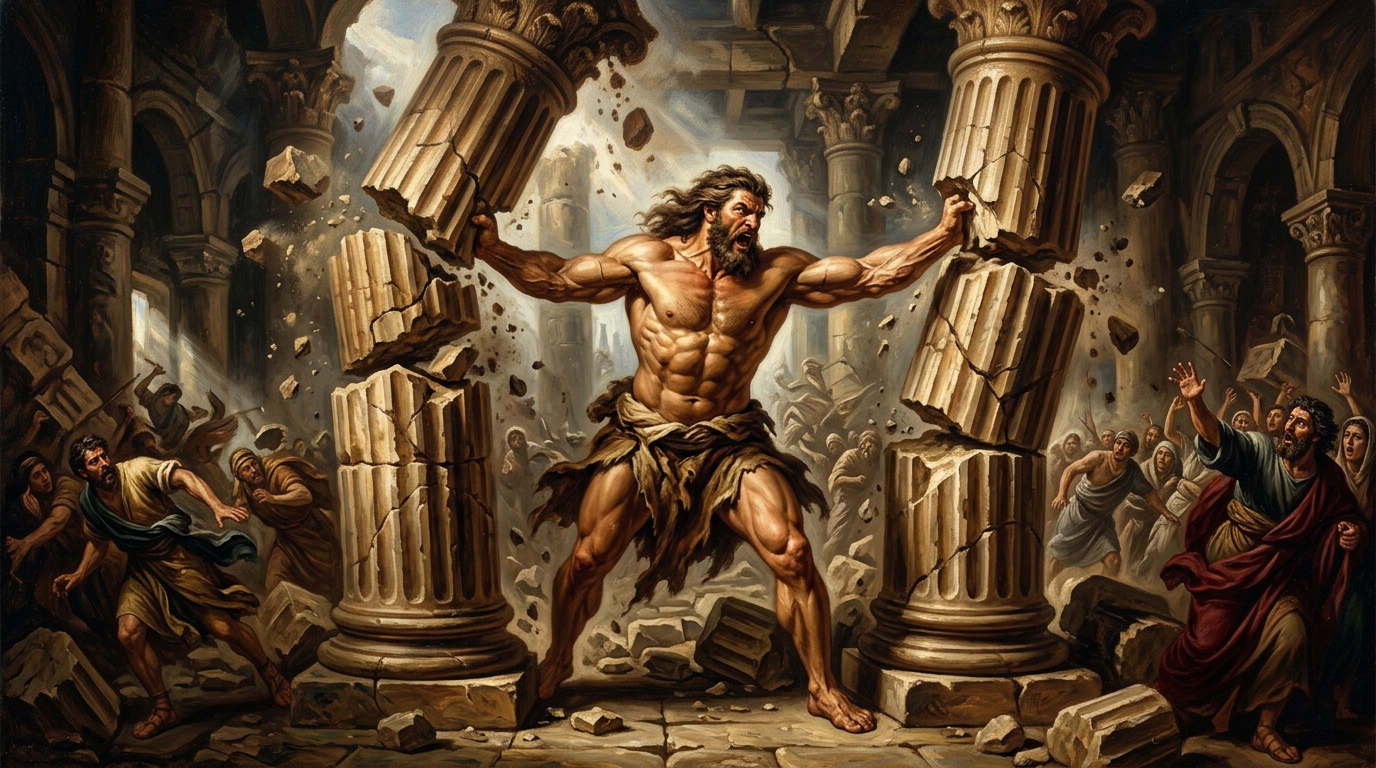
Beyond Romeo and Juliet, Shakespeare invokes the Samson motif across multiple plays to explore themes of fallen strength, physical vulnerability, and the undoing of great men through romantic infatuation.
-
Love’s Labour’s Lost (Act 1, Scene 2): The pompous courtier Armado, struggling with his sudden infatuation for Jaquenetta, explicitly cites Samson as his heroic precedent for falling in love. He turns to his page, Moth, to validate his weakness:
ARMADO: What great men have been in love? MOTH: Hercules, master. ARMADO: Most sweet Hercules! More authority, dear boy, name more; and, sweet my child, let them be men of good repute and carriage. MOTH: Samson, master: he was a man of good carriage, great carriage, for he carried the town-gates on his back like a porter; and he was in love.
Here, Shakespeare highlights both Samson’s raw physical power (carrying the gates of Gaza) and his immediate susceptibility to love, using the biblical figure as comedic justification for Armado’s own lack of emotional discipline.
-
Henry VI, Part 1 (Act 1, Scene 2): During the siege of Orléans, the English general Charles frames the miraculous combat prowess of Joan of Arc through biblical heroics, comparing her divine inspiration to Samson’s legendary strength:
CHARLES: Combat with Joan de Pucelle and be vanquished? / A Samson and a Goliad bit the dust! / Drive back the English troops and raise the siege…
-
Henry VIII (Act 5, Scene 4): Shakespeare returns to Samson’s physical might in a comedic crowd-control context. A Porter describing an uncontrollable, rowdy London mob remarks that even “Samson had quit the man” (been overwhelmed) if set against such a disorderly gathering.
Legacy and Critical Interpretation
Shakespeare’s engagement with the name Sampson demonstrates the rich layerings of Early Modern playwriting. By intertwining the historic legacy of Saint Samson of Dol with the mythic weight of the biblical Samson, Shakespeare created multi-layered characters that resonated across every class of Elizabethan society. Whether serving as a minor comic street-brawler in Verona or a moral touchstone for infatuated nobles, the name Samson remains one of Shakespeare’s most effective tools for dismantling false chivalry and exploring human vulnerability.
Frequently Asked Questions
-
Why did Shakespeare spell the name “Sampson” with a “p”? In Early Modern England, orthography was fluid and largely non-standardized. The insertion of an intrusive “p” in names like Sampson or Thompson reflected contemporary phonetic pronunciation and standard scribal habits of the 16th century. Printers and scribes routinely used “Samson” and “Sampson” interchangeably in early quarto prints and folios.
-
Is Saint Samson of Dol connected to the biblical Samson? No direct genealogical or theological link exists between the two figures. Saint Samson of Dol was an authentic 6th-century Celtic bishop and monastic founder from Wales who evangelized Brittany. The biblical Samson was an Old Testament judge from the tribe of Dan. However, medieval hagiographers and post-Reformation readers frequently conflated their names due to identical linguistic roots and shared cultural memory.
-
What is the symbolic meaning of Sampson biting his thumb in Romeo and Juliet? Biting the thumb (niffaro) was an insulting, provocative gesture across Renaissance Europe, carrying an offensive connotation roughly equivalent to modern vulgar gestures. By having Sampson perform the gesture while frantically asking his fellow servant, “Is the law of our side, if I say ay?”, Shakespeare exposes the absurd hypocrisies of the Capulet-Montague feud, where servants seek to provoke violence without taking personal or legal responsibility.
-
Did Shakespeare’s audience recognize the religious allusions in minor character names? Yes. Early Modern theatergoers possessed a high degree of biblical literacy driven by mandatory weekly sermon attendance, the widespread availability of the Geneva Bible, and lingering oral traditions of pre-Reformation saint veneration. Audiences instantly picked up on name irony (charactonym), recognizing when a low-status street brawler was given the grand name of an Old Testament hero or a revered Celtic saint.