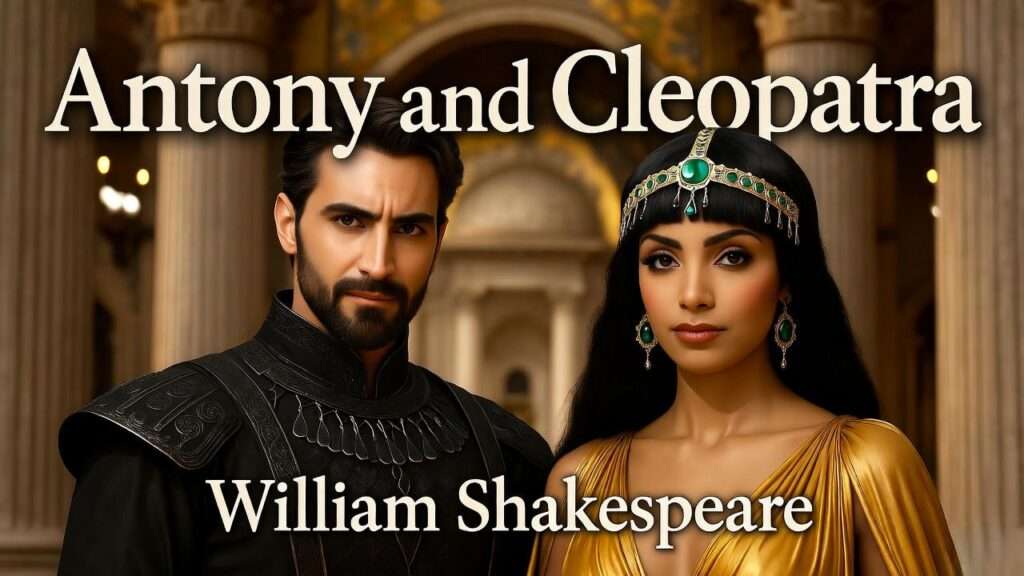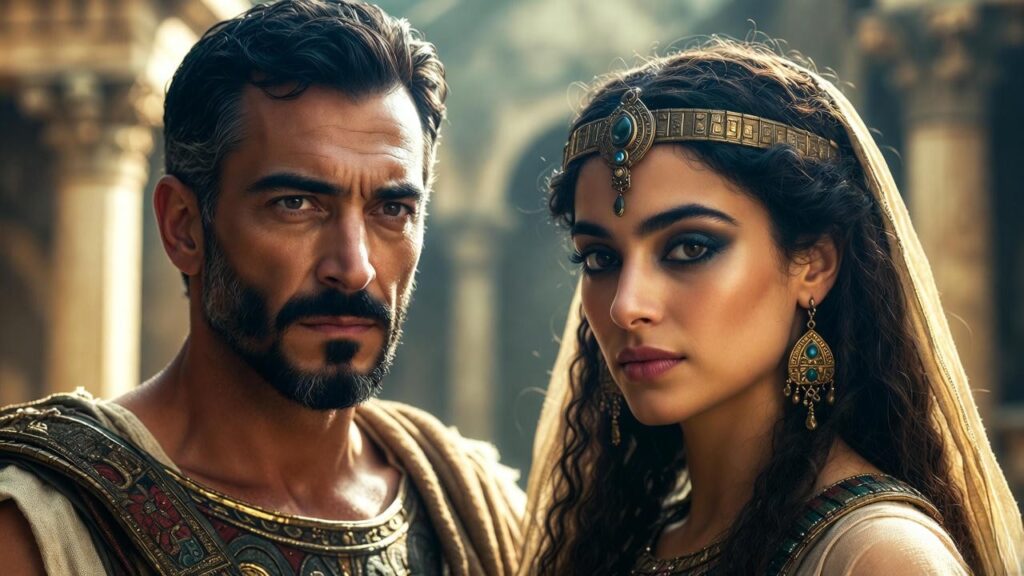
“Age cannot wither her, nor custom stale / Her infinite variety.” These immortal lines, spoken by Enobarbus in Act II of Shakespeare’s Antony and Cleopatra, have enchanted audiences for over four centuries. But when modern readers search for “Anthony Mark” (or variations like “Anthony Mark Shakespeare”), they are usually looking for the answer to a more fundamental question:
Who was the real man behind Shakespeare’s charismatic, tragic Roman general?
The confusion is understandable. The historical figure is properly known as Marcus Antonius (in Latin) or Mark Antony in English, yet the name “Anthony Mark” persists in search queries, likely due to reversed word order or simple misremembering. This article sets out to clarify exactly who Mark Antony was, how his life intersected with Cleopatra’s, and how William Shakespeare transformed a ruthless Roman politician into one of the most complex and memorable tragic heroes in English literature.
By the end, you will understand not only the historical Mark Antony but also why Shakespeare’s dramatic version remains so powerful—and why it diverges so significantly from the historical record. Whether you are a student preparing for exams, a theater enthusiast, or simply curious about the intersection of history and drama, this comprehensive guide will give you the clearest, most authoritative picture available.
Who Was the Real Mark Antony? Historical Background
Early Life and Rise to Power
Marcus Antonius was born in 83 BC into a distinguished but politically turbulent patrician family. His father, also Marcus Antonius, was a notable orator and consul who met a violent end during the civil wars of the 80s BC. Young Antony was educated in the Greek manner, learning rhetoric and philosophy—a foundation that would later serve him well in politics and public speaking.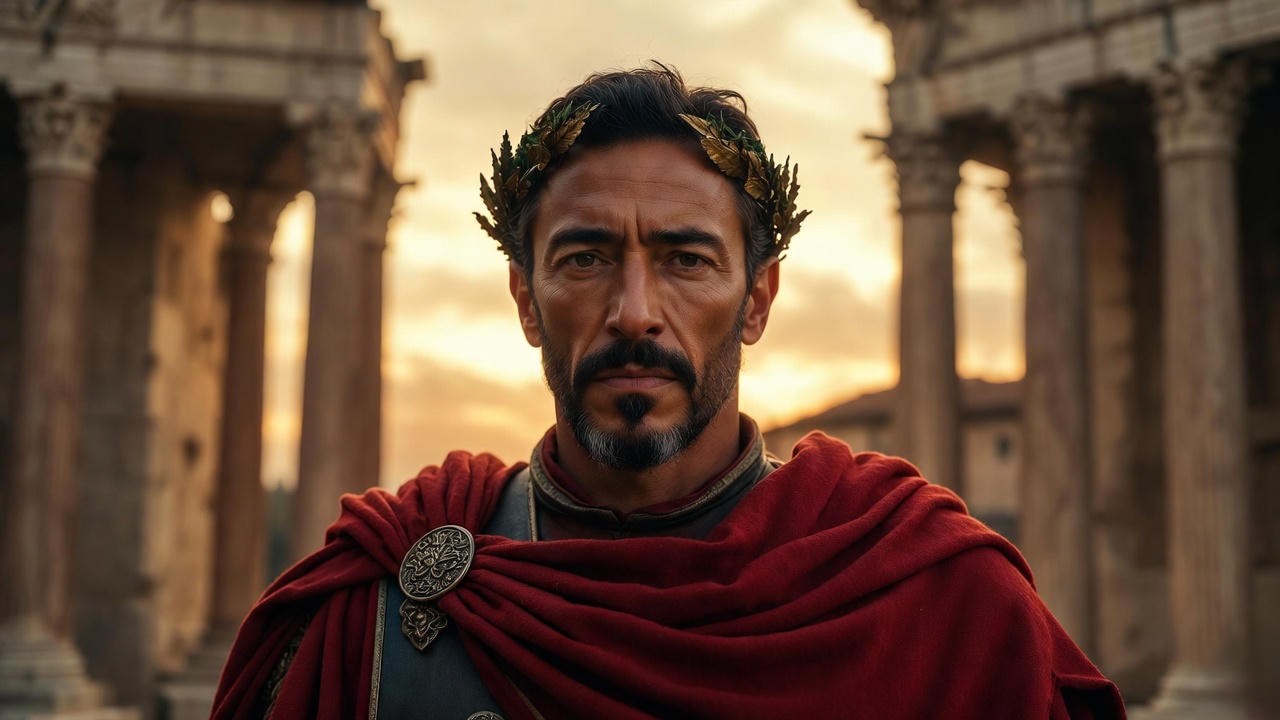
Antony’s military career began under Gaius Scribonius Curio and then under Julius Caesar, whom he joined in Gaul around 54 BC. He quickly proved himself an able and courageous commander. During Caesar’s Civil War (49–45 BC), Antony played a crucial role, commanding troops in Italy and at the decisive Battle of Pharsalus (48 BC). In return, Caesar rewarded him with high offices: tribune, augur, and finally co-consul in 44 BC.
The Second Triumvirate and Peak Power (43–33 BC)
After Caesar’s assassination on the Ides of March 44 BC, Antony initially positioned himself as the protector of Caesar’s legacy. He delivered the famous funeral oration that turned public opinion against the conspirators (an event Shakespeare dramatizes brilliantly in Julius Caesar).
In 43 BC, Antony formed the Second Triumvirate with Octavian (the future Augustus) and Marcus Aemilius Lepidus. This alliance was marked by ruthless proscriptions—the systematic murder of political enemies. Cicero, who had denounced Antony in his Philippics, was among the first to die.
After defeating Brutus and Cassius at Philippi (42 BC), the triumvirs divided the Roman world: Antony took the wealthy and culturally sophisticated Eastern provinces, while Octavian controlled the West.
Relationship with Cleopatra: Politics or Passion?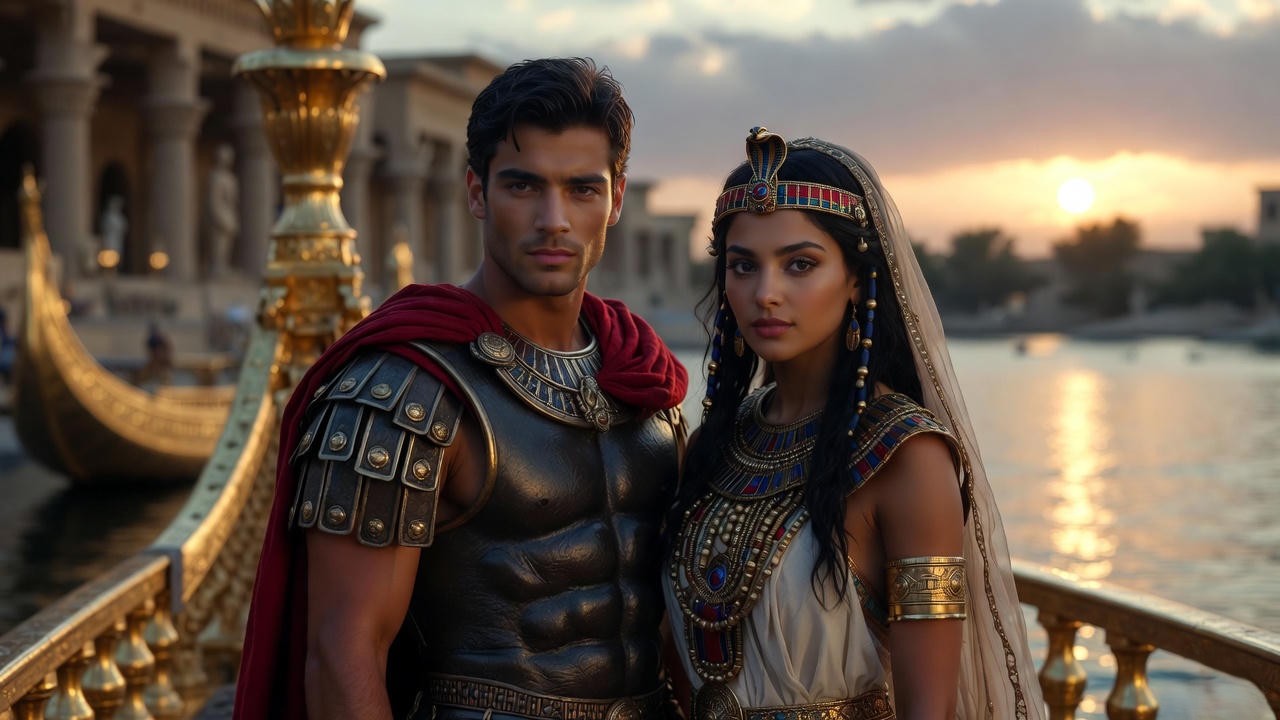
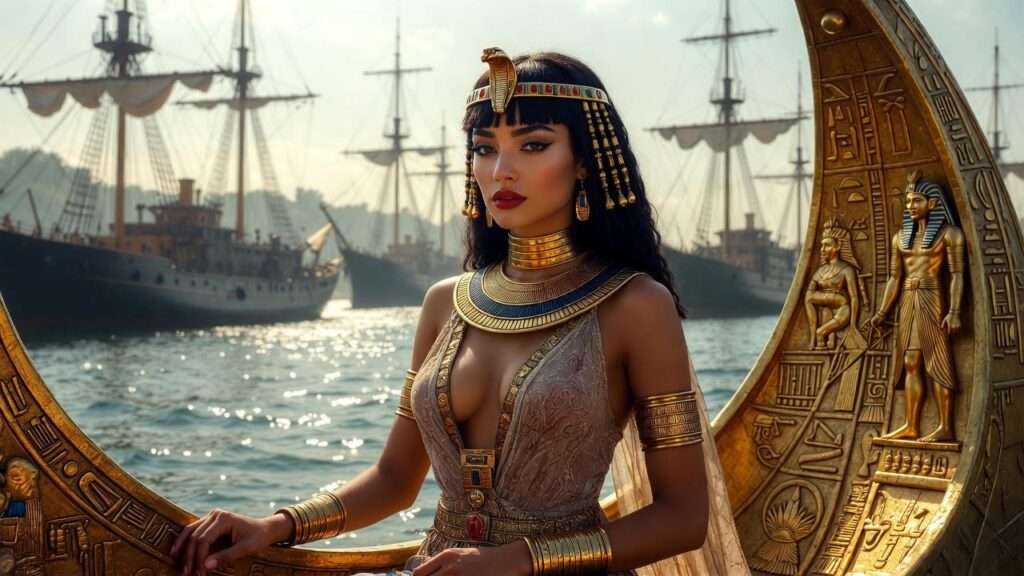
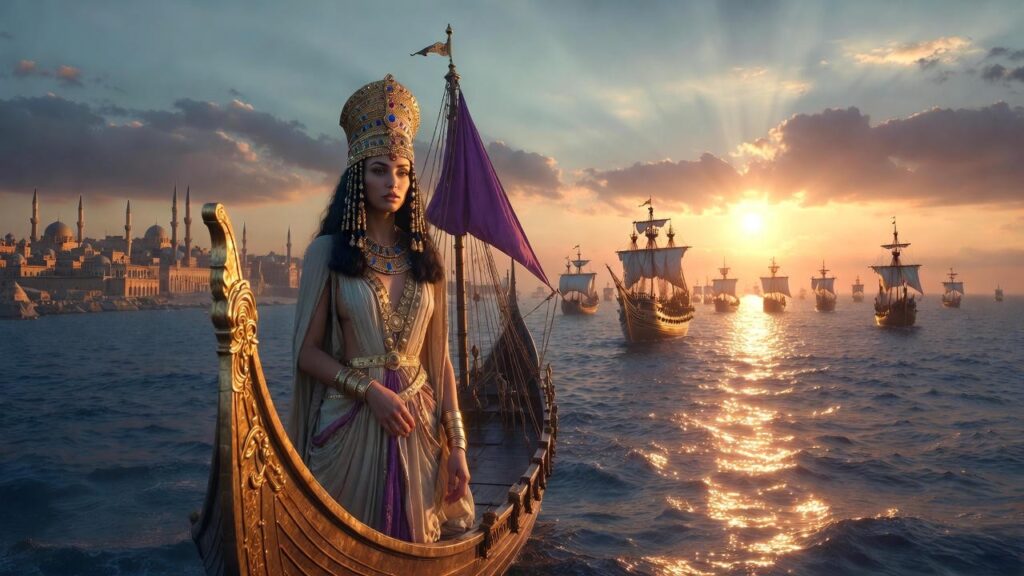
Antony first met Cleopatra VII in 41 BC in Tarsus, where she arrived in a magnificent barge that would later inspire Shakespeare’s most famous description. The meeting was politically motivated: Antony needed Egypt’s wealth and grain to fund his campaigns against the Parthians.
Over the next decade, their relationship deepened. They married according to Egyptian rites (though not recognized in Rome), and Cleopatra bore him three children: twins Alexander Helios and Cleopatra Selene (born 40 BC), and Ptolemy Philadelphus (born 36 BC).
In 34 BC, during the so-called Donations of Alexandria, Antony publicly granted Roman territories to Cleopatra and their children, actions that Octavian skillfully exploited as proof of Antony’s disloyalty to Rome.
The Downfall: Actium and Suicide (31–30 BC)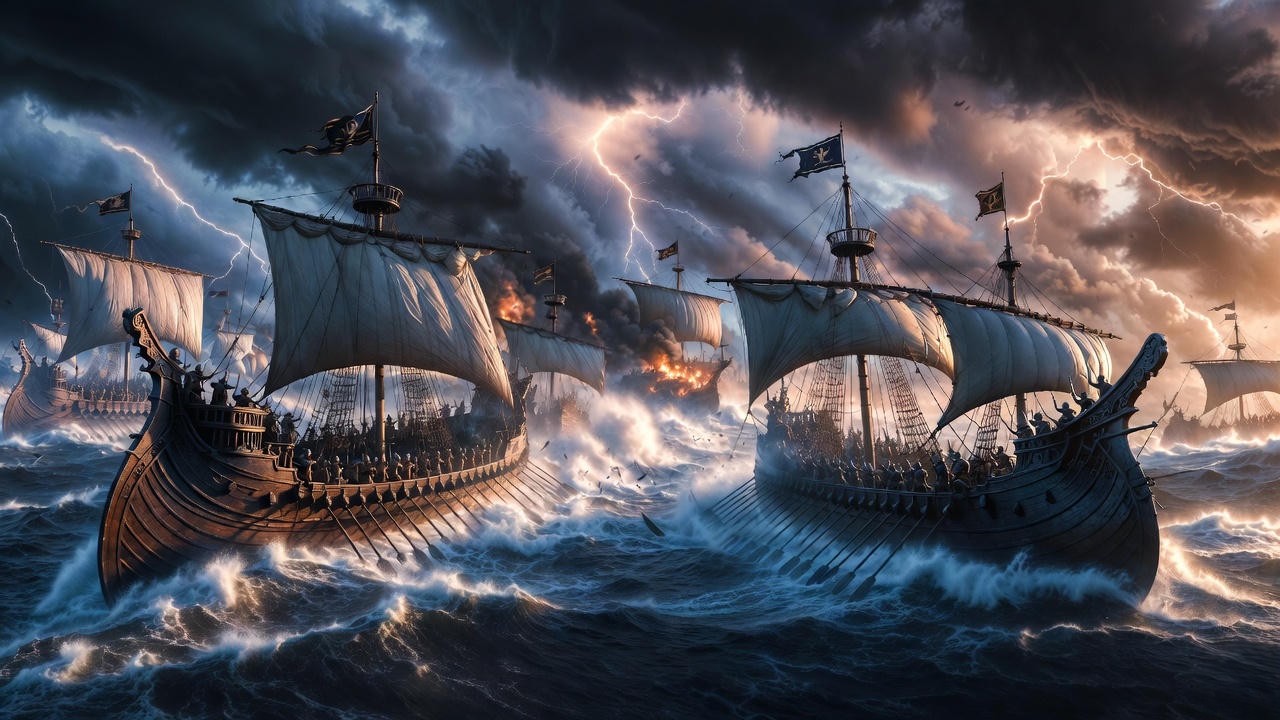
The decisive confrontation came at the Battle of Actium (2 September 31 BC). Contrary to Octavian’s propaganda, Actium was not a great naval victory but a tactical withdrawal by Antony and Cleopatra. Their forces were already weakened by desertions and supply problems.
Antony and Cleopatra fled to Alexandria. When Octavian’s forces closed in during the summer of 30 BC, Antony, believing Cleopatra dead, fell on his sword. Cleopatra, after failed negotiations with Octavian, famously took her own life—most likely by asp bite—on 12 August 30 BC.
How Shakespeare Found Mark Antony: Sources and Influences
Primary Source – Plutarch’s Life of Antony
Shakespeare’s main source for both Julius Caesar and Antony and Cleopatra was Plutarch’s Parallel Lives, specifically “The Life of Antony,” translated into English by Sir Thomas North (1579 edition). North’s Plutarch is vivid, dramatic, and rich in anecdote—qualities Shakespeare amplified.
Notable moments Shakespeare took almost verbatim from North include:
- Cleopatra’s arrival on the Cydnus River (“The barge she sat in…”)
- Antony’s comment about Cleopatra: “She was cunning past man’s thought”
- The lovers’ suicides and final words
However, Plutarch wrote as a moral philosopher. He portrays Antony as a man of great gifts destroyed by luxury and passion—a cautionary tale. Shakespeare, by contrast, creates a more sympathetic, tragic figure.
Other Influences: Appian, Dio Cassius, and Elizabethan Attitudes
Shakespeare may also have consulted Appian’s Civil Wars and Dio Cassius’s Roman History, both of which emphasize Antony’s military prowess and political ambition. Elizabethan audiences, meanwhile, were fascinated by the exoticism of Egypt and the grandeur of Rome. Cleopatra was often depicted as a dangerous temptress, a stereotype Shakespeare both uses and transcends.
Mark Antony in Shakespeare’s Antony and Cleopatra: The Dramatic Transformation
The Tragic Hero vs. the Historical Politician
The historical Mark Antony was a shrewd, ambitious, and often ruthless politician and general. Ancient sources (especially Octavian’s propaganda machine) paint him as a man who squandered Roman dignity on Eastern luxuries and allowed himself to be dominated by a foreign queen.
Shakespeare’s Antony, however, is a far more complex and human figure. He is a man of towering charisma and martial prowess who finds himself tragically torn between two worlds: the austere, duty-bound Roman ideal and the sensual, boundless world of Egypt. Shakespeare gives Antony an inner life, self-doubt, and a sense of loss that the historical record barely hints at.
This transformation is central to the play’s power. The real Antony was a survivor who played the game of power with skill; Shakespeare’s Antony is a romantic idealist whose very greatness makes his fall inevitable.
Key Character Changes and Additions
- Internal conflict and self-doubt Historical Antony rarely expressed regret or self-recrimination. Shakespeare’s Antony, by contrast, is constantly berating himself:
“I have lost my way for ever… I have a man’s mind, but a woman’s might.” (Act III, Scene 11) This psychological depth makes him relatable to modern audiences.
- The Roman vs. Egyptian dichotomy Shakespeare amplifies the cultural contrast between Rome (duty, discipline, empire) and Egypt (pleasure, emotion, excess). While the historical Antony certainly embraced Eastern customs, Shakespeare turns this into a cosmic opposition.
- Aging and decline Both the historical and dramatic Antony were in their late 40s/early 50s during the events of the play. Shakespeare uses this to explore themes of aging, fading glory, and the tragedy of a great man past his prime.
Famous Scenes That Deviate from History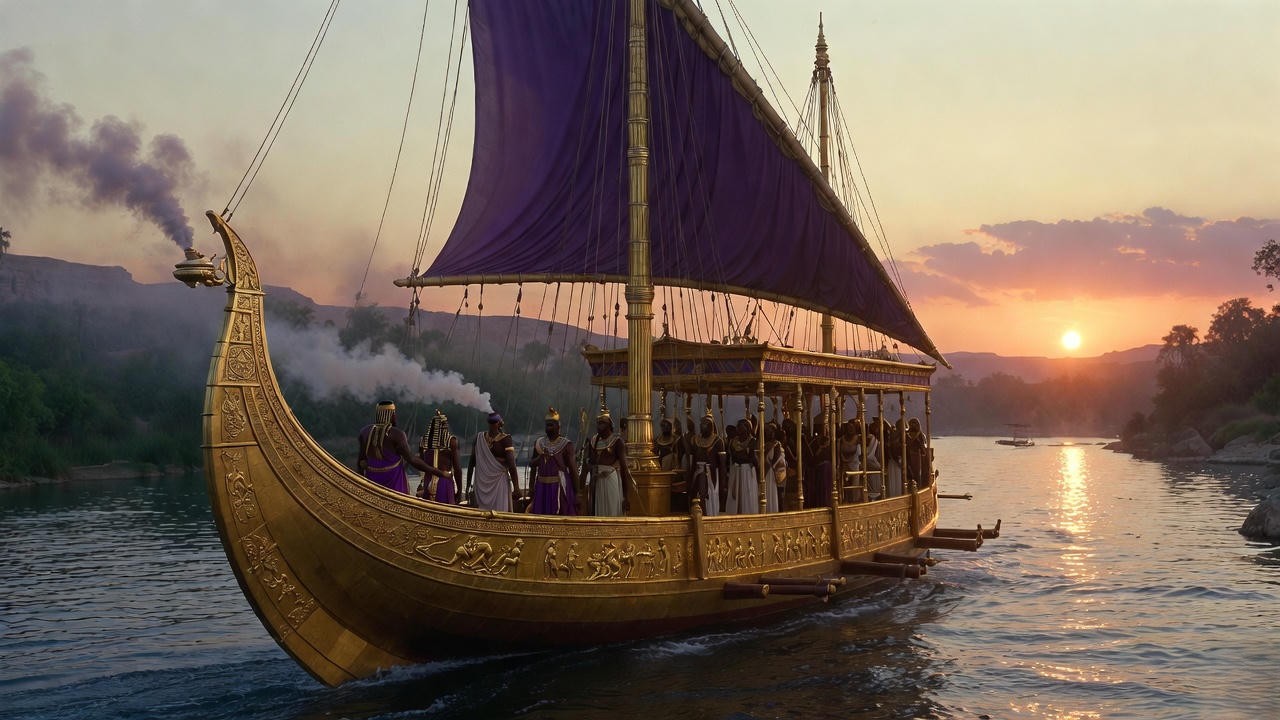
- Cleopatra’s barge on the Cydnus Shakespeare’s most famous description (“The barge she sat in, like a burnish’d throne…”) is lifted almost word-for-word from North’s Plutarch. Yet the historical meeting was a diplomatic event, not the romantic spectacle Shakespeare makes it.
- Antony’s suicide In history, Antony stabbed himself after hearing (falsely) that Cleopatra was dead. Shakespeare keeps this but adds layers of pathos: Antony’s despair, his final embrace of Eros, and Cleopatra’s arrival just in time to witness his death.
- Cleopatra’s death The historical Cleopatra most likely died by asp bite (though some sources suggest poison). Shakespeare turns this into one of the most majestic suicide scenes in literature, with Cleopatra’s final speech (“Give me my robe, put on my crown…”) achieving almost divine grandeur.
Mark Antony in Julius Caesar: A Very Different Portrait
The Political Opportunist of Act I–III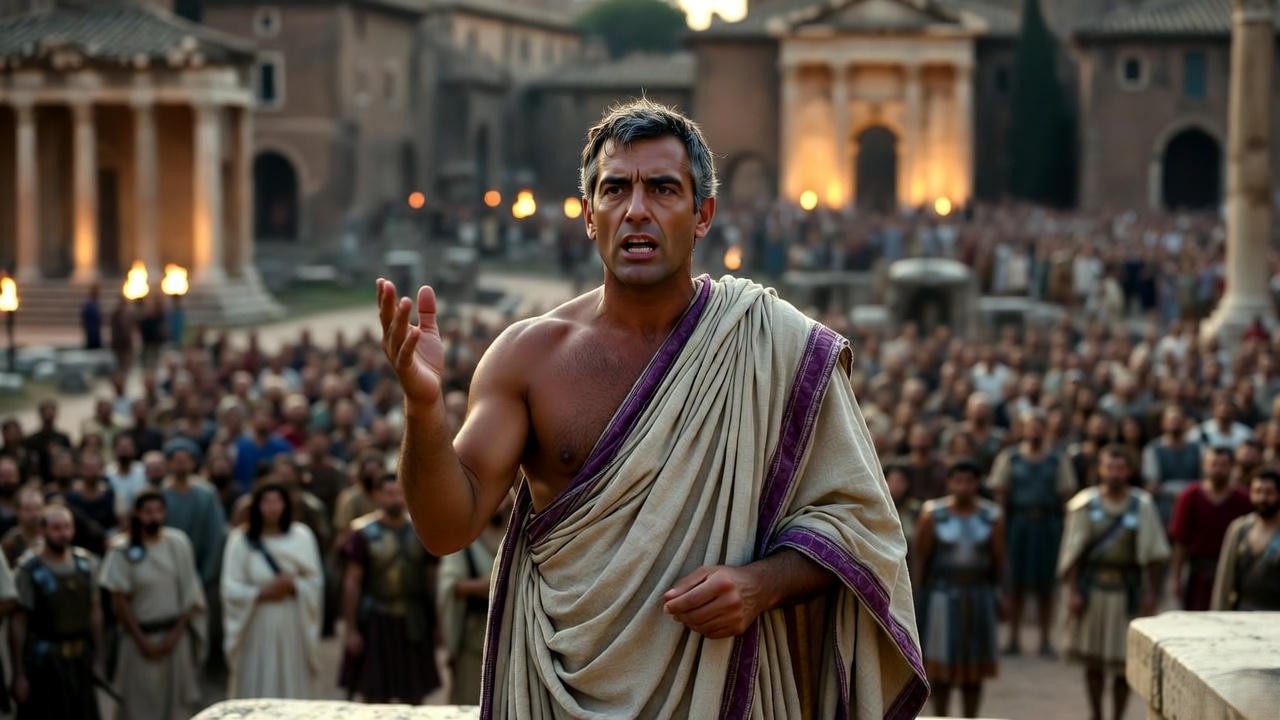
In Julius Caesar, Antony is introduced as a loyal lieutenant to Caesar, dismissed by Brutus as “but a limb of Caesar.” Yet after the assassination, he reveals his true cunning. His famous funeral oration (“Friends, Romans, countrymen…”) is a masterpiece of political manipulation, turning the mob against the conspirators without ever directly accusing them.
This Antony is cold, calculating, and dangerous—closer to the historical figure than the lovesick hero of the later play.
From Politician to Avenger
After the funeral, Antony joins the Second Triumvirate and oversees the proscriptions. In Act IV, Scene 1, he coldly bargains over the names of those to be executed—including his own nephew. Shakespeare does not shy away from Antony’s ruthlessness here.
How the Two Plays Complement Each Other
Julius Caesar shows Antony as a rising star; Antony and Cleopatra shows him in free fall. Together, the two plays form a tragic arc: from the cunning politician who avenges Caesar to the broken man who loses everything for love.
Historical Accuracy vs. Dramatic Necessity – What Shakespeare Changed and Why
| Event / Aspect | Historical Record | Shakespeare’s Version | Reason for Change |
|---|---|---|---|
| Antony’s character | Ruthless, opportunistic, militarily competent | Charismatic, passionate, self-divided | Creates tragic hero |
| Cleopatra’s role | Skilled politician, strategist | “Serpent of old Nile,” embodiment of infinite variety | Heightens romantic tragedy |
| Battle of Actium | Strategic retreat after losses | Dramatic naval defeat | Allows grand spectacle and tragic irony |
| Antony’s suicide | Stabs himself believing Cleopatra dead | Same, but with added emotional weight | Maximizes pathos |
| Cleopatra’s death | Likely poison or asp bite | Asp bite, staged as regal and transcendent | Creates iconic final scene |
Shakespeare’s changes were not errors but deliberate artistic choices. He softened Antony’s brutality and amplified his passion to create a universal tragedy about love, duty, and the cost of greatness.
Cleopatra: Historical Queen vs. Shakespeare’s “Serpent of Old Nile”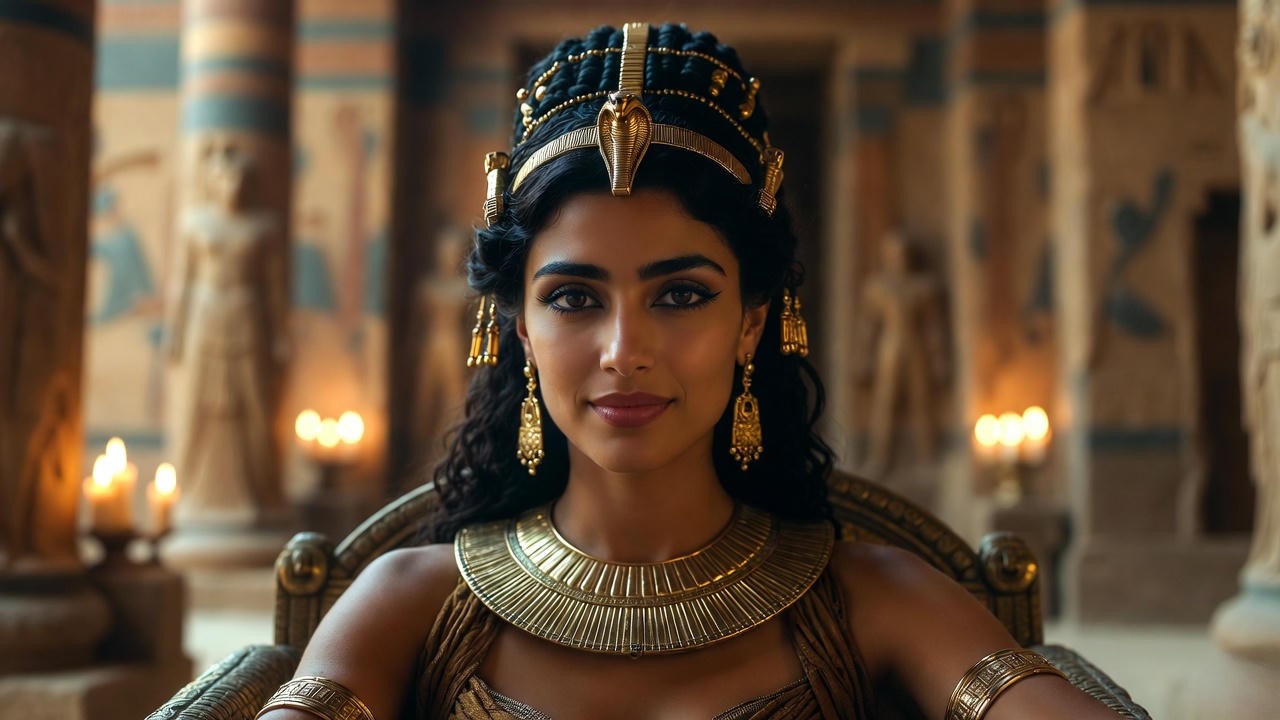
Cleopatra VII Philopator (69–30 BC) was no mere seductress. She was the last active ruler of the Ptolemaic Kingdom of Egypt, a brilliant polyglot who spoke nine languages, a skilled diplomat, and a shrewd political operator who kept Egypt independent longer than any of her predecessors.
Historical sources (Plutarch, Dio Cassius, Josephus) portray her as a woman of formidable intellect who used charm, wealth, and strategic alliances to maintain power. Her relationship with Antony was both romantic and pragmatic: Egypt needed Rome’s protection, and Antony needed Egypt’s resources.
Shakespeare, however, creates a Cleopatra who transcends history. She is “cunning past man’s thought,” mercurial, contradictory, and utterly captivating. Her “infinite variety” is not just a poetic flourish—it is the play’s central metaphor. She is by turns playful, regal, cruel, loving, and self-dramatizing. Shakespeare gives her agency and complexity that earlier traditions (which often reduced her to a temptress) denied.
This transformation is one of Shakespeare’s greatest achievements: he turns a historical queen into one of the most unforgettable female characters in Western literature.
Why Antony and Cleopatra Remains One of Shakespeare’s Greatest Achievements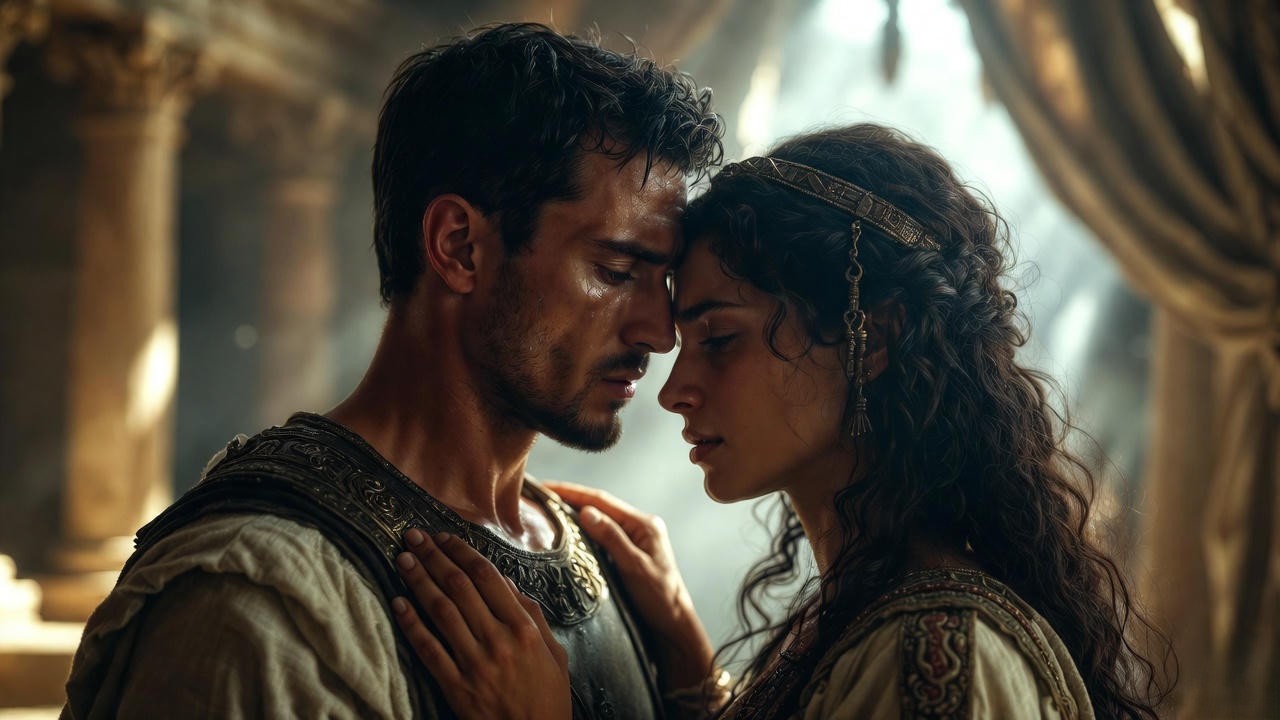
Antony and Cleopatra (written around 1606–1607) is often considered Shakespeare’s most mature tragedy. Unlike Hamlet or King Lear, it offers no single villain and no clear moral lesson. Instead, it presents a world of moral ambiguity, where passion and politics are equally destructive.
Key reasons for its enduring greatness:
- Epic scope and poetic richness The play spans the entire Mediterranean world, from Rome to Egypt to Parthia. Shakespeare’s language reaches new heights of sensuousness and grandeur.
- Tragic inevitability The lovers’ doom is never in doubt. Their very greatness—Antony’s martial glory, Cleopatra’s infinite variety—makes their destruction all the more poignant.
- Exploration of universal themes Love vs. duty, empire vs. desire, aging vs. vitality, East vs. West—the play speaks to every era.
Critics have called it Shakespeare’s “most difficult” tragedy because it refuses easy judgments. Antony and Cleopatra are neither heroes nor villains; they are human beings who pay the ultimate price for following their hearts.
Expert Insights & Modern Perspectives
Leading Shakespeare scholars have long praised Antony and Cleopatra for its psychological depth and emotional complexity:
- A.C. Bradley (1904): Described the play as “the most splendid of Shakespeare’s tragedies” and noted that Antony and Cleopatra are “the most splendid lovers in literature.”
- Janet Adelman (1973): In The Common Liar, she argued that Cleopatra’s “infinite variety” represents a challenge to patriarchal order, making her one of Shakespeare’s most subversive female characters.
- Coppélia Kahn (1981): Highlighted the play’s exploration of masculinity in crisis, as Antony struggles between Roman virtus and Egyptian softness.
On stage, Antony has been portrayed by legends such as Laurence Olivier (1951), Patrick Stewart (1974), Alan Howard (1978), and Ralph Fiennes (2007). Each interpretation reveals new facets of the character—whether the aging warrior, the broken lover, or the man who cannot reconcile his divided loyalties.
Today, the play resonates powerfully in an era of global power struggles, cultural clashes, and the tension between personal desire and public responsibility.
Frequently Asked Questions (FAQs)
Is Mark Antony the same as Anthony Mark? Yes—both refer to Marcus Antonius. The name “Anthony Mark” is simply a common reversal or typo in search queries.
Was Cleopatra really in love with Mark Antony? Historical evidence suggests their relationship was both romantic and politically strategic. They had three children together and married in Egyptian rites, indicating genuine affection, though passion was intertwined with power.
Did Shakespeare invent the “infinite variety” line? No—it comes directly from North’s translation of Plutarch, though Shakespeare elevates it into one of the play’s most famous phrases.
How historically accurate is Antony and Cleopatra? Shakespeare follows Plutarch closely for major events and many details, but he compresses time, simplifies politics, and greatly amplifies emotional and psychological depth for dramatic effect.
What is the best modern production to watch? Highly recommended versions include the 1972 film directed by and starring Charlton Heston, the 1981 BBC production with Janet Suzman and Richard Johnson, and the 2018 National Theatre production with Ralph Fiennes and Sophie Okonedo.
The real Mark Antony was a formidable Roman general and politician whose ambition and ruthlessness helped shape the end of the Roman Republic. Shakespeare’s Antony, by contrast, is a tragic hero whose passion and inner conflict make him timeless.
By transforming a historical figure into a deeply human character, Shakespeare created one of the greatest love stories in literature—one that continues to move audiences with its poetry, its complexity, and its unflinching honesty about the human heart.