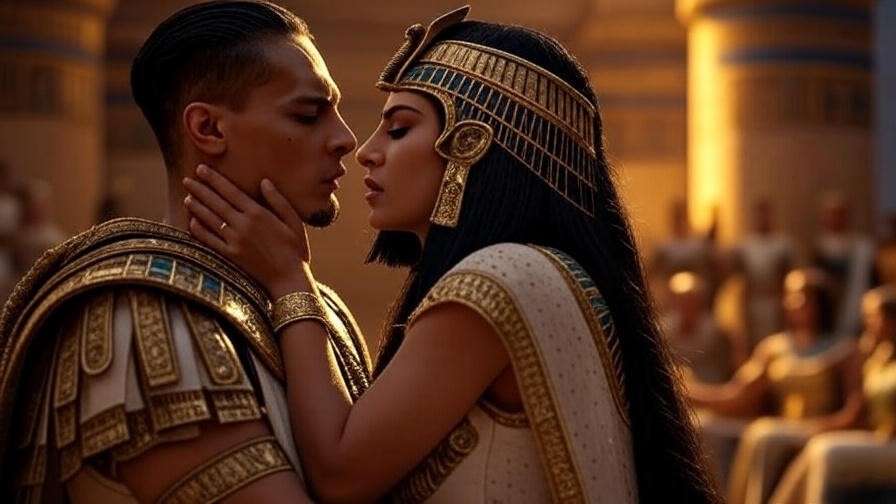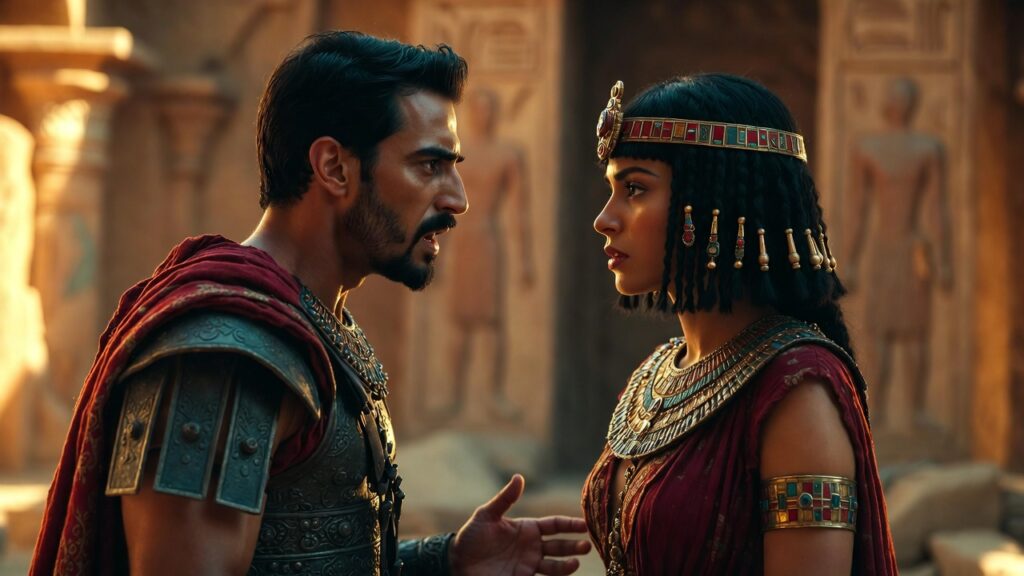
In William Shakespeare’s Antony and Cleopatra, few moments capture the explosive tension between love and obligation as powerfully as Act 1 Scene 3. Here, the Egyptian queen Cleopatra confronts Mark Antony with a whirlwind of jealousy, sarcasm, and vulnerability as he announces his departure for Rome. The scene opens with Cleopatra’s calculated instructions to her attendants, quickly escalates into a heated quarrel, and ends in a poignant farewell that hints at the tragedy to come.
Antony and Cleopatra Act 1 Scene 3 stands as a microcosm of the entire play’s central conflict: the irreconcilable pull between personal passion and public duty. Cleopatra’s manipulative tactics reveal her fear of abandonment, while Antony’s insistence on returning to Rome underscores his divided loyalties. This emotionally charged exchange not only deepens our understanding of the protagonists but also introduces core themes like manipulation in love, the clash between East and West, and the destructive power of desire. Whether you’re a student preparing for exams, a teacher crafting lessons, or a Shakespeare enthusiast seeking deeper insight, this comprehensive guide provides a detailed summary, close analysis, key quotes, thematic exploration, and practical study tips to help you master this pivotal scene.
Scene Summary: A Line-by-Line Breakdown
The scene is set in another room of Cleopatra’s palace in Alexandria. It begins with Cleopatra anxiously inquiring about Antony’s whereabouts, instructing her attendant Alexas to find him. She devises a manipulative plan: if Antony appears sad, report that she is dancing; if merry, say she is suddenly sick. This establishes her strategy of emotional provocation to retain control.
Charmian, one of her ladies, advises a more submissive approach—”In each thing give him way, cross him nothing”—but Cleopatra dismisses it as foolish, believing opposition keeps love alive. When Antony enters, Cleopatra immediately feigns illness and sullenness, lamenting his past infidelity to Fulvia and questioning his loyalty.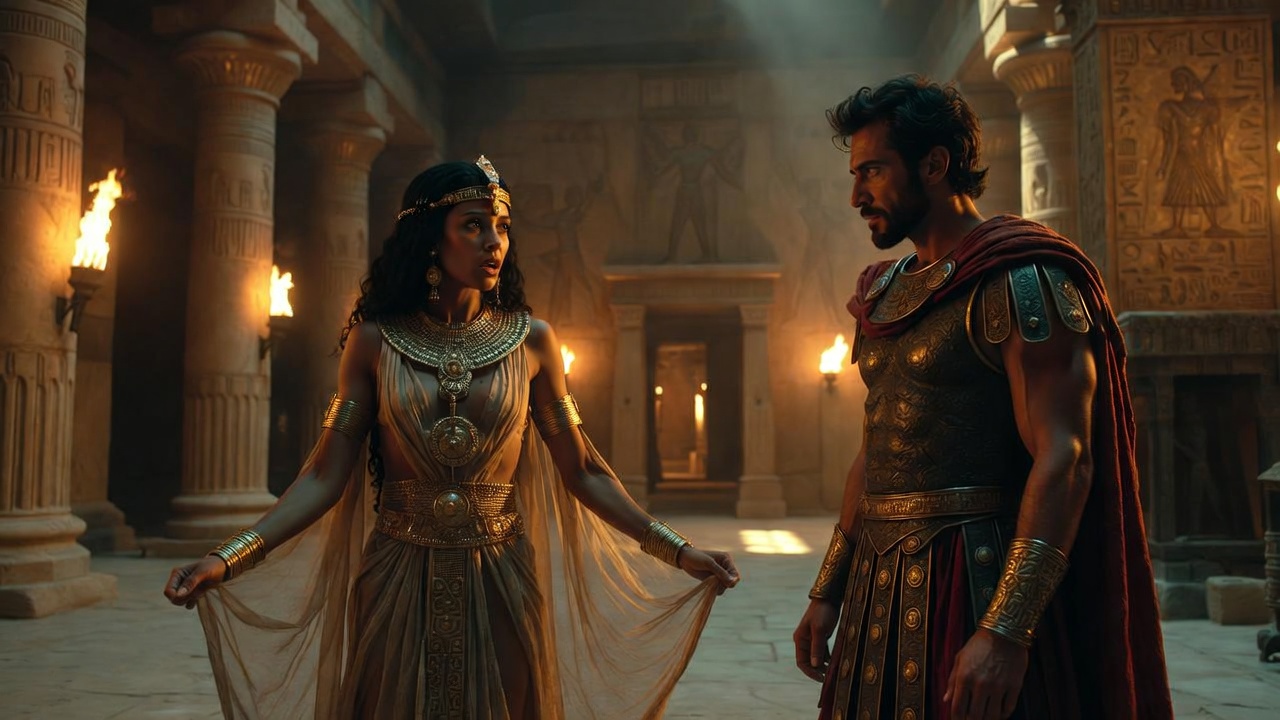
Antony attempts to explain his departure: political turmoil in Rome, with Sextus Pompey threatening the triumvirate, civil swords shining over Italy, and factions shifting. He reveals Fulvia’s death as a key reason, hoping it reassures Cleopatra that his obligations are genuine rather than a pretext to leave her.
Cleopatra responds with sarcasm and irony: “Can Fulvia die?” She mocks his lack of visible grief and fears her own fate will mirror Fulvia’s—betrayed and forgotten. She urges him to weep for Fulvia and “play one scene / Of excellent dissembling,” accusing him of hypocrisy.
Antony grows frustrated, swearing by his sword, but Cleopatra continues her barbs, calling him a “Herculean Roman” whose anger suits him poorly. Finally, she relents, acknowledging his honor calls him away: “your honour calls you hence; / Therefore be deaf to my unpitied folly.” She blesses his journey with victory.
The scene closes with Antony’s paradoxical farewell: “Our separation so abides, and flies, / That thou, residing here, go’st yet with me, / And I, hence fleeting, here remain with thee.” They exit together, underscoring the emotional unity despite physical parting.
This progression—from playful manipulation to raw vulnerability—structures the scene dramatically, building tension and revealing character depths that propel the tragedy forward.
In-Depth Character Analysis
Cleopatra: The Queen of Infinite Variety in Manipulation and Vulnerability
Cleopatra dominates this scene with her theatricality and emotional range. Her opening scheme with Alexas showcases her strategic mind: she uses feigned moods to provoke Antony, ensuring he remains emotionally invested. Critics often note this as evidence of her “infinite variety,” a phrase Enobarbus later uses to describe her ability to shift personas effortlessly.
Yet beneath the performance lies genuine insecurity. Her repeated references to Fulvia—”Now I see, / In Fulvia’s death how mine received shall be”—expose her fear of being discarded once inconvenient. This vulnerability humanizes her, transforming her from mere seductress into a complex woman who wields manipulation as both weapon and shield against loss.
Her final shift to gracious acceptance—”And all the gods go with you!”—reveals maturity and love. She recognizes duty’s call, even if it pains her, foreshadowing her tragic willingness to sacrifice for Antony later.
Mark Antony: The Divided Hero Torn Between Love and Duty
Antony enters conflicted, torn between his “full heart” for Cleopatra and Rome’s demands. He prioritizes passion initially but asserts Roman necessity: Pompey’s threat, civil strife, and Fulvia’s death demand action. His language reflects internal division—”my full heart / Remains in use with you”—suggesting his emotions stay in Egypt while duty pulls him away.
This scene highlights Antony’s tragic flaw: his inability to fully reconcile personal desire with public responsibility. His frustration with Cleopatra’s taunts (“You’ll heat my blood: no more”) shows passion overriding reason, a pattern that leads to his downfall.
Antony’s farewell paradox captures his essence: unity in separation, love transcending distance—yet it also hints at the impossibility of sustaining such division.
Supporting Characters: Charmian, Alexas, and Iras
Charmian’s pragmatic advice contrasts Cleopatra’s defiance, highlighting gender dynamics in the Egyptian court. Where Romans value stoic duty, Charmian suggests submission to secure love—a strategy Cleopatra rejects as weakness. Alexas and Iras serve as silent facilitators, emphasizing Cleopatra’s command and the performative nature of her court.
Key Themes Explored in Act 1 Scene 3
Passion vs. Duty (Love vs. Empire)
The scene crystallizes the play’s core opposition: Antony’s heart belongs to Cleopatra’s sensual Egypt, but his duty binds him to disciplined Rome. Egypt symbolizes indulgence, emotion, and personal fulfillment; Rome represents order, politics, and sacrifice. Antony’s departure forces this conflict into sharp relief, with his assurance that “my full heart / Remains in use with you” illustrating the impossibility of fully separating the two.
This theme extends to broader East-West tensions: Egypt’s fluidity challenges Rome’s rigidity, foreshadowing how passion undermines empire.
Manipulation and Performance
Cleopatra’s “excellent dissembling” dominates, turning love into theater. Her feigned illness, sarcastic jabs, and role-playing expose relationships as power struggles. Antony accuses her of provocation, yet he engages, revealing mutual performance. This theatricality questions authenticity: is their love genuine or staged?
Gender Roles and Power Dynamics
Cleopatra subverts traditional expectations, using emotional control rather than submission. Charmian’s advice reflects patriarchal norms, but Cleopatra’s agency—through wit and sexuality—challenges them. Antony’s masculinity is tested; his Roman honor clashes with Egyptian passion, highlighting how love emasculates in Roman eyes.
Mortality, Grief, and Foreshadowing
Fulvia’s death catalyzes the scene, symbolizing inevitable loss. Cleopatra’s ironic probing foreshadows her own fate—betrayed by Antony’s duty. The parting hints at ultimate separation and death, with grief woven into love’s fabric.
Important Quotes with Close Analysis
- “Eternity was in our lips and eyes, / Bliss in our brows’ bent…” (Cleopatra, lines 35–38) Recalling past bliss, Cleopatra uses hyperbole to contrast then and now. The imagery of eternity and heaven elevates their love, while accusing Antony of lying underscores betrayal.
- “Now I see, / In Fulvia’s death how mine received shall be.” (Cleopatra, lines 28–29) Ironic foresight; Cleopatra fears history repeating, blending jealousy with tragic prophecy.
- “Our separation so abides, and flies, / That thou, residing here, go’st yet with me…” (Antony, lines 104–106) Paradoxical antithesis captures metaphysical unity despite physical parting, blending passion and duty.
- “your honour calls you hence; / Therefore be deaf to my unpitied folly.” (Cleopatra, lines 99–100) Acknowledgment of Roman values; Cleopatra yields, showing love’s maturity.
These quotes employ Shakespeare’s devices—antithesis, metaphor, irony—to deepen emotional and thematic layers.
Historical and Literary Context
Shakespeare drew from Plutarch’s Lives, amplifying emotional drama over historical detail. Jacobean audiences viewed Egypt as exotic and decadent, Rome as disciplined—reinforcing stereotypes. Traditional criticism saw Cleopatra as temptress; modern feminist readings celebrate her empowerment through wit and agency.
Why This Scene Matters: Study Tips and Essay Insights
This scene is exam gold: common topics include love vs. duty, Cleopatra’s character, dramatic irony. Essay theses might argue: “Cleopatra’s manipulation in Act 1 Scene 3 reveals her vulnerability, making her tragedy inevitable.”
Act 1 Scene 3 stands as one of the most psychologically rich and dramatically concentrated moments in Antony and Cleopatra. In barely over one hundred lines, Shakespeare establishes the irreconcilable forces that will drive the tragedy forward: the intoxicating pull of personal passion against the relentless demands of political duty, the seductive power of theatrical manipulation in the service of love, and the fragile line between genuine emotion and calculated performance.
Cleopatra’s whirlwind of moods—from playful provocation to biting sarcasm to tender surrender—reveals a woman who is both supremely powerful and deeply vulnerable. Antony’s struggle to balance heart and honor foreshadows the catastrophic choices he will make later in the play. Their parting words, laced with paradox and mutual longing, encapsulate the central paradox of their relationship: they are most united precisely when they are forced apart.
This early scene does far more than advance the plot; it plants the emotional and thematic seeds that bloom into one of Shakespeare’s most complex tragedies. The clash between Egyptian sensuality and Roman discipline, the interplay of gender and power, the ever-present shadow of mortality—all are present here in miniature. Readers who return to this scene after finishing the play often discover new layers of irony and foreboding that were invisible on first reading.
Ultimately, Act 1 Scene 3 reminds us why Shakespeare remains unmatched in depicting the human heart under pressure. Love does not exist in a vacuum; it collides constantly with history, politics, honor, and death. When those collisions become irreconcilable, tragedy is inevitable.
Whether you are annotating the text for an essay, preparing to teach the scene, or simply seeking to appreciate its emotional and linguistic brilliance, this moment repays close attention. Reread it aloud. Notice how the rhythm shifts with each change in Cleopatra’s mood. Feel the weight behind Antony’s farewell. Then consider how these private lovers’ quarrels will eventually shake the foundations of empires.
Shakespeare gives us no easy answers—only the mesmerizing, heartbreaking spectacle of two extraordinary people trying, and failing, to have it all.
FAQs (Frequently Asked Questions)
1. What is the main conflict in Act 1 Scene 3 of Antony and Cleopatra? The central conflict is the tension between personal passion and public/political duty. Antony must leave Cleopatra to address crises in Rome (Pompey’s rebellion, civil unrest, Fulvia’s death), yet his heart remains with her in Egypt. Cleopatra fears abandonment and uses emotional manipulation to keep him tied to her, highlighting the irreconcilable demands of love versus empire.
2. How does Cleopatra manipulate Antony in this scene? Cleopatra employs a range of tactics: she feigns illness and sullenness, sarcastically questions his loyalty by referencing Fulvia, mocks his lack of grief, accuses him of hypocrisy, and provokes his anger—all to test his commitment and delay his departure. Her instructions to Alexas at the beginning (“If you find him sad, / Say I am dancing; if in mirth, report / That I am sudden sick”) show premeditated emotional strategy.
3. Why does Antony leave Egypt in Act 1 Scene 3? Antony leaves because of urgent political and military obligations in Rome: Sextus Pompey is gaining power and threatening the triumvirate, civil war looms, and Fulvia (his wife) has died. These events demand his presence and leadership as a Roman triumvir. He frames the departure as honorable duty rather than personal choice.
4. What does Fulvia’s death symbolize in this scene? Fulvia’s death serves as both a plot device (giving Antony a legitimate reason to return to Rome) and a powerful symbol. For Cleopatra, it foreshadows her own potential fate—being discarded or betrayed once she becomes inconvenient. It also represents the intrusion of Roman political reality into the lovers’ private world, reminding them (and the audience) that personal relationships cannot escape the consequences of power struggles.
5. How does this scene foreshadow the play’s ending? The scene is filled with tragic foreshadowing: Cleopatra’s fear that she will share Fulvia’s fate, Antony’s divided loyalties, the lovers’ paradoxical unity-in-separation (“Our separation so abides, and flies…”), and the repeated emphasis on honor, duty, and inevitable parting all point toward the catastrophic choices, betrayals, and mutual suicides that conclude the tragedy.
6. Is Cleopatra genuinely in love with Antony, or is their relationship mostly manipulation and power play? Shakespeare deliberately leaves this ambiguous—an aspect of the play’s greatness. Cleopatra’s manipulative behavior is undeniable, yet her vulnerability, her eventual gracious surrender to his duty, and her later willingness to die with him strongly suggest deep, authentic love beneath the performance. Most critics now view her actions as a complex blend of genuine passion, insecurity, political calculation, and theatrical instinct.
7. How does Act 1 Scene 3 compare to other famous Shakespearean love scenes? Unlike the lyrical idealism of Romeo and Juliet’s balcony scene or the destructive jealousy of Othello, this scene is more psychologically realistic and politically inflected. The lovers are mature, worldly, and already entangled in empire-scale consequences. Manipulation is mutual and theatrical rather than purely destructive or idealistic, making the scene feel uniquely adult and tragic.