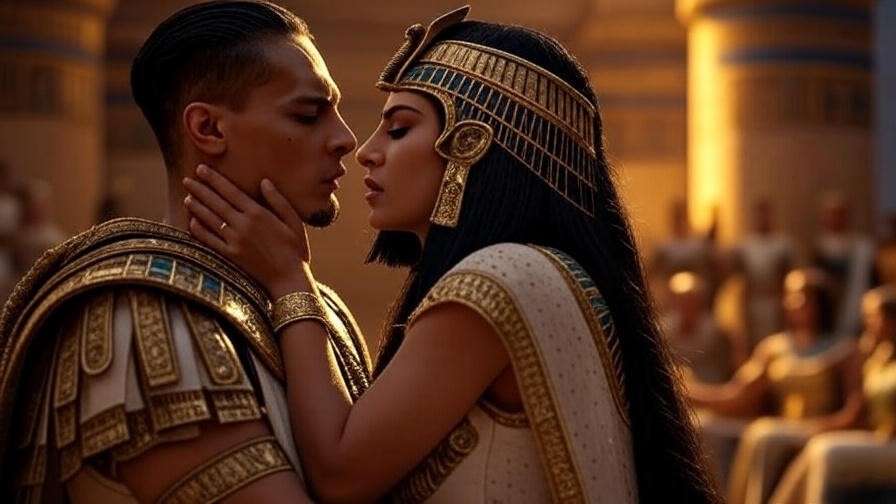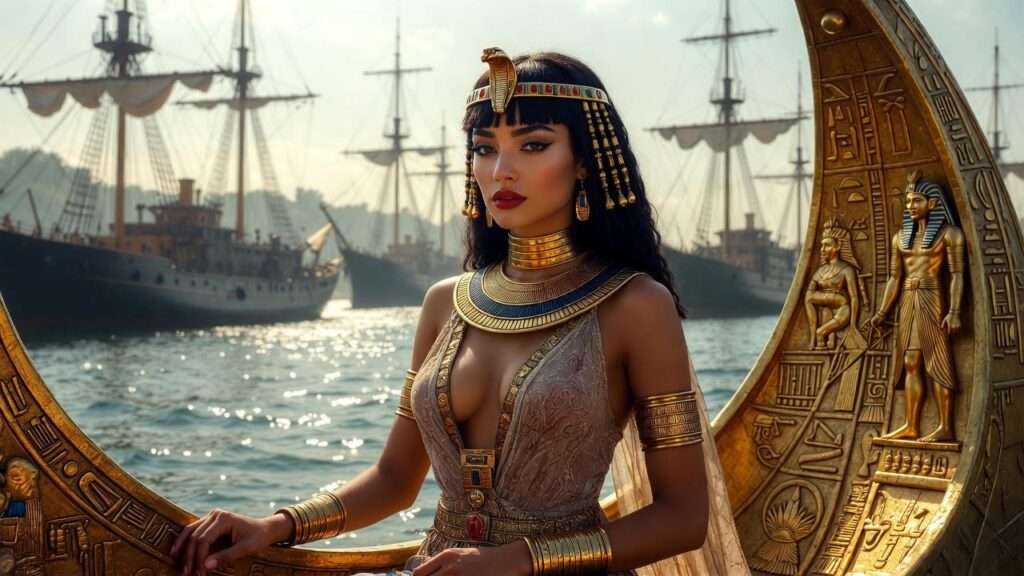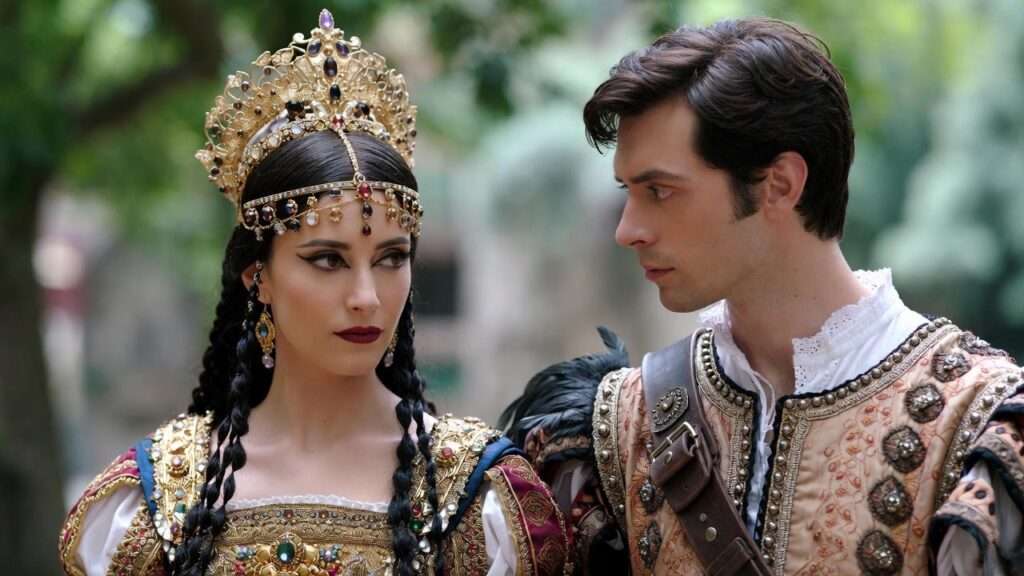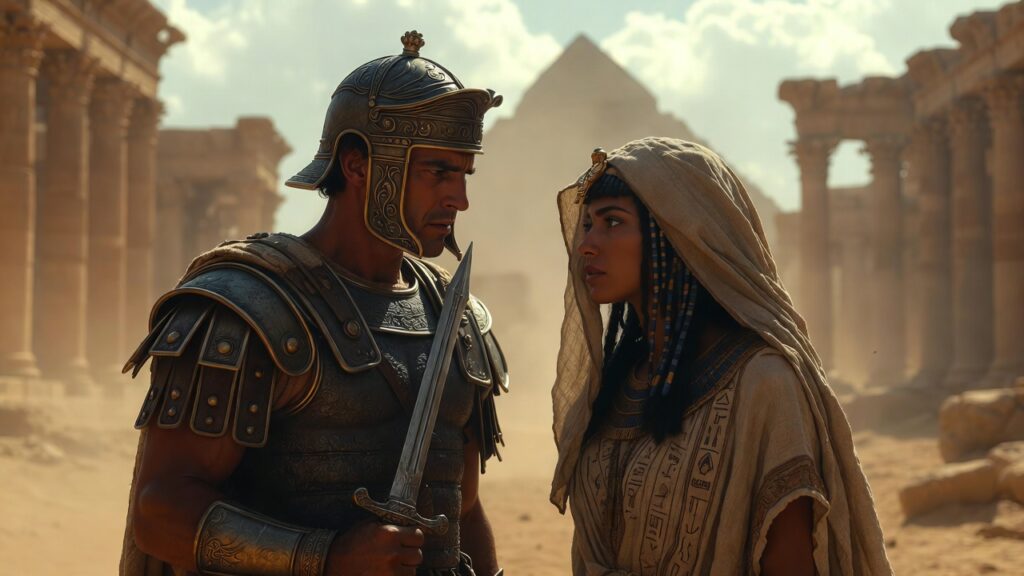
Imagine a world where empires rise and fall not on the battlefield alone, but in the fevered embrace of two lovers who choose passion over power. In the opening lines of William Shakespeare’s Antony and Cleopatra, a Roman soldier laments: “Nay, but this dotage of our general’s / O’erflows the measure.” From the very first scene, Shakespeare plunges us into the heart of the conflict—Antony’s “dotage,” his overwhelming love for Cleopatra, which threatens to dissolve the foundations of Roman order. This is no ordinary tragedy; it is Shakespeare’s profound exploration of love versus duty, where personal desire collides with political obligation, leading to a downfall that is as transcendent as it is devastating.
Antony and Cleopatra (c. 1606–1607) draws from Plutarch’s Lives but transforms historical fact into poetic myth. Set in the turbulent years following Julius Caesar’s assassination, the play chronicles the final days of the Roman Republic and the rise of the Empire under Octavius Caesar. At its core lies the legendary romance between Mark Antony, one of Rome’s triumvirs, and Cleopatra VII, Queen of Egypt. Their relationship—intense, volatile, and all-consuming—drives the action, forcing Antony to navigate the irreconcilable worlds of Rome (duty, reason, empire) and Egypt (passion, pleasure, fluidity). The tragic downfall that ensues is not mere failure but a complex affirmation of human emotion in the face of cold ambition.
This Antony and Cleopatra analysis delves deeply into the play’s themes, characters, language, and enduring relevance. Whether you’re a student preparing for exams, a teacher seeking fresh insights, or a lover of Shakespeare eager for nuanced interpretation, this comprehensive guide offers more than surface summaries. It incorporates critical perspectives, close textual readings, and modern parallels to provide genuine value—helping you understand why this “problem tragedy” remains one of Shakespeare’s most challenging and rewarding works.
Historical and Literary Context
Shakespeare’s genius lies in how he adapts sources while infusing them with dramatic innovation.
Shakespeare’s Sources — Plutarch’s Influence and Creative Departures
Shakespeare primarily drew from Sir Thomas North’s 1579 translation of Plutarch’s Parallel Lives, specifically the “Life of Marcus Antonius.” Plutarch provides the historical skeleton: Antony’s alliance with Cleopatra, the Battle of Actium, their suicides. Yet Shakespeare expands dramatically—adding poetic grandeur, Enobarbus’s memorable barge speech, and Cleopatra’s mythic self-fashioning. Where Plutarch moralizes Antony’s decline as weakness, Shakespeare presents it ambiguously, inviting debate over whether love redeems or destroys.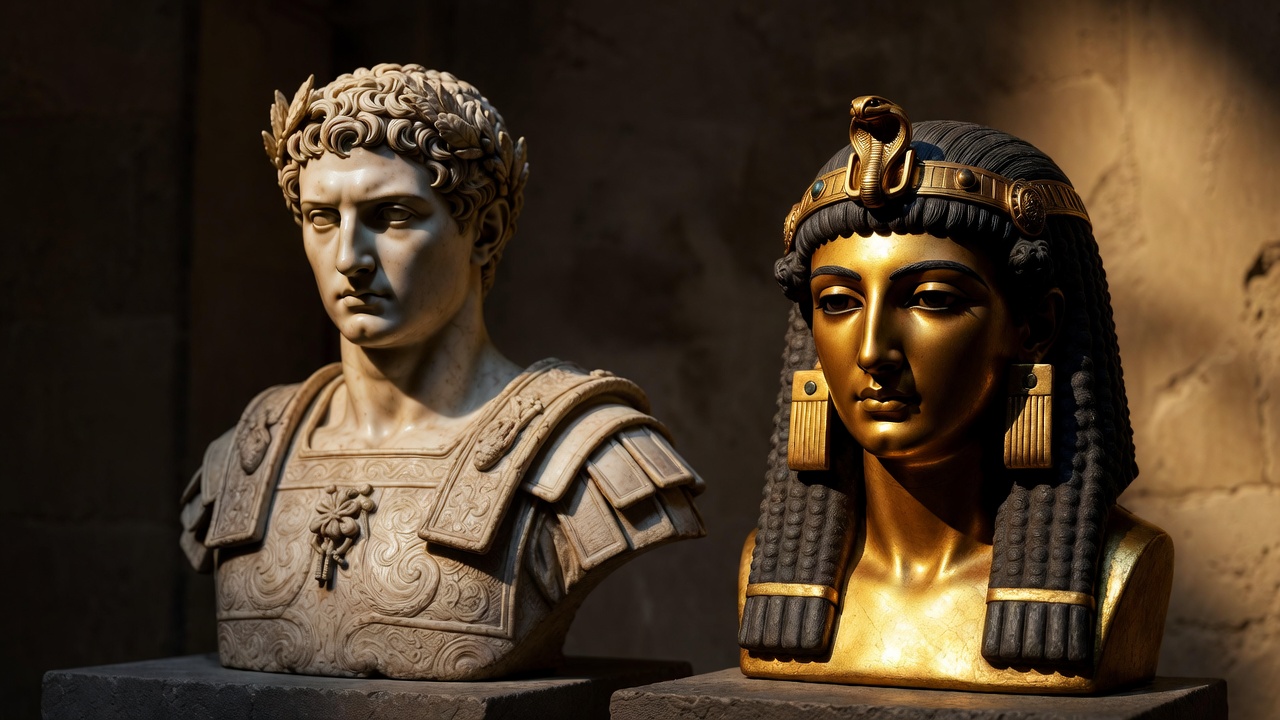
Placement in Shakespeare’s Career
As one of Shakespeare’s late tragedies (following King Lear and Macbeth), Antony and Cleopatra marks a shift from introspective heroes to panoramic scope. Unlike Hamlet’s internal torment or Othello’s jealousy-driven plot, this play spans continents, blending tragedy with history and romance. Its episodic structure—over 40 scenes—mirrors the chaotic empire, resisting neat Aristotelian unity.
Jacobean Relevance
Written during James I’s reign, the play echoes contemporary anxieties: empire-building, powerful women (echoing Elizabeth I), and the tension between private desire and public duty. Cleopatra’s performative queenship resonates with debates on gender and authority in Jacobean England.
The Central Conflict — Rome vs. Egypt
At the structural and thematic heart of Antony and Cleopatra lies an irreconcilable opposition: Rome versus Egypt. Shakespeare does not present this as a simple moral binary; rather, he constructs two opposing value systems, each compelling in its own right, and places Antony in the impossible position of trying to inhabit both.
Rome as Discipline, Reason, and Empire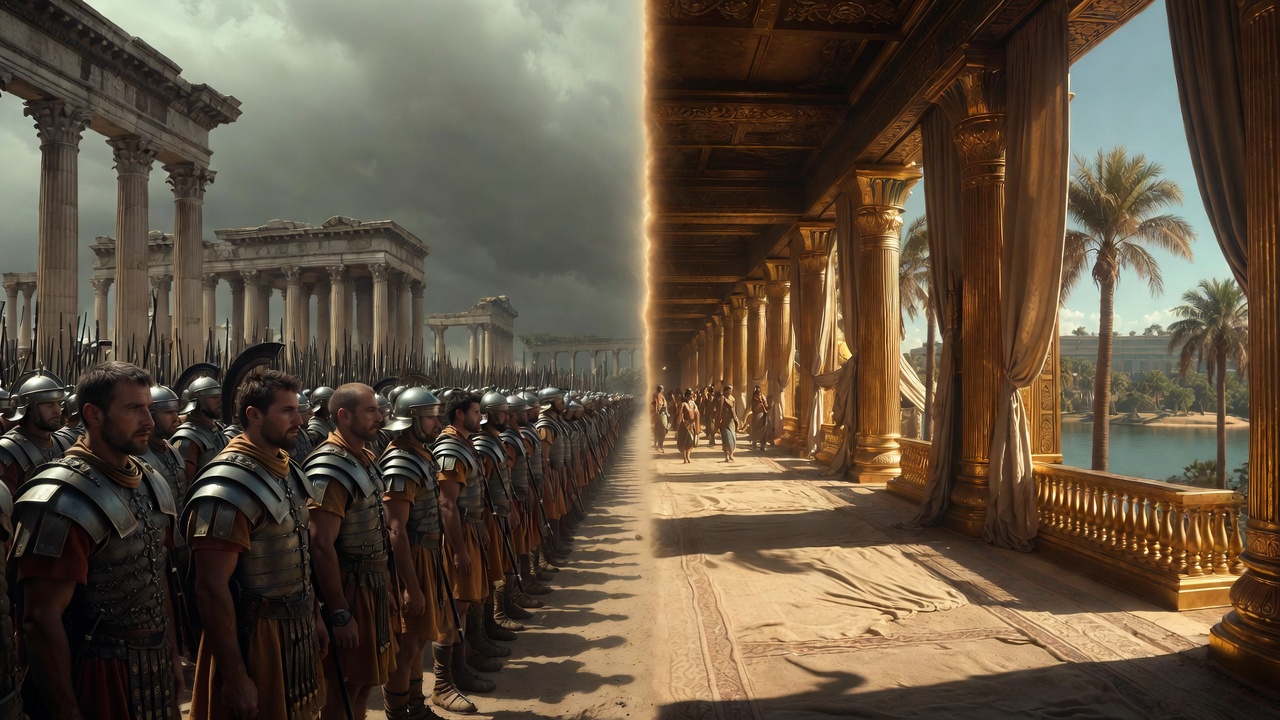
Rome represents order, duty, military discipline, and the relentless march of political ambition. Octavius Caesar embodies these qualities almost to a fault. From his first appearance, he speaks in measured, controlled language: “You shall find there / A man who is the abstract of all faults / That all men follow” (1.4). Octavius views Antony’s entanglement with Cleopatra as a dangerous lapse in Roman virtue—“dotage,” “idleness,” “pleasure.” His vision is imperial: a unified, rational world under one ruler. Rome’s strength lies in its ability to subordinate personal desire to public responsibility.
Yet Shakespeare subtly critiques this cold rationality. Octavius’s victory comes at the cost of humanity—he lacks warmth, humor, or genuine affection. His sister Octavia is offered as a political bride to Antony, a symbol of Roman duty over passion, yet the marriage fails precisely because it is devoid of desire.
Egypt as Passion, Pleasure, and Fluidity
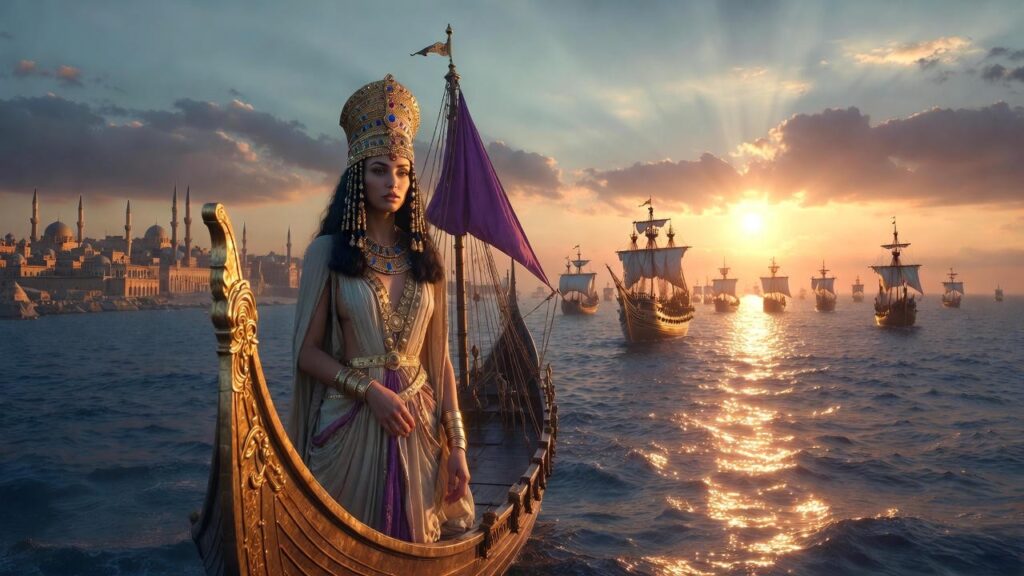
In stark contrast, Egypt is the realm of sensuality, excess, theatricality, and emotional abundance. Cleopatra’s Egypt is associated with the Nile—ever-changing, fertile, unpredictable. The play’s most lyrical language belongs to Egypt: Enobarbus’s famous description of Cleopatra on her barge (“The barge she sat in, like a burnish’d throne…” 2.2.190–226) transforms historical anecdote into mythic poetry. Egypt celebrates “infinite variety” (2.2.236), a phrase that encapsulates Cleopatra’s ability to reinvent herself endlessly.
Egypt is not merely decadent; it is a space of freedom from Roman restraint. Cleopatra and her court revel in role-playing, feasting, and erotic play—activities that Rome condemns as effeminate and weakening. Yet this fluidity also allows for genuine emotion and creativity, qualities absent in Octavius’s world.
Antony’s Internal Division
Antony is the tragic figure caught between these worlds. He is Rome’s greatest soldier—“the triple pillar of the world” (1.1.12)—yet he repeatedly abandons duty for love. His language reveals the split: he speaks of melting Rome in the Tiber when with Cleopatra, yet berates himself as “strumpet’s fool” when reminded of his Roman obligations (1.1.13; 1.4.31). His suicide is botched partly because he cannot fully commit to either identity—he dies a Roman soldier’s death, yet calls for Cleopatra’s forgiveness.
Critics such as Janet Adelman (in The Common Liar, 1973) argue that the play refuses to let us judge one side as wholly right. Rome wins historically, but Egypt triumphs poetically and emotionally.
In-Depth Character Analysis
Shakespeare’s characters in Antony and Cleopatra are among his most psychologically complex, resisting easy categorization.
Mark Antony — The Tragic Hero Divided
Antony begins as a larger-than-life hero, but love gradually erodes his Roman identity. His vacillations—returning to Cleopatra after political reconciliation with Caesar, fleeing Actium to follow her ship—are not mere weakness but symptoms of a deeper conflict. In death, however, he achieves a kind of reconciliation: “I am conqueror of myself” (paraphrased from 4.15). His final speech (“I am Antony yet,” 3.13.92–93) asserts identity even as he loses everything.
Antony’s tragedy is that he cannot be both the Roman conqueror and the Egyptian lover. His grandeur lies in the attempt.
Cleopatra — Shakespeare’s Most Complex Woman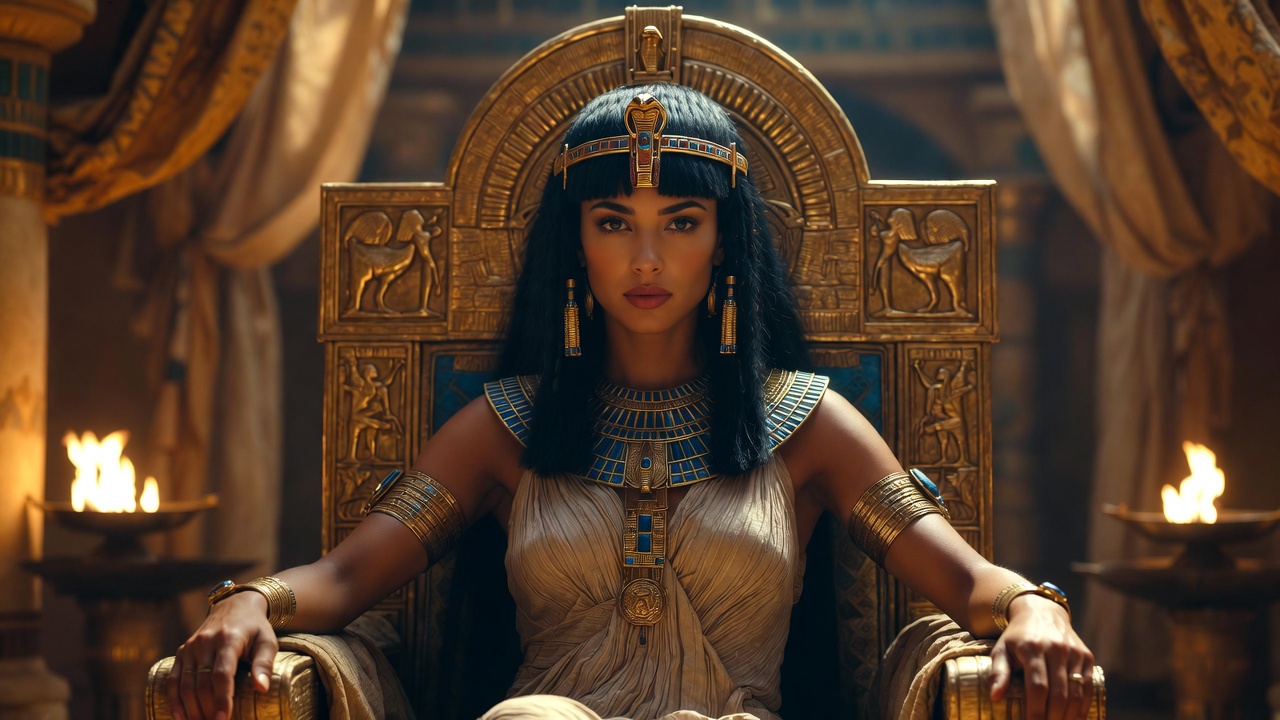
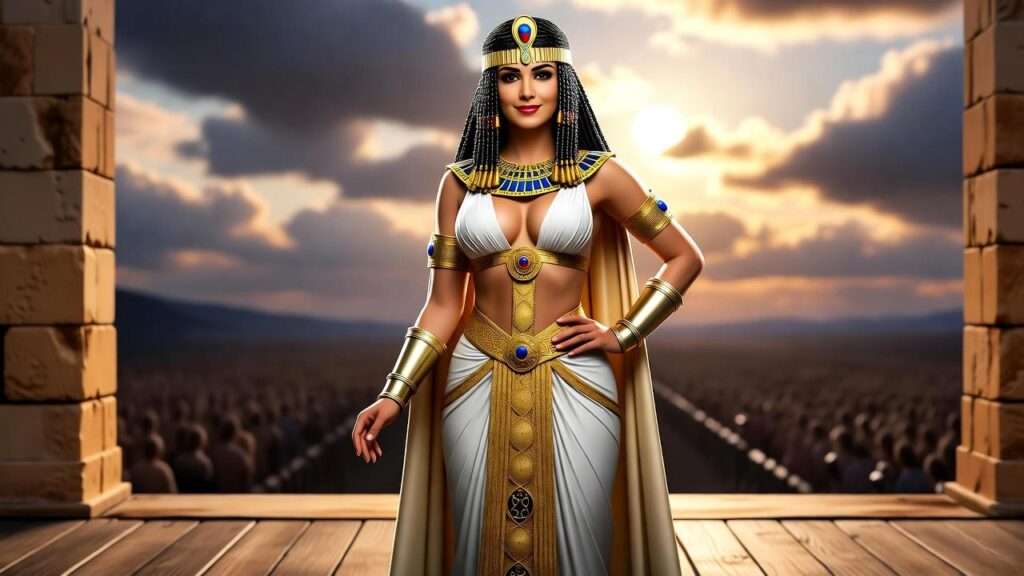
Cleopatra defies every stereotype of the femme fatale. She is politically astute (she negotiates with Caesar even after Antony’s death), sexually magnetic, and emotionally vulnerable. Her “infinite variety” is not mere caprice but a survival strategy in a male-dominated world. She performs queenship theatrically—costume changes, feigned deaths, grand rhetoric—yet her final act is one of profound authenticity.
Her suicide is the play’s climax of transcendence. Choosing the asp over captivity, she declares: “Give me my robe, put on my crown; I have / Immortal longings in me” (5.2.280–281). In death, she becomes eternal myth, outlasting Octavius’s empire.
Octavius Caesar — The Future Augustus
Octavius is the play’s necessary antagonist. He is disciplined, calculating, and victorious, yet emotionally barren. His coldness is most evident in his treatment of Octavia and in his final speech, where he reduces Cleopatra to “a lass unparalleled” (5.2.315)—a patronizing epitaph that fails to capture her complexity. Octavius wins the world but loses the moral and poetic high ground.
Supporting Characters and Their Roles
- Enobarbus: The voice of cynical Roman loyalty. His betrayal of Antony and subsequent death from shame (“I am alone the villain,” 4.6.30) humanizes the conflict. His barge speech remains one of Shakespeare’s most celebrated passages.
- Octavia: The embodiment of Roman female virtue—chaste, dutiful, silent. She is a tragic pawn, loved by neither husband nor brother.
- Charmian and Iras: Loyal attendants whose deaths mirror Cleopatra’s, underscoring the depth of devotion in Egypt.
Major Themes Explored
Love, Passion, and Decadence vs. Duty and Honor
Is Antony and Cleopatra’s love destructive lust or redemptive passion? The play refuses easy answers. Their relationship destroys empires, yet their final mutual devotion elevates them beyond politics.
Gender Roles and Power Dynamics
Cleopatra wields power through sexuality and performance in a world that punishes female agency. Antony’s “effeminization” (weeping, fleeing battle) is mocked by Romans, yet Shakespeare suggests that emotional openness is a form of strength.
Strategy, Manipulation, and Political Power
The play is filled with betrayals, marriages of convenience, and shifting alliances. Cleopatra’s political maneuvering is as skillful as Caesar’s, yet she is judged more harshly because of her gender.
Language and Imagery — Hyperbole, Paradox, and Poetry
Shakespeare employs extravagant rhetoric to match the protagonists’ grandeur. Hyperbole (“Let Rome in Tiber melt”) and paradox (“My desolation does begin to make / A better life,” 5.2.1–2) reflect the impossibility of containing their love within ordinary language.
Key Scenes and Close Readings
The Barge Speech (Enobarbus, 2.2) — Iconic Description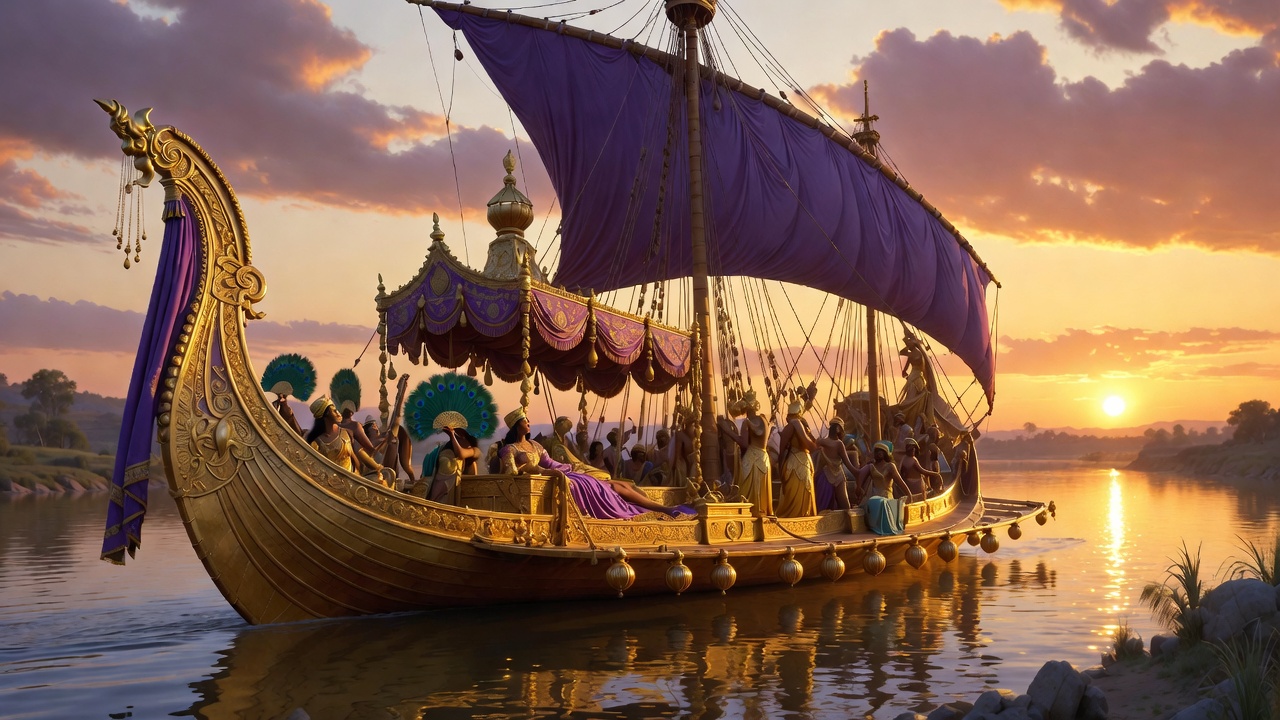
Enobarbus’s speech describing Cleopatra’s arrival on the Cydnus River is one of the most famous passages in all of Shakespeare. The language is lush and sensual, turning a historical moment into pure poetry. The speech does more than describe; it mythologizes Cleopatra, making her larger than life and foreshadowing her eventual apotheosis.
The Monument Scenes — Death and Transcendence (Act 5)
The final act takes place in Cleopatra’s monument, a symbolic space between life and death. Antony’s botched suicide and Cleopatra’s deliberate, regal death contrast sharply. Cleopatra’s final lines—“I am fire and air; my other elements / I give to baser life” (5.2.289–290)—suggest a spiritual transcendence that defies Roman materialism.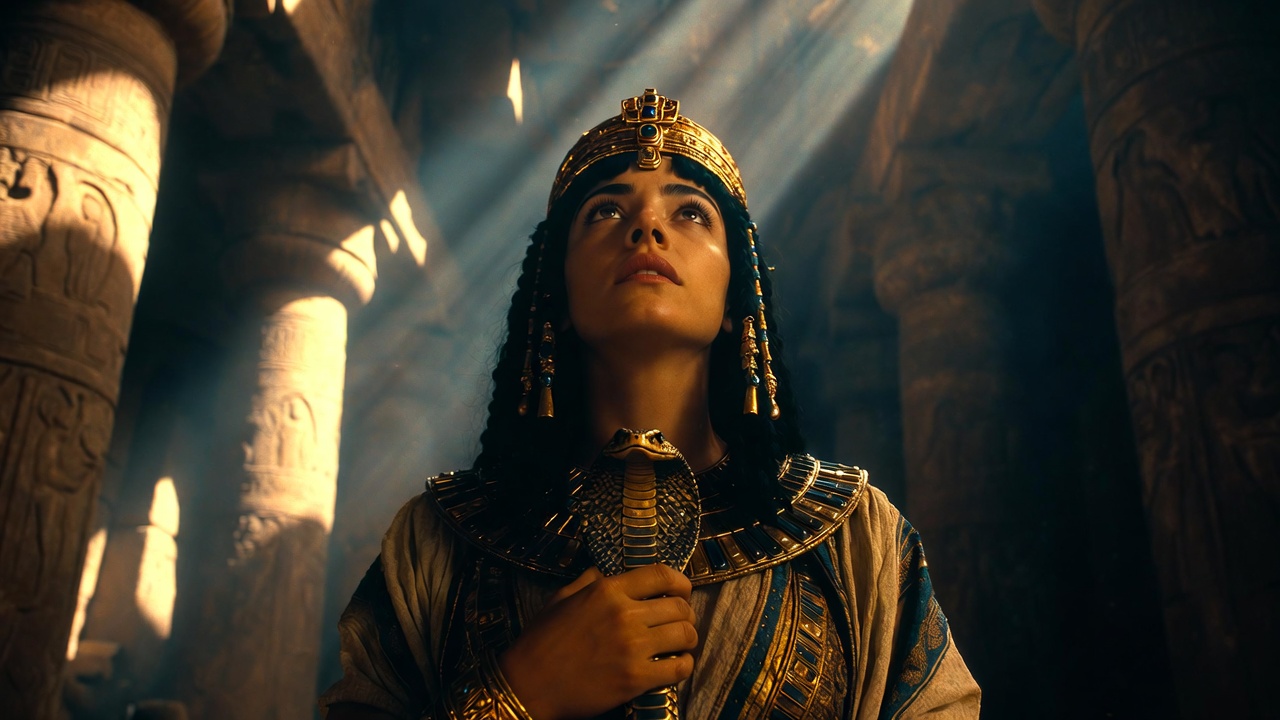
Actium and Aftermath — Turning Point of Defeat
The naval battle at Actium (3.10) is the play’s structural pivot. Antony’s decision to follow Cleopatra’s fleeing ship symbolizes the triumph of passion over duty—and seals their doom. The aftermath scenes show the psychological toll: Antony’s rage, Cleopatra’s fear, Enobarbus’s desertion.
Why Antony and Cleopatra Endures — Modern Relevance
Antony and Cleopatra feels strikingly contemporary. The clash between East and West, the tension between personal desire and public responsibility, the spectacle of powerful figures undone by scandal—all resonate in an age of political celebrity, leadership crises, and debates over gender and power.
Modern adaptations (the 1972 Charlton Heston film, the 2018 National Theatre production with Ralph Fiennes and Sophie Okonedo) highlight the play’s difficulty: its sprawling scope, rapid scene changes, and demand for actors who can convey both grandeur and vulnerability. Yet its central question—can love justify the destruction of duty?—remains timeless.
Study Tips and Essay Guidance
Common essay topics include:
- Is Antony and Cleopatra a tragedy, a romance, or something in between?
- To what extent is Cleopatra a feminist figure?
- How does Shakespeare use language to elevate the protagonists above their historical fates?
Tips for writing:
- Always support claims with precise quotations and line references.
- Engage with critics (Adelman on ambiguity, Bradley on Antony’s heroism, Loomba on postcolonial readings).
- Structure: introduction with thesis → thematic/character body paragraphs → conclusion that returns to the love/duty tension.
Key quotes to memorize:
- “Let Rome in Tiber melt, and the wide arch / Of the ranged empire fall!” (1.1.33–34)
- “Age cannot wither her, nor custom stale / Her infinite variety” (2.2.235–236)
- “I have / Immortal longings in me” (5.2.280–281)
Frequently Asked Questions (FAQ)
Is Antony and Cleopatra a true tragedy? Not in the classical sense. It lacks a single catastrophic flaw and features no cathartic restoration of order. Many scholars call it a “problem play” or “Roman tragedy” because the protagonists achieve a form of victory in death.
Does Cleopatra truly love Antony? Evidence points to yes—her grief, jealousy, and ultimate suicide suggest genuine devotion. Yet her theatricality keeps readers questioning whether love is ever “pure” in the play.
Why does Antony forgive Cleopatra repeatedly? His forgiveness reflects the depth of his passion and his own divided identity. He cannot fully condemn her without condemning the part of himself that loves her.
How does the play compare to Julius Caesar? Julius Caesar is more political and restrained; Antony and Cleopatra is emotional and extravagant. The earlier play ends in order; the later one ends in transcendent disorder.
What is the significance of suicide in the play? Suicide is portrayed as an act of agency and defiance. Both protagonists choose death over humiliation, transforming defeat into a kind of victory.
In the end, Antony and Cleopatra refuses to let us choose sides. Rome’s order triumphs historically, but Egypt’s passion triumphs poetically. Antony and Cleopatra’s downfall is not a cautionary tale of excess, but a celebration of human feeling in a world that demands its suppression. Their love, flawed and destructive though it may be, achieves something the Roman Empire never could: immortality through art.
Shakespeare leaves us with a final paradox: the greatest empire is built not of marble and legions, but of “fire and air”—the intangible elements of desire, imagination, and courage. In an age that still wrestles with the competing claims of heart and head, this masterpiece continues to speak with urgent clarity.
Thank you for reading this in-depth Antony and Cleopatra analysis. If you’re studying the play, writing about it, or simply revisiting it, I hope this guide has deepened your appreciation of Shakespeare’s most sumptuous tragedy.