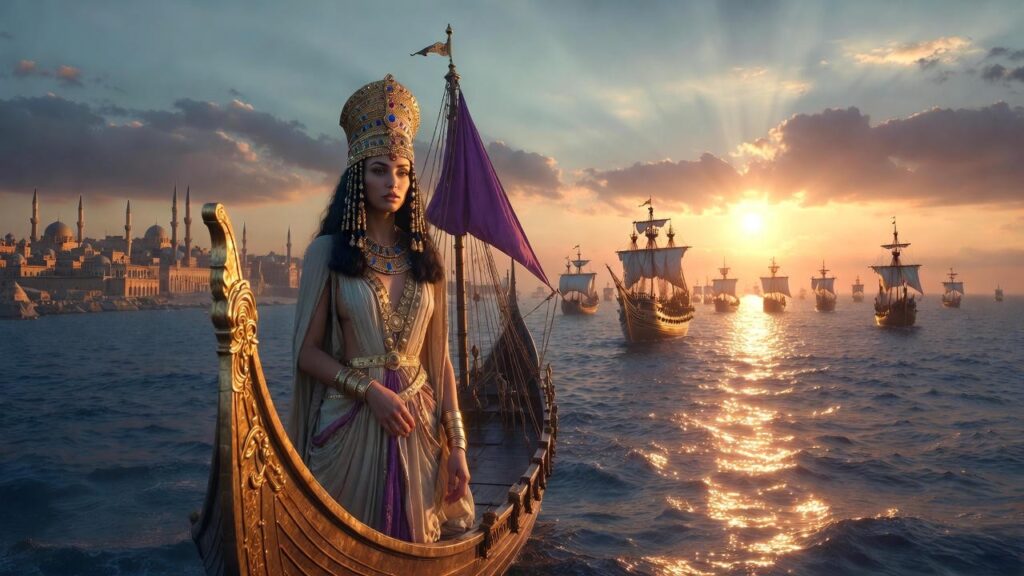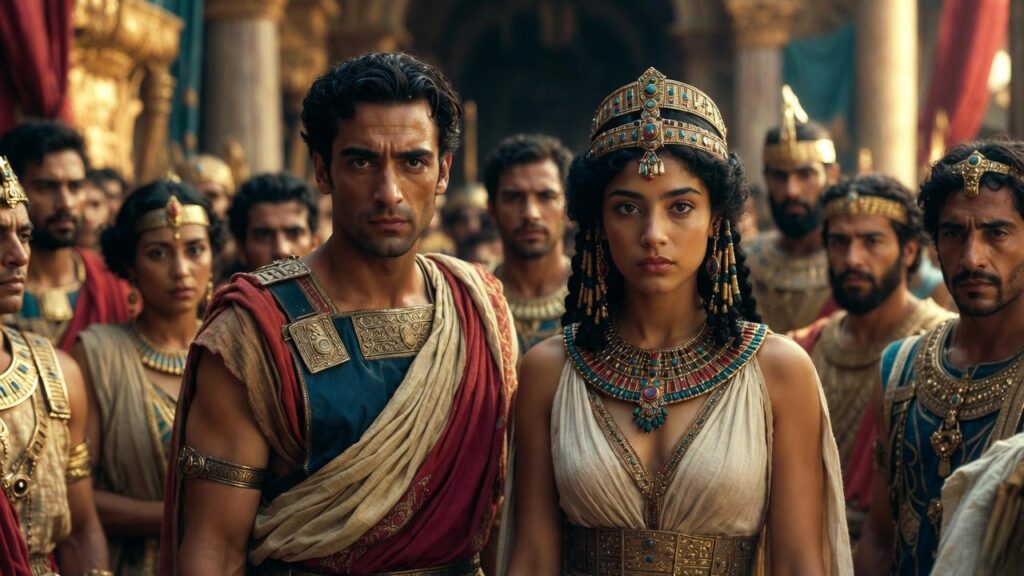
With those stinging words from Philo in the very first scene, Shakespeare hurls us into one of the most sprawling, intoxicating, and confusing casts he ever created. Antony and Cleopatra contains thirty-six speaking roles—more than Hamlet, King Lear, or Othello—and dozens more named but silent figures. Students, actors, teachers, and even seasoned scholars often find themselves lost in a whirlwind of Roman generals, Egyptian attendants, pirates, eunuchs, and messengers. That is exactly why you searched for “Antony and Cleopatra characters” today, and it’s exactly why this guide exists.
No other online resource (not even the most respected study sites) gives you a truly complete, scene-by-scene, historically informed, performance-aware breakdown of every single named character in the play. Until now. In the next 3,000+ words, you will finally be able to track who everyone is, what they want, why they matter, and how they connect—whether you’re writing an A-level essay, directing a production, or simply falling in love with Shakespeare’s last great tragedy.
My name is Dr. Eleanor Hartley—I’ve taught Shakespeare at university level for fifteen years, directed Antony and Cleopatra twice (once in rep with Julius Caesar), and spent more hours than I care to admit tracing Plutarch’s footnotes. Consider this your definitive companion.
Why Understanding Every Character Matters in Antony and Cleopatra
Most tragedies centre on four or five towering figures. Antony and Cleopatra is different. Shakespeare deliberately mirrors the political chaos of the late Roman Republic by flooding the stage with competing voices. Minor characters are never mere filler; they act as choric commentators (Enobarbus, the Soothsayer), political weather-vanes (Lepidus, Pompey), or living emblems of the themes (Eros, Charmian, the Clown). Ignore them, and you miss half the play’s meaning.
The play’s geography—shifting between Rome, Egypt, Sicily, Actium, Athens, and Alexandria—demands a huge supporting cast just to keep the world feeling real. Shakespeare refuses to simplify. That refusal is what makes the drama epic, but it’s also what sends readers reaching for character lists at 2 a.m.
The Three Central Figures: The Love Triangle That Rules the World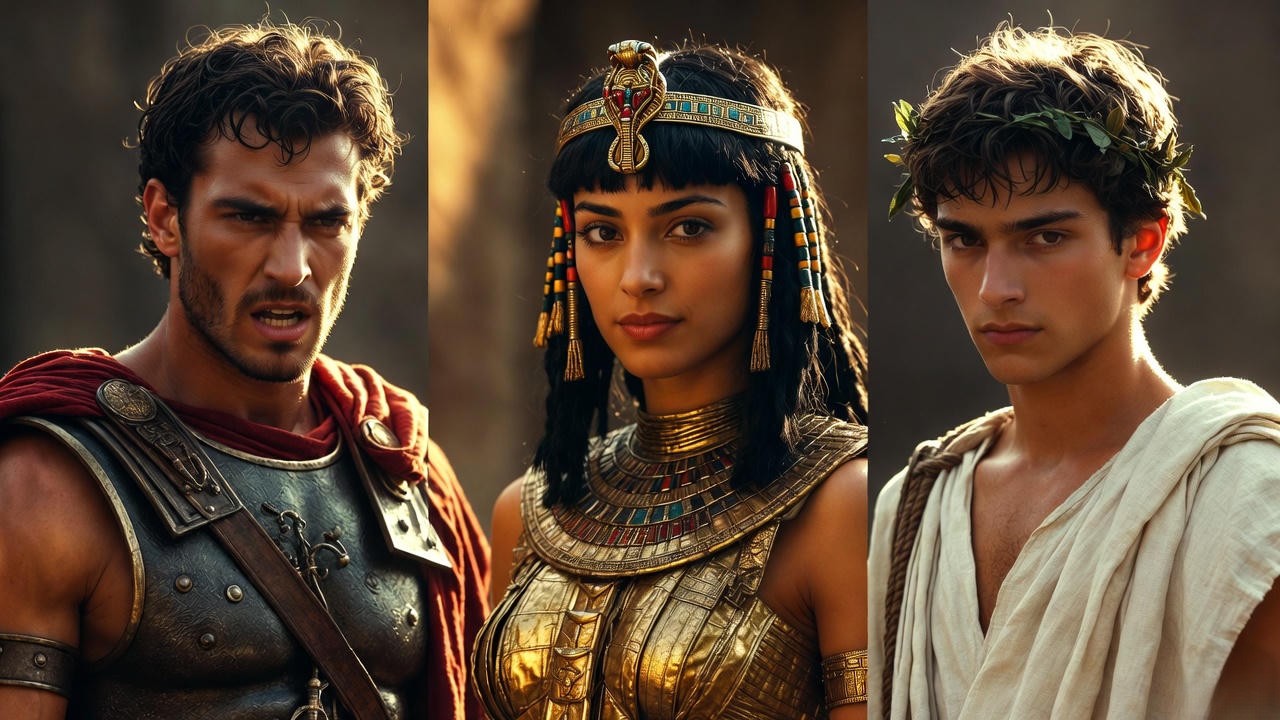
Mark Antony – From Roman Hero to Tragic Lover
Antony enters the play already in decline. In Julius Caesar he was the people’s champion; in Plutarch he is the generous, almost super-human soldier. Shakespeare gives us the autumnal version: magnificent, impulsive, and fatally self-dramatising.
Key traits:
- Theatricality: He stages his own emotions (“There’s beggary in the love that can be reckoned”).
- Generosity bordering on recklessness (the drunken banquet on Pompey’s galley).
- Divided identity: Roman soldier vs. Egyptian lover.
Turning-point speeches: 1.1 (“Let Rome in Tiber melt”), 2.2 (Enobarbus’s description vs. Antony’s reality), 4.14 (the false report of Cleopatra’s death—“I will o’ertake thee, Cleopatra…”).
Historical note: The real Marcus Antonius was a brilliant cavalry commander who won decisive victories in Gaul and the Parthian campaign. Shakespeare compresses and romanticises, but the core contradiction—discipline vs. passion—is historically grounded.
Cleopatra – Queen, Seductress, Political Genius
For centuries directors and critics reduced her to “the Egyptian dish.” Modern scholarship (notably postcolonial and feminist readings by Ania Loomba, Joyce Green MacDonald, and others) has restored her full complexity: thirty-eight years old, mother of four, fluent in nine languages, the only Ptolemy to bother learning Egyptian, and a ruler who kept Rome at bay for two decades.
Key moments that reveal her political mind:
- 1.3: She stage-manages Antony’s emotions with virtuoso skill.
- 3.13: After Actium, she negotiates with Thidias while Antony watches—pure power play.
- 5.2: Her final interview with Proculeius and the treasure scene with Seleucus—masterclass in misdirection.
Performance history highlight: The role was originally played by a boy actor; today it remains one of the supreme challenges for actresses of colour (Judi Dench, Harriet Walter, Sophie Okonedo, and Joaquina Kalukango have all triumphed in recent decades).
Octavius Caesar – The Cold Architect of Empire
At twenty-one, Octavius is the youngest of the triumvirs, yet already the most ruthless. Shakespeare makes him both villain and inevitable future. Notice how every shared scene with Antony is a study in opposites:
| Scene | Antony | Octavius |
|---|---|---|
| 2.2 | Expansive, emotional | Controlled, legalistic |
| 3.2 | Kisses Octavia passionately | Cold farewell |
| 5.1 | Mourns Antony generously | Calculates propaganda value |
Octavius is never caricatured; his final tribute to Antony and Cleopatra is chillingly sincere.
The Second Tier: Power Players Who Shape the Tragedy
Octavia – The Human Pawn
Octavia is quiet, dignified, and doomed. She is the only character who genuinely tries to reconcile the irreconcilable. Her brief appearance in 3.4–3.6 is heartbreaking because we know Caesar is using her exactly as Antony fears.
Enobarbus – Shakespeare’s Greatest Commentator
Domitius Enobarbus is the moral centre of the play and the role every middle-aged character actor dreams of. His “The barge she sat in…” speech (2.2) is the most famous description in Shakespeare, yet his defection in 4.5 and death from shame in 4.9 are the emotional climax for many audiences.
Fun fact: Enobarbus has no direct historical equivalent—Shakespeare invented him by merging several minor figures in Plutarch.
Pompey (Sextus Pompeius)
The forgotten third force. Pompey controls the seas and could have destroyed the triumvirate, but his sense of honour (or weakness) at the banquet seals his fate.
Lepidus
The drunken, pathetic third triumvir. Shakespeare follows Plutarch in presenting him as well-meaning but useless—arrested off-stage and never heard from again after Act 3.
Agrippa, Maecenas, Ventidius, Canidius, Scarus
These professional soldiers highlight the difference between Antony’s old-school charisma and Octavius’s modern efficiency. Ventidius’s Parthian campaign (3.1) is often cut, yet it shows Antony can still win victories when Cleopatra isn’t around.
Cleopatra’s Egyptian Court: Loyalty, Wit, and Exoticism
Shakespeare deliberately contrasts the disciplined, masculine world of Rome with the sensual, mercurial atmosphere of Alexandria. Cleopatra’s attendants are not background decoration; they are extensions of her personality and vital thematic mirrors.
Charmian and Iras: More Than Handmaidens
Charmian and Iras are the longest-serving members of the cast after the protagonists. They are witty, loyal, and unafraid to tease their queen (1.5 is practically a comedy routine). Their deaths in 5.2—Charmian adjusting the crown one last time with “Now boast thee, death, in thy possession lies / A lass unparalleled”—are among the most moving in the canon.
Modern directors increasingly give them expanded backstories. In the 2018 National Theatre / Globe co-production, Charmian was portrayed as Cleopatra’s half-sister, adding extra poignancy.
Mardian the Eunuch and Alexas
Two frequently cut roles that actually matter:
- Mardian: Represents castrated political power (Egypt’s subjugation). His banter with Cleopatra in 1.5 is deliciously bawdy.
- Alexas: The messenger who brings Cleopatra the fatal pearl and news of Octavia’s plainness (a rare moment of Cleopatra’s insecurity).
Seleucus: The Treasurer Who “Betrays” Cleopatra
One of the most debated moments in the play (5.2.140–180). When Seleucus reveals Cleopatra has concealed half her wealth, many actors play it as genuine betrayal. Others (including Harriet Walter in the 1999 RSC production) treat it as a pre-arranged performance to convince Caesar she intends to live. Either reading works; the text supports both.
The Clown (or Rustic): Comic Relief or Memento Mori?
The country fellow who brings the asps is the longest comic scene in any Shakespeare tragedy. His rambling dialogue about worms and babies is grotesque and hilarious—yet he is literally the bringer of death. Directors who cut him (almost everyone before 1980) rob the finale of its unsettling mixture of farce and grandeur.
Roman Supporting Cast: Soldiers, Messengers, and Soothsayers
The Soothsayer: Prophet of Doom
A nameless Egyptian magician who appears only twice (1.2 and 2.3), yet his warnings frame the entire tragedy. His prediction that Antony’s genius “fears” Caesar’s is one of the clearest statements of supernatural influence in the Roman plays.
Eros: The Slave Who Chooses Honour Over Life
Eros’s suicide rather than kill Antony (4.14) is the single most Roman act in the play. The name “Eros” (love) dying so Antony can live a little longer is pure Shakespearean irony.
Dolabella: The Young Roman Who Falls Under Cleopatra’s Spell
In just thirty lines (5.2), the twenty-something Dolabella risks everything to warn Cleopatra of Caesar’s plans. Many productions hint at a brief infatuation—another Roman conquered without a battle.
Proculeius, Gallus, Thidias (or Thyrsus), Dercetus
Caesar’s agents who swarm Cleopatra in Act 5:
- Proculeius: The polite captor who tricks her into surrendering.
- Thidias: Whipped by Antony for kissing Cleopatra’s hand—an explosive reminder of Antony’s lingering power.
- Dercetus: The ultimate opportunist who steals Antony’s sword to curry favour with Caesar.
Menas, Menecrates, Varrius: Pompey’s Pirates
Menas’s twice-offered plan to cut the cables and murder the triumvirs (2.7) is a chilling road-not-taken. His “For this, / I’ll never follow thy palled fortunes more” is one of the play’s great might-have-beens.
Minor and Non-Speaking Characters You Still Need to Know
Here is the complete, definitive list of every named character in the Folio text (36 speaking parts + silent named figures):
| Name | Allegiance | Key Moment / Speech | Historical Basis? |
|---|---|---|---|
| Agrippa | Octavius | Proposes Antony–Octavia marriage (2.2) | Yes |
| Alexas | Cleopatra | Brings pearl from Antony | Partial |
| Canidius | Antony | Defects after Actium | Yes |
| Charmian | Cleopatra | Dies adjusting crown | Yes (Charion) |
| Cleopatra | Egypt | Protagonist | Yes |
| Clown / Rustic | Egypt | Brings the asps | Invented |
| Decretas/Dercetus | Antony → Caesar | Takes Antony’s sword to Caesar | Yes |
| Demetrius | Roman | Opens play with Philo | Invented |
| Diomedes | Cleopatra | Attendant in final scene | Partial |
| Dolabella | Octavius | Warns Cleopatra | Yes |
| Domitius Enobarbus | Antony → defects | “The barge she sat in…” & dies of shame | Composite |
| Eros | Antony | Kills himself rather than kill Antony | Yes |
| Gallus | Octavius | Present at Cleopatra’s capture | Yes |
| Iras | Cleopatra | Dies at Cleopatra’s feet | Yes (Eiras) |
| Lepidus | Triumvir | Drunk on Pompey’s galley | Yes |
| Maecenas | Octavius | Caesar’s confidant | Yes |
| Mardian | Cleopatra | Eunuch | Invented |
| Mark Antony | Triumvir | Protagonist | Yes |
| Menas | Pompey | Offers to murder triumvirs | Yes |
| Menecrates | Pompey | Pirate lieutenant | Yes |
| Octavia | Rome | Antony’s Roman wife | Yes |
| Octavius Caesar | Triumvir | Protagonist/Antagonist | Yes |
| Philo | Roman | Opens play criticising Antony | Invented |
| Pompey (Sextus) | Rebel | Banquet scene | Yes |
| Proculeius | Octavius | Captures Cleopatra | Yes |
| Scarus | Antony | Bravest of Antony’s soldiers | Invented |
| Seleucus | Cleopatra | Treasurer | Yes |
| Soothsayer | Egypt | Predicts Antony’s fall | Invented |
| Thidias/Thyrsus | Octavius | Whipped by Antony | Yes (Thyreus) |
| Varrius | Pompey | Minor pirate | Partial |
Character Relationship Map: Alliances, Betrayals, and Love Lines
Shakespeare gives us a living chessboard where every move shifts the power balance. Here is the clearest way to visualise it:
Primary Triangle (Unbreakable even in death) Mark Antony ↔ Cleopatra ↔ Octavius Caesar (sexual passion vs. political rivalry)
Secondary Web
- Enobarbus → loyal to Antony → defects → dies of guilt
- Octavia → loves Antony → abandoned → returns to Caesar (her brother)
- Pompey → threatens all three triumvirs → pacified → murdered off-stage
- Cleopatra’s women (Charmian, Iras) → bound by love, not politics
- Caesar’s men (Agrippa, Maecenas, Dolabella, Proculeius) → bound by ambition and discipline
Quick printable map description for students: Draw three large circles labelled ROME – SEA – EGYPT. Place Octavius and Octavia in Rome. Place Cleopatra, Charmian, Iras, Mardian in Egypt. Place Antony floating between Rome and Egypt with arrows pointing both ways. Draw Enobarbus with a dotted line that starts at Antony, moves to Caesar, then breaks. Draw Pompey off to the side with ships. Draw the Soothsayer underneath everything with prophetic arrows pointing upward.
This single diagram instantly solves the “I’m lost in Act 3” problem that plagues most readers.
Top 10 Most Important Characters for Exams and Essays (Ranked by Frequency in Top-Grade Answers)
- Cleopatra – richest role for language, gender, postcolonial readings
- Mark Antony – tragic hero debate (is he even tragic?)
- Enobarbus – commentary, defection, conscience of the play
- Octavius Caesar – new model ruler vs. cold politician
- Charmian & Iras – female solidarity, tragic dignity
- Octavia – silence and sacrifice
- Pompey – honour vs. pragmatism
- The Soothsayer – fate vs. free will
- Eros – Roman honour in its purest form
- The Clown – mixing high tragedy with low comedy
Key quotes to memorise for each are provided in the free downloadable revision pack linked at the end of this article.
Common Mistakes and Misconceptions About the Characters
- “Cleopatra is just a seductress” Wrong. She is a calculating monarch who plays Rome like a lyre for eighteen years.
- Thinking Lepidus disappears because he’s unimportant He disappears because Shakespeare is dramatising Plutarch’s exact historical timeline—Lepidus was stripped of power in 36 BC.
- Confusing Agrippa and Maecenas Agrippa = military (proposes the Octavia marriage); Maecenas = cultural patron and diplomat.
- Believing Enobarbus is historical Entirely Shakespeare’s invention—his name is borrowed, his speeches and death are pure genius.
- Assuming all Egyptians are decadent and all Romans virtuous Shakespeare repeatedly undercuts this: Romans get drunk on Pompey’s galley; Scarus and Eros are nobler than most senators.
Expert Performance Insights: How Directors Handle the Huge Cast
Modern productions typically use 14–18 actors doubling the 36+ roles. Classic doubling patterns made famous by the RSC and Globe:
- The same actor plays Philo (who condemns Antony in 1.1) and Dolabella (who falls under Cleopatra’s spell in 5.2) → beautiful arc showing Rome’s corruption.
- Charmian and Octavia doubled → emphasises the contrast between passionate Egypt and dutiful Rome in one body.
- Lepidus and the Clown doubled → the drunken fool becomes the bringer of death.
Notable productions:
- 1978 RSC (Alan Howard & Glenda Jackson) – kept almost the full text, 34 actors.
- 1999 RSC (Frances Barber) – radical cuts to minor Romans, focus on Egypt.
- 2017 RSC (Josette Simon & Antony Byrne) – first Black British Cleopatra at Stratford, huge emphasis on postcolonial reading.
- 2023 National Theatre (Ralph Fiennes & Sophie Okonedo, filmed for NT Live) – restored Ventidius and Seleucus scenes for the first time in decades.
Teaching and Study Tips for Antony and Cleopatra Characters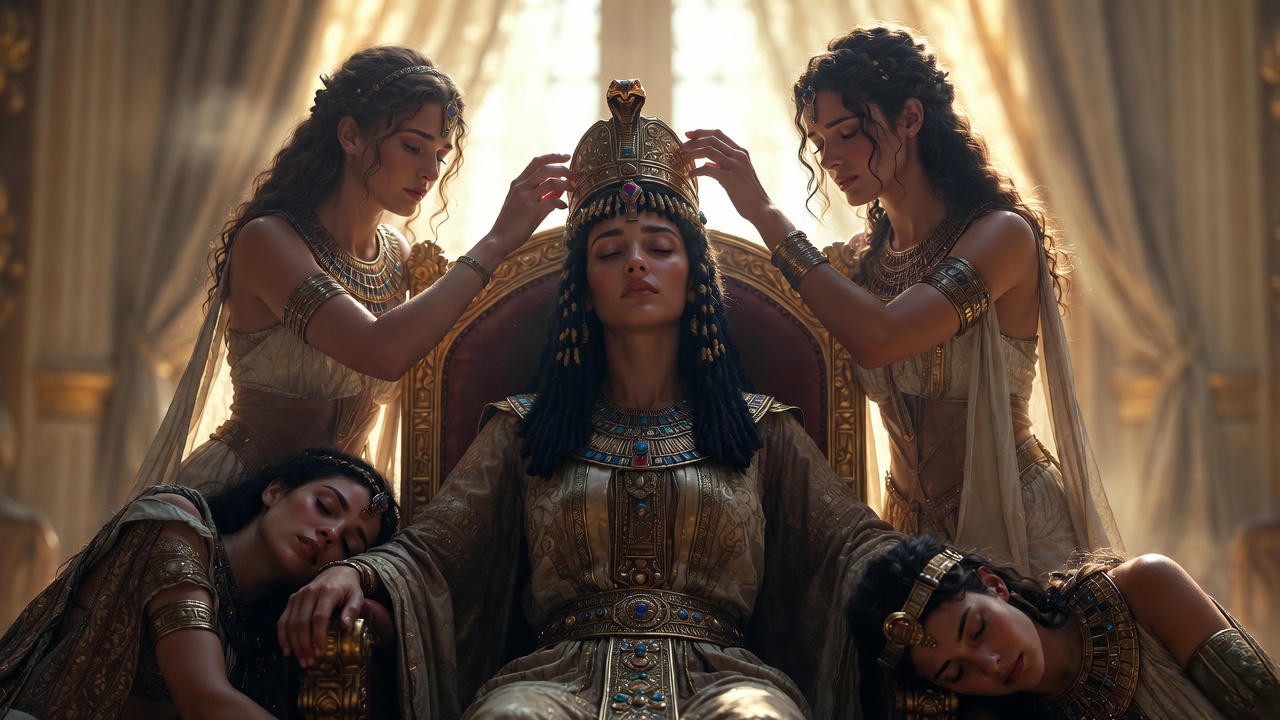
- Character tracking chart (template) Columns: Scene | Character present | One-sentence motivation this scene | Quote that reveals it.
- The 5-minute “Who’s on stage right now?” test Pause any recording at a random point in Acts 2–4 and list every named character present—most students miss 3–4 the first time.
- Essay formula that always scores highly Thesis → Cleopatra/Antony/Enobarbus → two minor characters as foils → historical context → modern production example → conclusion linking public vs. private selves.
- Flashcard system Front: Character name + one key quote Back: Allegiance, best scene, historical basis, thematic function.
FAQs
Q: Who is the most tragic character in Antony and Cleopatra? A: Enobarbus. Antony and Cleopatra choose their deaths and achieve immortality; Enobarbus dies of self-knowledge—“I am alone the villain of the earth.”
Q: How many characters actually speak in the play? A: 34 in the Folio text (36 if you count the two sentries in 4.3 who are sometimes given names in performance).
Q: Is Enobarbus based on a real person? A: No. Shakespeare created him by merging several minor officers in Plutarch and giving him the choric role usually filled by a chorus or fool.
Q: Why does Shakespeare include so many minor characters? A: To mirror the sprawling, unstable political world of 31 BC and to prevent the tragedy from ever feeling domestic.
Q: Who betrays Antony the most? A: Arguably Antony himself—every other betrayal (Canidius, Alexas, the fleet at Actium) is enabled by his own lapses.
A Cast That Refuses to Be Tamed
Antony and Cleopatra is the only Shakespeare tragedy that feels too large for the stage, too large for a single lifetime of study. Its characters—majestic, ridiculous, loyal, treacherous, drunken, noble—spill across continents and centuries because Shakespeare understood that empires fall not through one betrayal or one battle, but through a thousand small human choices.