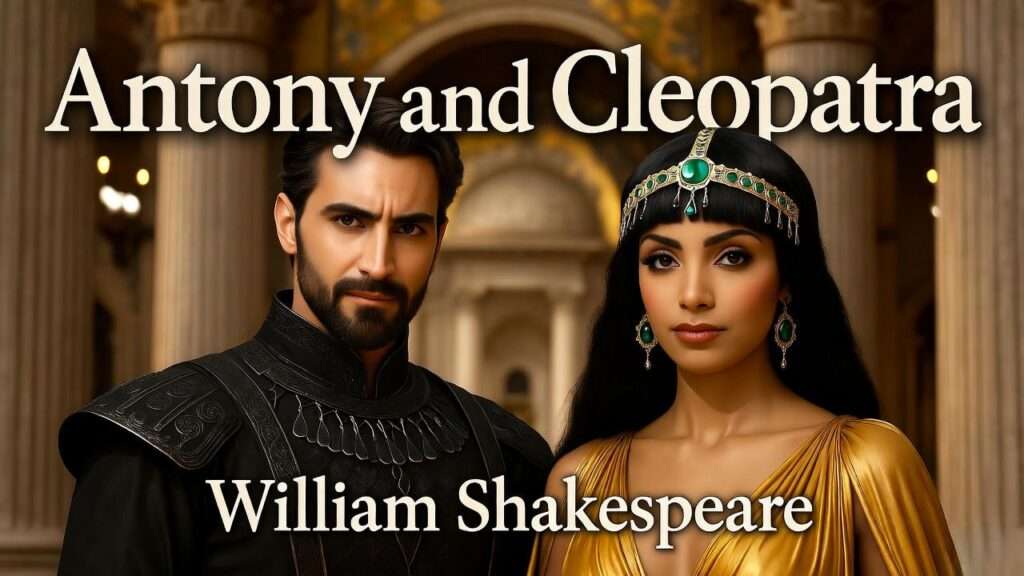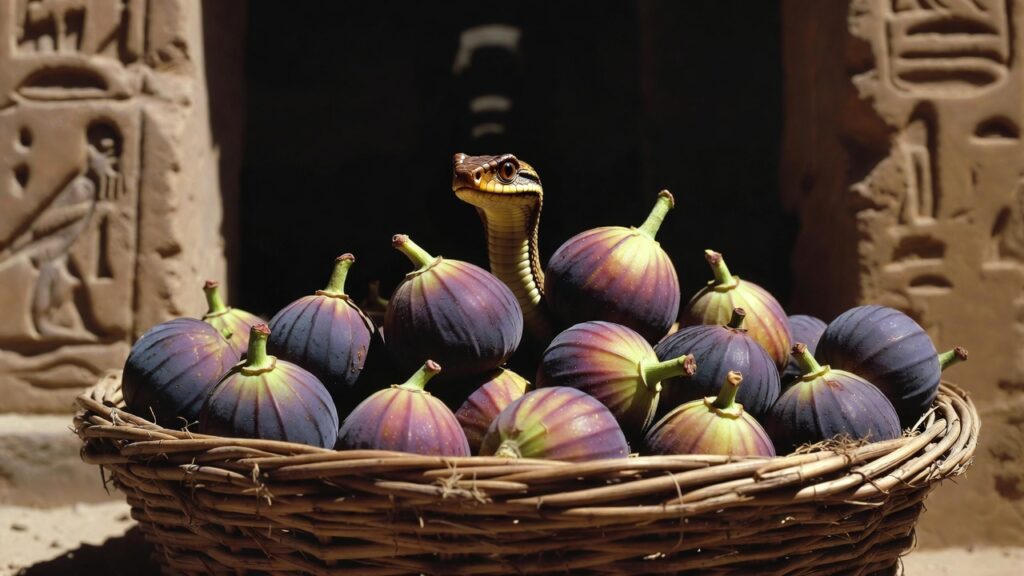
In the final, breathtaking moments of William Shakespeare’s Antony and Cleopatra, a humble basket of figs arrives at Cleopatra’s monument. What appears to be a simple gift from an Egyptian countryside—ripe, sweet, and evocative of the Nile’s fertile abundance—conceals something far more lethal: deadly asps, the venomous snakes that will deliver the queen’s self-chosen death. Antony and Cleopatra figs are not mere props in this tragedy; they embody a profound fusion of sensuality and mortality, life-giving ripeness hiding inevitable doom. This iconic image captures the essence of the play’s central tensions: the intoxicating pull of Egyptian passion against Roman duty, the erotic power of Cleopatra, and the tragic irony of love that ends in defiant suicide.
Why figs, of all fruits? Shakespeare could have chosen any container for the asps, yet he deliberately amplifies this detail from his source, Plutarch’s Life of Antony. The figs serve as a microcosm of the entire drama, blending beauty with danger, fertility with decay, and female agency with fatal consequence. For students analyzing the play, theatergoers revisiting its poetry, or anyone drawn to Shakespeare’s exploration of power, gender, and fate, understanding the symbolism of these figs unlocks deeper layers of meaning. This article examines their historical roots, textual significance, multifaceted symbolism, and enduring critical interpretations to reveal why this “basket of figs” remains one of Shakespeare’s most potent and layered images.
Historical and Dramatic Context of the Figs in Antony and Cleopatra
Shakespeare drew heavily from Plutarch’s Parallel Lives, specifically the biography of Mark Antony, for the plot of Antony and Cleopatra. In Plutarch’s account, Cleopatra’s suicide involves an asp hidden in a basket of figs (or sometimes flowers), smuggled past guards to avoid capture and humiliation by Octavius Caesar. Plutarch presents multiple theories—poison via a hairpin, toxic ointment, or snakebite—but the fig basket version persists as the most dramatic and symbolically rich.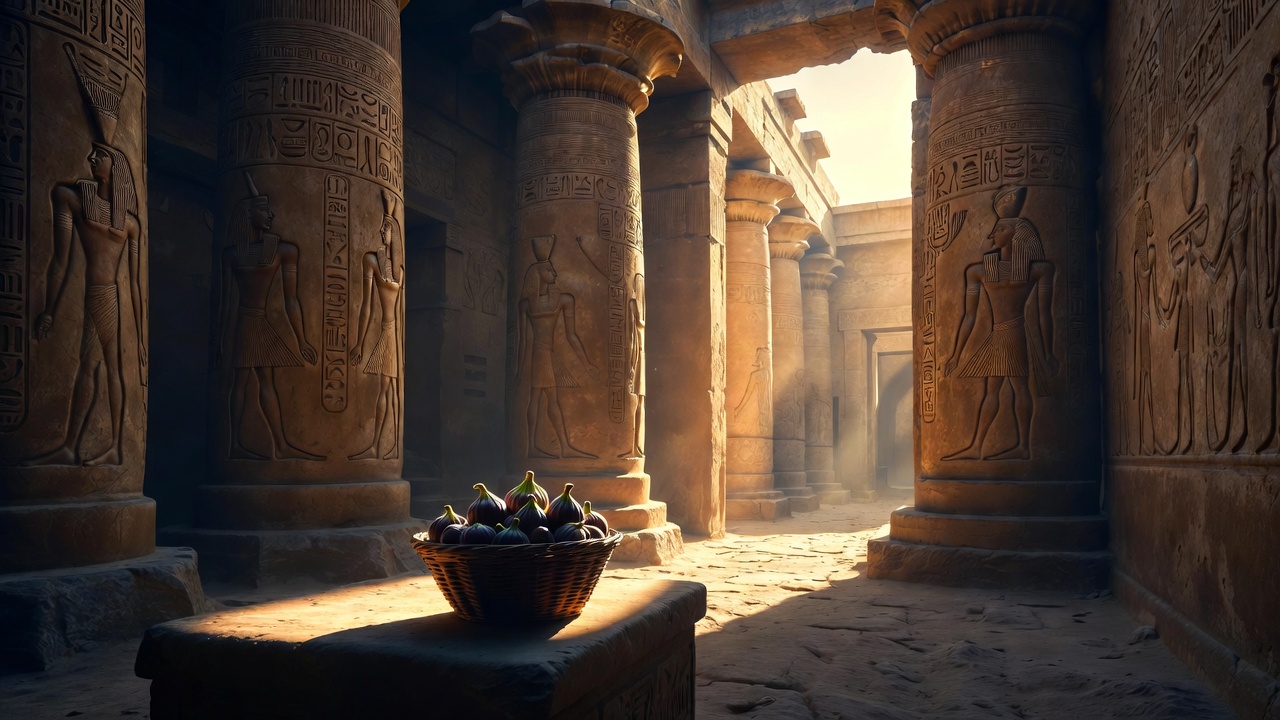
Shakespeare adapts and heightens this element for theatrical impact. He transforms the delivery into a tense, darkly comic interlude in Act 5, Scene 2. A rustic “Countryman” (often called the Clown) brings the basket, engaging Cleopatra in bawdy, pun-filled dialogue that delays the inevitable tragedy. This contrasts sharply with Plutarch’s more straightforward narrative, where the focus is on Cleopatra’s cunning. Shakespeare uses the figs to inject irony and comic relief, underscoring the play’s blend of high tragedy and low humor.
The scene’s structure builds suspense: Cleopatra, imprisoned in her monument after Antony’s botched suicide, negotiates with Caesar’s messengers while secretly planning her end. The Clown’s arrival interrupts with earthy prose, his warnings about the “worm of Nilus” laced with double entendres. Cleopatra’s calm acceptance—”Farewell, and thanks” (5.2.249)—highlights her regal control amid chaos.
Key quotes from the delivery illuminate the moment:
- Clown: “Truly, I have him [the asp], but I would not be the party that should desire you to touch him” (5.2.242–243).
- Cleopatra: “Wilt thou eat a grape, or a fig, or what?” (implying the hidden danger).
These lines emphasize the figs’ deceptive innocence, setting up the queen’s fatal embrace.
The Multifaceted Symbolism of Figs in the Play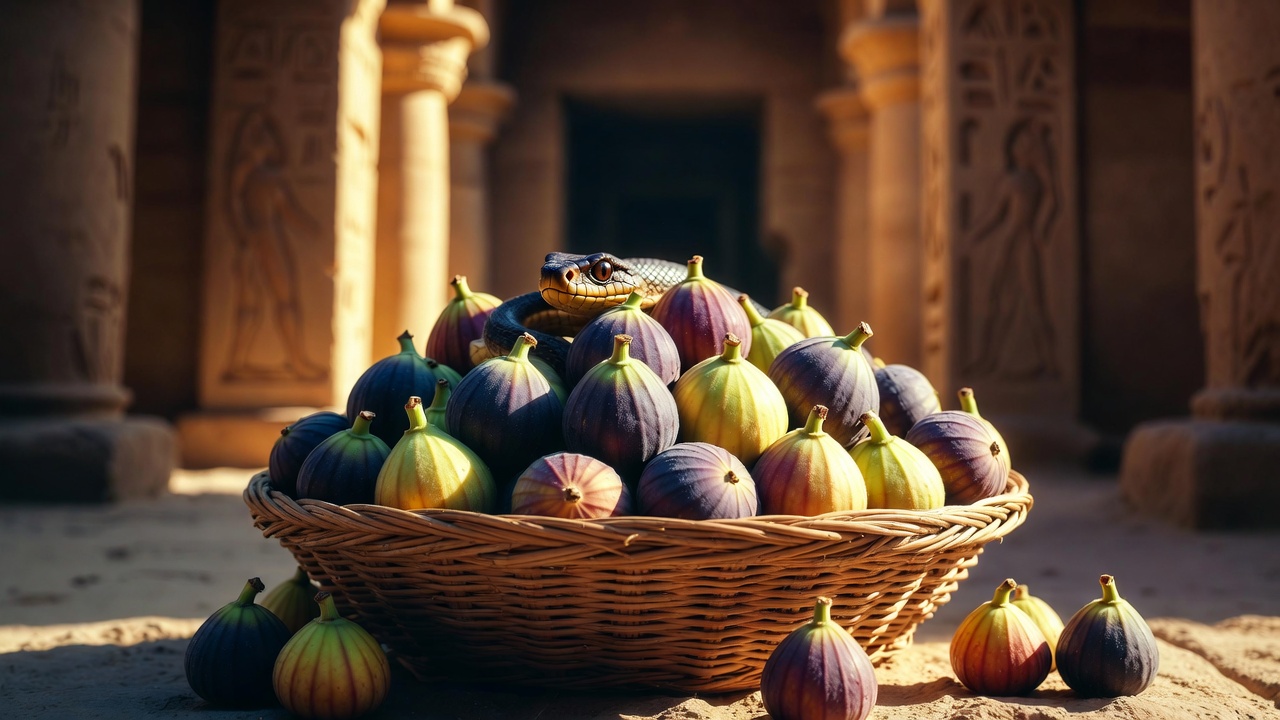
Figs in Antony and Cleopatra operate on multiple levels, far beyond a convenient hiding place for asps. They evoke sensuality, fertility, duality, and circularity, weaving into the play’s thematic fabric.
Figs as Symbols of Sensuality and Fertility Figs have long symbolized female fertility and sexuality in literature and mythology. Their soft, seed-filled interior and association with ripeness link them to the yonic (female genital) imagery prevalent in Renaissance symbolism. In the play, they tie directly to Egypt’s Nile-driven abundance, where the river’s floods bring life and excess. Cleopatra, often compared to Isis or a fertility goddess, embodies this sensuality—her “infinite variety” (2.2.241) mirrors the fig’s lush promise.
The figs also connect to broader literary traditions: post-Eden fig leaves covering nakedness, or Mediterranean myths of peace and plenty. In Egypt, they represent the sensual, indulgent world that seduces Antony from Roman duty.
The Duality of Life and Death – Beauty Hiding Danger The basket’s surface sweetness conceals venom, mirroring Cleopatra’s allure masking political ruthlessness and self-destructive passion. The asp, linked to the Nile, turns fertility lethal—Egyptian excess weaponized against Roman conquest. This duality parallels the play’s East-West conflict: Rome’s ordered restraint versus Egypt’s chaotic, life-affirming (yet fatal) sensuality.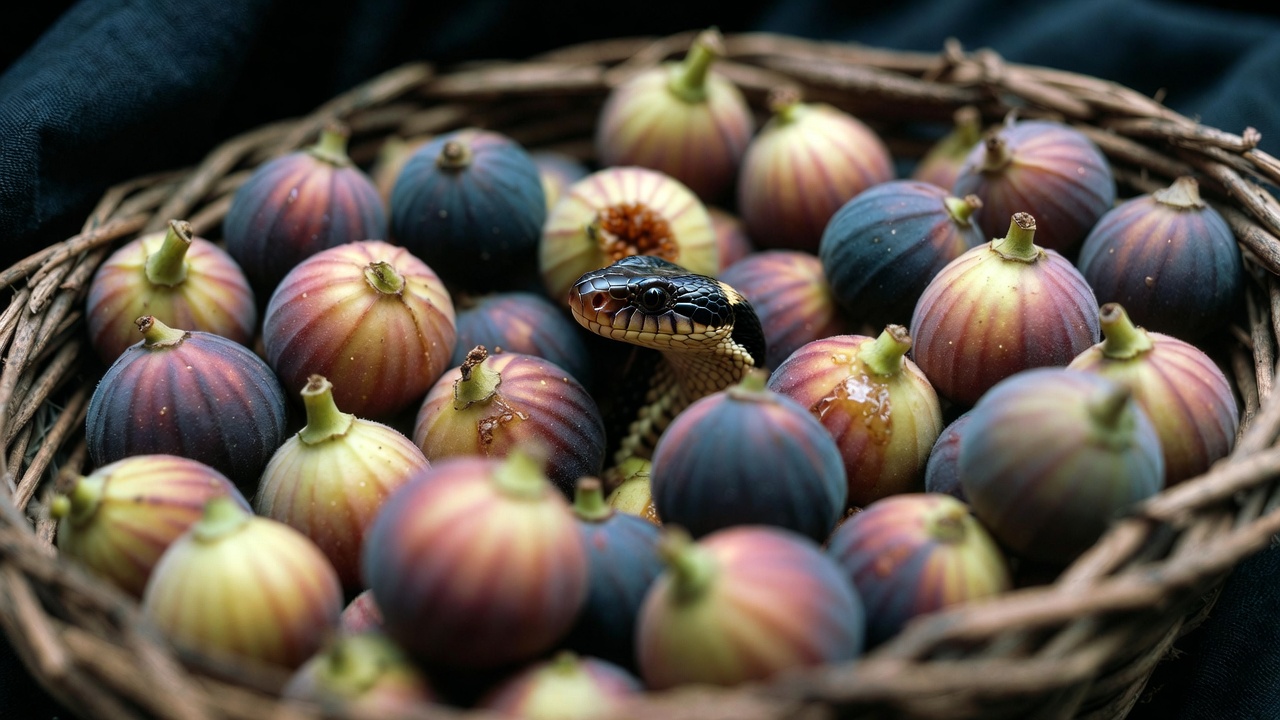
Sexual and Phallic Undertones in the “Worm” and Figs The Clown’s dialogue brims with bawdy puns: “worm” as phallus, figs as female genitalia, “slime” evoking semen or Nile ooze. The asp’s bite becomes an erotic act—”Come, thou mortal wretch, / With thy sharp teeth this knot intrinsicate / Of life at once untie” (5.2.303–305)—and maternal: “Dost thou not see my baby at my breast, / That sucks the nurse asleep?” (5.2.308–309). This blends phallic penetration, orgasmic “dying,” and nurturing, reinforcing Cleopatra’s complex gender defiance—she claims masculine agency in a feminine form.
Figs as a Bookend Motif in the Tragedy Figs frame the play. Early, Charmian dismisses longevity: “O excellent! I love long life better than figs” (1.2.32). By the end, figs enable Cleopatra’s short, defiant death. This circularity underscores fate’s irony: what begins as casual preference ends in fatal embrace.
Thematic Connections – How the Figs Illuminate Broader Play Elements
The figs crystallize key themes, showing Cleopatra’s agency, the East-West divide, and death’s ironic transfiguration.
Agency, Suicide, and Defiance Against Roman Power Cleopatra outmaneuvers Octavius: denied public triumph in Rome, she chooses private, regal death via Egyptian means. Unlike Antony’s failed Roman-style suicide, hers succeeds through cunning and sensuality—figs grant sovereignty over body and legacy.
East vs. West, Pleasure vs. Duty Figs/Nile embody Egyptian excess and dissolution (“Let Rome in Tiber melt,” 1.1.33), contrasting Rome’s discipline. Ripeness decays into slime-covered leaves, echoing the play’s melting imagery.
Irony, Comedy, and Transfiguration in Death The Clown’s ironic “joy of the worm” (5.2.253) undercuts Cleopatra’s poetic apotheosis, blending low comedy with high tragedy. Her death becomes erotic reunion, maternal, and triumphant.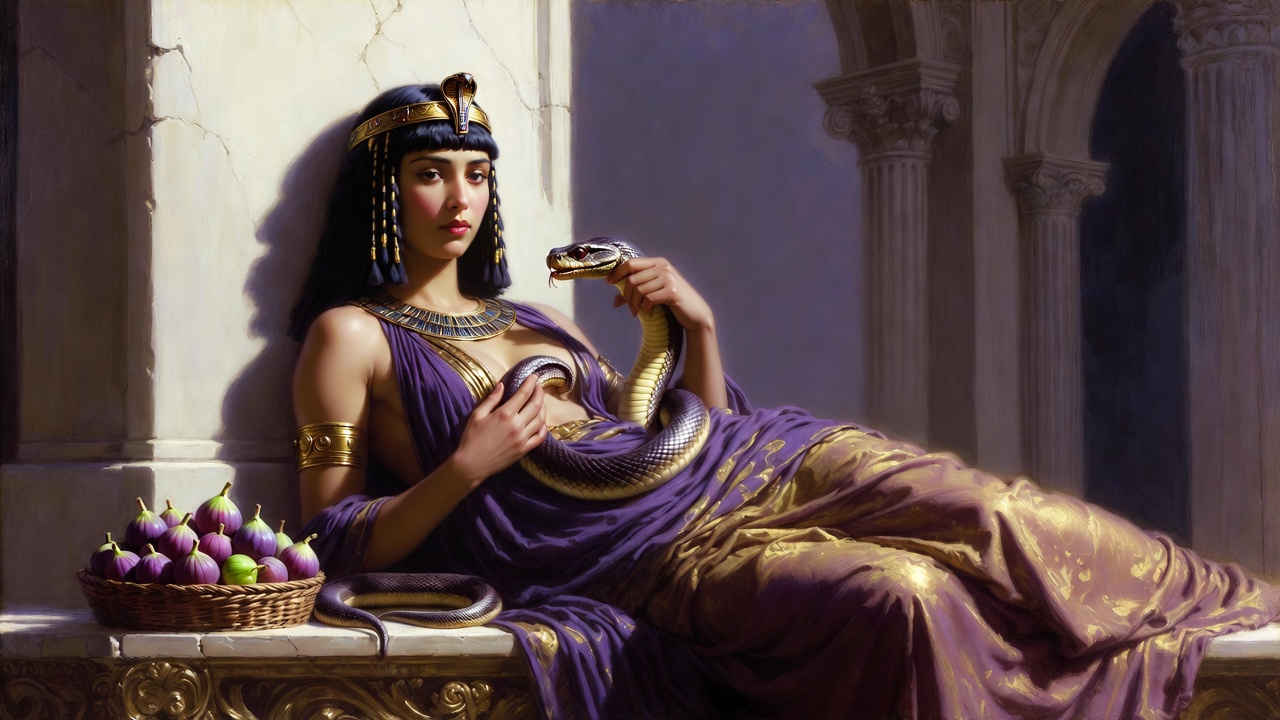
Scholarly Perspectives and Critical Interpretations
Critics view the figs as multilayered. SparkNotes highlights control and Nile fertility. Others explore sexual connotations—figs as yonic, asps phallic—or theological allegory (faith vs. works, serpent as Satan/Eve).
Modern readings emphasize gender and postcolonial angles: Cleopatra’s suicide as feminist agency, figs as colonized abundance turned weapon. Performance studies note staging challenges—how directors visualize hidden danger in a domestic prop.
Key Quotes and Close Readings
- Charmian (1.2.32): “I love long life better than figs” — foreshadows fatal irony.
- Clown (5.2.242): Warnings laced with puns on trust and goodness.
- Cleopatra (5.2.280): “Give me my robe, put on my crown; I have / Immortal longings in me” — regal preparation.
- Cleopatra (5.2.308): “My baby at my breast” — maternal-erotic fusion.
- Guard (5.2.351): “On the leaves… slime, such as th’aspic leaves / Upon the caves of Nile” — proof of method, tying to Egyptian origins.
These passages reward close analysis for their poetic density and thematic echoes.
Visual and Cultural Legacy of the Figs Scene
The scene inspires art: paintings like Reginald Arthur’s The Death of Cleopatra (1890s) depict the basket amid regal splendor. It influences metaphors for hidden danger (“snake in the figs”) and Cleopatra’s mythic image as seductive, tragic queen.
The Antony and Cleopatra figs transcend plot mechanics to become a symbol of the play’s tragic beauty: sensuality masking death, agency in defeat, love defying empire. They encapsulate Shakespeare’s genius in intertwining eroticism, politics, and mortality. Revisiting this detail deepens appreciation of Cleopatra’s complexity—not villainess or victim, but a woman who authors her end.