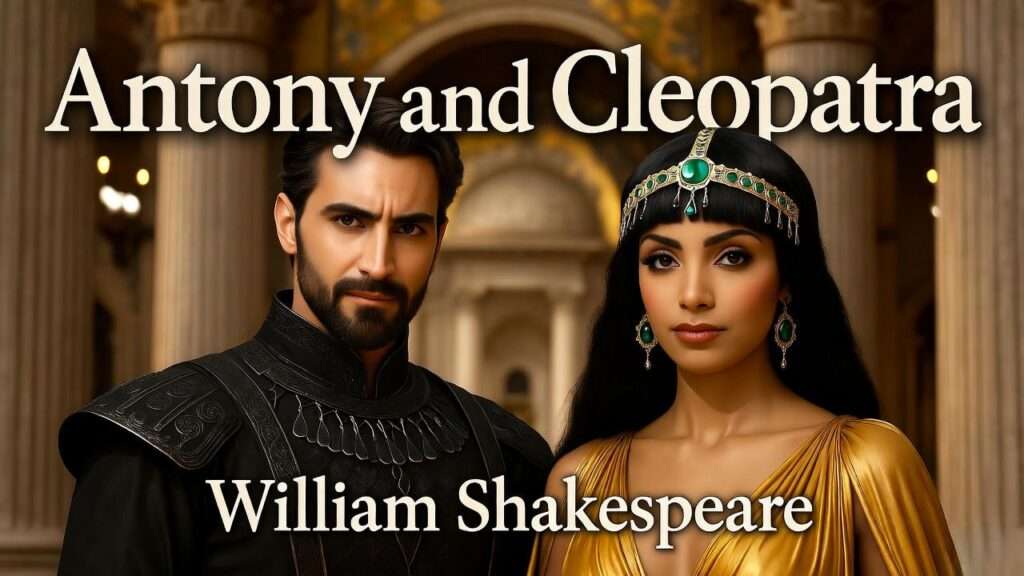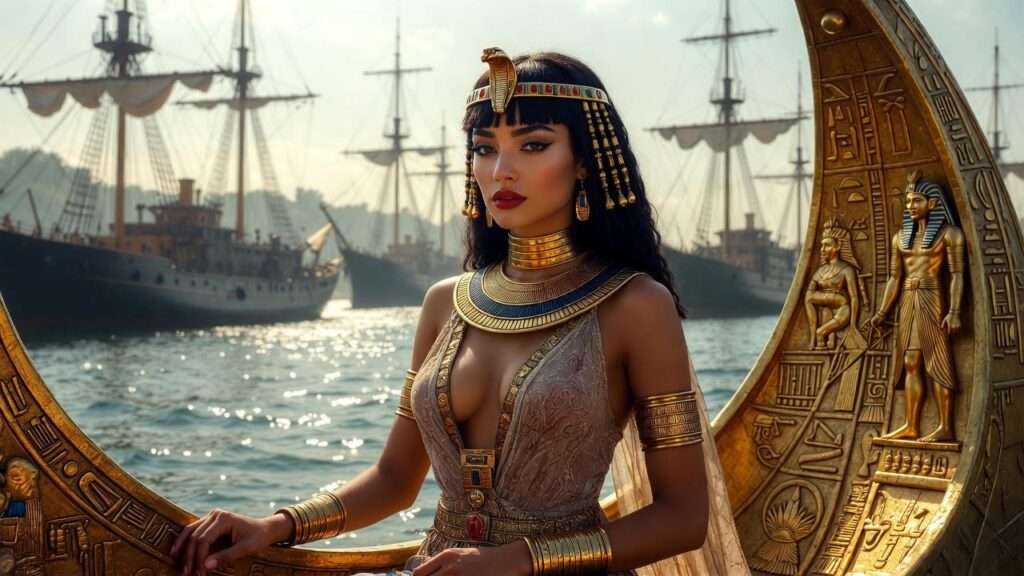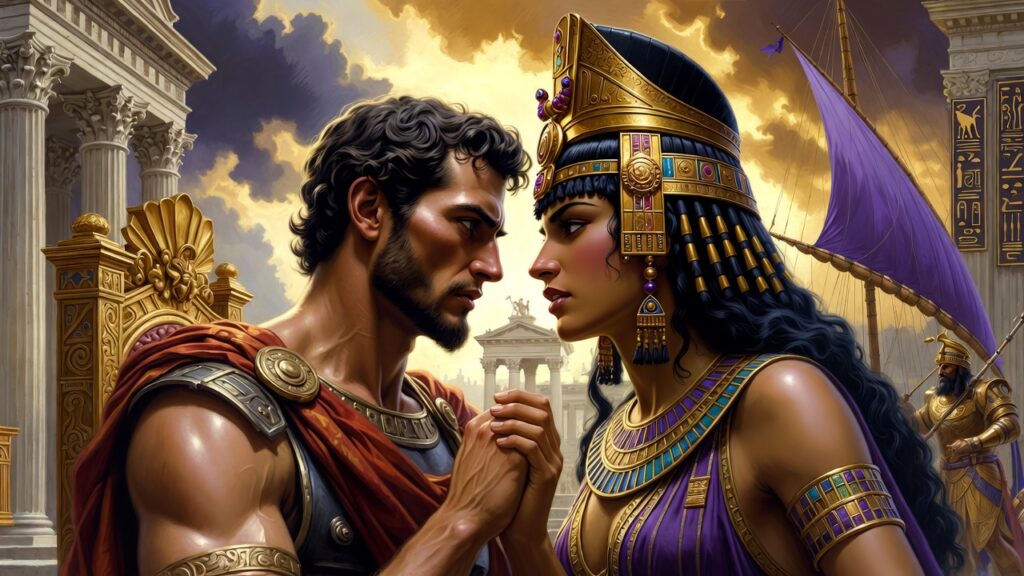
Few lines in all of literature capture the intoxicating power of love quite like Enobarbus’s immortal description: “Age cannot wither her, nor custom stale / Her infinite variety.” Spoken about Cleopatra in Act 2, Scene 2, these words encapsulate why Antony and Cleopatra remains one of Shakespeare’s most enduring tragedies— a sweeping tale of passion that defies time, empire, and reason itself.
Written around 1606–1607, this Roman tragedy draws from historical events following Julius Caesar’s assassination, focusing on the tumultuous romance between Mark Antony, one of Rome’s triumvirs, and Cleopatra, Queen of Egypt. Their love clashes with political duty, leading to betrayal, war, and ultimate self-destruction. For students preparing for exams (such as IGCSE, A-Level, or university courses), teachers seeking fresh insights, or literature lovers grappling with Shakespeare’s dense Elizabethan verse, the play’s poetic richness, rapid scene shifts between Rome and Egypt, and layered themes can feel overwhelming.
This comprehensive guide provides Antony and Cleopatra line by line explanation for the play’s most pivotal passages, blending modern English paraphrases, close textual analysis, imagery breakdowns, and contextual insights. We’ll cover the full arc scene by scene, unpack famous quotes, explore major themes like love versus duty, East versus West, and gender dynamics, and offer study tips. By the end, you’ll not only understand the language but appreciate why this tragedy—often called Shakespeare’s most “baroque”—continues to resonate in discussions of power, desire, and identity.
Historical and Literary Context
Shakespeare based Antony and Cleopatra primarily on Plutarch’s Parallel Lives (translated by Thomas North in 1579), specifically the biographies of Antony and Caesar. While Plutarch presents a more moralistic account—portraying Antony as a fallen hero corrupted by Eastern excess and Cleopatra as cunning—Shakespeare humanizes them profoundly. He amplifies Cleopatra’s “infinite variety,” transforming her from mere seductress into a complex, performative queen who wields intelligence and emotion as weapons.
The play unfolds in the years after Julius Caesar’s death (44 BCE), during the Second Triumvirate (Antony, Octavius Caesar, Lepidus). Key historical events include the rivalry with Sextus Pompey, the Battle of Actium (31 BCE), and the lovers’ suicides. Shakespeare compresses time and geography for dramatic effect, emphasizing the symbolic opposition between disciplined, masculine Rome (duty, empire, order) and sensual, feminine Egypt (pleasure, fluidity, excess). This East-West binary reflects early modern Orientalism—Rome as the civilized West, Egypt as the exotic, decadent Other—while Shakespeare subtly critiques Roman hypocrisy and rigidity.
Today, the play speaks to modern audiences on leadership charisma, toxic relationships, postcolonial power dynamics, and the tension between personal fulfillment and public responsibility.
Overview of Key Characters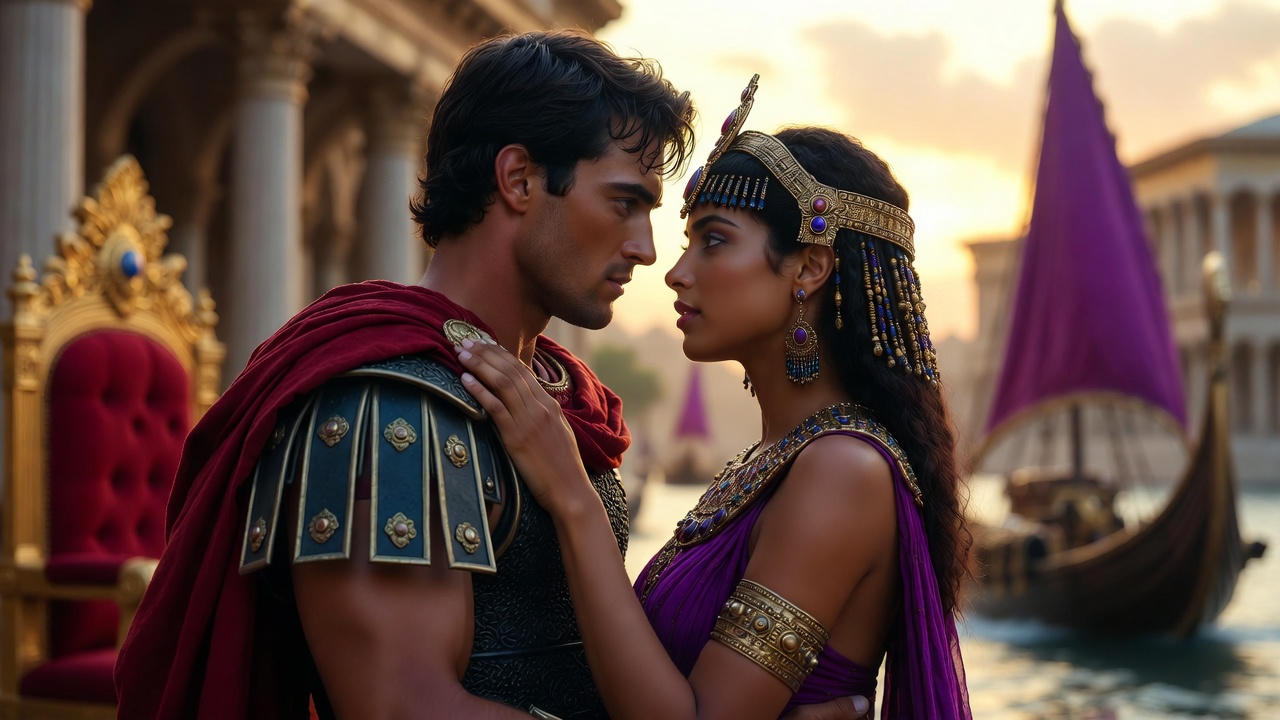
- Mark Antony: Once Rome’s heroic general (“Plated Mars”), Antony embodies the tragic conflict between martial duty and passionate love. His decline illustrates how desire can erode even the greatest leader.
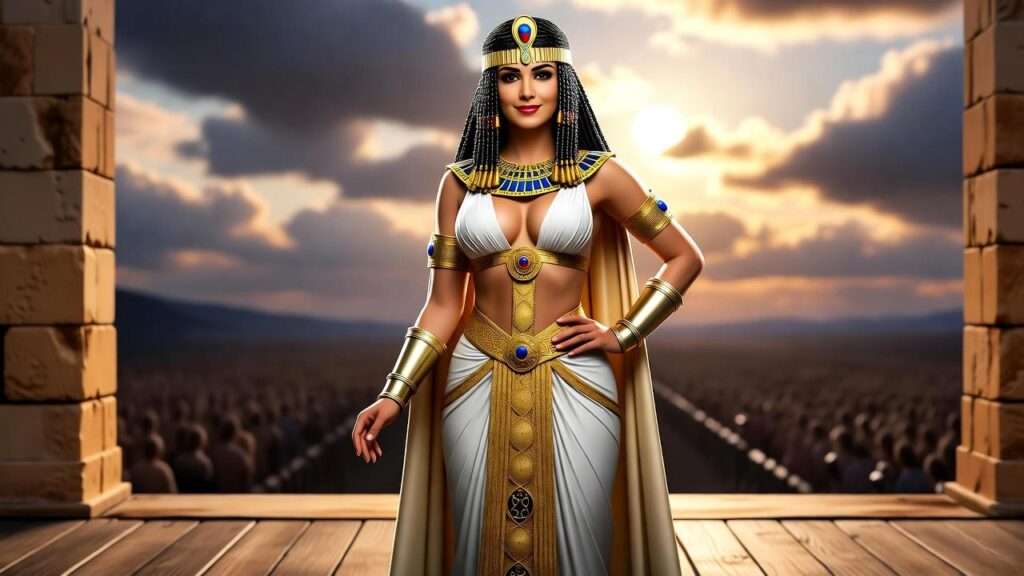
- Cleopatra: The “serpent of old Nile,” she is intelligent, theatrical, and endlessly changeable. Far from a passive temptress, she manipulates situations to preserve her power and dignity, making her one of Shakespeare’s most compelling female characters.
- Octavius Caesar: Cold, ambitious, and future Augustus, he represents Roman restraint and calculation. His victory symbolizes the triumph of empire over emotion.
Supporting figures enrich the drama: Enobarbus, Antony’s loyal but pragmatic friend, provides choral commentary; Octavia, Caesar’s sister and Antony’s political wife, highlights duty; Charmian and Iras show Cleopatra’s loyal court; Pompey adds external threat.
Shakespeare elevates these historical figures beyond Plutarch, giving them psychological depth and poetic voice.
Act-by-Act Breakdown with Line-by-Line Explanations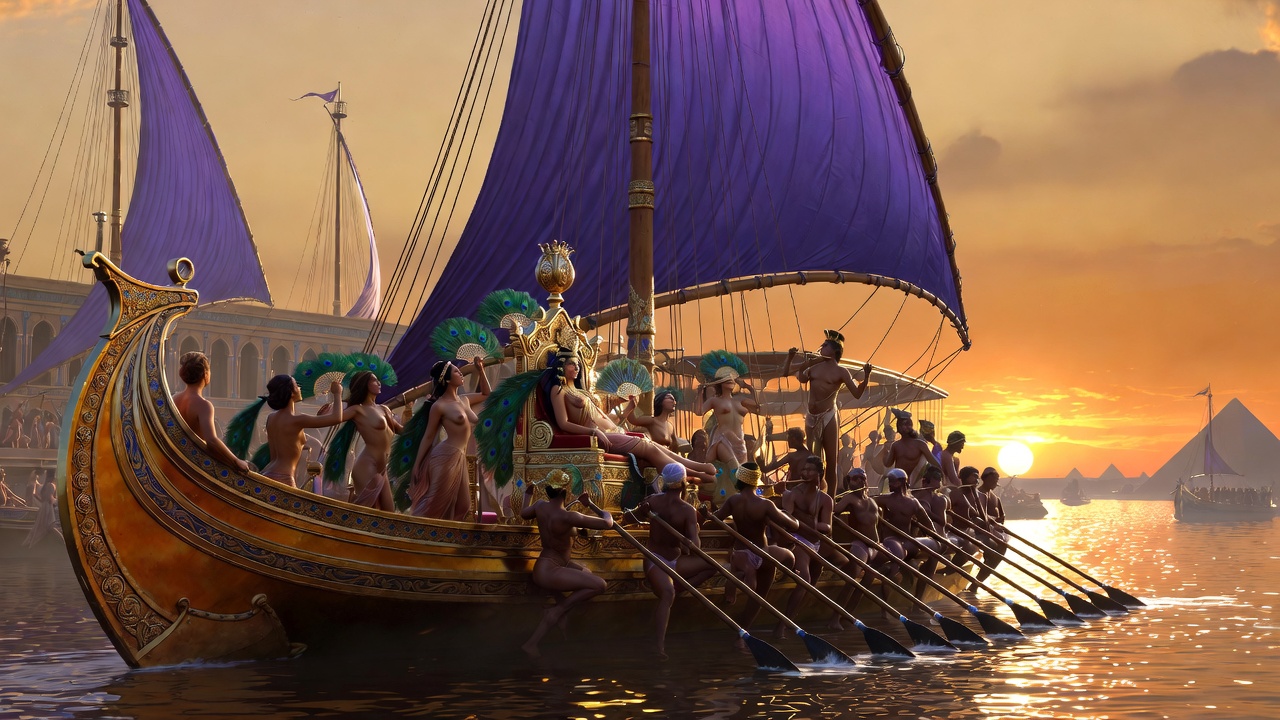
Act 1 – Establishing the Worlds of Rome and Egypt
Act 1 contrasts Rome’s urgency with Egypt’s indulgence, introducing the central tension.
Scene 1: Philo and Demetrius lament Antony’s “dotage.”
Key passage (Philo’s opening, lines 1–15 approx.):
Original: “Nay, but this dotage of our general’s / O’erflows the measure. Those his goodly eyes, / That o’er the files and musters of the war / Have glowed like plated Mars… / now bend, now turn / The office and devotion of their view / Upon a tawny front.”
Modern paraphrase: No, but this foolish obsession of our general overflows all bounds. Those fine eyes that once shone like armored Mars over armies now fix devotedly on a dark-skinned face (Cleopatra).
Analysis: “Dotage” implies senile foolishness; “plated Mars” evokes armored war god—Antony’s former glory. The Roman view reduces Cleopatra to “tawny front” (racially charged), “gypsy” (later), and “strumpet’s fool.” Dramatic irony: We soon see Antony’s passion as transcendent, not mere weakness.
Antony and Cleopatra enter; Cleopatra teases: “If it be love indeed, tell me how much.”
Antony: “There’s beggary in the love that can be reckoned.” (Love too measurable is poor.)
Cleopatra pushes for more; Antony declares: “Let Rome in Tiber melt, and the wide arch / Of the ranged empire fall. Here is my space.”
This iconic line rejects duty for love—Egypt as his true “space.”
Scene 3: Farewell scene—Cleopatra feigns illness, manipulates Antony’s guilt over leaving.
Scene 5: Cleopatra reminisces: “My salad days, / When I was green in judgement, cold in blood.” She reflects on youthful affairs (Caesar), contrasting her mature passion for Antony.
Act 2 – Politics, Poetry, and Passion
The act peaks with political maneuvering and Enobarbus’s famous barge speech.
Scene 2: Reconciliation on Pompey’s galley.
Enobarbus describes Cleopatra’s arrival (lines ~190–230):
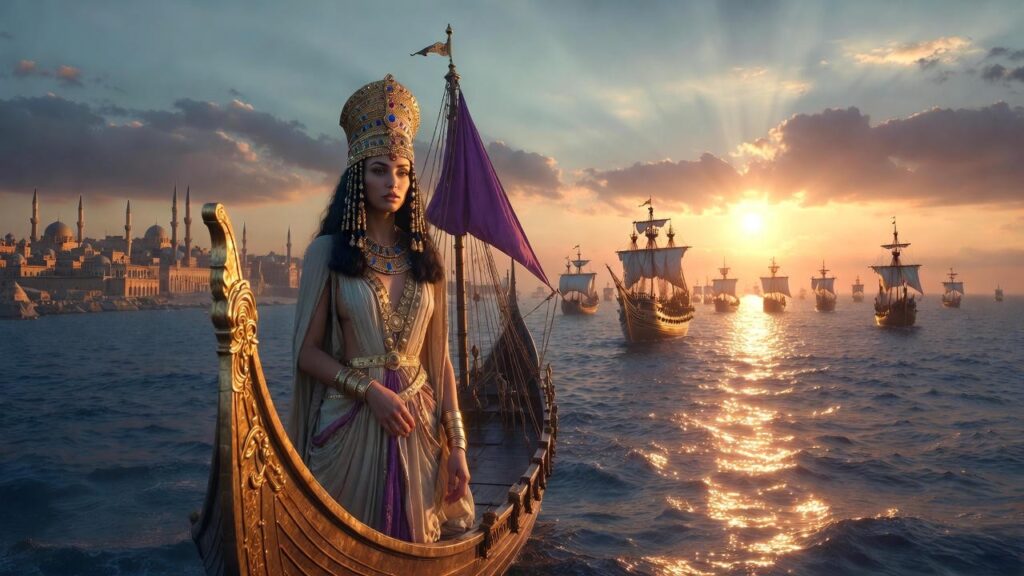
Original: “The barge she sat in, like a burnish’d throne, / Burn’d on the water. The poop was beaten gold; / Purple the sails, and so perfumed that / The winds were lovesick with them. The oars were silver, / Which to the tune of flutes kept stroke, and made / The water which they beat to follow faster, / As amorous of their strokes…”
Modern paraphrase: Her barge was like a shining throne burning on the water. The rear deck was hammered gold; purple sails so perfumed the winds fell in love with them. Silver oars rowed to flute music, making the water chase them eagerly, as if aroused by their strokes.
Analysis: Sensuous imagery (burning, lovesick winds, amorous water) mythologizes Cleopatra as Venus reborn. “It beggared all description” — beyond words. Cupid-like boys fan her; mermaids attend. Antony is left alone in the marketplace, air itself drawn to her. This speech immortalizes Cleopatra, contrasting Roman restraint with Egyptian allure.
Act 3 – War, Betrayal, and Shifting Allegiances
Act 3 marks the turning point: political alliances fracture, military disaster strikes, and personal loyalties begin to crack under pressure.
The act opens with tense negotiations and Caesar’s growing dominance. Antony and Cleopatra prepare for war against Octavius, but the famous Battle of Actium (compressed here into dramatic scenes) becomes the play’s catastrophic pivot.
Key passage – Antony’s decision to fight by sea (Act 3, Scene 7–8):
Cleopatra insists on joining the naval battle: “I will be even with thee” (matching Antony’s prowess). Enobarbus warns: “Your ships are not well manned… ’tis ignoble.” Antony overrides: “By sea, by sea.”
Modern insight: Historically, Antony’s choice to fight at sea (where Cleopatra’s fleet was strong) instead of land (where his legions excelled) is seen as strategic folly influenced by passion. Shakespeare presents it as tragic hubris mixed with love—Antony cannot bear to leave Cleopatra behind.
The battle’s aftermath (Scene 10): Scarus reports chaos—“The greater cantle of the world is lost / With very ignorance.” Cleopatra’s ships flee: “She once being loof’d, / The noble ruin of her magic, Antony… / Claps on his sea-wing and… / Like a doting mallard / Leaving the fight in height, flies after her.”
Line-by-line breakdown of Antony’s rage and despair (Act 3, Scene 11):
Antony: “All is lost! / This foul Egyptian hath betrayed me… / Triple-turned whore!”
Modern paraphrase: Everything is ruined! This treacherous Egyptian has betrayed me… you three-times faithless whore!
Analysis: “Triple-turned” accuses Cleopatra of infidelity (Caesar, Pompey, now flight). The animal imagery (“doting mallard”) reduces Antony to a foolish duck chasing its mate—self-loathing projected outward. Yet moments later, reconciliation: Cleopatra weeps, Antony forgives instantly. Their passion overrides strategy, sealing their doom.
Enobarbus’s growing disillusionment peaks here. He observes the lovers’ volatility and begins questioning loyalty, foreshadowing his desertion.
Act 4 – Decline and Despair
The act is a relentless downward spiral: false reports, desertions, remorse, and failed suicides.
Enobarbus defects to Caesar (Scene 5–6), but Caesar refuses to reward him, sending treasure instead. Alone, Enobarbus delivers one of Shakespeare’s most poignant soliloquies (Scene 9):
Original: “O sovereign mistress of true melancholy, / The poisonous damp of night disponge upon me, / That life, a very rebel to my will, / May hang no longer on me… / Throw my heart / Against the flint and hardness of my fault, / Which being dried with grief, will break to powder, / And finish all foul thoughts.”
Modern paraphrase: O queen of genuine sorrow, let the night’s poisonous moisture drench me so that this life (which rebels against my wish to die) no longer clings to me… I’ll smash my heart against the hard rock of my betrayal; dried by grief, it will shatter to dust and end my wicked thoughts.
Analysis: Enobarbus personifies melancholy as a “sovereign mistress.” The imagery of night’s “poisonous damp” and heart breaking to “powder” conveys absolute despair. He dies of a broken heart—literally—offering a choral commentary on the cost of abandoning loyalty.
Antony receives false news of Cleopatra’s death (Scene 14): “She’s dead… / The hand that hath made you fair hath made you / A coward.” In grief, he asks Eros to kill him. Eros kills himself instead. Antony falls on his sword but survives, mortally wounded.
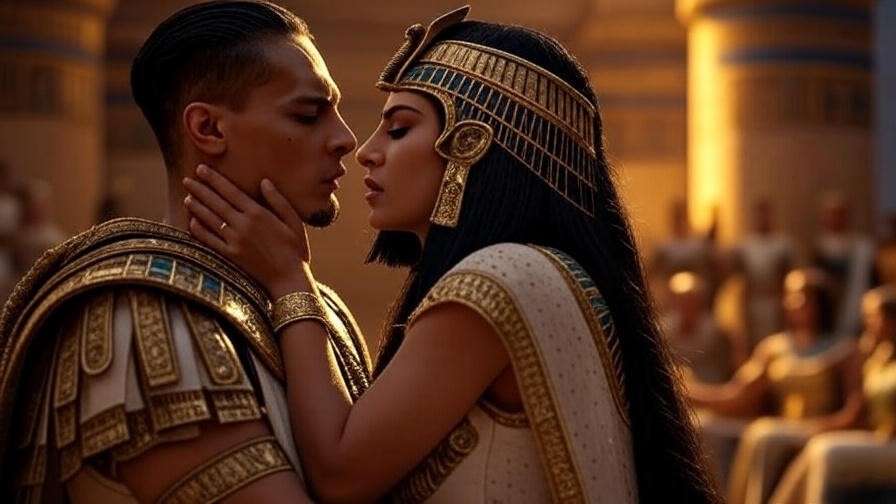
He is carried to Cleopatra’s monument: “I am dying, Egypt, dying… / Give me some wine, and let me speak in me.” The repetition underscores finality; “Egypt” as term of endearment shows love enduring to the last.
Act 5 – Tragic Climax and Immortality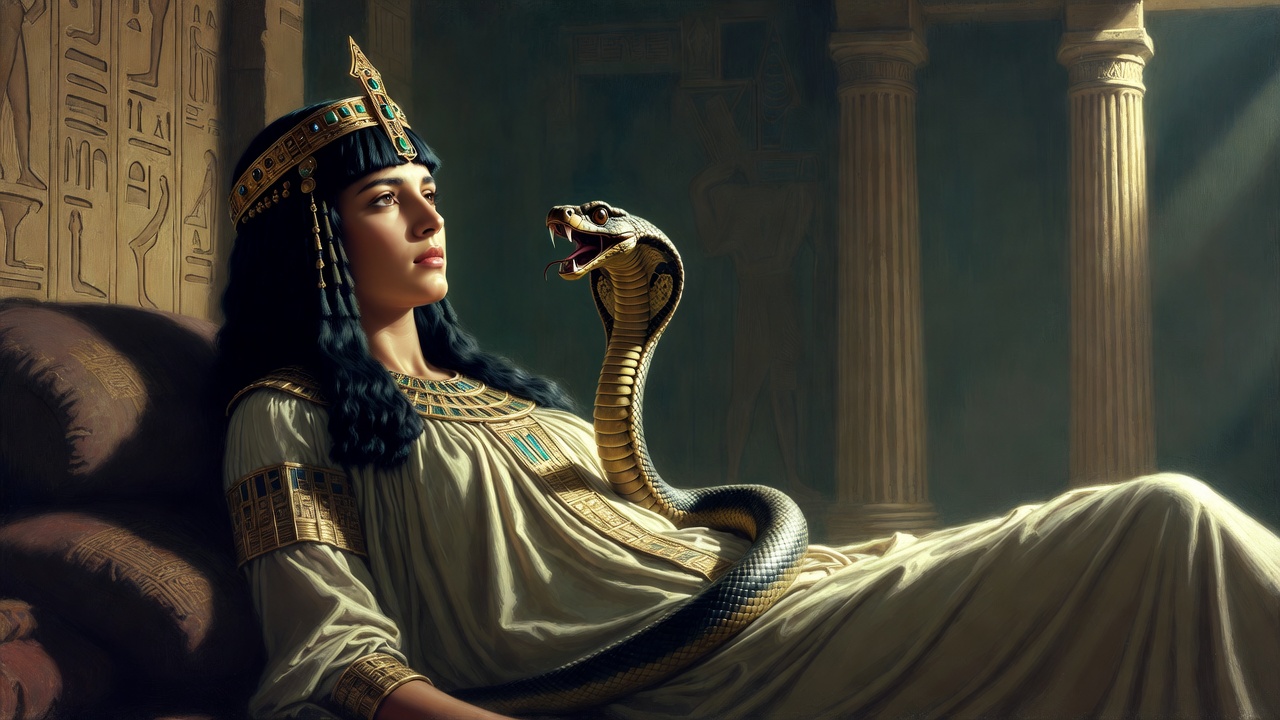
The final act belongs to Cleopatra. She barricades herself in her monument, negotiates with Caesar, but refuses humiliation.
Key passage – Cleopatra’s suicide (Scene 2):
After Antony’s body is brought to her, she mourns: “O withered is the garland of the war, / The soldier’s pole is fall’n… / Young boys and girls / Are level now with men.”
Then, resolute: “Give me my robe, put on my crown. I have / Immortal longings in me… / Husband, I come. / Now to that name my courage prove my title!”
She applies asps (venomous snakes): “Come, thou mortal wretch, / With thy sharp teeth this knot intrinsicate / Of life at once untie… / Peace, peace! / Dost thou not see my baby at my breast, / That sucks the nurse asleep?”
Modern paraphrase: Dress me in my royal robe and crown. I feel immortal desires within me… I come to you, my husband. Let my courage prove I deserve that title! … Come, deadly creature, with your sharp teeth untie at once this complicated knot of life… Peace! Don’t you see my baby at my breast, putting the nurse to sleep?
Analysis: Cleopatra stages her death as a regal, theatrical act—crown, robe, asp as “baby.” The nursing imagery transforms suicide into maternal/romantic consummation. She achieves immortality through legend: “My desolation does begin to make / A better life.”
Caesar enters, marvels at her dignity, and closes the play: “She shall be buried by her Antony… / No grave upon the earth shall clip in it / A pair so famous.”
The tragedy ends not in despair but in defiant transcendence—the lovers defeat Caesar’s political victory by choosing their own end.
Major Themes and Motifs Explained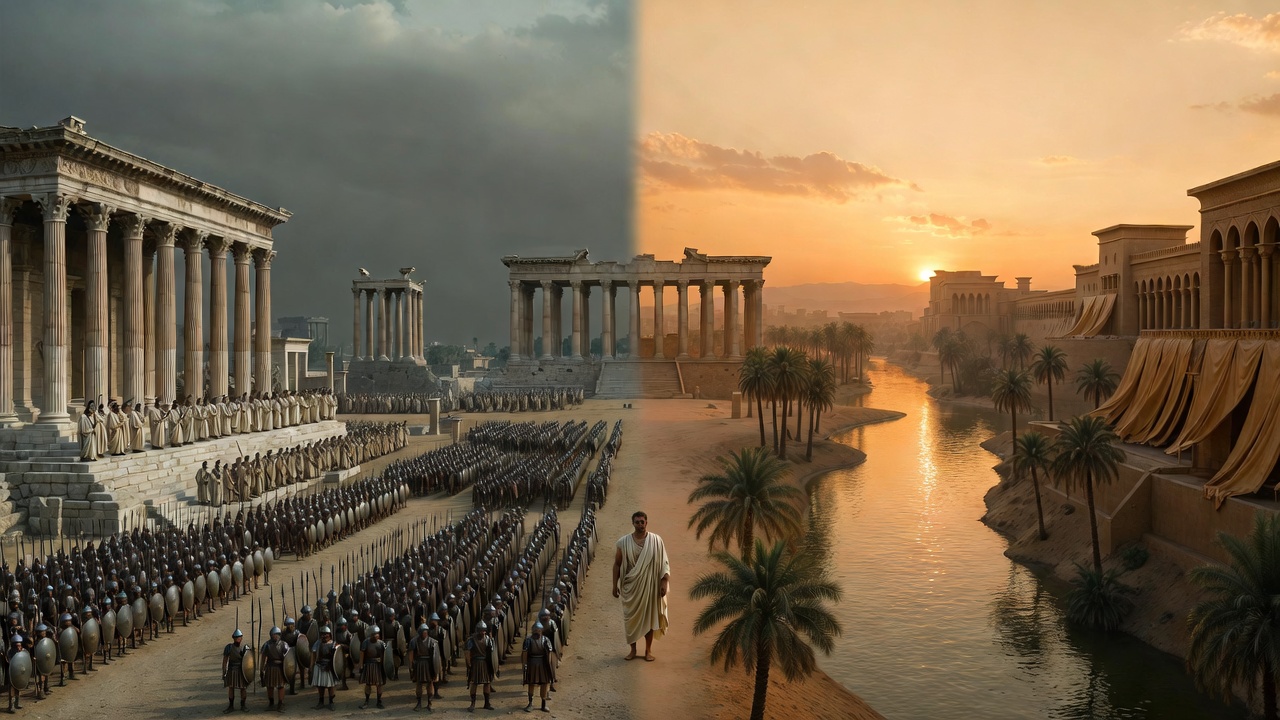
- Love vs. Duty / Private vs. Public: Antony’s choice of Cleopatra over Rome destroys both empire and self. Cleopatra prioritizes personal sovereignty over submission.
- East vs. West / Orientalism: Rome = order, masculinity, restraint; Egypt = fluidity, femininity, sensuality. Shakespeare critiques both—Roman coldness is sterile, Egyptian excess self-destructive.
- Mutability and “Infinite Variety”: Change is constant. Cleopatra thrives on it; Antony is destroyed by it.
- Gender and Power: Cleopatra wields agency through performance and sexuality, subverting patriarchal expectations.
- Performance and Role-Playing: Both protagonists constantly “act” their parts—Antony as Roman hero, Cleopatra as queen/seductress.
- Death and Immortality: Suicide grants them legendary status, outlasting Caesar’s empire.
Key Literary Devices and Language Analysis
Shakespeare employs rich imagery:
- Water/sea: Fluidity of Egypt, Actium’s disaster.
- Fire/burning: Passion’s consuming force.
- Serpents/asp: Cleopatra’s self-identification and weapon.
Blank verse dominates noble speech; prose appears in low-life or drunken scenes. Dramatic irony abounds—readers know historical outcomes, heightening tragedy.
Metaphors in Enobarbus’s barge speech and Cleopatra’s final lines elevate ordinary acts to mythic proportions.
Important Quotes with Explanations
- “Age cannot wither her, nor custom stale / Her infinite variety” (2.2) — Defines Cleopatra’s timeless allure.
- “Let Rome in Tiber melt…” (1.1) — Antony rejects empire for love.
- “The barge she sat in…” (2.2) — Mythologizes Cleopatra.
- “All is lost!” (3.10) — Turning point of defeat.
- “I am dying, Egypt, dying” (4.15) — Repeated for pathos.
- “Give me my robe…” (5.2) — Cleopatra’s regal suicide.
- “Finish, good lady, the bright day is done…” (5.2) — Charmian’s farewell.
Critical Perspectives and Interpretations
Feminist critics celebrate Cleopatra as a powerful woman who refuses subjugation. Postcolonial readings examine the East-West binary as early Orientalist stereotype, yet Shakespeare grants Egypt dignity and complexity. Performance history highlights iconic portrayals: Elizabeth Taylor (1963 film), Judi Dench, Harriet Walter—each revealing new layers of sensuality, intellect, or tragedy.
Scholars often call it Shakespeare’s most “baroque” work—excessive, ornate, emotionally extravagant—contrasting with the taut restraint of Othello or King Lear.
Study Tips and Exam Preparation
- Focus on key passages for close reading: barge speech, Actium aftermath, suicides.
- Common essay topics: “To what extent is Cleopatra responsible for Antony’s downfall?” or “How does Shakespeare present the conflict between Rome and Egypt?”
- Compare to Othello (jealousy/power) or Macbeth (ambition’s cost).
- Use annotated editions (Arden, Folger) alongside modern translations.
Antony and Cleopatra is Shakespeare at his most passionate and politically astute—a tragedy where love does not redeem but glorifies destruction. Through language of extraordinary beauty and psychological depth, the play transforms historical defeat into eternal legend. With this line-by-line guide, the dense verse becomes accessible, revealing why generations return to these lovers who choose infinity over empire.
Explore the full text, watch a performance, or revisit Plutarch—the tragedy grows richer with every encounter.
FAQs
What is the main conflict in Antony and Cleopatra? The central tension is between personal passion (Antony and Cleopatra’s love) and public duty (Roman empire-building), symbolized by the Rome–Egypt divide.
Why does Antony follow Cleopatra at Actium? Shakespeare portrays it as a tragic blend of love, trust, and strategic misjudgment—Antony cannot bear to fight without her, leading to disaster.
Is Cleopatra a tragic heroine or manipulative? Both. She is cunning and theatrical, yet her love is genuine and her death dignified—she manipulates to preserve autonomy, not mere cruelty.
How does the play end? Cleopatra stages a regal suicide by asp bite, joining Antony in death. Caesar acknowledges their fame but claims political victory.
What are the best modern translations or editions? The Folger Shakespeare Library edition (with facing-page notes), No Fear Shakespeare (full modern paraphrase), or Arkangel audio for performance feel.