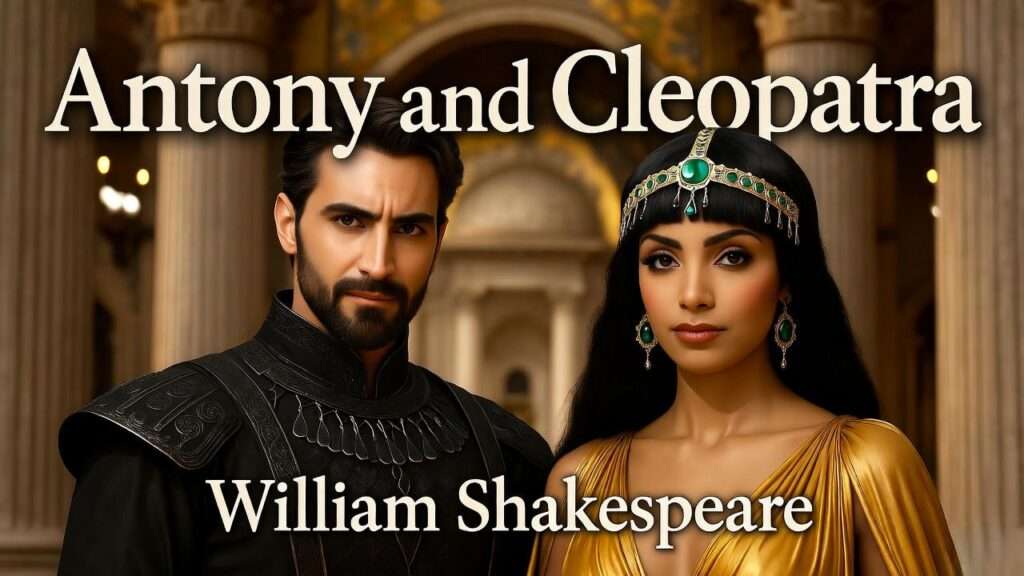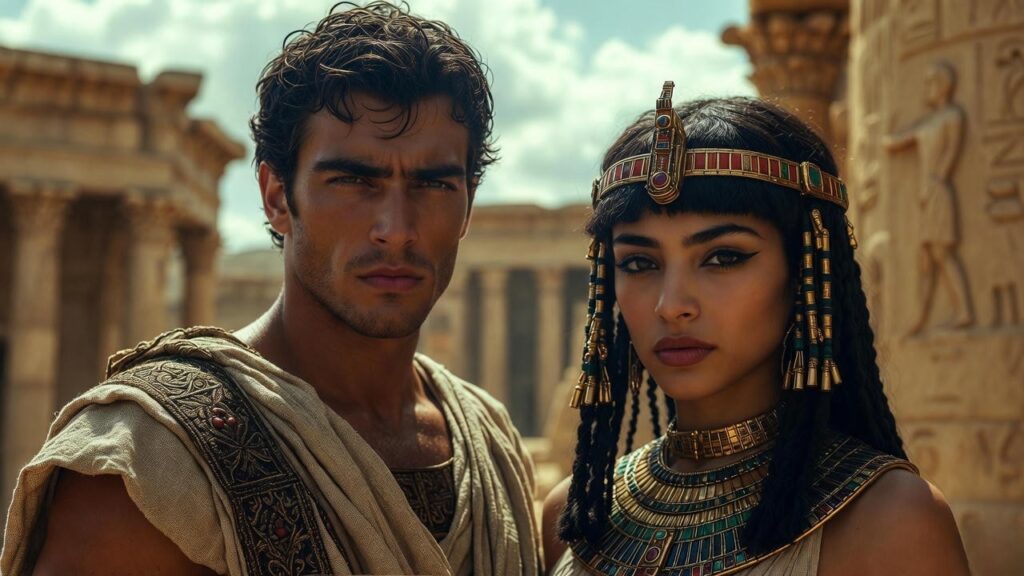
Few plays in the English language capture the intoxicating collision of love, ambition, and inevitable doom as powerfully as William Shakespeare’s Antony and Cleopatra. Written around 1606–1607, this towering tragedy explores the passionate, politically charged relationship between the Roman general Mark Antony and the Egyptian queen Cleopatra—two larger-than-life figures whose all-consuming love ultimately destroys them and reshapes empires.
If you’ve ever searched for Antony and Cleopatra quotes that capture the play’s emotional depth, rhetorical brilliance, and tragic grandeur, you know how overwhelming the full text can be. The language is dense, the speeches long, and the themes vast. That’s why we’ve curated and deeply analyzed the 20 most powerful lines from the play—quotes that stand alone as poetic masterpieces while revealing the heart of Shakespeare’s vision.
These carefully selected passages illuminate the central conflicts of love versus duty, passion versus politics, and mortality versus immortality. They showcase Shakespeare’s unparalleled command of metaphor, paradox, and psychological insight. Whether you’re a student preparing for an exam, an actor studying a role, a literature lover revisiting the play, or simply someone seeking the most memorable Shakespearean lines, this guide delivers exactly what you need: the best Antony and Cleopatra quotes, explained in context and with lasting relevance.
The Historical and Dramatic Context
Antony and Cleopatra is based on real historical events, primarily drawn from Plutarch’s Lives (via Sir Thomas North’s translation). Mark Antony, one of Julius Caesar’s most trusted generals, formed the Second Triumvirate with Octavius Caesar (the future Augustus) and Lepidus after Caesar’s assassination. Antony’s alliance with Cleopatra VII of Egypt, both political and romantic, threatened Octavius’s growing power and Rome’s vision of ordered empire.
Shakespeare transforms this history into one of his most emotionally complex tragedies. Unlike the clear moral framework of Macbeth or Othello, Antony and Cleopatra refuses easy judgments. Antony is neither villain nor hero; Cleopatra is neither mere seductress nor innocent victim. The play’s greatness lies in its refusal to choose between Rome’s cold rationality and Egypt’s sensual excess—both are shown to be incomplete.
The result is a tragedy that feels uniquely modern: a story of two powerful individuals whose private desires clash with the public demands of empire.
Why These 20 Quotes Matter
We selected these 20 lines based on four criteria:
- Emotional and thematic impact — they strike at the core conflicts of the play
- Linguistic brilliance — they showcase Shakespeare’s most memorable imagery and rhetoric
- Cultural staying power — many have become iconic in literature, theater, and popular culture
- Revealing character and philosophy — each line deepens our understanding of the speakers and the play’s worldview
20 Most Powerful Antony and Cleopatra Quotes
1. Cleopatra: “If it be love indeed, tell me how much.” (Act I, Scene i)
The play opens with Cleopatra’s teasing challenge to Antony. This single line immediately establishes her as a master of emotional manipulation and erotic power. She demands quantification of love—an impossible task—while simultaneously asserting her control over the conversation.
The question is both playful and profound: it exposes the tension between love’s infinite nature and the human desire to measure it. Cleopatra already knows that true love cannot be contained in words, yet she forces Antony to confront that limitation.
2. Antony: “Let Rome in Tiber melt, and the wide arch / Of the ranged empire fall!” (Act I, Scene i)
In response to Cleopatra’s challenge, Antony delivers one of the most defiant declarations in all of Shakespeare. He is willing to let the entire Roman Empire collapse for the sake of their love.
This hyperbolic image—Rome dissolving into the Tiber—captures Antony’s reckless passion and foreshadows the catastrophic consequences of his choice. It is also a stunning reversal of Roman values: empire and duty are subordinated to private desire.
3. Antony: “The business of the world is not for me.” (Act I, Scene i)
A quieter but equally revealing line. Antony acknowledges that he is no longer fit for the political world he once dominated. This moment of self-awareness is both tragic and liberating—he has chosen love over power, knowing the cost.
4. Cleopatra: “My salad days, / When I was green in judgment…” (Act I, Scene v)
Cleopatra’s famous reflection on her youthful affair with Julius Caesar. The phrase “salad days” has entered the English language as a metaphor for youthful inexperience.
What makes the line extraordinary is Cleopatra’s self-awareness and humor. She mocks her younger self while simultaneously asserting her current sophistication and power.
5. Enobarbus: “Age cannot wither her, nor custom stale / Her infinite variety.” (Act II, Scene ii)
Perhaps the most famous line in the play. Spoken by Antony’s loyal friend Enobarbus, this tribute to Cleopatra’s enduring allure is one of Shakespeare’s greatest poetic achievements.
The phrase “infinite variety” captures Cleopatra’s ability to constantly reinvent herself—both as lover and political strategist. It also explains why Antony cannot leave her, despite knowing she is dangerous.
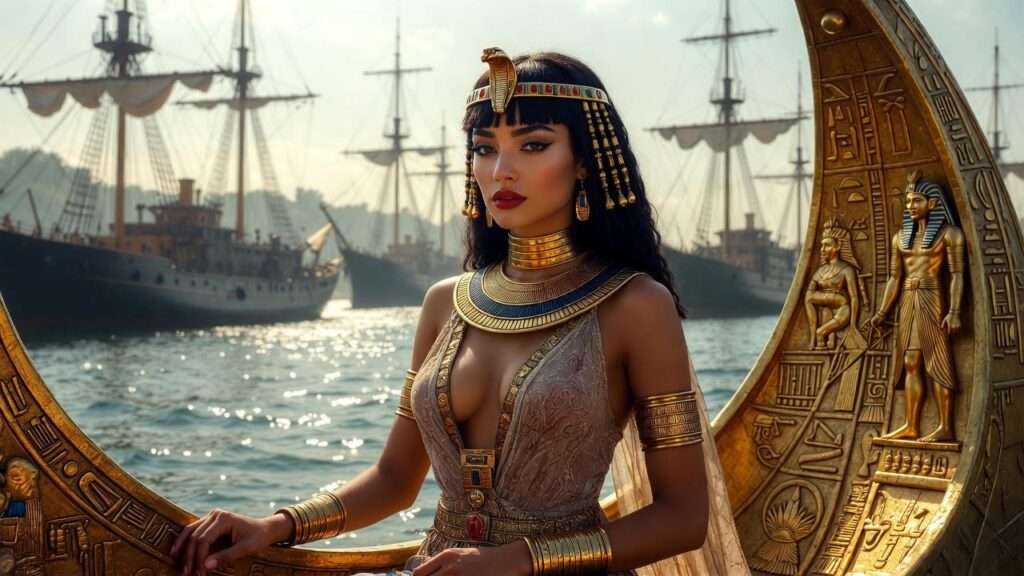
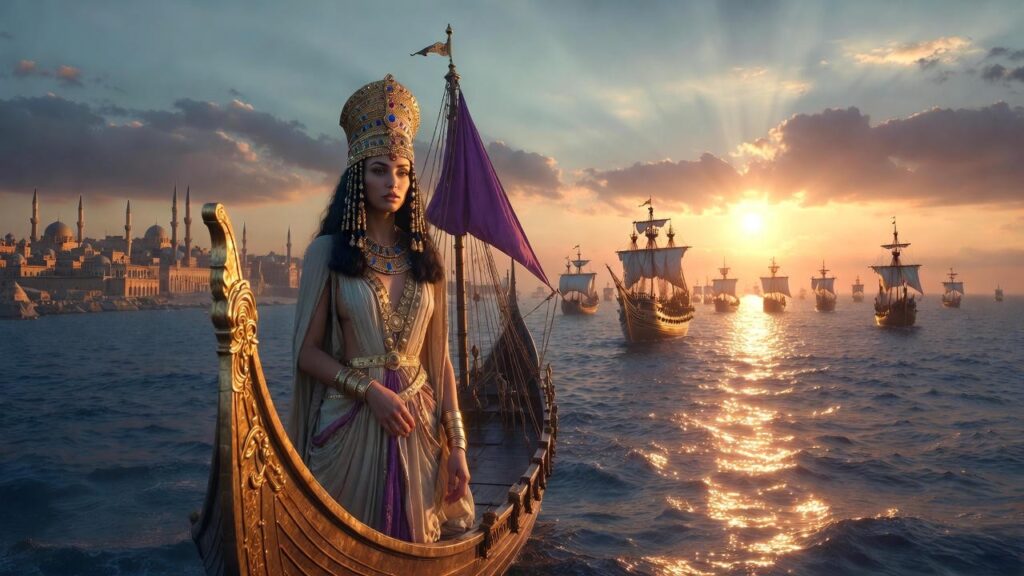
6. Enobarbus: “The barge she sat in, like a burnished throne…” (Act II, Scene ii)
The beginning of Enobarbus’s legendary description of Cleopatra’s arrival at Cydnus. The speech is a masterpiece of visual and sensual language, transforming Cleopatra into a goddess-like figure.
Shakespeare uses this passage to show how Cleopatra’s power is partly theatrical—she stages her own myth.
7. Antony: “All is lost! / This foul Egyptian hath betrayed me.” (Act IV, Scene xii)
In a moment of despair, Antony believes Cleopatra has betrayed him to Octavius. The raw pain and misogynistic fury in these lines reveal how deeply Antony has internalized Roman prejudices against Cleopatra.
8. Antony: “I am dying, Egypt, dying.” (Act IV, Scene xv)
Repeated three times, this simple phrase is one of the most moving death speeches in Shakespeare. The repetition conveys both physical agony and emotional finality. Antony addresses Cleopatra as “Egypt,” elevating her to the status of a nation.
9. Cleopatra: “Give me my robe, put on my crown. I have / Immortal longings in me.” (Act V, Scene ii)
Cleopatra’s preparations for death are regal and deliberate. She refuses to be led in triumph by Octavius and instead chooses a queenly suicide.
The phrase “immortal longings” is profoundly beautiful—it expresses her desire to transcend mortality through death itself.
10. Cleopatra: “Husband, I come.” (Act V, Scene ii)
Cleopatra’s final words to Antony as she applies the asp. The simplicity and intimacy of “Husband, I come” contrast with the grandeur of the scene, making her suicide feel like a reunion rather than an end.
11. Antony: “The breaking of so great a thing should make / A greater crack.” (Act IV, Scene xv)
Spoken as Antony dies, this line reflects on the cosmic significance of his fall. Shakespeare suggests that the death of such a great man should shake the world itself.
12. Cleopatra: “His face was as the heavens…” (Act V, Scene ii)
In her final speech, Cleopatra mythologizes Antony, transforming him into a god-like figure. The imagery elevates their love to cosmic proportions.
13. Cleopatra: “O Antony, Antony, Antony!” (Act V, Scene ii)
Three simple repetitions of Antony’s name convey overwhelming grief more powerfully than any elaborate metaphor could.
14. Antony: “I made these wars for Egypt, and the queen…” (Act IV, Scene xiv)
A moment of bitter self-recrimination. Antony acknowledges that his military campaigns were ultimately for Cleopatra’s sake—a devastating admission.
15. Cleopatra: “My desolation does begin to make / A better life.” (Act V, Scene ii)
One of Cleopatra’s most profound lines. She suggests that losing everything has paradoxically freed her to live more authentically.
16. Enobarbus: “I will go seek / Some ditch wherein to die…” (Act IV, Scene vi)
Enobarbus’s tragic decision to die alone after deserting Antony. His self-punishment reveals the depth of his loyalty and guilt.
17. Cleopatra: “Finish, good lady; the bright day is done, / And we are for the dark.” (Act V, Scene ii)
Cleopatra’s final command to her maids before applying the asp. The line carries a sense of calm acceptance of death.
18. Antony: “Kiss me through the iron bars of my cage.” (Act IV, Scene xv)
A poignant image of Antony’s imprisonment—both literal and metaphorical. He is trapped by his own choices.
19. Cleopatra: “I shall show my duty to my lord and master.” (Act V, Scene ii)
Spoken ironically to Octavius, Cleopatra pretends submission while plotting her suicide. The line demonstrates her mastery of performance.
20. Octavius: “She shall be buried by her Antony: / No grave upon the earth shall clip in it / A pair so famous.” (Act V, Scene ii)
Octavius’s final acknowledgment of their legend. Even the victor recognizes the mythic quality of their love.
Key Themes Illuminated by These Quotes
Love vs. Duty / Passion vs. Politics
The play’s central conflict is embodied in Antony’s choice between Cleopatra and Rome. Quotes like “Let Rome in Tiber melt” and “The business of the world is not for me” show Antony’s complete surrender to passion.
Power and Empire
Cleopatra’s theatricality and Antony’s military campaigns are both expressions of power. Yet the play questions whether personal power can ever coexist with imperial responsibility.
Mortality and Immortality
Both protagonists seek to transcend death through love and legend. Cleopatra’s “immortal longings” and Antony’s “I am dying, Egypt, dying” reflect this desire.
Gender and Performance
Cleopatra’s power lies in her ability to stage herself. Lines like “Age cannot wither her” and “My salad days” reveal her constant reinvention.
Language as Power
Shakespeare demonstrates that words can shape reality. Cleopatra’s rhetoric and Antony’s hyperbole are as potent as any army.
How Antony and Cleopatra Quotes Live On Today
Lines from the play have permeated popular culture. “Age cannot wither her” appears in novels, songs, and political commentary. The 1963 film starring Elizabeth Taylor and Richard Burton cemented the play’s romantic legend.
Modern productions continue to find new relevance—whether exploring toxic relationships, political power struggles, or gender dynamics.
Expert Insights and Performance Notes
Actors often describe Cleopatra as one of the most challenging roles in Shakespeare—requiring immense emotional range and physical presence. Antony’s death scene demands vulnerability beneath bravado.
Directors frequently debate whether to portray Cleopatra as manipulative or genuinely in love. The barge speech (Enobarbus’s description) is often a highlight of any production.
The 20 quotes we’ve explored reveal why Antony and Cleopatra remains one of Shakespeare’s most enduring tragedies. They capture the ecstasy and agony of love, the seductive pull of power, and the inevitability of death.
We invite you to return to the full play with fresh eyes—these lines will resonate even more deeply in context. Which of these quotes speaks most powerfully to you? Share your thoughts in the comments below.
FAQs
What is the most famous quote from Antony and Cleopatra? “Age cannot wither her, nor custom stale / Her infinite variety” (Enobarbus, II.ii) is widely considered the play’s most iconic line.
Is Antony and Cleopatra a true tragedy or a romance? It is a tragedy, though one that refuses easy moral judgment. The lovers’ deaths are inevitable, but their passion is presented as magnificent.
What is the meaning of “Age cannot wither her…”? It means Cleopatra’s allure never fades—time and familiarity cannot diminish her fascination.
Why does Cleopatra call herself “the serpent of old Nile”? She embraces the image of herself as both dangerous and regal, aligning herself with Egypt’s ancient mythology.
Where can I read the full text of Antony and Cleopatra online? The Folger Shakespeare Library and MIT’s Internet Shakespeare Editions offer excellent free editions.