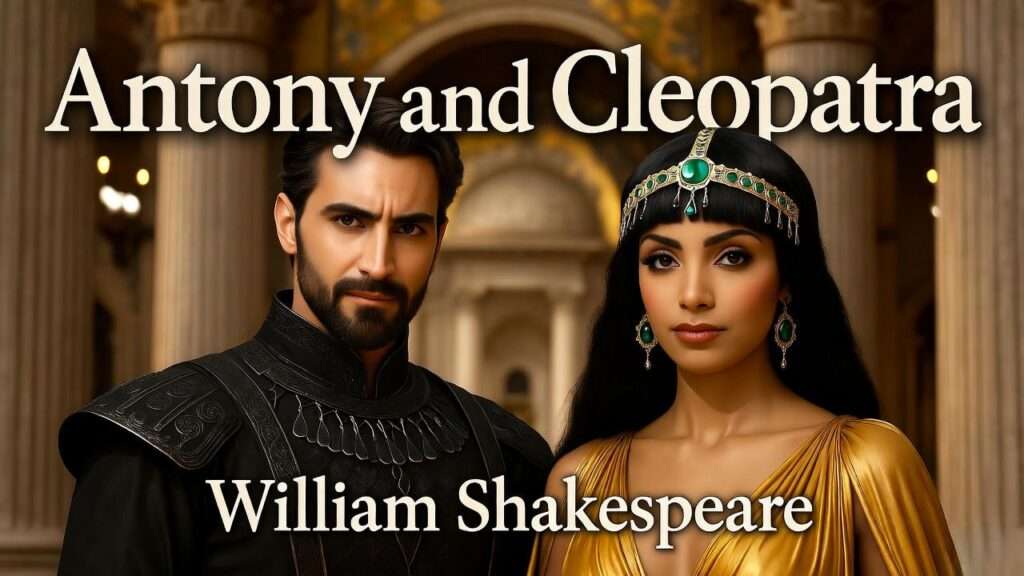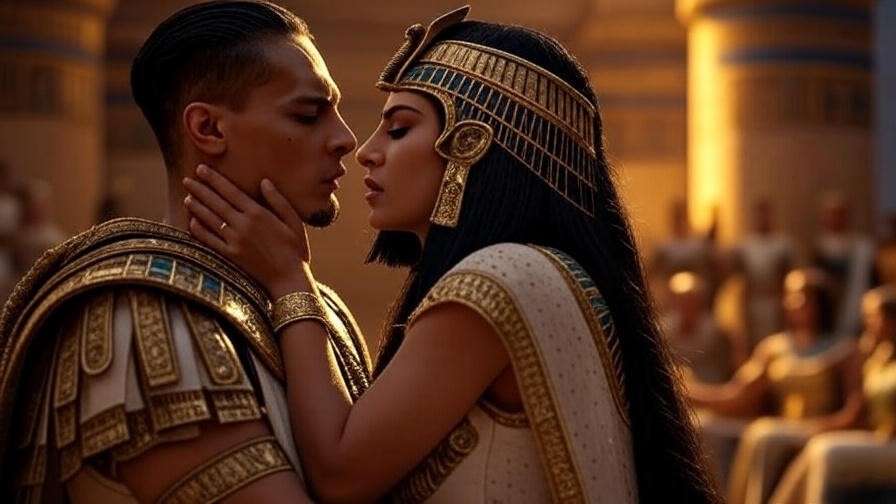
“Let Rome in Tiber melt, and the wide arch / Of the ranged empire fall! Here is my space.” These electrifying words from Mark Antony in the very first scene of Antony and Cleopatra instantly plunge us into the heart of Shakespeare’s most intoxicating tragedy: a world where boundless passion threatens to dissolve the foundations of empire itself.
Antony and Cleopatra (written around 1606–1607) stands as one of Shakespeare’s supreme achievements in tragedy, drawing from Plutarch’s Lives to weave history, romance, politics, and existential drama into a tapestry of human contradiction. Unlike the tightly focused personal downfall in Othello or Macbeth, this play spans continents, contrasting the disciplined, masculine world of Rome with the sensual, fluid realm of Egypt. At its core lies the explosive relationship between Mark Antony, one of Rome’s triumvirs, and Cleopatra, Queen of Egypt—a liaison that defies political logic and invites catastrophe.
Antony and Cleopatra summary Act 1 is essential because this opening act masterfully lays the groundwork for everything that follows. In just five scenes, Shakespeare establishes the central binary opposition—Rome versus Egypt, duty versus passion—introduces the protagonists’ all-consuming love, foreshadows betrayal and political upheaval, and plants the seeds of tragedy through Antony’s internal conflict. Readers, students preparing for exams, teachers crafting lessons, or enthusiasts seeking deeper insight often turn to Act 1 summaries to grasp how Shakespeare transforms historical figures into timeless archetypes of desire and obligation.
This comprehensive guide delivers far more than a basic recap. It offers a detailed scene-by-scene breakdown, close analysis of key quotes, thematic exploration, character development insights, literary devices, historical context, and practical study tools. Whether you’re analyzing for GCSE, A-Level, college essays, or personal appreciation, this article equips you to understand why Act 1 remains one of Shakespeare’s most brilliant dramatic openings—setting up a conflict that resonates across centuries.
Overview of Act 1 – Structure and Setting
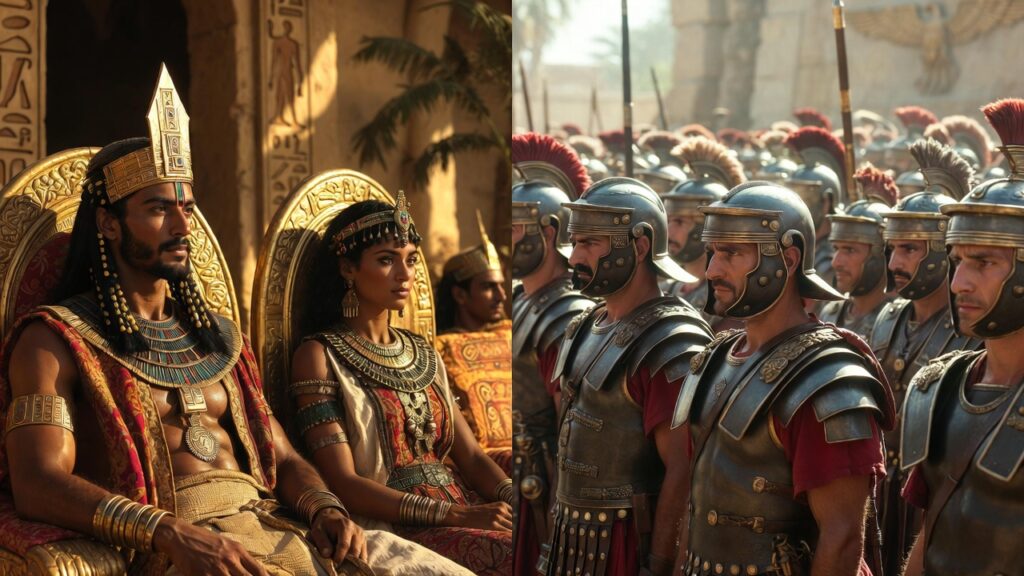
Act 1 unfolds primarily in Alexandria, Egypt, with a brief but crucial shift to Rome in Scene 4. This geographical contrast is deliberate: Egypt’s opulent, pleasure-seeking court stands in stark opposition to Rome’s austere, duty-bound atmosphere. The act comprises five scenes that alternate perspectives, building dramatic tension through juxtaposition.
- Scenes 1–3 and 5 remain in Cleopatra’s palace, immersing us in the luxurious, emotional world of Egypt.
- Scene 4 transports us to Rome, where Octavius Caesar and Lepidus view Antony’s behavior with contempt.
Structurally, Act 1 serves multiple purposes: it introduces the main characters, establishes the geopolitical stakes of the Second Triumvirate (Antony, Octavius Caesar, and Lepidus ruling the Roman world after Julius Caesar’s assassination), and ignites the central conflict. Antony, once Rome’s heroic general, now appears “transformed / Into a strumpet’s fool” (Philo, 1.1.12–13). Cleopatra, enigmatic and theatrical, wields power through charm and manipulation. The act ends with Cleopatra’s wistful longing, underscoring how love sustains itself through memory and absence.
By the close of Act 1, Shakespeare has already foreshadowed the tragedy: passion may dazzle, but duty—ignored—will exact its price.
Scene-by-Scene Summary and Analysis
Act 1, Scene 1 – Antony’s “Dotage” and the Birth of the Conflict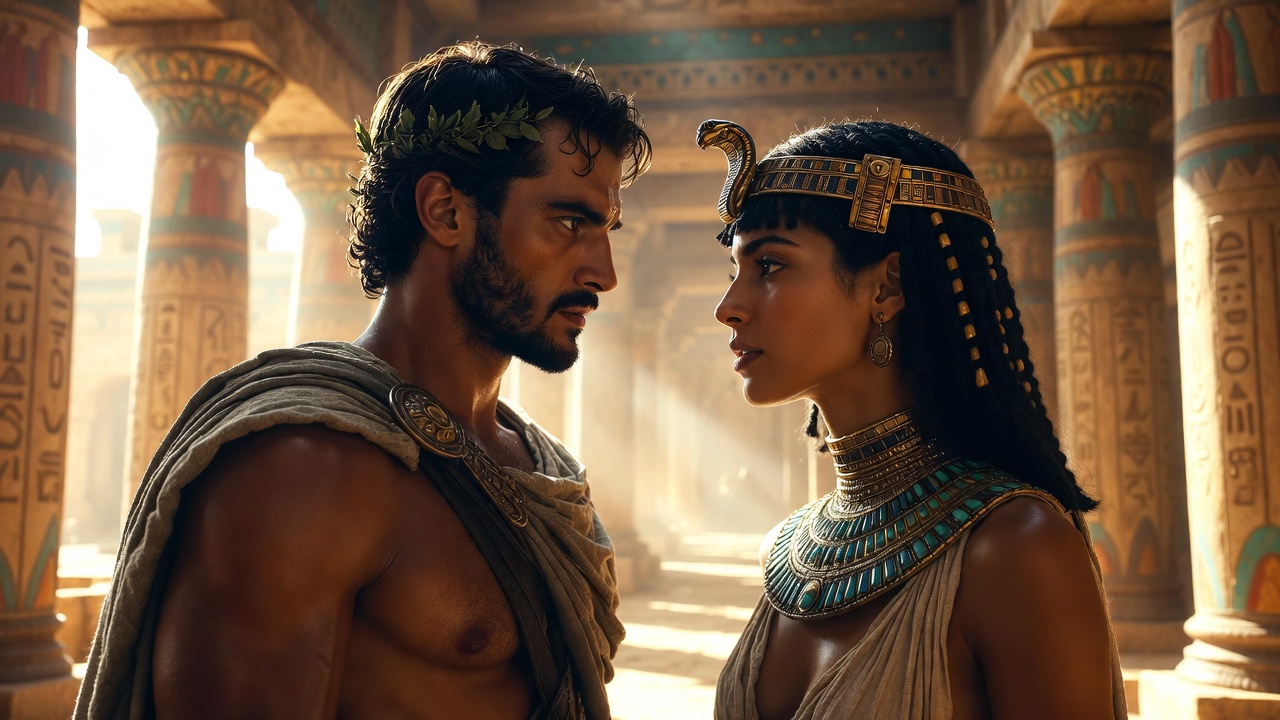
The play opens not with the lovers but with two Roman soldiers, Philo and Demetrius, who lament Antony’s downfall. Philo describes how Antony’s “dotage” (foolish infatuation) “o’erflows the measure” (1.1.1), transforming the once-mighty warrior—whose eyes once “glowed like plated Mars”—into a servant fawning over a “tawny front” and “gypsy’s lust” (1.1.6–10). This Roman perspective frames Antony as a fallen hero, introducing the theme of decline through excess.
Antony and Cleopatra enter amid fanfare, attended by eunuchs fanning the queen. Cleopatra teases Antony to quantify his love: “If it be love indeed, tell me how much” (1.1.14). Antony replies famously: “There’s beggary in the love that can be reckoned” (1.1.15)—love, he insists, transcends measurement. When messengers arrive from Rome bearing urgent news, Cleopatra urges Antony to hear them, but he dismisses the interruption: “Let Rome in Tiber melt, and the wide arch / Of the ranged empire fall! Here is my space. / Kingdoms are clay” (1.1.33–35). He declares their mutual passion as “the nobleness of life” (1.1.37).
Analysis: Shakespeare uses dramatic irony—Philo’s scornful aside (“the triple pillar of the world / Transform’d / Into a strumpet’s fool,” 1.1.12–13) contrasts sharply with the lovers’ ecstatic exchange. The hyperbolic language (“melt,” “fall,” “new heaven, new earth”) establishes Egypt’s association with boundless emotion and hyperbole, while Philo’s military metaphors evoke Rome’s ordered world. This scene masterfully introduces the duty-passion divide: Antony rejects empire for Cleopatra, yet the messengers’ presence hints that Rome will not be ignored forever.
Act 1, Scene 2 – Fortune, Omens, and Antony’s Call to Duty
The scene shifts to Cleopatra’s attendants—Charmian, Iras, Alexas, and Enobarbus—who jest with a Soothsayer. The fortune-teller predicts ironic fates: Charmian and Iras will outlive their mistress, but their wishes for marriage or children are mocked. Enobarbus quips cynically about women’s appetites.
Messengers arrive with grave news: Antony’s wife Fulvia has died after warring against Caesar; Pompey threatens rebellion with a powerful fleet; Parthians advance in the East. Antony, initially distracted, absorbs the tidings. Learning of Fulvia’s death, he reflects: “The hand could pluck her back that shoved her on” (1.2.128), showing regret mixed with relief. A “Roman thought” strikes him—he must return to Rome to address the crises.
Analysis: Comic banter provides relief before serious politics intrude, highlighting Egypt’s hedonism. The Soothsayer introduces fate and omens, foreshadowing doom. Antony’s shift from indulgence to resolve reveals his torn nature: passion pulls him to Cleopatra, duty to Rome. Enobarbus emerges as a witty, loyal observer—his cynicism balances the emotional excess.
Act 1, Scene 3 – Cleopatra’s Manipulation and Emotional Farewell
Cleopatra, sensing Antony’s impending departure, feigns illness and jealousy to detain him. She accuses him of coldness, mocks Fulvia, and dramatizes her grief: “If you find him sad, / Say I am dancing; if in mirth, report / That I am sudden sick” (1.3.3–5). Their argument escalates—Cleopatra calls him a “hercules” turned “painted” (1.3.84–85), while Antony defends his honor. He reassures her of his love, kisses her farewell, and departs with promises to return.
Analysis: This scene showcases Cleopatra’s theatricality and emotional power. Her manipulation is both strategic and genuine—vulnerability beneath control. Antony asserts Roman duty (“My sword and buckler”) yet yields to passion (“My oblivion is a very Antony,” 1.3.90). Gender dynamics emerge: Cleopatra wields influence through emotion, challenging Roman patriarchy.
Act 1, Scene 4 – Rome’s Perspective: Caesar’s Disdain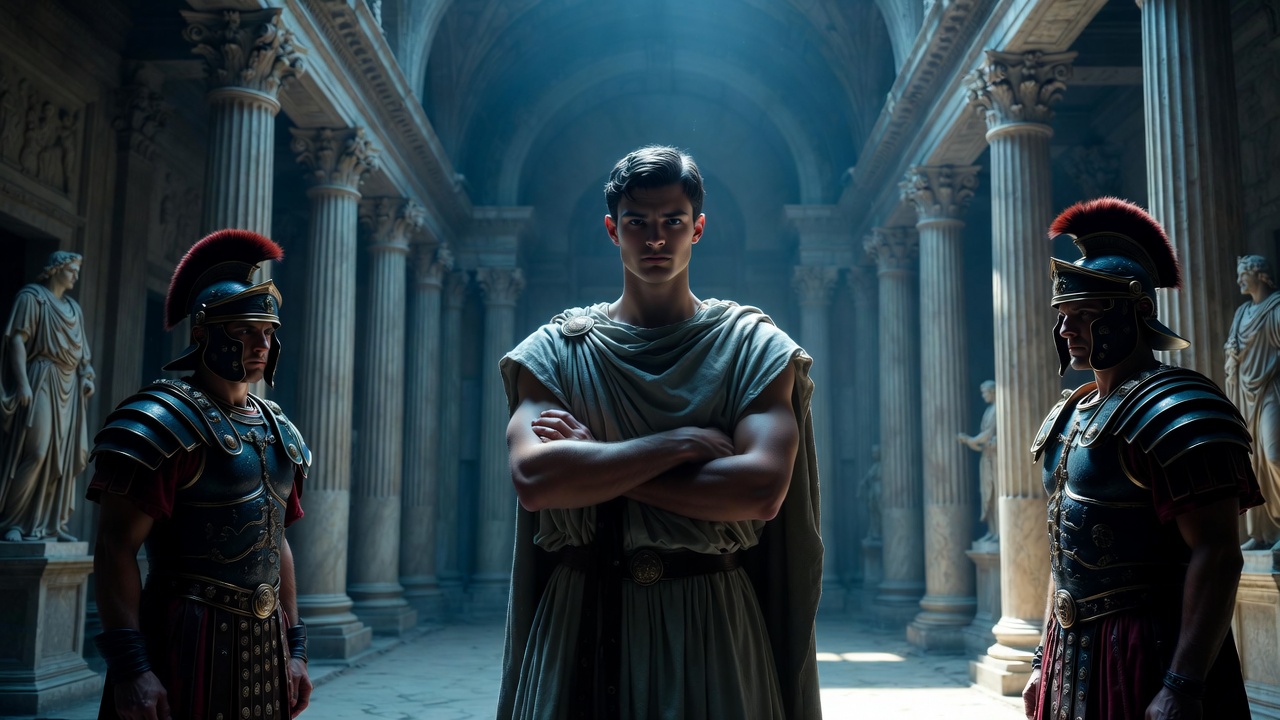
The action now relocates decisively to Rome. Octavius Caesar and Lepidus, the other two members of the Second Triumvirate, confer in a sober, austere setting that immediately contrasts with the lavish Egyptian court. Caesar reads reports of Antony’s behavior with evident contempt. He describes how Antony has abandoned his military duties to revel in Egypt:
“He fishes, drinks, and wastes / The lamps of night in revel; is not more manlike / Than Cleopatra, nor the queen of Ptolemy / More womanly than he” (1.4.4–7).
Caesar paints a vivid picture of Antony’s degeneration: “reel[ing] / From Alexandria” and living “like a libertine” (1.4.55–56). Yet even in his criticism, Caesar acknowledges Antony’s former greatness, calling him a man who once “would stand and make his eyes grow in my brow” (1.4.31). The scene also introduces the rising threat of Sextus Pompey, whose naval power now challenges the Triumvirate’s authority.
Lepidus attempts to moderate Caesar’s anger, but Caesar remains cold and calculating, already positioning himself as the disciplined leader who will restore order.
Analysis: This scene functions as a deliberate counterpoint. While Egypt is associated with melting boundaries, overflowing emotion, and sensuality, Rome is defined by restraint, measurement, and hierarchy. Caesar’s language is clipped and judgmental; he measures worth in terms of martial discipline and political utility. The contrast sharpens the play’s central dialectic: Rome represents control and empire-building, Egypt surrender to desire. Importantly, Caesar’s disdain is not mere jealousy—it is strategic. He sees Antony’s “Egyptian” behavior as a political liability that he can exploit.
Act 1, Scene 5 – Cleopatra’s Longing and Reflection
Back in Alexandria, Cleopatra lounges with her attendants, restless in Antony’s absence. She recalls past lovers—Julius Caesar and Pompey the Great—yet insists that Antony surpasses them: “Broad-fronted Caesar, / When thou wast here above the ground, I was / A morsel for a monarch” (1.5.29–31). She daydreams erotically about Antony, imagining him armored and heroic, then playfully asks Charmian to imagine him thinking of her.
A messenger arrives bearing a pearl from Antony—a token of his devotion. Cleopatra kisses the pearl and declares she will “piece / That piece of virtue” (1.5.44) by sending him a kiss in return. The scene closes on her wistful, sensual reverie: “My salad days, / When I was green in judgment, cold in blood, / To say as I said then” (1.5.73–75).
Analysis: This intimate, almost confessional scene reveals layers of Cleopatra’s character rarely seen in the earlier, performative moments. She is both regal and vulnerable, powerful yet haunted by memory. The “salad days” line—now a famous idiom—underscores her self-awareness: she recognizes her youthful inexperience, yet uses nostalgia strategically to sustain desire. The pearl becomes a potent symbol of love’s materiality—something small yet priceless, mirroring the way personal passion can outweigh empires. Egypt here is not merely excess but also memory, longing, and imaginative richness.
Major Themes Introduced in Act 1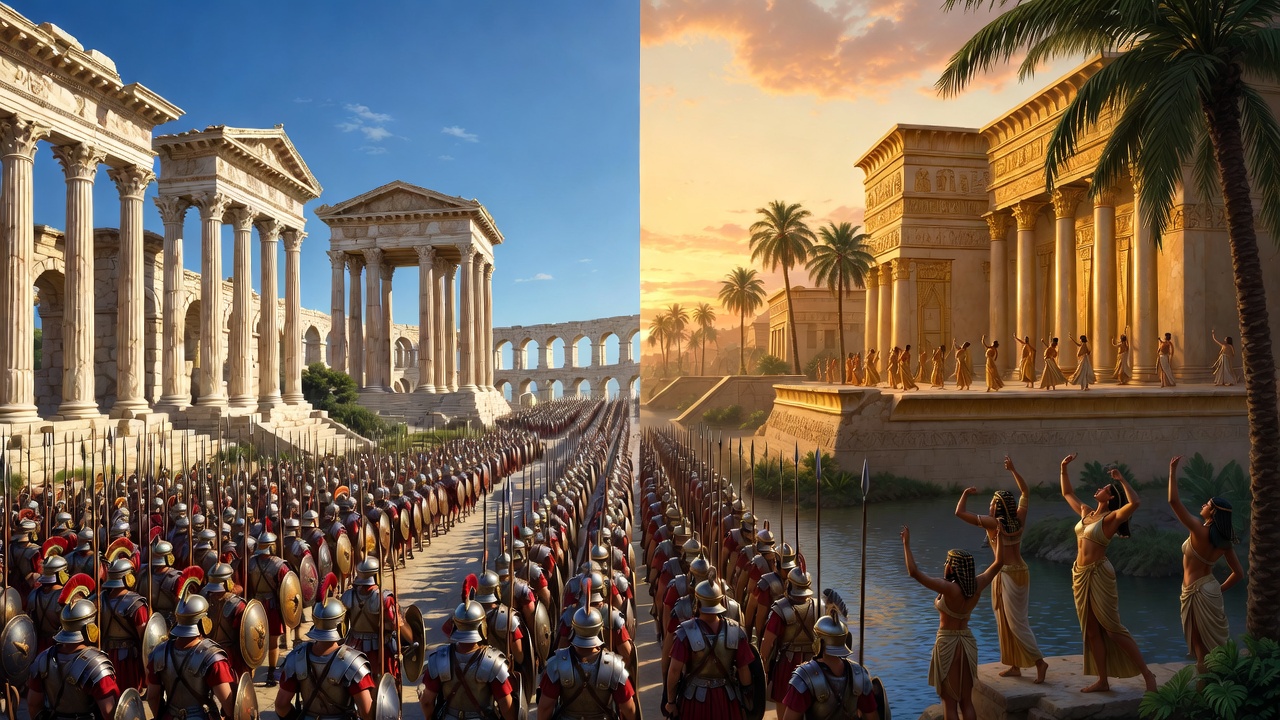
Shakespeare plants several enduring themes in Act 1 that will reverberate throughout the tragedy:
- Duty versus Passion / Rome versus Egypt The binary is established immediately and reinforced at every turn. Rome = discipline, measurement, empire, masculinity; Egypt = excess, fluidity, pleasure, femininity. Antony’s rejection of “the business of the state” for “Here is my space” crystallizes the conflict.
- Love and Power Dynamics The lovers’ relationship is mutual yet asymmetrical. Cleopatra manipulates through emotion and performance; Antony yields through passion and guilt. Their love is both liberating and destructive.
- Identity and Transformation Antony’s “dotage” signals a radical shift in identity—from Roman hero to Egyptian lover. Cleopatra’s theatricality suggests identity itself is performative.
- Fate, Fortune, and Omens The Soothsayer’s cryptic predictions introduce the idea that destiny may already be written, even as characters believe they exercise free will.
- Political Instability and Empire The Triumvirate is fragile; Pompey’s rebellion and Parthian threats remind us that personal passion occurs against a backdrop of crumbling Roman order.
Character Development in Act 1
- Mark Antony Presented initially through others’ eyes (Philo’s scorn), then in his own ecstatic voice. We see the heroic general beneath the lover, but also the guilt and division that will doom him.
- Cleopatra Multifaceted from the start: regal, manipulative, vulnerable, witty, sensual. She is never merely a seductress; she is a political actor who understands power’s theatrical dimension.
- Octavius Caesar Cold, disciplined, ambitious. Already the future Augustus, he views emotion as weakness and positions himself as Rome’s savior.
- Supporting Characters Enobarbus’s sardonic loyalty provides comic relief and moral commentary. Philo and Demetrius represent traditional Roman values. Charmian, Iras, and Alexas embody Egypt’s loyalty and sensuality.
Key Literary Devices and Shakespeare’s Craft in Act 1
- Imagery of excess and dissolution: “melt,” “o’erflows,” “reel,” “waste the lamps of night.”
- Juxtaposition: Alternating scenes between Egypt and Rome create dramatic tension.
- Hyperbole: Especially in the lovers’ language, reflecting Egyptian emotional scale.
- Dramatic irony: The audience knows Rome’s messengers will eventually prevail.
- Language contrast: Poetic, flowing verse in Egypt; clipped, measured prose in Rome.
Historical and Literary Context
Shakespeare drew heavily from Thomas North’s 1579 translation of Plutarch’s Parallel Lives, particularly the life of Antony. However, he transformed Plutarch’s moralistic history into a tragedy of passion. Where Plutarch condemns Antony’s “ dotage,” Shakespeare makes the love both glorious and tragic.
For Elizabethan and Jacobean audiences, the play resonated with anxieties about empire, gender roles, and the tension between public duty and private desire—issues heightened by Queen Elizabeth I’s recent death and James I’s ascension.
Study Tips and Essay Ideas for Act 1
- Quote analysis technique: Always embed quotes in context, then analyze language, imagery, and dramatic function.
- Common exam questions: – How does Shakespeare establish the Rome–Egypt opposition in Act 1? – To what extent is Antony responsible for his own downfall from the opening act? – Explore Cleopatra’s power in Act 1.
- Thesis examples: – “In Act 1, Shakespeare uses geographical and linguistic contrast to present love not as mere indulgence, but as a force capable of dissolving empire itself.” – “Cleopatra’s theatricality in Act 1 reveals a queen who wields emotion as strategically as Caesar wields armies.”
Frequently Asked Questions (FAQs)
What is the main conflict introduced in Act 1? The central tension between personal passion (embodied by Antony and Cleopatra’s love) and public duty (Rome’s political and military demands).
Why does Antony ignore Rome at first? He is intoxicated by love and Cleopatra’s world, declaring that “Kingdoms are clay” compared to their passion.
How does Cleopatra manipulate Antony in Scene 3? Through feigned jealousy, illness, and dramatic grief—tactics that both control and reveal her genuine fear of losing him.
What does the pearl symbolize in Scene 5? A tangible token of Antony’s devotion; small yet infinitely valuable, paralleling how personal love outweighs political power.
How does Caesar view Antony? As a fallen hero who has become effeminate and irresponsible, a threat to Roman stability.
Act 1 of Antony and Cleopatra is a masterclass in dramatic economy. In five compact scenes, Shakespeare establishes characters of mythic proportion, ignites an irreconcilable conflict, and creates a world so richly contrasted that every subsequent act feels inevitable. The passion that dazzles in Alexandria will ultimately be measured against the cold arithmetic of Roman power—and found wanting.
Yet the tragedy is not simple moral failure. Shakespeare invites us to marvel at the grandeur of Antony and Cleopatra’s love even as we witness its destructiveness. Act 1 does not merely set the stage; it makes us feel the seductive pull of Egypt and the inexorable drag of Rome.
For students, teachers, and lovers of Shakespeare, returning to Act 1 repeatedly reveals new layers—of language, psychology, and political insight. Explore the rest of the play with this foundation, and the tragedy’s full power will unfold.
Thank you for reading this in-depth guide on Antony and Cleopatra summary Act 1. For more detailed scene analyses, character studies, quote banks, essay frameworks, and Shakespeare resources, subscribe to williamshakespeareinsights—we’re here to help you unlock the richness of the Bard’s greatest works.