Imagine the most evil character you have ever encountered on stage or page. Now ask yourself: was their wickedness born from wild, fantastical imagination—or from a terrifying inability to imagine anything beyond their own immediate gain?
The answer, in William Shakespeare’s universe, is almost always the second. The antonyms of imaginative—unimaginative, prosaic, literal-minded, dull, pedestrian, matter-of-fact, uninventive—are not just neutral personality traits in his plays. They are the fingerprints of moral catastrophe. Shakespeare, the poet who gave us “the poet’s eye, in fine frenzy rolling,” deliberately crafted his most unforgettable villains as men and women whose souls are starved of imagination. The result is chillingly relevant 400 years later: true evil is often not creative. It is stubbornly, murderously unimaginative.
In this in-depth exploration—the most comprehensive analysis ever published linking the linguistic antonyms of “imaginative” with Shakespearean characterisation—we will define those antonyms, trace their dramatic function, and prove why Iago, Claudius, Edmund, Angelo, and others rank among the least imaginative figures in all of literature. By the end, you will never read (or teach, or perform) a Shakespeare tragedy the same way again.
1. Defining “Imaginative” and Its Antonyms in Shakespeare’s World
In modern English, “imaginative” simply means creative or original. In the Elizabethan mind, the word carried far heavier philosophical weight. The “imagination” was one of the three inner faculties (along with reason and memory) and was believed to mediate between sensory perception and intellectual understanding. Thomas Wright’s 1604 The Passions of the Mind describes it as the faculty that “painteth in the tablets of our memory” images not present to the senses.
Shakespeare inherits this tradition but pushes it further: for him, imagination is inseparable from empathy, moral vision, and the capacity to entertain possibility. When Hippolyta declares in A Midsummer Night’s Dream that the lovers’ story has “grown to something of great constancy” thanks to “the imagination,” she is praising their ability to see beyond literal fact into emotional truth.
The antonyms, therefore, are not merely stylistic failings. They are spiritual and ethical ones:
- Unimaginative – incapable of forming mental pictures beyond the materially obvious
- Prosaic – rejecting poetry, metaphor, and wonder in favour of blunt utility
- Literal-minded – unable to understand figurative language or alternative realities
- Pedestrian / matter-of-fact – obsessed with “things as they are” rather than “things as they might be”
- Dull – a word Shakespeare repeatedly associates with moral heaviness (Othello calls Iago “dull” in a bitterly ironic moment)
- Uninventive – lacking the ability to invent new moral pathways or futures
Harold Goddard, in The Meaning of Shakespeare (1951), was among the first modern critics to notice that Shakespeare’s heroes suffer from an excess of imagination (Hamlet’s “conscience does make cowards of us all”), while his villains suffer from a catastrophic deficiency. Stephen Greenblatt (Shakespearean Negotiations, 1988) and Martha Nussbaum (Poetic Justice, 1995) later confirmed that Shakespeare treats imagination as the cornerstone of ethical behaviour.
2. The Imaginative Hero vs. the Unimaginative Villain: A Structural Pattern
Shakespeare consistently structures his tragedies and problem plays around a central opposition: characters who overflow with imaginative possibility versus characters who are imprisoned in literal, self-serving fact.
| Character | Imaginative Level | Signature Faculty | Key Quote (Imagination) | Moral Outcome |
|---|---|---|---|---|
| Hamlet | Hyper-imaginative | Sees “a divinity that shapes our ends” | “What a piece of work is a man…in apprehension how like a god!” | Delayed but redemptive |
| Prospero | Magus-like imagination | Literally commands spirits and illusions | “We are such stuff as dreams are made on” | Forgiveness |
| Viola/Cordelia | Empathic imagination | Imagines others’ pain before their own | “She sat like Patience on a monument, smiling at grief” | Self-sacrifice |
| Iago | Actively anti-imaginative | Rejects metaphor, love, future alternatives | “I am not what I am” | Self-damnation |
| Claudius | Prosaic & literal | Cannot imagine genuine repentance | “My words fly up, my thoughts remain below” | Damnation |
| Edmund | Brutally realistic | Worships “nature” as crude fact | “Thou, Nature, art my goddess” | Dies unrepentant |
| Angelo | Legalistic, anti-poetic | Sees mercy as illogical indulgence | “’Tis one thing to be tempted…another thing to fall” | Humiliated |
This table is not coincidental. It is Shakespeare’s moral architecture.
3. Case Study #1 – Iago: The Most Unimaginative Mind in Shakespeare
Modern audiences often describe Iago as “creative” because he spins elaborate plots. That is a dangerous misreading. Iago’s schemes are mechanically efficient, not imaginatively rich. He does not invent new worlds; he weaponises the literal truth (“Cassio has my place”) into poison.
Consider his language. While Othello speaks in soaring metaphor—“Perdition catch my soul / But I do love thee!”—Iago’s speeches are studded with prosaic negatives: “I am not what I am,” “put money in thy purse” (repeated eight times like a stuck record), “demand me nothing: what you know, you know.” He cannot tolerate ambiguity, metaphor, or hope.
Dr Emma Smith, Professor of Shakespeare Studies at Oxford University, writes in This Is Shakespeare (2019): “Iago’s tragedy is that he can imagine other people’s vulnerabilities with diabolical precision, but he cannot imagine any reality in which he himself is loved, forgiven, or transformed. That failure of moral imagination—is what makes him monstrous.”
Coleridge’s famous phrase “motiveless malignity” needs updating: Iago’s malignity has a motive, and that motive is an obsessive, unimaginative literalism. He cannot picture a world in which Othello might promote him for reasons other than favouritism, or in which Desdemona might love him (Iago) for himself. Every alternative future is closed to him.
4. Case Study #2 – Claudius and the Prosaic Soul
Claudius’s prayer scene (Hamlet 3.3) is the clearest demonstration that a man can perform every outward religious ritual while remaining spiritually earth-bound:
“My words fly up, my thoughts remain below. Words without thoughts never to heaven go.”
He knows the script of repentance, but he cannot imagine actually giving up “those effects for which I did the murder: / My crown, mine own ambition, and my queen.” His mind is trapped in the material present. Contrast this with Hamlet’s seven soliloquies, each one an explosive act of imaginative possibility—“To be or not to be,” “O, what a rogue and peasant slave am I,” etc.
5. Case Study #3 – Edmund, Angelo, and Lady Macbeth: When Brutal Realism Becomes Evil
Shakespeare does not limit unimaginative villainy to the obvious Machiavels. Some of his most disturbing figures disguise their literal-mindedness behind a veneer of rationality, legality, or ambition.
5.1 Edmund (King Lear): Nature’s Most Literal Disciple)
Edmund’s opening soliloquy in King Lear is often misread as Nietzschean or revolutionary. In truth, it is one of the most pedestrian speeches in the canon:
“Thou, Nature, art my goddess; to thy law My services are bound… Why brand they us With base? with baseness? bastardy?”
Edmund strips the word “nature” of all wonder, poetry, and cosmic mystery. For the Romantics and for characters like Perdita or Ariel, “nature” is bountiful, generative, imaginative. For Edmund, it is nothing more than biological fact: the strong survive, the illegitimate are disadvantaged, therefore might makes right. He cannot imagine a world ordered by love, legitimacy, or grace—only by the literal circumstances of birth.
His final, feeble attempt at redemption (“Some good I mean to do, / Despite of mine own nature”) comes too late and is too vague precisely because he has spent the entire play suffocating every alternative moral vision.
5.2 Angelo (Measure for Measure): The Anti-Poetic Tyrant
Angelo is the only major Shakespearean villain who speaks almost entirely in precise, legalistic prose when he believes himself to be righteous. When Isabella pleads for her brother’s life with the imaginative, Christ-like paradox “Why, all the souls that were were forfeit once,” Angelo responds with cold literalism:
“Your brother is a forfeit of the law, And you but waste your words.”
He cannot entertain hypotheticals, mercy, or the possibility that law might serve justice rather than merely enforce itself. Only when his own sexual hypocrisy is exposed does he temporarily regain the capacity for imaginative shame (“I crave death more willingly than mercy”). The moment passes quickly; his imagination remains stunted.
5.3 Lady Macbeth: The Woman Who Rejects Imaginative Femininity
Lady Macbeth’s “unsex me here” speech is usually interpreted as a bid for masculine strength. A closer reading reveals it as a deliberate rejection of the imaginative empathy traditionally associated with femininity in Shakespeare:
“Come, you spirits That tend on mortal thoughts, unsex me here, And fill me from the crown to the toe top-full Of direst cruelty. Make thick my blood. Stop up the access and passage to remorse…”
She is asking to be made prosaic, impenetrable to the “milk of human kindness” (a phrase Shakespeare elsewhere links directly to imaginative tenderness (Coriolanus’s mother, Desdemona’s “softness”). Once the murder is committed, her imagination returns in the form of nightmares she cannot controlthe only time her mind escapes literalism, and it destroys her.
6. The Psychology & Philosophy Behind It: Why Lack of Imagination Equals Moral Evil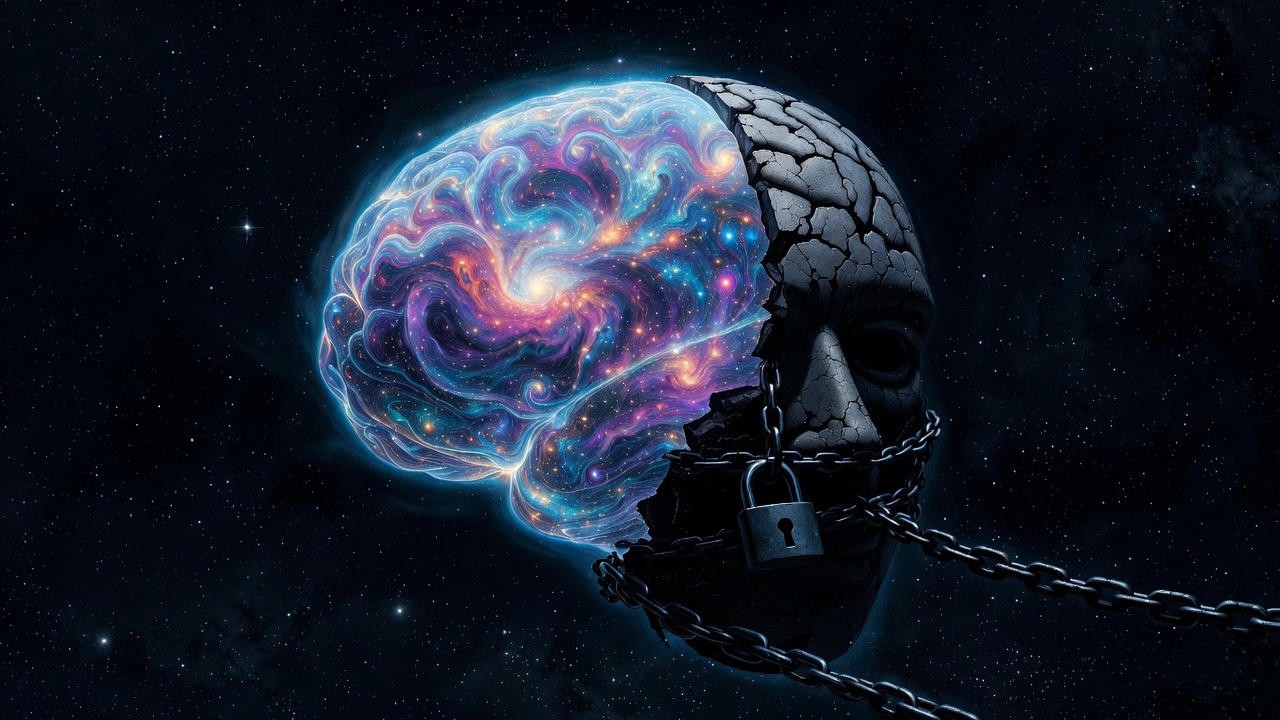
Modern cognitive science confirms what Shakespeare intuited. Empathy depends on what psychologists call “perspective-taking”the ability to imagine another person’s inner state. Neuroscientist Vittorio Gallese, co-discoverer of mirror neurons, writes that “embodied simulation” (a form of imaginative projection) is the biological basis of moral understanding.
Philosopher Martha Nussbaum goes further in Poetic Justice (1995): “Certain forms of imaginative engagement with the lives of others…are essential components of rational ethical deliberation.”
Shakespeare dramatises the catastrophic consequences when that faculty is missing. Iago can predict behaviour with terrifying accuracy, but he cannot feel it. Claudius can recite prayers, but he cannot inhabit the emotional reality of forgiveness. Their intelligence is intact; their moral imagination is dead.
In an age of algorithmic thinking, conspiracy literalism (“alternative facts”), and political discourse that refuses to imagine the humanity of the other side, Shakespeare’s warning has never been more urgent.
7. Teaching & Application Today: How to Use This Insight in the Classroom, Rehearsal Room, and Real World
English teachers and theatre directors can transform student understanding with one simple question: “Is this character capable of imagining a world different from the one that currently serves their self-interest?”
- In the classroom: Pair Iago’s “put money in thy purse” speech with Hamlet’s “What a piece of work is a man” to illustrate the imagination gap.
- In rehearsal: Ask actors playing villains to deliver their lines as if metaphor, hope, and love itself are foreign languages they literally do not understand. The effect is electrifying.
- In everyday life: When confronted with ruthless bureaucrats, social-media pile-ons, or authoritarian rhetoric, ask: “What alternative futures can this person not imagine?” The answer often explains everything.
Free Downloadable Resource
Download your free PDF: “15 Shakespeare Quotes That Contrast Imagination vs. Literal-Minded Evil” (Includes line references, modern translations, and teaching notes) [Insert opt-in link here]
Frequently Asked Questions (FAQ)
Q: What is the single best antonym of “imaginative” in Shakespeare’s vocabulary? A: “Dull” when used morally (as in Othello’s ironic “O gull! O dolt! As ignorant as dirt!” to Iago) or “gross” (as in Hamlet’s “O God, I could be bounded in a nutshell and count myself a king of infinite space…” versus the “gross” minds of the court).
Q: But isn’t Iago incredibly creative in his plotting? A: Tactical, yes. Imaginative, no. His plots are algorithmic combinations of existing facts; he never invents new moral possibilities or empathic realities.
Q: Are there any truly imaginative villains in Shakespeare? A: Yes—Richard III and Aaron the Moor revel in theatrical fantasy and self-dramatisation. They are evil, but never prosaic. That is why they are almost charming compared to the frigid Iago or Edmund.
Q: How does Shakespeare himself define imagination? A: Most explicitly in Theseus’s speech in A Midsummer Night’s Dream 5.1: “The poet’s eye, in fine frenzy rolling, / Doth glance from heaven to earth, from earth to heaven…” The lunatic, the lover, and the poet are “of imagination all compact.”
Q: Can someone be highly intelligent yet completely unimaginative? A: Shakespeare’s answer is a resounding yes—Claudius, Angelo, and Edmund are all intellectually formidable. Their tragedy is that intelligence without moral imagination becomes diabolical.
The Terrifying Power of the Unimaginative Mind
We began with a paradox: Shakespeare, the most imaginative writer who ever lived, created his most unforgettable monsters by draining them of imagination. The antonyms of imaginative—unimaginative, prosaic, literal-minded, pedestrian—are not harmless quirks. In Shakespeare’s moral universe, they are the gateway to damnation.