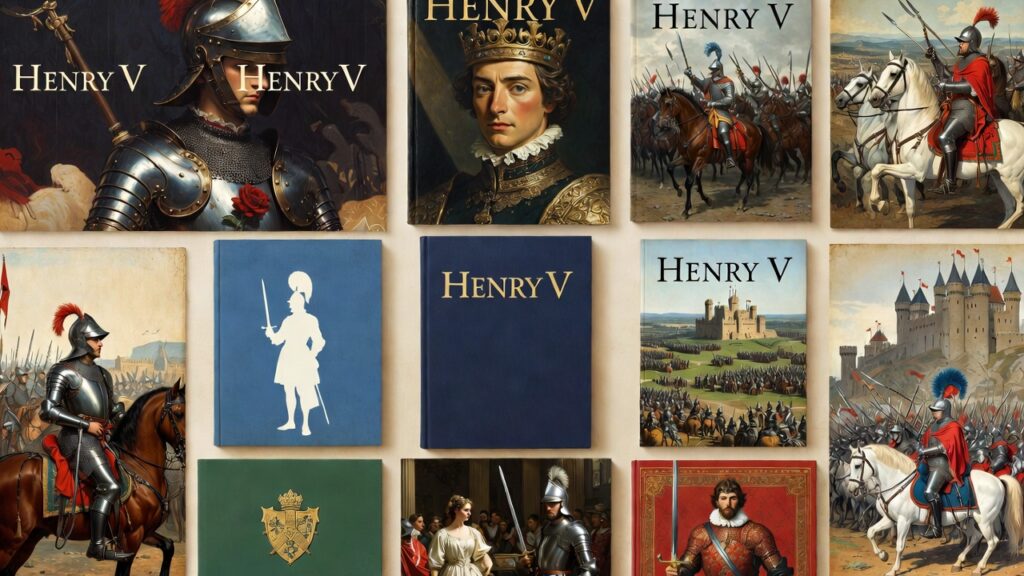
Imagine standing on a muddy field in northern France, rain lashing down, as a vastly outnumbered English army faces annihilation. A young king rallies his troops with words that have echoed through centuries: “We few, we happy few, we band of brothers.” This is the electrifying climax of William Shakespeare’s Henry V—a play that captures the thrill of victory at Agincourt while subtly questioning the cost of war, the nature of leadership, and the power of rhetoric. Yet Shakespeare’s dramatic portrait of the warrior king is just one layer. To truly grasp the depth of this masterpiece, readers often seek the right books on Henry V: authoritative editions of the play itself, insightful critical analyses, and reliable historical biographies that reveal the real monarch behind the legend.
Many enthusiasts, students, teachers, and theater lovers struggle with the same challenges. Shakespeare’s Elizabethan language can feel distant, the play’s tonal shifts—from patriotic triumph to quiet horror—invite conflicting interpretations, and the historical King Henry V (1413–1422) was far more complex than the heroic figure on stage. The right books solve these problems by providing clear annotations, scholarly context, performance insights, and evidence-based history. This comprehensive guide draws on decades of Shakespeare studies, recent scholarship, and acclaimed works to curate the essential reads. Whether you’re preparing for an exam, directing a production, or simply wanting to appreciate one of Shakespeare’s most powerful history plays, these recommendations will transform your understanding.
Why Shakespeare’s Henry V Demands the Right Books
Shakespeare’s Henry V (written around 1599) stands as the culmination of his second tetralogy, following the turbulent reigns in Richard II, Henry IV Part 1, and Henry IV Part 2. It explores timeless themes: inspirational leadership, the brutal realities of war, national identity, and the tension between public image and private conscience. Henry delivers some of the Bard’s most stirring speeches—the Tennis Ball insult, the siege of Harfleur, St. Crispin’s Day—yet the play also includes moments of moral ambiguity, such as the execution of Bardolph, the killing of prisoners, and the Chorus’s ironic commentary.
Readers frequently encounter hurdles. The text exists in two early versions: the 1600 Quarto (shorter, possibly pirated) and the 1623 Folio (longer, more authoritative). Archaic words, puns, and historical allusions demand explanation. Performance history adds layers—from Laurence Olivier’s patriotic 1944 film during WWII to Kenneth Branagh’s grittier 1989 adaptation. Without strong supporting books, it’s easy to miss the play’s deliberate contradictions: Is Henry a heroic “mirror of all Christian kings,” or a calculating propagandist?
Quality editions clarify the language and variants. Critical books unpack interpretations, from patriotic to anti-war readings. Historical biographies ground the drama in reality, showing how Shakespeare drew from sources like Raphael Holinshed while reshaping events for theatrical effect. Together, they provide the tools to engage deeply with Shakespeare’s greatest history play.
The Best Editions of Shakespeare’s Henry V
Choosing the right edition is crucial. A good one offers a reliable text, helpful notes without overwhelming the reader, and context on language, staging, and history.
Here are the top recommendations, ranked for different audiences:
- Best Overall for Students and General Readers: The Folger Shakespeare Library Edition, edited by Barbara A. Mowat and Paul Werstine. This edition features facing-page modern notes, scene summaries, illustrations, and an accessible introduction. It’s ideal for first-time readers or classroom use, balancing clarity with scholarly accuracy. The Folger’s trusted text draws from the best sources, making it perfect for understanding speeches like “Once more unto the breach.”
- Best for In-Depth Scholarship and Actors: The Arden Shakespeare Third Series, edited by T.W. Craik (or the latest update). Known for exhaustive footnotes, textual variants, performance history, and a substantial introduction, this edition excels in unpacking ambiguities—such as the play’s treatment of war crimes or Henry’s piety. Actors value its staging insights.
- Best for Balanced Academic Use: The New Cambridge Shakespeare edition, edited by Andrew Gurr. It provides authoritative notes, focuses on language and theatrical possibilities, and offers a clear, reliable text. Many scholars praise Gurr’s work for its insight into the play’s inconsistencies and historical context.
- Best Budget or Modern Plain English Option: No Fear Shakespeare (SparkNotes) or Penguin Classics with side-by-side translation. These make the play approachable for beginners by pairing original text with contemporary paraphrase.
To compare at a glance:
- Folger: Beginners/Students — Clear notes, illustrations — Less textual depth — Low price
- Arden: Scholars/Actors — Comprehensive commentary — Can feel dense — Medium price
- Cambridge/Oxford: Advanced readers — Balanced, reliable — Fewer performance insights — Medium price
Tip: Start with the Folger edition for enjoyment, then consult Arden for deeper study. Pair with free resources like the Folger Digital Library or MIT’s online Shakespeare texts.
Essential Critical Books and Analyses of Shakespeare’s Henry V
Beyond editions, criticism illuminates the play’s interpretive richness. Henry V has sparked debate: Is it patriotic propaganda or subtle critique of war? These books offer expert perspectives.
- For Contextualizing the Henriad: Peter Saccio’s Shakespeare’s English Kings: History, Chronicle, and Drama or John Julius Norwich’s Shakespeare’s Kings. These place Henry V within the larger cycle, comparing Shakespeare’s version to historical chronicles and showing how he compressed events for drama.
- Modern Critical Companions: The Arden Critical Companion series (Henry V: A Critical Reader) compiles essays on themes like nationalism, gender, and performance. The Cambridge Companion to Shakespeare’s History Plays includes strong chapters on Henry V‘s rhetoric and ambiguities.
- Performance-Focused Insights: Books analyzing adaptations, such as studies of Olivier’s wartime film (propaganda triumph) versus Branagh’s (post-Falklands grit), highlight how interpretations evolve.
Expert insight: Critics like Norman Rabkin famously compared the play to an optical illusion (“Rabbits and Ducks”), where Henry appears heroic or Machiavellian depending on perspective. These works help readers appreciate Shakespeare’s deliberate even-handedness.
Best Historical Biographies to Complement Shakespeare’s Portrayal
Shakespeare’s Henry is charismatic yet ruthless; the historical king was a pious administrator, skilled diplomat, and devout ruler who died young at 35. These biographies bridge the gap.
- Best Modern Biography: Henry V: The Astonishing Triumph of England’s Greatest Warrior King by Dan Jones (2024). This engaging, narrative-driven work reconciles legend with evidence. Jones, a bestselling historian, draws on primary sources to portray a strategic leader in crisis—pious, diligent, and far from the wild Prince Hal of Shakespeare. Praised by The New York Times for its lively style and research, it’s accessible yet authoritative, ideal for readers wanting a vivid contrast to the play.
- Best Scholarly/Revisionist View: Henry V: The Conscience of a King by Malcolm Vale (Yale University Press). Vale emphasizes Henry’s piety, governance, music composition, and art patronage, using documents annotated in Henry’s hand. It challenges the “warmonger” image, showing a multidimensional ruler focused on church, language reform, and subjects’ welfare.
- Classic on the Key Campaign: Agincourt: Henry V and the Battle that Made England by Juliet Barker. This detailed account of the 1415 invasion and battle uses wide sources to recreate medieval life, chivalry, and strategy—perfect for visualizing the play’s events.
Other strong options include Anne Curry’s works or Christopher Allmand’s academic biography. These books enrich Shakespeare’s “mirror of all Christian kings” by revealing a more nuanced historical figure.
Additional Resources and Related Reads
For broader context, explore the Hundred Years’ War through Bernard Cornwell’s novel Agincourt (vivid battle scenes) or documentaries on Agincourt. Watch Branagh’s film alongside the text for performance insights.
Reading Tips:
- Beginners: Folger edition + Dan Jones biography.
- Intermediate: Add Arden edition and Vale for depth.
- Advanced: Compare Shakespeare to Holinshed’s Chronicles.
- For essays: Read criticism while viewing adaptations.
Key Takeaways and Reading Roadmap
Must-reads: Folger or Arden edition, Dan Jones (2024), Malcolm Vale, Juliet Barker.
Roadmap:
- Beginner: Folger + Jones.
- Intermediate: Arden + Vale.
- Advanced: Critical companions + primary sources.
FAQs
What is the best edition of Shakespeare’s Henry V for beginners? The Folger Shakespeare Library edition—clear notes and summaries make it approachable.
How does Shakespeare’s Henry V differ from the real historical figure? Shakespeare emphasizes heroism and rhetoric; history shows a pious, administrative king who valued governance and piety over mere conquest.
Are there good audiobooks or modern retellings? Yes—many editions have audio versions; No Fear Shakespeare offers plain English.
Why is Henry V considered Shakespeare’s greatest history play? Its blend of stirring oratory, moral complexity, and exploration of leadership sets it apart.
These books on Henry V turn Shakespeare’s play from a stirring but distant drama into a profound exploration of power, war, and humanity. They provide the clarity, context, and depth needed to appreciate why Henry V remains relevant today. Start with one—perhaps Dan Jones’s recent biography or the Folger edition—and let the insights unfold.