The Knife That Started It All: Why “Caesars First Stabber” Still Fascinates Audiences Today
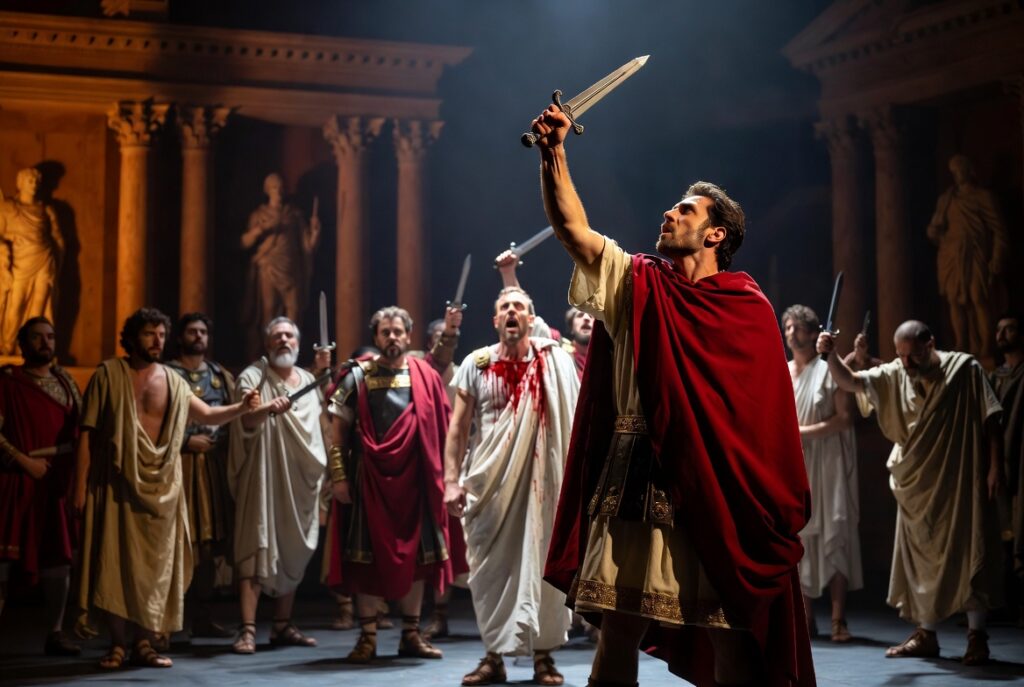
Imagine the Roman Senate House on the Ides of March. Tension crackles in the air as Julius Caesar, the most powerful man in the Republic, stands surrounded by senators he once trusted. Petitions fly. Voices rise. Then one conspirator steps forward and cries out: “Speak, hands, for me!” A dagger flashes. The first blow lands. Blood spills. This single, explosive moment launches the assassination scene in William Shakespeare’s Julius Caesar—and it has left generations of readers, students, actors, and theatergoers asking the same urgent question: Who exactly is the Caesars first stabber?
The answer lies not in vague memory or Hollywood dramatization, but in the precise text of Shakespeare’s play. In Act 3, Scene 1, the Caesars first stabber is Casca. Shakespeare deliberately places Publius Servilius Casca at the forefront of the attack, and this choice is no accident. It shapes the entire tragedy, heightening dramatic irony, underscoring themes of betrayal and collective guilt, and transforming a political conspiracy into raw, visceral murder.
Drawing directly from the 1623 First Folio (as preserved and edited in authoritative editions such as the Folger Shakespeare Library and Arden Shakespeare series), cross-referenced with Shakespeare’s primary historical source—Thomas North’s 1579 translation of Plutarch’s Lives—this article delivers the definitive, line-by-line explanation you’ve been searching for. Whether you’re a student decoding the assassination scene for an essay, an actor preparing to stage the frenzy, a director rethinking modern political resonance, or simply a Shakespeare enthusiast tired of conflicting online summaries, you’ll leave with crystal-clear insight, textual evidence, and practical analysis that goes far deeper than typical study guides or Wikipedia entries.
By the end, you’ll understand not only who delivered the first blow, but why Shakespeare made Casca the Caesars first stabber—and how this detail continues to echo through performances, literature, and even contemporary discussions of power and treachery.
Historical vs. Dramatic Truth – The Real Assassination vs. Shakespeare’s Version
Shakespeare was a master of compression and theatrical effect, but he grounded Julius Caesar in real Roman history. To appreciate his artistic decisions, we must first separate fact from fiction.
What Plutarch and Suetonius Actually Record Plutarch’s Life of Caesar (the key source Shakespeare consulted) describes the assassination in vivid detail. On March 15, 44 BCE, a group of senators—led in spirit by Marcus Junius Brutus and Gaius Cassius Longinus—surrounded Caesar in the Curia of Pompey. According to Plutarch, Publius Servilius Casca struck the first blow, a glancing wound to the neck or shoulder. Caesar seized Casca’s arm and cried out in Latin, “Casca, you villain, what are you doing?” Casca called for help from his brother, and the attack escalated into a frenzy. Caesar was stabbed 23 times in total. Only one wound proved fatal. Suetonius and other Roman historians corroborate the chaos but add that Caesar’s final words may have been a Greek lament directed at Brutus: “You too, my child?”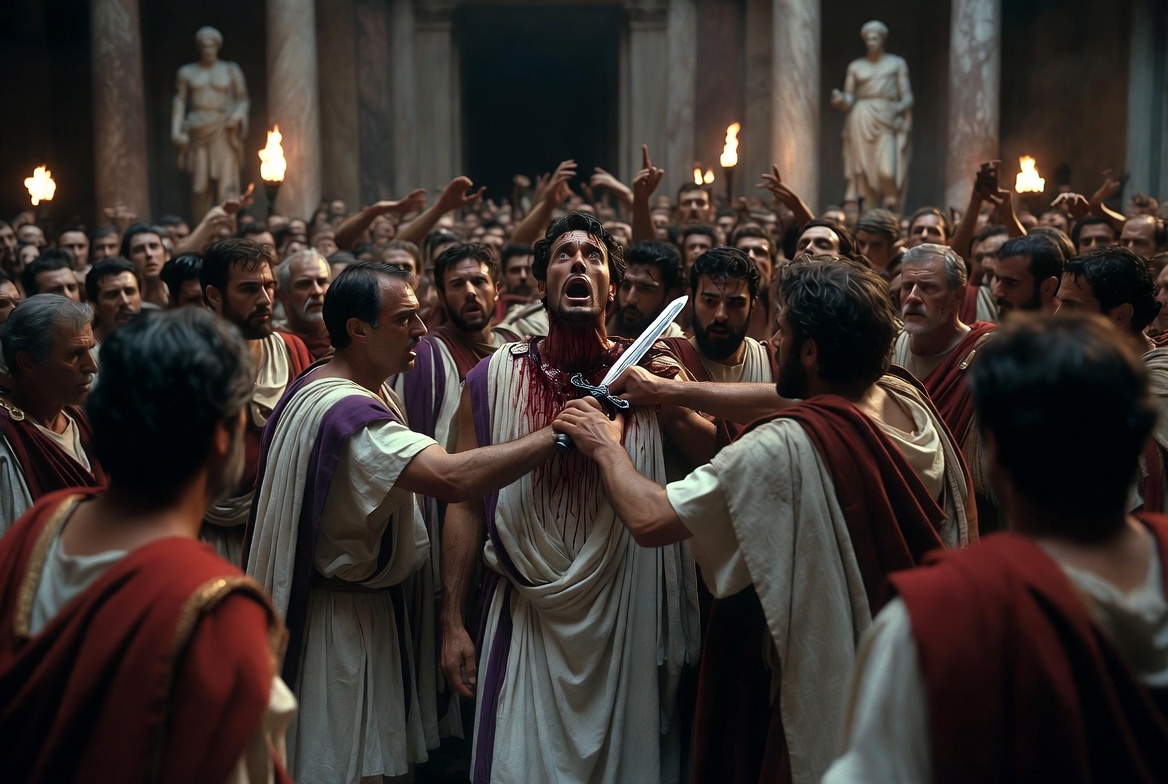
The historical record shows dozens of conspirators (estimates range from 23 to 60 participants), with Casca consistently identified as the man who initiated the violence.
Shakespeare’s Artistic Choices and the First Folio Text Shakespeare condenses history for maximum dramatic impact. He reduces the attackers to a tight circle of named conspirators (Casca, Brutus, Cassius, Cinna, Decius, Metellus Cimber, Trebonius, and others). He keeps Casca as the Caesars first stabber but heightens the theatricality: the attack becomes a coordinated, almost ritualistic encirclement rather than a sprawling mob assault.
Here is a clear side-by-side comparison for quick reference:
| Aspect | Historical Accounts (Plutarch/Suetonius) | Shakespeare’s Julius Caesar (First Folio, 1623) |
|---|---|---|
| Number of attackers | 23–60 senators | 8–9 named conspirators |
| First stabber | Publius Servilius Casca (neck/shoulder wound) | Casca (“Speak, hands, for me!”) |
| Caesar’s final words | Possible Greek lament to Brutus (“You too, my child?”) | “Et tu, Brute? — Then fall, Caesar!” |
| Order of stabs | Frenzied and chaotic; Casca first | Casca initiates; group frenzy follows; Brutus highlighted last |
| Setting | Curia of Pompey | Senate House (dramatized for stage) |
| Dramatic purpose | Political murder | Exploration of betrayal, rhetoric, and the fall of republics |
Shakespeare’s reordering and compression serve the stage: the audience experiences the murder in real time, feeling the shock and moral weight as it unfolds. By making Casca the Caesars first stabber, Shakespeare signals the shift from words to violence—an irreversible point of no return.
The Assassination Scene Unpacked – Line-by-Line Breakdown (Act 3, Scene 1)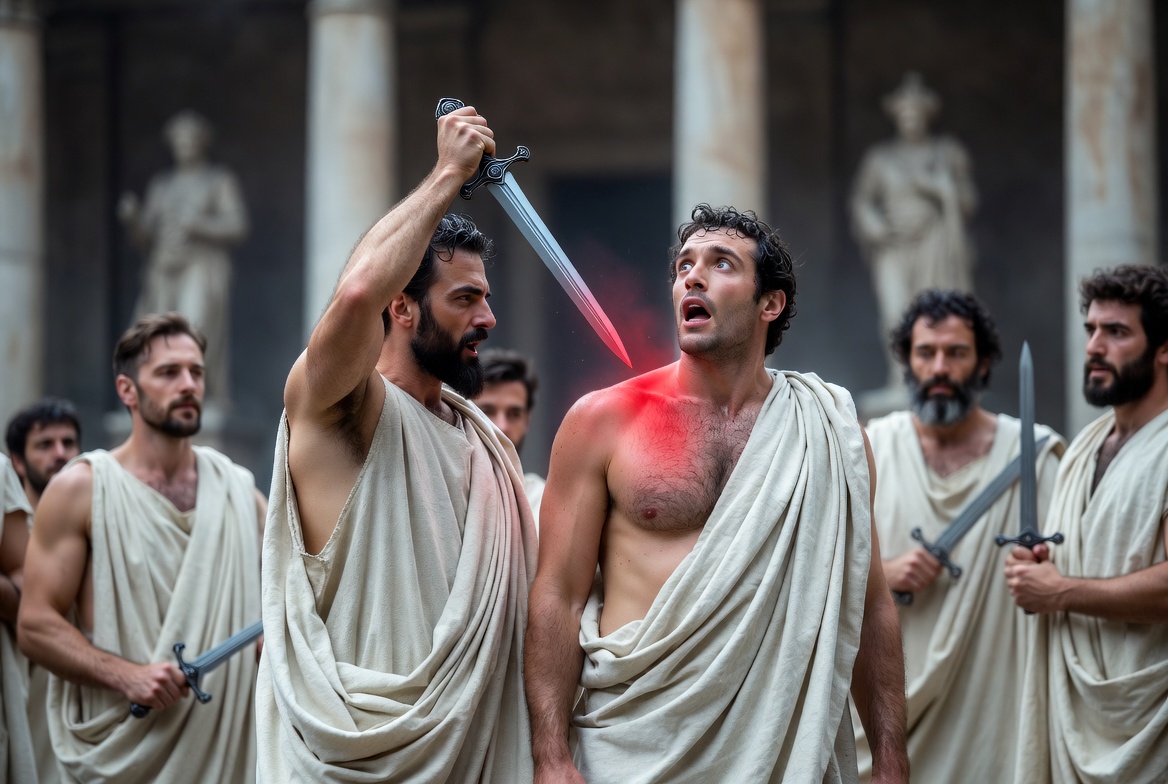
No summary can replace the raw power of the text itself. Let’s walk through the pivotal moment as it appears in modern editions based on the First Folio.
The Setup – Metellus Cimber’s Petition and the Conspirators’ Circle The conspirators have encircled Caesar under the pretense of pleading for the exile of Metellus Cimber’s brother. Caesar, ever the autocrat, refuses and compares himself to Olympus—unmovable. The tension builds through layered rhetoric: Brutus, Cassius, and Decius all speak in polished pleas. Casca remains silent until this point.
“Speak, hands, for me!” – Casca Delivers the First Blow Cinna explicitly cues the action earlier in the scene: “Casca, you are the first that rears your hand.” Then comes the explosive line that launches the murder:
CASCA Speak, hands, for me! [As Casca strikes, the others rise up and stab Caesar.]
This is the exact moment the Caesars first stabber acts. The Folio stage direction confirms Casca strikes first; the others immediately join in a frenzy. The line itself is brilliant in its bluntness—Casca, the plain-speaking soldier, bypasses elegant rhetoric and calls directly for action. No flowery justification. Just violence.
The Frenzy That Follows – The Order of the Remaining Stabs Shakespeare does not list every individual stab in dialogue (theater relies on visual chaos), but the stage direction and subsequent lines make clear the group attack. Caesar fights back briefly, then utters the play’s most famous line:
CAESAR Et tu, Brute? — Then fall, Caesar!
The address to Brutus implies he participates in the assault, and theatrical tradition—supported by the emotional weight of the moment—often stages Brutus as the final stabber. Many readers mistakenly assume Brutus struck first because of his prominence in the conspiracy and the “Et tu, Brute?” line. The text proves otherwise: Casca is unequivocally the Caesars first stabber.
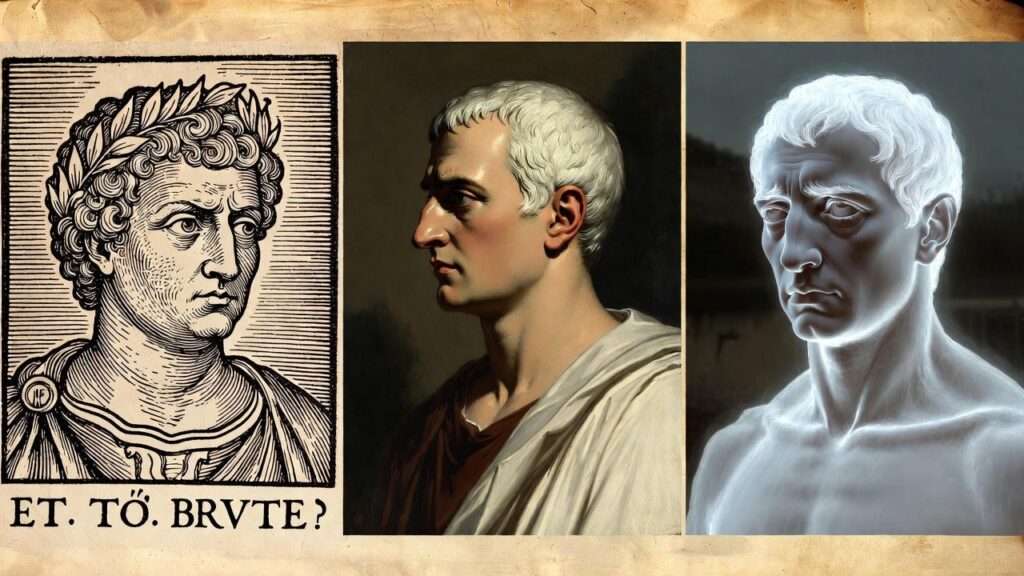
Caesar’s Dying Words and the Famous “Et tu, Brute?” Moment The Latin phrase “Et tu, Brute?” (“And you, Brutus?”) is Shakespeare’s invention, not historical fact. It crystallizes the theme of personal betrayal. Caesar’s collapse follows immediately, and the conspirators bathe their hands in his blood—an image of ritual purification turned grotesque.
This line-by-line unpacking reveals Shakespeare’s genius: the first blow is not random. It belongs to Casca, the character least associated with grand ideals and most associated with blunt force.
Who Is Casca? Character Analysis of Shakespeare’s “Caesars First Stabber”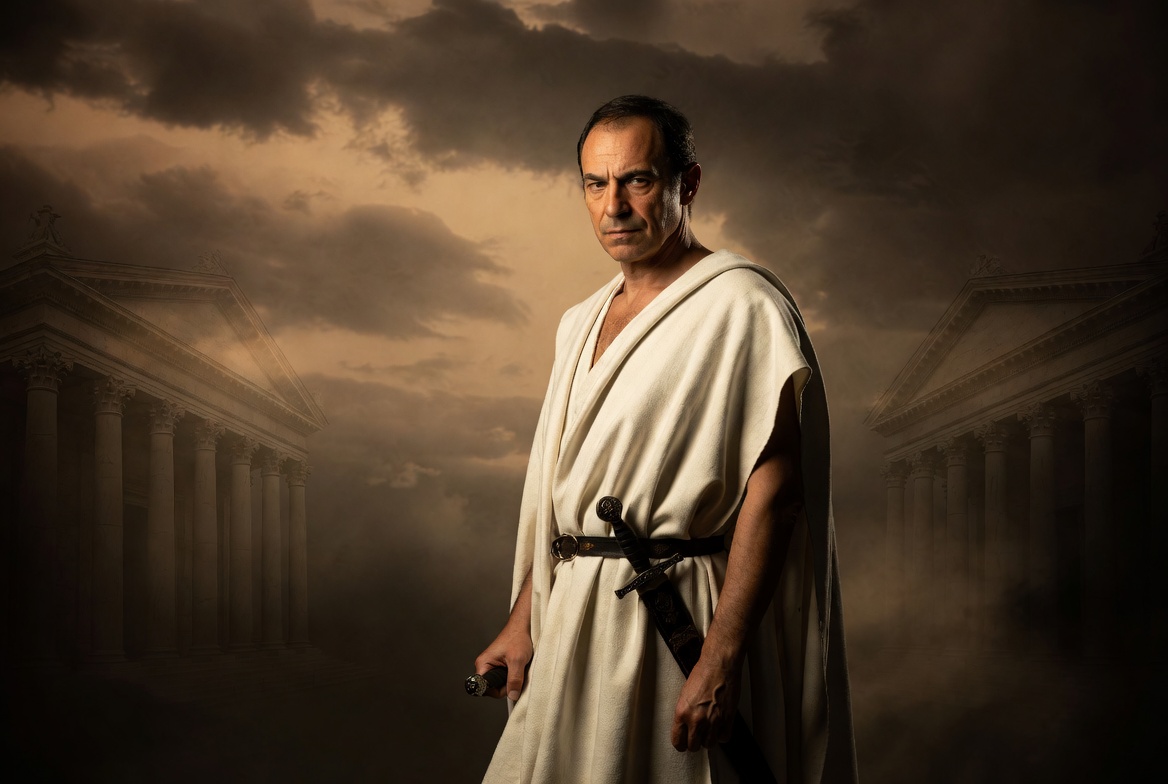
Casca is far more than a plot device. He is one of Shakespeare’s most intriguing minor characters—underestimated by his fellow conspirators yet pivotal to the action.
Casca’s Personality – Blunt Soldier or Cunning Politician? Throughout the play, Casca is portrayed as gruff, plain-spoken, and somewhat cynical. In Act 1, Scene 2, he delivers a sarcastic eyewitness account of Caesar refusing the crown three times during the Lupercal festival. His language is colloquial and direct—“He put it by with the back of his hand, thus”—contrasting sharply with the elevated rhetoric of Brutus and Cassius. This plain style makes him the perfect choice for the Caesars first stabber: when words fail the conspirators, Casca supplies action.
Foreshadowing in Act 1 – Casca’s Stormy Night Report In Act 1, Scene 3, Casca describes the terrifying omens during the thunderstorm: lions in the Capitol, men on fire, and birds of night shrieking at noon. He interprets these as divine warnings against Caesar’s growing power. Cassius seizes the moment to recruit him, recognizing Casca’s reliability in crisis. This early scene plants the idea that Casca is the enforcer—the man who will translate fear into deed.
Symbolism of the First Strike – Casca as the Spark of Tyrannicide By assigning the opening blow to Casca, Shakespeare underscores a key theme: the conspiracy is not a noble philosophical endeavor led solely by the idealistic Brutus. It requires the rough, decisive action of a soldier like Casca. The first stab transforms abstract republican ideals into literal bloodshed. As modern critics have noted, Casca embodies the uncomfortable reality that tyrannicide demands both rhetoric and raw violence.
Dramatic and Thematic Reasons Shakespeare Chose Casca as the First Stabber
Shakespeare’s decision to make Casca the Caesars first stabber is one of the play’s most calculated dramatic masterstrokes. Far from arbitrary, it serves multiple interlocking purposes that elevate Julius Caesar from mere historical reenactment into profound tragedy.
Building Suspense and Dramatic Irony The conspiracy builds slowly through eloquent speeches. Brutus agonizes over moral justification; Cassius manipulates through envy and rhetoric. By delaying physical violence until Casca’s blunt cry—“Speak, hands, for me!”—Shakespeare creates unbearable tension. The audience knows the plot is coming, yet the first actual strike still shocks. This delay mirrors the conspirators’ own hesitation: they talk revolution but need a decisive man to begin the killing. Casca’s role as Caesars first stabber releases that pent-up energy in one explosive instant, shifting the play from political debate to irreversible tragedy.
Class and Rhetoric – Casca’s Plain Style vs. Brutus’s Eloquence Casca’s language throughout the play is noticeably plainer and more colloquial than that of the aristocratic conspirators. Where Brutus speaks in measured, philosophical periods, Casca cuts through with soldierly directness. This contrast makes him ideal as the Caesars first stabber. His simple line carries no grand justification—only action. Shakespeare uses this to highlight a central irony: the lofty ideals of republican liberty require base violence to enact them. The noble Brutus cannot bring himself to strike first; it falls to the less refined Casca to draw the initial blood.
The Theme of Collective Guilt and Individual Responsibility By having Casca strike first, Shakespeare distributes moral responsibility across the group while spotlighting individual agency. No single conspirator bears sole guilt—yet each participates. Casca’s opening blow forces every man present (and the audience) to confront the reality that words have consequences. The subsequent frenzy implicates them all, but Casca’s initiating act marks the precise moment abstract conspiracy becomes murder. This structure deepens the play’s exploration of how good men can commit terrible acts together, a theme that resonates powerfully in any era.
Critics such as Stephen Greenblatt have observed that this choice underscores Shakespeare’s fascination with the gap between political rhetoric and violent reality. The first stab is not glamorous; it is messy, shocking, and human—exactly as tyrannicide must be on stage.
Performance History – How Actors Have Interpreted Caesars First Stabber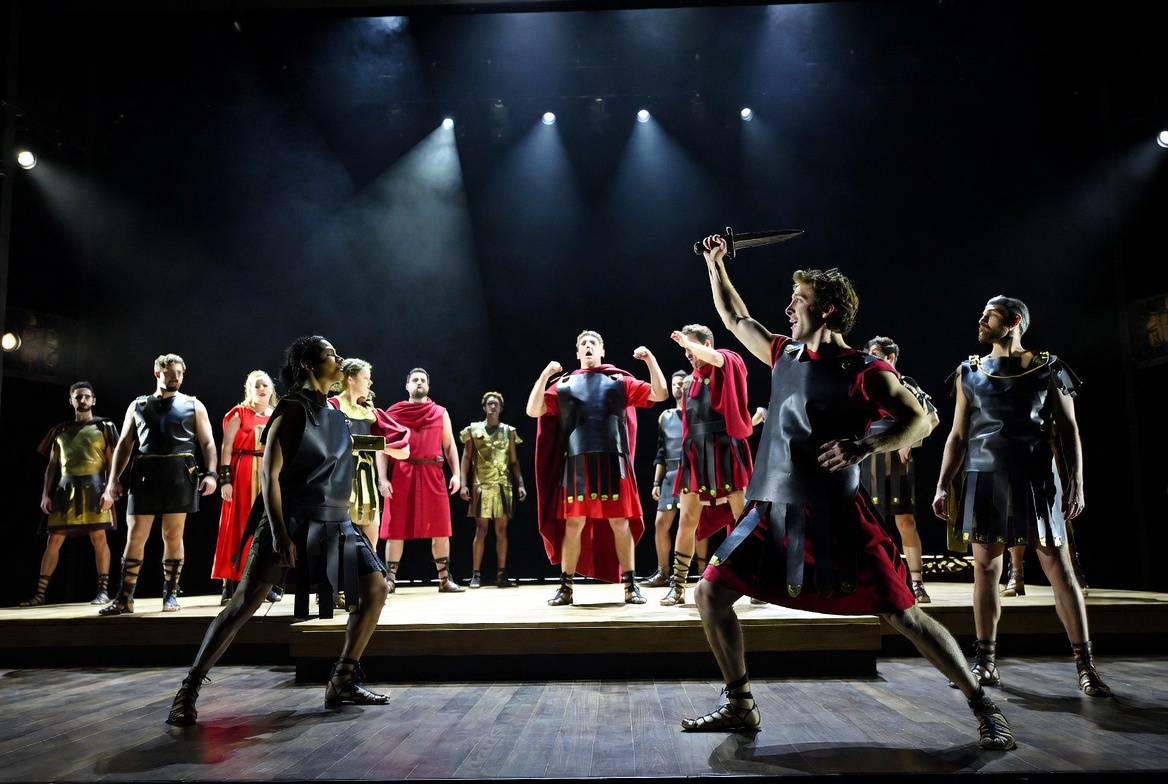
The role of Casca, though relatively small, carries enormous weight because of that single, defining action. Directors and actors have approached the Caesars first stabber in strikingly different ways across centuries.
Famous Casca Portrayals (Globe, RSC, Hollywood Adaptations) In the 1953 film adaptation directed by Joseph L. Mankiewicz, Edmund O’Brien’s Casca delivers a grizzled, no-nonsense performance. His first strike is sharp and decisive, emphasizing the soldierly quality of the character. The 1970 Stuart Burge film with Charlton Heston as Antony features a more agitated Casca, whose hand trembles slightly before the cry “Speak, hands, for me!”—humanizing the moment of hesitation.
On stage, the Royal Shakespeare Company and Shakespeare’s Globe have offered varied interpretations. In the 2012 RSC production, Casca (played with muscular intensity) made the first blow visceral and loud, with the sound of the dagger striking emphasized for the audience. The 2018 National Theatre version in London staged the assassination with slow-motion clarity, allowing spectators to see Casca’s blade enter first, heightening the horror.
Directorial Choices – Visible First Strike or Hidden Chaos? Some directors keep the first stab partially obscured in the chaos of bodies, preserving mystery and mob violence. Others spotlight Casca deliberately—using lighting or staging to isolate the moment the Caesars first stabber acts. Modern productions often slow the initial strike or use sound design (a sharp gasp from Caesar) to make the audience feel the exact instant the Republic begins to die. These choices affect how viewers perceive the moral weight of the conspiracy.
Modern Productions (2010s–2020s) and Political Resonance In recent decades, Casca’s first blow has taken on fresh political meaning. Productions during times of populist leaders or democratic backsliding have emphasized the conspirators’ fear of tyranny, making Casca’s strike feel both necessary and tragic. The 2020s have seen experimental stagings where the assassination is filmed live on stage or projected, allowing audiences to witness the Caesars first stabber in close-up—mirroring how modern politics unfolds under constant surveillance.
These performance choices prove that while the text fixes Casca as the Caesars first stabber, each generation reinterprets the emotional and political stakes of that first blow.
Common Misconceptions About the Julius Caesar Assassination Scene
Even dedicated Shakespeare readers often carry misconceptions about the assassination, largely due to popular culture and incomplete summaries.
- Myth 1: “Brutus stabbed Caesar first.” This is perhaps the most widespread error. Because Brutus is the moral center of the conspiracy and delivers the emotionally charged “Et tu, Brute?” line, many assume he struck first. The text and Folio stage directions clearly show Casca initiating the attack. Brutus’s prominence comes later—his final stab carries symbolic weight as the deepest personal betrayal.
- Myth 2: “All senators stabbed at once.” The scene is chaotic, but Shakespeare stages a clear sequence beginning with Casca. The group frenzy follows, yet the first blow belongs unmistakably to the Caesars first stabber.
- Myth 3: “Caesar said ‘Et tu, Brute’ in real life.” Shakespeare invented this iconic line for dramatic effect. Historical sources suggest Caesar may have groaned or spoken Greek to Brutus, but the Latin phrase is pure Elizabethan invention—designed to pierce the heart of the audience.
Correcting these misconceptions matters because they affect how we understand Shakespeare’s craft. Accurate knowledge of the Caesars first stabber deepens appreciation of the play’s structure and themes.
Why This Detail Still Matters – Literary Legacy and Modern Relevance
The choice of Casca as the Caesars first stabber reverberates far beyond the Elizabethan stage.
Influence on Later Literature and Pop Culture The image of the first stab has inspired countless works, from political thrillers to adaptations like the 2017 modern-dress Julius Caesar in New York’s Central Park (which sparked controversy for its contemporary parallels). Phrases like “the first stab” appear metaphorically in discussions of political betrayal, echoing Shakespeare’s precise staging.
Political Parallels – “First Stab” as Metaphor in Today’s Discourse In an age of polarized politics, the moment Casca strikes first resonates as a symbol of how words escalate into violence. Commentators frequently invoke the assassination scene when discussing the erosion of democratic norms—making the identity of the Caesars first stabber more relevant than ever.
Tips for Students and Actors – How to Analyze or Perform the First Blow For students: When writing about the scene, always cite the exact line “Speak, hands, for me!” and contrast Casca’s plain speech with Brutus’s rhetoric. Compare Plutarch’s account to Shakespeare’s to demonstrate understanding of source adaptation.
For actors playing Casca: Decide whether your first strike shows hesitation, cold resolve, or nervous energy. The physicality of that single blow must convey the character’s entire arc—plain-spoken reliability turning into irreversible action. Rehearse the line with varying intensity; the audience must feel the precise moment the tragedy ignites.
These practical insights turn passive reading into active engagement, fulfilling the core need of anyone searching for “caesars first stabber.”
Frequently Asked Questions About Caesars First Stabber
1. Who is Caesars first stabber in Shakespeare’s Julius Caesar? Casca (Publius Servilius Casca) is the Caesars first stabber. He delivers the opening blow with the line “Speak, hands, for me!” in Act 3, Scene 1.
2. What exact words does Casca say before the first stab? Casca cries “Speak, hands, for me!” immediately before striking Caesar. This blunt call to action launches the assassination.
3. Does Brutus stab Caesar first or last? Brutus does not stab first. Textual evidence and stage tradition place him among the later or final stabbers, emphasizing the personal betrayal when Caesar sees him.
4. How does the play differ from actual Roman history? Shakespeare compresses the number of attackers, invents “Et tu, Brute?”, and structures the chaos for theatrical clarity while keeping Casca as the historical first stabber.
5. Why did Shakespeare make Casca strike first? To build suspense, contrast rhetorical styles, and underscore the shift from words to violent action. Casca’s plain character makes the first blow feel raw and irreversible.
6. In which act and scene does the assassination happen? The assassination occurs in Act 3, Scene 1 of Julius Caesar.
7. How have modern directors staged Casca’s first blow? Approaches range from spotlighted isolation to chaotic frenzy, with some using slow motion or sound design to emphasize the exact moment the Caesars first stabber acts.
8. Where can I read the original First Folio text of this scene? Reliable digital editions are available through the Folger Shakespeare Library website and the Internet Shakespeare Editions project.
The First Blow That Echoes Through Centuries
The Caesars first stabber is Casca—a seemingly minor figure whose single decisive action changes the course of Shakespeare’s Roman tragedy. By placing the first blow in Casca’s hands, Shakespeare masterfully bridges the gap between noble ideals and brutal reality, between eloquent conspiracy and bloody consequence.
This moment is not merely stage violence. It is the precise instant when the Roman Republic begins its long theatrical collapse in the imagination of audiences worldwide. From the 1623 First Folio to contemporary productions grappling with power and betrayal, Casca’s strike continues to fascinate because it captures something timeless: the dangerous ease with which words become weapons and hesitation gives way to irreversible deeds.
For students seeking textual clarity, actors preparing the role, or anyone captivated by Shakespeare’s genius, understanding the identity and significance of the Caesars first stabber unlocks richer appreciation of Julius Caesar. The play warns that even the best intentions can unleash chaos once the first blade is drawn.