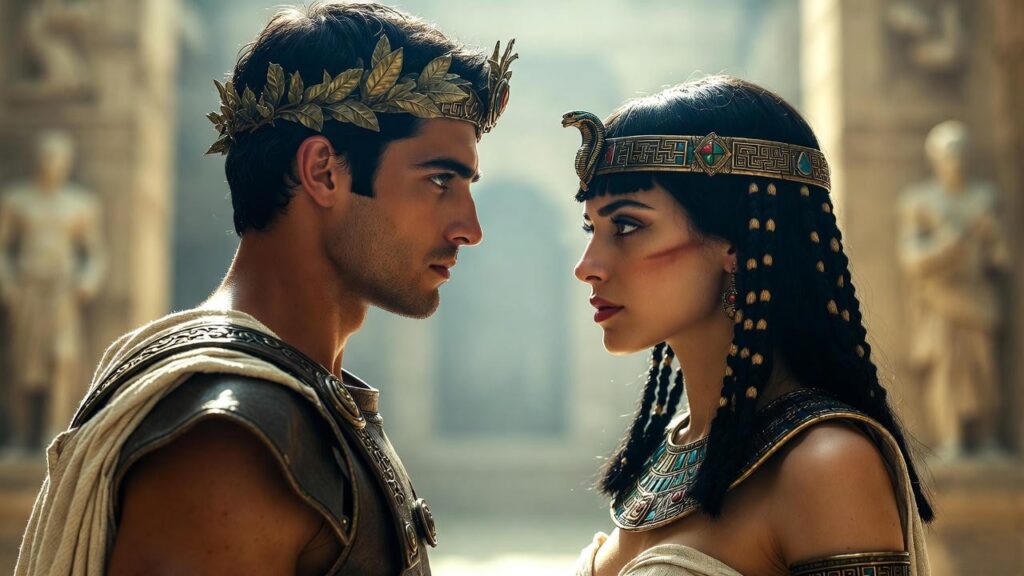
“My man of men… I am dying, Egypt, dying.” — Mark Antony, Antony and Cleopatra, Act 4, Scene 15
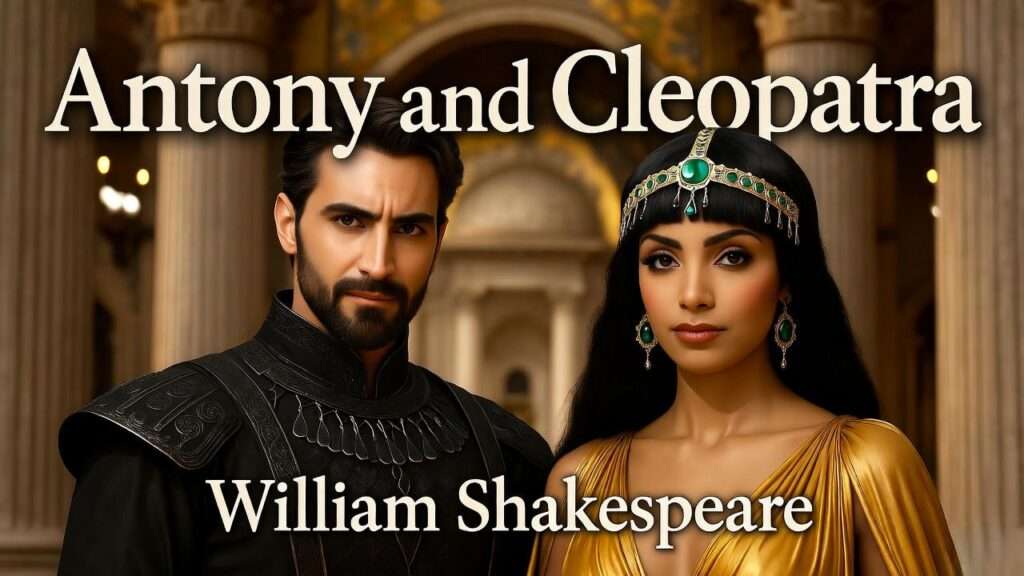
Few lines in literature capture the raw intensity of love, power, and mortality quite like Antony’s final words to Cleopatra. Shakespeare’s Antony and Cleopatra (c. 1606–1607) presents two of the most magnetic, contradictory, and unforgettable lovers in dramatic history. In this in-depth analysis of the characters of Antony and Cleopatra, we will explore not only the titular protagonists but also the richly drawn supporting figures who illuminate the play’s central conflicts: the clash between Rome and Egypt, duty and desire, public image and private self, and the inexorable pull of fate.
What makes these characters endure more than four centuries later? Shakespeare refuses to simplify them. Antony is both heroic general and reckless lover; Cleopatra is cunning politician, passionate queen, and consummate performer. Their flaws are as compelling as their virtues, and their tragic fall feels inevitable yet profoundly human. Whether you’re a student preparing for exams, a theatre enthusiast, a teacher seeking fresh insights, or a lifelong reader of Shakespeare, this comprehensive guide offers textual evidence, historical context, critical perspectives, and thematic connections to deepen your understanding of one of the Bard’s most sophisticated tragedies.
Historical and Dramatic Context
To fully appreciate the complexity of Shakespeare’s characters, we must first understand the sources and cultural tensions that shaped the play.
The Real Antony and Cleopatra (Plutarch’s Influence)
Shakespeare drew primarily from Sir Thomas North’s 1579 translation of Plutarch’s Parallel Lives, specifically the lives of Mark Antony and Octavius Caesar. Plutarch portrayed Antony as a noble but flawed soldier whose Eastern excesses led to his downfall, and Cleopatra as a captivating, intellectually formidable ruler. However, Shakespeare dramatically reimagined both figures.
Where Plutarch emphasizes historical events, Shakespeare foregrounds psychology and poetry. He amplifies Cleopatra’s theatricality, gives Antony moments of profound self-awareness, and transforms their relationship into a transcendent romance that rivals Romeo and Juliet—yet with far greater maturity and political stakes. These departures allow Shakespeare to explore universal questions about identity, power, and love rather than mere biography.
Political and Cultural Backdrop
The play is set against the final years of the Roman Republic (c. 40–30 BC), when the Second Triumvirate—Antony, Octavius Caesar, and Lepidus—divided the empire after Julius Caesar’s assassination. The central tension lies in the opposition between Roman and Egyptian values.
Rome represents discipline, martial honor, stoicism, and imperial order. Egypt embodies sensuality, abundance, imagination, and fluidity. Antony’s tragic flaw stems from his inability to reconcile these worlds. Cleopatra, by contrast, thrives in ambiguity, using performance and charisma to navigate political peril. Shakespeare, writing for a Jacobean audience fascinated by exoticism and empire, uses this East-West divide to probe deeper questions about cultural identity and the cost of power.
Major Characters: In-Depth Profiles
Mark Antony – The Tragic Hero Divided
Mark Antony stands at the heart of the play as its flawed protagonist—a man torn between two irreconcilable identities.
Antony’s Dual Nature: Soldier vs. Lover
From the opening scene, Antony is criticized by Romans for neglecting duty: “Let Rome in Tiber melt, and the wide arch / Of the ranged empire fall!” (Act 1, Scene 1). Yet this same Antony is the legendary general who once defeated Brutus and Cassius at Philippi. His famous generosity—bestowing kingdoms on Cleopatra’s children—reflects both magnanimity and political folly.
Shakespeare repeatedly juxtaposes Antony’s martial prowess with his Egyptian indulgence. In Act 1, he dismisses Roman messengers; by Act 3, after Actium, he laments his lost reputation: “I have lost command of myself.” His suicide attempt, botched yet ultimately successful, encapsulates this division—he dies neither as triumphant Roman soldier nor serene Egyptian lover, but as a man caught between worlds.
Key Traits and Flaws
Antony possesses charisma, courage, and emotional openness that make him deeply human. His impulsiveness, however, proves fatal. Critics such as A.C. Bradley (in Shakespearean Tragedy, 1904) note parallels with Othello: both are noble warriors undone by passion and misjudgment. Unlike Othello’s jealousy, Antony’s downfall arises from inconstancy and overconfidence.
His generosity borders on recklessness—he abandons Octavia, forgives Enobarbus’s desertion, and trusts Cleopatra even after suspecting betrayal. These qualities make him sympathetic even as they precipitate tragedy.
Psychological Development and Tragic Fall
Antony’s arc traces a descent from self-assured triumvir to self-loathing exile. Key moments of introspection reveal rare vulnerability: “O, my fortunes have / Corrupted honest men!” (Act 4, Scene 5). His final reunion with Cleopatra transcends defeat, achieving a kind of apotheosis: “I am Antony yet.”
Symbolic Role
Antony embodies the decline of heroic individualism in the face of emerging imperial order. As Harold Bloom observes in Shakespeare: The Invention of the Human (1998), Antony represents “the last of the Hellenistic grand style” against Caesar’s cold efficiency.
Cleopatra – Queen, Lover, Performer
If Antony is divided, Cleopatra is kaleidoscopic—forever shifting, forever captivating.
Cleopatra as Multifaceted Enigma
Shakespeare’s Cleopatra defies reductive labels. She is mother to Caesarion and Antony’s children, shrewd diplomat who has survived alliances with Julius Caesar and now Antony, and a woman capable of both childish tantrums and majestic dignity. Her first appearance—demanding Antony declare how much he loves her—reveals playful manipulation, yet later scenes expose genuine grief.
Power and Performance
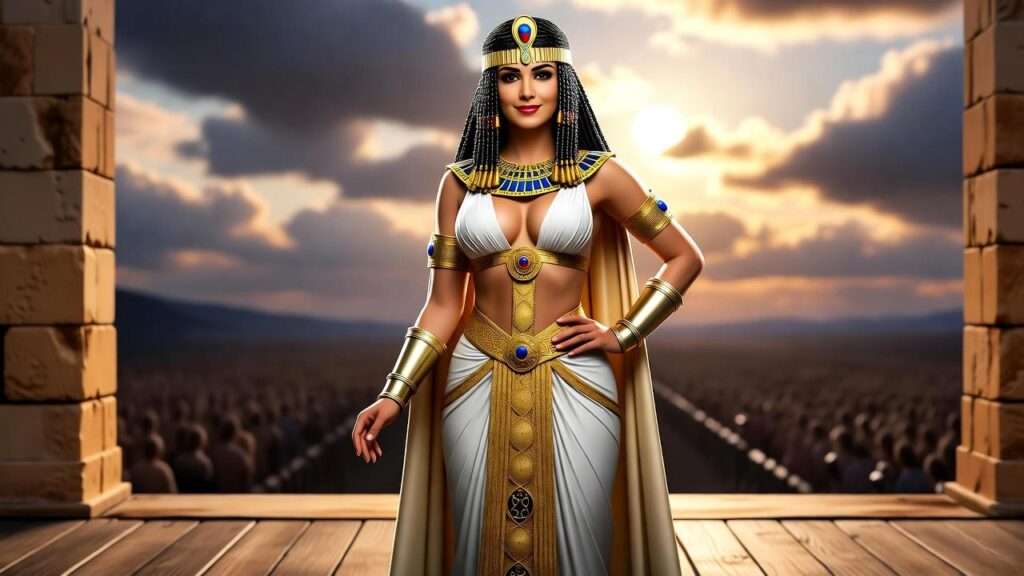
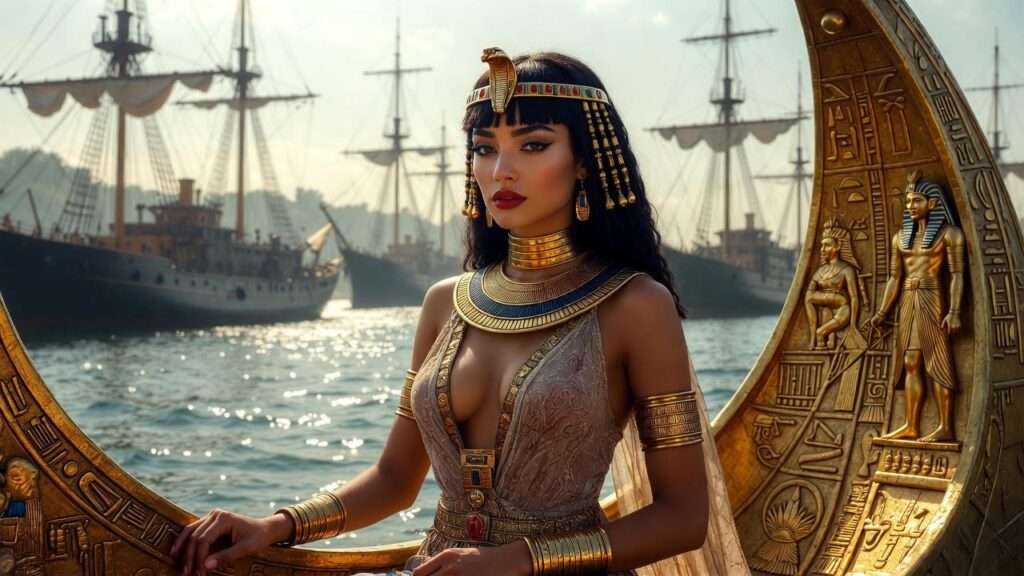
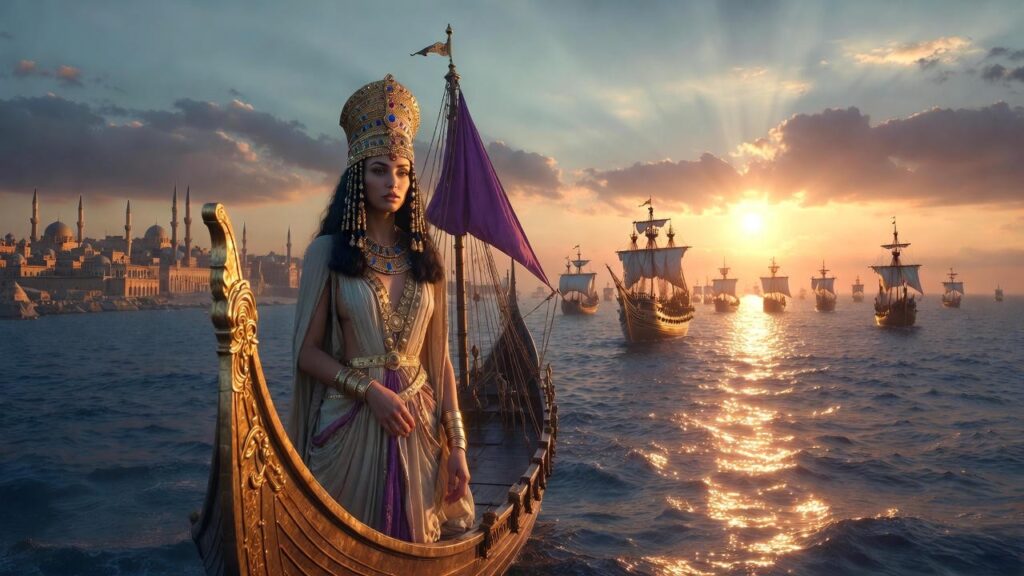
Cleopatra’s greatest weapon is theatricality. Enobarbus’s immortal description of her barge appearance (Act 2, Scene 2) transforms her into myth: “The barge she sat in, like a burnish’d throne, / Burn’d on the water.” She stages her own suicide as final performance, donning royal robes and applying the asp with deliberate ceremony: “Give me my robe, put on my crown; I have / Immortal longings in me.”
Feminist critics such as Janet Adelman (The Common Liar, 1973) and Phyllis Rackin (Shakespeare and Women, 2005) highlight how Cleopatra subverts Roman patriarchal discourse by controlling her own narrative. She refuses to be paraded as Caesar’s captive.
Independence and Vulnerability
Despite her power, Cleopatra reveals vulnerability in private moments with her attendants. Her fear after Antony’s death—“The odds is gone, / And there is nothing left remarkable / Beneath the visiting moon”—exposes profound loneliness.
Evolution Throughout the Play
Cleopatra matures from capricious lover to transcendent figure. Her feigned death in Act 4 tests Antony’s devotion; her real death elevates their love beyond earthly politics. As she declares, “I am fire and air; my other elements / I give to baser life.”
Symbolic Role
Cleopatra incarnates Egypt itself—fertile, mutable, imaginative. She fuses eros and thanatos, love and death, in a way that challenges Roman binaries.
Octavius Caesar – The Cold Architect of Empire
Octavius (later Augustus) serves as Antony’s foil and the play’s ultimate victor.
Contrasting Antony’s Passion with Caesar’s Restraint
Where Antony overflows with emotion, Caesar calculates. He speaks in measured prose rather than poetry, revealing disciplined mind over passionate heart. His grief over Antony’s death feels genuine yet politically expedient: “The breaking of so great a thing should make / A greater crack.”
Ambition and Morality
Caesar’s ruthlessness hides behind duty. He manipulates Antony’s marriage to Octavia, spreads propaganda about Egyptian debauchery, and plans to exhibit Cleopatra in triumph. Shakespeare presents him ambiguously—neither villain nor hero, but the necessary architect of empire.
Limited Emotional Depth
Caesar remains somewhat distant, reflecting Shakespeare’s interest in power’s dehumanizing effect. His final speech praises the lovers while asserting Roman order.
Symbolic Role
Caesar represents the future: centralized authority, stability, and the Augustan age that would inspire Shakespeare’s own Elizabethan/Jacobean world.
Enobarbus – The Voice of Reason and Loyalty Tested
Few supporting characters in Shakespeare rival Enobarbus for complexity and tragic stature.
Role as Chorus and Confidant
Enobarbus functions almost as a choric figure, offering blunt commentary on events. His barge speech is the play’s poetic high point, celebrating Cleopatra even while recognizing her danger.
Moral Conflict and Defection
A pragmatic Roman soldier, Enobarbus initially defends Antony’s choices. Yet after Actium, he deserts: “I am alone the villain of the earth.” His death from remorse—“O Antony, / Nobler than my revolt is infamous!”—proves loyalty transcends rationality.
Why He’s One of Shakespeare’s Greatest Supporting Characters
Enobarbus combines wit, honesty, and tragic insight. His arc mirrors the play’s larger themes: even the most clear-sighted cannot escape emotional bonds.
Key Relationships and Dynamics
Shakespeare’s genius in Antony and Cleopatra lies not only in individual portraits but in the intricate web of relationships that drive the drama. These connections reveal power imbalances, mutual dependencies, and the tragic consequences of mismatched worlds.
Antony and Cleopatra’s Passionate Bond
The central relationship is one of literature’s most complex romances. Unlike the youthful idealism of Romeo and Juliet, Antony and Cleopatra’s love is mature, volatile, and inextricably linked to politics.
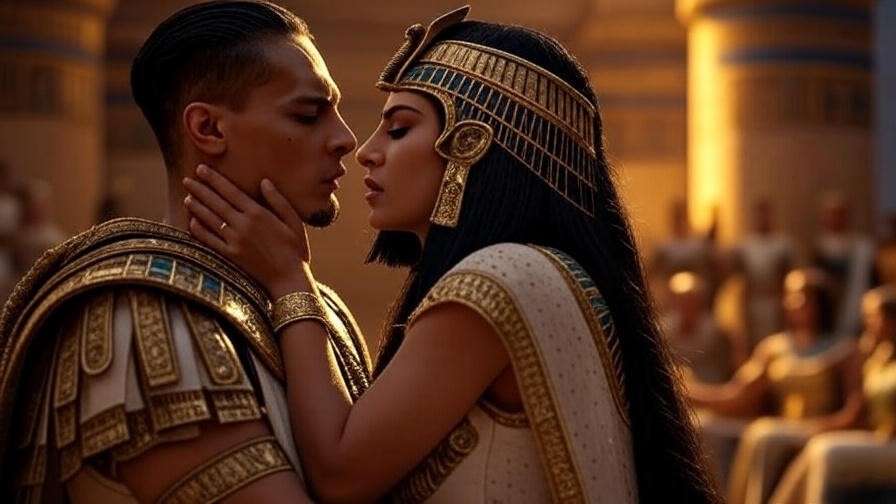
Their bond oscillates between ecstasy and suspicion. Early scenes show playful banter—“If it be love indeed, tell me how much” (Act 1, Scene 1)—while later moments expose jealousy and manipulation. Cleopatra’s feigned death in Act 4 provokes Antony’s suicide, yet her genuine grief transforms their love into something immortal: “Husband, I come!” (Act 5, Scene 2).
Critics debate whether their passion is destructive or redemptive. Linda Bamber (Comic Women, Tragic Men, 1982) argues that Cleopatra ultimately redeems Antony by allowing him to die as a lover rather than a failed soldier. Their final reunion elevates personal desire above imperial duty, achieving a paradoxical victory in defeat.
The Triumvirate Triangle (Antony, Caesar, Lepidus)
The political alliance among Antony, Octavius Caesar, and Lepidus underscores fragile power dynamics. Lepidus, often dismissed as weak, serves as a buffer between the two stronger personalities. His drunken reconciliation scene on Pompey’s galley (Act 2, Scene 7) exposes the triumvirate’s underlying tensions.
Caesar’s calculated use of his sister Octavia as a “hoop” to hold Antony reveals his strategic mastery. Antony’s swift return to Cleopatra dooms the marriage and accelerates conflict, highlighting how personal choices destabilize empires.
Cleopatra and Her Attendants (Charmian, Iras, Mardian)
Cleopatra’s relationships with Charmian, Iras, and the eunuch Mardian provide intimate glimpses into her private world. These loyal women mirror her moods, participate in her theatrics, and ultimately share her fate—dying alongside her in Act 5.
Their banter humanizes the queen: Charmian’s teasing about Cleopatra’s past lovers and the soothsayer scene reveal a court bound by affection rather than mere servitude. Their parallel deaths reinforce themes of devotion transcending social hierarchy.
Supporting Characters and Their Contributions
While the titular lovers dominate, Shakespeare populates the play with vivid secondary figures who sharpen thematic contrasts and advance the plot.
- Pompey: The son of Pompey the Great represents a missed opportunity for republican restoration. His hesitation to attack the triumvirs at sea (Act 2) underscores the shifting tides of fortune.
- Octavia: Caesar’s sister embodies Roman virtue—modesty, obedience, duty. Her brief marriage to Antony highlights his inconstancy; her quiet dignity contrasts sharply with Cleopatra’s flamboyance. She functions as a tragic pawn, aware of her symbolic role yet powerless to change it.
- Charmian and Iras: Beyond loyalty, they reflect Cleopatra’s femininity and foreshadow her suicide. Charmian’s final line—“Your crown’s awry”—touches with tender familiarity.
- Scarus and Eros: Antony’s soldiers illustrate varying degrees of loyalty. Scarus’s battlefield commentary critiques Antony’s leadership, while Eros’s refusal to kill his master (preferring suicide) echoes Enobarbus’s remorse, reinforcing honor’s complexity.
- Menas: Pompey’s pirate advisor tempts him with regicide, exposing moral ambiguities in power struggles.
These figures, though briefly onstage, enrich the play’s texture and prevent it from becoming a mere two-person drama.
Themes Illuminated Through Character
Shakespeare weaves profound themes through his characters, using them as vessels for exploring human experience.
Love vs. Duty / Public vs. Private Self
Antony’s internal conflict epitomizes this tension. His declaration “Let Rome in Tiber melt” prioritizes private passion over public responsibility, yet he repeatedly attempts (and fails) to reclaim Roman identity. Cleopatra navigates both spheres masterfully, using love as political leverage.
Empire and Identity (Roman vs. Egyptian)
The play interrogates cultural stereotypes: Rome’s masculine rigidity versus Egypt’s feminine fluidity. Antony’s “Egyptian fetters” symbolize both liberation and enslavement. Caesar’s victory asserts Roman order, but Shakespeare subtly questions its cost—emotional sterility.
Performance and Reality
Cleopatra’s life is performance; she “plays” roles to survive and seduce. Enobarbus’s barge speech blurs reality and myth. Even Antony performs heroism in his final moments. This metatheatricality reflects Jacobean fascination with illusion and truth.
Fate, Time, and Mortality
Characters repeatedly invoke fortune’s wheel. Cleopatra’s “immortal longings” transcend time, while Antony’s “The star that’s fallen” acknowledges mutability. Their suicides defy Caesar’s narrative, achieving mythic permanence.
Modern Interpretations and Relevance
Antony and Cleopatra continues to captivate in performance and criticism.
Recent productions emphasize diversity and contemporaneity. The Royal Shakespeare Company’s 2017 staging featured Josette Simon as a commanding Cleopatra opposite Antony Byrne, exploring postcolonial dynamics. The 2023 National Theatre production with Ralph Fiennes and Sophie Okonedo highlighted gender and power imbalances.
Critical lenses have evolved: postcolonial readings (Ania Loomba, Shakespeare, Race, and Colonialism, 2002) examine Roman propaganda against “Eastern” excess; queer theory explores fluid identities; feminist scholarship celebrates Cleopatra’s agency while acknowledging her constraints.
In 2025, the play resonates amid discussions of leadership, toxic relationships, and authenticity in public life. Antony’s struggle with reputation mirrors modern political scandals; Cleopatra’s performative power anticipates social media curation.
Expert Tips for Deeper Appreciation
To enrich your engagement with the play:
- Close-Reading Passages:
- Enobarbus’s barge speech (Act 2, Scene 2, lines 194–227)
- Cleopatra’s “dream” of Antony (Act 5, Scene 2, lines 76–100)
- Antony’s suicide (Act 4, Scene 15)
- Recommended Criticism:
- A.C. Bradley, Shakespearean Tragedy (1904)
- Harold Bloom, Shakespeare: The Invention of the Human (1998)
- Janet Adelman, Suffocating Mothers (1992)
- Linda Charnes, Notorious Identity (1993)
- Discussion Questions:
- Is Cleopatra manipulative or genuinely in love?
- Does Shakespeare endorse or critique Roman values?
- How does the play’s language reflect character psychology?
FAQs
What is the main flaw in Antony’s character? Antony’s primary flaw is inconstancy—his inability to reconcile Roman duty with Egyptian passion, leading to impulsive decisions and loss of reputation.
How does Shakespeare portray Cleopatra differently from historical accounts? While Plutarch emphasizes her intellect and charm, Shakespeare amplifies her theatricality, emotional range, and transcendent death, making her a mythic rather than merely historical figure.
Who is the true tragic hero—Antony or Cleopatra? Many critics argue both share tragic stature, but Cleopatra’s final act of self-determination gives her the play’s culminating nobility.
Why does Enobarbus die of heartbreak? His desertion of Antony violates his deepest sense of loyalty; remorse literally breaks his heart, illustrating emotion’s triumph over reason.
How does Octavius Caesar represent the future of Rome? Caesar embodies disciplined, centralized authority—the Augustan order that ended the Republic and brought peace at the cost of individual grandeur.
What role does performance play in Cleopatra’s character? Performance is Cleopatra’s survival strategy and essence; she stages scenes, controls narratives, and dies as her ultimate role, denying Caesar victory.
Are Antony and Cleopatra truly in love, or is it political alliance? Their relationship blends genuine passion with politics, but moments of vulnerability and transcendent death affirm authentic love.
Why is the play considered one of Shakespeare’s most difficult to stage? Its global scope, rapid scene changes, poetic density, and demand for charismatic leads challenge directors, yet reward ambitious productions.
Shakespeare’s Antony and Cleopatra endures because its characters refuse simplification. Antony’s grandeur and frailty, Cleopatra’s brilliance and vulnerability, Caesar’s calculation, Enobarbus’s insight—these figures embody the beautiful contradictions of human nature.
In refusing to judge them harshly, Shakespeare invites us to recognize ourselves in their struggles: the pull between duty and desire, the masks we wear, the legacies we chase. Their story ends in death, yet achieves immortality through art—a testament to love’s power to outlast empires.
Revisit the play, watch a production, or join the centuries-long conversation. The characters of Antony and Cleopatra continue to challenge, enchant, and illuminate.