Imagine a queen whose words echo through centuries, capturing the raw intensity of passion, the sting of betrayal, and the defiant embrace of death itself. In William Shakespeare’s Antony and Cleopatra, the Egyptian queen Cleopatra is not merely a historical figure but a literary force of nature—charismatic, unpredictable, and eternally captivating. Her famous lines have inspired generations of readers, actors, and scholars, revealing a character who blends vulnerability with regal power.
If you’re searching for cleopatra famous lines, you’re likely seeking the most iconic quotes from Shakespeare’s tragedy, along with their context, meaning, and why they resonate today. Whether you’re a student analyzing the play, a theater enthusiast, or simply drawn to Shakespeare’s mastery of language, this comprehensive guide delivers exactly that. Drawing on the full text of the play and scholarly interpretations, we explore the 10 best Cleopatra famous lines (including one legendary description of her that defines her legacy). These selections highlight themes of love, power, mortality, and infinite variety, offering deeper insight than standard quote lists.
Shakespeare’s portrayal transforms the historical Cleopatra VII into a timeless icon. In this skyscraper-level exploration, we’ll provide scene-by-scene context, line-by-line analysis, literary devices, thematic connections, and modern relevance—equipping you to appreciate the play’s genius fully.
Who Was Cleopatra in Shakespeare’s Antony and Cleopatra?
Shakespeare’s Antony and Cleopatra (c. 1607) blends Roman history from Plutarch’s Lives with poetic drama, contrasting the disciplined world of Rome with the sensual, chaotic realm of Egypt. Cleopatra, Queen of Egypt, is one of Shakespeare’s most complex female characters: a skilled politician, seductress, and tragic figure who chooses her own end.
Historically, Cleopatra VII allied with Julius Caesar and Mark Antony to maintain Egypt’s independence against Rome’s expansion. Shakespeare amplifies her allure, portraying her as both manipulative and deeply passionate. Key themes include the clash between duty and desire, the illusion of power, and the transformative nature of love. Cleopatra’s arc evolves from playful temptress to a queen who mythologizes herself in death, ensuring eternal fame.
The 10 Best Cleopatra Famous Lines: Quotes, Context, and Expert Analysis
These quotes are curated based on their cultural impact, frequency in scholarly discussions, and dramatic power. Each includes the exact wording, act/scene reference, context, analysis, and significance.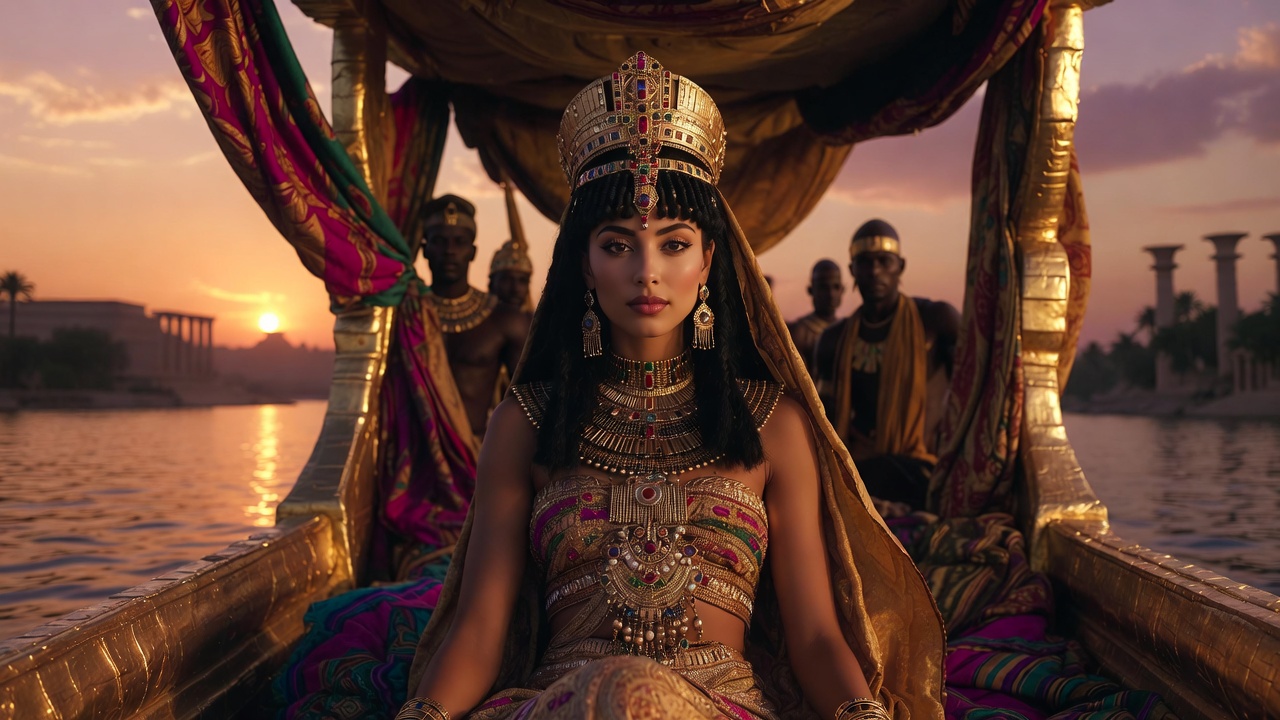
-
“My salad days, / When I was green in judgment: cold in blood” (Act 1, Scene 5)
Cleopatra reflects on her youthful affair with Julius Caesar while longing for Antony. Charmian teases her about past loves, prompting this self-aware dismissal.
This line coined the idiom “salad days”—meaning youthful inexperience, marked by immaturity (“green”) and lack of passion (“cold in blood”). The vegetable metaphor evokes freshness yet blandness, contrasting her mature, fiery love for Antony. It showcases Cleopatra’s self-reflection and growth, highlighting how her earlier relationships were politically driven rather than emotionally profound. Modern usage still refers to carefree, naive youth.
-
“Age cannot wither her, nor custom stale / Her infinite variety” (Act 2, Scene 2 – spoken by Enobarbus)
Enobarbus describes Cleopatra’s timeless allure to skeptical Romans after recounting her lavish barge meeting with Antony.
One of Shakespeare’s most celebrated passages, it captures Cleopatra’s eternal appeal: time (“age”) cannot diminish her beauty, and familiarity (“custom”) cannot make her predictable. “Infinite variety” suggests endless moods, sensuality, and unpredictability—qualities that make her irresistible. Enobarbus, a pragmatic soldier, admires her despite Roman bias, underscoring her power over men and the theme of Egypt’s seductive chaos versus Roman order.
-
“O happy horse, to bear the weight of Antony! … Now I feed myself / With most delicious poison” (Act 1, Scene 5)
Alone with her attendants, Cleopatra imagines Antony on horseback, then describes her longing as self-inflicted torment.
Erotic imagery abounds: the horse bearing Antony’s “weight” evokes physical intimacy, while “delicious poison” captures love’s addictive danger. It foreshadows the tragedy—passion as both ecstasy and destruction—revealing Cleopatra’s obsessive devotion.
-
“If it be love indeed, tell me how much. / There’s beggary in the love that can be reckoned” (Act 1, Scene 1 – shared with Antony)
Cleopatra playfully challenges Antony to quantify their love.
Rejecting Roman pragmatism (measuring everything), she insists true love is boundless. “Beggary” implies poverty in limiting affection, emphasizing passion’s infinity and the play’s central conflict: Roman duty versus Egyptian desire.
-
“Give me my robe, put on my crown; I have / Immortal longings in me” (Act 5, Scene 2)

Preparing for suicide, Cleopatra dresses regally to meet death.
This line conveys dignified resolve. “Immortal longings” express her desire for eternal fame through a noble end, transforming suicide into mythic apotheosis. It highlights her performative identity—she stages her death like a queen.
-
“The stroke of death is as a lover’s pinch, / Which hurts, and is desired” (Act 5, Scene 2)
Describing the asp’s bite as she applies it.
Eroticizing death, Cleopatra blends pain and pleasure, consummating her love with Antony in mortality. It underscores the play’s fusion of eros and thanatos.
-
“His legs bestrid the ocean: his reared arm / Crested the world” (Act 5, Scene 2)
Cleopatra envisions Antony posthumously as a colossus.
Hyperbolic praise elevates Antony to god-like status, contrasting Roman diminishment. It reveals her idealization and grief, affirming their mythic partnership.
-
“I dreamt there was an emperor Antony. / O, such another sleep, that I might see / But such another man!” (Act 5, Scene 2)
Grieving, Cleopatra recalls a dream of ideal Antony.
This line expresses profound loss—reality pales beside her vision. It explores perception versus reality, a recurring theme.
-
“Finish, good lady; the bright day is done, / And we are for the dark” (Act 5, Scene 2 – to attendants)
In her final moments, Cleopatra accepts mortality.
Poetic resignation: “bright day” symbolizes life, “dark” death. It conveys serene dignity.
-
“She shall be buried by her Antony. / No grave upon the earth shall clip in it / A pair so famous” (Act 5, Scene 2 – spoken by Caesar)
Caesar’s tribute after her death.
Irony: the conqueror immortalizes them. It seals their legendary status, fulfilling Cleopatra’s desire for eternal fame.
Why These Cleopatra Famous Lines Still Matter Today
Shakespeare’s language endures because it captures universal emotions. “Salad days” entered everyday speech for youthful folly; “infinite variety” describes timeless allure. These lines influence films (e.g., Elizabeth Taylor’s 1963 portrayal), feminist readings of power dynamics, and discussions of passionate love. They teach lessons in self-determination, the cost of desire, and art’s power to defy death.
Key Themes Illuminated by Cleopatra’s Famous Lines
- Love vs. Empire — Cleopatra’s boundless passion challenges Roman restraint.
- Performance and Identity — She constantly performs royalty, even in death.
- Mortality and Immortality — Her words transform tragedy into legend.
Cleopatra’s famous lines reveal a woman of extraordinary depth—passionate, strategic, and tragically human. Shakespeare’s genius lies in making her words resonate across time, inviting us to explore love’s heights and depths. Dive into the full play or watch a performance to experience her voice anew. Share your favorite Cleopatra line in the comments or explore more Shakespeare insights on williamshakespeareinsights.com!
FAQs
What is Cleopatra’s most famous line in Antony and Cleopatra? “Age cannot wither her, nor custom stale / Her infinite variety” (spoken by Enobarbus) is arguably the most iconic, celebrating her eternal allure.
Did Shakespeare base Cleopatra’s quotes on real historical words? No—Shakespeare drew from Plutarch but invented the dialogue for dramatic effect.
Why is “Age cannot wither her” said about Cleopatra? It highlights her unchanging charm and unpredictability, making her irresistible.
What does “salad days” mean in Shakespeare’s context? Youthful inexperience and lack of passion, contrasting with mature love.
How many lines does Cleopatra speak in the play? Cleopatra has over 680 lines, one of Shakespeare’s longest female roles.