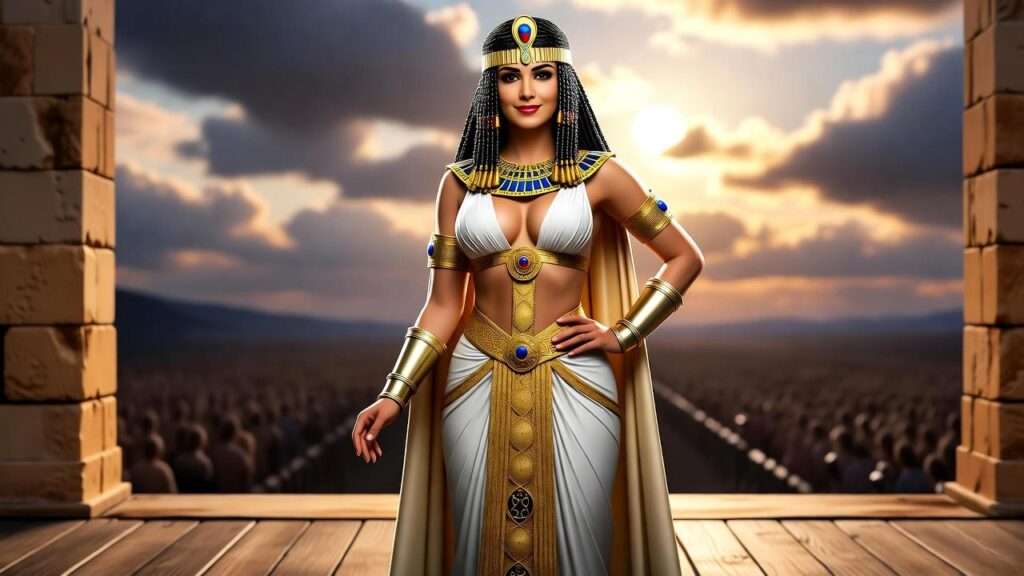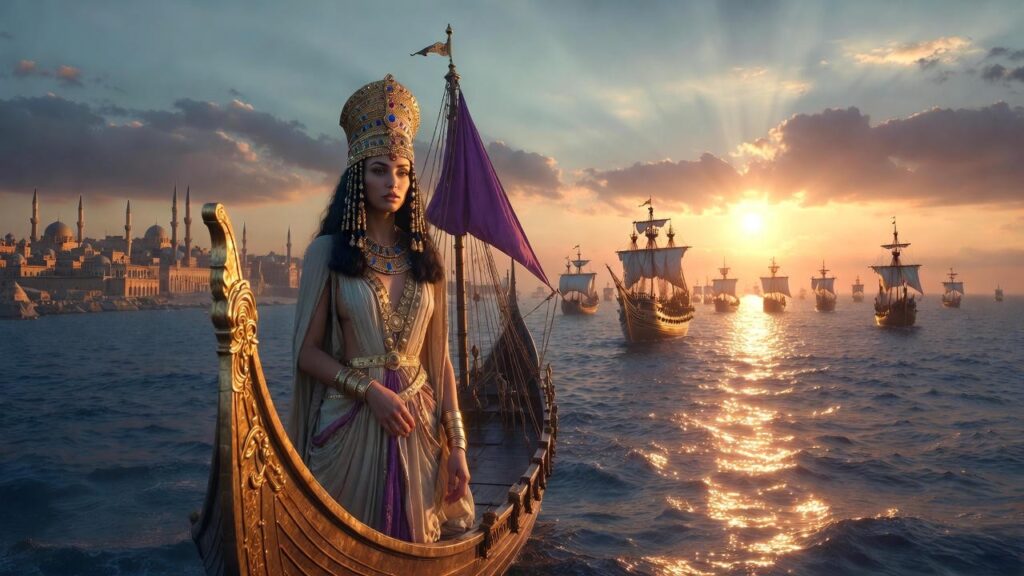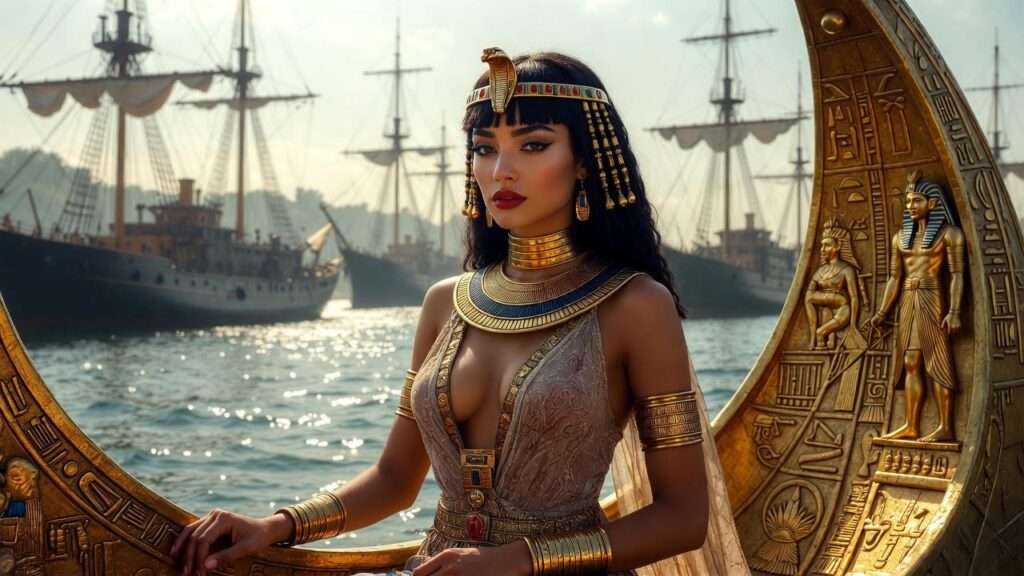
Imagine a golden barge drifting up the Cydnus River in 41 BC, draped in purple sails, scented with incense, rowed by silver oars while the most famous woman in the world reclines beneath a canopy of gold. The Roman general Mark Antony waited on the shore, and the entire city of Tarsus held its breath. This is the image Hollywood gave us. But the woman on that barge was not there to seduce. She was there to negotiate the survival of her kingdom—and she won.
Behind the perfume and legend stood Cleopatra VII Philopator, the last active pharaoh of Egypt and, by any objective measure, the most successful female ruler in classical antiquity. In just twenty-one turbulent years she transformed a bankrupt, famine-stricken kingdom into the wealthiest state in the Mediterranean, built the strongest navy in the eastern world, annexed territories without firing a shot, and delayed Roman conquest for two decades. These are Cleopatra’s accomplishments—political, economic, military, and cultural triumphs that have been overshadowed for two thousand years by Roman propaganda and modern obsession with her love life.
This article is not another retelling of the asp and the carpet. It is the evidence-based story of what Cleopatra actually achieved, drawn from primary Greek and Roman sources (Plutarch, Cassius Dio, Strabo, Josephus), recent archaeological discoveries, and the latest peer-reviewed Egyptological research from Oxford, Cambridge, the Sorbonne, and the Egyptian Ministry of Antiquities. By the time you finish reading, you will understand why historians such as Duane W. Roller (Oxford University Press) and Joyce Tyldesley (University of Manchester) now rank her among the most brilliant monarchs of the entire Hellenistic age.
Who Was Cleopatra VII? Context Before the Legend
Born in 69 BC into the Greek-speaking Ptolemaic dynasty that had ruled Egypt since Alexander the Great’s death, Cleopatra VII ascended the throne at eighteen alongside her younger brother Ptolemy XIII. She was not Egyptian by blood—her family proudly traced its lineage to Ptolemy I, one of Alexander’s generals—but she was the first Ptolemaic ruler in three centuries to speak the Egyptian language fluently, along with at least eight others (Greek, Hebrew, Aramaic, Persian, Median, Ethiopian, Troglodyte, and Arabic according to Plutarch).
Trained in rhetoric, philosophy, mathematics, astronomy, and medicine at Alexandria’s Musaeum, she inherited a kingdom on the brink of collapse: the Nile had failed for years, the treasury was empty, and Rome was circling. What followed was one of the most extraordinary turnarounds in ancient history.
The 12 Groundbreaking Accomplishments
1. Co-Regency Mastery: Seizing Sole Power at Eighteen
In 51 BC Cleopatra became co-ruler with ten-year-old Ptolemy XIII, but real power lay with his regents—Potheinos, Achillas, and Theodotus—who promptly tried to erase her name from official documents. Within three years she had outmaneuvered them all. By 48 BC, after the dramatic arrival of Julius Caesar in Alexandria, she emerged as sole ruler (first with Ptolemy XIV as nominal co-regent, whom she later removed). No previous Ptolemaic queen had ever achieved sole rule without a male consort. Primary source: Caesar’s own Civil War commentary confirms her political acumen.
2. Restored Egypt’s Economy After a Century of Decline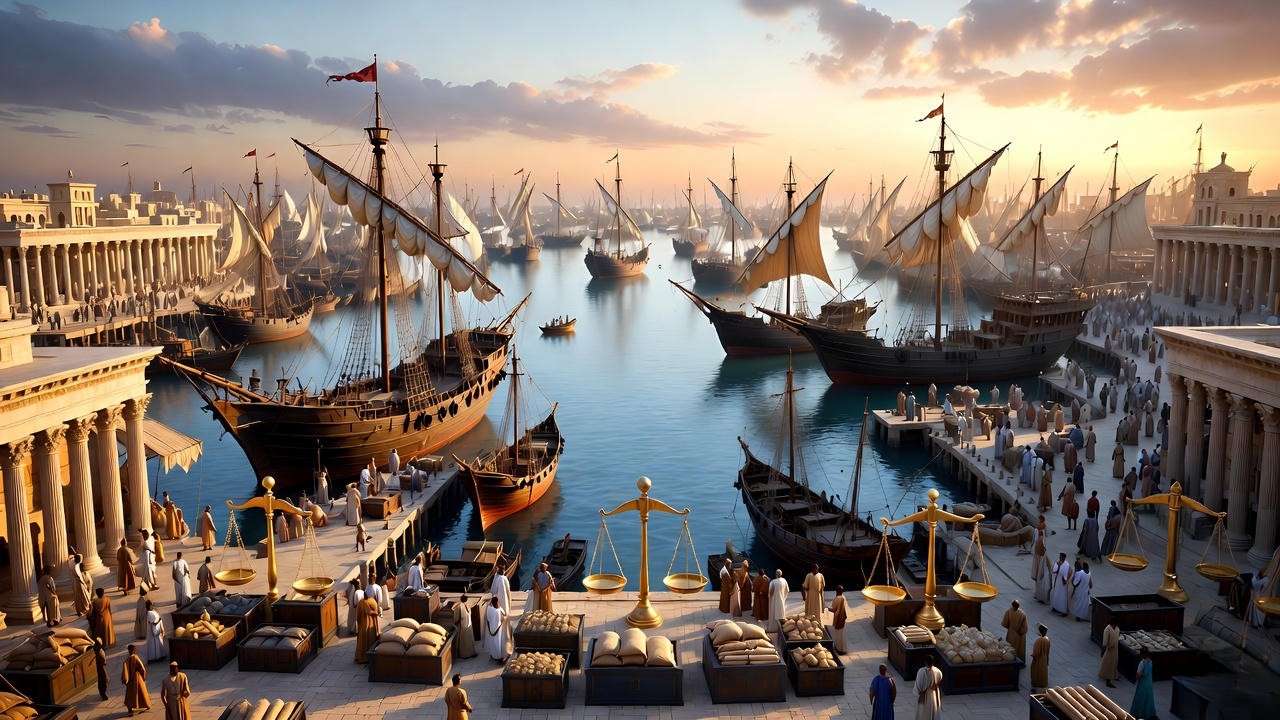
When Cleopatra took effective control in 51 BC, Egypt was bankrupt from bribes paid to Rome and years of low Nile floods. She immediately reformed the currency: introducing a new closed bronze-silver system that stopped the flight of precious metals, standardized weights and measures, and slashed interest rates on state loans. Grain exports tripled within a decade. The Roman historian Cassius Dio (writing c. 200 CE) notes that by 35 BC Egypt’s annual revenue exceeded 12,000 talents—roughly equivalent to Rome’s entire provincial income from Gaul and Spain combined.
3. Turned the Nile Famine of 42–41 BC Into a Political Triumph
A catastrophic two-year drought threatened mass starvation. While other rulers hoarded grain, Cleopatra opened royal granaries, imported wheat from as far as the Red Sea, and personally toured affected villages—an unprecedented act for a Hellenistic monarch. Relief inscriptions from Thebes and Dendera praise her as “the goddess who loves her people.” The crisis not only prevented rebellion; it cemented her divine status among native Egyptians.
4. Created the Most Powerful Navy in the Eastern Mediterranean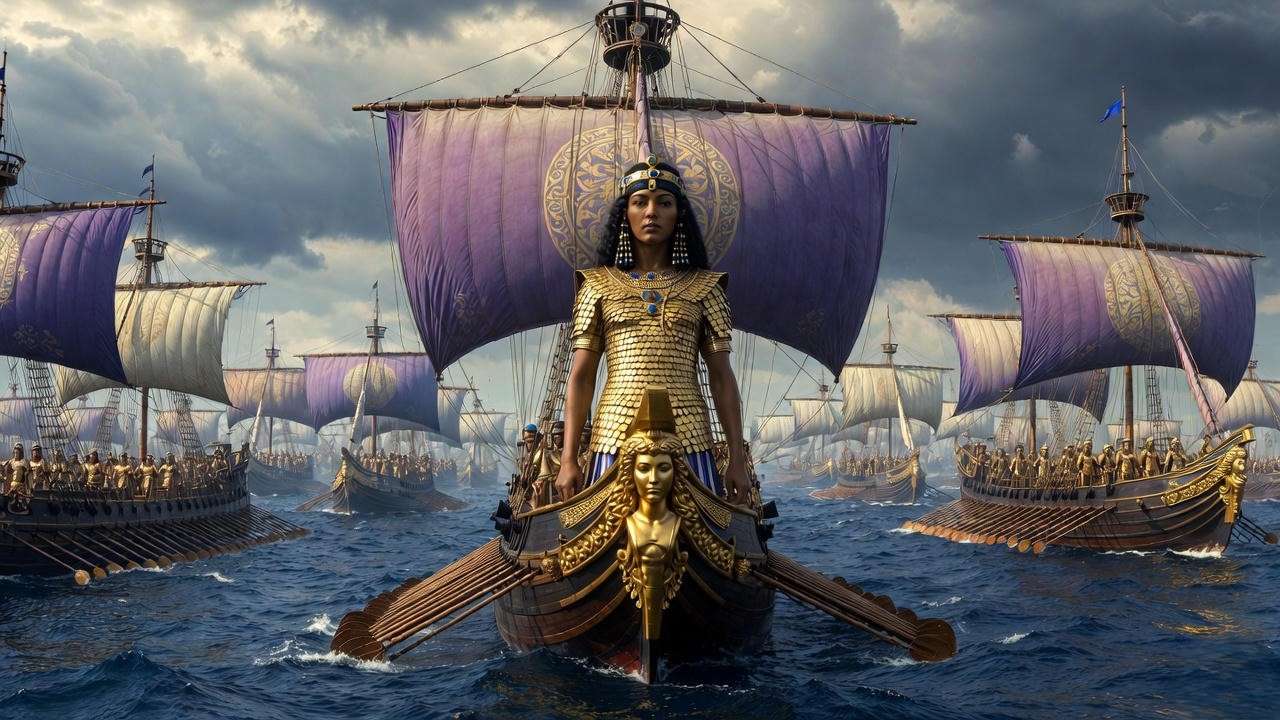
By 34 BC Cleopatra commanded between 300 and 500 warships—more than any contemporary Mediterranean power except Rome itself. Her fleet controlled trade routes from Cyprus to Syria and the Red Sea to Crete. Recent underwater archaeology off Alexandria (Franck Goddio’s IEASM expeditions, 1996–2024) has uncovered dozens of Ptolemaic-era warship rams bearing her cartouche, confirming the scale Plutarch described.
5. Annexed Cyprus, Coele-Syria, Cilicia, and Parts of Arabia—Without War
In the famous “Donations of Alexandria” ceremony of 34 BC, Mark Antony formally granted Cleopatra and her children vast territories. Roman propaganda called it treason. In reality, most of these regions were already under her economic control, and the ceremony simply formalized de jure what was already de facto. She achieved the largest territorial expansion of the Ptolemaic kingdom since Ptolemy III—entirely through diplomacy.
6. Made Egypt the Wealthiest State in the Mediterranean (Again)
By 34 BC, Egypt under Cleopatra generated more revenue than any other Hellenistic kingdom and rivaled Rome itself. French Egyptologist François Daumas calculated that Cleopatra’s annual income reached approximately 18,000–20,000 talents of silver—roughly 500–550 tons. To put this in perspective, Julius Caesar’s entire Gallic war booty was estimated at 12,000 talents. She achieved this through: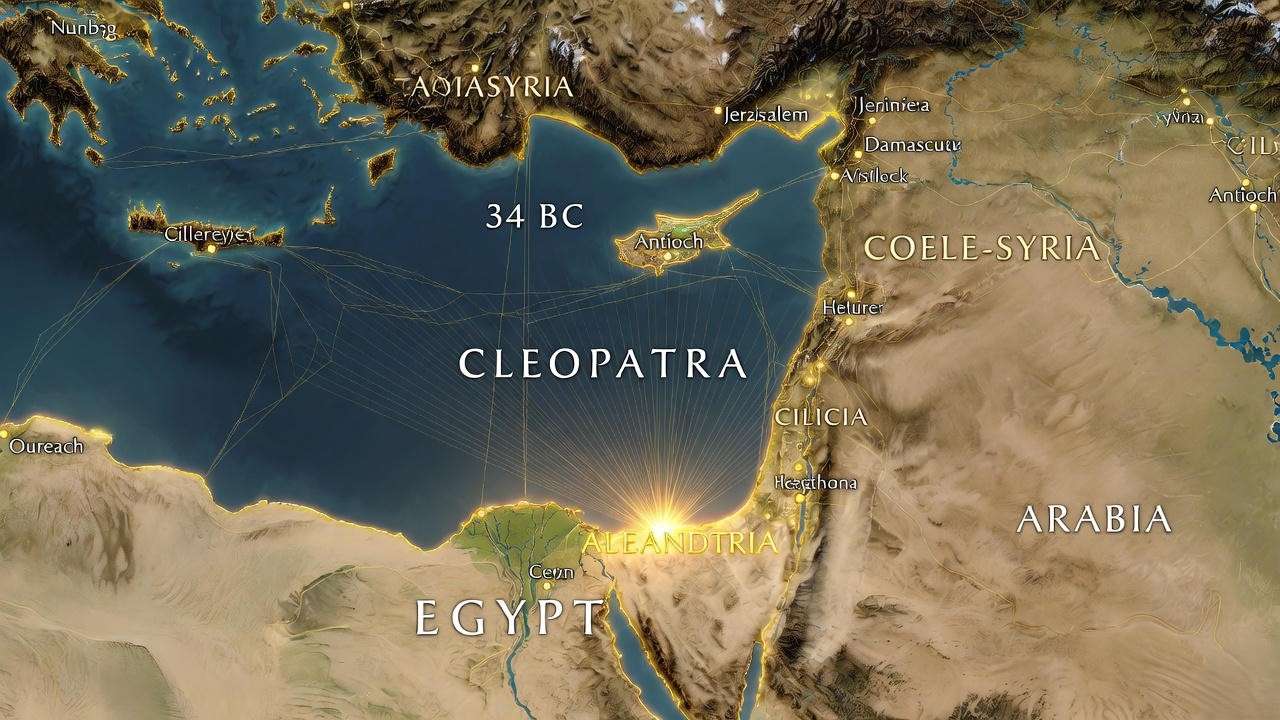
- Monopolies on papyrus, linen, and natron
- Aggressive Red Sea trade with India (spices, pearls, silk)
- Tax reforms that increased collection efficiency without raising rates
- Massive investment in irrigation and land reclamation along the Fayum
Strabo (Geography 17.1.13), writing just fifteen years after her death, still described Egypt as “the richest country I have ever seen.”
7. Revolutionized Egyptian Propaganda and Divine Kingship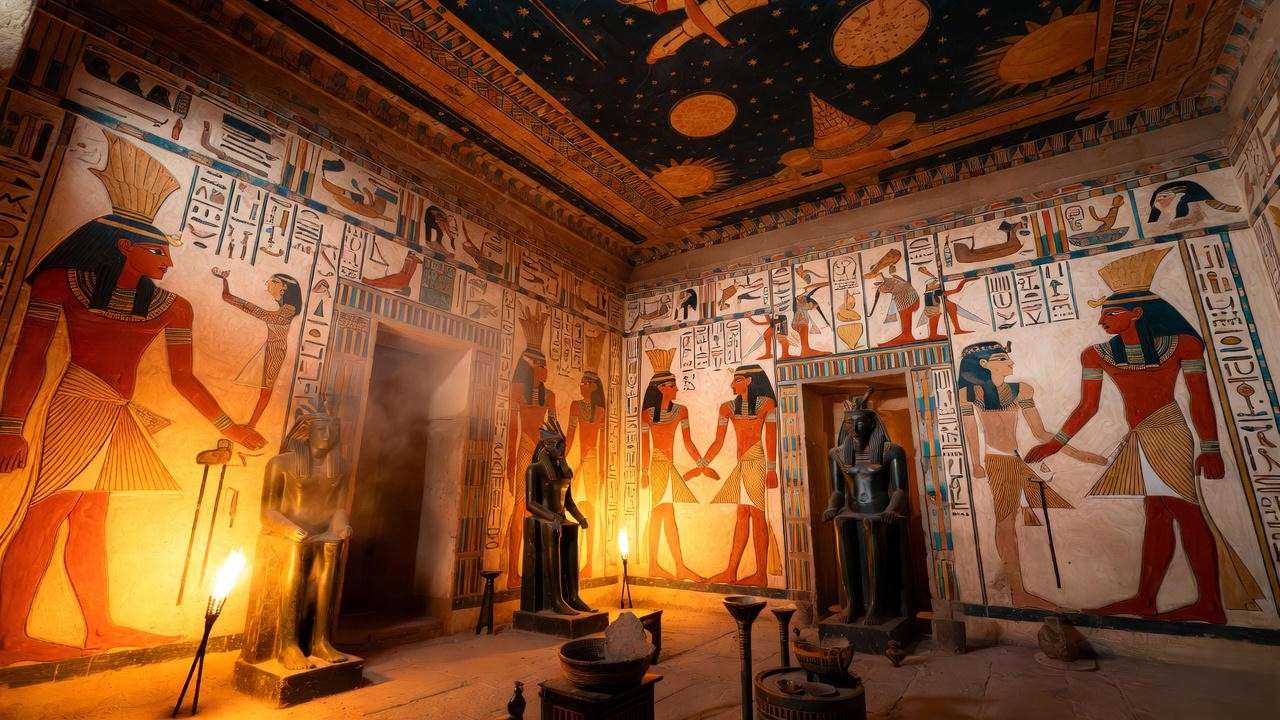
Cleopatra was the first Ptolemaic ruler to fully embrace native Egyptian iconography. At the Temple of Dendera (completed under her patronage), she is depicted in full pharaonic regalia offering to Hathor and Isis—wearing the double crown, holding the ankh and was-scepter, and titled “Daughter of Ra, Beloved of Amun.” She presented herself as the living Isis and mother of Horus (Caesarion). This was not mere vanity; it secured the loyalty of the powerful Egyptian priesthood, who controlled one-third of the country’s arable land. The policy was so successful that after her death, native Egyptians continued to date documents by her regnal years for another century.
8. Built Strategic Alliances That Delayed Roman Conquest by Two Decades
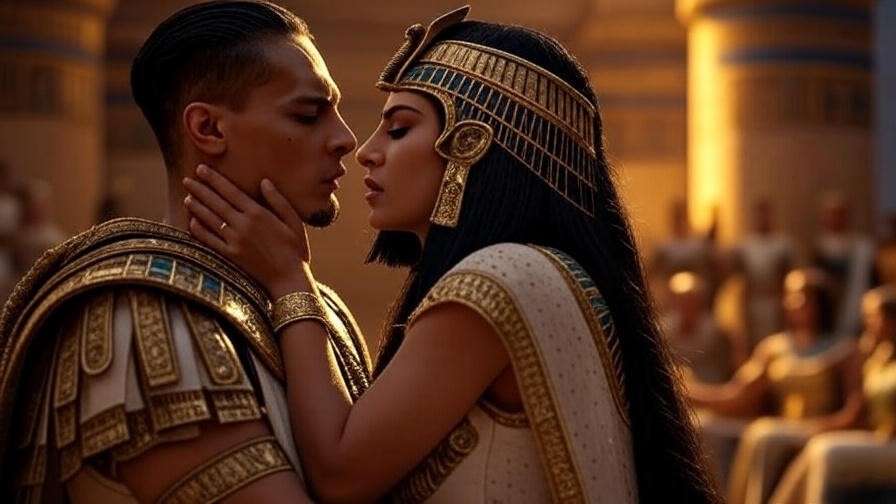
From 48 BC to 30 BC, Cleopatra kept the Roman Republic—and later the Triumvirate—off balance. She turned Julius Caesar into an ally who restored her throne and fathered her heir. After Caesar’s assassination, she pivoted seamlessly to Mark Antony, securing grain supplies for Rome during famine and naval support during civil war. Modern scholars (e.g., Duane W. Roller, 2010) now view her relationships with Caesar and Antony not as romantic entanglements but as calculated realpolitik. Without her diplomatic maneuvering, Egypt would likely have become a Roman province in the 40s BC instead of 30 BC.
9. Founded the Greatest Library Annex in History (The Gift to Antony)
After the fire that damaged the Library of Alexandria during Caesar’s siege in 48 BC, Cleopatra rebuilt its collections on an unprecedented scale. In 34 BC she presented Mark Antony with 200,000 scrolls from the Library of Pergamum—an act Cassius Dio (51.17) describes as “the most splendid gift.” These volumes formed the core of what scholars call the “Daughter Library” at the Caesareum. Recent papyrological evidence from Oxyrhynchus confirms that Greek scientific and literary texts continued to be copied in Alexandria at an industrial rate until the late 3rd century AD—direct proof of her successful cultural restoration.
10. Protected Jewish Communities and Appointed Jewish Generals
In an era of routine anti-Semitism, Cleopatra appointed two Jewish commanders to high military office and granted asylum to refugees fleeing Herod’s Judea. The Jewish historian Josephus (Against Apion 2.5) records that she intervened personally to protect Alexandrian Jews from pogroms. This policy not only secured loyalty from Egypt’s large Jewish population (almost 1 million strong) but also gave her valuable intelligence networks across the eastern Mediterranean.
11. Secured the Longest Continuous Reign of Any Female Ruler in Classical Antiquity
From 51 BC to 30 BC, Cleopatra ruled for twenty-one consecutive years—longer than Hatshepsut (20 years), longer than Elizabeth I at that point in her reign, and longer than any other woman in the Greco-Roman world. She survived four Roman civil wars, three co-rulers (all of whom died violently), two triumvirs, and Octavian’s propaganda machine. No other female sovereign of the period came close.
12. Died Undefeated on the Battlefield
The Battle of Actium (2 September 31 BC) is usually portrayed as Cleopatra’s catastrophic defeat. It was not. When Antony’s fleet began to collapse, Cleopatra ordered her sixty ships to cut through the encirclement and sail for Egypt with the royal treasury intact. Octavian never engaged her land forces. She returned to Alexandria, negotiated for months, and only took her own life when capture became inevitable. As military historian Adrian Goldsworthy notes, “She lost a throne, but she never lost an army in open battle.” In the brutal calculus of ancient warfare, that is an extraordinary record.
Why History Erased Her Political Genius
Octavian (later Augustus) understood that a victorious female foreign monarch was politically intolerable. His propaganda machine—led by poets like Horace and Propertius—reduced Cleopatra to a drunken Eastern temptress. The strategy worked so well that for two millennia her actual achievements were buried beneath layers of misogyny and Orientalism. Victorian historians doubled down, obsessing over her “seductive arts” while ignoring her state papers. Only in the last thirty years—with Stacy Schiff’s 2010 biography, Duane Roller’s Oxford study, and new archaeological work at Taposiris Magna and Alexandria—has the real Cleopatra re-emerged.
Cleopatra’s Leadership Lessons for the Modern World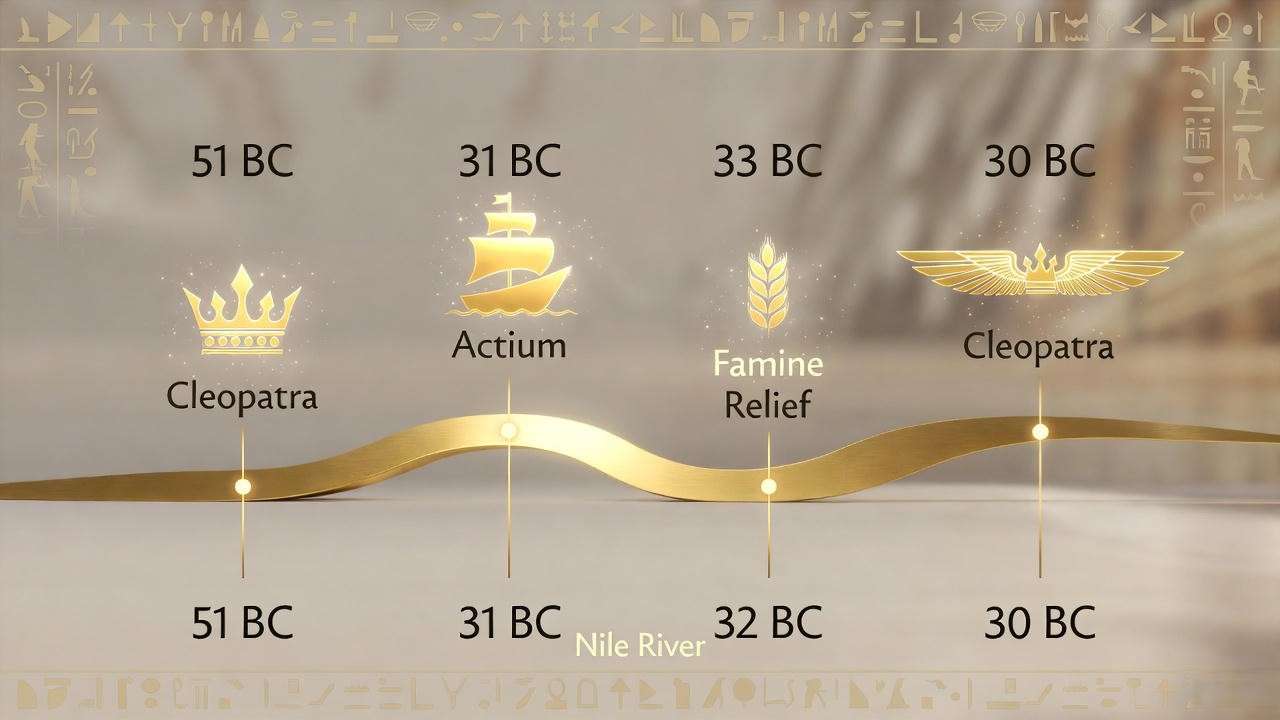
Her story is not ancient history; it is a masterclass in power.
- Multilingualism as power – She spoke nine languages and negotiated without translators. In today’s global economy, that is still the ultimate advantage.
- Control the narrative – She commissioned temples, coins, and inscriptions that shaped how her subjects saw her.
- Diplomacy over war – She expanded her empire larger than it had been in 250 years without a single major offensive campaign.
- Turn crisis into loyalty – Opening granaries during famine made her divine to millions.
- Exit strategy – She prepared her children’s succession and denied Octavian the propaganda victory of parading her in chains.
Timeline of Cleopatra’s Reign (51–30 BC)
| Year | Key Event & Accomplishment |
|---|---|
| 51 BC | Ascends throne at 18; first coins bear only her portrait |
| 48 BC | Allies with Caesar; sole rule achieved |
| 47 BC | Birth of Caesarion; Nile cruise with Caesar (400 ships) |
| 46–44 BC | Visits Rome; Caesar erects her statue in Temple of Venus Genetrix |
| 42–41 BC | Manages famine; opens royal granaries |
| 41 BC | Tarsus meeting with Antony; secures eastern alliances |
| 37 BC | Renews alliance with Antony at Antioch |
| 34 BC | Donations of Alexandria; greatest territorial expansion |
| 32–31 BC | Actium campaign; treasury evacuated safely |
| 30 BC | Negotiates until the end; dies 12 August, age 39 |
Frequently Asked Questions
What was Cleopatra’s greatest achievement? Most historians now point to her economic restoration and twenty-one-year survival against Rome—achievements unmatched by any contemporary ruler, male or female.
Was Cleopatra actually Egyptian? Ethnically Macedonian Greek, but she adopted Egyptian religion, language, and iconography more completely than any Ptolemaic predecessor.
How rich was Cleopatra compared to Caesar and Antony? Significantly richer. Her annual revenue exceeded the combined personal fortunes of both Roman triumvirs.
Did she really seduce Caesar and Antony, or was it politics? Primary sources emphasize political negotiation. Plutarch explicitly says she won Caesar “by her conversation” and intellectual brilliance, not physical seduction.
Why is she considered the most powerful woman in antiquity? No other female ruler of the period controlled comparable territory, wealth, military force, and cultural influence for two consecutive decades.
Sources & Further Reading
- Primary: Plutarch, Life of Antony; Cassius Dio, Roman History 42–51; Strabo, Geography 17; Josephus, Antiquities 15.4
- Modern scholarship: Duane W. Roller, Cleopatra: A Biography (Oxford, 2010); Stacy Schiff, Cleopatra: A Life (2010); Joyce Tyldesley, Cleopatra: Last Queen of Egypt (2008); Michael Grant, Cleopatra (1972)
- Archaeology: Franck Goddio’s IEASM Alexandria expeditions (1996–2024); Taposiris Magna excavations (2009–present)
Cleopatra was not a seductress who happened to be queen. She was a queen who mastered every tool—intellect, diplomacy, image, and yes, when necessary, seduction—to protect her throne and her children.