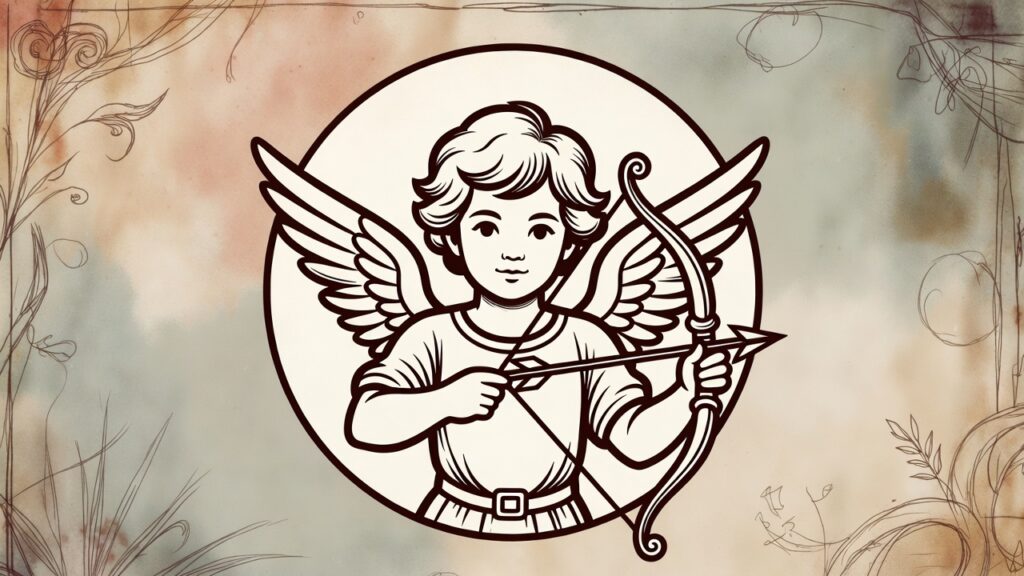
Imagine a moonlit garden where lovers chase illusions, arrows fly unseen, and passion strikes without warning. This is the chaotic, enchanting world William Shakespeare paints when he invokes Cupid—the winged god of desire who shoots arrows to ignite love, often blindly and irrationally. Centuries later, Cupid remains one of the most enduring symbols of romance, appearing everywhere from Valentine’s Day cards to classroom decorations. Yet in Shakespeare’s hands, Cupid is no mere cherubic mascot; he represents the folly, pain, and transformative power of love.
If you’re searching for a cupid drawing outline—a simple, printable line art template to trace, color, craft, or use in educational projects—you’ve landed in the perfect spot. This comprehensive guide delivers exactly that: an easy-to-follow, beginner-friendly Cupid outline you can recreate or print at home. But we go far beyond basic clipart. Drawing on Shakespeare’s profound insights into love’s mysteries, we explore how Cupid’s imagery connects to the Bard’s timeless themes in plays like A Midsummer Night’s Dream and his sonnets. Whether you’re a teacher planning a literature-art crossover activity, a parent seeking meaningful Valentine’s crafts, a student analyzing romantic motifs, or an artist wanting deeper inspiration, this article provides genuine value: practical creativity fused with literary depth.
By the end, you’ll have a ready-to-use outline, step-by-step drawing instructions, creative application ideas, and expert analysis that elevates a simple sketch into something thoughtful and memorable. Let’s draw Cupid—and uncover what Shakespeare really thought about love’s arrows.
Who Is Cupid? The Mythological Roots Behind the Icon
Cupid, known as Eros in Greek mythology, is the son of Venus (Aphrodite), goddess of love. Armed with a bow and arrows, he pierces hearts to spark desire—sometimes golden arrows for true love, sometimes leaden ones for aversion. In Roman art and Renaissance iconography (the era that shaped Shakespeare’s world), Cupid evolved into the chubby, winged cherub we recognize today: playful, mischievous, often blindfolded to symbolize love’s irrationality.
This blindfolded image became especially popular in the 16th and 17th centuries, appearing in paintings, tapestries, and emblems. Shakespeare, writing during this Renaissance revival of classical myths, frequently referenced Cupid not as a sweet symbol of romance but as a figure of chaos and deception. His Cupid embodies the unpredictable, sometimes painful nature of attraction—far richer than the commercialized Valentine version.
Understanding these roots helps when using a Cupid drawing outline: the classic cherub shape (plump body, tiny wings, bow, quiver) draws directly from this tradition, making your template historically authentic and literarily resonant.
Cupid in Shakespeare’s Works: Beyond the Valentine Cliché
Shakespeare rarely treats Cupid as harmless. Instead, he uses the god to critique and explore love’s darker, more complex sides—irrationality, lust, self-delusion, and even affliction.
Cupid as the “Knavish Lad” in A Midsummer Night’s Dream
In A Midsummer Night’s Dream (c. 1595–96), one of Shakespeare’s most beloved comedies, love potions mimic Cupid’s arrows, causing hilarious (and sometimes cruel) mismatches. The play’s famous line comes from Helena in Act 1, Scene 1:
“Love looks not with the eyes, but with the mind, And therefore is winged Cupid painted blind.”
This iconic quote explains Cupid’s blindness: love isn’t rational or visual; it’s subjective, shaped by imagination and emotion. In the forest chaos, characters fall for the wrong people because of magical interference—mirroring how Cupid’s arrows strike indiscriminately. Shakespeare subverts the romantic ideal, showing love as folly driven by inner perception rather than objective beauty.
A blindfolded Cupid outline variation captures this perfectly: add a simple band across the eyes to evoke Helena’s insight, turning your drawing into a visual meditation on Shakespearean love.
Cupid’s Arrows in the Sonnets – Desire, Pain, and Passion
Shakespeare’s sonnets delve even deeper into Cupid’s darker implications. Sonnets 153 and 154 explicitly reference Cupid:
In Sonnet 153:
“Cupid laid by his brand and fell asleep. A maid of Dian’s this advantage found, And his love-kindling fire did quickly steep In a cold valley-fountain of that ground…”
The speaker tries to cure his lovesickness by bathing in a sacred fountain, only to find the fire reignites—symbolizing incurable desire. Sonnet 154 echoes this, portraying Cupid’s torch as a disease-like passion that no remedy can quench.
These sonnets portray Cupid not as a bringer of joy but as a source of torment—lust that burns without satisfaction. For modern readers, this adds layers to a Cupid drawing: include a flaming torch or heart-pierced arrow to nod to the sonnets’ bittersweet view of love.
Other References – Romeo and Juliet, As You Like It, and More
In Romeo and Juliet, Mercutio mocks romantic fantasies in his Queen Mab speech, indirectly evoking Cupid’s dream-like delusions. In As You Like It and Much Ado About Nothing, Cupid appears in witty banter—e.g., “Some Cupid kills with arrows, some with traps” (Much Ado, Act 3, Scene 2)—highlighting love’s varied, often manipulative paths.
Across genres, Shakespeare’s Cupid underscores love’s unpredictability: joyous in comedies, tragic in sonnets and tragedies. This nuanced portrayal makes a Shakespeare-inspired Cupid outline ideal for thoughtful projects—far more meaningful than generic heart-and-arrow doodles.
Why Use a Shakespeare-Inspired Cupid Drawing Outline?
In an age of instant digital downloads and mass-produced Valentine’s decor, a generic Cupid silhouette can feel flat and forgettable. A Shakespeare-inspired version changes that entirely. By connecting the classic cherub imagery to the Bard’s nuanced exploration of love, your drawing outline becomes more than a craft project—it transforms into a mini-lesson in literature, symbolism, and emotional depth.
Teachers and homeschooling parents frequently seek cross-curricular activities that blend art with English literature. A Cupid outline paired with quotes from A Midsummer Night’s Dream or the sonnets allows students to visualize abstract concepts: the blindness of infatuation, the burning persistence of desire, the comedic chaos of mismatched affection. Literature enthusiasts and theater lovers appreciate the opportunity to bring Renaissance motifs to life in a personal, tangible way. Even casual crafters benefit from the added meaning—your homemade Valentine card or journal page now carries echoes of one of the greatest writers in the English language.
This approach solves a common frustration: most free printable Cupid templates online are cartoonish, overly simplified, and lack context. They serve the immediate need (something to color or trace), but offer nothing memorable or educational. Here, you get both the practical tool and the intellectual enrichment—making your finished piece more thoughtful, shareable, and conversation-starting.
Easy Step-by-Step Cupid Drawing Outline (Beginner-Friendly Template)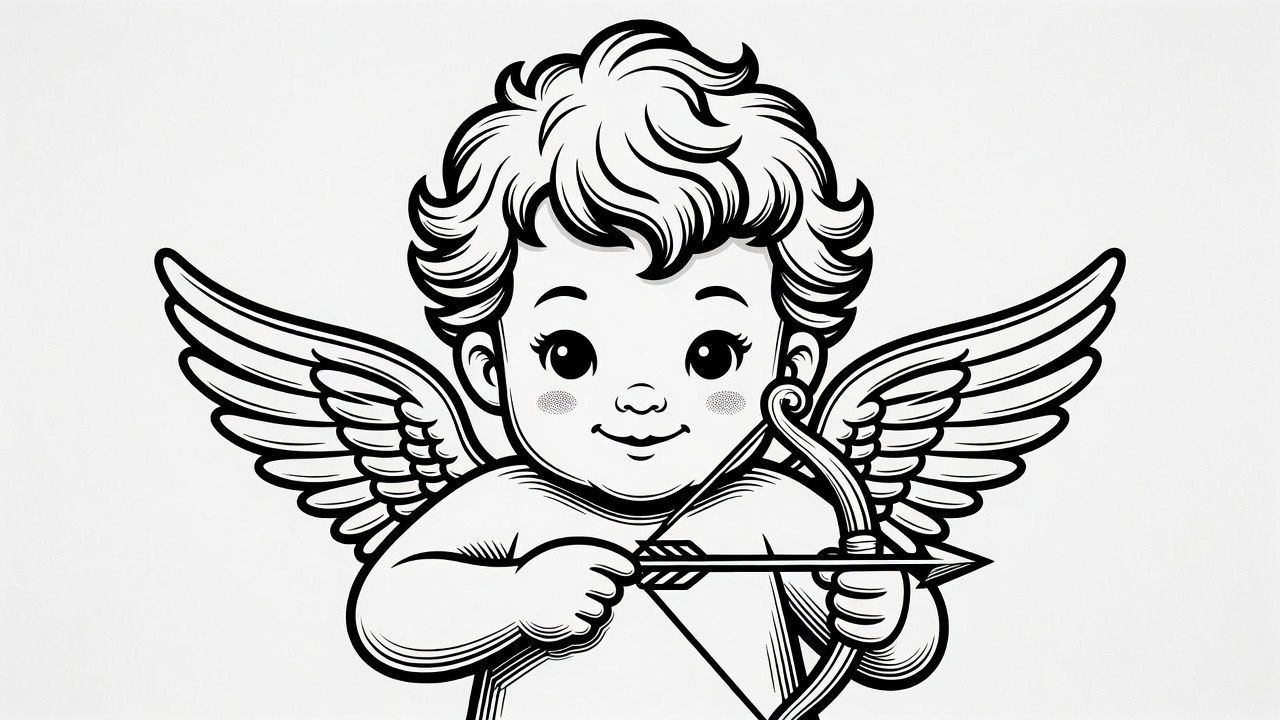
The heart of this article is delivering exactly what most searchers need: a straightforward, printable-ready cupid drawing outline that anyone can recreate with pencil and paper—no advanced drawing skills required.
We’ll provide:
- A basic classic cherub style (the most popular and versatile)
- Clear, numbered step-by-step instructions
- A detailed textual description you can copy-paste or print as a reference guide
- Simple variations to add Shakespearean flavor
Basic Cupid Outline – Classic Chubby Cherub Style
This version features the iconic plump baby-like figure with tiny wings, a small bow, and an arrow—perfect for coloring pages, stencils, Valentine cards, classroom posters, or even beginner tattoo references.
Step-by-Step Drawing Instructions
- Draw the head Start with a medium-sized circle (about 3–4 inches in diameter if working on standard letter/A4 paper). This will be Cupid’s round, chubby face.
- Add the body Below the head, draw a larger, slightly flattened oval for the torso. Make it about 1.5 times wider than the head and connect it smoothly to the chin—no neck needed for the cherub look.
- Sketch the arms and legs From the upper sides of the torso oval, draw two short, curved lines outward and down for pudgy arms (end each with small mitten-like hands). From the bottom of the torso, draw two short, bent lines for chubby legs, ending in tiny rounded feet. Keep everything soft and rounded—no sharp angles.
- Add the wings On either side of the upper back (near where the shoulders would be), draw two small, curved teardrop shapes pointing outward and slightly upward. Each wing should be about half the width of the head. Add 2–3 gentle feather lines inside each wing for detail.
- Draw the bow and arrow Across the chest or held in one hand: draw a simple curved bow shape (like a wide, shallow “C” turned sideways). From the center of the bow, draw a straight diagonal line for the arrow shaft, ending in a small triangle arrowhead. Add a tiny heart shape at the fletching (back end) for extra Valentine charm.
- Face and final details Place two small dots for eyes, a tiny curved line for a smiling mouth, and two short curved lines above the eyes for eyebrows. Add a small curl or two on top of the head for hair. Optionally, draw a thin band across the eyes for the blindfolded variation.
- Clean up and ink Erase any overlapping construction lines. Go over your final outline with a black pen or marker for a crisp, printable look.
This basic outline takes 5–10 minutes even for complete beginners and scales easily—make it larger for posters or smaller for cards.
Printable Template Description (Ready to Sketch or Recreate)
If you prefer to trace or hand-copy rather than free-draw, use this precise textual blueprint. Print these instructions or keep the page open while you work.
Classic Cupid Outline Template – Dimensions for Letter/A4 Paper
- Head: 9 cm (3.5 in) diameter circle, centered near top third of page
- Torso: 12 cm wide × 10 cm tall oval, bottom touching head’s lower edge
- Arms: 6 cm long, 3 cm wide at shoulder, tapering to 2 cm at wrist; end in 3 cm mitten hands
- Legs: 7 cm long, bent at knee, 4 cm wide thighs tapering to 2.5 cm ankles
- Wings: Each 7 cm tall × 4 cm wide at base, curved outward; add 3–4 feather scallops
- Bow: 10 cm wide arc, placed diagonally across chest
- Arrow: 12 cm total length, shaft 1 cm thick, heart-shaped fletching 2 cm wide, triangle head 1.5 cm
- Face: Eyes 0.8 cm apart, 0.5 cm dots; mouth 1.5 cm curved smile; optional blindfold 0.4 cm wide band
Copy these proportions onto graph paper for accuracy, or freehand them using the steps above. For digital use, import into free tools like Canva, Photopea, or Inkscape and trace over a blank canvas.
(These images show a clean line-art Cupid cherub and a blindfolded variation—ideal visual references for the template described.)
Advanced Variations for Shakespeare Fans
- Blindfolded Cupid — Add a simple horizontal band across the eyes (inspired by Helena’s line in A Midsummer Night’s Dream).
- Heart-Pierced Design — Draw a medium heart below or beside Cupid, with an arrow through it. Overlay space for a short quote (e.g., “Love looks not with the eyes…”).
- Renaissance-Style Cupid — Slim the body slightly, elongate the wings, give a more elegant pose (seated on a cloud or leaning on a bow). Reference 16th-century emblem books for authenticity.
- Sonnet-Inspired — Include a small torch or flame near the arrow tip (echoing Sonnets 153–154’s “love-kindling fire”).
Creative Ways to Use Your Cupid Outline
Once you have your clean Cupid drawing outline ready—whether you’ve hand-drawn it from the steps above, traced the textual template, or digitized it—the real fun begins. Here are practical, inspiring ways to put it to work, each one designed to deliver more value than a basic coloring page or generic Valentine printable.
- Valentine’s Day Crafts with Literary Depth
- Print multiple copies on cardstock and create layered Valentine cards: Cut out the Cupid figure, back it with red or gold paper, and write a short Shakespeare quote inside (e.g., “Love looks not with the eyes…”).
- Make garlands or bunting: String several small Cupids along ribbon for classroom or home décor.
- Gift tags: Reduce the outline to 2–3 inches and attach to presents with a personalized love note inspired by the sonnets.
- Educational Activities for Teachers and Students
- Literature extension project: After reading Act 1 of A Midsummer Night’s Dream, have students color the blindfolded Cupid variation and write a short paragraph explaining how the blindfold reflects Helena’s insight.
- Journal prompts: Use the outline as a border on notebook pages. Students respond to questions like “When have you felt ‘struck by Cupid’s arrow’ in a way that wasn’t rational?” or “How does Shakespeare show love as both joyful and dangerous?”
- Drama club prop: Enlarge the outline to poster size, color it vibrantly, and use it as a visual anchor during scenes involving love potions or romantic confusion.
- Modern and Personal Creative Twists
- Custom bullet journal / planner spread: Place the Cupid outline in the February layout with space around it for tracking acts of kindness, self-love goals, or romantic reflections.
- Temporary or minimalist tattoo stencil: The simple line art translates well to fine-line tattoos—many artists use similar cherub designs. Print at actual size and bring the blindfolded or heart-pierced version for a literary touch.
- Digital art base: Import the outline into free apps (Procreate, Canva, Adobe Fresco) and layer watercolor effects, metallic gold accents, or Renaissance-style shading for social media posts or printable wall art.
- Seasonal & Themed Variations Beyond Valentine’s
- Anniversary or wedding décor: Personalize with names or dates woven into the arrow shaft or heart.
- Self-love February challenge: Use a non-blindfolded, smiling Cupid to represent healthy, intentional affection—pair with positive affirmations drawn from Shakespeare’s more hopeful passages.
These ideas turn a simple outline into a multi-purpose tool that bridges art, literature, and personal expression—exactly the kind of elevated content that stands out from the thousands of plain Cupid printables online.
Expert Tips for Perfecting Your Cupid Drawing
Even with the beginner-friendly steps, small adjustments can elevate your outline from cute to classically inspired.
- Proportion secrets for that authentic cherub look Keep the head large (about 1/3 to 1/2 the total height) and limbs short and rounded. Renaissance artists exaggerated baby-like features to evoke innocence—avoid long, adult proportions unless aiming for the elegant seated Cupid variation.
- Common beginner mistakes & quick fixes
- Wings too small or flat → Make them at least half the head height and curve them gently upward for movement.
- Body looks stiff → Soften every line; add subtle bulges at elbows, knees, and tummy.
- Arrow looks awkward → Keep the shaft perfectly straight and center the heart fletching neatly.
- Tools & materials recommendations
- Paper: Smooth 80–100 gsm printer paper for tracing; heavier cardstock (200+ gsm) for finished crafts.
- Inking: Fine-tip black gel pen (0.5–0.7 mm) or permanent marker for crisp lines.
- Coloring: Soft pastels, colored pencils, or watercolors for a Renaissance glow; metallic gold markers for wings and arrows add period-appropriate shine.
- Digital enhancement: Use free online tools like remove.bg to isolate your scanned outline, then recolor in Canva or Photopea.
- Historical authenticity note Study 16th-century emblem books (e.g., Alciato’s Emblematum Liber) or paintings by Caravaggio and Bronzino—notice how Cupid’s wings are often small, feathery, and slightly asymmetrical. A touch of imperfection makes the drawing feel more period-appropriate than cartoon symmetry.
Applying even two or three of these tips will give your Cupid outline a noticeably more polished, intentional appearance.
FAQs About Cupid Drawing Outlines and Shakespeare’s Love Themes
Q: Why is Cupid usually drawn blindfolded? A: The blindfold symbolizes that love is not guided by rational sight or logic—precisely the idea Shakespeare captures in Helena’s famous line from A Midsummer Night’s Dream. It’s one of the most enduring visual metaphors in Western art.
Q: Is this outline free to use for commercial purposes? A: The textual template and step-by-step instructions are provided for personal, educational, and non-commercial use. If you plan to sell products featuring the design, consider creating your own hand-drawn variation or purchasing a commercial license from a stock art site.
Q: How does Shakespeare’s Cupid differ from the modern Valentine version? A: Modern Cupid is almost always sweet, innocent, and purely romantic. Shakespeare’s Cupid is mischievous, sometimes cruel, and frequently associated with irrationality, lust, pain, and deception—making him a far more complex symbol of human emotion.
Q: Can I make this outline larger for classroom posters? A: Yes—simply scale the proportions up proportionally (e.g., double every measurement in the template description). Use grid paper or projector tracing for accuracy on big sheets.
Q: Are there other Shakespeare plays with strong Cupid references? A: Beyond A Midsummer Night’s Dream and the sonnets, look at Love’s Labour’s Lost (where Cupid is mocked in witty exchanges) and Troilus and Cressida (where love’s arrows lead to betrayal and disillusionment).
Q: What if I want a more realistic or adult-looking Cupid? A: Shift to Renaissance-style proportions: slender body, larger wings, classical drapery. Reference paintings like Caravaggio’s Amor Vincit Omnia for inspiration.
Q: How can I add color in a Shakespearean style? A: Use a limited Renaissance palette—soft pinks and reds for skin, gold and white for wings, deep crimson for arrows/hearts—to evoke Elizabethan miniatures and emblem art.
Creating a cupid drawing outline is more than a quick craft or coloring activity—it’s an invitation to connect with one of the most powerful and enduring symbols in Western literature and art. By starting with the simple, timeless cherub shape we’ve outlined here (plump cheeks, tiny wings, bow drawn taut), and then layering in Shakespeare’s insights, you transform an everyday Valentine motif into something richer and more meaningful.
Shakespeare never let Cupid rest as a mere emblem of sweetness. In his comedies, Cupid’s arrows spark delightful confusion; in his sonnets, they kindle fires that refuse to be quenched; across his plays, they remind us that love—real, messy, human love—is rarely tidy or predictable. Whether your finished drawing features a blindfolded cherub gazing inward (echoing Helena’s wisdom), a flaming arrow (nodding to the sonnets’ burning desire), or a classic smiling figure ready to pierce hearts, you now carry a piece of that complexity into your own creation.
The beauty of this approach lies in its accessibility: no advanced artistic talent is required, yet the result feels personal and thoughtful. Print the template proportions on cardstock for a classroom display, trace the outline onto watercolor paper for a handmade card, digitize it for a custom phone wallpaper, or simply keep the steps handy for future projects. Each time you draw those curved wings or notch the arrow, you’re quietly paying homage to centuries of artists and writers who saw in Cupid both joy and warning.