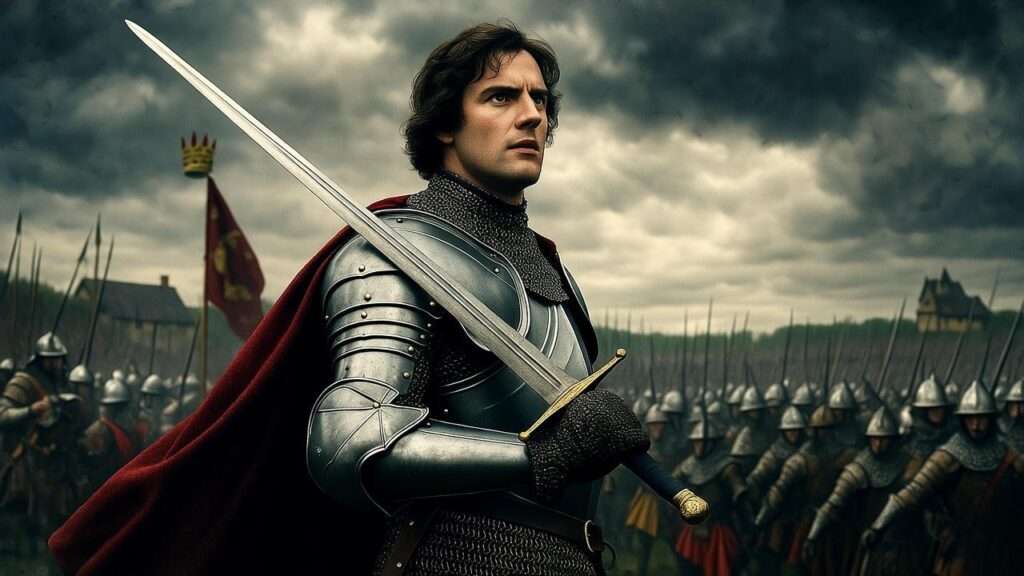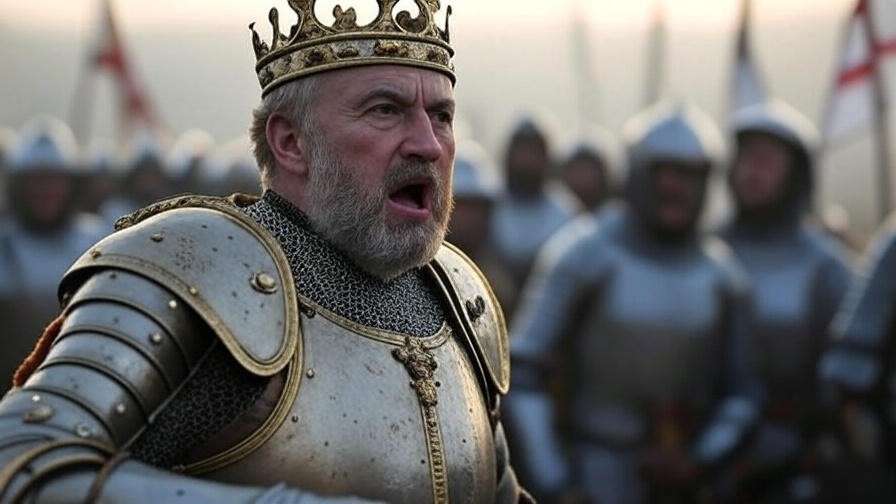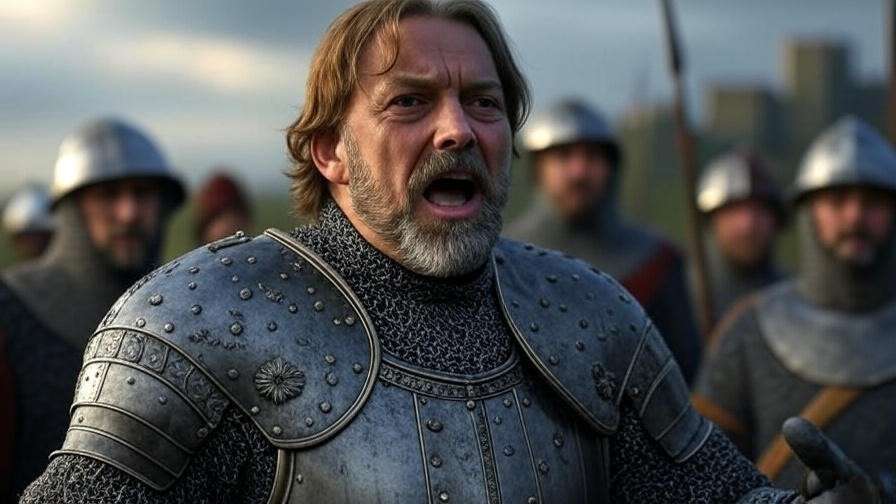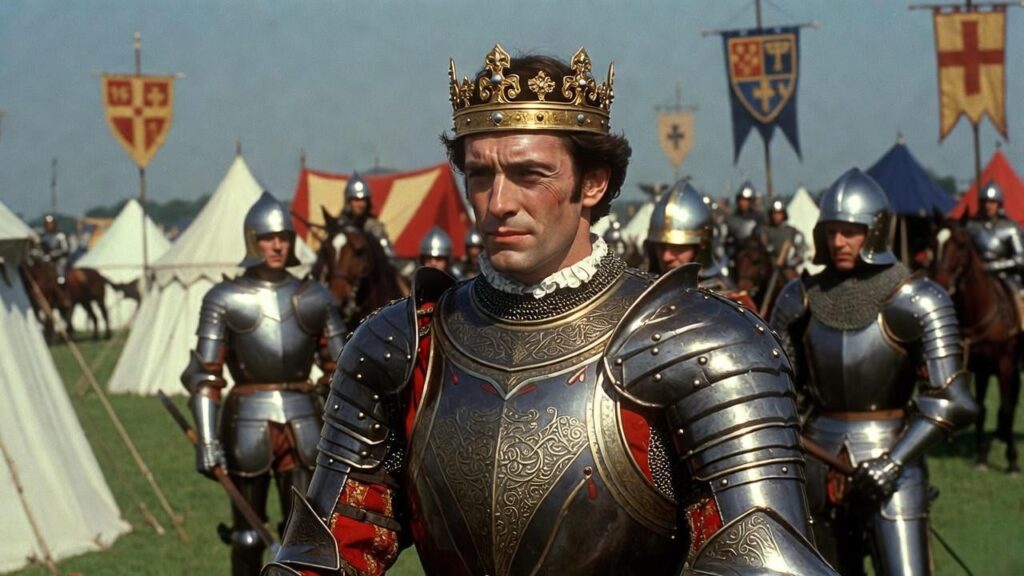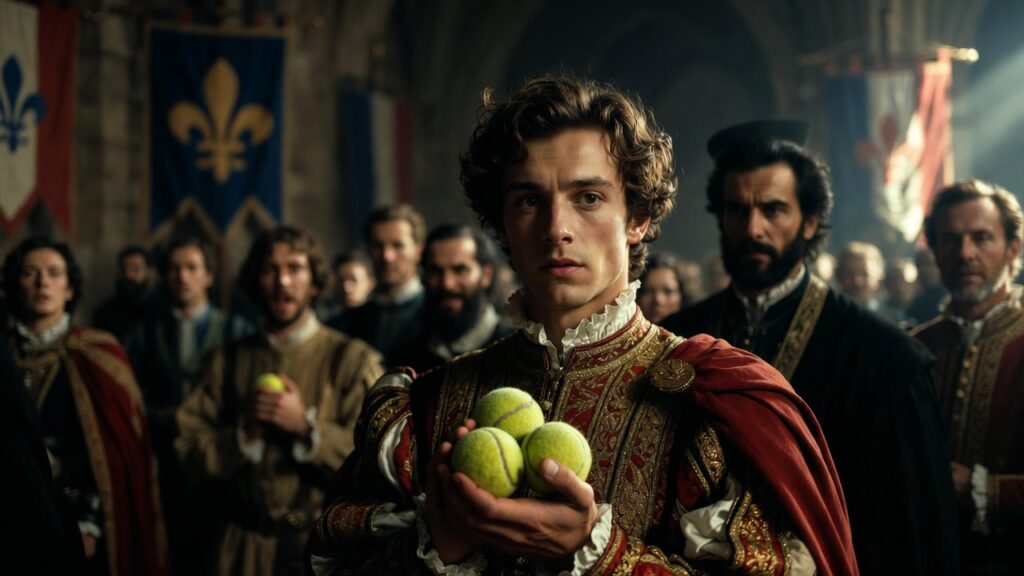
Imagine a single, seemingly trivial gift igniting one of the most famous military campaigns in literature and history: a chest filled with tennis balls. In William Shakespeare’s Henry V, this mocking present arrives from the Dauphin of France, the arrogant heir to the French throne, who dismisses the newly crowned English king as a frivolous youth unfit for serious rule. The Dauphin of France in Henry V embodies overconfidence and national pride gone awry, turning a diplomatic slight into the catalyst for invasion, battle, and ultimate defeat at Agincourt.
This moment—often called the “tennis balls scene”—is more than comic relief or historical anecdote. It reveals Shakespeare’s masterful use of character contrast to explore profound themes: the dangers of hubris, the power of humility in leadership, the folly of underestimating an opponent, and the interplay between divine providence and human ambition. For students, theater enthusiasts, history buffs, and anyone drawn to timeless insights on power, understanding the Dauphin’s role unlocks deeper appreciation of why Henry V remains one of Shakespeare’s most enduring history plays.
In this comprehensive analysis, we’ll examine the character’s historical roots, his dramatic function as a foil to Henry, key scenes with close textual readings, performance interpretations across adaptations, and the lasting lessons the Dauphin offers about leadership and pride. Whether you’re preparing for an exam, directing a production, or simply revisiting the play, this guide provides more depth than standard summaries, blending Shakespeare’s text, historical context, and scholarly perspectives.
Historical Context – The Real Dauphin vs. Shakespeare’s Version
Shakespeare rarely wrote pure history; he shaped events for dramatic effect, drawing from sources like Raphael Holinshed’s Chronicles while compressing timelines and inventing details to heighten conflict and character.
Who Was the Historical Dauphin During Henry V’s Campaign?
The historical figure behind Shakespeare’s Dauphin was Louis, Duke of Guyenne (1397–1415), eldest surviving son of the mentally unstable King Charles VI of France. Louis inherited the Dauphin title (Dauphin of Viennois) and became Duke of Guyenne in 1401 after his older brother’s death. During the chaotic Armagnac-Burgundian civil war that fractured France, Louis served as a regent-like figure in his father’s absences, attempting to broker peace at moments like the 1409 Treaty of Chartres and 1410 accords at Auxerre.
By 1415, when Henry V invaded Normandy claiming rights through his great-great-grandfather Edward III, France was deeply divided. Louis, still young and inexperienced, remained at Rouen with his father during the Battle of Agincourt (October 25, 1415). He never personally commanded troops there, nor did he send any mocking tennis balls—Shakespeare’s invention. Tragically, Louis died of dysentery later in 1415, shortly after the battle, paving the way for his brother John to become Dauphin (and later for the title to pass to the future Charles VII).
Shakespeare’s Dramatic Choices and Historical Liberties
Shakespeare conflates and dramatizes to create a clear antagonist. The real insult of tennis balls appears nowhere in primary sources; it’s a Shakespearean flourish symbolizing French contempt for Henry’s “wilder days” as Prince Hal. By making the Dauphin the sender, Shakespeare personifies French overconfidence and division—contrasting the unified English under Henry.
This choice served Elizabethan audiences well. Post-Armada (1588), portraying the French as arrogant and fractious reinforced English national pride and the idea of divine favor for a rightful English cause. The Dauphin’s hubris echoes broader themes in Shakespeare’s histories: rulers who ignore wise counsel (like the historical Charles VI’s madness or the Constable d’Albret’s cautions) invite disaster.
Scholars note Shakespeare’s compression: the play ignores Louis’s death pre-Agincourt and has the Dauphin boast pre-battle, only to vanish post-defeat, symbolizing the collapse of French pride.
The Dauphin’s First Appearance – The Infamous Tennis Balls Insult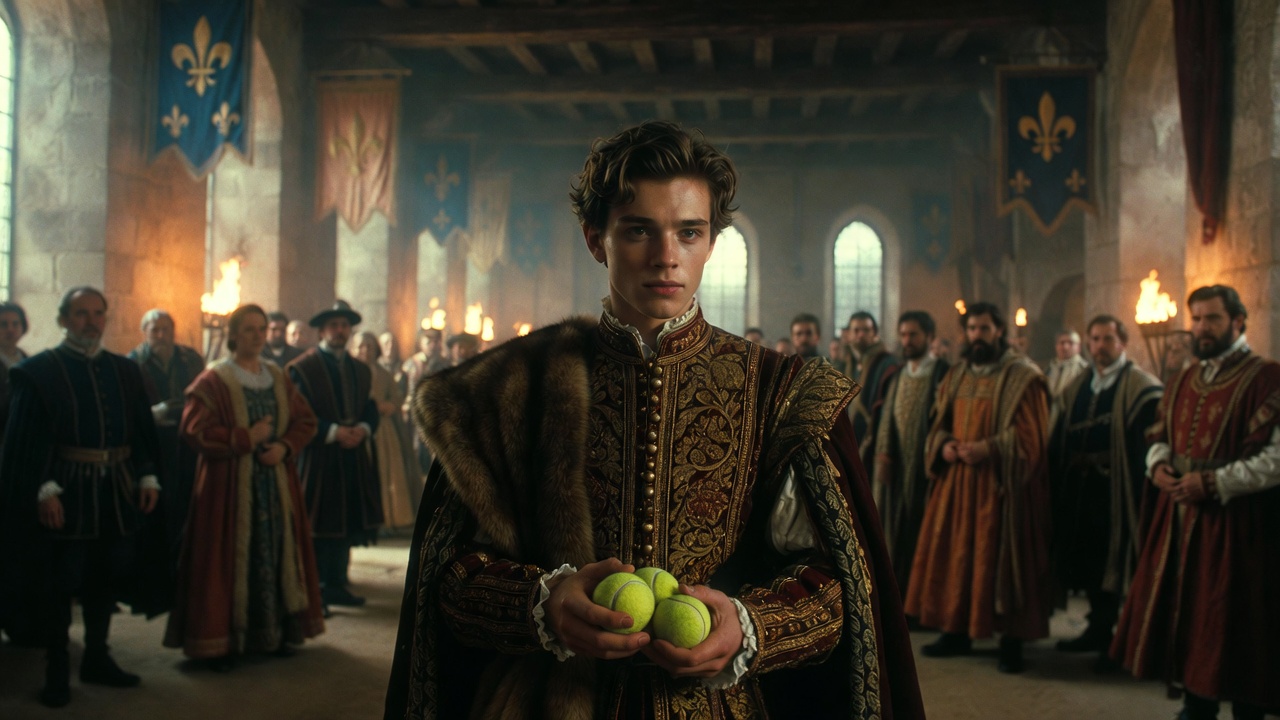
The tennis balls incident in Act 1, Scene 2 stands as one of Shakespeare’s most memorable dramatic pivots.
Scene Breakdown: Act 1, Scene 2
The English court debates Henry’s claim to French territories. French ambassadors arrive, ostensibly with a “tun of treasure” in response to Henry’s demands. Instead, Exeter reveals: “Tennis-balls, my liege” (1.2.258).
The Dauphin’s message mocks Henry’s youthful indiscretions: better to play games than pursue crowns. Symbolically, tennis balls represent immaturity and frivolity—Henry’s past as a tavern-haunter.
Henry’s Masterful Response and Rhetorical Brilliance
Henry’s reply transforms insult into prophecy. He quips: “We are glad the Dauphin is so pleasant with us; / His present and your pains we thank you for. / When we have match’d our rackets to these balls, / We will in France, by God’s grace, play a set / Shall strike his father’s crown into the hazard” (1.2.259–263).
The tennis metaphor escalates: “rackets” become war instruments, balls become “gun-stones” (cannonballs). Henry warns: “And tell the pleasant prince this mock of his / Hath turn’d his balls to gun-stones; and his soul / Shall stand sore charged for the wasteful vengeance / That shall fly with them” (1.2.282–285).
This speech showcases Henry’s growth—witty, measured, divinely justified—contrasting the Dauphin’s rashness.
Why This Insult Sparks the Conquest
The gift unites the English court, justifies invasion as righteous response, and exposes French miscalculation. It catalyzes the plot, turning potential diplomacy into war.
The Dauphin as Foil – Contrasting Leadership Styles with Henry V
Shakespeare’s genius in Henry V lies in his use of foils—characters who, through opposition, illuminate the protagonist’s qualities. The Dauphin of France serves as perhaps the most direct and revealing foil to the young king. Where Henry evolves into a model of disciplined, humble, and divinely sanctioned leadership, the Dauphin remains trapped in adolescent arrogance, blind privilege, and reckless bravado.
Arrogance and Hubris vs. Humility and Resolve
The Dauphin’s every appearance drips with condescension. In Act 2, Scene 4, as the English army approaches, he dismisses Henry’s forces with casual contempt:
“Turn him to any cause of policy, The Gordian knot of it he will unloose, Familiar as his garter” (2.4.35–37).
He assumes English success is impossible, comparing their army to “a few sprays of France” (sprigs or worthless shoots). Later, in Act 3, Scene 5, he mocks the English as “barbarous” and “empty”:
“O Dieu vivant! shall a few sprays of us, The emptying of our fathers’ luxury, Our scions, put in wild and savage stock, Spirt up so suddenly into the clouds” (3.5.5–8).
These lines reveal not only national prejudice but personal insecurity masked as superiority.
Contrast this with Henry’s speeches. At Harfleur (Act 3, Scene 1), he urges his men forward with shared purpose: “Once more unto the breach, dear friends, once more.” At Agincourt, the famous “St. Crispin’s Day” oration (Act 4, Scene 3) transforms a desperate situation into brotherhood and glory:
“We few, we happy few, we band of brothers; For he to-day that sheds his blood with me Shall be my brother” (4.3.60–62).
Henry speaks from experience and empathy; he has walked among his people disguised (Act 4, Scene 1), listened to their fears, and shouldered responsibility. The Dauphin never descends from his elevated position to understand his own soldiers or the stakes.
Underestimation and Its Consequences
The Dauphin consistently ignores wiser counsel. The Constable of France repeatedly cautions restraint (e.g., 3.5.36–40), yet the Dauphin overrides him with youthful bluster. This mirrors a recurring Shakespearean pattern: leaders who refuse wise advice (Richard II, Lear, Macbeth) court catastrophe.
After Agincourt, the Dauphin disappears from the play entirely. Shakespeare does not give him a final speech or moment of reckoning. His absence is eloquent: French pride has been shattered so completely that its mouthpiece is rendered speechless. Henry, by contrast, ends the play in triumph, betrothed to Katherine, and hailed as a conquering hero.
Thematic Depth – Pride, Nationalism, and Divine Right
The Dauphin personifies the dangers of unchecked pride. Shakespeare contrasts French division (civil war between Armagnacs and Burgundians, a mad king, an arrogant heir) with English unity forged under a reformed monarch. The Dauphin’s tennis-ball insult and subsequent boasts serve as proof that the French have misread both Henry and providence itself.
Henry repeatedly invokes God as the true architect of victory: “O God, thy arm was here” (4.8.108). The Dauphin’s secular arrogance—relying on numbers, lineage, and scorn—stands condemned by the play’s providential framework.
Key Scenes Featuring the Dauphin – Textual Analysis and Stage Impact
Act 2, Scene 4 – French Court Debate
Here the Dauphin’s overconfidence clashes with the French King’s wariness and the Constable’s realism. The Dauphin insists Henry is “a vain, shallow, humorous youth” (2.4.46–47), while wiser voices urge preparation. Directors often stage this scene with the Dauphin lounging or gesturing extravagantly to emphasize his detachment from reality.
Act 3, Scene 5 – Pre-Agincourt Bravado
The Dauphin’s longest speech in the play drips with contempt for the English climate, food, and soldiery. The irony is thick: he mocks the very army that will soon annihilate French chivalry. On stage, this scene frequently becomes darkly comic—his bravado undercut by the audience’s knowledge of what is coming.
Performance Notes: How Directors Portray the Dauphin
- Laurence Olivier (1944 film): Played with aristocratic hauteur, the Dauphin is elegant but brittle—his tennis-ball delivery is sneering and superior.
- Kenneth Branagh (1989 film): Michael Williams’s Dauphin is petulant and youthful, almost petulant-childlike, making his eventual silence after Agincourt more poignant.
- Modern RSC and Globe productions: Directors often cast younger actors and emphasize physical comedy in the tennis-ball scene, turning the Dauphin into a spoiled princeling whose arrogance makes his downfall satisfying rather than tragic.
These choices reinforce the foil function: the more immature the Dauphin appears, the more mature and commanding Henry becomes by comparison.
Broader Themes and Modern Relevance
The Dauphin remains strikingly relevant in an age of diplomatic blunders, social-media bravado, and leadership hubris. His story warns against:
- Underestimating reformed or underestimated opponents
- Allowing personal ego to override strategic counsel
- Mistaking privilege for competence
- Using insult as a substitute for diplomacy
From corporate boardrooms to international summits, leaders who mock rather than engage often find themselves on the wrong side of history—just as the Dauphin did.
FAQs – Common Questions About the Dauphin of France in Henry V
Who is the Dauphin in Shakespeare’s Henry V? He is the arrogant heir to the French throne, an invented or dramatically exaggerated version of the historical Louis, Duke of Guyenne. He serves primarily as a foil to highlight Henry’s virtues.
Did the real Dauphin send tennis balls to Henry V? No. The tennis-ball insult is Shakespeare’s dramatic invention, drawn loosely from chronicle traditions but not historically attested.
Why does the Dauphin disappear after Agincourt? Shakespeare removes him to symbolize the complete collapse of French aristocratic confidence. Historically, the Dauphin Louis died of dysentery shortly after Agincourt, but Shakespeare uses narrative silence for thematic effect.
How does the Dauphin compare to other Shakespearean foils or villains? Unlike tragic villains (Macbeth, Richard III), the Dauphin is more comic and contemptible—a shallow antagonist whose function is to make Henry shine brighter rather than to evoke pity or fear.
What is the significance of the tennis balls scene? It is the dramatic trigger for the entire war, a moment where mockery is turned into prophecy, immaturity into maturity, and insult into divine justification for conquest.
The Dauphin of France in Henry V may seem a minor character—arrogant, boastful, ultimately voiceless—but his presence is essential. Through him, Shakespeare explores the fragility of pride, the necessity of humility, and the transformative power of leadership earned rather than inherited. The tennis balls that arrive as an insult become, in Henry’s hands, the opening shot of a legendary conquest.
Re-reading Henry V with the Dauphin in mind reveals a richer play: one that celebrates not just military glory, but the moral and psychological qualities that make such glory possible. Whether on stage, screen, or page, the Dauphin reminds us that underestimating an opponent—especially one who has learned humility through hardship—is often the first step toward defeat.