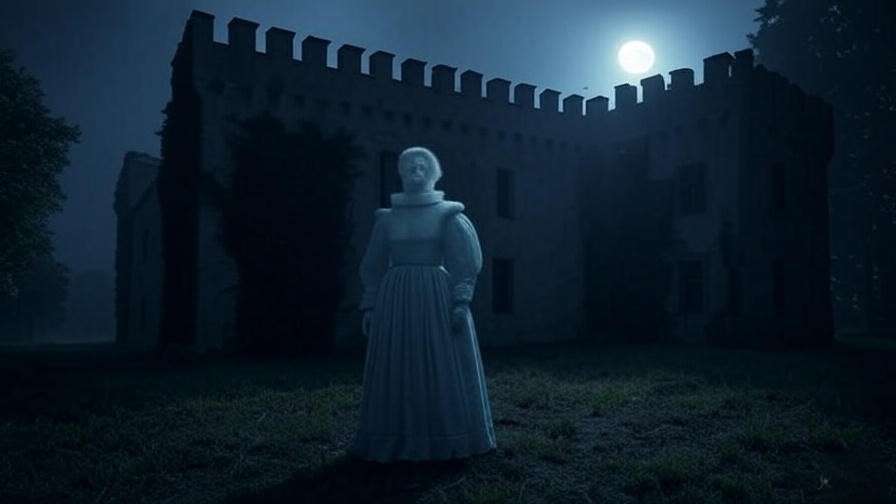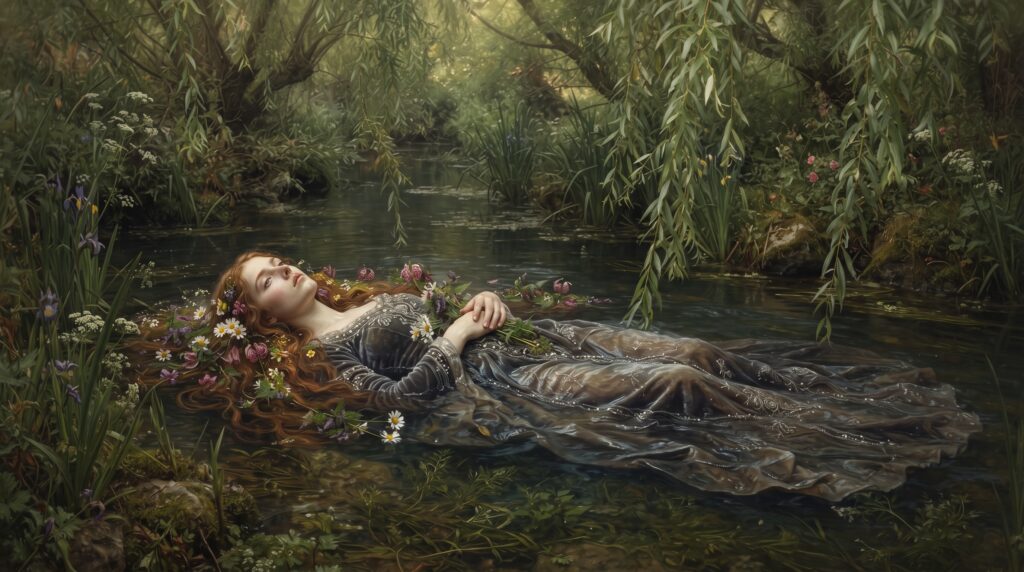
Few moments in English literature match the haunting dualism of Gertrude’s report on the death of ophelia in hamlet. On one hand, Shakespeare paints a pastoral landscape of breathtaking, almost idyllic beauty—a weeping brook, a glass-like stream, and a delicate garland of wild flowers. On the other, this delicate imagery conceals a grim, suffocating reality: a young woman slipping silently beneath the surface, weighed down by her heavy garments, swallowed by the very waters she once sought solace near.
For centuries, students, actors, directors, and scholars have returned to this pivotal moment in Act 4, Scene 7. Was it an accident, a tragic slip of a breaking branch, or a quiet act of self-destruction driven by unbearable grief? Why does Shakespeare frame such a horrific event with such elevated, poetic language? And how does Ophelia’s demise serve as a devastating critique of the corrupt court of Elsinore?
This comprehensive guide offers a deep, scholarly exploration of the death of Ophelia in Hamlet, unpacking the botanical symbolism, psychological dimensions, feminist critiques, and historical context that make this tragedy endure across generations.
I. The Setup: Contextualizing Ophelia’s Descent
A. The Spiral of Grief and Trauma
To understand Ophelia’s end, one must trace the rapid, compounding catastrophes that shatter her mental stability. Ophelia is not a character who descends into madness because of a singular heartbreak; rather, she is subjected to a systemic barrage of psychological trauma.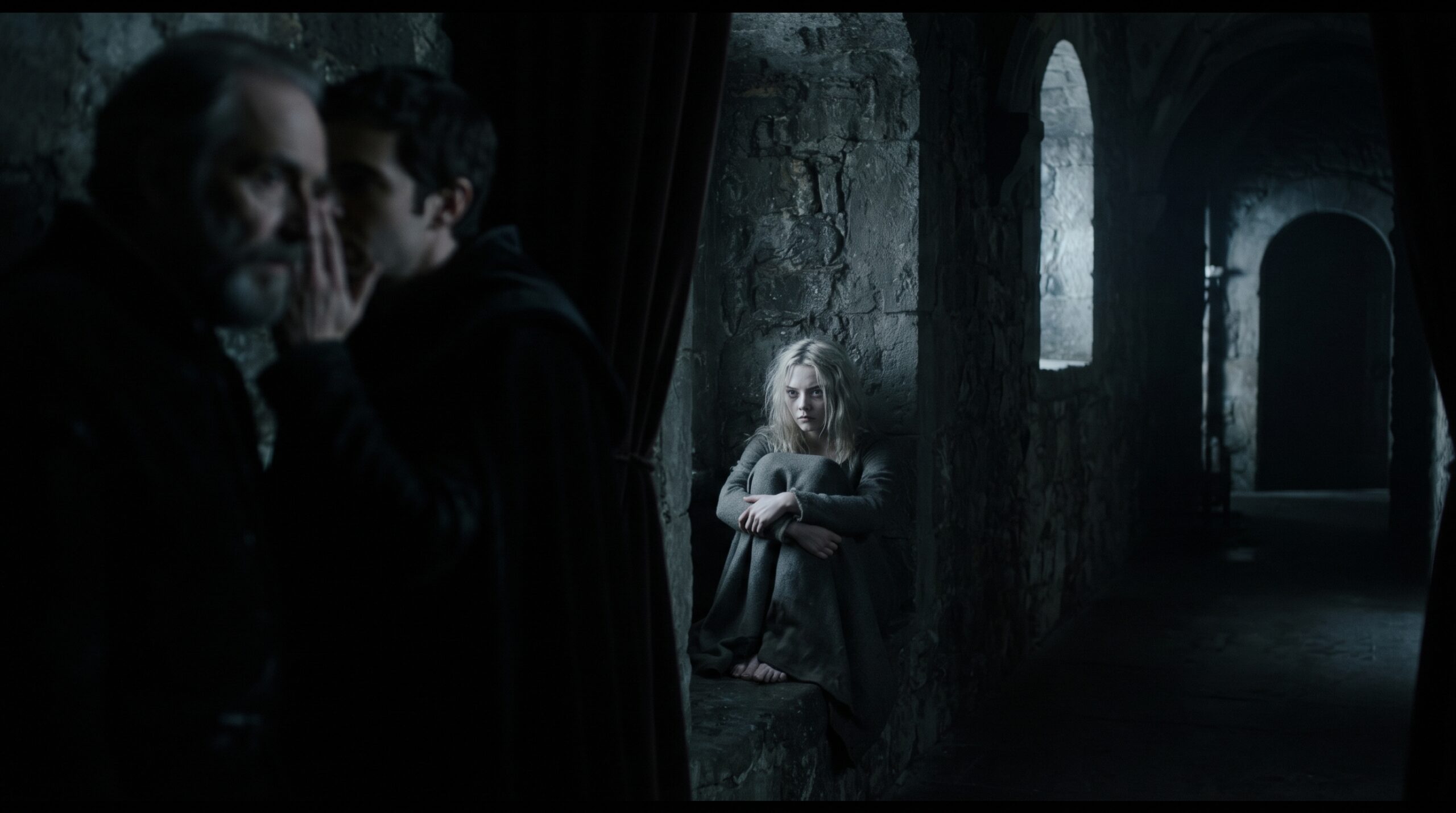
First, she is caught in a web of surveillance and manipulation by her father, Polonius, and the reigning monarch, Claudius, both of whom use her as bait to spy on Hamlet. Second, she suffers the abrupt, violent rejection from Hamlet—a man she deeply loved—culminating in his volatile “Get thee to a nunnery” tirade.
The ultimate breaking point arrives in Act 3, Scene 4, when Hamlet mistakenly stases and kills Polonius behind the arras. In a single moment, Ophelia loses her father, her primary protector, and her anchor in the royal court. Her brother, Laertes, is away in France, and Hamlet—the source of her sudden grief—is packed off to England. Isolated, gaslit, and stripped of her agency, Ophelia experiences acute psychological fracturing.
B. The Politics of Elsinore: An Isolated Woman
Elsinore is a rotting ecosystem, famously described by Marcellus as smelling of state corruption (“Something is rotten in the state of Denmark”). In this hyper-masculine, politically fractured environment, women are treated as pawns. Gertrude trades her loyalty hastily between kings, while Ophelia is treated by her father and brother as property whose chastity and obedience dictate family honor.
Ophelia’s descent into madness is the only form of protest and freedom available to her. In Elizabethan drama, the ” madwoman” trope granted female characters a unique, terrifying license: freed from social decorum, they could speak truths, sing bawdy songs, and critique the hypocrisy of the court without immediate execution. Yet, society could only tolerate this disruption temporarily before neutralizing it.
II. Analyzing the Text: Gertrude’s Account of the Drowning (Act 4, Scene 7)
A. A Close Reading of the Speech
Perhaps the most remarkable aspect of Ophelia’s death is that it happens entirely off-stage. The audience learns of her fate through Queen Gertrude’s famous report to Claudius and Laertes:
*”There is a willow grows aslant a brook,
That shows his hoar leaves in the glassy stream;
Therewith fantastic garlands did she make
Of crow-flowers, nettles, daisies, and long purples…
When down her weedy trophies and herself
Fell in the weeping brook. Her clothes spread wide;
And, mermaid-like, awhile they bore her up:
Which time she chanted snatches of old tunes;
As one incapable of her own distress,
Or like a creature native and indued
Unto that element: but long it could not be
Till that her garments, heavy with their drink,
Pull’d the poor wretch from her melodious lay
To muddy death.”*
Gertrude’s speech is an aesthetic masterpiece. Instead of portraying a panicked, thrashing struggle for air, she paints Ophelia as a mythical sea-creature (“mermaid-like”), chanting old tunes as if she belonged to the water. This jarring aestheticization has sparked fierce literary debates for centuries.
B. Accident vs. Suicide: The Eternal Literary Debate
Literary critics are perpetually split into two camps regarding whether Ophelia’s death was accidental or intentional:
-
The Accident Argument: Proponents of this view point to Gertrude’s description of the breaking branch (“an envious sliver broke”) and Ophelia’s apparent detachment from reality (“as one incapable of her own distress”). In this interpretation, Ophelia was merely gathering flowers near the water’s edge, lost in her psychosis, unaware of the physical danger until the heavy clothes dragged her down.
-
The Suicide Argument: Conversely, other scholars argue that the act of walking into a stream while singing, refusing to save oneself, and allowing water-logged garments to pull one under constitutes passive or active suicide.
This debate has profound legal and theological implications within the play’s setting. Under Elizabethan canon law, suicide resulted in denial of consecrated Christian burial. The grave-digger scene in Act 5 hinges precisely on this controversy, with the clowns arguing that Ophelia received a Christian burial only because of her aristocratic status and political pressure from the crown. Gertrude’s poetic framing can thus be read as a diplomatic shield, softening a forbidden act into a tragic accident to ensure Ophelia receives proper rites.
III. The Language of Flowers: Botanical Symbolism in Ophelia’s Death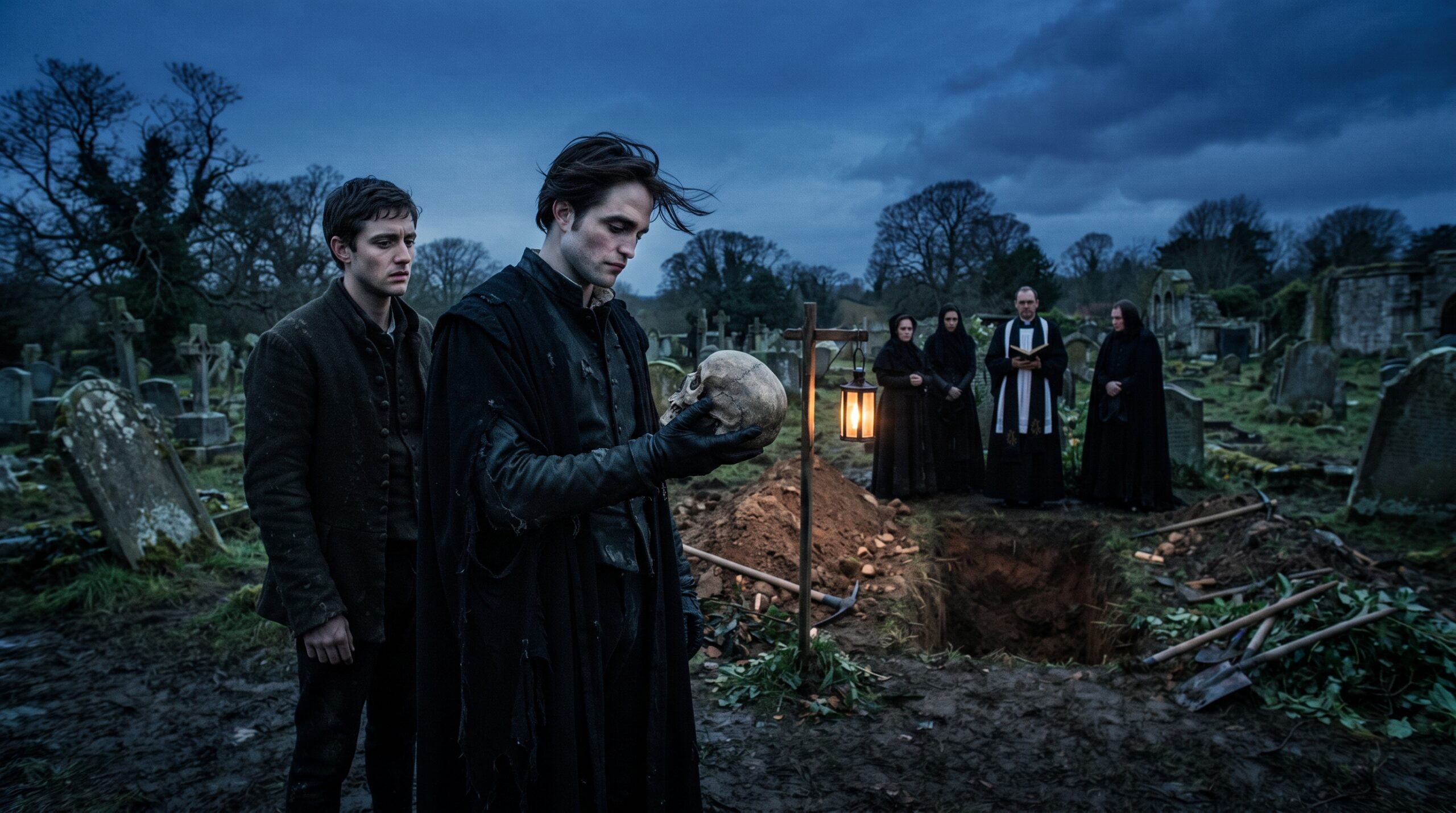
Flowers in Renaissance drama carry heavy metaphorical weight. When Ophelia creates her “fantastic garland,” she is communicating through the silent, highly codified language of Elizabethan botany.
A. The Garland’s Components and Their Meanings
-
Crowflowers (Ragged Robins): Often associated with childish play or rustic neglect, signifying her innocence cut short.
-
Nettles: Representing stinging pain, discomfort, and the sharp grief she has endured.
-
Daisies: Traditionally symbolizing innocence, purity, and sometimes feigned or broken trust.
-
Long Purples (Orchis mascula): Carrying explicit sexual connotations in Elizabethan folklore (referred to by vulgar colloquialisms in the period), these phallic orchids juxtapose her pure image with underlying themes of fertility, desire, and sexual victimization.
B. From Distribution to Drowning
Earlier, in her mad scene (Act 4, Scene 5), Ophelia distributes herbs and flowers to the court (fennel and columbines for adultery/flattery; rue for repentance; daisies for dissembling). The garland she wears into the river is the tragic culmination of this botanical lexicon—a wearable summary of her sorrow, violated purity, and grief.
IV. Psychological and Feminist Interpretations
A. The Feminist Critique
In 20th-century literary criticism, feminist scholars revolutionized how Ophelia is perceived. Most notably, Elaine Showalter’s seminal essay Representing Ophelia: Women, Madness, and the Responsibilities of Feminist Criticism argued that Ophelia represents the archetypal hysterical female, silenced by patriarchal structures.
Feminist analysis views Ophelia’s death not as a romanticized literary trope, but as a metaphor for the suppression of women’s voices. Deprived of a self-determined identity, Ophelia dissolves into nature. Her madness is understood as a rational response to an insane, oppressive world.
B. Modern Trauma and Grief Theory
Through a modern psychological lens, Ophelia displays classic symptoms of complex PTSD and acute grief reaction. The sudden loss of her father combined with total abandonment by her social circle triggers severe dissociation. Her singing of old, disjointed folk songs is a coping mechanism for emotional overload—a way for her fractured mind to process unbearable trauma when rational speech fails.
V. Ophelia’s Death as a Catalyst for the Play’s Climax
A. Impact on Hamlet
Hamlet’s trajectory shifts irrevocably upon learning of Ophelia’s death. When he leaps into her grave in Act 5, Scene 1, wrestling with Laertes, he finally confesses the depth of his genuine affection (“I loved Ophelia: forty thousand brothers / Could not, with all their quantity of love, / Make up my sum”). Her death strips away Hamlet’s philosophical stalling, forcing him to confront mortality head-on just before the fatal fencing match.
B. Structural Turning Point
Her death marks the psychological point of no return for Elsinore. Following her demise, political maneuvering gives way entirely to raw, inevitable bloodshed, sealing the doom of Claudius, Gertrude, Laertes, and Hamlet alike.
VI. Ophelia on Stage and Screen: Performance History
Directors through the ages have grappled with how to stage Ophelia’s tragic end.
-
Classical Productions: Often emphasized the romantic, ethereal tragedy of the drowning, echoing John Everett Millais’s famous 1851 pre-Raphaelite painting.
-
Modern & Avant-Garde Productions: Often lean into the grim realism of drowning—highlighting the heavy, freezing water, the terror of suffocation, or framing her death as a deliberate, defiant leap off a high embankment rather than a passive slip.
VII. Frequently Asked Questions (FAQs)
Q1: Did Hamlet actually love Ophelia?
Answer: Yes. Despite his cruel “nunnery” speech—which was largely driven by his discovery that she was being used as a spy and his general disgust with female duplicity (directed heavily at his mother)—Hamlet’s grief at her graveside is authentic and desperate. His erratic behavior stemmed from emotional overload, not a lack of love.
Q2: Why didn’t Gertrude save Ophelia?
Answer: Gertrude claims she witnessed Ophelia fall and float for a brief time while chanting. Textually, critics debate whether Gertrude was paralyzed by shock, grief, or royal protocol, or whether the drowning happened so rapidly that intervention was impossible. Some psychological readings suggest Gertrude felt a subconscious guilt that paralyzed her action.
Q3: Is Ophelia’s death considered a suicide under Elizabethan law?
Answer: Technically yes, due to her failure to save herself and surrender to the water. However, her noble birth and the royal intervention of Claudius allow her a Christian burial with “cracked” rites, highlighting the systemic corruption where laws bend for the powerful.
VIII.The Enduring Legacy of Ophelia’s Tragedy
The death of Ophelia in Hamlet remains one of the most powerful and multi-layered scenes in Western literature. It transcends its function as a plot device, evolving into a profound meditation on grief, gender oppression, madness, and poetic beauty masking human horror. Through brilliant botanical symbolism, psychological realism, and tragic irony, Shakespeare ensured that Ophelia’s drowning would haunt the collective imagination forever—proving that even in silence and death, her story commands eternal attention.