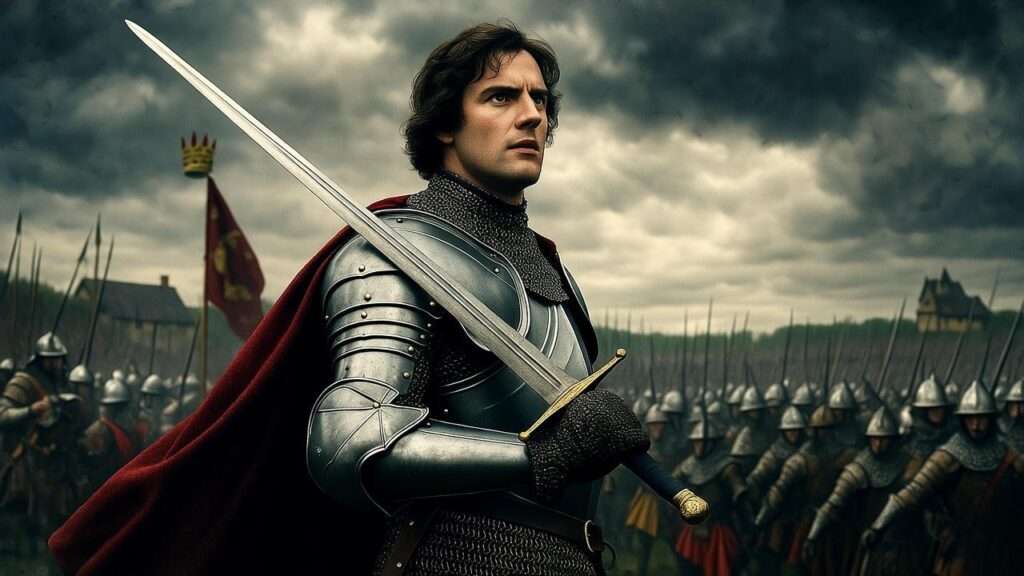
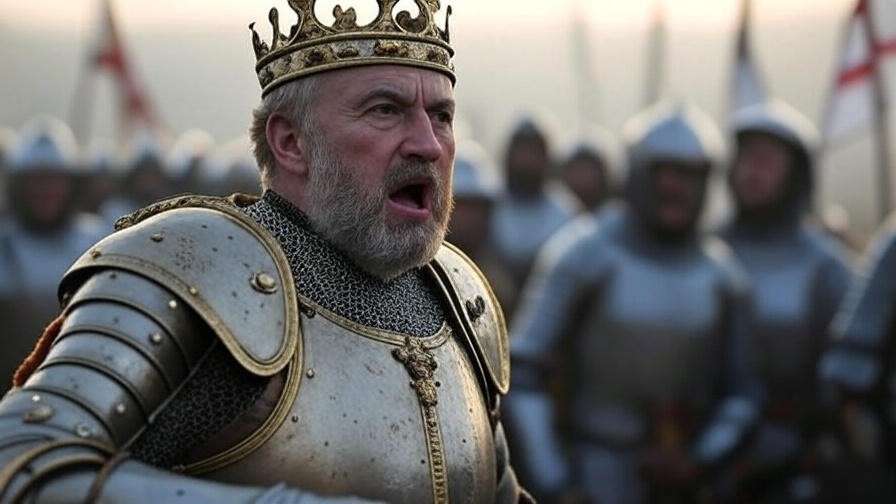
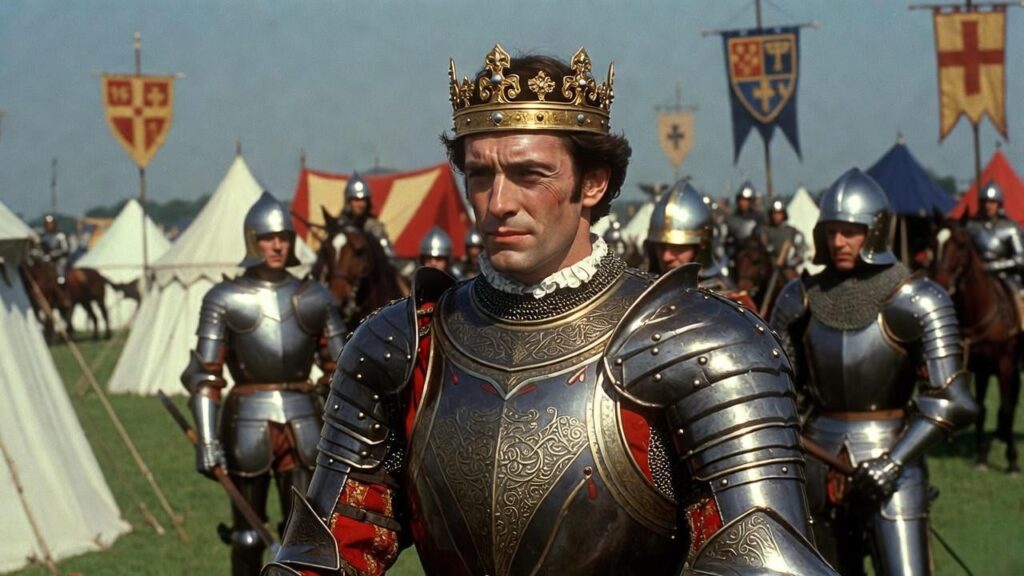
When we think of psychological collapse on the Elizabethan stage, our minds instantly race to the wild, storm-lashed heath with King Lear, or the fevered, guilt-ridden hallucinations of Macbeth. Yet, tucked deep within the sweeping political tapestry of William Shakespeare’s history plays lies a quieter, infinitely more tragic portrait of psychological dissolution: the historical reality of king henry mad. Long before modern psychiatry mapped the contours of catatonia, major depressive episodes, and acute trauma, Shakespeare was exploring how the crushing, unyielding weight of the English crown could shatter a human mind. Far from being a mere narrative footnote or a convenient theatrical device to spark the Wars of the Roses, the mental instability of King Henry VI represents one of early modern drama’s most profound and psychologically astute explorations of royal vulnerability, political powerlessness, and the heavy toll of divine right.
Fact Versus Fiction: What History Tells Us About Henry VI’s Mind
The Catatonic King: Chronicling the Historical Breakdown of 1453
To truly understand how Shakespeare crafts his dramatic vision, we must first look to the historical soil from which these plays grew. The historical King Henry VI—crowned both King of England and King of France as an infant—was never temperamentally suited for the blood-soaked, treacherous theater of fifteenth-century politics. Highly pious, ascetic, gentle, and more inclined toward scholarship and prayer than martial dominance, Henry spent the early years of his personal rule surrounded by fierce, competing factions of ambitious nobles.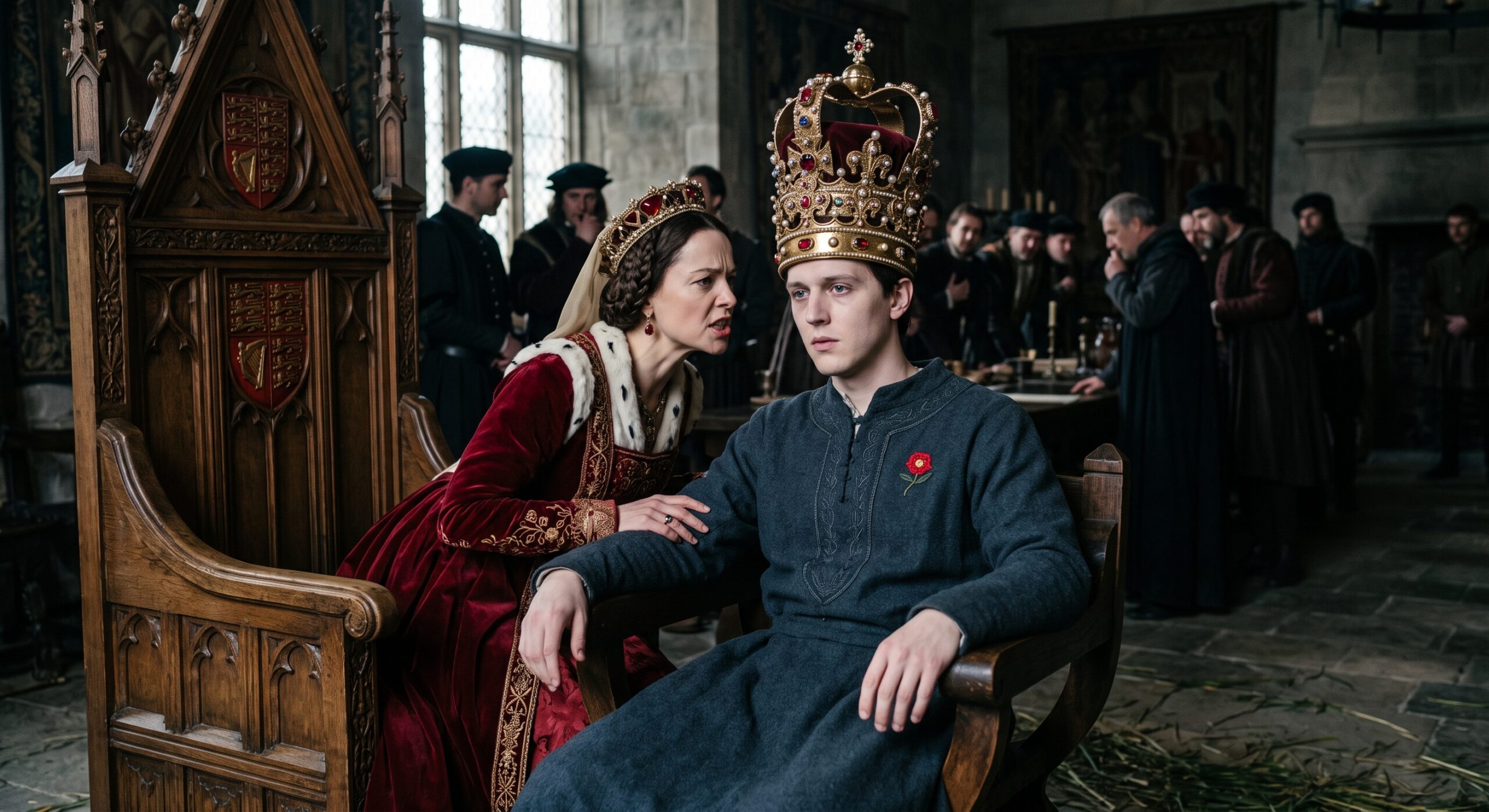
The tipping point of his psychological stability arrived in the late summer of 1453. As the catastrophic news of the English defeat at the Battle of Castillon reached London—effectively spelling the end of the Hundred Years’ War—Henry suffered a sudden, severe mental collapse. Contemporary chroniclers record that the king fell into a state of profound, unyielding stupor. He became entirely unresponsive to external stimuli, lost the capacity to recognize his own wife, Queen Margaret of Anjou, and even failed to comprehend or acknowledge the birth of his long-awaited son and heir, Prince Edward.
Modern historians and medical interpreters looking back at sixteenth-century chroniclers like Edward Hall and Raphael Holinshed often categorize this breakdown as a severe catatonic stupor, likely triggered by severe trauma, overwhelming stress, or a genetic predisposition inherited from his maternal grandfather, Charles VI of France (famously known in history as “Charles the Mad”). Shakespeare inherited these accounts not merely as dry historical facts, but as a rich psychological blueprint. He recognized that the spectacle of a king sitting motionless upon a throne while his kingdom dissolved into civil war was dramatic gold.
Margaret of Anjou and the Vacuum of Authority
In Shakespeare’s Henry VI, Part 3 and its predecessor plays, Henry’s psychological retreat creates an immediate, dangerous vacuum at the center of the English state. In political theory, nature abhors a vacuum; in the Wars of the Roses, a vacant mind at the helm invited absolute anarchy.
With Henry effectively paralyzed by his inner demons and emotional withdrawal, the play charts the fierce, militaristic rise of Queen Margaret. Margaret steps into the patriarchal void, transforming from a foreign bride into a ruthless, hardened general fighting for her son’s inheritance. Shakespeare uses Henry’s mental incapacity not just as a character study, but as a structural device to demonstrate how institutional stability depends entirely on the psychological resilience of the sovereign. When the king’s mind shatters, the societal bonds of loyalty, law, and order shatter right along with it.
Staging the Unraveling: How Shakespeare Visualizes Madness
The Symbolic Retreat from Power: Nature and the Common Life
One of the most striking elements of Shakespeare’s portrayal of Henry’s psychological state is how the king actively seeks refuge away from the trappings of power. While power-hungry lords like Richard, Duke of York, and the Earl of Warwick tear the country apart in a relentless pursuit of the crown, Henry displays a profound alienation from the very concept of sovereignty.
Consider one of the most poignant scenes in Henry VI, Part 3 (Act 2, Scene 5), set against the brutal backdrop of the Battle of Towton—the bloodiest battle of the Wars of the Roses. While thousands of Englishmen slaughter one another in the snow, Henry sits quietly on a molehill. Rather than issuing commands or mourning the tactical situation, he delivers a deeply melancholic, philosophical soliloquy envying the life of a simple shepherd:
*“O God! methinks it were a happy life,
To be no better than a homely swain;
To sit upon a hill, as I do now,
Cut out the times for divers seasons,
The hours, minutes, and days, of years,
Framed things to time, and tend their flocks…”*
This pastoral yearning is not merely poetic decoration; it is a clinical manifestation of deep psychological withdrawal. Henry’s mind, fundamentally unequipped to process the staggering violence and political treachery required of a medieval monarch, retreats into an idealized fantasy of pastoral innocence. He experiences a dissociative detachment from reality, finding peace only when he conceptualizes himself as completely powerless.
Powerlessness as a Catalyst for Psychological Trauma
Shakespeare expertly demonstrates that Henry’s madness is not born of innate maliciousness or tyrannical hubris (the traditional hallmarks of stage madness like that of Hieronimo or later tragic tyrants), but rather of overwhelming, structural trauma.
Throughout the tetralogy, Henry is pulled this way and that by aggressive uncles, domineering wives, and rebellious subjects. He is forced to disinherit his own son, witness the gruesome executions of his closest advisors, and sign away his birthrights under duress. His mind does not break because it is weak; it breaks because it is subjected to an unbearable ethical and emotional contradiction. As a devout Christian king dedicated to pacifism, he is trapped at the head of a bloodthirsty military machine. The cognitive dissonance tears his psyche apart, leading to his recurring bouts of speechlessness, melancholic detachment, and emotional dissociation.
The Divine Right Dilemma: When God’s Substitute Loses His Mind
Piousness vs. Pragmatism: The Tragedy of a Misplaced Vocation
In the Elizabethan worldview, the monarch was understood to be God’s immediate lieutenant on Earth—the head of the body politic, ordained to maintain divine order among men. When a king possessed physical or mental flaws, it raised terrifying theological and constitutional questions. Was a mad king a divine punishment upon the nation? Was resistance against an incapacitated sovereign a sin against God, or an absolute necessity for survival?
Shakespeare captures this agonizing tension through Henry’s extreme religious devotion. Henry is portrayed as a man who would have made an exemplary monk, scholar, or saint, but who was catastrophically misplaced on the throne of a warring nation. His charity is weaponized against him; his forgiveness of traitors is viewed by his court as fatal weakness; his prayers during times of crisis are interpreted as dereliction of duty.
By framing Henry’s psychological fragility through this lens, Shakespeare elevates the character from a historical loser into a genuine tragic figure. The tragedy is that Henry’s moral purity and gentle spirit render him fundamentally incompatible with the brutal pragmatic realities of early modern statecraft. His mind fractures because his conscience refuses to adopt the Machiavellian ruthlessness practiced by his adversaries—and eventually, by his own Yorkist and Lancastrian successors.
Elizabethan Anxieties: Mental Stability and the Tudor Succession
To fully appreciate why Shakespeare invested so much dramatic energy into exploring royal mental instability, we must remember the sociopolitical climate of late Elizabethan England. When the Henry VI plays were being written and performed in the late 1580s and early 1590s, Queen Elizabeth I was aging, unmarried, and famously reluctant to name a successor.
The specter of civil war—the very horrors depicted in the Wars of the Roses—was fresh in the cultural memory of Elizabethans, largely popularized by chroniclers and reinforced by state-sanctioned homilies read in churches warning against the perils of rebellion and civil division. Furthermore, the mental stability and legitimacy of the monarch were matters of acute national security. By exploring the historical collapse of a weak lancastrian king, Shakespeare’s audience was invited to reflect upon the fragile architecture of the Tudor peace. A compromised mind on the throne meant a compromised nation; royal insanity was not an isolated domestic tragedy, but an existential threat to the entire body politic.
Madness as Mirror: What Royal Insanity Reveals About the State
The Body Politic Diseased: Shakespeare’s Medical and Political Metaphors
Throughout the history plays, Shakespeare heavily relies on the Renaissance medical and political metaphor of the body politic. In this framework, the state is structured like a human body: the king is the head, the nobility are the limbs, and the commons form the foundation.
When the king’s mind decays, the entire body politic registers symptoms of systemic infection and neurological failure. The anarchy in the streets of London during Jack Cade’s rebellion (Henry VI, Part 2), the slaughter on the battlefield, the shifting loyalties of the nobility, and the breakdown of familial bonds are all dramatized as direct systemic consequences of the king’s psychological incapacity.
Shakespeare’s medical intuition here is remarkably sophisticated. He does not treat madness as an isolated spiritual failing, but as a mirror reflecting the moral rot of the society around it. The lords who exploit Henry’s fragile state—plotting assassinations, betraying oaths, and murdering prisoners—are shown to be far more “mad” in their unbridled lust for power than the quiet, grieving king sitting on his molehill.
The Transition from Lancastrian Weakness to Tudor Order
The psychological breakdown of King Henry VI serves a vital macro-narrative function across the entire historical cycle: it clears the stage for the rise of absolute, centralized royal authority.
Henry’s inability to govern paves the way for the ruthless pragmatism of the Yorkists, the tyrannical nightmare of Richard III, and, ultimately, the triumphant founding of the Tudor dynasty by Henry VII (the grandfather of Elizabeth I). By tracing how a nation crumbles when its leader loses his mental and political grip, Shakespeare underscores the Tudor political ideology: that strong, decisive, and sometimes ruthless governance, even with all its moral compromises, is the only bulwark against the hellscape of civil war.
Frequently Asked Questions About Shakespeare, History, and Madness
Did Shakespeare base King Henry’s madness on actual medical conditions?
While modern clinical terminology did not exist in the Renaissance, Shakespeare drew deeply from contemporary understandings of “melancholy,” “lunacy,” and humoral imbalances, alongside historical accounts of catatonic stupor. In early modern medical thought, extreme grief, shock, or cognitive overload could cause the spirits in the brain to become blocked or overwhelmed, leading to a complete withdrawal from sensory reality. Shakespeare translates these medical theories into deeply empathetic dramatic performance.
Which Shakespeare play features King Henry’s mental breakdown most prominently?
While the psychological strain builds across Henry VI, Part 1 and Part 2, it is most prominently and poignantly featured in Henry VI, Part 3. This play contains his famous philosophical soliloquies, his witnessing of the brutal civil carnage at Towton, and his eventual tragic assassination in the Tower of London by the ruthless Richard of Gloucester.
How does Henry VI’s madness differ from King Lear’s madness?
King Lear’s madness is late-onset, explosive, and driven by aging, pride, betrayal by his daughters, and exposure to a violent tempest on the heath—it is an active, raging storm of the intellect. In contrast, Henry VI’s madness is passive, melancholic, and rooted in structural powerlessness, deep piety, and an inability to cope with systemic political violence. Lear rages against the universe; Henry retreats from it into silence.
The Enduring Resonance of the Broken Monarch
The portrayal of king henry mad in Shakespeare’s history plays stands as a testament to the playwright’s unparalleled genius for human psychology. Long before the formal birth of psychiatry, Shakespeare recognized that absolute power and unyielding political pressure could fracture even the gentlest soul. By transforming historical records of catatonia and political failure into rich dramatic art, he created a timeless exploration of vulnerability, trauma, and the devastating human cost of bearing a crown.