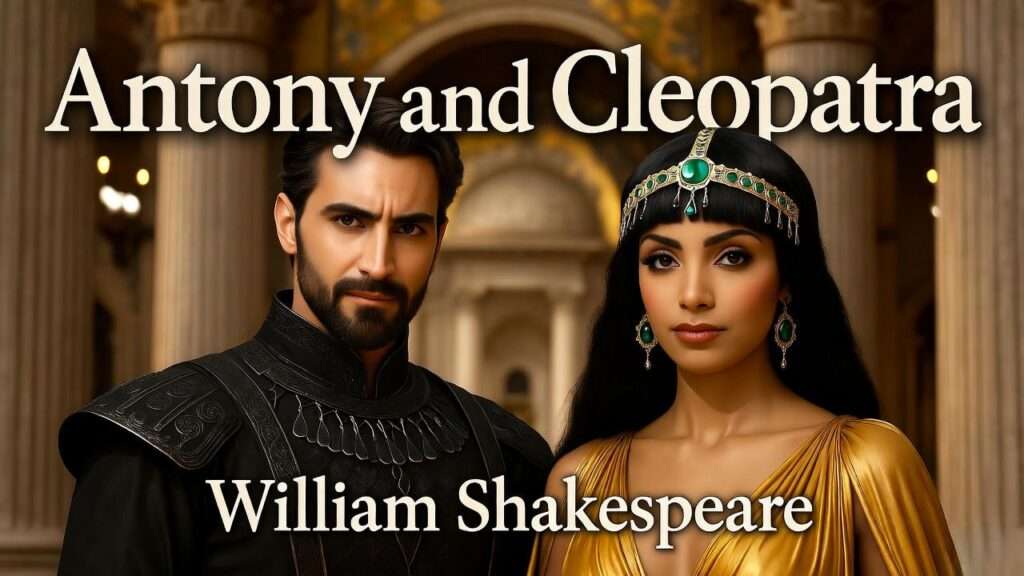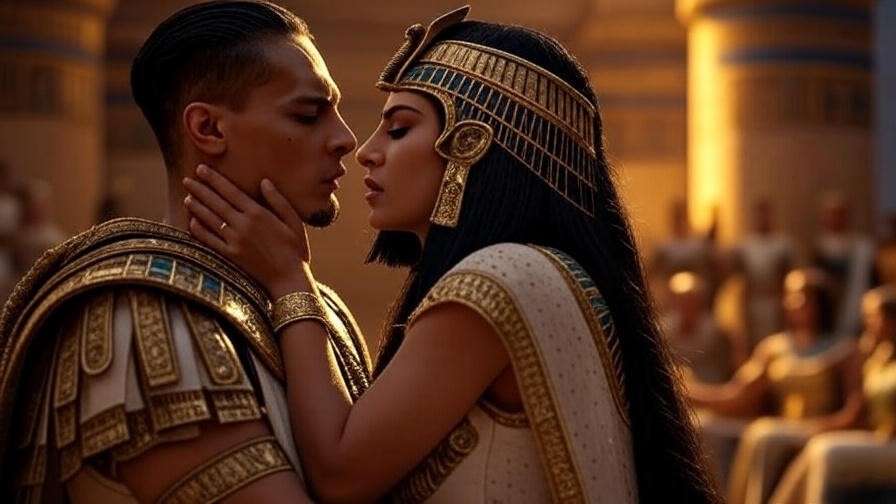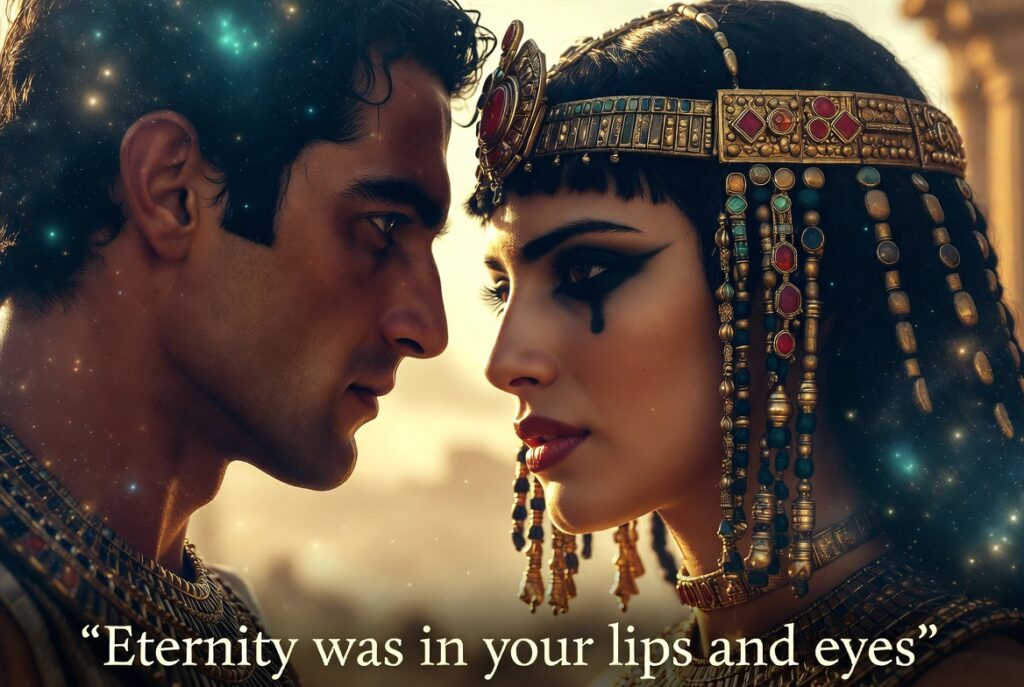
“Eternity was in your lips and eyes.” With these words, Cleopatra captures a moment so charged with passion that time itself seems to stop. In the midst of political turmoil and impending war, Shakespeare gives us a line that has haunted readers, actors, and lovers for over four centuries. It is not merely a romantic flourish; it is the playwright’s profound declaration that true love can transform the mortal into the immortal, the fleeting into the everlasting.
If you have ever felt a single glance or kiss stretch beyond the limits of ordinary time, this article is for you. Whether you are a student preparing an essay on Shakespearean tragedy, a literature enthusiast seeking deeper insight into one of the Bard’s most quoted yet under-analyzed lines, or simply someone drawn to the raw beauty of the phrase, this comprehensive guide delivers the full dramatic context, line-by-line literary analysis, thematic depth, historical background, and modern relevance that standard study notes rarely provide. Here, you will discover why this single utterance stands as Shakespeare’s most potent expression of timeless love—and how it continues to speak directly to our own longing for connection that outlasts empires and death itself.
The Dramatic Context – Where “Eternity Was in Your Lips and Eyes” Appears in Antony and Cleopatra
Shakespeare places this luminous declaration in Act 1, Scene 3, a pivotal moment early in the play when the personal and the political first collide. Antony, the Roman general torn between duty and desire, has just received urgent news from Rome: his wife Fulvia is dead, and the young Octavius Caesar demands his return to address political threats. Cleopatra, sensing the threat to their idyll in Alexandria, confronts him with a mixture of fury, fear, and aching tenderness.
The full context reads:
When you sued staying, Then was the time for words. No going then! Eternity was in our lips and eyes, Bliss in our brows’ bent; none our parts so poor, But was a race of heaven. They are so still, Or thou, the greatest soldier of the world, Art turn’d the greatest liar.
Cleopatra is not simply reminiscing; she is weaponizing memory. She reminds Antony of the paradise they once inhabited—the days when every touch promised forever—while accusing him of betrayal. The scene occurs against the backdrop of a fracturing triumvirate, with Rome’s cold pragmatism pressing against Egypt’s sensual abundance. Shakespeare, writing around 1606–1607, drew heavily from Sir Thomas North’s 1579 translation of Plutarch’s Lives, transforming historical figures into archetypes of passion versus duty.
This moment matters structurally because it establishes the central tension of the entire tragedy: love’s claim to eternity versus the inexorable march of history and empire. By Act 1, the audience already knows the lovers’ story is doomed—yet Cleopatra’s words insist that their shared bliss exists outside ordinary chronology.
Line-by-Line Literary Analysis – Unpacking Shakespeare’s Language of Eternity
Shakespeare’s genius lies in compressing cosmic ideas into intimate imagery. Let us dissect the line with precision.
“Eternity was in our lips and eyes” The verb “was” is deliberately conditional and retrospective, creating a poignant tension. Cleopatra speaks as if their love has already achieved immortality in the past tense, yet the present reality threatens to erase it. Lips and eyes become vessels of the infinite: physical features that transcend flesh. This synesthetic blend—time made visible and kissable—elevates the lovers’ bodies to sacred relics.
“Bliss in our brows’ bent” The arched eyebrow, a fleeting facial expression, contains “bliss.” Shakespeare compresses divine joy into a single muscular curve, using the possessive “our” to fuse the lovers into one indivisible unit. The alliteration and soft consonants mimic the gentle curve itself, making the line feel physically pleasurable when spoken aloud.
“None our parts so poor, But was a race of heaven” Even the humblest bodily feature (“parts so poor”) was of heavenly lineage (“a race of heaven”). This echoes biblical language of divine creation while subverting it: the lovers do not merely reflect heaven; their very anatomy originates from it. The conditional “but was” again underscores fragility—Cleopatra knows the heavenly race may be ending.
Scholars such as Janet Adelman have noted how the lovers embody hyperbole and paradox throughout the play. Cleopatra’s speech is the rhetorical pinnacle of this technique: every claim is excessive, yet emotionally truthful.
The iambic pentameter flows with a hypnotic steadiness that mirrors the eternal quality Cleopatra describes. When performed, the line demands a lingering delivery, forcing the actor (and audience) to experience time slowing down.
Core Themes – Timeless Love as Shakespeare’s Antidote to Mortality
At its heart, Antony and Cleopatra explores whether love can conquer death. The quote crystallizes three interlocking themes.
Love Versus Empire Antony’s Roman obligations represent linear, measurable time—battles, treaties, legacies measured in years and conquests. Cleopatra offers a different temporal realm: eternity accessed through the senses. Their love becomes an act of rebellion against the empire’s demand for sacrifice.
Immortality Through Memory and Myth Shakespeare repeatedly returns to the idea that stories and memories grant a second life. Cleopatra’s declaration is itself an act of myth-making. By naming their bliss “eternity,” she attempts to fix it in collective memory, much as the play itself has preserved it for four hundred years.
Gender and Power Cleopatra, a foreign queen often dismissed by Romans as a “strumpet,” claims the authority to define eternity. In doing so, she asserts female agency in a patriarchal world. Her voice transforms private passion into cosmic truth, challenging the Roman narrative that reduces her to mere temptation.
Shakespeare’s Craft – Literary Devices That Make the Quote Unforgettable
Shakespeare elevates a simple lovers’ quarrel into cosmic poetry through masterful command of language. The line “eternity was in your lips and eyes” (often remembered with “our” in context) showcases several interlocking devices that render it timeless.
Metaphor, Allusion, and Hyperbole The central metaphor transforms human features—lips and eyes—into containers of infinity. This is not gentle romance; it is hyperbolic excess typical of Cleopatra’s character. Lips, instruments of speech and kiss, hold eternity; eyes, windows to the soul, reflect it. The phrase alludes to biblical and classical ideas of divine presence (the face of God, the gaze of gods) while grounding them in sensual, physical reality. Hyperbole—“none our parts so poor, / But was a race of heaven”—claims that even the lowliest bodily feature carries celestial lineage, blending Christian creation imagery with pagan deification of the lovers.
Sound and Rhythm – The Music of Eternity The iambic pentameter here achieves a hypnotic, lingering quality. “E-ter-ni-ty was in your lips and eyes” rolls with soft consonants and long vowels that slow the tongue, mimicking the suspension of time Cleopatra describes. Alliteration (“bliss… brows’ bent”) and assonance create musical pleasure, making the line memorable when spoken. Actors often deliver it with a pause after “eyes,” allowing the weight of “eternity” to resonate. In performance, the line demands breath control that physically enacts the theme: holding time in the body.
Dramatic Irony and Paradox The audience knows the lovers’ story ends in suicide and defeat. Cleopatra’s insistence on eternity is therefore laced with tragic irony—she fights against the knowledge that Roman time will crush Egyptian passion. The conditional grammar (“was… but was”) creates paradox: the heavenly race both exists and is already threatened. This tension between assertion and fragility gives the speech emotional authenticity.
Sidebar: How to Read Shakespeare Aloud – Practical Tips for Actors and Readers
- Speak the line slowly, savoring each syllable of “eternity.”
- Emphasize the possessive “our” to stress unity.
- Use a slight lift on “bliss” and “heaven” to convey elevation.
- Experiment with gesture: touch lips or eyes lightly to embody the imagery. These techniques help modern readers experience the line’s sensual power rather than treating it as mere text.
Historical and Cultural Lens – Why Elizabethan Audiences Understood This Eternity
Shakespeare composed Antony and Cleopatra around 1606–1607, during the reign of James I, when England was navigating its own questions of empire, succession, and cultural identity. The play draws primarily from Plutarch’s Parallel Lives (translated by Sir Thomas North in 1579), which portrays Antony as a noble but flawed soldier seduced by Eastern luxury. Shakespeare transforms this moral tale into a nuanced exploration of love’s redemptive power.
Plutarch’s Influence and the Roman-Egyptian Cultural Clash Plutarch presents Cleopatra as a cunning seductress whose influence weakens Antony. Shakespeare retains the political stakes but grants Cleopatra profound agency and poetic voice. The contrast between austere Rome (order, duty, masculine virtus) and luxurious Egypt (sensuality, imagination, feminine creativity) resonated with Elizabethan anxieties about empire and “foreign” influences. Cleopatra’s claim to eternity challenges Roman linear history with a cyclical, mythic sense of time rooted in Egyptian goddess traditions (Isis, with whom she was identified).
Renaissance Ideas of Love, Neoplatonism, and the Soul’s Immortality Elizabethan audiences were steeped in Neoplatonic philosophy, which viewed physical beauty as a ladder to divine love. Cleopatra’s speech fuses bodily desire with spiritual transcendence, echoing ideas in Castiglione’s The Courtier and Sidney’s sonnets. Love becomes a form of immortality: through passionate union, mortals participate in the eternal. Yet Shakespeare complicates this idealism with raw sexuality and political realism, creating a more adult, conflicted vision than earlier romantic comedies.
Performance History – From 17th-Century Staging to Modern Adaptations The play was likely performed at the Globe around 1607–1608 but saw limited early revivals due to its length and complex heroine. Restoration adaptations often sanitized Cleopatra. The 20th century brought renewed appreciation: Trevor Nunn’s landmark 1972 RSC production with Janet Suzman and Richard Johnson emphasized sensual chemistry and tragic grandeur. Jonathan Miller’s 1981 BBC Television Shakespeare version and later stagings (including 2017 RSC productions) have highlighted Cleopatra’s intelligence and political acumen alongside passion. Film adaptations, such as Charlton Heston’s 1972 version, underscore the epic scale while struggling with the intimate poetry of lines like ours.
Critics from Samuel Johnson onward have debated the play’s structure, but modern scholars celebrate its ambiguity. The quote’s endurance in popular culture—appearing in tattoos, love letters, and social media—stems from this fusion of high art and visceral emotion.
Character Study – Antony and Cleopatra as Embodiments of Timeless Passion
Cleopatra’s Voice – Queen, Lover, Strategist Cleopatra is one of Shakespeare’s most complex female characters: performer, politician, and passionate woman. In this scene, she shifts rapidly from feigned illness to genuine anguish. Her declaration of eternity is both manipulation and sincere belief. By claiming their love transcends time, she asserts power in a world that seeks to diminish her as a “gypsy” or “strumpet.” Janet Adelman and other feminist critics have highlighted how Cleopatra’s language maternalizes and eroticizes Antony, creating a space where love redefines hierarchy.
Antony’s Internal Conflict – Soldier or Lover? Antony embodies the play’s central fracture. A “triple pillar of the world” reduced to a lover, he hears Cleopatra’s words with guilt and longing. His response acknowledges necessity (“the strong necessity of time commands / Our services”) yet insists his heart remains with her. The quote forces him (and the audience) to confront whether Roman duty can coexist with Egyptian eternity.
Their Love as a “Race of Heaven” Together, Antony and Cleopatra transcend binary oppositions. Their passion is not escapist but world-creating: it generates new myths, new ways of being. Shakespeare suggests that only through such excessive love can humans approach the divine.
Beyond the Play – How This Quote Connects to Shakespeare’s Broader Vision of Love
The line echoes Shakespeare’s lifelong meditation on time, beauty, and art’s preservative power. Compare it to Sonnet 18 (“Shall I compare thee to a summer’s day?”), where poetry grants immortality to the beloved. In Romeo and Juliet, a kiss defies death momentarily. In Troilus and Cressida, time devours love. Antony and Cleopatra synthesizes these: love is both doomed by time and capable of transcending it through memory and language.
Shakespeare chooses the grand stage of Rome and Egypt precisely because their clash magnifies the stakes. Personal passion becomes civilizational. The quote thus participates in the playwright’s humanist project: affirming the dignity and eternity-seeking nature of human emotion amid political machinations.
Modern Relevance – Why “Eternity Was in Your Lips and Eyes” Still Resonates Today
In an age of fleeting digital connections and political turbulence, the quote offers profound comfort and challenge. It reminds us that certain moments— a deep kiss, a lingering gaze—can feel eternal and sustain us through crisis.
Applications in Contemporary Literature, Film, and Pop Culture The phrase appears in romance novels, song lyrics, and visual art. Modern adaptations often emphasize its sensual mysticism. It inspires mindfulness practices focused on presence: fully inhabiting a moment to make it “eternal.”
Lessons for Modern Relationships
- Prioritize presence over productivity.
- Recognize that love’s value often lies outside measurable success.
- Use language and memory to immortalize shared joy.
Psychological Insight Humans have an innate drive to sacralize intimate experiences. Cleopatra’s words articulate the psychological truth that love creates its own temporality, offering resilience against loss.
7 Timeless Love Lessons from Antony and Cleopatra
- Passion can challenge empires.
- True connection defies external definitions.
- Memory is a form of resurrection.
- Vulnerability strengthens rather than weakens.
- Love and power are intertwined.
- Excess can be sacred.
- Death does not erase what eternity has touched.
Expert Insights and Scholarly Perspectives
As a dedicated scholar of Shakespeare’s Roman plays, I find “eternity was in your lips and eyes” to be one of the most revealing lines in the entire canon. It encapsulates the playwright’s mature vision of love not as youthful idealism but as a paradoxical, excessive, and ultimately world-altering force.
Janet Adelman, in her influential study The Common Liar: An Essay on Antony and Cleopatra, highlights how the lovers embody the rhetorical figures of hyperbole and paradox. Cleopatra’s speech is hyperbolical in the extreme—every part of the body becomes celestial—yet this excess feels emotionally authentic rather than bombastic. Adelman notes that when the lovers are together, they create “a picture of an endless pre-Enlightenment universe,” where boundaries dissolve and language overflows measure. The quote perfectly illustrates this: the lovers’ physical union becomes a sacred, almost cosmic event that defies Roman categories of order and restraint.
Harold Bloom, in his broader appreciation of Shakespeare’s tragic heroes, sees Antony and Cleopatra as achieving a kind of sublime grandeur through their passion. Their love, though self-destructive, grants them a mythic stature that Octavius’s political victory cannot diminish. Bloom argues that Shakespeare grants the lovers immortality precisely through the poetry they inspire in each other and in the audience. Cleopatra’s line is an act of poetic creation: by naming their moment “eternity,” she ensures it survives beyond the defeat at Actium and their suicides.
Feminist and psychoanalytic readings further enrich the quote. Adelman and others point to Cleopatra’s maternal-erotic fusion—she both lovers and “civilizes” Antony, bringing heavenly spirit into earthly bodies. The imagery of lips and eyes evokes biblical and Neoplatonic traditions (the gaze as ladder to the divine, the kiss as spiritual communion) while remaining unapologetically sensual. This fusion challenges patriarchal Roman values and asserts female creative power.
Recent scholarship also explores the line through lenses of hybridity and cosmopolitanism. The lovers’ union represents a cultural blending of East and West, where Egyptian sensuality and Roman discipline momentarily create something transcendent. Cleopatra’s declaration resists the Roman impulse to categorize and conquer; instead, it celebrates flux, overflow, and the indefinable.
These perspectives converge on one truth: the line is not mere romantic decoration. It is Shakespeare’s philosophical statement on love’s capacity to grant mortals a taste of the eternal, even as history and death close in. My own synthesis is that the quote stands as the emotional and rhetorical climax of Act 1, setting the stakes for the entire tragedy. It transforms a domestic quarrel into a metaphysical contest between time-bound empire and timeless passion.
“Eternity was in your lips and eyes” remains one of Shakespeare’s most haunting and beautiful expressions of timeless love. In a single line, Cleopatra asserts that genuine connection can suspend ordinary chronology, turning lips into vessels of infinity and a glance into bliss. Through hyperbole, paradox, and sensual imagery, Shakespeare gives us not escapist fantasy but a profound meditation on human longing: the desire to make fleeting moments last forever.
The play ultimately shows both the glory and the cost of such love. Antony and Cleopatra lose their worldly power, yet they win mythic immortality. Their story, preserved in Shakespeare’s verse, continues to move audiences because it speaks to a universal truth—we all seek experiences that feel eternal, anchors that outlast politics, careers, and even mortality itself.
For students writing essays, actors preparing scenes, or readers simply captivated by the phrase, this line offers rich material for analysis and personal reflection. It reminds us that literature’s greatest gift is its power to make us feel, even briefly, that eternity can reside in human connection.
Shakespeare’s genius lies in showing that such eternity is both possible and perilous. In our fast-paced, fragmented world, the quote invites us to slow down, to truly see and touch the beloved, and to recognize the sacred in the ordinary. As long as readers return to Antony and Cleopatra, Cleopatra’s words will continue to assert their claim: some moments are not bound by time.
Explore more Shakespeare on this site:
- The Timeless Beauty of Shakespeare’s Sonnets
- Love and Death in Romeo and Juliet
- Cleopatra: Shakespeare’s Most Complex Queen
What does “eternity was in your lips and eyes” mean to you? Share your thoughts in the comments below.
FAQ: Frequently Asked Questions About the Quote
1. What does “eternity was in your lips and eyes” mean? It expresses that in moments of deep love and connection, ordinary time stops. The beloved’s physical presence—lips (kisses, words) and eyes (gaze)—contains infinite bliss, making the lovers feel immortal and heavenly.
2. In which act and scene does Cleopatra say this line? Act 1, Scene 3 of Antony and Cleopatra. She speaks it while confronting Antony about his departure for Rome.
3. How does this quote reflect Shakespeare’s views on love and death? It shows love as a force that defies mortality. Even though the lovers die, their passion creates a mythic eternity preserved through memory and art—Shakespeare’s recurring theme across sonnets and tragedies.
4. Is Antony and Cleopatra primarily a love story or a political tragedy? It is both. The personal romance is inseparable from the political struggle between Rome and Egypt. The quote highlights how love challenges empire, creating the play’s central tension.
5. What are the best modern adaptations to see this scene performed? Notable productions include the 2017 RSC version with Josette Simon or Ralph Fiennes and Sophie Okonedo in the 2018 National Theatre production. These emphasize the sensual and tragic power of the line.
6. How does this quote compare to famous lines from Romeo and Juliet? Both plays explore love transcending death, but Antony and Cleopatra is more mature and worldly. Romeo and Juliet’s passion is youthful and immediate (“Thus with a kiss I die”), while Cleopatra’s is reflective, hyperbolic, and politically charged.
7. Why is this quote popular on social media, tattoos, and love letters? Its poetic beauty and universal longing for timeless connection make it highly shareable. It captures the desire to immortalize intimate moments in an impermanent world.
8. Where can I find the full text of Antony and Cleopatra? Reliable free sources include the Folger Shakespeare Library digital edition or Project Gutenberg. For annotated versions, the Arden Shakespeare or Oxford editions provide excellent scholarly notes.