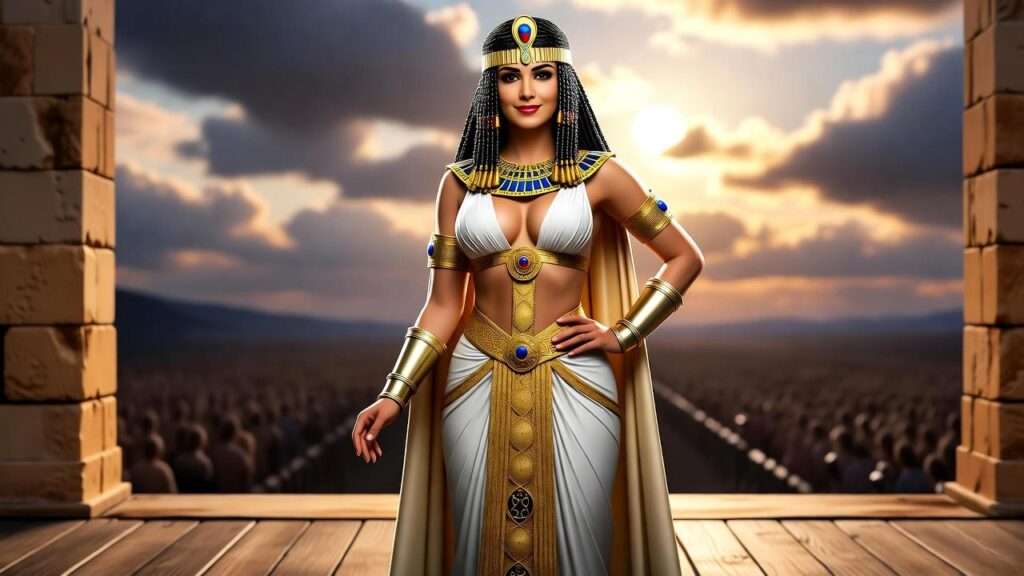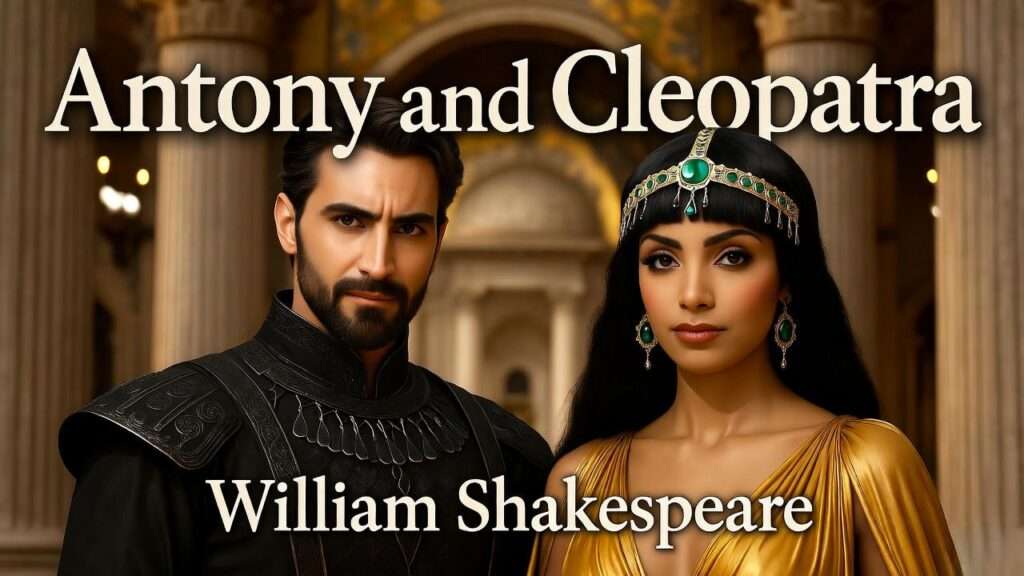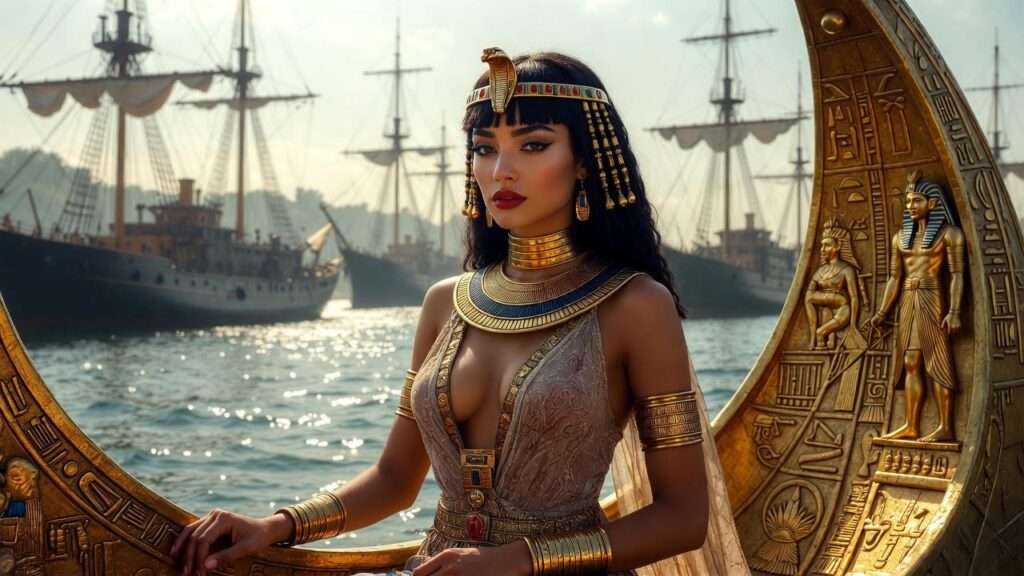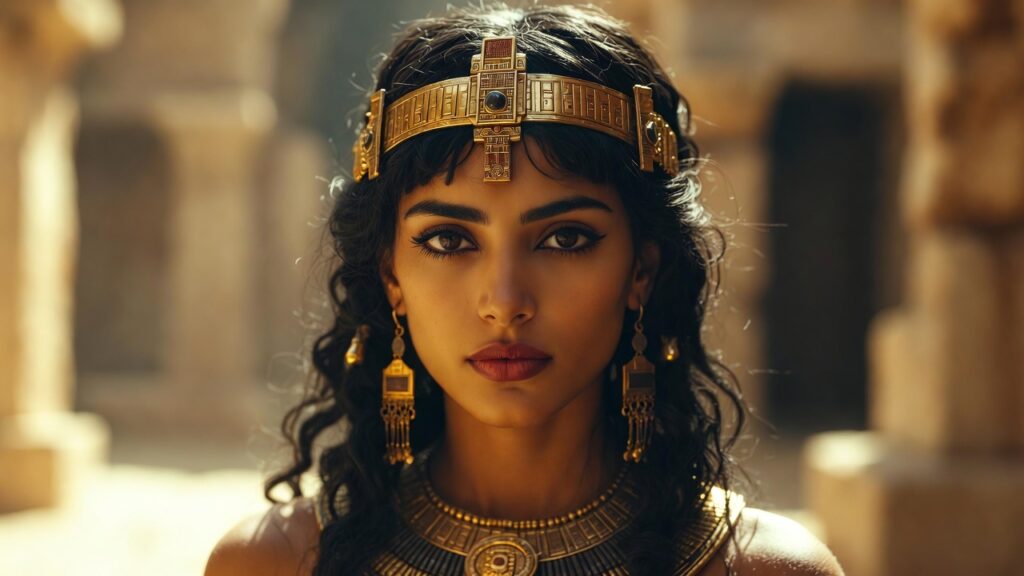
Picture this: the sun sets over the Nile, casting a golden glow on a queen who commanded empires, seduced the most powerful men of her age, and chose death on her own terms rather than submission. Her name evokes mystery, power, and unparalleled allure — Cleopatra. Yet when people search for the famous quotes of Cleopatra today, they often encounter a mix of modern inventions, Hollywood lines, and inspirational memes. The truth is more profound: the most enduring and authentic voice we have of this legendary queen comes not from surviving ancient Egyptian records, but from William Shakespeare‘s masterpiece, Antony and Cleopatra (written around 1606–1607).
In this comprehensive exploration, we dive deep into Shakespeare’s portrayal of Cleopatra — a woman of “infinite variety” whose words capture passion, intelligence, defiance, and regal dignity. These lines have shaped cultural memory more than any historical account, offering timeless wisdom on love, power, resilience, and self-possession. Whether you’re a literature enthusiast, history buff, or someone seeking inspiration from one of history’s strongest female figures, this article separates myth from dramatic truth and delivers the insight you need.
Who Was the Real Cleopatra? Historical Context Before Shakespeare
Cleopatra VII Philopator (69–30 BCE) was the last active ruler of the Ptolemaic Kingdom of Egypt, a descendant of Greek Macedonians who ruled after Alexander the Great. Far from the exotic seductress of legend, she was a brilliant polyglot (speaking nine languages, including Egyptian — a rarity for her dynasty), skilled diplomat, and strategic leader who maintained Egypt’s independence amid Roman expansion.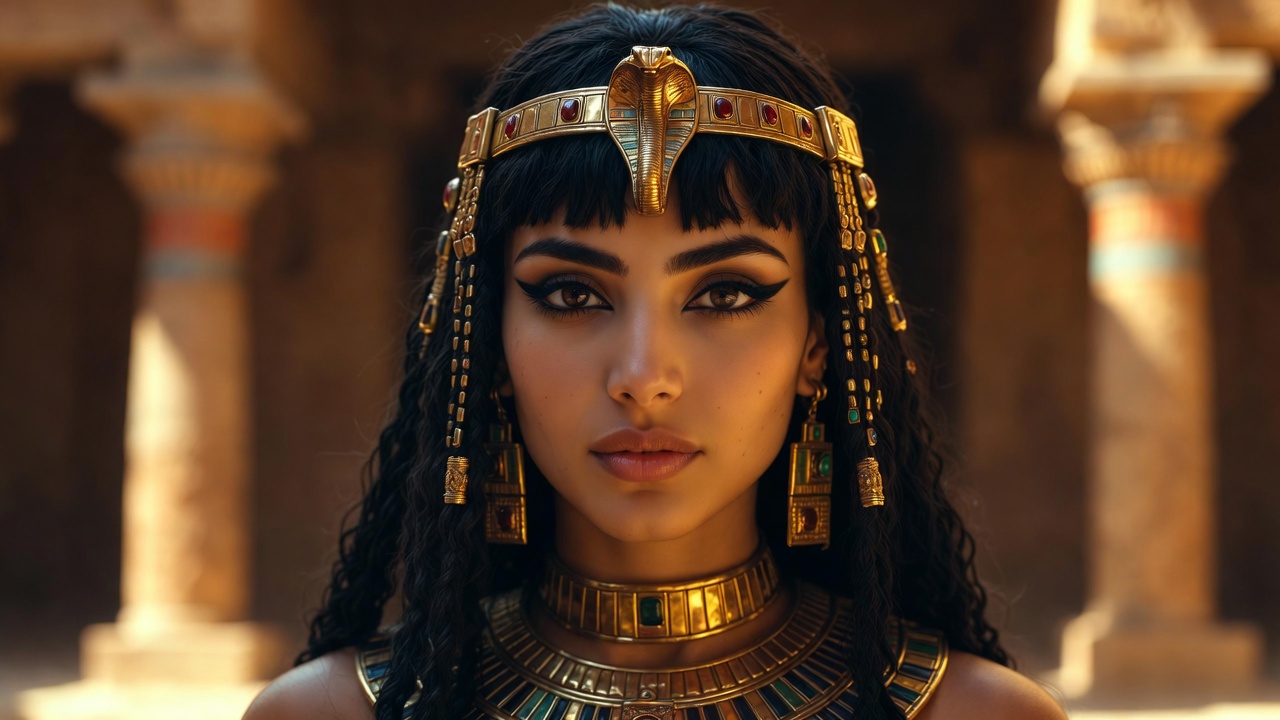
Her alliances with Julius Caesar (by whom she had a son, Caesarion) and later Mark Antony were political masterstrokes, aimed at securing Egypt’s sovereignty. Ancient sources like Plutarch’s Life of Antony (Shakespeare’s primary source), Cassius Dio, and Suetonius paint her as intelligent and charismatic — but they are filtered through Roman propaganda that portrayed her as a dangerous foreign temptress who “bewitched” noble Romans.
Crucially, no verbatim quotes from Cleopatra herself survive. Her writings, letters, and speeches were lost to time, destroyed, or never recorded by biased historians. What we have are second-hand accounts, often hostile. This absence creates a vacuum that Shakespeare filled with dramatic genius, giving Cleopatra a voice that resonates across centuries.
Shakespeare drew heavily from Plutarch but transformed the historical figure into a multifaceted tragic heroine — mercurial, passionate, politically astute, and profoundly human. His Cleopatra is not merely a lover; she is a queen who navigates love, empire, and mortality with unmatched complexity.
Cleopatra in Shakespeare’s Antony and Cleopatra – A Character of Infinite Variety
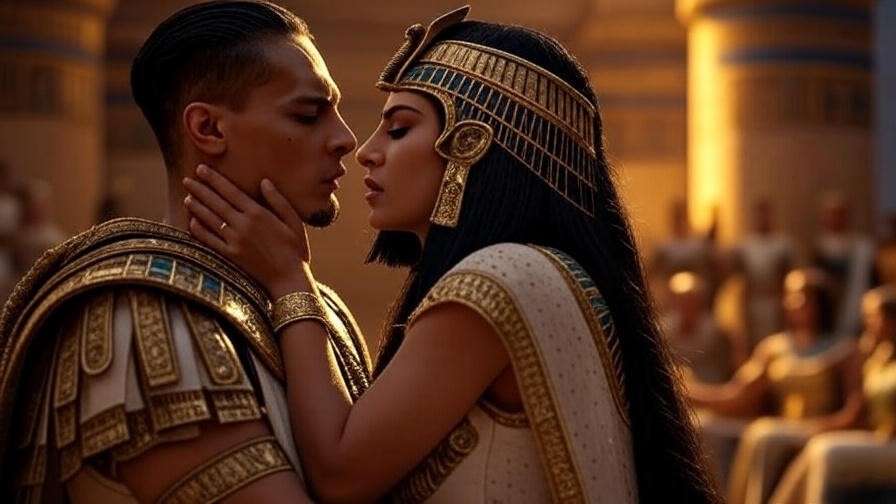
Shakespeare’s Antony and Cleopatra explores the clash between Roman duty and Egyptian passion, public obligation versus private desire. At its heart is the tragic romance between Mark Antony, one of Rome’s triumvirs, and Cleopatra, Queen of Egypt.
Unlike the villainous temptress of Roman accounts, Shakespeare’s Cleopatra is a force of nature. She is witty, sensual, politically shrewd, and capable of deep vulnerability. The play’s most famous description of her comes not from her own mouth but from Enobarbus: “Age cannot wither her, nor custom stale / Her infinite variety” (Act 2, Scene 2). This line encapsulates why she captivates audiences — her unpredictability, her ability to embody contradictions, makes her endlessly fascinating.
Shakespeare’s Cleopatra speaks in poetry of extraordinary richness: sensual daydreams, sharp barbs, grand declarations, and poignant reflections. These words have become the famous quotes of Cleopatra in popular culture because they humanize her, making her relatable while preserving her majesty. In an age when women were often portrayed as passive, Shakespeare created a queen who commands the stage even in defeat.
The Most Famous Quotes of Cleopatra from Shakespeare – With Full Context & Analysis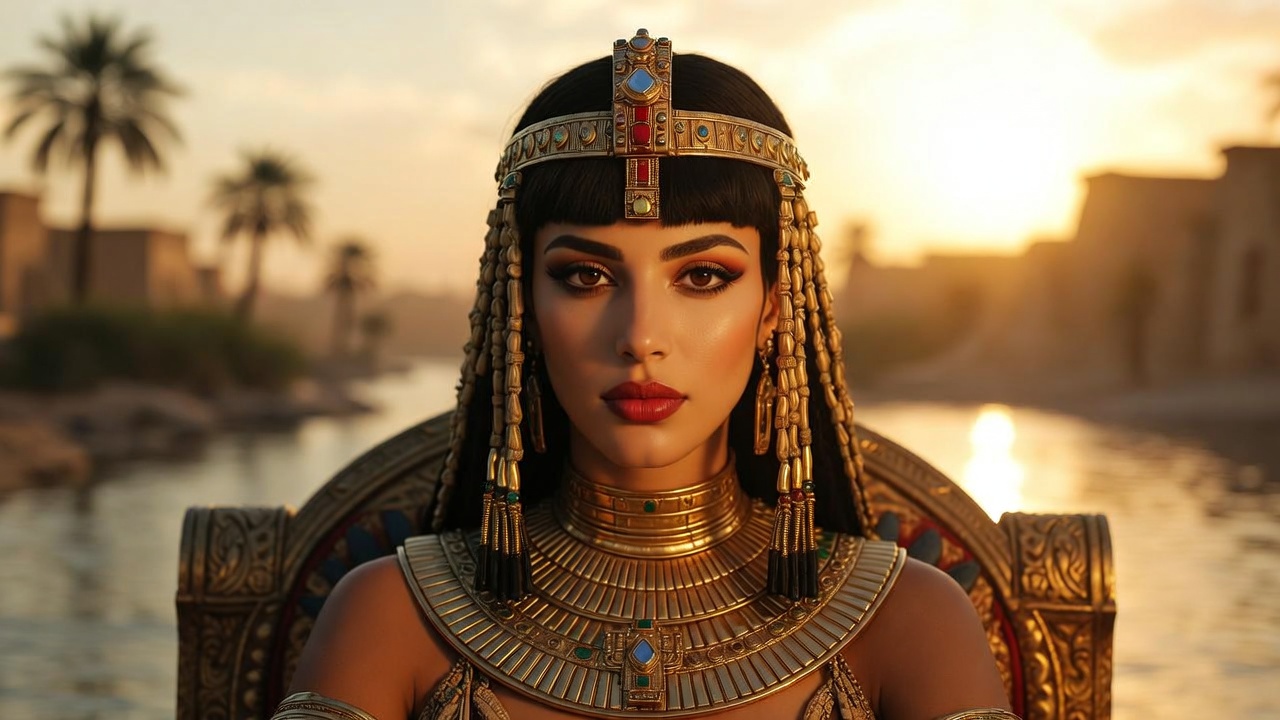
Here we examine the most iconic lines spoken by Cleopatra herself, drawn directly from the play. Each includes context, literary analysis, and modern relevance — going beyond simple lists to provide deeper insight.
“My salad days, When I was green in judgment, cold in blood…” (Act 1, Scene 5)
Full quote: “My salad days, / When I was green in judgment, cold in blood, / To say as I said then! But come, away; / Get me ink and paper. He shall have every day a several greeting, / Or I’ll unpeople Egypt.”
Context: Alone with her attendants after Antony’s departure for Rome, Cleopatra reflects on her youthful romances (including with Caesar). Charmian teases her about past loves; Cleopatra dismisses them as immature compared to her current passion for Antony.
Analysis: This self-aware admission reveals maturity and growth. “Salad days” — a phrase Shakespeare coined — evokes freshness and immaturity, like unripe greens. The contrast with her “hot” love for Antony underscores her emotional evolution. It’s humorous yet poignant, showing a queen who laughs at her own past.
Modern lesson: Embrace personal growth. We all have “salad days” — phases of inexperience — but recognizing them allows us to appreciate deeper connections later in life. In relationships or careers, this line reminds us that intensity grows with wisdom.
“O happy horse, to bear the weight of Antony!…” (Act 1, Scene 5)
Full quote: “O happy horse, to bear the weight of Antony! / Do bravely, horse, for wot’st thou whom thou bear’st? / The demi-Atlas of this Earth, the arm / And burgonet of men. […] Now I feed myself / With most delicious poison.”
Context: Daydreaming about Antony, Cleopatra imagines him on horseback, envying the animal that carries him. She calls him “demi-Atlas” (half the world-bearer) and refers to herself as his “serpent of old Nile.”
Analysis: This sensual, obsessive reverie blends mythology, desire, and playfulness. The horse metaphor highlights her longing, while “delicious poison” captures love’s addictive pain. It reveals Cleopatra’s vulnerability beneath her regal exterior — a woman consumed by passion.
Timeless appeal: The quote shows how love can elevate the ordinary (a horse) to mythic status. In modern terms, it’s the feeling of idealizing a partner, finding joy in their very presence.
“Give me my robe, put on my crown. I have Immortal longings in me…” (Act 5, Scene 2)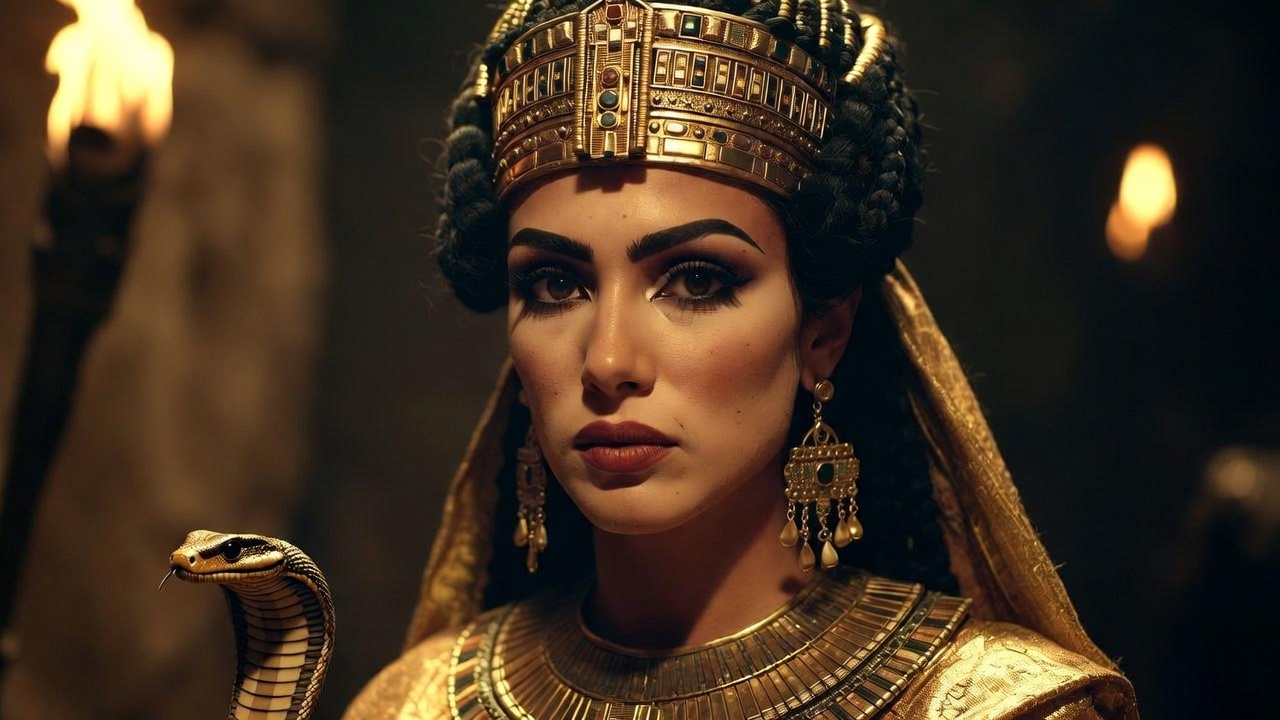
Full quote: “Give me my robe. Put on my crown. I have / Immortal longings in me. […] Now from head to foot / I am marble-constant. Now the fleeting moon / No planet is of mine.”
Context: Facing capture by Octavius Caesar after Antony’s death, Cleopatra prepares for suicide by asp bite. She dresses regally, rejecting humiliation in Rome.
Analysis: This is Cleopatra’s triumphant moment — she reclaims agency through death. “Immortal longings” expresses her desire for eternal legacy over mortal defeat. The “marble-constant” image evokes statuesque dignity, turning suicide into a performance of power.
Wisdom today: Choose your ending. In times of loss or failure, this line inspires dignity and self-determination — refusing to let others define your narrative.
“His legs bestrid the ocean…” (Act 5, Scene 2)
Full quote: “His legs bestrid the ocean; his reared arm / Crested the world. His voice was propertied / As all the tuned spheres…”
Context: Mourning Antony, Cleopatra elevates him to god-like status in her final tribute.
Analysis: Hyperbolic poetry immortalizes love. By making Antony cosmic, Cleopatra preserves his greatness — and their bond — against Roman diminishment.
Relevance: How we remember loved ones shapes our grief. This quote teaches us to honor the extraordinary in those we’ve lost.
Other Notable Cleopatra Lines Worth Remembering
- “All strange and terrible events are welcome, / But comforts we despise” (Act 4, Scene 15) — embracing chaos over mediocrity.
- “My desolation does begin to make / A better life” (Act 5, Scene 2) — finding renewal in loss
Why Shakespeare’s Cleopatra Speaks Louder Than History
Despite the wealth of historical writing about Cleopatra VII, Shakespeare’s dramatic creation has become the version that lives most vividly in the collective imagination. Why?
The answer lies in the power of poetry and performance. Ancient sources — Plutarch, Dio, Suetonius — offer detailed but distant portraits, often colored by Roman political agendas that sought to demonize her as the exotic “other” who corrupted Antony. Shakespeare, working four centuries later, was free to reimagine her without the same propaganda constraints. He took the bare facts from North’s 1579 translation of Plutarch and breathed into them psychological depth, linguistic brilliance, and emotional truth.
The result is a Cleopatra whose voice feels immediate and alive. Modern “famous quotes of Cleopatra” that circulate on social media and quote collections — lines like:
- “I will not be triumphed over.”
- “A woman’s greatest power is her beauty, but her greatest weapon is her mind.”
- “Fool! Don’t you see my heart is breaking?”
— are almost always either paraphrases of Shakespeare, inventions inspired by the 1963 Elizabeth Taylor film, or complete fabrications. None are authentic ancient words.
Here is a quick comparison for clarity:
| Popular Modern Quote | Actual Source / Reality | Shakespearean Echo / Closest Match |
|---|---|---|
| “I will not be triumphed over” | Iconic 1963 film line (Elizabeth Taylor) | Inspired by Cleopatra’s refusal to be paraded in Rome (Act 5) |
| “Age cannot wither her…” | Enobarbus’s speech (Act 2, Scene 2) | Shakespeare — not Cleopatra herself |
| “My beauty is my power” | Modern invention / meme | No direct match; closest is her self-aware sensuality |
| “Give me my robe, put on my crown…” | Direct Shakespeare (Act 5, Scene 2) | Authentic Shakespearean Cleopatra |
Scholars such as Janet Adelman (The Common Liar), Coppélia Kahn, and Linda Fitz have long argued that Shakespeare’s Cleopatra transcends the historical record precisely because she is allowed contradictions: she is both politically calculating and passionately irrational, regal and vulnerable, tragic and triumphant. This complexity makes her more human — and therefore more quotable — than any one-dimensional historical portrait could achieve.
Timeless Lessons from Cleopatra’s Words – What We Can Learn Today
Shakespeare’s Cleopatra is not merely a character to admire from afar — her words offer practical, enduring wisdom for modern life. Here are the most powerful lessons distilled from her most famous lines:
- Embrace Your Complexity (“Infinite variety”) Cleopatra refuses to be reduced to a single label. She is lover, mother, strategist, performer, and mourner — often all at once. Application today: In an era that pressures people (especially women) to fit neat categories, her example reminds us that strength lies in wholeness. You don’t have to choose between being ambitious and nurturing, serious and playful. Own all your facets.
- Love Fiercely, Without Apology Her passionate daydreams (“O happy horse…”) and mythic tributes (“His legs bestrid the ocean…”) show a refusal to diminish love for the sake of decorum or politics. Modern relevance: In relationships, workplaces, and creative pursuits, intensity and vulnerability are not weaknesses. They are sources of power — when expressed authentically.
- Choose Dignity in Defeat The robe-and-crown moment (“Give me my robe… I have immortal longings in me”) is perhaps the play’s most iconic declaration of agency. Rather than accept humiliation, Cleopatra scripts her own exit. Lesson for today: When facing loss — job termination, breakup, public failure — you still control your narrative. How you stand in defeat can become your greatest legacy.
- Recognize Growth Over Time (“Salad days”) Cleopatra’s gentle mockery of her younger self shows wisdom earned through experience. Takeaway: Stop judging your past self harshly. Every “green” phase was necessary preparation for who you are becoming.
These principles resonate because they address universal human experiences: love, power, failure, and self-definition. Cleopatra’s voice — through Shakespeare — continues to speak directly to anyone navigating complexity in the modern world.
Bonus: Cleopatra in Popular Culture – From Film to Feminism
Shakespeare’s Cleopatra has been reinterpreted countless times, each era finding new meaning in her words:
- 1963 Film — Elizabeth Taylor’s performance made “Give me my robe…” a cinematic icon, turning Cleopatra into a symbol of glamorous defiance.
- Stage revivals — From Vanessa Redgrave (1973) to Harriet Walter (2006) to Sophie Okonedo (2018), modern productions emphasize her political acumen alongside her passion.
- Feminist readings — Since the late 20th century, scholars and directors have highlighted Cleopatra as an early example of female agency, intellectual brilliance, and refusal of patriarchal control.
- Pop culture echoes — From Beyoncé’s visual album Black Is King (which drew on Egyptian imagery) to memes and Instagram quotes, Cleopatra remains a shorthand for powerful, multifaceted womanhood.
Her voice endures because every generation rediscovers something new in her infinite variety.
Frequently Asked Questions (FAQs)
Are any famous quotes of Cleopatra really from her? No verbatim quotes from the historical Cleopatra survive. The most authentic and widely recognized lines come from Shakespeare’s play.
What is Cleopatra’s most famous line in Shakespeare? While Enobarbus’s description (“Age cannot wither her…”) is the most quoted overall, Cleopatra’s own most iconic line is widely considered: “Give me my robe. Put on my crown. I have / Immortal longings in me.”
How does Shakespeare differ from historical accounts? Shakespeare amplifies Cleopatra’s agency, wit, and emotional depth. Roman historians often portrayed her as manipulative; Shakespeare makes her tragic, regal, and deeply human.
Why do people misattribute quotes to Cleopatra? Her legend is so potent that modern writers, filmmakers, and social media creators create inspirational lines that feel “Cleopatra-like,” blending her historical mystique with Shakespearean grandeur.
Should I read Antony and Cleopatra to understand her better? Absolutely. The full play reveals the richness behind the famous quotes — and remains one of Shakespeare’s most moving tragedies.
Cleopatra VII may have ruled an ancient kingdom, but it was William Shakespeare who granted her immortality through language. The famous quotes of Cleopatra that echo through time — from playful self-reflection to majestic defiance — are Shakespeare’s gift to history. They transform a distant queen into a living presence: passionate, wise, contradictory, and utterly compelling.
If you seek inspiration from one of literature’s greatest female characters, there is no better place to start than Antony and Cleopatra. Revisit the play. Let her words remind you that true power is never one-dimensional — it is infinite in its variety.
Which of Cleopatra’s lines speaks most powerfully to you? Share your thoughts in the comments — I’d love to hear your favorite moment from Shakespeare’s legendary queen.
Thank you for reading this deep dive into Shakespeare’s timeless portrayal of Cleopatra. Explore more Shakespearean insights on strong female characters, tragic love, and the power of language right here on WilliamShakespeareInsights.