Imagine stepping into the historic Folger Theatre in Washington, D.C., where the intimate Elizabethan stage has been transformed into a gladiatorial arena. The audience encircles the action, mere feet from the performers, as ancient Rome and opulent Egypt clash in a whirlwind of passion, power, and inevitable tragedy. This was the electrifying experience of the Folger Theatre’s 2017 production of William Shakespeare’s Antony and Cleopatra, directed by Robert Richmond and running from October 10 to November 19. Featuring Shirine Babb as the mesmerizing Cleopatra and Cody Nickell as the conflicted Mark Antony, this revival brought Shakespeare’s sprawling tragedy to life with sumptuous glamour, sizzling chemistry, and innovative staging that prioritized the lovers’ doomed romance above all.
For Shakespeare enthusiasts, theater lovers, students analyzing late tragedies, or anyone drawn to timeless tales of love versus duty, this production offered a fresh, accessible interpretation of one of the Bard’s most challenging plays. It bridged the “gulfs” of the text—its length, shifting locations, and complex political intrigue—through bold directorial choices and stunning design. In this comprehensive guide, we dive deep into what made Folger Theater Antony and Cleopatra so memorable, exploring its innovations, performances, critical acclaim, and enduring insights into Shakespeare’s exploration of passion, politics, and human frailty.
Overview of Shakespeare’s Antony and Cleopatra – The Play’s Enduring Challenges and Appeal
Antony and Cleopatra stands as one of Shakespeare’s final tragedies, written around 1606–1607, following the events of Julius Caesar. Set in the turbulent years after Caesar’s assassination, it chronicles the volatile alliance and passionate affair between Roman triumvir Mark Antony and Egyptian queen Cleopatra. Their relationship threatens the stability of the Roman Empire, clashing with the calculating Octavius Caesar, who seeks to consolidate power.
The play’s challenges are legendary: its epic scope spans the Mediterranean, with over 40 scenes jumping between Rome, Egypt, and battlefields; a sprawling cast; and characters who defy simple arcs—Antony oscillates between heroic warrior and lovesick fool, while Cleopatra shifts from seductive queen to cunning strategist to tragic figure. Critics often call it Shakespeare’s most “difficult” tragedy due to its blend of grand politics, intimate sensuality, and poetic excess. Yet its appeal lies in its richness: themes of love versus empire, East versus West (Egypt’s exotic fluidity against Rome’s rigid discipline), gender dynamics, mortality, and the seductive pull of self-destruction.
Famous lines like Enobarbus’s description—”Age cannot wither her, nor custom stale / Her infinite variety”—capture Cleopatra’s allure, while Antony’s lament, “The brave, the wise, the great, / Fall thus,” underscores the tragedy of hubris and desire. Rarely staged due to logistical demands, successful productions must balance spectacle with emotional intimacy. The Folger’s 2017 take succeeded by condensing the text slightly, foregrounding the romance, and using the theater’s unique space to immerse audiences in the lovers’ world.
The Folger Theatre’s Bold Vision – Staging Innovations in 2017
Director Robert Richmond, a veteran of Folger productions including Othello, Richard III, and Henry V, approached Antony and Cleopatra with a clear goal: to make a “difficult” play exhilarating and relevant. He emphasized the central love affair over the political sprawl, noting in interviews that the play’s energy is “contagious,” allowing audiences to vicariously experience the highs and lows of the relationship.
The most striking innovation was the transformation of the Folger’s Elizabethan-style theater into an in-the-round configuration. Scenic designer Tony Cisek created a “gladiatorial” circular platform, removing traditional barriers and placing spectators on all sides. This setup fostered unparalleled intimacy—viewers felt like witnesses to private boudoir scenes or battlefield confrontations, heightening the erotic tension and emotional stakes.
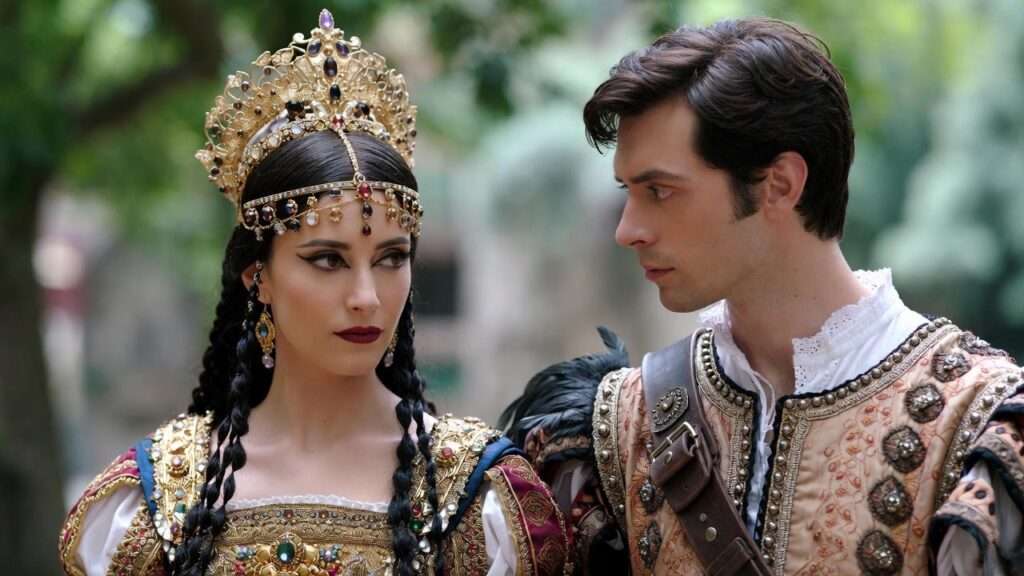
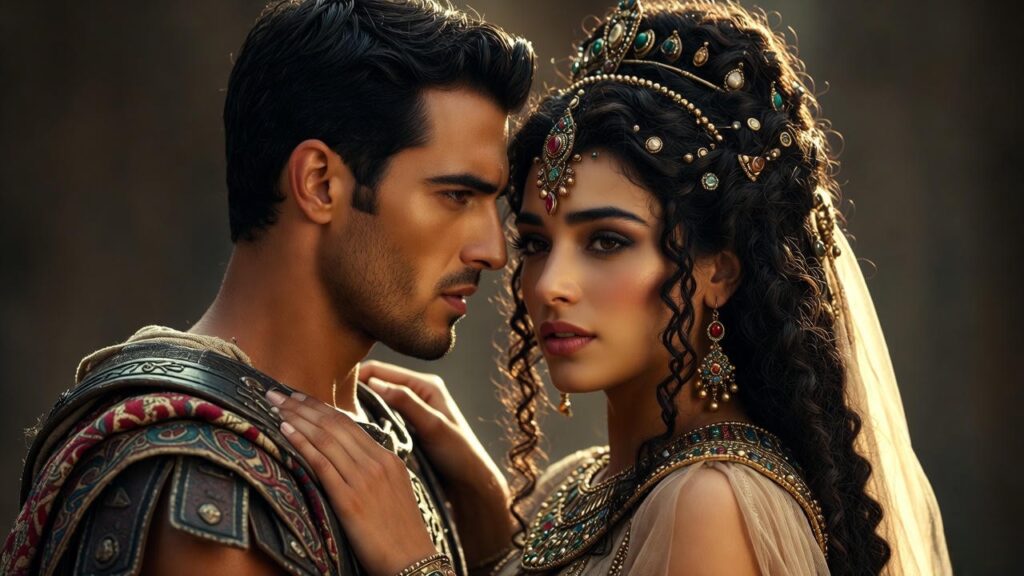
Sumptuous Costumes and Visual Glamour Costume designer Mariah Hale crafted a “period/no period” aesthetic, blending Roman and Egyptian influences with modern flair. Cleopatra’s diaphanous, gem-toned gowns and glittering golden cloche evoked regal sensuality, while Antony’s leather-girded armor and scarlet capes highlighted his martial prowess. The contrast—fluid Egyptian silks versus structured Roman leather—visually reinforced the cultural clash, making the production feel glamorous and timeless.
Lighting and Sound Mastery Lighting designer Andrew F. Griffin differentiated worlds masterfully: Rome appeared cold, austere, and shadowed, while Alexandria glowed warm and inviting. Sound designer Adam Stamper added evocative layers, from battle echoes to sensual undertones, enhancing the play’s rhythmic shifts.
Movement and Choreography Movement director Michele Osherow (noted in production materials) infused battles with dance-like fluidity and Egyptian scenes with “snake-like” grace—relaxed, serpentine motions contrasting Rome’s stiff discipline. This physicality made abstract themes visceral, turning politics into embodied passion.
These elements combined to create a visually indulgent, sensorially rich experience that critics praised as “sumptuous” and “electrifying.”
Standout Performances – Bringing the Legendary Lovers to Life
At the heart of any successful Antony and Cleopatra lies the chemistry between its titular characters. The Folger Theatre’s 2017 production delivered one of the most compelling pairings in recent memory.
Shirine Babb as Cleopatra Shirine Babb, making her third appearance in the role across different companies, delivered what many critics described as a career-defining performance. Babb’s Cleopatra was neither a one-dimensional seductress nor a manipulative caricature. Instead, she presented a fiercely intelligent, sexually confident, politically astute queen who was also deeply vulnerable. Reviewers repeatedly noted her ability to shift registers—from playful teasing in early scenes to raw grief in the final acts—while maintaining an almost magnetic stage presence.
Her physicality was particularly striking in the in-the-round setting. Babb used every inch of the circular stage, gliding, reclining, and commanding attention with serpentine grace. Her costumes—flowing silks in deep jewel tones, accented with gold—amplified her regal yet approachable sensuality. As one reviewer put it, Babb’s Cleopatra was “infinite in variety,” capturing Shakespeare’s description perfectly while adding layers of modern psychological depth.
Cody Nickell as Mark Antony Opposite her stood Cody Nickell, whose Antony was equal parts bombastic warrior and tragic romantic. Nickell excelled at portraying the character’s internal divisions: the loyal Roman soldier torn between duty to Octavius and devotion to Cleopatra. His Antony roared in battle scenes, yet crumbled in moments of private despair, particularly during the devastating “All is lost!” sequence.
The chemistry between Babb and Nickell was electric. Their quarrels felt contemporary—sharp, playful, and painfully real—while their reconciliations carried genuine tenderness. Critics praised how the actors made the lovers’ volatility feel earned rather than melodramatic, turning potentially overwrought moments into deeply human ones.
Supporting Cast Highlights The ensemble was uniformly strong, with several performances deserving special mention:
- Nigel Gore as Enobarbus delivered one of the production’s most moving moments with the famous “barge” speech, his loyalty and eventual betrayal rendered with heartbreaking clarity.
- Dylan Paul as Octavius Caesar provided a chilling counterpoint—cold, calculating, and utterly devoid of the passion that doomed Antony and Cleopatra.
- The versatile ensemble (including actors doubling in multiple roles) handled the play’s rapid scene changes with seamless precision, reinforcing the sense of a world in constant motion.
Together, these performances transformed a notoriously difficult text into an emotionally gripping evening of theater.
Critical Reception and Lasting Impact
The 2017 Folger production received overwhelmingly positive notices, with reviewers across Washington, D.C., hailing it as one of the year’s standout Shakespeare offerings.
- DC Theatre Scene called it “a sizzling love affair… the play cooks,” praising the intimacy and passion.
- The Washington Post noted that the “glamour amps up” the production, successfully bridging the play’s structural gulfs.
- DC Theater Arts described an “exhilarating evening of theater,” highlighting the visual splendor and strong performances.
- MD Theatre Guide and Whisk + Quill both used words like “exquisite” and “electrifying,” recommending it highly.
Critics particularly appreciated how Richmond made a play often considered “unstageable” feel urgent and accessible. In a city steeped in political intrigue, the production’s exploration of power, loyalty, betrayal, and the personal costs of leadership resonated deeply.
Its legacy endures as one of the most innovative and emotionally satisfying recent stagings of Antony and Cleopatra. It demonstrated that with thoughtful direction, bold design, and fearless performances, even Shakespeare’s most challenging tragedies can feel immediate, glamorous, and profoundly moving.
Themes and Insights – What This Production Revealed About the Play
By foregrounding the central romance, Robert Richmond illuminated several key themes in fresh ways:
- Love versus Empire The production made painfully clear that Antony and Cleopatra’s passion was not merely a distraction from politics—it was their politics. Their relationship became an act of rebellion against Roman order, and their eventual downfall felt like the inevitable price of choosing desire over dominion.
- East versus West The visual and aural contrasts between Rome (austere, masculine, disciplined) and Egypt (sensual, feminine, fluid) were stark yet never cartoonish. Cleopatra’s world was not portrayed as decadent excess but as a legitimate alternative value system—one that Rome feared and ultimately crushed.
- Cleopatra’s Agency and Complexity Shirine Babb’s performance powerfully refuted centuries of misogynistic readings that reduce Cleopatra to a temptress. Here she was a shrewd political actor, a grieving mother, a grieving lover, and finally a woman who chose the manner of her death—asserting control even in defeat.
- Modern Resonance In 2017, amid debates over leadership, celebrity culture, and the collision of public and private lives, the play felt eerily contemporary. Antony and Cleopatra could be seen as the ultimate power couple—flawed, magnetic, and ultimately doomed by their refusal to conform.
Behind the Scenes – Production Notes and Fun Facts
Bringing Antony and Cleopatra to the Folger stage required meticulous planning, creative problem-solving, and a deep respect for both the text and the theater’s unique architecture.
- Textual Choices and Condensation Director Robert Richmond and dramaturg Michele Osherow trimmed the script slightly—most noticeably by streamlining some of the battle sequences and messenger scenes—to keep the running time around 2 hours and 45 minutes (with intermission). The goal was never to simplify Shakespeare but to maintain momentum and focus on the emotional core of the lovers’ relationship.
- Rehearsal Insights Shirine Babb shared in pre-production interviews that the cast spent significant time exploring Cleopatra’s “infinite variety”—working on how to show her intelligence, humor, rage, and tenderness without ever making her feel inconsistent. Cody Nickell described the challenge of playing Antony as “trying to hold two opposing magnets together”: the Roman stoic and the besotted lover.
- In-the-Round Challenges and Rewards The circular configuration meant no traditional “upstage” or “downstage”—actors had to remain aware of all four sides at all times. This created both risks (an actor could have their back to a large portion of the audience) and rewards (moments of direct eye contact that intensified emotional beats). Richmond used blocking that kept the lovers frequently center-stage during key scenes, ensuring maximum visibility.
- Fun Production Trivia
- The golden cloche Cleopatra wears in several scenes was custom-made and weighed several pounds—Babb joked that it helped her “feel the weight of queenship.”
- The production team drew inspiration from both ancient Roman frescoes and mid-20th-century Hollywood epics (think Elizabeth Taylor’s 1963 film) to inform the glamorous aesthetic.
- Audience members occasionally found themselves inches from dramatic moments—such as Cleopatra’s final “asp” scene—creating an almost voyeuristic intensity.
These behind-the-scenes details reveal how much craft, collaboration, and courage went into making a notoriously difficult play feel immediate and alive.
Key Takeaways – Why This Production Matters for Shakespeare Lovers Today
The Folger Theatre’s 2017 Antony and Cleopatra remains a benchmark revival for several compelling reasons:
- Intimacy Amplified Emotion The in-the-round staging turned abstract tragedy into a deeply personal experience—viewers weren’t just watching history; they were witnessing a relationship unravel in real time.
- Glamour Made the Ancient Story Vivid Sumptuous costumes, evocative lighting, and sensual movement reminded audiences that Shakespeare could be visually stunning without sacrificing textual depth.
- Performances Offered Fresh Interpretations Shirine Babb and Cody Nickell gave us a Cleopatra and Antony who felt psychologically modern—flawed, passionate, and painfully human—while remaining true to Shakespeare’s language.
- Proof That the Play Is Stageable and Thrilling Many companies shy away from Antony and Cleopatra due to its reputation. This production demonstrated that, with vision and skill, it can be one of the most rewarding Shakespeare experiences.
For anyone studying the play, teaching it, or simply loving great theater, this staging offers a powerful reminder that Shakespeare’s late tragedies still have the capacity to surprise, move, and provoke.
Tips for Readers
- Read the play alongside Enobarbus’s barge speech (Act 2, Scene 2) to appreciate how richly Shakespeare paints Cleopatra’s allure.
- Watch the 1972 film version with Charlton Heston and Hildegard Neil for a contrasting, more cinematic take.
- Explore other intimate Shakespeare productions (e.g., the Donmar Warehouse’s all-female Julius Caesar or the Almeida’s Antony and Cleopatra with Ralph Fiennes and Sophie Okonedo) to see how different directors handle scale and space.
Frequently Asked Questions (FAQs)
What was unique about the Folger Theatre’s 2017 Antony and Cleopatra? The in-the-round staging created extraordinary intimacy, the production prioritized the central romance over political sprawl, and the design team delivered a visually glamorous interpretation that made the play feel fresh and accessible.
Who played Cleopatra and Antony in the 2017 Folger production? Cleopatra was portrayed by Shirine Babb, and Mark Antony by Cody Nickell. Both performances were widely praised for their depth, chemistry, and emotional range.
Is Antony and Cleopatra Shakespeare’s best love story? Many scholars and theatergoers argue it is his most complex and mature exploration of romantic passion—more psychologically layered than Romeo and Juliet and more politically entangled than Othello. Its tragic inevitability and sensuous poetry make it uniquely powerful.
Where can I read or watch reviews of this production? Key reviews appeared in The Washington Post, DC Theatre Scene, DC Theater Arts, MD Theatre Guide, and Whisk + Quill. Archival photos and select clips may still be available on the Folger Shakespeare Library’s website or production-related social media archives.
Has the Folger staged Antony and Cleopatra since 2017? As of early 2026, no. The Folger continues to produce a wide range of Shakespeare works, but Antony and Cleopatra has not returned to their mainstage since this acclaimed run.
The Folger Theatre’s 2017 production of Antony and Cleopatra remains a luminous example of what happens when bold vision meets masterful execution. By embracing the play’s sensuality, intimacy, and emotional extremes, director Robert Richmond, designers Tony Cisek, Mariah Hale, Andrew F. Griffin, and Adam Stamper, and actors Shirine Babb and Cody Nickell created something rare: a Shakespeare tragedy that felt glamorous, urgent, and deeply human.
In an era still wrestling with the collision of private desire and public power, this staging offered not just entertainment but insight. It reminded us why Antony and Cleopatra endures—because even emperors and queens cannot escape the gravitational pull of love, nor the consequences of surrendering to it.
Whether you’re a longtime Shakespeare devotee revisiting the text, a theater lover seeking inspiration from past productions, or a curious newcomer drawn to stories of passion and ruin, the 2017 Folger revival stands as a glittering invitation to experience one of the Bard’s greatest works in full, vivid color.
If this deep dive has sparked your interest, explore more Shakespeare insights here on the blog—perhaps our analyses of Cleopatra’s character arc, comparisons of major stagings, or the political resonances of Shakespeare’s Roman plays. Share your thoughts in the comments: Have you seen Antony and Cleopatra on stage? What production lingers in your memory?