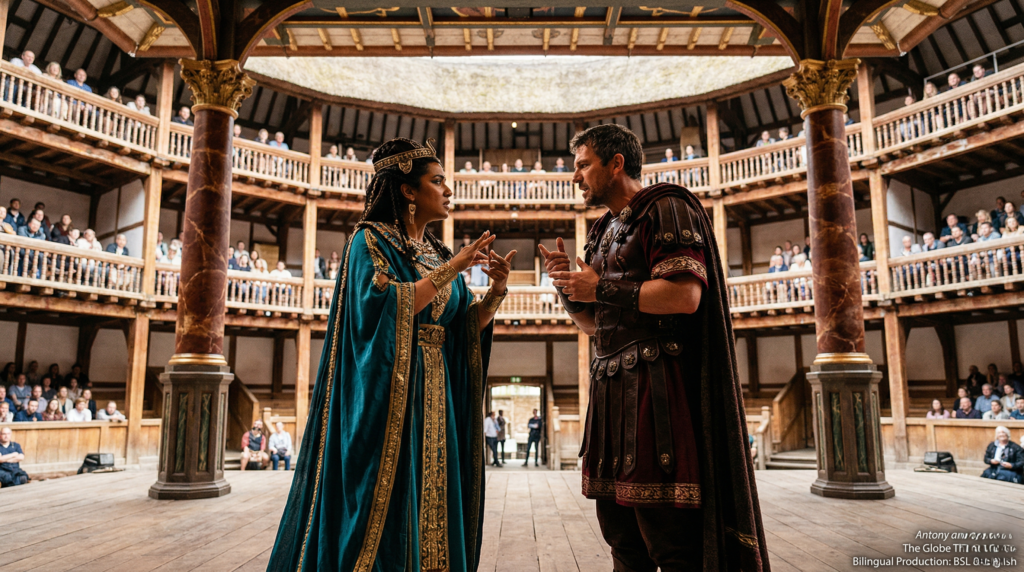
Imagine the wooden O of Shakespeare’s Globe Theatre pulsing with life as Cleopatra’s hands carve “Eternity was in our lips and eyes” into the air in flowing British Sign Language (BSL), while Mark Antony answers in resonant spoken English. The audience leans forward, captivated by a love story that literally bridges worlds. This was the magic of Antony and Cleopatra at the Globe in its groundbreaking 2024 run — the first major revival in a decade and the first full bilingual (Spoken English + BSL) staging in the theatre’s history.
Whether you missed the sold-out summer season, are a student dissecting the text for an essay, a theater lover seeking accessible Shakespeare, or simply someone fascinated by how the Globe continues to reinvent the Bard, this comprehensive guide delivers exactly what you need. You’ll discover the revolutionary staging choices that made the tragedy feel urgent and intimate, detailed performance breakdowns, theme analysis enriched by the bilingual concept, and practical ways to experience the production today on Globe Player. Backed by official Globe sources, director interviews, and leading reviews, this article goes deeper than any existing coverage to help you truly understand why this production is already being studied as a landmark in inclusive Shakespeare.
The 2024 Production at Shakespeare’s Globe – A Historic Return After Ten Years
After a decade-long absence (the previous Globe staging was in 2014 with Clive Wood and Eve Best), Antony and Cleopatra returned to Bankside from 4 August to 15 September 2024. Directed by Blanche McIntyre with Associate Director Charlotte Arrowsmith, the production ran for 2 hours 45 minutes and quickly sold out, proving the enduring draw of Shakespeare’s epic tale of passion, politics, and empire.
The creative team was exceptional: designer Simon Daw created a stunning visual contrast between Rome and Egypt; fight and intimacy directors Rachel Bown-Williams and Ruth Cooper-Brown of Rc-Annie brought visceral energy; and BSL specialists including Consultant Daryl Jackson, Coach Adam Bassett, and Caption Co-Designers Ben Glover and Sarah Readman ensured the bilingual experiment was both authentic and accessible. The full cast featured John Hollingworth as Mark Antony, Nadia Nadarajah as Cleopatra, Daniel Millar as Domitius Enobarbus, Bert Seymour as Octavius Caesar, Zoë McWhinney as Charmian, and a strong ensemble doubling multiple roles.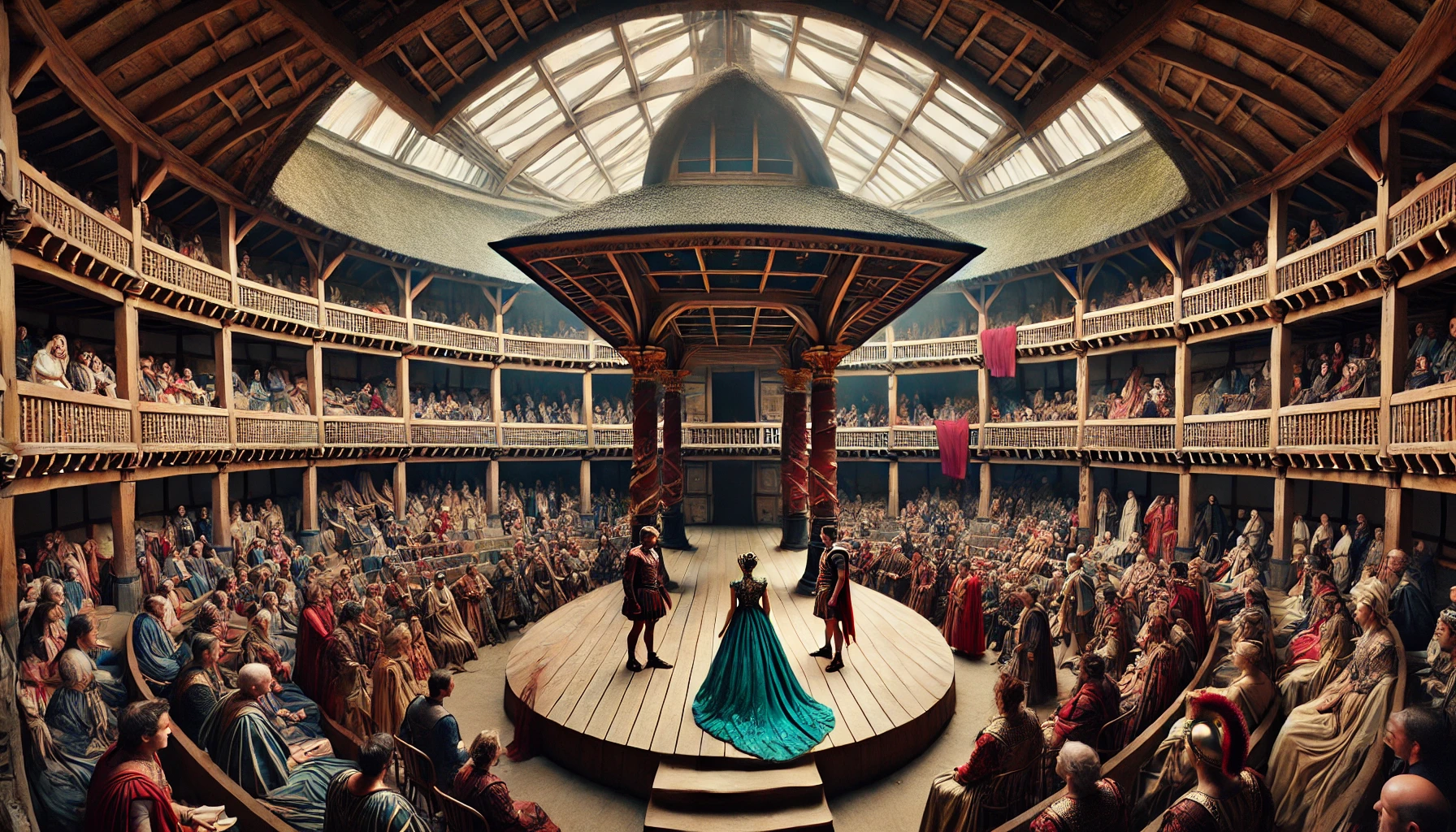
Director Blanche McIntyre captured the essence perfectly: “I like ‘a love that changed the world’… two flawed people… throw away kingdoms for their love.” Associate Director Charlotte Arrowsmith added her profoundly deaf perspective: “Antony and Cleopatra are twin flames… when they communicate, they make sure their hearts are being seen, and not just heard.” These insights shaped a production that treated the cultural clash between Rome and Egypt as a literal language barrier — a decision that elevated the tragedy beyond traditional stagings.
The show is now permanently available to stream on Globe Player (released 2025), fully captioned and ready for repeat viewings worldwide. This availability solves a real problem for global audiences who couldn’t travel to London or secure tickets during the limited run.
The Revolutionary Bilingual Staging – How BSL and Spoken English Transformed the Tragedy
The Language Divide That Mirrors the Cultural Clash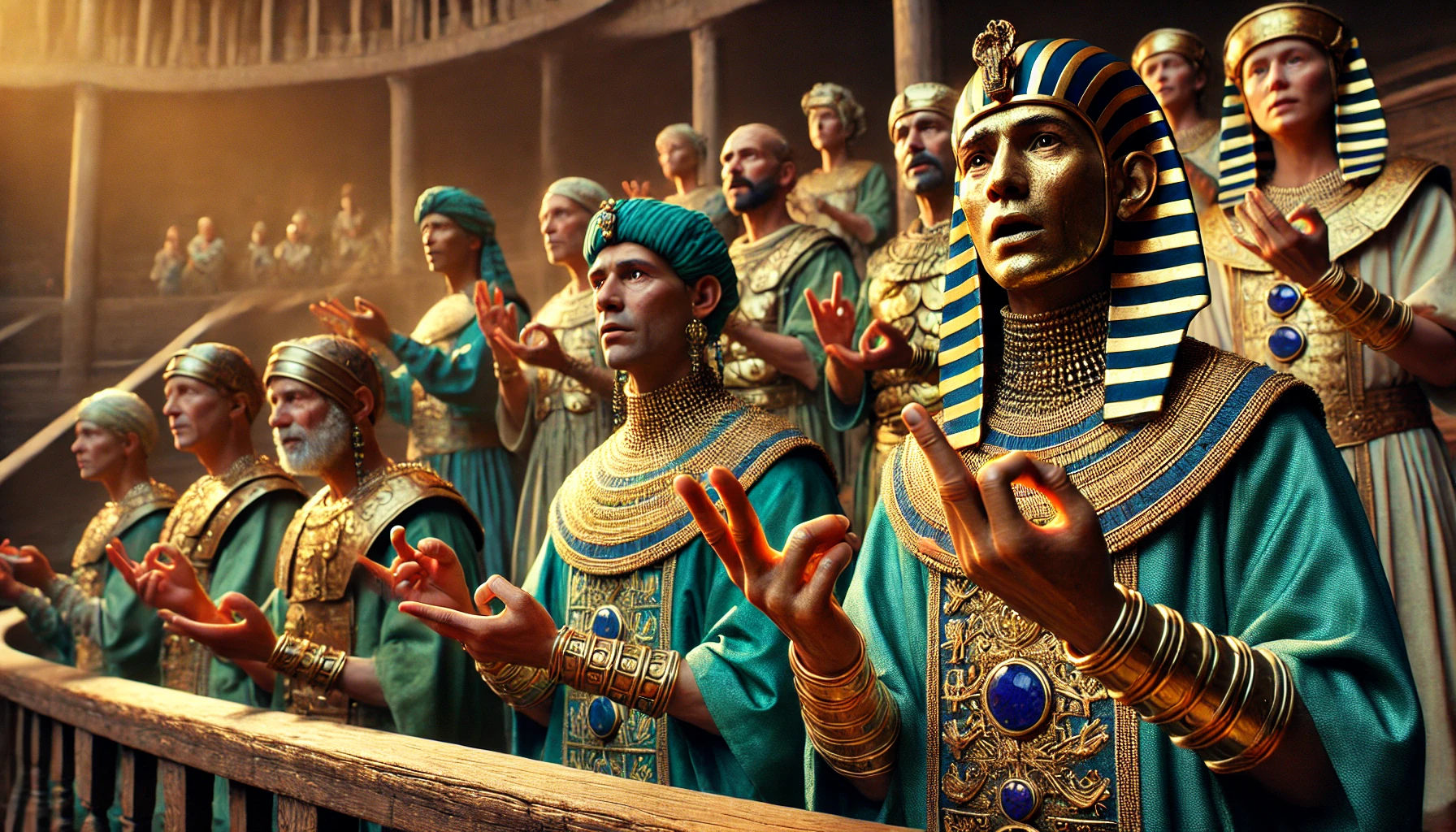
In a stroke of genius, McIntyre and Arrowsmith assigned spoken English to the Romans and BSL to Cleopatra’s Egyptian court. Some scenes were performed entirely in one language; others layered both simultaneously. This wasn’t gimmickry — it was theatrical revelation.
Romans barked orders in crisp English, embodying their “young, macho, emotionally repressed” empire. Egyptians signed with fluid, expressive BSL, reflecting an “ancient, gender-equal, emotionally direct” culture. When Antony crossed into Egypt, he sometimes signed intimate lines to Cleopatra while still speaking to his Roman officers — a visual metaphor for his torn loyalties.
Critics immediately noticed the power. The Guardian observed that BSL gave “physical shape to Shakespeare’s language… frequently lending clarity to character and further depth to description.” One memorable moment: the Soothsayer’s prophecy became serpentine and visceral as William Grint’s hands created a forked-tongue image around Charmian’s throat. Double entendres gained extra layers when a messenger signed a cheeky gesture while speaking.
Accessibility Breakthroughs That Set a New Standard
This production didn’t just include BSL — it centered it. Full captioning appeared on multiple screens around the Globe (with different fonts for Rome vs. Egypt to aid visual navigation). A Visual Story resource, character BSL name guide, and relaxed performances made the show genuinely inclusive for deaf, disabled, and neurodivergent audiences.
The result? Subtitles were praised as “not distracting” and offered “a strong case for permanent visual aids in theatre.” For the first time, many hearing audience members experienced Shakespeare primarily through visual storytelling — exactly as deaf viewers always have. This solves a long-standing problem in classical theater: how to make 400-year-old language feel immediate and equitable.
Practical Impact on Staging and Audience Experience
The Globe’s circular yard and galleries amplified the bilingual effect. Standing in the yard allowed movement to catch both signs and captions; seated galleries offered clear sightlines to the multiple screens. Stage blood, choreography, and audience interaction took on new dimensions when performed in two languages simultaneously.
The production proved that bilingual Shakespeare isn’t a niche experiment — it’s the future. As Arrowsmith noted from her lived experience as a profoundly deaf BSL user, “A bilingual world is the goal, where everyone adapts equally.”
Timeless Themes Illuminated Like Never Before
Love That Defies Empire – Antony and Cleopatra’s Passionate Power Struggle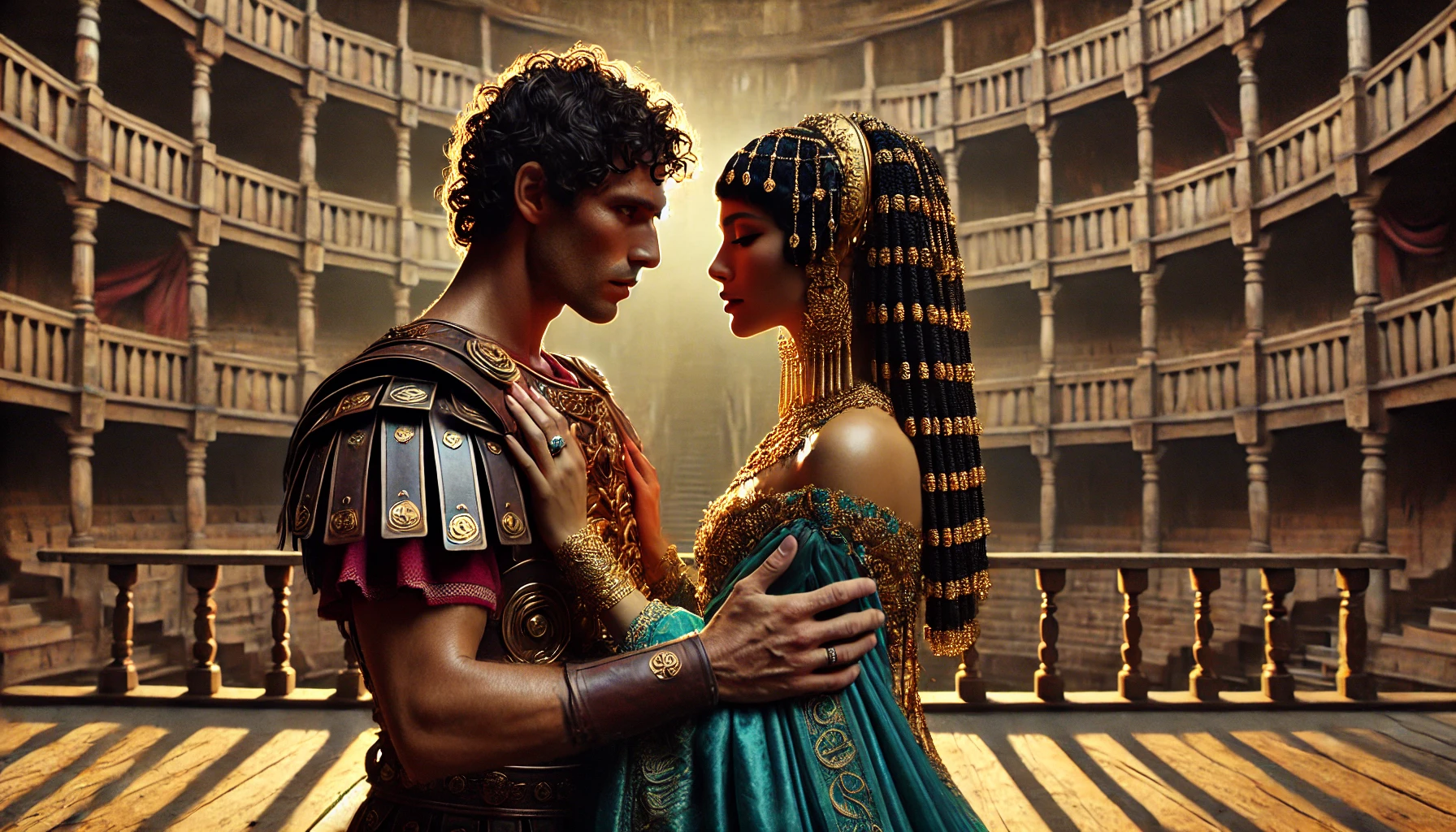
Shakespeare’s central lovers are defined by excess: “Let Rome in Tiber melt, and the wide arch / Of the ranged empire fall!” Antony declares. The bilingual staging made their obsession tangible. When Nadia Nadarajah signed Cleopatra’s most sensual lines while John Hollingworth spoke Antony’s responses, the physicality of BSL amplified the text’s erotic charge. Hands brushing air became caresses; prolonged eye contact during signed dialogue underscored “infinite variety.”
The barge speech — Enobarbus’s famous description of Cleopatra on the Cydnus — gained new layers when the women of the Egyptian court signed along in chorus, turning a male Roman’s memory into a collective, feminine vision. The result was a love story that felt dangerously alive, not merely historical.
Power, Duty, and the Fall of Two Worlds
The production made the political divide literal. Rome’s cold, measured English contrasted sharply with Egypt’s expressive, gestural BSL. Octavius Caesar (Bert Seymour) delivered clipped, strategic speeches in English while Cleopatra’s court responded with sweeping, emotional signs. This staging choice highlighted Shakespeare’s core tension: the masculine, rational West versus the feminine, sensual East.
Enobarbus’s betrayal and eventual suicide became even more heartbreaking when his final soliloquy was spoken in English against the silent, signing grief of the Egyptian women. Critics noted that “the production belongs to the women” — Charmian, Iras, and Cleopatra’s attendants carried emotional weight that traditional stagings often underplay.
Modern Parallels – Empire, Misogyny, and Cultural Conflict Today
In 2026, the production’s themes resonate powerfully. Antony’s refusal to choose between personal desire and imperial duty mirrors contemporary debates about leadership and personal integrity. Cleopatra’s portrayal as a powerful, sexually autonomous woman who is nonetheless vilified by Roman propaganda feels strikingly current in discussions of misogyny and media framing. The bilingual staging itself speaks to today’s conversations about cultural inclusion, accessibility, and the ethics of “translating” one culture through another’s lens.
Standout Performances That Define the Production
Nadia Nadarajah’s Groundbreaking Cleopatra – Regal, Obsessive, Revolutionary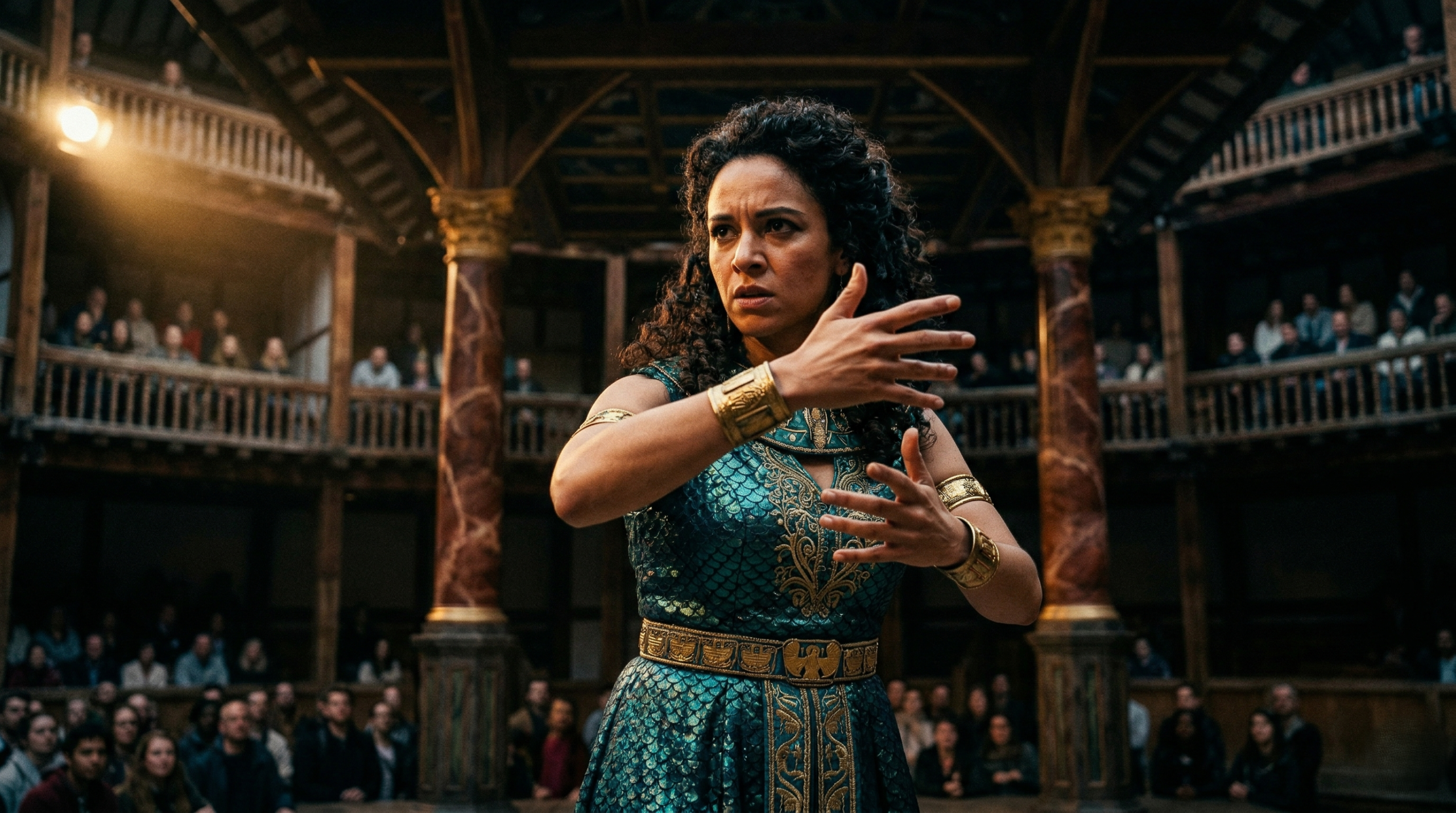
Nadia Nadarajah became the first deaf actress to play Cleopatra at the Globe — and arguably the most compelling in recent memory. Her BSL was not translation but performance: regal flourishes when commanding, tender curves when seducing, furious slashes when enraged. The Stage called her “truly excellent,” while Broadway World praised the “cleverly constructed bilingual epic” she anchored.
Her physicality brought new depth to Cleopatra’s “infinite variety.” Every gesture was deliberate, turning Shakespeare’s poetry into a living, breathing language of power and vulnerability.
John Hollingworth’s Mark Antony and the Supporting Cast
John Hollingworth’s Antony was torn, passionate, and convincingly world-weary. His chemistry with Nadarajah crackled, especially in the moments he switched between spoken English and halting, learned BSL — a visual representation of his divided soul.
Supporting standouts included Daniel Millar’s Enobarbus (whose barge speech was both lyrical and devastating), Bert Seymour’s icy Octavius, and Zoë McWhinney’s fiercely loyal Charmian. The ensemble’s cross-language training created seamless interplay that felt organic rather than forced.
Directorial Vision and the Globe’s Unique Playing Space
Blanche McIntyre’s direction was described as “thrillingly radical” (Evening Standard). She embraced the Globe’s original-practices ethos — daylight, groundlings, direct audience address — while layering modern accessibility. The circular stage became a perfect metaphor for the lovers’ orbit around each other, with BSL adding a third spatial dimension to the performance.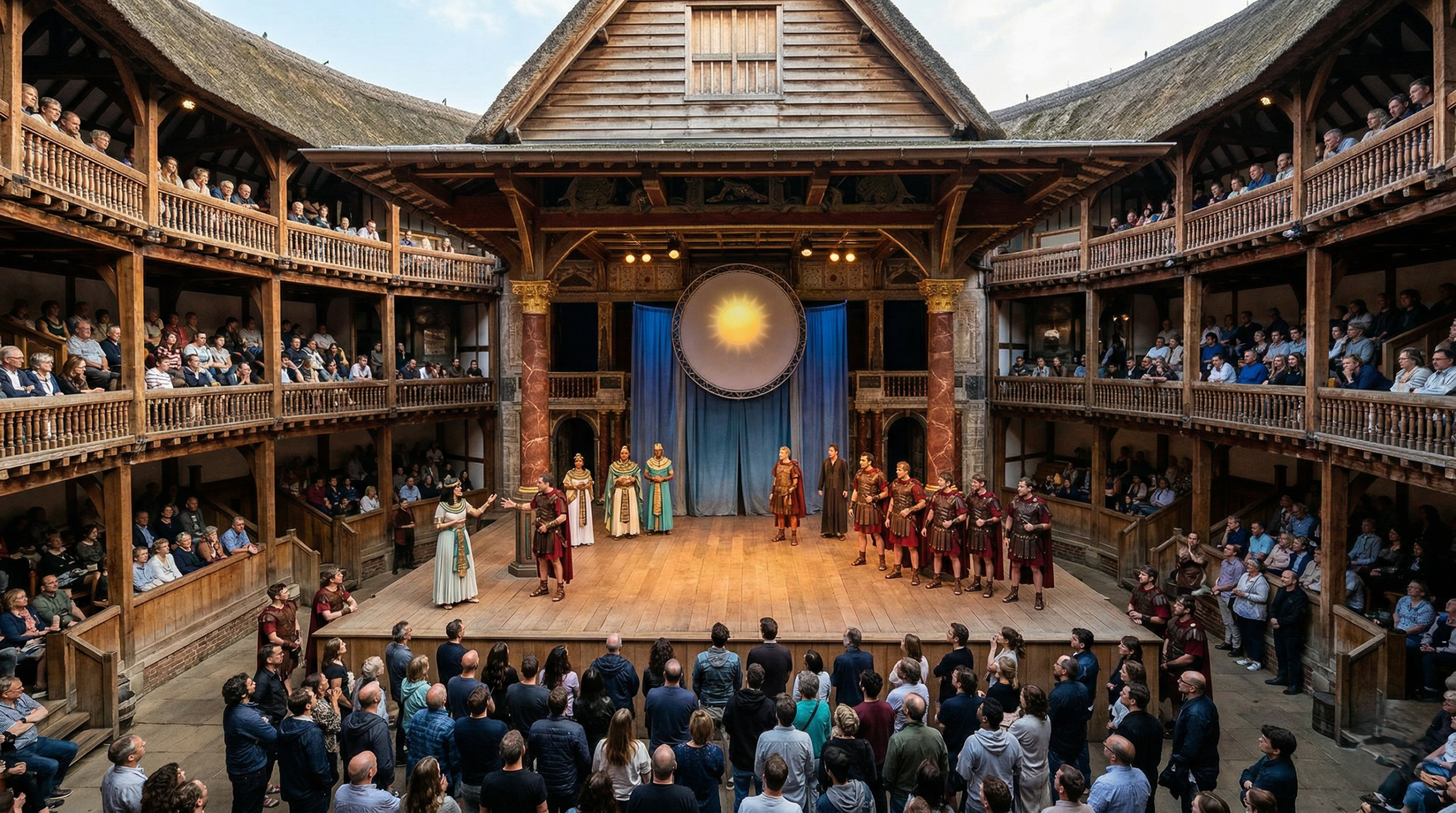
Compared with earlier Globe productions (the 1999 all-male version and the 2014 heterosexual pairing), the 2024 staging stands apart for its inclusivity and visual storytelling. The bilingual approach turned a potential limitation (two languages) into the production’s greatest strength.
Lessons for Today – What This Production Teaches Actors, Students, and Theater Lovers
- For actors: Train in both spoken and signed delivery. Physicality becomes as important as vocal tone; eye contact replaces vocal inflection in signed scenes.
- For students: Key scenes for essays include III.ii (the barge speech), IV.xv (Cleopatra’s monument scene), and V.ii (the final suicide). Analyze how BSL changes emotional delivery compared with spoken-only versions.
- For theater-goers: Prepare by reading a BSL glossary of key Shakespeare terms. Arrive early for yard standing to follow both languages easily.
How to Experience Antony and Cleopatra at the Globe Right Now
The production is available on Globe Player with full captions, audio description options, and bonus content including post-show talks. Purchase grants permanent access, making it ideal for repeated study or classroom use. Check the official Shakespeare’s Globe website for the latest access schemes and relaxed performance recordings.
Frequently Asked Questions (FAQ)
Was the entire play performed in BSL? No. Romans spoke English; Egyptians signed BSL. Many scenes featured both languages simultaneously for dramatic effect.
How does the bilingual version differ from traditional stagings? It makes the Rome–Egypt cultural clash literal through language. BSL adds physical and emotional depth, especially to Cleopatra’s character and the women’s roles.
Is the Globe Player recording captioned and accessible? Yes — full captions, audio description, and BSL interpretation options are included.
Who should watch this production? Anyone interested in Shakespeare, accessibility in theater, deaf performance, or fresh interpretations of classic texts.
Will there be another bilingual Shakespeare at the Globe? Given the critical and audience success, future bilingual productions are highly likely.
How long is the runtime and are there intervals? 2 hours 45 minutes including one interval.
Antony and Cleopatra at the Globe in 2024 was more than a revival — it was a reimagining that made a 400-year-old tragedy speak directly to contemporary concerns about love, power, empire, and inclusion. By centering BSL and making accessibility structural rather than additive, Blanche McIntyre, Charlotte Arrowsmith, Nadia Nadarajah, and the company created a landmark production that will influence Shakespeare performance for decades.
Stream it on Globe Player today, revisit the text with fresh eyes, and discover why this version of Antony and Cleopatra at the Globe is already considered essential viewing for anyone who cares about the living, breathing future of Shakespeare’s work.