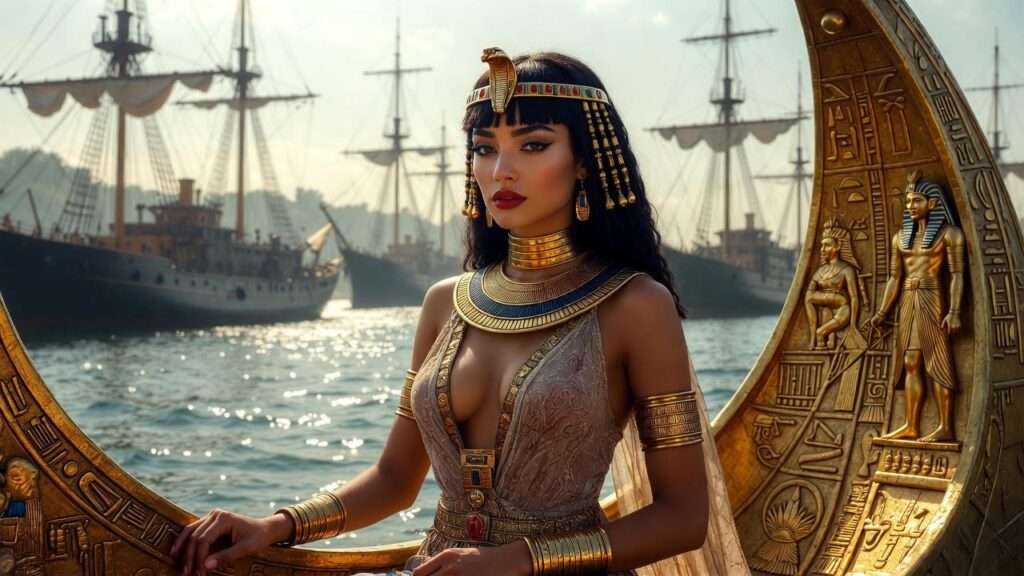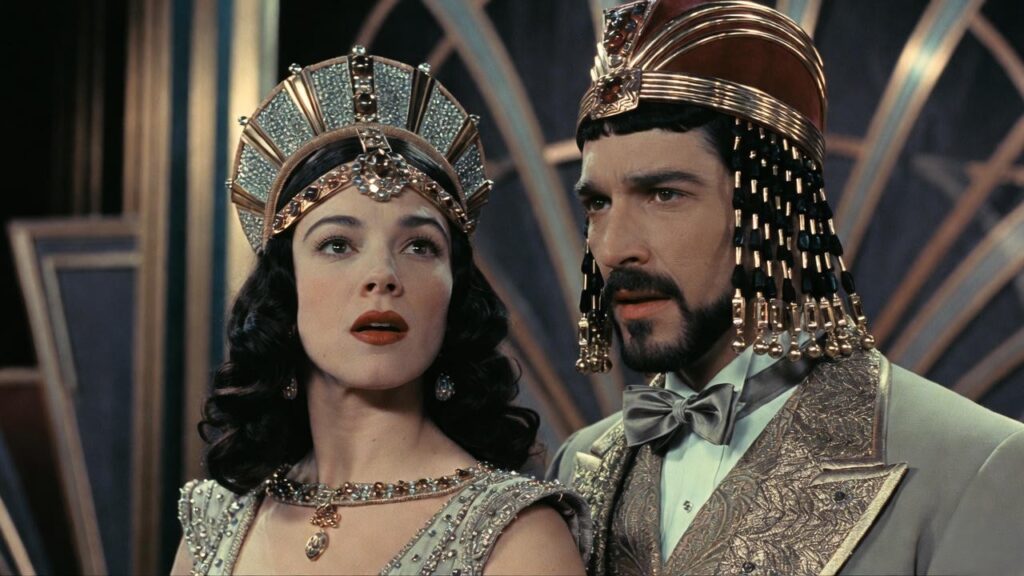
Imagine the intoxicating passion of Shakespeare’s Mark Antony and Cleopatra—their epic romance amid the clash of empires, a tale of love, power, betrayal, and tragic downfall—brought to vivid life through pulsating contemporary music. In May 2025, the Metropolitan Opera premiered John Adams’s bold new opera Antony and Cleopatra, with the composer conducting, soprano Julia Bullock as the mesmerizing Cleopatra, and bass-baritone Gerald Finley as the tormented Antony. This production bridges the Bard’s timeless verse with Adams’s signature minimalism, set against a glamorous 1930s Hollywood backdrop, offering fresh perspectives on ambition, desire, and legacy that feel strikingly relevant today.
For Shakespeare enthusiasts wondering how the play’s profound psychological depth translates to the operatic stage, or opera lovers curious about Adams’s evolution beyond works like Nixon in China and Doctor Atomic, this landmark production delivers a compelling reimagining. Drawing directly from Shakespeare’s text while incorporating classical sources, Adams crafts a fast-paced, emotionally charged score that honors the original tragedy’s complexity.
Overview of the Metropolitan Opera Production
John Adams’s Antony and Cleopatra marked its highly anticipated Met premiere on May 12, 2025, running through June 7 as part of the 2024-25 season. This co-commissioned work, originally premiered at San Francisco Opera in 2022 and later in Barcelona, arrived in New York with revisions that tightened the pacing while preserving its grandeur.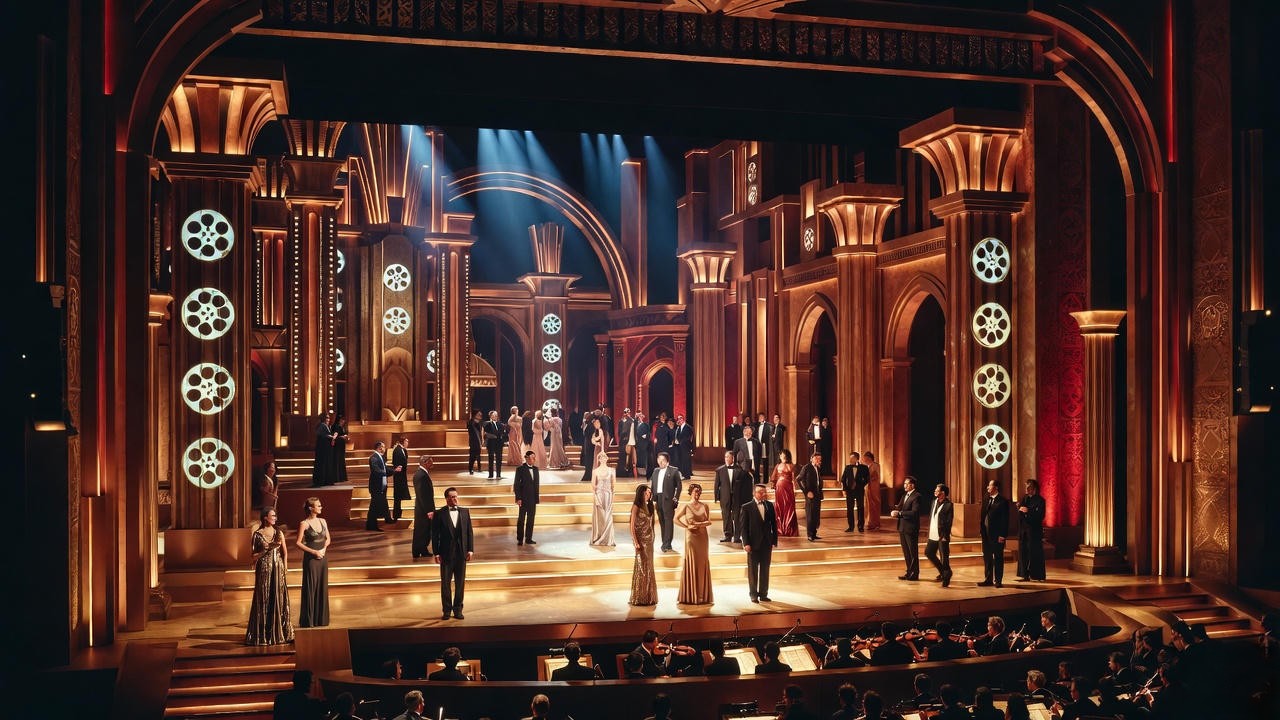
Premiere Details and Creative Team
Adams conducted the Metropolitan Opera Orchestra himself, infusing the score with precision and energy. Director Elkhanah Pulitzer, making her Met debut, collaborated closely on the libretto alongside dramaturg Lucia Scheckner. The team included set designer Mimi Lien, costume designer Constance Hoffman, lighting designer David Finn, projection designer Bill Morrison, and choreographer Annie-B Parson.
Setting: From Ancient Rome and Egypt to 1930s Hollywood Glamour
Pulitzer transports the ancient story to a stylized 1930s Hollywood-inspired world, evoking Golden Age cinema’s glamour and propaganda. Art Deco elements, slinky gowns, newsreel-style projections, and fascist-era aesthetics highlight themes of mediated power, celebrity culture, and image construction. Bill Morrison’s projections blend historic footage with new video, underscoring parallels between imperial spectacle and modern media manipulation.
Cast Highlights: Julia Bullock, Gerald Finley, and Supporting Roles
Julia Bullock delivered a poised yet volatile Cleopatra, her dark-centered soprano capturing the queen’s “infinite variety.” Gerald Finley portrayed a robust, emotionally frayed Antony. Supporting roles shone with tenor Paul Appleby as the chillingly ambitious Caesar (Octavius), mezzo-soprano Elizabeth DeShong as the forsaken Octavia, bass-baritone Alfred Walker as Enobarbus, and mezzo-soprano Taylor Raven as Charmian.
John Adams’s Adaptation: From Shakespeare’s Play to Operatic Libretto
Adams crafted the libretto himself, consulting Pulitzer and Scheckner, marking a departure from his earlier collaborations with Peter Sellars.
Key Structural Changes – Condensing Five Acts into Two
Shakespeare’s sprawling five-act play with 42 scenes and numerous locations becomes a taut two-act opera lasting around three hours. Adams trims minor subplots and secondary characters to focus relentlessly on the central triangle of Antony, Cleopatra, and Caesar, eliminating distractions while retaining the core dramatic momentum.
Libretto Choices: Retaining Shakespearean Verse with Classical Supplements
The text stays remarkably faithful to Shakespeare’s language—over 80% drawn directly from the play—supplemented by passages from Plutarch’s Lives, Virgil’s Aeneid, and other classical sources that influenced Shakespeare himself. This preserves the Elizabethan cadences, rhetorical flourishes, and psychological nuance, though some critics noted challenges in intelligibility when dense verse is sung rapidly.
Musical Style – Adams’s Signature Minimalism Meets Shakespearean Rhythm
Adams eschews traditional arias and set pieces in favor of continuous, propulsive declamation that follows the natural rhythms of Shakespeare’s iambic pentameter. The orchestra provides rich harmonic textures, explosive rhythmic outbursts, and subtle emotional undercurrents, evolving his minimalist style toward greater lyricism and dramatic immediacy than in earlier works.
Plot Synopsis: Parallels and Divergences from Shakespeare’s Original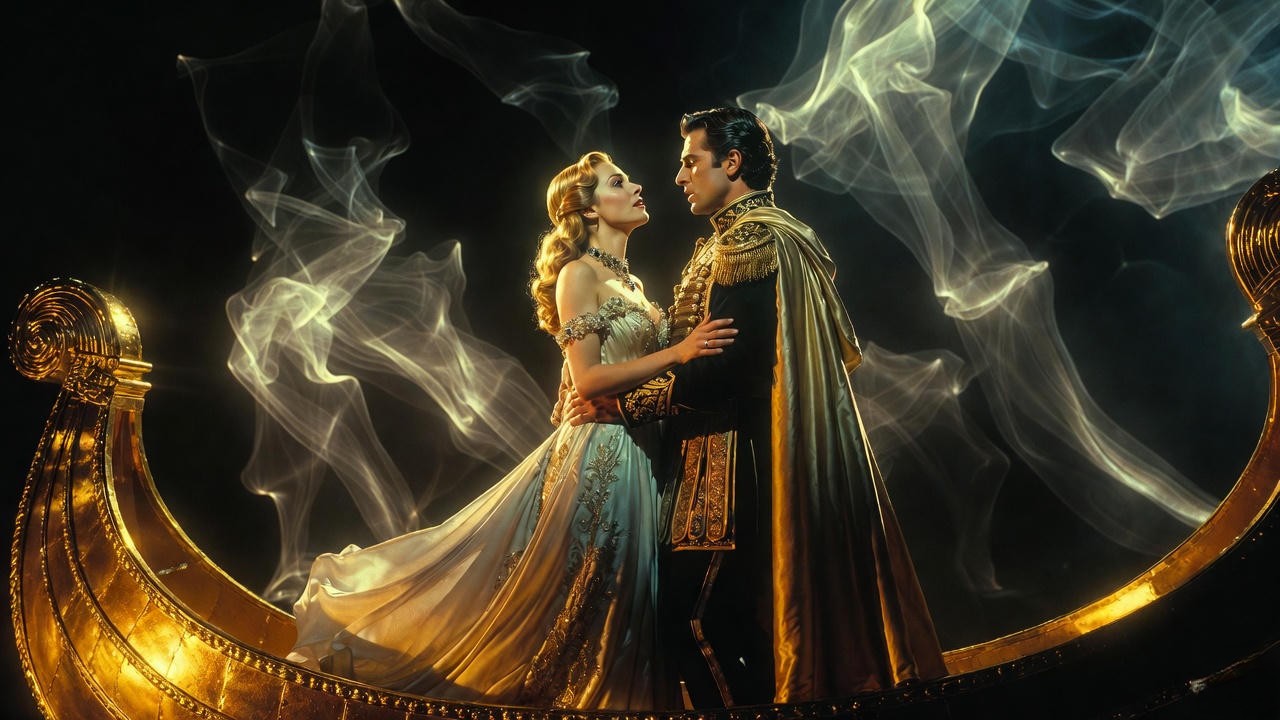
Adams’s opera closely follows Shakespeare’s narrative arc but condenses it for dramatic flow and musical continuity.
Act I – Passion in Alexandria and Political Intrigue in Rome
The opera opens directly in Cleopatra’s Alexandria bedroom, plunging the audience into the lovers’ intimate banter and erotic play. News of Fulvia’s death pulls Antony back to Rome, where he forms the Second Triumvirate with Octavius Caesar and Lepidus. To seal political alliances, Antony marries Caesar’s sister Octavia—a decision that enrages Cleopatra back in Egypt. Enobarbus’s famous description of Cleopatra on her golden barge remains one of the dramatic and musical highlights.
Act II – War, Betrayal, and Tragic Ends
Tensions escalate as Antony abandons Octavia and returns to Cleopatra, prompting Caesar to declare war. The disastrous Battle of Actium is evoked through orchestral turmoil and projections rather than staged combat. Blaming Cleopatra for the defeat, Antony descends into despair. His botched suicide attempt and Cleopatra’s monumental death by asp follow in rapid, devastating succession, ending with her visionary aspiration toward immortality.
Side-by-Side Comparison Table: Major Scenes in Play vs. Opera
| Scene/Event | Shakespeare’s Play | Adams’s Opera |
|---|---|---|
| Opening in Alexandria | Philo and Demetrius critique Antony’s dotage | Direct plunge into lovers’ intimacy |
| Enobarbus’s barge description | Extended monologue (Act 2, Scene 2) | Retained almost verbatim, with musical highlighting |
| Antony’s marriage to Octavia | Detailed political maneuvering in Rome | Condensed, emphasizing emotional betrayal |
| Battle of Actium | Reported offstage through messengers | Orchestral evocation with dramatic projections |
| Antony’s suicide | Prolonged, multiple attempts | Streamlined for tragic momentum |
| Cleopatra’s death | Extended monument scene with multiple characters | Focused on queen’s final grandeur and vision |
This compression intensifies the personal-political clash that lies at the heart of Shakespeare’s tragedy.
Character Analysis Through Shakespeare’s Lens
Adams’s musical setting and Pulitzer’s direction amplify Shakespeare’s psychologically complex portrayals.
Cleopatra: Infinite Variety in Voice and Drama (Focus on Julia Bullock’s Portrayal)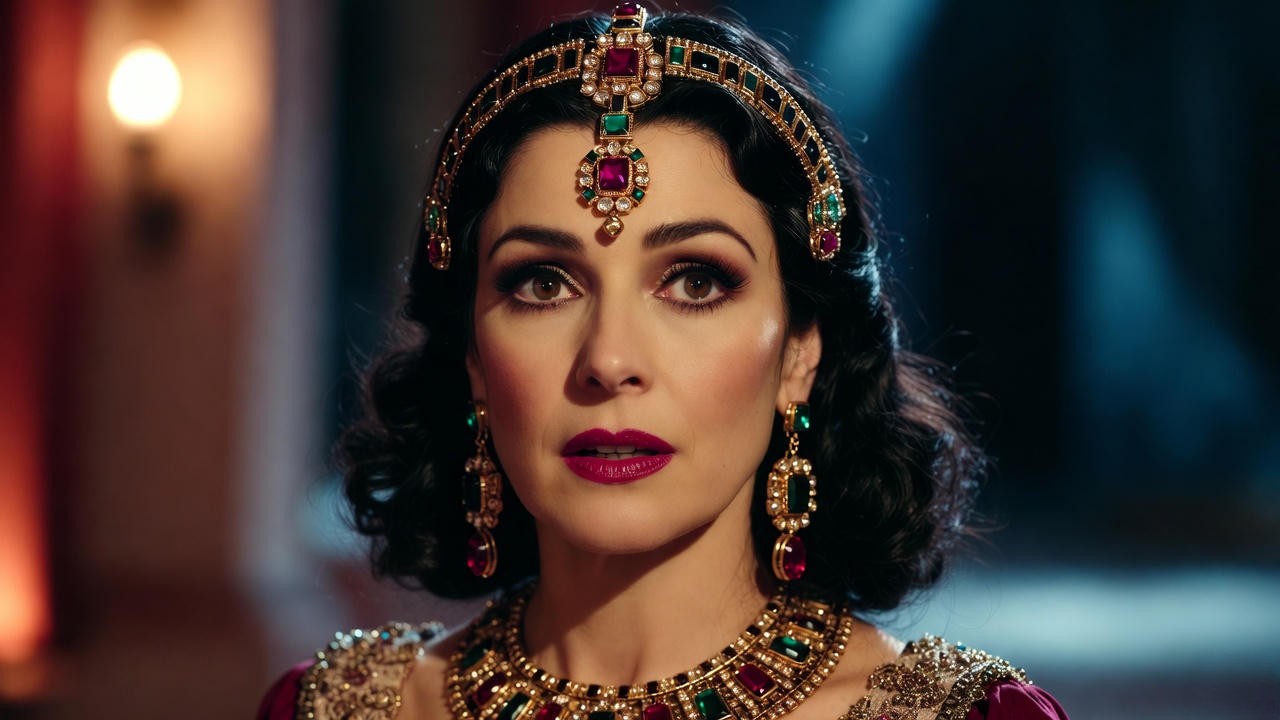
Shakespeare’s Cleopatra is one of literature’s most enigmatic figures—seductive, manipulative, theatrical, and profoundly intelligent. Julia Bullock embodied this “infinite variety” with superb diction, dramatic intelligence, and a voice that shifted effortlessly from sultry warmth to piercing urgency in the upper register, navigating the queen’s volatility, regal poise, and ultimate transcendence.
Mark Antony: The Fall of a Hero (Gerald Finley’s Interpretation)
Antony represents the tragic archetype of the divided hero—torn between Roman duty and Egyptian passion. Gerald Finley’s robust, burnished bass-baritone conveyed both the general’s former glory and his emotional unraveling, moving from authoritative command to self-pitying despair with heartbreaking conviction.
Octavius Caesar: The Rise of Empire (Paul Appleby’s Chilling Ambition)
In contrast to the lovers’ excess, Caesar embodies cold calculation and inevitable imperial order. Paul Appleby’s bright, focused tenor brought chilling restraint and growing menace, particularly in crowd scenes where he manipulates public opinion.
Supporting Characters: Enobarbus, Octavia, and the Role of the Chorus
Alfred Walker’s Enobarbus provided loyal yet clear-eyed commentary on events; Elizabeth DeShong’s Octavia highlighted the human cost of political expediency. The chorus, drawn from Roman soldiers and Egyptian attendants, evoked the shifting tides of public spectacle and allegiance.
Themes Explored – Timeless Shakespearean Insights in Adams’s Score
Adams’s music deepens and modernizes Shakespeare’s enduring explorations.
Love vs. Duty: The Personal Cost of Power
The lovers’ all-consuming passion systematically undermines their political responsibilities, mirrored in the orchestra’s tension between lyrical intimacy and martial aggression.
East vs. West: Cultural Clashes and Orientalism
The 1930s Hollywood setting adds layers to Shakespeare’s already complex portrayal of cultural difference, subtly critiquing Western exoticization of the “Orient” through Cleopatra’s depiction.
Mortality and Legacy: Echoes of Plutarch and Virgil
Supplementary classical texts enhance Shakespeare’s meditations on death, fame, and immortality, particularly in Cleopatra’s final transcendent vision.
Gender and Power Dynamics in a Modern Context
Cleopatra’s agency, theatricality, and rage resonate powerfully amid contemporary discussions of female leadership and representation.
Production Elements: Staging, Design, and Direction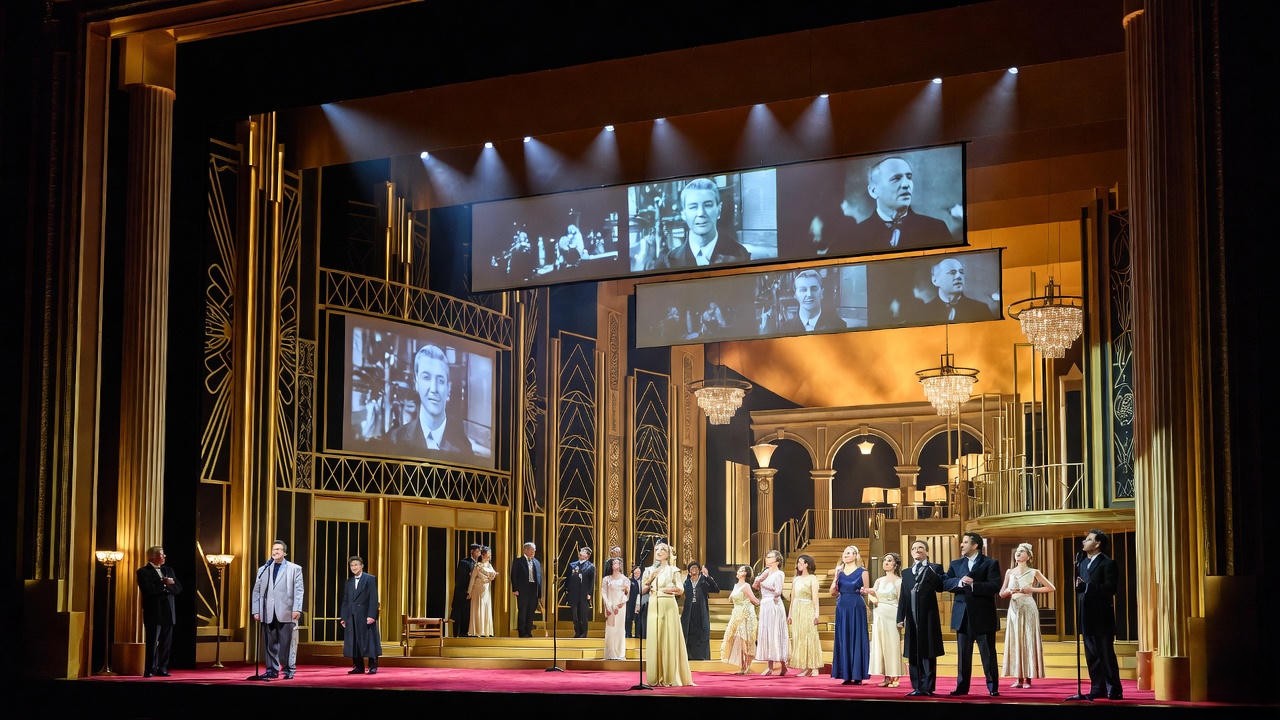
Elkhanah Pulitzer’s Vision and the 1930s Hollywood Analogy
Pulitzer’s direction emphasizes image-making, propaganda, and celebrity culture, drawing explicit parallels between ancient imperial spectacle and 20th-century fascism and Hollywood mythmaking.
Sets, Costumes, Projections, and Choreography
Mimi Lien’s versatile set opens like a camera aperture, transforming fluidly between locations. Constance Hoffman’s costumes blend ancient silhouettes with Hollywood glamour—Cleopatra in slinky bias-cut gowns, Romans in sharp suits. Bill Morrison’s projections and Annie-B Parson’s choreography add kinetic energy and period flavor.
John Adams Conducting the Met Orchestra: Orchestral Highlights
Conducting his own work, Adams elicited extraordinary precision and color from the orchestra, with churning minimalist textures giving way to explosive climaxes and tender lyricism.
Critical Reception and Expert Insights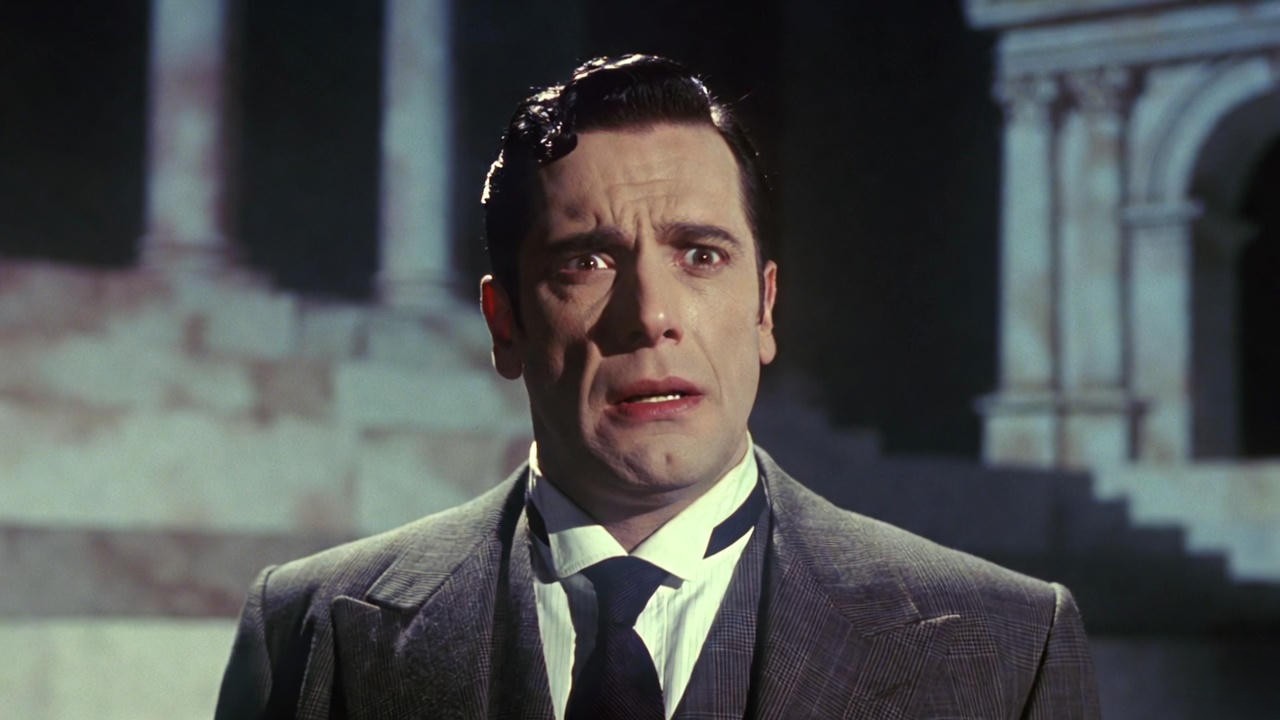
Reviews following the May 2025 premiere were predominantly positive though nuanced.
Praise for Performances and Orchestration
Critics universally lauded Bullock and Finley’s electric chemistry, Appleby’s steely Caesar, and Adams’s richly detailed, propulsive score.
Critiques: Challenges with Pacing and Dramatic Intensity
Some reviewers noted that the relentless momentum and dense text occasionally sacrificed emotional breathing room or peak dramatic contrast.
Comparison to Previous Adams Operas
Less quirky and idiosyncratic than Nixon in China or The Death of Klinghoffer, this work represents Adams’s most conventionally operatic score to date.
Historical Context: The Met’s Legacy with Antony and Cleopatra
The Met previously staged Samuel Barber’s 1966 adaptation (with Leontyne Price), which proved a notorious failure. Adams’s version demonstrates the company’s renewed commitment to contemporary opera nearly six decades later.
Why This Production Matters for Shakespeare Scholars and Opera Lovers
Bridging Theater and Opera: Enhancing Emotional Depth Through Music
Setting Shakespeare to music amplifies subtext and emotional undercurrents in ways spoken theater cannot, making familiar lines newly revelatory.
Relevance Today: Parallels to Modern Politics and Celebrity Culture
The Hollywood analogy illuminates contemporary issues of media manipulation, political spectacle, and celebrity influence.
Expert Tip: How to Appreciate Shakespearean Text in Sung Form
Listen first for overall dramatic shape and orchestral color, then focus on specific textual details in subsequent hearings or with libretto in hand.
Listening and Viewing Guide
Recommended Recordings and Broadcasts
The Metropolitan Opera’s Live in HD transmission from May 2025 remains available on demand. A commercial recording is anticipated in 2026.
Key Musical Moments to Watch For
- Opening bedroom duet between Antony and Cleopatra
- Enobarbus’s barge description
- Orchestral depiction of the Battle of Actium
- Cleopatra’s final monument scene and death
Preparing with Shakespeare’s Play: Essential Reading Excerpts
Read Act 1 for the lovers’ passion, Act 2 Scene 2 for Enobarbus’s description, and Acts 4–5 for the tragic conclusion.
Frequently Asked Questions (FAQs)
What are the main differences between Shakespeare’s play and Adams’s opera? Primarily structural: five acts condensed into two, elimination of subplots, retention of most verse with classical supplements, and continuous musical flow rather than separate arias.
Is this opera suitable for Shakespeare beginners? Absolutely—familiarity with the play enhances appreciation, but the music and drama carry the story compellingly on their own.
How does the 1930s Hollywood setting enhance the story? It underscores themes of propaganda, image construction, and celebrity while adding visual glamour and historical resonance.
Why is John Adams considered a leading adaptor of historical/literary works? His mastery in setting complex, topical texts to vivid, rhythmically vital music has produced enduring modern classics.
Where can I see or hear this production? Check the Metropolitan Opera’s on-demand streaming service or watch for future revivals and recordings.
John Adams’s Antony and Cleopatra at the Metropolitan Opera stands as a landmark achievement in contemporary opera and Shakespeare adaptation. By honoring the Bard’s linguistic richness while infusing it with urgent modern musical vitality and visual conceptualization, this production invites us to rediscover one of literature’s greatest tragedies anew. Though not without minor flaws in pacing and contrast, its stellar performances, intelligent direction, and resonant themes make it essential viewing for anyone passionate about Shakespeare, opera, or the enduring interplay between love, power, and mortality.