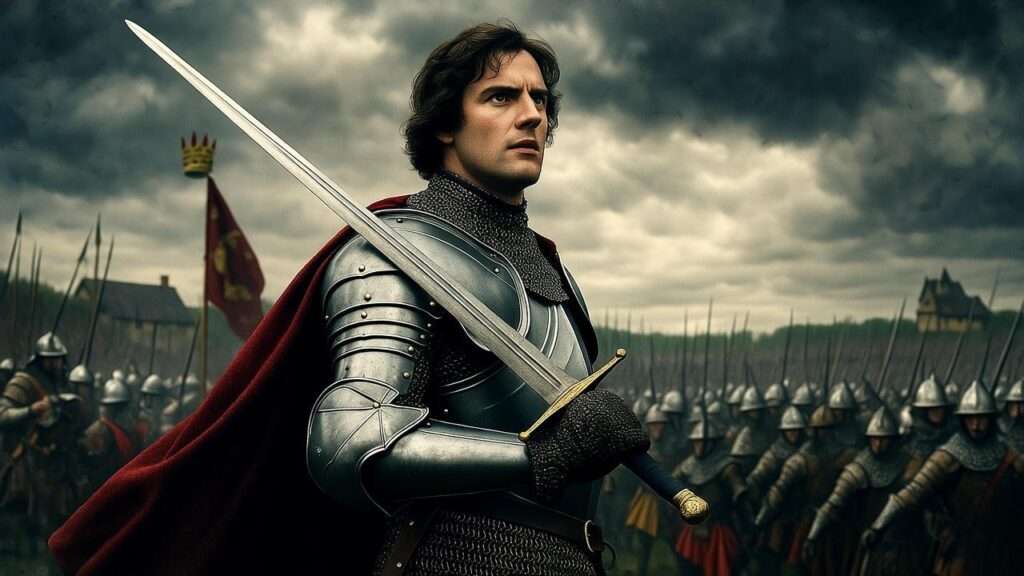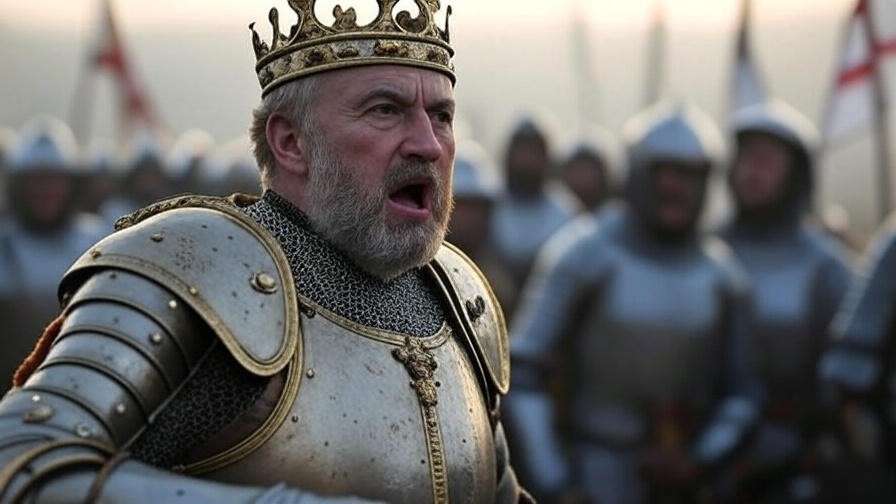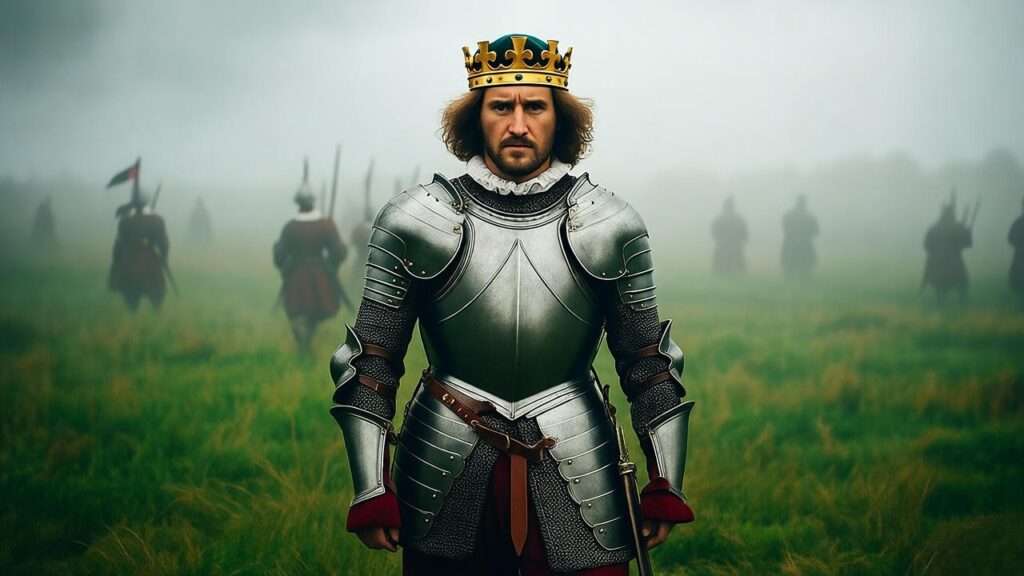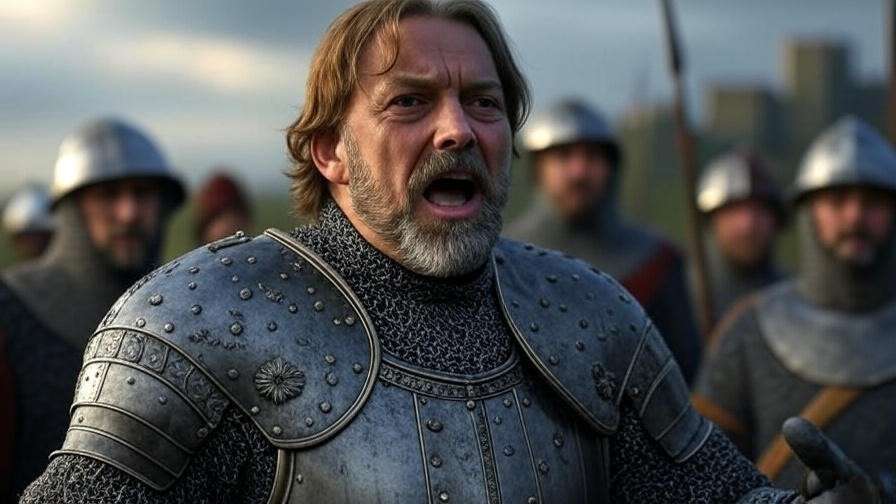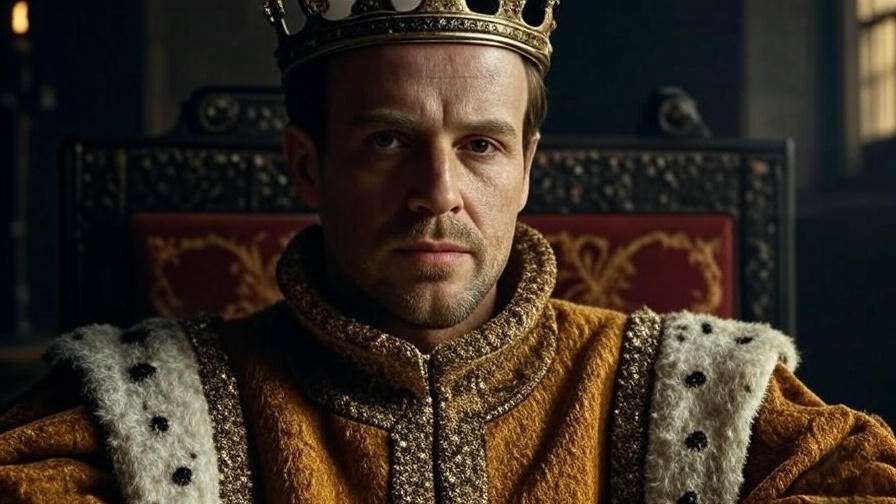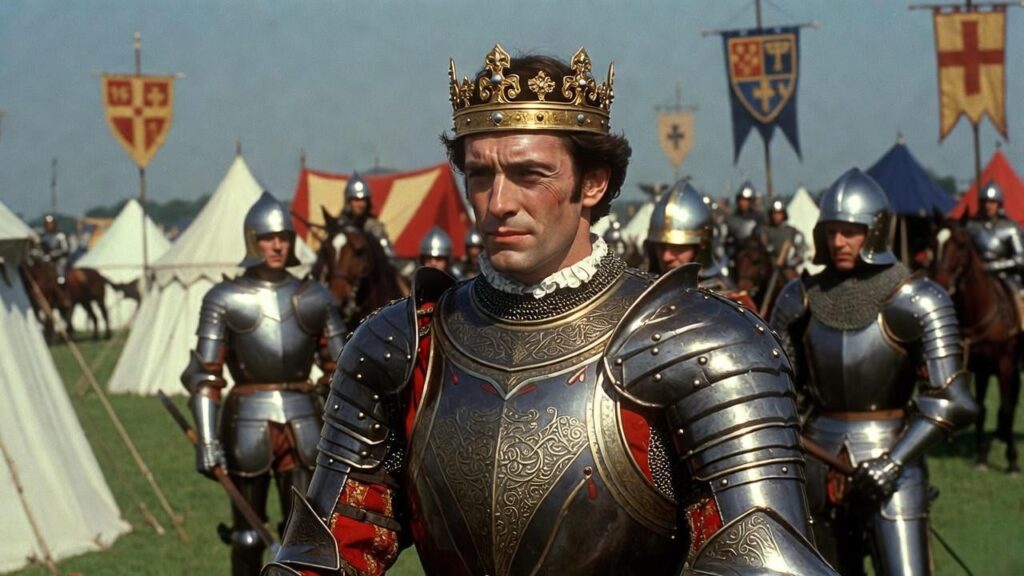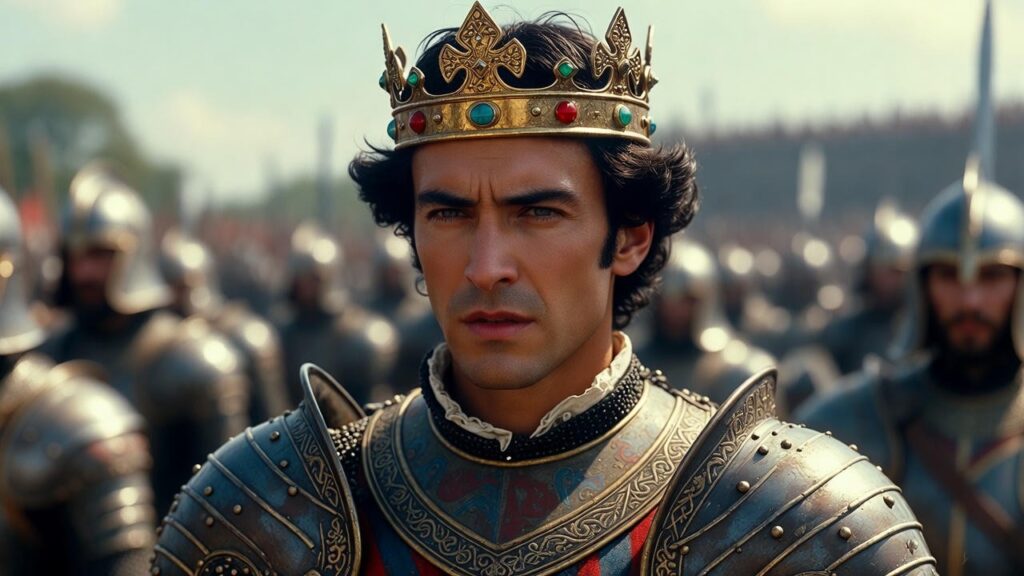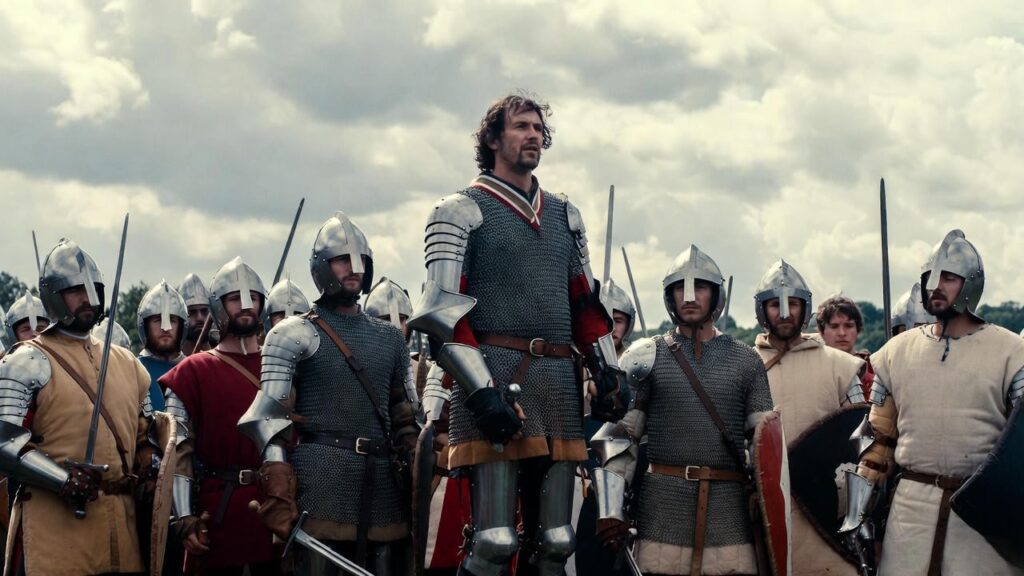
“We few, we happy few, we band of brothers; For he to-day that sheds his blood with me Shall be my brother…”
These immortal words, spoken on the eve of the Battle of Agincourt, capture the heart of William Shakespeare’s Henry V—a play that transforms a once-reckless prince into England’s most celebrated warrior-king. Whether you’re a student preparing for an exam, a theater enthusiast agearing up for a production, or a reader seeking inspiration from timeless stories of leadership, this king henry v summary offers everything you need: a detailed act-by-act breakdown, historical context, thematic analysis, iconic speeches, character insights, and modern relevance—all in one place.
Written around 1599, Henry V stands as the triumphant conclusion to Shakespeare’s second tetralogy of history plays (Richard II, Henry IV Part 1, Henry IV Part 2, and Henry V). It explores the weight of kingship, the glory and horror of war, and the power of rhetoric to unite a nation. This comprehensive guide goes beyond basic plot recaps to provide deeper scholarly insight while remaining accessible and engaging. Let us march “once more unto the breach” and discover why this play continues to inspire leaders, soldiers, and artists more than four centuries later.
The Real King Henry V: History vs. Shakespeare’s Portrait
To fully appreciate Shakespeare’s masterpiece, we must separate the historical Henry V from the dramatic hero on stage.
Who Was the Historical Henry V?
Henry of Monmouth was born in 1386 (or possibly 1387) to Henry Bolingbroke (later Henry IV) and Mary de Bohun. He became Prince of Wales after his father usurped the throne from Richard II in 1399. As a young man, Henry proved himself a capable military leader, notably defeating the Welsh rebel Owain Glyndŵr and the Percy family at Shrewsbury (1403).
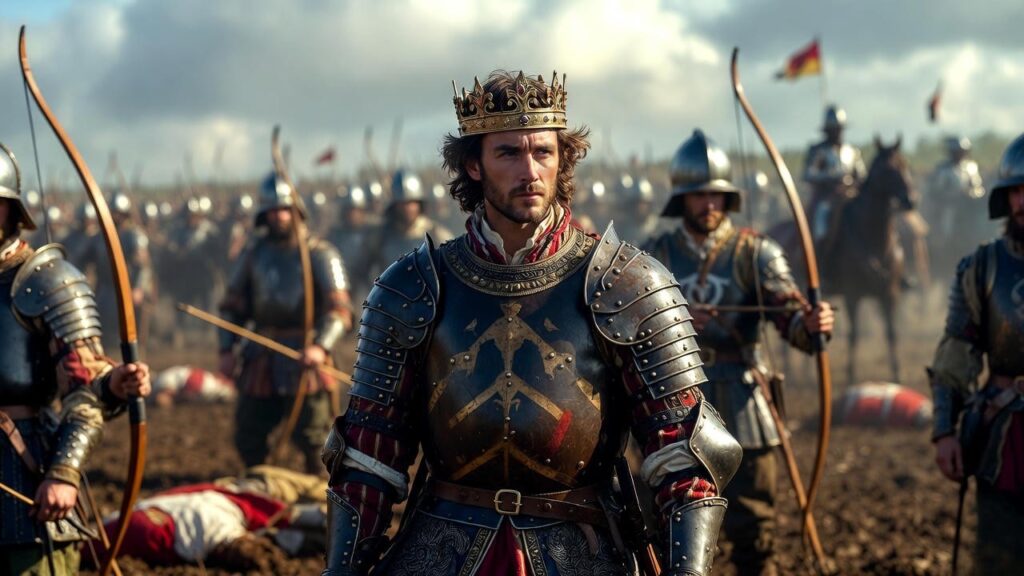
His greatest triumph came on October 25, 1415, at the Battle of Agincourt, where a vastly outnumbered English army defeated the French through superior tactics, longbow archery, and the muddy terrain that bogged down French knights. Henry went on to conquer much of Normandy, married Catherine of Valois (daughter of the French king), and was recognized as heir to the French throne under the Treaty of Troyes (1420). Tragically, he died of dysentery in 1422 at age 35, just months before he would have become king of France.
Historians debate his legacy: a brilliant strategist and pious ruler to some, a ruthless conqueror who executed prisoners and devastated French towns to others.
Shakespeare’s Main Sources
Shakespeare drew primarily from Raphael Holinshed’s Chronicles (1577/1587 edition) and Edward Hall’s The Union of the Two Noble and Illustre Families of Lancaster and York (1548). He also likely knew the anonymous play The Famous Victories of Henry the Fifth (c. 1580s), which includes early versions of the tennis-balls insult and the wooing of Princess Katherine.
Shakespeare compressed timelines, omitted inconvenient facts (such as Henry’s harsh reprisals), and idealized the king to create a near-mythic national hero.
Why Shakespeare Wrote Henry V in 1599
The play was composed during a wave of Elizabethan patriotism. England faced threats from Spain and Ireland, where the Earl of Essex led a troubled campaign against Hugh O’Neill. Many scholars believe the Chorus’s praise of a returning general in Act 5 alludes hopefully to Essex (though he returned in disgrace later that year). The new Globe Theatre had just opened, and a rousing patriotic drama was perfect for the moment.
Complete King Henry V Summary – Act by Act Breakdown
Prologue and Act 1: The Young King’s Transformation
The play opens with a Chorus—a single speaker who apologizes for the limitations of the stage and begs the audience to use their imagination: “O for a Muse of fire, that would ascend / The brightest heaven of invention…”
We meet the newly crowned Henry V, advised by the Archbishop of Canterbury and Bishop of Ely. They fear a bill that would seize church lands, so they encourage Henry’s claim to the French throne via the obscure Salic Law. Canterbury delivers a lengthy genealogical justification, concluding Henry has a legitimate right to France.
Henry asks whether he may claim the crown “with right and conscience.” Assured yes, he prepares for war—until the French Dauphin sends a mocking gift: tennis balls, implying the English king is still the frivolous youth of his past.
Henry’s response is chillingly resolute:
“We are glad the Dauphin is so pleasant with us; His present and your pains we thank you for: When we have match’d our rackets to these balls, We will in France, by God’s grace, play a set Shall strike his father’s crown into the hazard.”
The act ends with the revelation of a treasonous plot (funded by France) involving three nobles: Cambridge, Scroop, and Grey.
Act 2: Intrigue, Betrayal, and Departure
Henry confronts the traitors with masterful psychological control, offering them a chance to judge a drunken railer against the king before revealing their own guilt. All three are condemned.
Meanwhile, the low-comic subplot follows the Eastcheap crew from the Henry IV plays: Pistol (now married to Mistress Quickly), Nym, Bardolph, and the Boy. We learn off-stage that Sir John Falstaff, broken-hearted after Prince Hal’s rejection, has died. Mistress Quickly’s moving eulogy is one of the play’s most poignant moments.
The Chorus describes the enthusiastic embarkation of the English fleet and the fear it strikes in France.
Act 3: The Siege of Harfleur and Moral Questions
The English lay siege to Harfleur. Henry delivers the famous rallying cry:
“Once more unto the breach, dear friends, once more; Or close the wall up with our English dead!”
Harfleur surrenders after heavy English losses from disease. Henry orders merciful treatment of civilians—a historically accurate detail that contrasts with later harshness.
We see comic scenes with Welsh captain Fluellen, Irish Macmorris, Scottish Jamy, and English Gower—highlighting unity among the four nations.
Intercut is a scene in French as Princess Katherine takes an English lesson from her lady-in-waiting, humorously struggling with words like “neck” (which sounds like a French obscenity). This foreshadows her later courtship.
Act 4: Agincourt – The Heart of the Play
The Chorus paints a vivid picture of the two camps the night before battle: confident French knights gambling for English prisoners, and weary English soldiers around campfires.
Disguised as a common soldier, Henry debates with Michael Williams and Bates about the king’s responsibility for his soldiers’ souls. Alone, he delivers a profound soliloquy on the burdens of “ceremony”—the isolating trappings of royalty.
On St. Crispin’s Day morning, Henry learns the French outnumber them five to one. Westmoreland wishes for more men, prompting the most celebrated speech in the play:
“We few, we happy few, we band of brothers…”
The battle is fought off-stage, described by the Chorus and messengers. The English victory is miraculous. In a controversial moment, Henry orders the execution of French prisoners (partly in response to the French killing English baggage boys—a historical event).
Henry modestly attributes victory to God and reads the casualty lists: thousands of French dead, only 25 English.
Act 5: Peace, Wooing, and Epilogue
The Chorus bridges four years, describing Henry’s triumphant return to London (understated on stage) and renewed campaigning.
In a charming bilingual scene, Henry woos Princess Katherine despite language barriers. His plain-spoken sincerity wins her over: “I love thee, Kate… but I cannot speak thy England.”
The treaty negotiations conclude with Burgundy’s eloquent speech on peace restoring a ravaged France. The marriage seals the Treaty of Troyes, making Henry heir to France.
The Chorus delivers a bittersweet epilogue, reminding us that Henry’s infant son Henry VI would lose France and plunge England into civil war—setting up the next cycle of history plays.
Major Themes in Henry V
Leadership and the Burden of Kingship
Henry evolves from the “madcap Prince Hal” into a model ruler: decisive, eloquent, merciful when possible, ruthless when necessary. Yet his private moments reveal doubt and loneliness.
War: Glory vs. Brutality
Shakespeare balances patriotic triumph with grim realities—disease, executions, and the common soldiers’ skepticism. The play invites audiences to question whether Agincourt’s glory justifies the cost.
National Identity and Unity
Captains from England, Wales, Scotland, and Ireland banter yet fight together. Fluellen’s pride in his Welsh heritage (and comparison of Henry to Alexander the Great) underscores a united British identity under English leadership.
Language, Rhetoric, and Power
Henry’s speeches inspire loyalty and fear. The play itself celebrates the power of words, from the Chorus’s invocations to Katherine’s language lesson symbolizing conquest through union.
The Most Iconic Speeches in Henry V
- “Once more unto the breach” (Act 3, Scene 1) A rallying cry emphasizing action over despair.
- St. Crispin’s Day Speech (Act 4, Scene 3) Transforms numerical disadvantage into eternal brotherhood and glory.
- “Upon the king” soliloquy (Act 4, Scene 1) A rare vulnerable moment exposing the isolation of power.
- Wooing of Katherine (Act 5, Scene 2) Henry drops royal rhetoric for honest, soldierly courtship.
- “O for a Muse of fire” (Prologue) The Chorus’s plea for imaginative collaboration.
Shakespeare employs anaphora, metaphor, and rhythm to make these speeches unforgettable.
Key Characters in Henry V
- King Henry V: Protagonist; charismatic, strategic, complex.
- Chorus: Narrator and commentator; bridges scenes and manages expectations.
- Fluellen: Pedantic but brave Welsh captain; comic yet honorable.
- Pistol: Boastful coward; represents the seedy underside of war.
- Princess Katherine: Intelligent and spirited; more than a mere prize.
- Michael Williams: Common soldier who challenges the king’s disguise.
- Duke of Exeter, Bedford, Gloucester: Loyal noble supporters.
Notably absent is Falstaff, whose death marks the end of Henry’s youthful escapades.
Why Henry V Still Resonates Today
The play’s exploration of leadership remains profoundly relevant. Politicians, military officers, and business executives quote the St. Crispin’s Day speech for motivation. Questions about just war, propaganda, and national unity echo in modern conflicts.
Notable adaptations include:
- Laurence Olivier’s 1944 film (made as wartime propaganda with Churchill’s encouragement).
- Kenneth Branagh’s 1989 gritty, visceral version (Branagh himself as Henry).
- The 2012 Hollow Crown series starring Tom Hiddleston, emphasizing Henry’s youth and charisma.
- Recent stage productions often highlight anti-war elements or postcolonial readings.
Frequently Asked Questions About Henry V
Is Henry V a hero or a war criminal? The play deliberately leaves this ambiguous. Shakespeare presents Henry as pious and just, yet includes moments (prisoner executions, threats to Harfleur civilians) that modern audiences find troubling.
Why is Falstaff not in the play? Falstaff died in Henry IV Part 2’s aftermath. Shakespeare originally promised his return in the epilogue of Part 2, possibly due to the actor Will Kempe leaving the company or artistic choice to show Henry’s maturation.
What is the main message of Henry V? There is no single message—rather a rich debate on leadership, war, rhetoric, and national myth-making.
How long is Shakespeare’s Henry V? The full text is approximately 3,300 lines, making it one of Shakespeare’s longest plays. Performance runtime is typically 2.5–3 hours.
Which is the best film version to watch? Branagh’s 1989 adaptation is widely regarded for its emotional depth and realism, while Olivier’s 1944 version offers stunning Technicolor spectacle.
Shakespeare’s Henry V transforms history into myth, a reckless prince into a legendary king, and a muddy battlefield into an eternal symbol of courage and brotherhood. This king henry v summary has traced that journey—from the tennis-balls insult to the Treaty of Troyes—while exploring the play’s profound questions about power, war, and identity.
Whether you now feel inspired to read the full text, watch a production, or revisit Agincourt’s history, the play’s power endures. As the Chorus reminds us, great stories live through our imagination.
What is your favorite moment or speech from Henry V? Share in the comments below, and explore more Shakespeare insights on our blog.