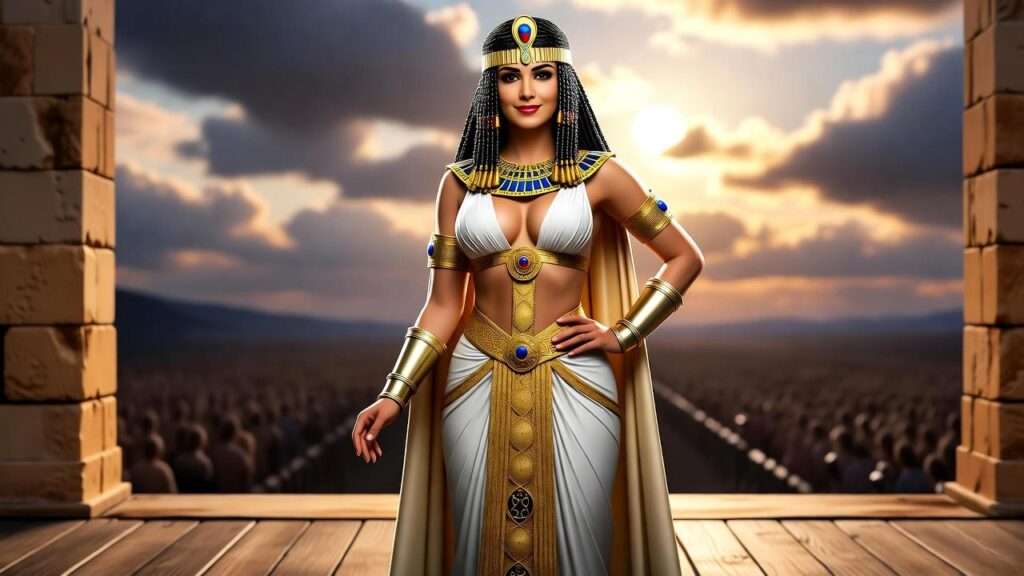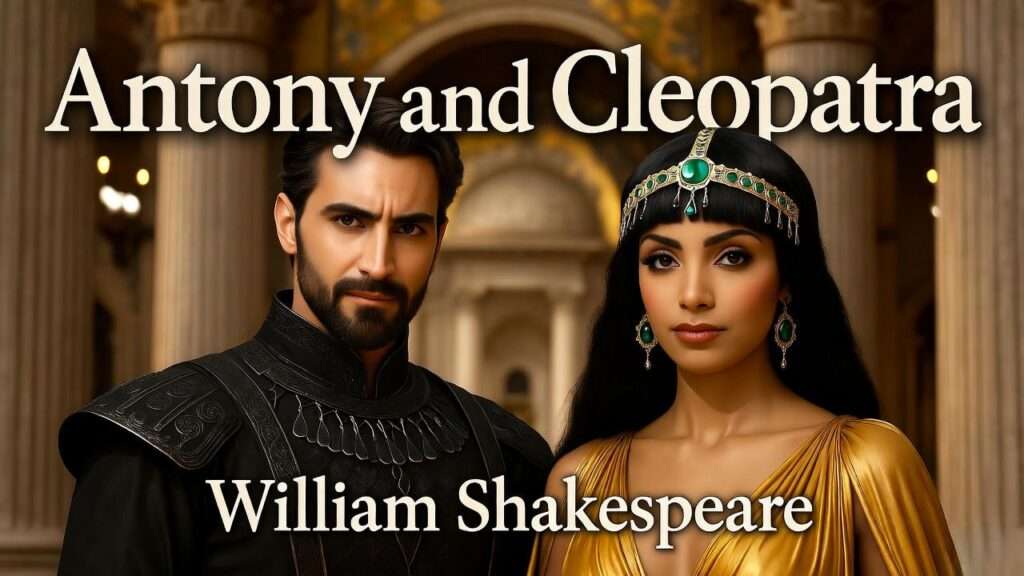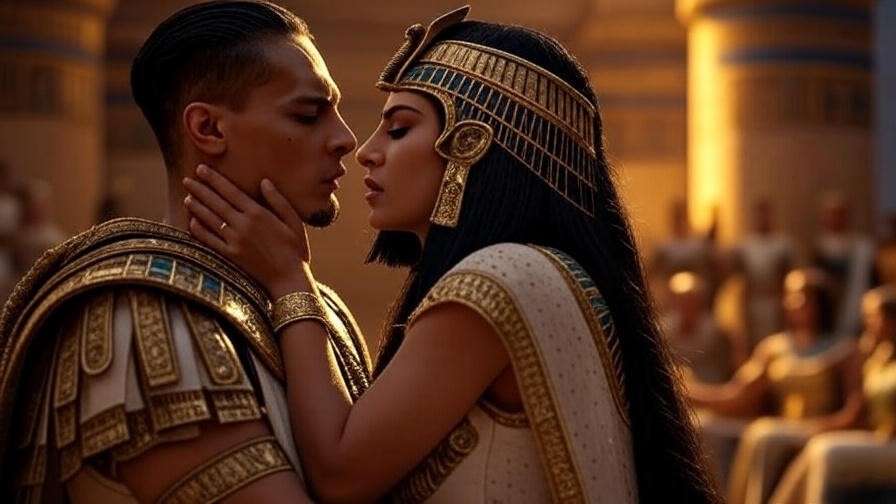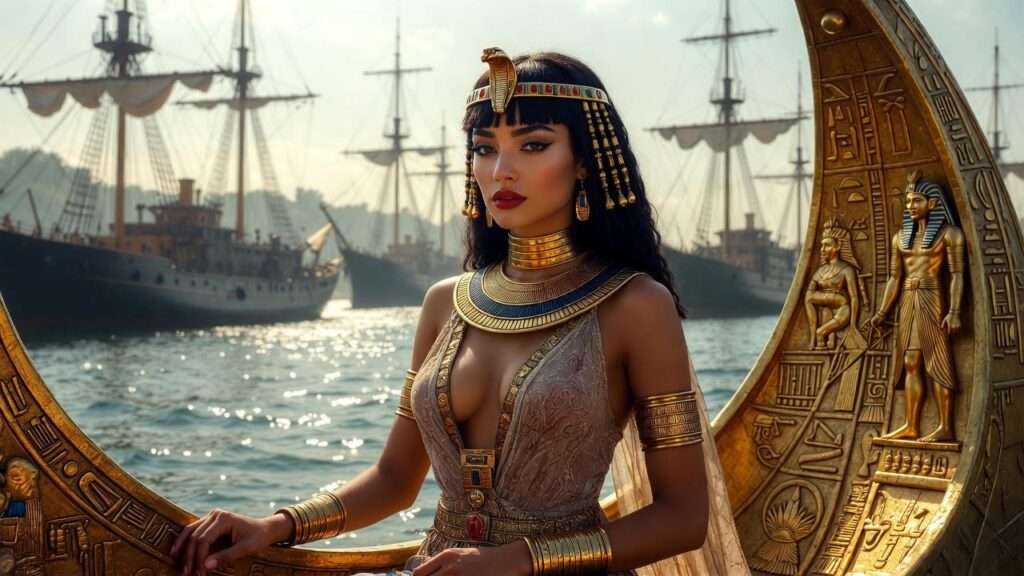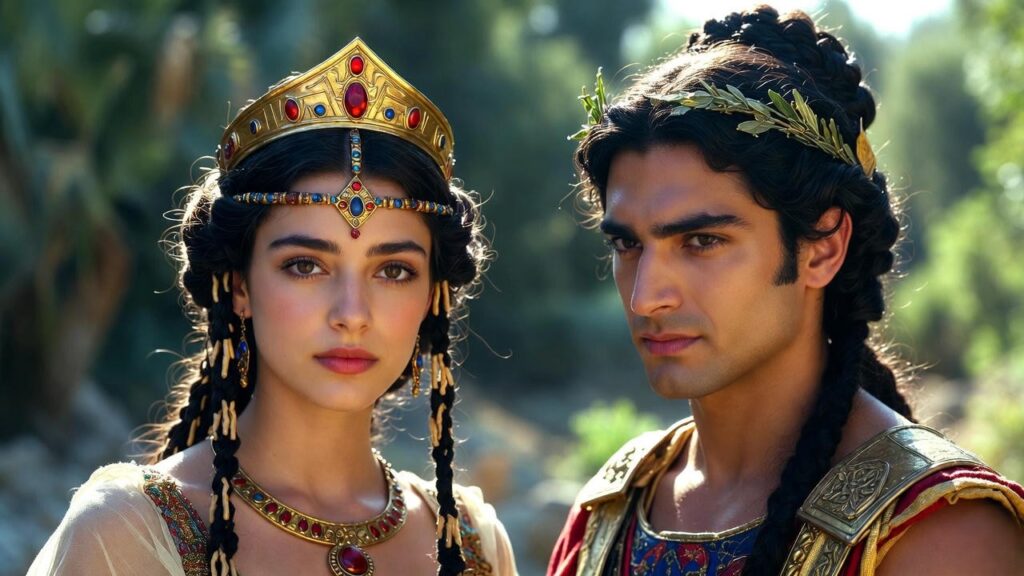
Imagine a love so intense that it topples empires, defies duty, and transcends death itself. The love story of Cleopatra and Mark Antony has captivated hearts for over two millennia, blending raw passion with political intrigue in a tale that feels as timeless as it is tragic. In William Shakespeare’s Antony and Cleopatra, this legendary romance is elevated to one of literature’s greatest masterpieces—a profound exploration of desire, power, and mortality that continues to resonate with modern audiences.
As a Shakespeare scholar with years of studying and teaching his works, I’ve long been drawn to how the Bard masterfully weaves history into poetry. In this comprehensive guide, we’ll delve deep into Shakespeare’s portrayal of the love story of Cleopatra and Mark Antony, separating fact from fiction, analyzing key scenes, quotes, and themes, and exploring why this play stands as a pinnacle of tragic drama. Whether you’re a student preparing for an exam, a theater enthusiast, or simply someone fascinated by epic romances, this article will provide the insights you need to fully appreciate Shakespeare’s genius.
Historical Background: The Real Antony and Cleopatra
To truly grasp Shakespeare’s tragic masterpiece, we must first understand the historical figures behind the drama. The real Mark Antony and Cleopatra VII were not mere star-crossed lovers but shrewd political players in a turbulent era following Julius Caesar’s assassination.
Who Were Mark Antony and Cleopatra Historically?
Mark Antony (Marcus Antonius, c. 83–30 BC) was a Roman general and statesman, one of the Second Triumvirate alongside Octavian (later Augustus) and Lepidus. Known for his military prowess and charisma, Antony was a loyal supporter of Caesar.
Cleopatra VII Philopator (69–30 BC), the last active ruler of the Ptolemaic Kingdom of Egypt, was a descendant of Greek Macedonians. Renowned for her intelligence, political acumen, and multilingualism, she was far from the seductive siren of popular myth—she was a capable monarch who navigated alliances to preserve Egypt’s independence.
Their partnership began as a strategic alliance but evolved into a profound personal bond, producing three children: Alexander Helios, Cleopatra Selene II, and Ptolemy Philadelphus.

Their Relationship in Ancient Sources (Primarily Plutarch)
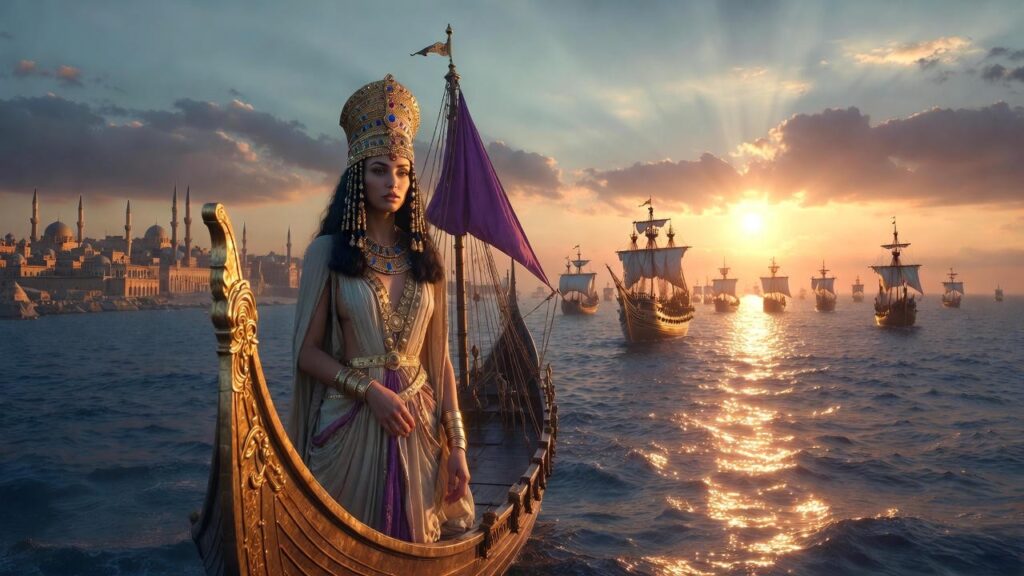
Our primary source for their story is Plutarch’s Parallel Lives, written over a century later in Greek. Plutarch portrays Antony as a noble but flawed hero, weakened by his indulgence in Egyptian luxuries and love for Cleopatra. He describes their meeting in 41 BC, where Cleopatra arrived dramatically on a golden barge, enchanting Antony.
Other sources like Suetonius and Dio Cassius, influenced by Roman propaganda under Augustus, paint Cleopatra as a manipulative temptress who ensnared Antony, leading to Rome’s near downfall.
Key Events: From Alliance to Actium and Suicide
- 41 BC: Antony summons Cleopatra to Tarsus; their alliance forms, marked by extravagance.
- 40–36 BC: Antony marries Octavian’s sister Octavia for political stability, but returns to Cleopatra.
- 34 BC: The “Donations of Alexandria,” where Antony grants territories to Cleopatra’s children, enraging Rome.
- 31 BC: Battle of Actium—Antony and Cleopatra’s forces are defeated by Octavian.
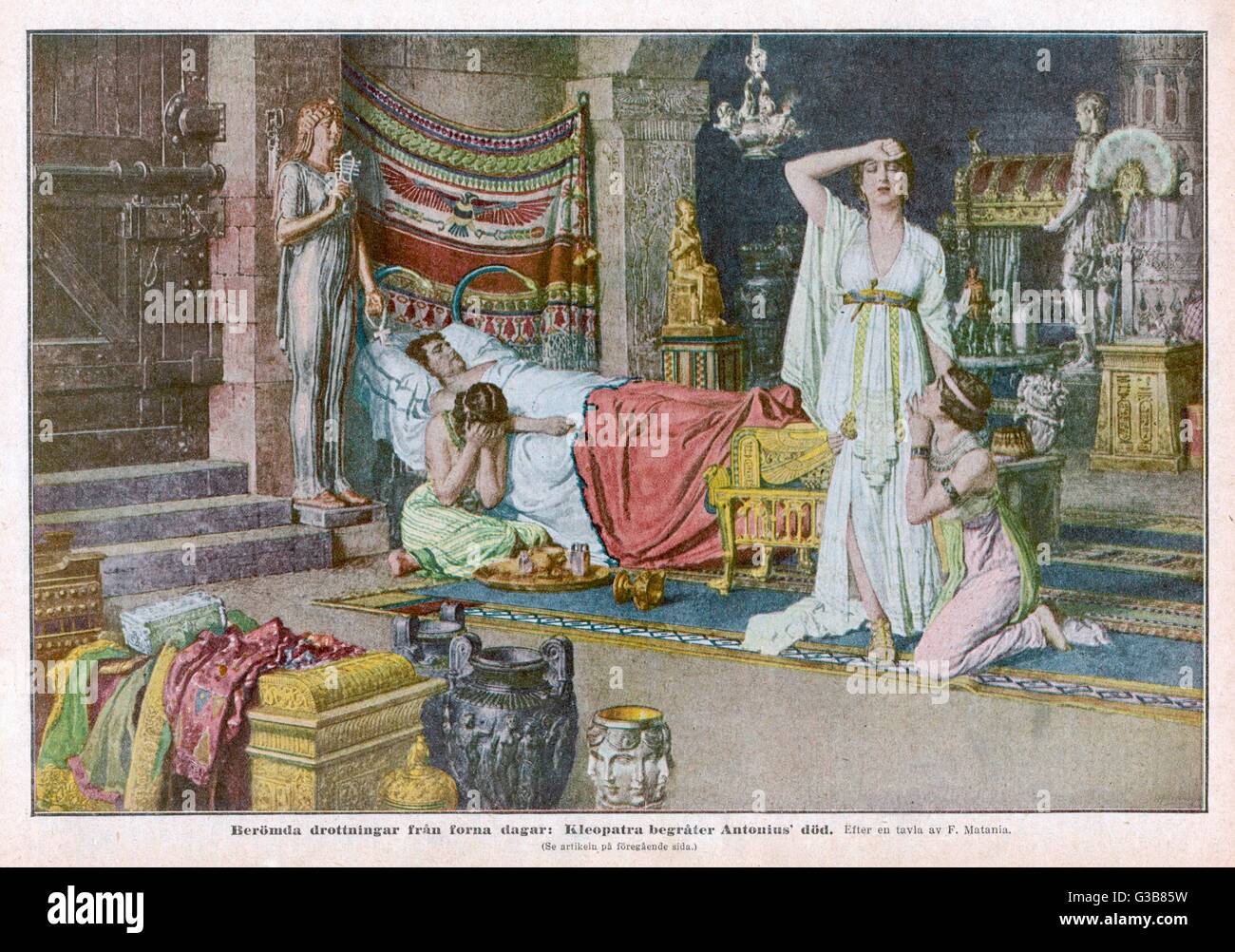
- 30 BC: Antony commits suicide upon false news of Cleopatra’s death; Cleopatra follows, reportedly by asp bite, to avoid capture.
These events form the backbone of Shakespeare’s play, but as we’ll see, he transforms them dramatically.

Shakespeare’s Sources and Dramatic Transformations
Shakespeare wrote Antony and Cleopatra around 1606–1607, drawing heavily from classical sources while infusing his own poetic vision.
Plutarch’s Lives as Primary Inspiration (via Sir Thomas North’s Translation)
Shakespeare relied on the 1579 English translation by Sir Thomas North of Plutarch’s Life of Marcus Antonius. He lifts passages almost verbatim, such as Enobarbus’s famous description of Cleopatra’s barge. Yet, Shakespeare compresses timelines and heightens emotional intensity for the stage.
Key Differences Between History and Shakespeare’s Play
- Characterization: Historical Cleopatra was a politician; Shakespeare’s is theatrical and emotionally volatile, with “infinite variety.”
- Scope: Shakespeare expands the global scale with 42 scenes across Rome, Egypt, and battlefields—unprecedented in his works.
- Ending: Both die by suicide, but Shakespeare makes their deaths heroic and transcendent, uniting them eternally.
Why Shakespeare Elevates Their Love Story to Tragic Heights
Unlike Romeo and Juliet‘s youthful passion, this is a mature, world-altering love. Shakespeare avoids simple tragedy; their flaws contribute to downfall, but their passion ennobles them. As critic A.C. Bradley noted, it’s a tragedy of “lyrical” rather than “dramatic” intensity.

Plot Summary: The Tragic Arc of Passion and Power
Antony and Cleopatra defies traditional five-act structure, unfolding in rapid, cinematic scenes.
Act 1: Indulgence in Egypt and the Call of Rome
The play opens in Alexandria, where Antony is immersed in luxury with Cleopatra. Roman messengers bring news of threats, highlighting Antony’s neglect of duty: “Let Rome in Tiber melt, and the wide arch / Of the ranged empire fall!”
Act 2: Political Alliances and Enobarbus’s Iconic Description
Antony marries Octavia in Rome for peace, but Enobarbus famously describes Cleopatra’s irresistible allure on her barge, foreshadowing Antony’s return.

Act 3: Betrayal, Marriage to Octavia, and Return to Cleopatra
Antony abandons Octavia and reunites with Cleopatra. Tensions escalate as Octavius declares war.
Act 4: Defeat at Actium and Antony’s Despair
The disastrous Battle of Actium sees Cleopatra’s fleet flee, followed by Antony’s. In rage and shame, Antony accuses Cleopatra of betrayal, but they reconcile passionately.
Act 5: The Lovers’ Deaths and Cleopatra’s Triumphant Suicide
Antony, wounded and defeated, falls on his sword. Cleopatra, staging her death to avoid Roman triumph, applies asps and dies regally: “I am fire and air.”
Character Analysis: The Heart of the Love Story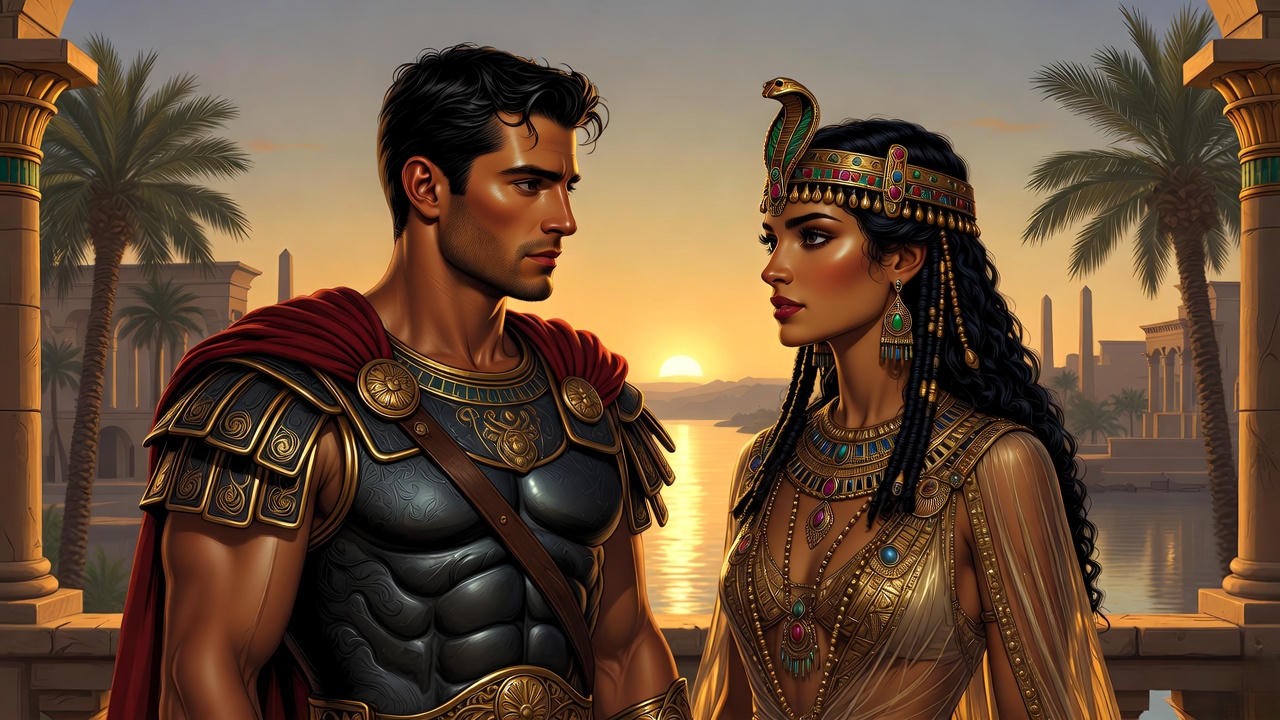
What makes Shakespeare’s Antony and Cleopatra profoundly different from earlier love tragedies is the maturity and complexity of its protagonists. These are not impulsive teenagers but seasoned leaders in their forties, fully aware of the consequences of their choices—yet powerless against the force of their mutual attraction.
Mark Antony – The Hero Torn Between Duty and Desire
Antony begins the play as one of Rome’s three most powerful men, yet Shakespeare immediately undermines his heroic stature. His own soldiers mock him as Cleopatra’s “Egyptian dish.” Throughout the drama, Antony oscillates between the Roman ideal of martial honor and the Egyptian world of sensual fulfillment. Critics such as Janet Adelman (in The Common Liar, 1973) argue that Antony’s tragedy stems from his inability to integrate these two identities. His famous declaration “Let Rome in Tiber melt” (1.1.35) is not mere hyperbole—it reveals a genuine philosophical shift toward a worldview where love outweighs empire.
Cleopatra – Shakespeare’s Most Complex Female Protagonist: Passionate, Theatrical, and Unpredictable
Cleopatra is often called Shakespeare’s greatest female role, and with good reason. She is by turns playful, imperious, manipulative, vulnerable, and transcendent. Her “infinite variety” (2.2.246) ensures that she never ages into predictability. Unlike the passive heroines of earlier tragedies, Cleopatra actively shapes her own narrative, even in death. Modern scholars such as Ania Loomba and Jyotsna Singh highlight her as a site of colonial anxiety: a non-Roman woman who threatens the masculine Roman order through intellect and sexuality rather than arms.
Supporting Characters: Enobarbus, Octavius Caesar, and Octavia as Foils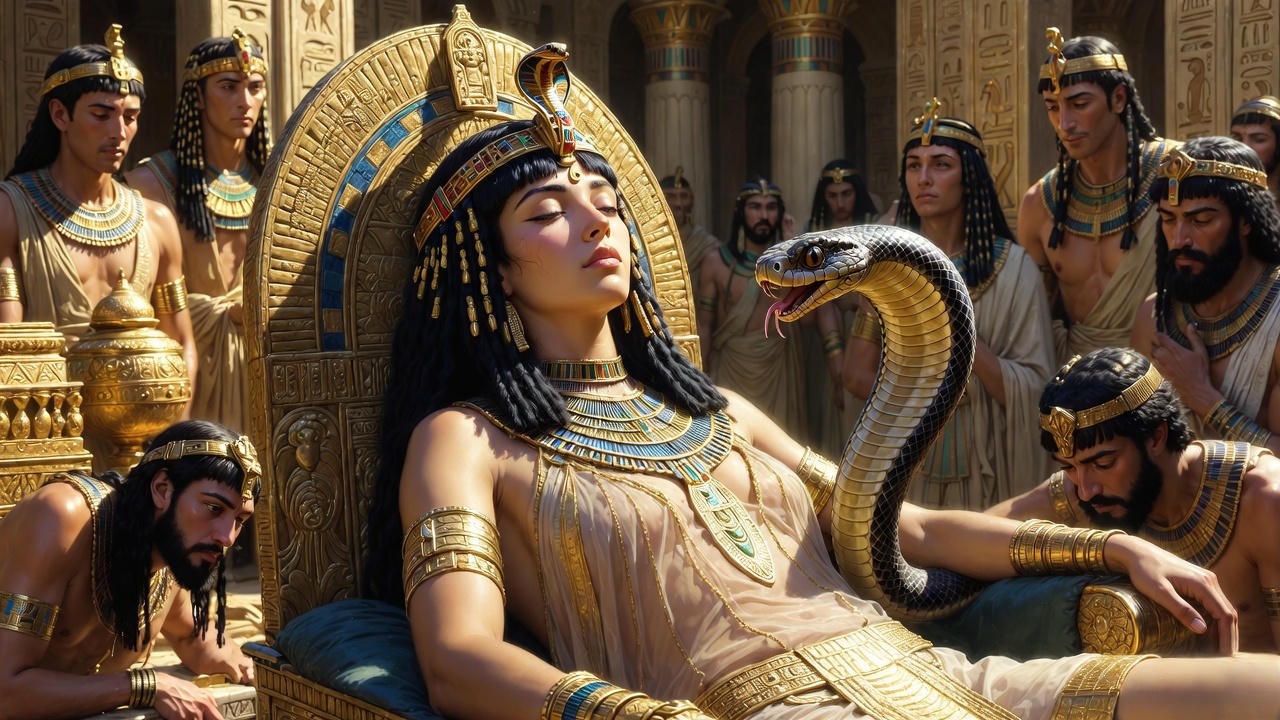
- Enobarbus, Antony’s blunt lieutenant, serves as the play’s moral compass and chorus. His desertion and subsequent death from grief underscore the devastating loyalty Antony inspires.
- Octavius Caesar represents cold political calculation—everything Antony is not. Their rivalry is ideological as much as personal.
- Octavia, gentle and dutiful, functions as the anti-Cleopatra, highlighting what Antony sacrifices for passion.
The Evolution of Antony and Cleopatra’s Relationship
Their love deepens from erotic infatuation (Act 1) through jealousy and mistrust (Acts 3–4) to spiritual union in death (Act 5). The reconciliation scene after Actium (4.8) is one of Shakespeare’s most moving: “I am dying, Egypt, dying” transforms into shared triumph when Cleopatra arms him again, proving their bond transcends military defeat.
Key Quotes That Capture Their Passionate Love
Shakespeare’s language in this play is among his richest—lush, baroque, and often hyperbolic, mirroring the excess of Egypt itself.
Declarations of Boundless Love
- Antony: “There’s beggary in the love that can be reckoned” (1.1.15–16) – love that can be measured is worthless.
- Cleopatra: “Eternity was in our lips and eyes” (1.3.36) – their passion exists outside time.
Enobarbus’s Description of Cleopatra on the Barge (2.2.201–228)
Often cited as the most beautiful passage Shakespeare ever wrote:
“The barge she sat in, like a burnished throne, Burned on the water… …her gentlewomen, like the Nereides, So many mermaids, tended her i’ th’ eyes…”
This set-piece does more than praise beauty; it establishes Cleopatra as a living work of art who commands nature itself.
Moments of Jealousy, Reconciliation, and Transcendence
- Cleopatra’s rage over Antony’s marriage to Octavia (Act 3, Scene 3) reveals genuine vulnerability beneath the theatrics.
- Antony’s dying words: “I am dying, Egypt, dying… Give me some wine, and let me speak a little” (4.15).
- Cleopatra’s final transcendence: “Husband, I come! / Now to that name my courage prove my title!” (5.2.283–284).
Major Themes in Shakespeare’s Masterpiece
Love vs. Duty: Passion as a Destructive and Elevating Force
Unlike Romeo and Juliet, where love is pure and society corrupt, here love itself bears responsibility for catastrophe—yet also redeems the lovers.
Rome vs. Egypt: Reason and Order Against Pleasure and Excess
Shakespeare uses geography symbolically:
- Rome = masculinity, war, measure, stoicism
- Egypt = femininity, peace, excess, sensuality The play refuses to moralize; both worlds are shown as incomplete without the other.
Power, Politics, and Empire
The personal is political. Their affair redraws the map of the Mediterranean and accelerates the transition from Republic to Empire.
Gender Roles and Identity: Cleopatra’s “Infinite Variety”
Cleopatra performs femininity theatrically—dressing as Isis, fainting, raging—challenging fixed notions of gender. As she says, “Though I am mad, I will not bite” (2.5).
Fate, Honor, and Mortality: Transcending Defeat Through Love
Their suicides are not defeat but apotheosis. Cleopatra stages her death as imperial spectacle, dying “after the high Roman fashion” while surpassing Rome.
Literary Techniques and Shakespeare’s Genius
Language and Imagery
The verse is opulent and overflowing, full of hyperbole (“new heaven, new earth”) and oceanic imagery that mirrors the lovers’ boundless emotions.
Structure: Rapid Scene Shifts and Global Scope
With 42 scenes (more than any other Shakespeare play), the drama mimics the speed of empire and the restlessness of desire.
Ambiguity and Multiple Perspectives
There are no clear villains. Even Octavius admires the dead lovers in the final lines.
Comparisons to Other Tragedies
- Vs. Romeo and Juliet: mature vs. youthful love
- Vs. Othello: public vs. domestic tragedy
- Vs. King Lear: cosmic scope without a subplot of comparable weight
Legacy and Modern Interpretations
The play has inspired countless adaptations:
- 1677 Dryden’s All for Love (a more neoclassical version)
- 1963 film with Richard Burton and Elizabeth Taylor
- 2014 Globe Theatre production with Eve Best
- Opera by Samuel Barber (1966) and John Adams (Antony and Cleopatra, 2022)
Contemporary criticism explores:
- Post-colonial readings (Cleopatra as resistance to Roman imperialism)
- Feminist reclamation of Cleopatra’s agency
- Queer theory examinations of fluid gender performance
Expert Insights and Further Reading
Dr. Emma Smith (Oxford University) calls Antony and Cleopatra “Shakespeare’s most modern tragedy” because of its refusal of easy moral judgments. For deeper study:
- Antony and Cleopatra (New Cambridge Shakespeare, ed. David Bevington)
- Shakespeare’s Late Tragedies by Susanne Wofford
- British Library and Folger Shakespeare Library digital resources
FAQs
Q: Is their love genuine or manipulative? A: Both. Cleopatra tests Antony repeatedly, yet her grief and suicide prove authentic devotion.
Q: Why is Antony and Cleopatra considered a tragic masterpiece? A: It combines epic scope, psychological depth, and linguistic splendor while questioning the very nature of tragedy.
Q: How does the play explore themes relevant today? A: Power dynamics in relationships, East-West cultural clashes, performative identity, and the conflict between personal desire and public duty remain strikingly contemporary.
Two thousand years after their deaths, the love story of Cleopatra and Mark Antony continues to captivate because Shakespeare transformed historical scandal into universal myth. In Antony and Cleopatra, passion does not merely destroy—it immortalizes. As Cleopatra declares in her final moments, “I have immortal longings in me.” Through Shakespeare’s genius, those longings have indeed become immortal.