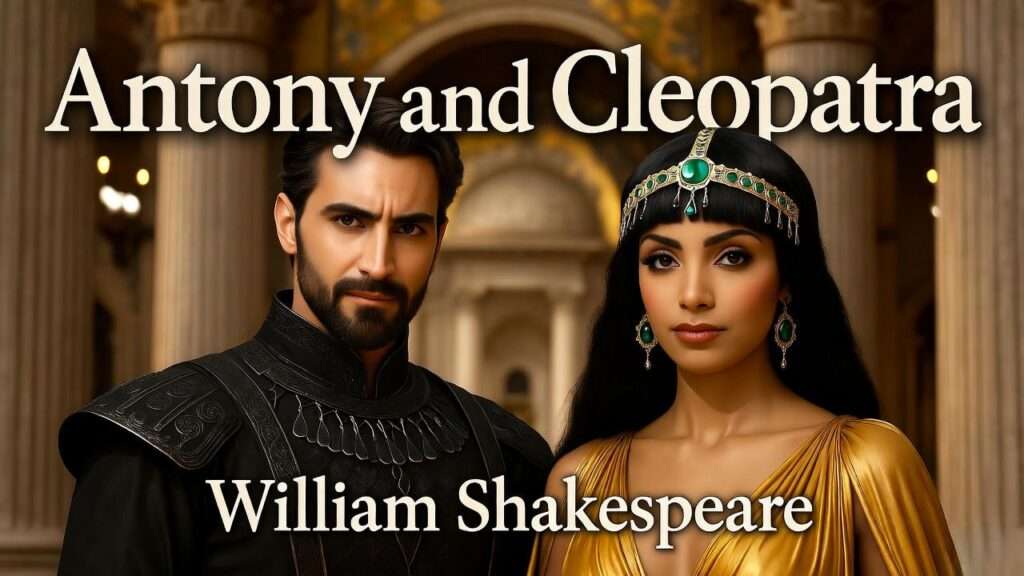
In the opening lines of William Shakespeare’s Antony and Cleopatra, the Roman soldier Philo laments that his general, Marc Antony, has become “the bellows and the fan / To cool a gipsy’s lust” (1.1.9–10). This scornful judgment sets the stage for one of literature’s most iconic romances: Marc Antony’s love for Cleopatra, a force so overwhelming that it leads him to declare, “Let Rome in Tiber melt, and the wide arch / Of the ranged empire fall! Here is my space” (1.1.33–34). Marc Antony’s love embodies the play’s central tension—a passionate, all-consuming devotion that elevates the lovers to mythic heights while simultaneously eroding empires, duties, and ultimately their lives.
Shakespeare, drawing from Plutarch’s Life of Marcus Antonius, transforms historical events into profound tragedy. Marc Antony’s love is neither simple infatuation nor mere political alliance; it is a complex interplay of genuine devotion, destructive obsession, political calculation, and transcendent passion. This article explores the depths of that love, examining its authenticity, its role in the cultural clash between Rome and Egypt, key scenes and quotes that define it, Cleopatra’s influence, and the timeless lessons it offers. Whether you’re a student analyzing Shakespeare’s tragedies, a theater enthusiast, or someone drawn to stories of epic romance and downfall, understanding Marc Antony’s love reveals why this play endures as one of the Bard’s most nuanced portraits of human desire.
Historical Context: The Real Marc Antony and Cleopatra vs. Shakespeare’s Vision
To appreciate Shakespeare’s portrayal of Marc Antony’s love, it’s essential to contrast the historical figures with their dramatic counterparts. In reality, Mark Antony (83–30 BCE) was a skilled Roman general and triumvir, allied with Octavius Caesar and Lepidus after Julius Caesar’s assassination. His relationship with Cleopatra VII began around 41 BCE as a strategic partnership: Antony needed Egypt’s wealth and grain to sustain his eastern campaigns, while Cleopatra sought Roman protection against threats to her throne.
Their union produced three children and culminated in the disastrous Battle of Actium (31 BCE), where Cleopatra’s fleet fled, prompting Antony to follow—leading to their defeat and suicides in 30 BCE. Roman propaganda, amplified by Octavius (later Augustus), painted Antony as bewitched by an “Egyptian whore,” his love a symbol of Eastern decadence corrupting Roman virtue.
Shakespeare adapts this history with artistic license. He minimizes the purely political aspects and amplifies the emotional intensity. Antony’s passion becomes a rebellion against Roman stoicism, not just weakness. Cleopatra is no mere seductress but a multifaceted queen of “infinite variety” (2.2.276). By elevating their love to tragic grandeur, Shakespeare critiques Roman imperialism while celebrating the human capacity for profound connection—even when it leads to ruin. This mythic treatment, rooted in Plutarch yet transformed by poetic insight, makes Marc Antony’s love feel timeless rather than merely historical.
The Nature of Marc Antony’s Love: Genuine Devotion or Destructive Obsession?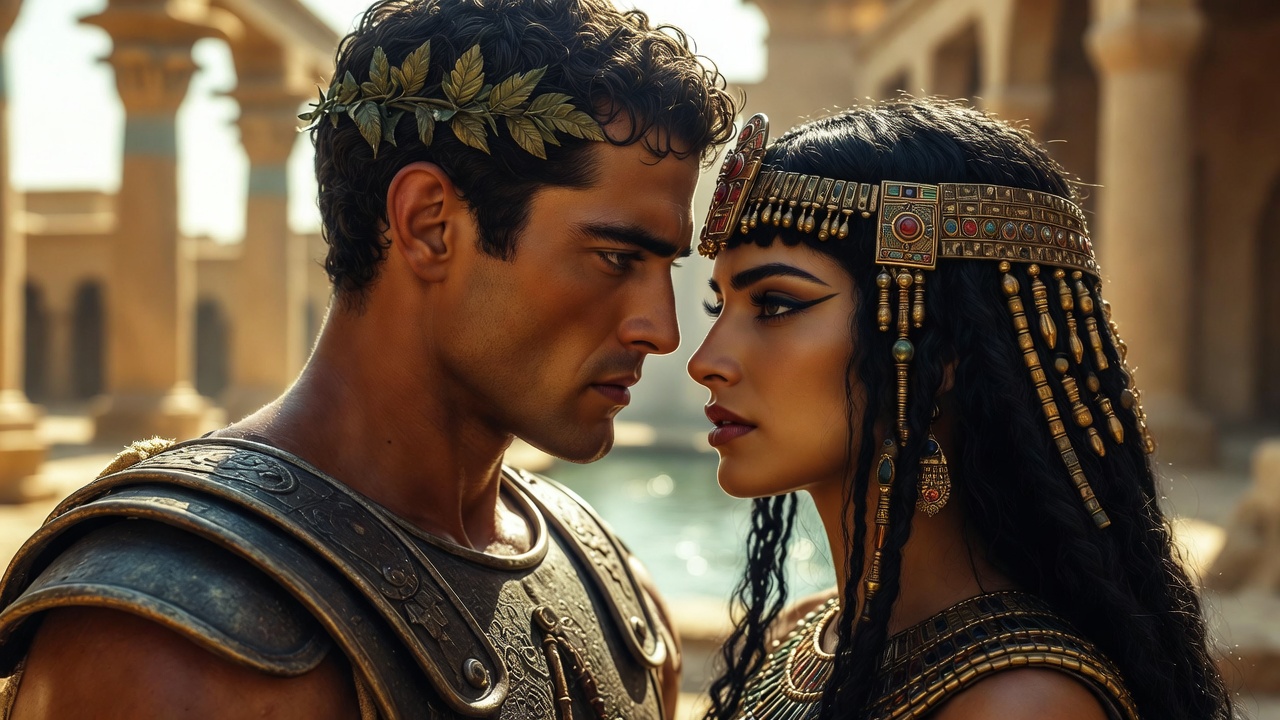
Scholars have long debated whether Marc Antony’s love for Cleopatra is authentic or a destructive force. The play presents evidence for both views, refusing easy answers.
Evidence of Authentic, Transcendent Love
From the outset, Antony rejects quantifiable love: “There’s beggary in the love that can be reckon’d” (1.1.15). When Cleopatra presses him to define its bounds, he replies, “Then must thou needs find out new heaven, new earth” (1.1.17). This hyperbolic language suggests a love that transcends ordinary limits, envisioning a cosmic scale. Their shared moments of ecstasy—such as Antony’s declaration that “Here is my space” amid Cleopatra’s court—portray a mutual fulfillment absent in his Roman alliances.
In death, this transcendence peaks. Antony’s botched suicide leads him to Cleopatra’s monument, where he dies in her arms. Cleopatra later immortalizes him: “His legs bestrid the ocean… / His face was as the heavens” (5.2.82–86). Their love achieves apotheosis, turning tragedy into legend.
The Shadow Side – Excess, Jealousy, and Self-Destruction
Yet the play unflinchingly shows love’s corrosive effects. Antony’s passion clouds judgment: he abandons Rome for Egypt, marries Octavia for political peace yet returns to Cleopatra, and flees Actium after her retreat. In rage, he blames her: “This foul Egyptian hath bewitched me” (4.12.28), echoing Roman accusations of enchantment.
Jealousy fuels volatility—Antony has a messenger beaten for kissing Cleopatra’s hand. His self-loathing surfaces: “I have lost my way forever” (3.11). Critics like those on LitCharts note that Antony’s love often veers into lust and recklessness, contributing to his downfall.
Expert Insight – Balancing Lust, Love, and Politics
As Folger Shakespeare Library analyses highlight, the play juxtaposes mythic romance against skeptical voices. Antony’s love is both constructive (affirming identity beyond Roman duty) and destructive (eroding virtus, or manly virtue). It is genuine yet flawed—mature, passionate, and doomed by its excess.
The Rome vs. Egypt Dichotomy: How Antony’s Love Embodies Cultural Clash
Shakespeare structures the play around binary oppositions: Rome symbolizes discipline, reason, empire, and stoic masculinity (embodied by Octavius Caesar), while Egypt represents sensuality, fluidity, pleasure, and emotional freedom (personified by Cleopatra and the Nile’s imagery).
Antony straddles both worlds. Once “plated Mars” (1.1.4), he becomes emasculated in Roman eyes through his devotion to Cleopatra. His internal conflict—”Roman thoughts” clash with Egyptian indulgence—mirrors the play’s geopolitical tension. Love becomes rebellion: Antony prioritizes personal desire over imperial duty, declaring Rome can “melt” for his “space” with Cleopatra.
This dichotomy critiques Roman rigidity. Egypt’s “infinite variety” challenges binary logic, as modern scholars like Hélène Cixous argue. Antony’s love exposes the limitations of Roman values—reason without passion leads to cold conquest, while passion without restraint invites ruin.
Key Scenes and Quotes That Define Marc Antony’s Love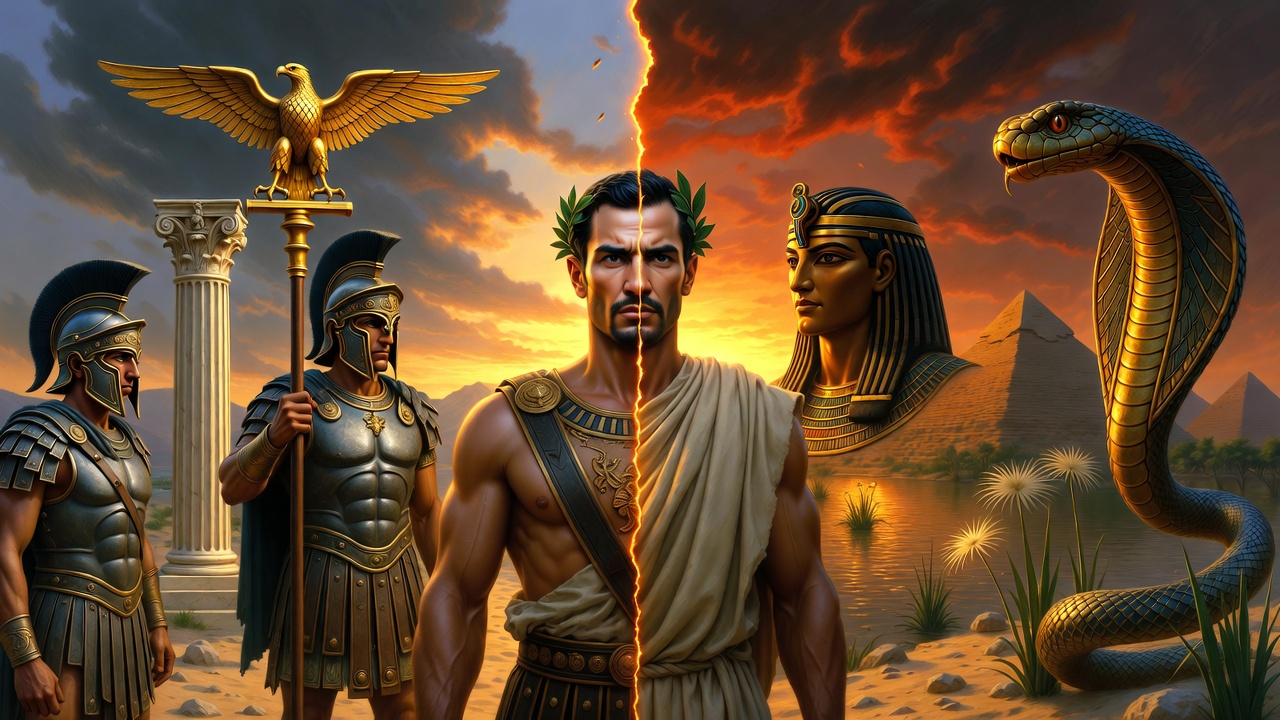
Shakespeare dramatizes Marc Antony’s love through carefully selected moments that reveal its evolution—from ecstatic defiance to anguished betrayal, forgiveness, and final transcendence. Below are the pivotal scenes, with close readings of the language that make his passion so vivid and tragic.
Early Ecstasy – Act 1, Scene 1
The play opens in Alexandria with Roman soldiers observing Antony and Cleopatra. Philo’s bitter description—“His captain’s heart, / Which in the scuffles of great fights hath burst / The buckles on his breast, reneges all temper” (1.1.6–8)—contrasts sharply with the lovers’ entrance. Cleopatra teases Antony about measuring love’s depth, prompting his famous reply:
There’s beggary in the love that can be reckon’d. Then must thou needs find out new heaven, new earth. (1.1.15–17)
This exchange establishes love as boundless and uncontainable. When a messenger arrives with Roman news, Antony brushes him aside: “Let Rome in Tiber melt… Here is my space” (1.1.33–34). The phrase “my space” is deeply intimate—Cleopatra’s presence becomes his entire world, rendering empire irrelevant. The scene shocks Roman sensibilities and hooks the audience with the audacity of such passion.
The Messenger Scene and Parting (Act 1, Scenes 2–3)
As duty calls Antony back to Rome, Cleopatra tests his commitment with playful jealousy and feigned illness. Antony reassures her with tenderness:
Our separation so abides and flies That thou residing here go’st yet with me, And I hence fleeting here remain with thee. (1.3.102–104)
The paradox captures love’s ability to defy physical distance. Yet the scene also foreshadows tragedy: Cleopatra’s manipulation and Antony’s divided loyalties already strain the bond.
Reconciliation After Betrayals (Act 3–4)
After the marriage to Octavia and the political truce, Antony returns to Cleopatra. The Actium disaster—where he follows her fleeing ships—triggers one of the play’s most painful scenes. Antony rages:
All come to this? The hearts That spanieled me at heels, to whom I gave Their wishes, do discandy, melt their sweets On blossoming Caesar… (4.12.20–23)
He then turns fury on Cleopatra: “Triple-turned whore!” (4.12.13). Yet reconciliation follows swiftly. In Act 4, Scene 15, Cleopatra cradles the dying Antony, and he forgives her completely:
I will be a bridegroom in my death, and run into’t As to a lover’s bed. (4.14.99–100)
The imagery of death as erotic union underscores how deeply love has fused with their identities.
Final Moments – Act 4–5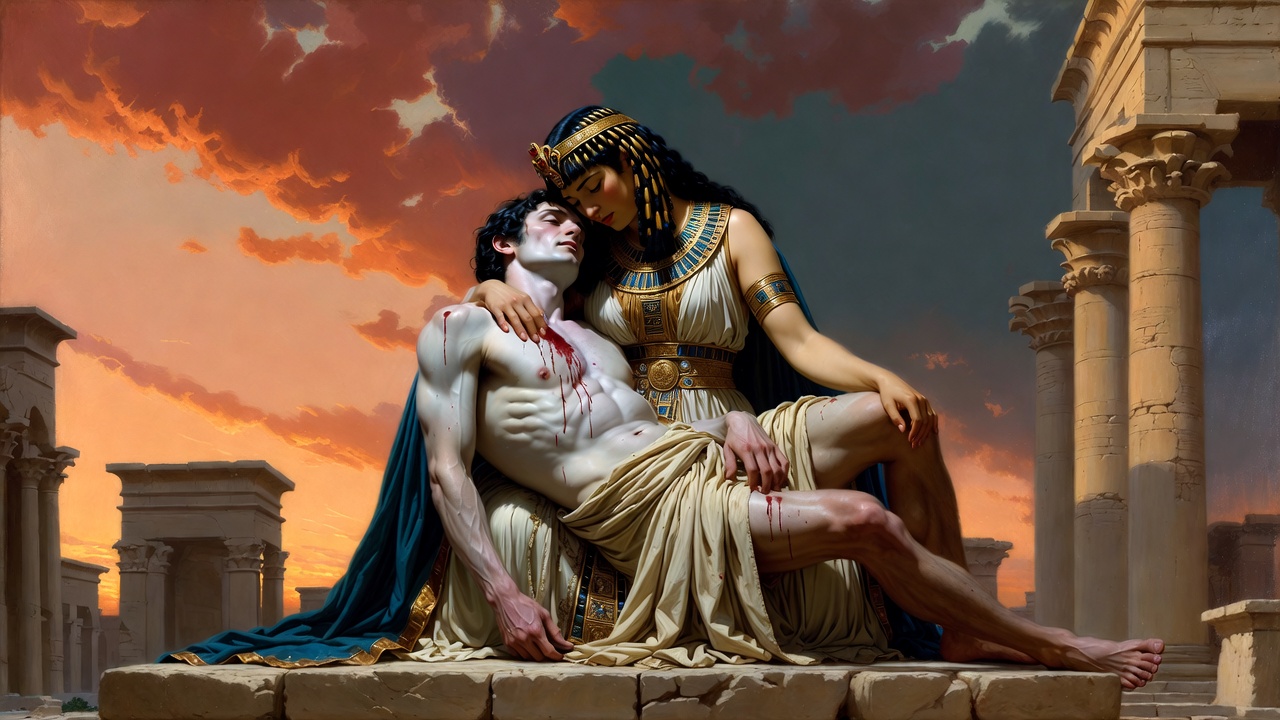
Antony’s botched suicide is both comic and tragic—he falls on his sword but lingers long enough to be carried to Cleopatra. His last words to her are tender:
I am dying, Egypt, dying… Give me my robe. Put on my crown. I have Immortal longings in me. (No—Cleopatra says this; Antony’s are:) The miserable change now at my end Lament nor sorrow at… (4.15.51–53, adapted context)
Cleopatra’s response immortalizes him in her vision of cosmic grandeur (5.2.79–92), turning private love into eternal myth.
Cleopatra’s Role in Shaping Antony’s Love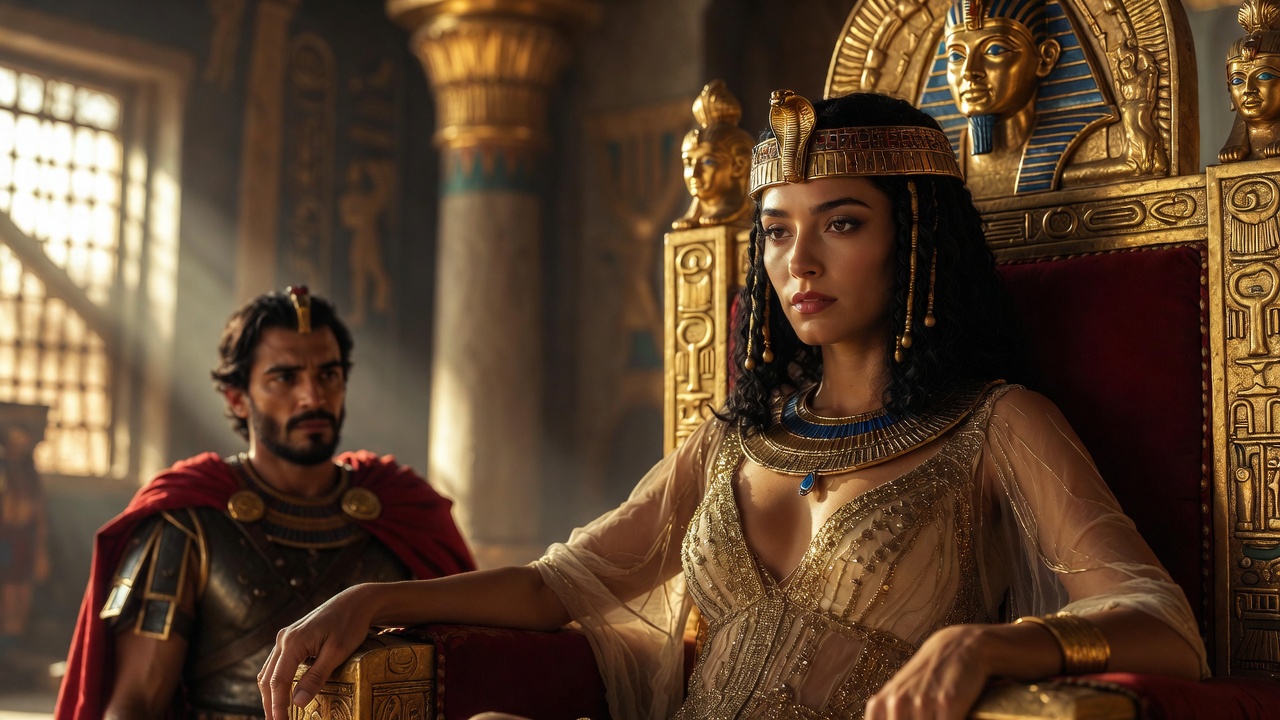
Cleopatra is not a passive object of desire—she actively shapes Antony’s passion. Her “infinite variety” (Enobarbus’s phrase, 2.2.276) keeps him enthralled: she is “cunning past man’s thought” (1.2.150), theatrical, mercurial, and politically astute.
Their love is mutual, yet asymmetrical. Antony is more vulnerable—he loses empire and reputation for her—while Cleopatra maintains strategic control (she feigns death to test his reaction). Yet she too chooses love over survival, staging her suicide as a royal, erotic triumph: “Give me my robe. Put on my crown” (5.2.280).
Shakespeare presents their relationship as symbiotic: Cleopatra’s performativity sustains Antony’s excess, while his devotion validates her power. Their tragedy lies in this very interdependence—neither can exist fully without the other.
Themes of Passion, Power, and Tragedy Interwoven
At its core, Antony and Cleopatra explores how passion and power cannot coexist without destruction. Antony’s love pits personal desire against public duty, pleasure against discipline, Egypt against Rome. Unlike Romeo and Juliet, where youthful passion meets external obstacles, here the obstacle is internal: Antony’s own divided soul.
Power dynamics are complex. Love becomes a political weapon—Antony uses Cleopatra to challenge Octavius, Cleopatra uses Antony to preserve Egypt. Yet the tragedy is not mere failure of ambition; it is heroic defiance. By choosing love over empire, they achieve a form of victory through art and legend.
Compared to other Shakespearean couples, Antony and Cleopatra represent mature, worldly love—flawed, self-aware, and apocalyptic in scale.
Modern Relevance and Lessons from Marc Antony’s Love
Today, Marc Antony’s story resonates in debates about work-life balance, the cost of ambition, and the tension between heart and responsibility. Can intense passion coexist with duty? Shakespeare suggests no easy compromise exists—excess in either direction leads to loss.
For readers, the play offers cautionary yet inspiring lessons:
- Passion without boundaries can destroy as much as it creates.
- Genuine love often demands sacrifice—of status, certainty, even life.
- Forgiveness and mutual devotion can redeem even catastrophic mistakes.
- Identity is fluid; love can redefine who we are, for better or worse.
In an era of polarized values—career vs. family, reason vs. emotion—Antony’s dilemma feels strikingly contemporary.
Why Marc Antony’s Love Endures as Shakespeare’s Greatest Tragic Romance
Marc Antony’s love for Cleopatra is Shakespeare’s most expansive and ambivalent portrait of romantic passion. It topples empires, shatters reputations, and yet achieves immortality through defiance and art. Unlike straightforward tragedies of fate or villainy, this is a tragedy of human complexity—where love is simultaneously glorious and ruinous, authentic and self-deceiving.
In the end, Shakespeare does not judge. He simply shows us two people who choose each other over the world—and in doing so, become larger than the world itself. That is the enduring power of Marc Antony’s love: a force that, even in defeat, refuses to be diminished.
FAQs
Did Marc Antony truly love Cleopatra, or was it political? Shakespeare presents it as both. The historical alliance had political roots, but the play elevates it into genuine, transcendent passion—flawed, excessive, but real.
How does Antony’s love differ from his relationship with Octavia? Octavia represents duty, restraint, and Roman virtue. Antony respects her but feels no passion; his marriage to her is contractual, while his bond with Cleopatra is visceral and all-consuming.
What is the significance of Antony’s suicide? It symbolizes his attempt to reclaim Roman honor on his own terms—yet the botched attempt and reliance on Cleopatra underscore how fully his identity has merged with hers. Death becomes their final act of union.