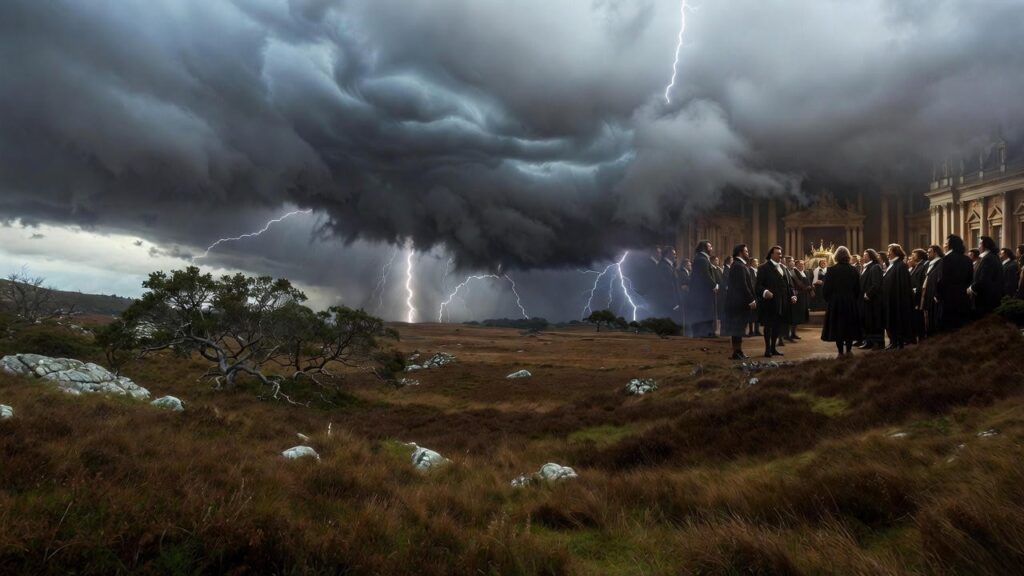
Imagine a raging storm tearing across a barren heath, stripping a once-mighty king of his courtly illusions and forcing him to confront the raw essence of humanity. Or picture a solitary prince in a decadent castle, pondering existence amid whispers of intrigue and betrayal. What if the true power of Shakespeare’s genius lies not just in his richly drawn social worlds, but in their stark opposites—the voids, isolations, and wildernesses that shatter illusions and reveal profound truths? Exploring milieu antonyms unlocks a deeper layer of appreciation for how Shakespeare uses contrasting environments to propel drama, develop characters, and probe timeless questions of identity, power, and society.
In literary analysis, “milieu” refers to the social, cultural, and physical surroundings that shape individuals and events—the intricate web of courtly politics, family dynamics, and societal norms that define so much of Shakespeare’s world. Yet, as major thesauruses like Merriam-Webster, Thesaurus.com, and PowerThesaurus confirm, “milieu” lacks direct single-word antonyms. Instead, its conceptual opposites emerge as isolation, alienation, wilderness, void, or chaos: the absence or inversion of structured social and cultural immersion. These milieu antonyms are not mere background shifts; they are dramatic engines in Shakespeare’s plays, creating tension by removing characters from familiar settings and exposing their inner selves.
This comprehensive exploration addresses a common challenge for students, educators, and Shakespeare enthusiasts: moving beyond surface-level reading to grasp how environmental contrasts drive thematic depth. Whether preparing for exams, teaching classes, or simply enriching personal enjoyment, understanding milieu antonyms provides practical tools for analyzing character arcs, themes, and Shakespeare’s innovative dramaturgy. Drawing on primary texts, established literary criticism, and detailed examples from tragedies, comedies, and romances, we’ll examine how these opposites function across multiple plays—offering more insightful, multi-faceted analysis than typical overviews.
Understanding “Milieu” and Its Role in Literature
To fully appreciate milieu antonyms in Shakespeare, we must first ground ourselves in the term’s meaning and significance.
Etymology and Precise Definition
“Milieu” originates from French, combining “mi” (middle) and “lieu” (place), literally “middle place.” In English, adopted in the 19th century but conceptually resonant with earlier ideas, it denotes the physical, social, and cultural environment influencing a person or group (Merriam-Webster Dictionary). Unlike broader synonyms such as “environment” (general surroundings) or “setting” (physical location), “milieu” emphasizes the interactive, shaping force of social and cultural contexts—think hierarchies, norms, and interpersonal dynamics.
In literature, milieu encompasses not just backdrop but active influence: the corrupt Danish court in Hamlet that breeds deceit, or the flattering royal circle in King Lear that blinds Lear to truth.
Why “Milieu” Matters in Shakespearean Analysis
Shakespeare’s plays thrive on richly layered social milieus reflective of Elizabethan and Jacobean England—courts rife with ambition, families torn by loyalty, societies stratified by class and gender. These settings mold characters: ambition flourishes in political intrigue, love navigates societal constraints, tragedy often stems from milieu-induced flaws.
Literary critics, from early commentators like Samuel Johnson to modern scholars like Stephen Greenblatt (in Shakespearean Negotiations), highlight how Shakespeare drew from contemporary social structures while universalizing them. The Elizabethan theater itself was a vibrant milieu, blending classical influences with popular traditions.
The Challenge of Direct Antonyms
Major references (Thesaurus.com, PowerThesaurus.org, YourDictionary) list abundant synonyms for milieu—surroundings, atmosphere, ambiance, environs—but few, if any, direct antonyms. Some sources like WordHippo suggest quirky opposites (e.g., “brightness” or “light”), but these are contextual mismatches. Conceptually, opposites arise from negation: the lack of social structure or cultural influence.
Here’s a structured overview:
| Aspect of Milieu | Conceptual Antonym | Literary Implication |
|---|---|---|
| Social connectedness | Isolation/Alienation | Removal from peers forces self-confrontation |
| Cultural structure/order | Chaos/Wilderness/Anarchy | Untamed nature exposes societal pretensions |
| Influential surroundings | Void/Emptiness/Solitude | Absence highlights inner psychology |
| Immersive community | Exile/Detachment | Banishment reveals true character |
These conceptual milieu antonyms are Shakespeare’s masterstroke, turning environmental shifts into catalysts for revelation.
Conceptual Milieu Antonyms in Shakespeare’s Works
Shakespeare rarely leaves characters comfortably embedded in their milieus; he disrupts them, thrusting protagonists into opposites that invert social norms and amplify internal conflicts.
Isolation and Alienation as Opposites to Social Milieu
Social milieus in Shakespeare—courts, families, cities—thrive on interaction, flattery, and power plays. Their antonym, isolation, strips away these supports, forcing characters to grapple with unfiltered reality. Alienation emerges when individuals feel disconnected even within crowds, as in Hamlet’s intellectual detachment amid Elsinore’s hypocrisy.
This opposition underscores a recurring Shakespearean insight: society both sustains and corrupts. Isolation, by contrast, can purify or destroy.
Wilderness and Nature vs. Civilized/Courtly Settings
Civilized milieus represent order, hierarchy, and artifice. Wilderness—storms, forests, islands—symbolizes primal chaos, equality, and truth. This pastoral vs. courtly contrast, rooted in classical traditions but innovated by Shakespeare, critiques societal corruption while idealizing (yet complicating) nature.
In tragedies, wilderness often punishes; in comedies, it heals. The shift from court to green world or heath serves as a reset, exposing the artificiality of social conventions.
Inner Turmoil vs. External Harmony
Sometimes the antonym is psychological: a mental “void” opposing a harmonious external milieu. Characters like Macbeth experience hallucinatory isolation amid triumphant courts, illustrating how inner chaos inverts outward order.
Expert Insight: As critic Northrop Frye notes in Anatomy of Criticism, Shakespeare’s “green world” comedies use milieu opposites for renewal, while tragedies employ them for destruction—demonstrating his genre-spanning mastery. Jan Kott’s Shakespeare Our Contemporary further argues that these barren, chaotic spaces reflect existential absurdity, anticipating modern theater.
Key Examples from Shakespeare’s Plays
The true power of milieu antonyms shines in specific plays, where Shakespeare deploys environmental contrasts with precision.
Courtly Corruption vs. Solitary Exile in King Lear
King Lear offers one of the clearest illustrations. The primary milieu is the royal court—a world of flattery, division of kingdoms, and hierarchical loyalty. Lear begins immersed in this artificial social order, demanding professions of love as tribute.
The antonym arrives violently: expulsion to the storm-swept heath. Stripped of retinue, Lear confronts wilderness and isolation:
“Poor naked wretches, wheresoe’er you are, That bide the pelting of this pitiless storm, How shall your houseless heads and unfed sides… Defend you from seasons such as these? O, I have ta’en too little care of this!” (Act 3, Scene 4)
This shift from courtly comfort to elemental exposure triggers Lear’s moral awakening. The heath’s chaos mirrors his madness but also strips away illusions, enabling empathy. Edgar’s disguise as Poor Tom and the Fool’s companionship provide minimal social threads in the void, emphasizing how complete isolation would be unbearable.
Critics like A.C. Bradley (Shakespearean Tragedy) emphasize this as the play’s pivotal reversal: the king’s descent from societal pinnacle to natural equality.
Decadent Danish Court vs. Alienated Introspection in Hamlet
In Hamlet, the milieu is Elsinore—a claustrophobic court of surveillance, performance, and moral rot (“something is rotten in the state of Denmark”). Hamlet navigates this world of “seeming,” where words mask intent.
His antonym is internal and solitary: moments of profound alienation, epitomized in soliloquies. The famous “To be or not to be” speech occurs not in company but in contemplative isolation, even amid the castle.
Hamlet’s alienation critiques the court’s hypocrisy; his feigned madness further distances him. Physical removal comes briefly in England, but psychological detachment dominates. As Harold Bloom observes in Shakespeare: The Invention of the Human, Hamlet’s consciousness creates its own void, making him the first modern introspective hero.
Magical Island Isolation vs. Lost Civilized Milieu in The Tempest
The Tempest inverts the pattern: the play opens in isolation, with the civilized Milanese/Naples court as remembered (and eventually restored) milieu.
Prospero’s island is a magical wilderness—untamed, inhabited by spirits and Caliban. This antonymic space allows Prospero to wield godlike control absent in courtly politics. Yet isolation breeds tyranny: his treatment of Caliban echoes colonial dynamics.
The shipwreck brings court members into the island’s void, disrupting their hierarchies. Ariel and the tempest symbolize chaotic nature opposing civilized order. Reconciliation occurs when the antonym dissolves—characters return to society transformed.
Frank Kermode’s Arden edition notes how the island functions as a theatrical microcosm, where absence of normal social constraints enables both art and forgiveness.
Additional Examples for Breadth
- Macbeth: The noble Scottish thanedom (ambitious but ordered) contrasts with the witches’ heath and Macbeth’s hallucinatory isolation (“Is this a dagger which I see before me?”). Inner void consumes him amid outward triumph.
- As You Like It: The oppressive ducal court opposes the liberating Forest of Arden—a pastoral wilderness fostering equality, love, and self-discovery. Rosalind thrives in disguise within this green antonym.
- Coriolanus: Rome’s volatile political milieu (senate, plebeians) drives Coriolanus’s pride; voluntary exile to the wilderness of Antium reveals his dependence on societal validation, leading to tragic reversal.
How Milieu Antonyms Drive Themes and Character Development
Shakespeare’s deployment of milieu antonyms is not ornamental; it is foundational to his exploration of human nature. By juxtaposing structured social environments with their opposites—isolation, wilderness, chaos, or psychological void—he illuminates universal themes: the corrupting influence of power, the fragility of identity, the tension between civilization and nature, and the redemptive (or destructive) potential of self-confrontation.
In tragedies, these antonyms often accelerate downfall. The removal from a supportive or flattering milieu exposes characters’ flaws amplified by society. Lear’s courtly sycophancy breeds vanity; only the heath’s merciless equality humbles him. Similarly, Coriolanus’s exile from Rome strips away the martial identity forged in political and military milieus, revealing his inability to exist outside societal validation.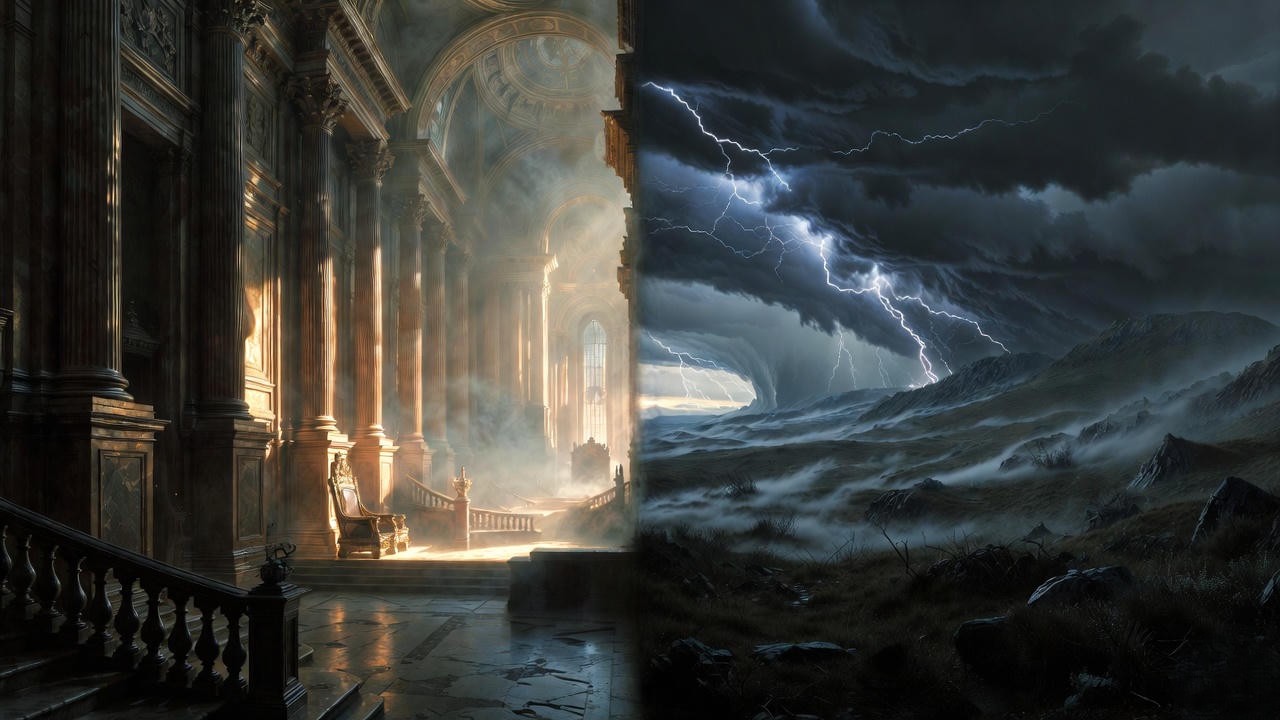
In comedies and romances, the pattern reverses: antonymic spaces facilitate growth and resolution. The Forest of Arden in As You Like It dissolves courtly hierarchies, allowing characters like Orlando and Rosalind to discover authentic love and self-knowledge. The island in The Tempest serves as a controlled void where Prospero orchestrates reconciliation, suggesting that temporary removal from corrupting milieus can heal.
This duality reflects Shakespeare’s nuanced view: society shapes us, but its absence reveals us. As critic G. Wilson Knight argues in The Wheel of Fire, Shakespeare’s landscapes are symbolic extensions of psyche—milieu and its antonym together form a complete dramatic worldview.
Modern relevance endures. Contemporary readers recognize parallels in digital age isolation amid hyper-connected social media “milieus,” or in exile narratives of refugees and political dissidents. Shakespeare’s contrasts prefigure existentialist themes in Beckett or Camus: humanity defined against the void.
Tips for Analyzing Milieu Antonyms in Shakespeare
To apply these insights practically—whether for essays, classroom discussions, or personal reading—follow this structured approach:
- Identify the Primary Milieu: Note dominant social, cultural, and physical settings early in the play. Ask: How do hierarchies, norms, and interactions influence characters?
- Spot Shifts to Antonyms: Look for pivotal scenes of removal—storms, exiles, forests, soliloquies, or islands. Mark language shifts (e.g., from courtly verse to prose in wilderness).
- Trace Character Changes: Examine how the antonym affects protagonists. Does isolation breed madness (Lear), insight (Hamlet), or transformation (Prospero)?
- Connect to Themes: Link contrasts to broader ideas—nature vs. nurture, appearance vs. reality, power vs. humility.
- Compare Across Plays: Use the table earlier to identify patterns (tragic vs. comic uses).
Recommended resources:
- Stephen Greenblatt’s Will in the World for historical context.
- Arden or Folger Shakespeare editions for detailed notes.
- Jan Kott’s Shakespeare Our Contemporary for modern parallels.
This method transforms reading from passive to active, revealing Shakespeare’s structural brilliance.
Frequently Asked Questions (FAQs)
What is the exact antonym of “milieu”?
No single-word antonym exists in standard English. Conceptually, opposites include isolation, void, wilderness, alienation, or chaos—depending on whether emphasizing social, cultural, or physical absence.
Does Shakespeare use the word “milieu” directly?
No—the term entered English post-Shakespeare. He conveys the concept through vivid depictions of courts, families, and societies, contrasted with their inversions.
How do milieu antonyms differ in comedies vs. tragedies?
In comedies (As You Like It, A Midsummer Night’s Dream), antonymic spaces (forests) enable renewal and happy resolutions. In tragedies (King Lear, Hamlet), they precipitate breakdown and irreversible loss.
Can these concepts apply to modern adaptations of Shakespeare?
Absolutely. Films like Akira Kurosawa’s Ran (Lear in feudal Japan) preserve storm-heath isolation. Baz Luhrmann’s Romeo + Juliet contrasts urban gang milieus with moments of alienated intimacy.
Why study milieu antonyms for better understanding Shakespeare?
They reveal how environment drives plot and psychology, offering tools for deeper thematic analysis and appreciation of Shakespeare’s dramatic innovation.
Exploring milieu antonyms in Shakespeare’s plays—from the storm-lashed heath stripping Lear bare to the enchanted island reshaping Prospero’s vengeance into mercy—uncovers the playwright’s profound insight: true character emerges not in society’s comforting embrace, but in confrontation with its opposites.
These contrasts of social immersion versus isolation, civilization versus wilderness, harmony versus void propel the greatest dramas in English literature. For students, they provide analytical precision; for educators, teaching clarity; for enthusiasts, renewed wonder.