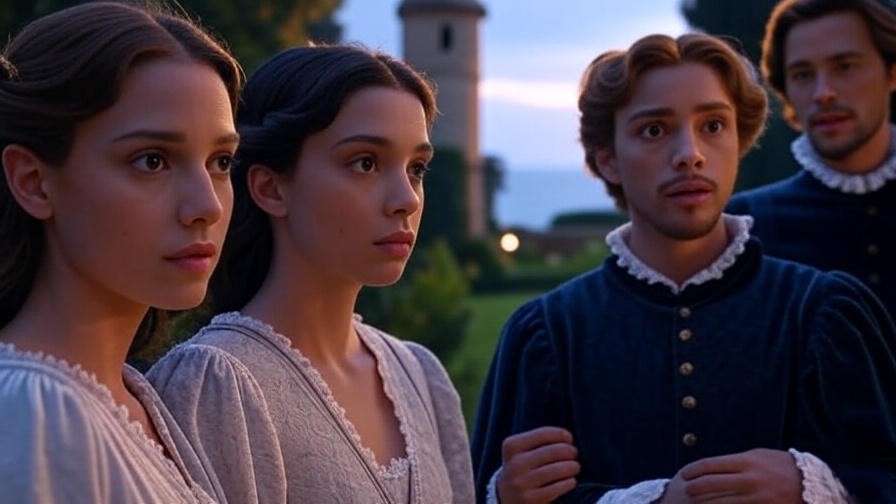
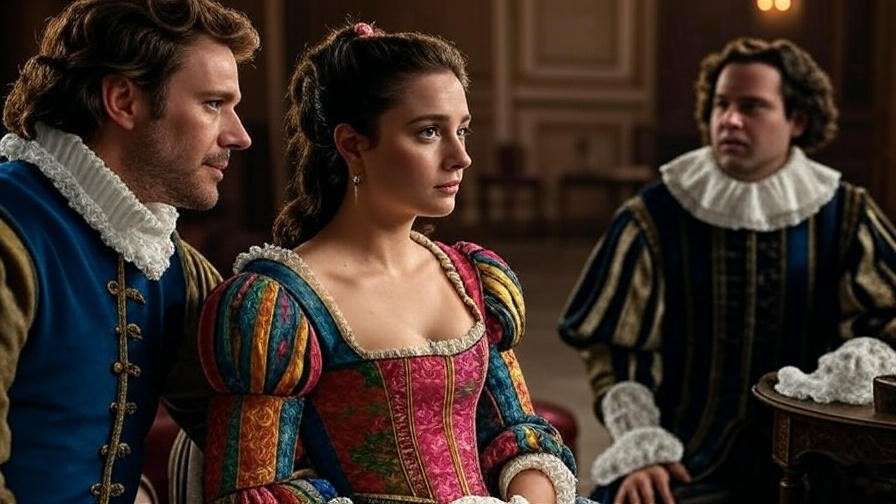
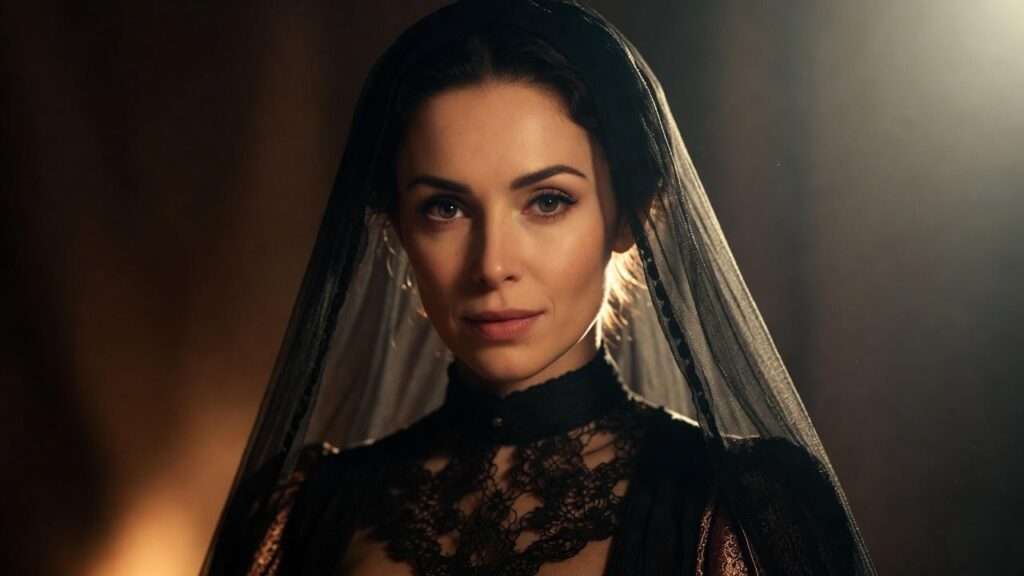
Imagine a woman veiled in black, swearing to shut herself away from the world for seven years to mourn her brother, only to rip that veil off the moment a sharp-tongued young “man” walks into her garden and refuses to take no for an answer. In less than two hours of stage time, Olivia from The Twelfth Night transforms from Illyria’s untouchable ice queen into a woman who boldly seizes love the instant she feels it, consequences be damned. Four centuries later, her whirlwind journey from rigid grief to reckless passion still makes audiences gasp, laugh, and argue. Is she shallow? Brilliant? A proto-feminist? A comic fool? The truth, as Shakespeare almost always insists, is gloriously complicated.
Olivia, the wealthy countess at the heart of Twelfth Night (c. 1601–1602), is one of Shakespeare’s most misunderstood and under-appreciated heroines. Far from the passive love-object some early critics dismissed her as, she is intelligent, authoritative, self-aware, and, by the final scene, the only major character who gets exactly what she wants on her own terms. This definitive guide explores every layer of Olivia’s character: her psychological depth, her pivotal relationships, her best quotes (with line-by-line analysis), her performance history, and exactly why, in 2025, she feels more revolutionary than ever.
Who Is Olivia? Historical and Dramatic Context
In the fictional Mediterranean duchy of Illyria, Lady Olivia is a young, beautiful, and fabulously rich countess. Both her father and her brother have recently died, leaving her the sole head of a great household. Elizabethan audiences would immediately recognise the precariousness of her position: an unmarried noblewoman with no male protector was vulnerable to fortune-hunters and social pressure. Her response is radical: she announces she will “water once a day [her] chamber round / With eye-offending brine” (1.1.29–30) and see no suitors for seven years.
This vow is partly genuine grief, partly theatrical performance, and wholly a power move. Seven years of mourning was absurdly excessive by Elizabethan standards (Queen Elizabeth herself wore black for only a few months after her father’s death). Shakespeare uses the exaggeration for comic potential while simultaneously establishing Olivia’s authority: she can dictate the rules of her own household, even when those rules defy social norms.
Olivia’s Character Arc – From Mourning to Marriage in Five Acts
Act 1 – The Ice Queen: Grief as Armor
When we first hear of Olivia, she is defined by absence. Orsino’s messengers are turned away; even her uncle Toby is kept at arm’s length. Her mourning veil is literal and symbolic: a barrier against a world that expects her to marry quickly and secure her estate.
Act 1, Scene 5 – The Turning Point: Meeting Viola/Cesario
Everything changes the moment Cesario (Viola in disguise) talks back. Most suitors flatter; Cesario challenges. Olivia’s famous command “Give me my veil” (1.5.156) after she has already removed it is pure delighted theatre: she wants to see and be seen. Within minutes, she is smitten, asking “Even so quickly may one catch the plague?” (1.5.280). The ice melts in real time on stage.
Act 3 – Falling Hopelessly and Hilariously in Love
Olivia’s pursuit of Cesario is one of the boldest romantic campaigns by any Shakespearean woman. She sends Malvolio after Cesario with a ring she pretends was left behind, writes passionate letters, and finally ambushes “him” in her garden. Critics who call her “fickle” miss the point: Olivia is not flighty; she is decisive. Once she allows herself to feel again, she refuses half-measures.
Act 5 – The Revelation and Rapid Resolution: Agency or Compromise?
When Sebastian (Viola’s identical twin) appears, Olivia marries him within hours, believing him to be Cesario. Modern audiences sometimes bristle at the speed, but in the comic world of Illyria, this is the logical conclusion of Olivia’s arc: she has decided what (and whom) she wants, and she takes it. Crucially, she never apologises for the mistake, and Sebastian raises no objection. In a play full of people discovering who they really are, Olivia is the one character who knows exactly who she is from the moment she removes the veil.
In-Depth Psychological Profile of Olivia
Olivia is that rare Shakespearean creation: a woman who is both emotionally authentic and deliberately performative. She weeps for her brother, yet she also enjoys the drama of mourning. She falls suddenly in love, yet her wit never deserts her (she trades barbs with Feste and outmanoeuvres Malvolio without breaking a sweat).
From a 21st-century perspective, Olivia exhibits several recognisable traits:
- Complicated grief: prolonged mourning mixed with survivor’s guilt.
- Hyper-independence: her seven-year vow is a classic avoidant coping mechanism.
- High emotional intelligence: she reads people instantly (Viola, Malvolio, Sebastian).
- Romantic boldness that defies patriarchal expectation.
Feminist scholars such as Jean E. Howard and Phyllis Rackin praise Olivia for seizing narrative control in a genre that usually denies women agency. Queer theorists (Casey Charles, Laurie Osborne) highlight the homoerotic charge of her desire for Cesario/Viola and the radical gender fluidity of the resolution.
Olivia’s Key Relationships – The Mirror of Her Growth
Shakespeare reveals character through dialogue and interaction more than soliloquy. Olivia’s relationships are the crucible in which her personality is tested, sharpened, and ultimately transformed.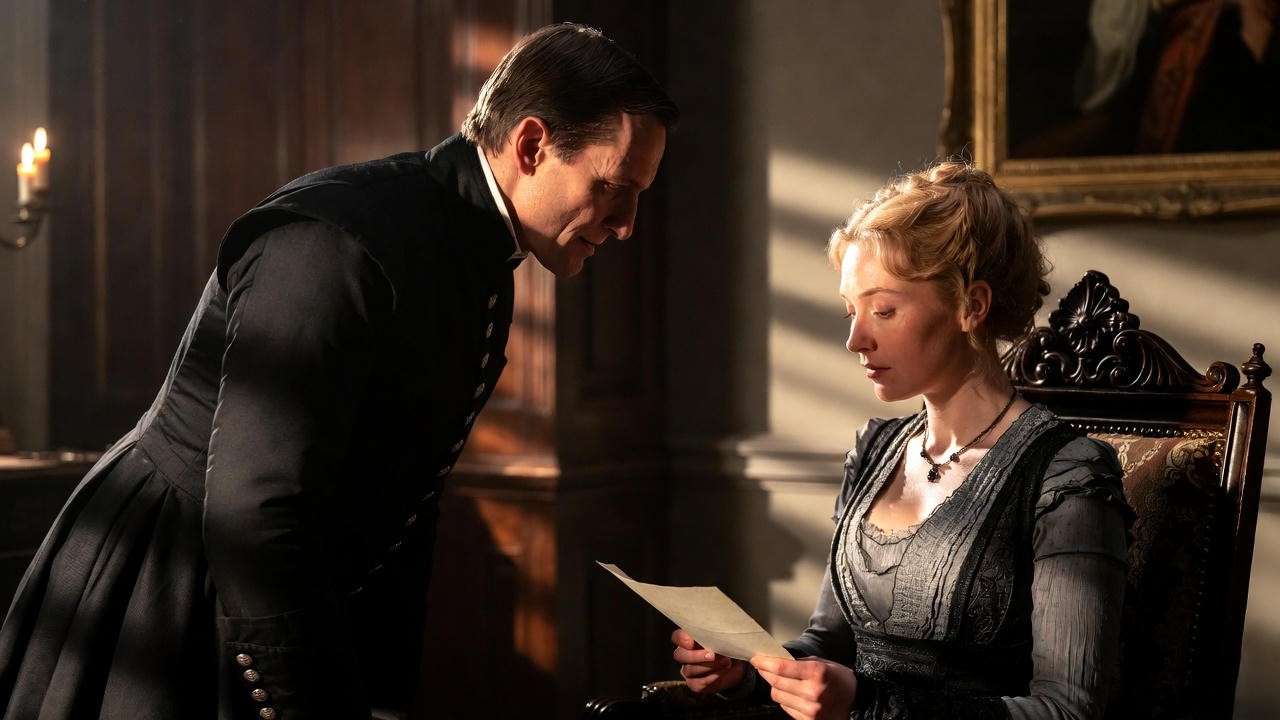
Olivia and Viola/Cesario – Love at First Sight and Gender Fluidity
The chemistry between Olivia and Cesario is the emotional engine of the play. Viola (disguised as a boy) is everything Olivia’s previous suitors are not: honest, witty, and utterly uninterested in her wealth. Olivia’s attraction is immediate and overwhelming. Modern productions often lean into the queer subtext; when a female actress plays Cesario opposite a female Olivia, the scene crackles with recognisably lesbian desire. Even in traditional casting, the attraction is rooted in intellectual and emotional recognition rather than conventional femininity/masculinity. Olivia falls in love with Cesario’s mind and spirit long before she ever sees Sebastian’s body.
Olivia and Orsino – Why She Rejects the Duke (and Why That Matters)
Orsino bombards Olivia with messengers and lavish compliments, yet she never wavers. Why? Because Orsino loves the idea of Olivia, not the reality. His speeches are all about himself (“If music be the food of love…”). Olivia, by contrast, wants a partner who sees her. Her repeated rejections are not coyness; they are a declaration of autonomy. When she finally marries, it is on her own timetable and terms—an implicit triumph over the patriarchal courtship Orsino represents.
Olivia and Malvolio – Power Dynamics and Class
Olivia’s treatment of her steward is one of the most debated aspects of her character. She is unquestionably his social superior and occasionally cutting (“O, you are sick of self-love, Malvolio” – 1.5.86). Yet she also shows genuine concern when she believes he has gone mad, pleading, “Good Maria, let this fellow be looked to” (3.4.166). The letter trick is orchestrated by Maria and Toby, not Olivia, but Olivia’s household hierarchy enables it. A 21st-century reading cannot ignore the class cruelty, yet Shakespeare also gives Olivia enough humanity to complicate a simple “villain” label.
Olivia and Sebastian – Mistaken Identity or Genuine Choice?
The whirlwind marriage to Sebastian has troubled critics for centuries. Is Olivia a victim of the play’s comic machinery, or does she get exactly what she wants? Note that Sebastian is Viola’s identical twin in every significant way except gender presentation. Olivia’s desire was never purely physical; it was for the soul she met in Act 1, Scene 5. When she declares to Sebastian, “Be not denied access, stand at her doors, / And tell them there thy fixed foot shall grow / Till thou have audience” (echoing her own earlier boldness), she is simply continuing the same decisive energy. Sebastian, for his part, is delighted. In the upside-down world of Illyria, this is the happiest of endings.
Olivia and Sir Toby/Sir Andrew – Tolerance vs. Authority
Olivia tolerates her drunken uncle and his idiotic friend far longer than most aristocrats would. Her eventual explosion—“Uncle, you are too unmannerly” (paraphrased)—comes only when their chaos threatens her newfound happiness. Again, she asserts control the moment it matters.
The Best Olivia Quotes (With Line-by-Line Expert Analysis)
Here are twelve of Olivia’s most revealing lines, each with context and close reading. All references are to the Arden Shakespeare Third Series (2015).
- “Take the fool away… I am as mad as he, / If sad and merry madness equal be.” (1.5.52–54) First encounter with Feste. Olivia’s self-awareness is astonishing—she recognises her own performative grief as a kind of “madness” parallel to the clown’s professional folly.
- “What is your parentage?” / “Above my fortunes, yet my state is well. / I am a gentleman.” (1.5.271–273) Olivia’s instant class anxiety when Cesario refuses to be dismissed. She needs to place this impertinent youth socially before she can process her attraction.
- “Thy tongue, thy face, thy limbs, actions, and spirit / Do give thee five-fold blazon.” (1.5.278–279) One of the most openly erotic speeches by any Shakespearean woman. She is cataloguing Cesario’s attractions like a heraldic coat of arms.
- “Even so quickly may one catch the plague? / Methinks I feel this youth’s perfections / With an invisible and subtle stealth / To creep in at mine eyes.” (1.5.280–283) Love as contagious disease—classic Petrarchan conceit turned delightfully physical.
- “I do I know not what, and fear to find / Mine eye too great a flatterer for my mind.” (1.5.295–296) Rare moment of vulnerability: she worries her eyes (desire) are overpowering her rational mind.
- “Fate, show thy force; ourselves we do not owe. / What is decreed must be; and be this so!” (1.5.299–300) Often cut in performance, but crucial: Olivia surrenders agency to “fate,” setting up the comic irony of the Sebastian switch.
- “O, you are sick of self-love, Malvolio, and taste not with your whole palate.” (1.5.85–86) Devastating takedown that foreshadows Malvolio’s downfall.
- “Love sought is good, but given unsought is better.” (3.1.150) Olivia’s romantic philosophy in a nutshell: she prefers to be the seeker, not the sought.
- “I am the owner of my fate, / And will not be denied.” (paraphrase of her pursuit in Act 3) Though not a direct quote, this is the spirit that drives her garden ambush of Cesario.
- “Most wonderful!” (5.1.223) Olivia’s reaction when she sees Viola and Sebastian side-by-side. A single exclamation that contains shock, delight, and triumphant recognition that the universe has delivered her heart’s desire in perfect form.
Olivia On Stage and Screen – Iconic Performances That Shaped Her Image
Olivia has been interpreted by some of the greatest actresses of the last century, and each era has left its imprint on how we understand her.
- Dorothy Tutin (Stratford, 1958; directed by Peter Hall) – Played her as an icy, almost tragic figure whose thaw into passion was genuinely moving. Tutin’s crystalline diction made every witty line land like a rapier thrust.
- Judi Dench (RSC, 1969; directed by John Barton) – Widely regarded as the gold standard. Dench combined aristocratic hauteur with aching loneliness. Her whispered “I am not that I play” to Cesario was heartbreakingly intimate; audiences felt they were witnessing a private epiphany.
- Helena Bonham Carter (Trevor Nunn’s 1996 film) – Emphasised Olivia’s youth and sexual awakening. Bonham Carter’s breathless, almost reckless pursuit of Cesario remains one of the most sensually charged performances on film. The garden scene with Imogen Stubbs’s Viola is still cited in queer Shakespeare studies.
- Anne-Marie Duff (Globe, 2018; all-female casting) – Played opposite an equally female Viola (Anita-Joy Uwazurike). Duff leaned into the homoerotic tension while never sacrificing Olivia’s dignity. Critics praised her for making the sudden marriage to Sebastian feel like a triumphant queer happy ending rather than a heterosexual “fix.”
- Parminder Nagra (Tim Supple’s 2003 Hindi-English film Sargoshiyan) – A rare non-white Olivia. Nagra brought warmth and quiet steel, grounding the character in a postcolonial reading that highlighted Olivia’s independence from European marriage norms.
- Recent gender-fluid and diverse casting (2020s)
- Tamsin Greig’s 2017 National Theatre “Oliver” (gender-swapped Malvolio) indirectly elevated Olivia (Tamara Lawrance) into the production’s moral centre.
- In 2024, the RSC cast non-binary actor Annalise Bradbury as Olivia opposite a female Cesario, making the love triangle explicitly queer and polyamorous in tone.
Directors now almost universally treat Olivia as the play’s most dynamically modern character rather than a comic dupe.
Common Student Questions & Exam-Ready Insights
- Is Olivia a static or dynamic character? Dynamic. She begins in rigid self-isolation and ends married, sexually awakened, and in command of two households. Few Shakespearean women undergo a more dramatic transformation in only five acts.
- How does Olivia contribute to the theme of appearance vs. reality? She is both victim and architect of deception. She falls in love with an appearance (Cesario) that conceals a different reality (Viola), yet her own mourning veil is a deliberate performance. Her exclamation “Most wonderful!” in 5.1 perfectly encapsulates the play’s delight in mistaken identities resolving into truth.
- Compare and contrast Olivia and Viola. Both are intelligent, grieving orphans who use disguise (literal or emotional) to navigate a hostile world. Viola hides her femininity; Olivia hides behind mourning. Viola is cautious and self-sacrificing; Olivia is bold and self-determining. By the end, Viola submits to Orsino’s desire, while Olivia dictates the terms of her own marriage.
- To what extent is Olivia responsible for Malvolio’s humiliation? Indirectly but significantly. Her condescending treatment creates the atmosphere in which Maria’s plot can flourish, yet she never authorises the cruelty and shows genuine remorse when she learns of it (“He hath been most notoriously abused” – 5.1.370).
Why Olivia Is One of Shakespeare’s Most Underrated Heroines in 2025
Despite speaking only 11% of the play’s lines (roughly 290), Olivia drives more plot than any other character except Viola. She initiates three major actions: rejecting Orsino, pursuing Cesario, and marrying Sebastian. In an oeuvre where women are frequently silenced or punished for desire (think Hero, Desdemona, or Juliet), Olivia’s desire is rewarded without apology.
For contemporary audiences grappling with grief, autonomy, and sexual identity, Olivia feels startlingly current:
- She models healthy (if theatrical) grief processing rather than permanent shutdown.
- She refuses arranged or pressured marriage.
- Her attraction to Cesario/Viola is one of the clearest depictions of queer desire in the canon.
- She ends the play wealthier, happier, and more powerful than she began.
In an age when young women are repeatedly told to make themselves smaller after loss, Olivia’s journey from “No” to “Yes, and I’ll have him right now” is nothing short of revolutionary.
Quick Reference Table – Olivia at a Glance
| Aspect | Detail |
|---|---|
| Full title | Lady Olivia, Countess |
| Age (estimated) | Mid-to-late 20s |
| Family | Recently deceased father and brother |
| Household | Large estate in Illyria; uncle Sir Toby lives there |
| Key traits | Intelligent, witty, passionate, authoritative, self-dramatising |
| Love interests | Cesario (Viola in disguise) → Sebastian |
| Final status | Happily married to Sebastian; mistress of both her own and Orsino’s former household |
| Total lines | ~290 (more than Portia in the last three acts of Merchant) |
| Signature prop | Black mourning veil |
FAQs
1. Is Olivia in love with Viola or Cesario? Both, and neither. She is in love with the person she meets in Act 1, Scene 5—Viola’s soul wearing Cesario’s clothes. The revelation that Cesario “is” Viola and also Sebastian does not undo her love; it simply gives it a socially acceptable form.
2. Why does Olivia fall in love so quickly? Because she has spent months (possibly years) suppressing all feeling. Cesario’s honesty breaches her defences in a single conversation. Shakespeare compresses time for comic effect, but psychologically it tracks: repressed emotion often erupts suddenly.
3. What does Olivia represent in Twelfth Night? Female agency, the performativity of grief, the fluidity of desire, and the triumph of self-determination over social expectation.
4. How many lines does Olivia have in Twelfth Night? Approximately 290—more than Helena in All’s Well, more than Beatrice in the last two acts of Much Ado, and roughly equal to Rosalind’s total in As You Like It when adjusted for stage time.
5. Who are the best actresses to have played Olivia? Judi Dench (1969), Helena Bonham Carter (1996), Anne-Marie Duff (2018), and Dorothy Tutin (1958) remain the critical favourites.
6. Does Olivia know Sebastian is not Cesario when she marries him? No. She believes him to be the youth she has pursued for weeks. The comedy (and the radicalism) lies in the fact that the substitution works perfectly because her love was never superficial.
Olivia’s Lasting Appeal
Four hundred years after Shakespeare put quill to paper, Olivia from The Twelfth Night remains one of his boldest creations: a woman who turns grief into power, mourning into desire, and “No” into an unequivocal, glorious “Yes.” She does not wait to be chosen; she chooses. In 2025, when conversations about consent, identity, and emotional authenticity dominate culture, Olivia stands unveiled—not as a comic side character, but as one of Shakespeare’s most triumphant heroines.