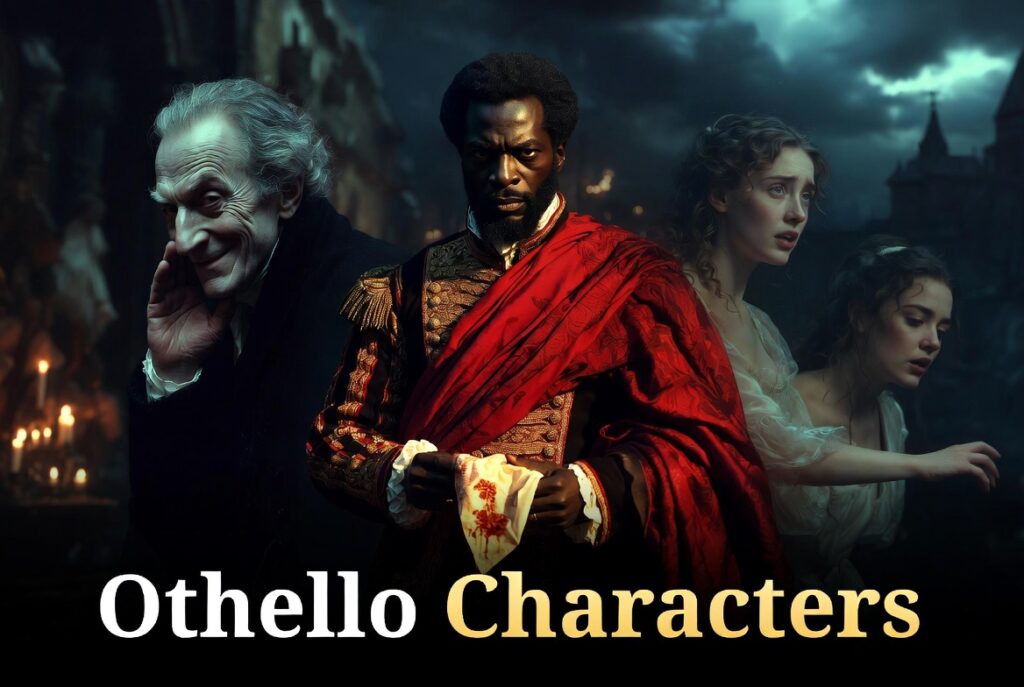
What if the tragedy of Othello isn’t really about jealousy alone—but about how each character’s role silently drives the story toward destruction?
Understanding the othello role of each character is the key to unlocking the deeper meaning of the play. Many readers focus only on Othello’s downfall, but that approach misses something critical: every character—major or minor—functions like a cog in a tragic machine. Remove or misunderstand one role, and the entire interpretation falls apart.
This guide goes far beyond basic summaries. You’ll discover:
- The true purpose behind each character
- How roles interconnect to build tension and tragedy
- Expert-level insights that most readers and students overlook
- Practical analysis techniques you can apply in essays and exams
Whether you’re a student, literature enthusiast, or educator, this is your complete, authoritative breakdown of every Othello role—designed to give you clarity, confidence, and a deeper appreciation of Shakespeare’s genius.
What Does “Othello Role” Really Mean? (Clarifying the Core Concept)
Role vs Character: Why the Distinction Matters
In literary analysis, a character is simply a person in the story. But a role is much more powerful—it defines what that character does in shaping the narrative.
For example:
- A character may exist for background
- A role actively drives conflict, reveals themes, or influences outcomes
In Othello, roles are not accidental. Each one is carefully constructed to serve:
- The plot progression
- The emotional tension
- The thematic depth
Why Roles Matter in Shakespearean Tragedy
Shakespeare’s tragedies are built on interconnected forces—not isolated actions.
In Othello, roles function as:
- Catalysts (Iago triggering events)
- Victims (Desdemona embodying innocence)
- Mirrors (Cassio reflecting Othello’s flaws)
- Truth-revealers (Emilia exposing deception)
Understanding these roles allows you to:
- Interpret the play more accurately
- Write stronger essays
- Identify deeper meanings beyond surface-level reading
Overview of the Dramatic Structure of Othello
Othello as a Classical Tragedy
Othello follows the classic structure of tragedy:
- A noble hero
- A fatal flaw (hamartia)
- A descent into chaos
- A catastrophic ending
Othello begins as a respected general and ends as a broken man. But this transformation doesn’t happen in isolation—it’s shaped by the roles around him.
Key Themes That Shape Every Role
Each role in Othello is tied to central themes:
- Jealousy → The destructive force that consumes Othello
- Manipulation → Iago’s primary weapon
- Trust vs Deception → The core conflict
- Race and Identity → Othello’s vulnerability as an outsider
- Reputation and Honor → Especially seen in Cassio
These themes are not abstract—they are activated through character roles.
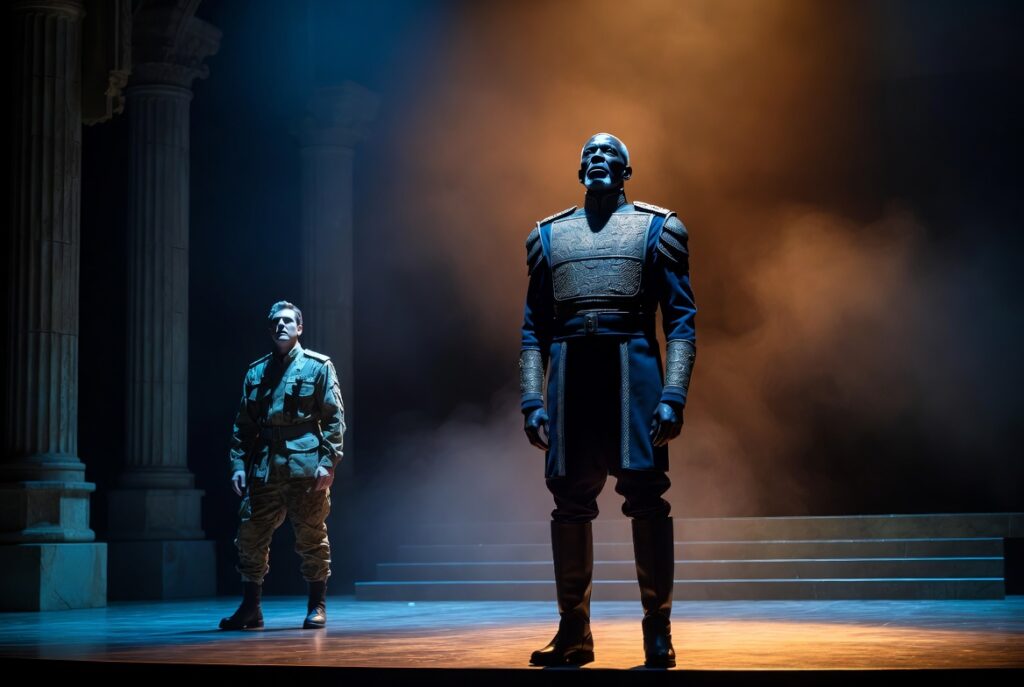
Othello’s Role – The Tragic Hero
Who Is Othello?
Othello is a Moorish general in the Venetian army—respected, powerful, and admired. Yet beneath this strength lies vulnerability.
His Role in the Story
Othello serves as:
- The central tragic hero
- The emotional and moral focus of the play
His role is to demonstrate how even greatness can collapse under psychological pressure.
Othello’s Fatal Flaw (Hamartia)
Othello’s downfall is driven by:
- Deep insecurity
- Blind trust in Iago
- Emotional impulsiveness
His jealousy doesn’t appear instantly—it is carefully planted and nurtured.
How His Role Drives the Tragedy
Othello transforms from:
- A confident leader → to a suspicious husband → to a tragic destroyer
His role is not just to fall—but to show how easily truth can be distorted when trust is misplaced.
Iago’s Role – The Master Manipulator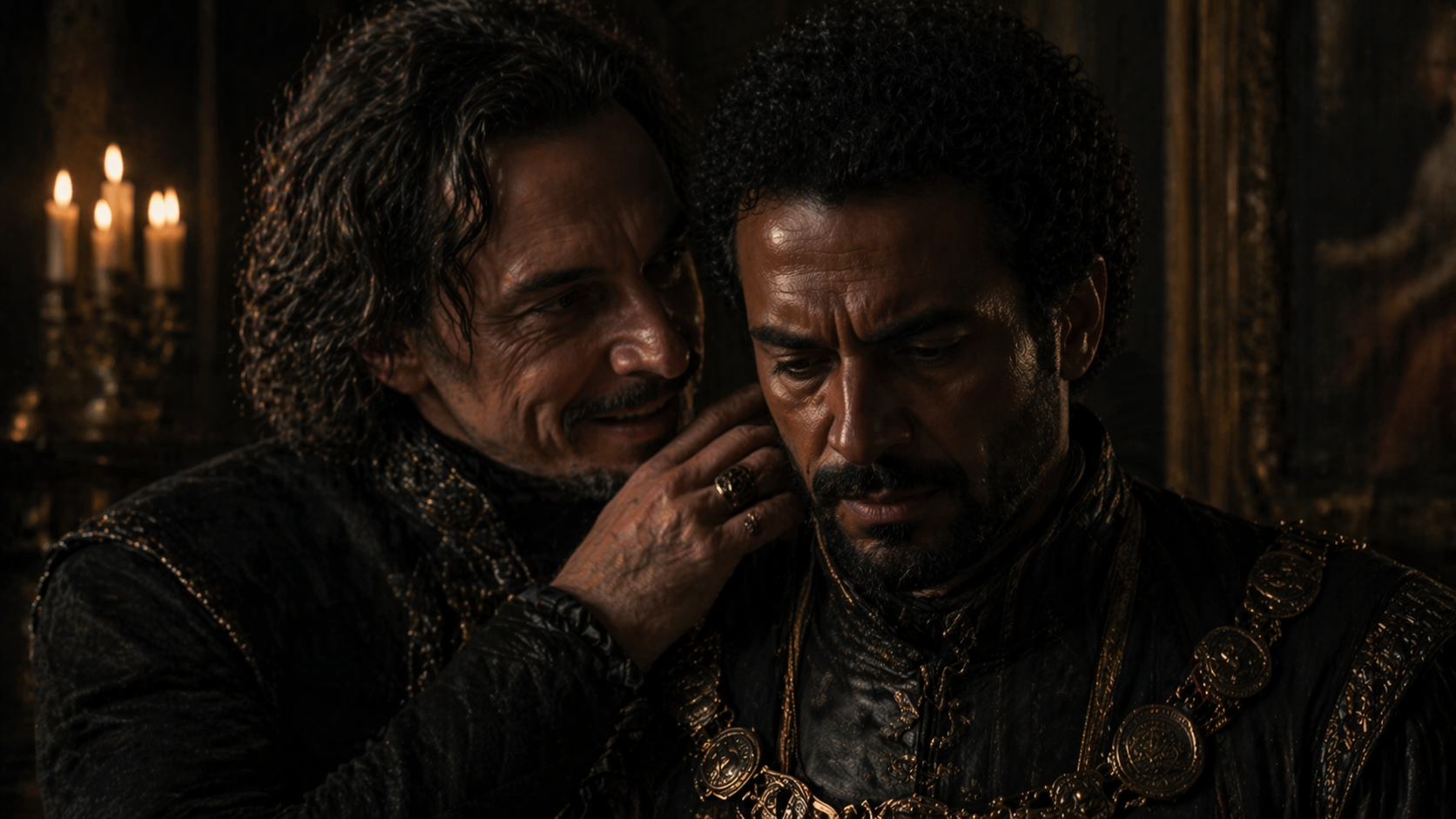
++
Iago as the Villain
Iago is not just a villain—he is the architect of the entire tragedy.
Unlike typical antagonists, his motives are:
- Unclear
- Shifting
- Deeply psychological
His Role as the Engine of Conflict
Without Iago:
- There is no misunderstanding
- No jealousy
- No tragedy
He acts as:
- A puppet master controlling others
- A narrative driver shaping events behind the scenes
Techniques of Manipulation
Iago’s power lies in:
- Strategic language
- Exploiting trust
- Planting doubt subtly
He never forces Othello—he guides him to destroy himself.
Why Iago Is So Dangerous
Iago represents:
- The danger of hidden malice
- The illusion of honesty (“Honest Iago”)
His role shows that evil doesn’t always appear obvious—it often disguises itself as loyalty.
Desdemona’s Role – Innocence and Tragic Victim
Her Character Traits
Desdemona is:
- Loyal
- Pure
- Courageous
She defies societal norms by marrying Othello—but remains deeply devoted.
Role in the Narrative
Desdemona functions as:
- The emotional heart of the play
- The ultimate victim of misunderstanding
Symbolism of Desdemona
She represents:
- Innocence destroyed by suspicion
- Love corrupted by doubt
Her role amplifies the tragedy—because the audience knows she is innocent.
Cassio’s Role – Reputation and Honor
Cassio as a Foil to Othello
Cassio highlights Othello’s weaknesses:
- Polished vs emotionally unstable
- Concerned with reputation vs driven by passion
His Role in Iago’s Plan
Cassio becomes:
- The false evidence of Desdemona’s betrayal
He is unaware of the chaos surrounding him—making his role tragically ironic.
Theme of Reputation Through Cassio
Cassio famously values reputation:
- “Reputation, reputation, reputation!”
His role reinforces:
- How fragile honor is
- How easily it can be manipulated
Emilia’s Role – Truth, Loyalty, and Awakening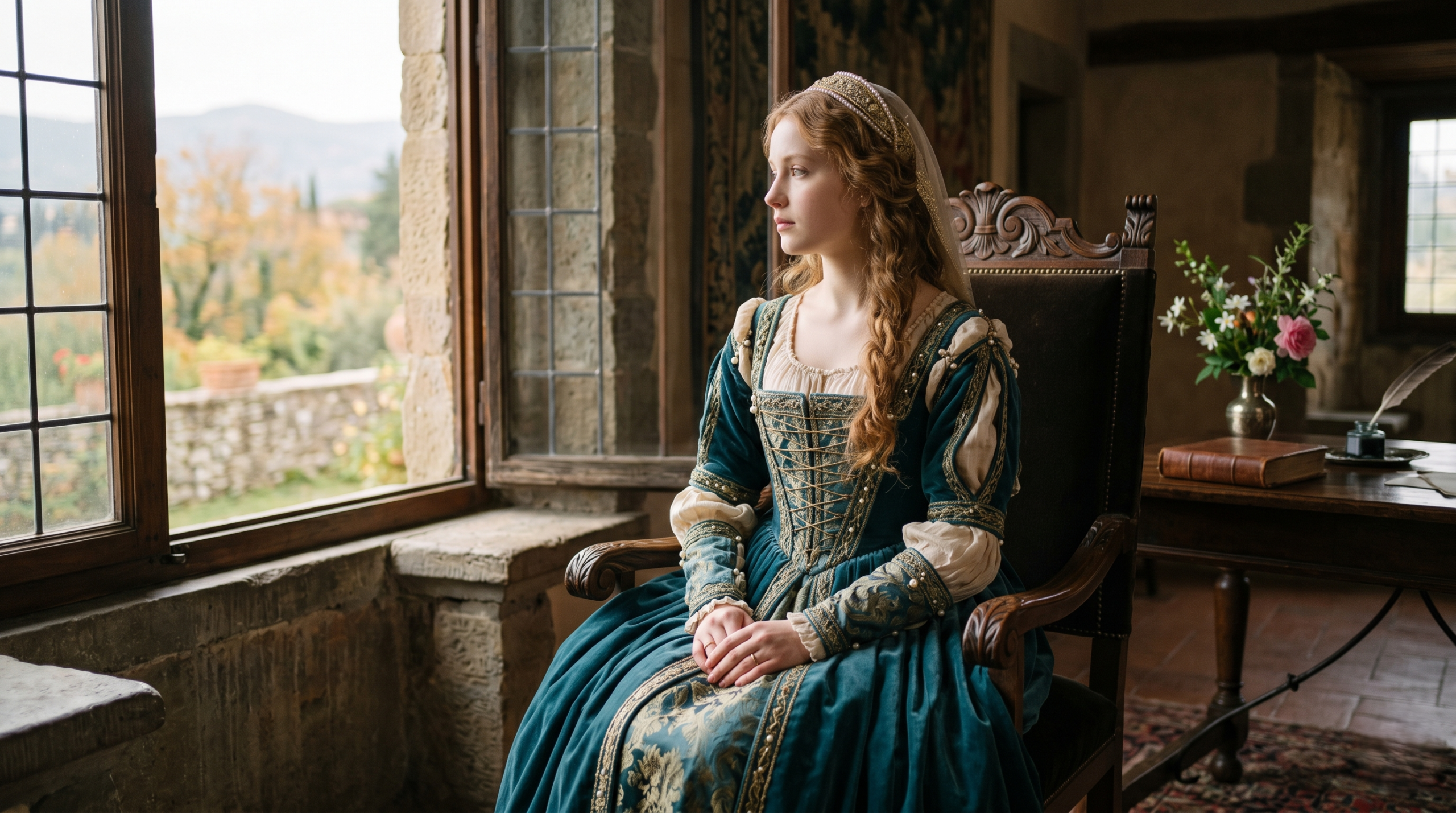
Emilia’s Relationships
Emilia is:
- Iago’s wife
- Desdemona’s attendant
She stands between:
- Loyalty to her husband
- Loyalty to truth
Her Role in Revealing the Truth
Emilia becomes the turning point of the play.
She exposes:
- Iago’s deception
- The truth behind the handkerchief
Emilia as a Voice of Insight
Emilia challenges:
- Gender inequality
- Male dominance
Her role evolves from passive to powerful—making her one of the most underrated characters in the play.
Brabantio’s Role – Authority and Prejudice
Father Figure and Social Power
Brabantio represents:
- Patriarchal authority
- Social control
Role in Introducing Conflict
He accuses Othello of:
- Witchcraft
- Manipulation
This early conflict sets the tone for the entire play.
Representation of Bias
Brabantio embodies:
- Racial prejudice
- Cultural fear
His role foreshadows Othello’s later insecurity.
Roderigo’s Role – The Foolish Pawn
His Motivation
Roderigo is driven by:
- Obsession with Desdemona
Role in the Plot
He acts as:
- Iago’s tool
- A financial and physical resource
Roderigo’s role highlights:
- The danger of blind desire
- How easily people can be manipulated
Minor Characters and Their Roles (Often Overlooked but Essential)
While major figures like Othello, Iago, and Desdemona dominate attention, Shakespeare deliberately uses minor characters to stabilize, contrast, and expose the main action. Their roles may seem secondary, but they are structurally essential to the tragedy.
Bianca – Reality vs Perception
Bianca is often misunderstood as a minor romantic figure, but her role is far more meaningful.
She represents:
- Real emotional love vs assumed infidelity
- Social stigma attached to women outside marriage norms
- A mirror that reflects Cassio’s misunderstood situation
When Cassio possesses Desdemona’s handkerchief, Bianca becomes the “fake suspect,” reinforcing how easily perception replaces truth in the play.
👉 Her role strengthens the central theme: appearances are dangerously misleading.
Montano – Order and Governance
Montano serves as a symbol of:
- Venetian authority in Cyprus
- Military discipline
- Stability before chaos escalates
When violence erupts under Iago’s influence, Montano’s inability to maintain order highlights:
- The breakdown of rational leadership
- The vulnerability of structured society
His role is subtle but important in showing the collapse of control.
Lodovico and Gratiano – Voices of External Judgment
These characters enter later in the play, but their presence is crucial.
They function as:
- External observers of chaos
- Representatives of Venetian society returning to “clean up” disorder
They react with shock, reinforcing for the audience:
- How far Othello has fallen
- How distorted reality has become inside Cyprus
Their role is to restore moral and social perspective after destruction.
How All Roles Interconnect to Create the Tragedy
Understanding each othello role individually is important—but the true mastery of the play comes from seeing how they connect like a chain reaction.
The Chain Reaction of Tragedy
The tragedy unfolds through a carefully designed sequence:
- Iago plants suspicion
- Othello misinterprets signals
- Cassio becomes accidental evidence
- Desdemona becomes wrongly accused
- Emilia reveals truth too late
Each role triggers the next, forming a self-reinforcing system of destruction.
Role Interdependence: No Character Exists Alone
Shakespeare designs the play so that:
- Othello cannot fall without Iago
- Iago cannot succeed without Othello’s trust
- Desdemona’s innocence only matters because of accusation
- Emilia’s truth only matters after deception spreads
This creates a tightly woven narrative structure where every role is essential.
Collapse of Trust: The Core Mechanism
At the center of all roles lies one breaking point:
Trust is destroyed before truth can be established.
Once trust collapses:
- Relationships dissolve
- Logic becomes irrelevant
- Emotion takes control
This is the true engine of the tragedy.
Key Symbols That Strengthen Each Role
Shakespeare reinforces character roles through powerful symbolism.
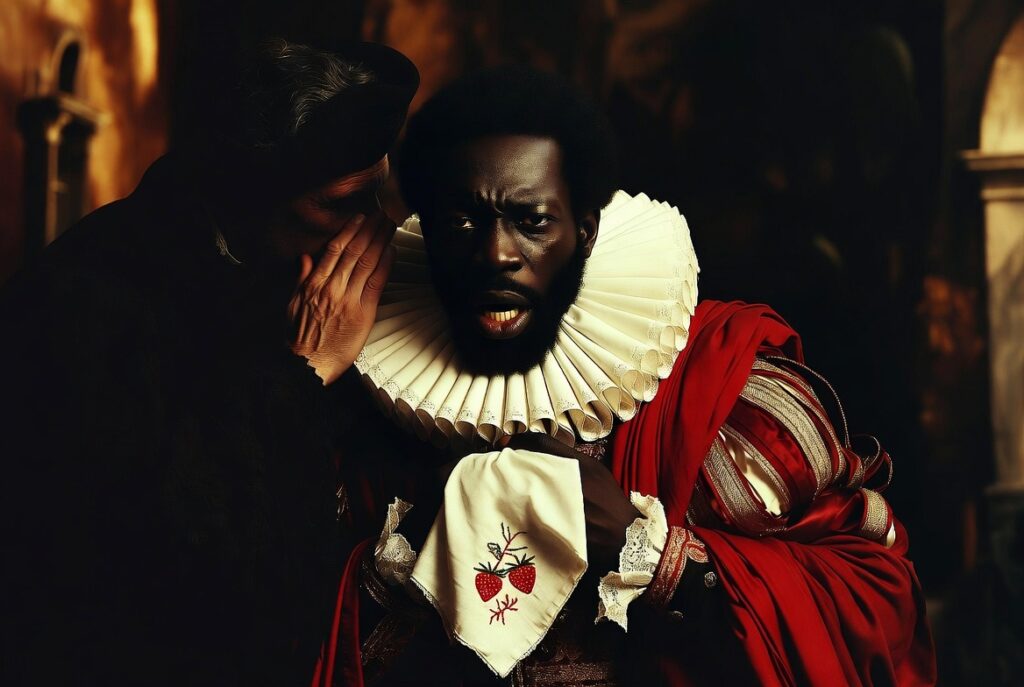
The Handkerchief – Love, Proof, and Deception
The handkerchief is not just an object—it is a symbolic weapon.
It represents:
- Othello and Desdemona’s marital bond
- Proof of fidelity
- Evidence of betrayal (fabricated by Iago)
Its movement between characters reflects:
- The transfer of trust into suspicion
- The transformation of love into proof of guilt
Language and Imagery
Shakespeare uses recurring imagery to reinforce roles:
- Animal imagery → Othello’s dehumanization of Desdemona
- Light vs darkness → truth vs deception
- Disease imagery → corruption spreading through relationships
Each character’s role is reinforced through how they speak and are described.
Expert Insights: What Most Readers Miss About Othello Roles
After analyzing Othello for academic and literary contexts, three major insights often go unnoticed:
1. Othello Is Not Just a Victim
Many assume Othello is purely manipulated—but his role includes:
- Emotional vulnerability
- Rapid psychological escalation
- Responsibility for his final actions
He is both victim and agent.
2. Iago’s Motive Is Less Important Than His Function
Readers often ask “why does Iago do it?” but Shakespeare shifts focus:
- Iago’s role is not explanation
- His role is mechanism of chaos
He represents manipulation itself, not just a motivated villain.
3. Emilia Is the True Turning Point
Emilia’s role is often underestimated, but she is:
- The only character who fully understands truth
- The catalyst for revelation
- The final moral voice of the play
Without Emilia, the tragedy would remain permanently unresolved.
Practical Analysis Tips for Students and Readers
If you are studying Othello, understanding roles is the fastest way to improve essays and exam answers.
How to Write About Othello Roles in Essays
Use this structure:
- Identify the role
- Explain its function in the plot
- Link it to a theme
- Support with textual evidence
- Analyze impact on tragedy
Example:
- “Iago’s role as manipulator drives the collapse of trust…”
Common Mistakes to Avoid
- Treating characters as isolated personalities
- Ignoring minor roles like Emilia or Roderigo
- Over-simplifying Othello as “just jealous”
- Forgetting thematic connections
Strong analysis always connects role → theme → effect.
Frequently Asked Questions (SEO Section)
What is Othello’s role in the play?
Othello is the tragic hero whose downfall demonstrates how trust, jealousy, and manipulation can destroy even the strongest individuals.
Why is Iago important in Othello?
Iago’s role is to orchestrate the entire tragedy through manipulation, deception, and psychological control.
What role does Desdemona play in Othello?
Desdemona represents innocence and unconditional love, making her unjust suffering central to the emotional tragedy.
Who is the most important character in Othello?
While Othello is the central figure, Iago is often considered the most influential due to his control over events.
What is Emilia’s role in Othello?
Emilia’s role is to reveal the truth of Iago’s manipulation, making her essential to the resolution of the tragedy.
Why Understanding Every Othello Role Changes Everything
The tragedy of Othello is not built on one character’s downfall—it is built on the interlocking roles of every character in the play.
Othello represents emotional vulnerability.
Iago represents manipulation.
Desdemona represents innocence.
Cassio represents reputation.
Emilia represents truth.
Even minor characters reinforce structure and meaning.
When you understand each othello role, the play transforms from a simple tragedy into a complex psychological system—where trust, language, and perception collide with devastating consequences.
Ultimately, Shakespeare is not just telling a story of jealousy.y