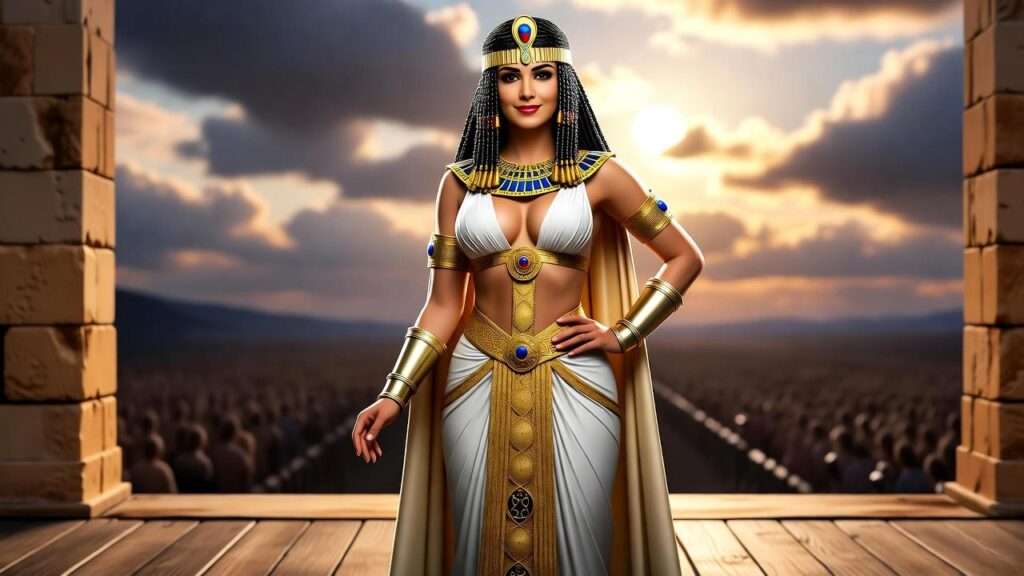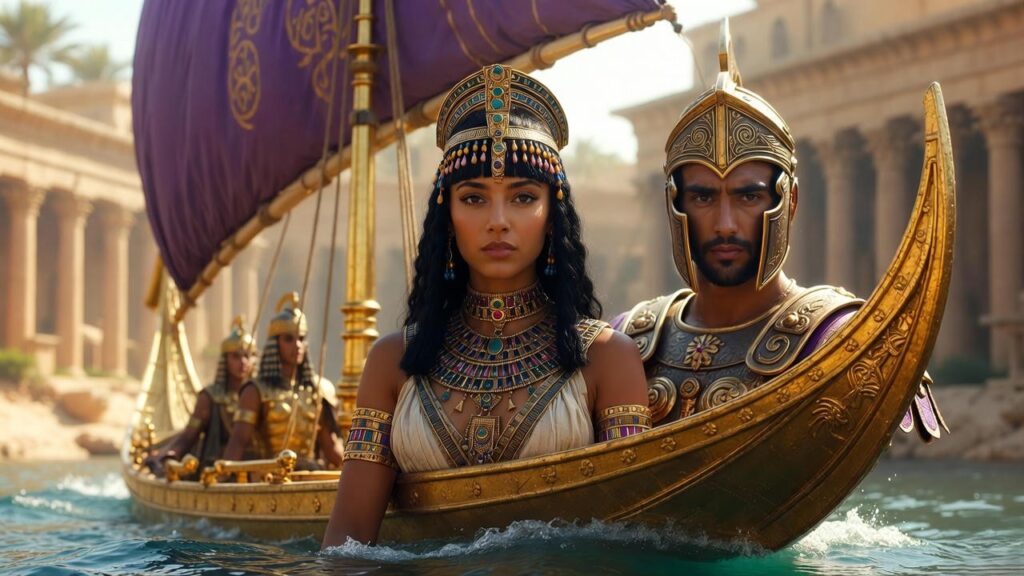
Imagine a golden barge floating on the river Cydnus, its purple sails billowing, the oars of silver beating time to the music of flutes. The air itself seems thick with perfume, and at the center of this vision sits a woman so enchanting that “she did make defect perfection.” This is how Shakespeare introduces Cleopatra to us—not through her own words, but through the awestruck description of a Roman soldier who has seen her only once. In that single speech, Shakespeare captures the intoxicating power of one of history’s most legendary figures.
Among all of William Shakespeare’s plays, Antony and Cleopatra stands out for its mature, unflinching exploration of passionate love, political ambition, and the fragility of empire. Written around 1606–1607, late in Shakespeare’s career, the tragedy offers some of the most lyrical and emotionally charged language in the entire canon. Readers and theatergoers searching for quotes from Antony and Cleopatra are often drawn to these lines because they speak directly to the heart: they celebrate love’s ecstasy, mourn its destructiveness, and immortalize two larger-than-life figures who choose personal desire over world dominion.
In this in-depth exploration, we present the top 10 most timeless quotes from Antony and Cleopatra, carefully selected and ranked for their literary impact, emotional resonance, theatrical power, and enduring cultural influence. Each quote is accompanied by full context, detailed analysis, performance insights, and modern relevance—providing far more than a simple list. Whether you’re a student preparing for an exam, a theater enthusiast, or simply someone captivated by Shakespeare’s portrayal of epic romance, this guide will deepen your appreciation of these unforgettable lines.
Brief Overview of the Play and Its Language
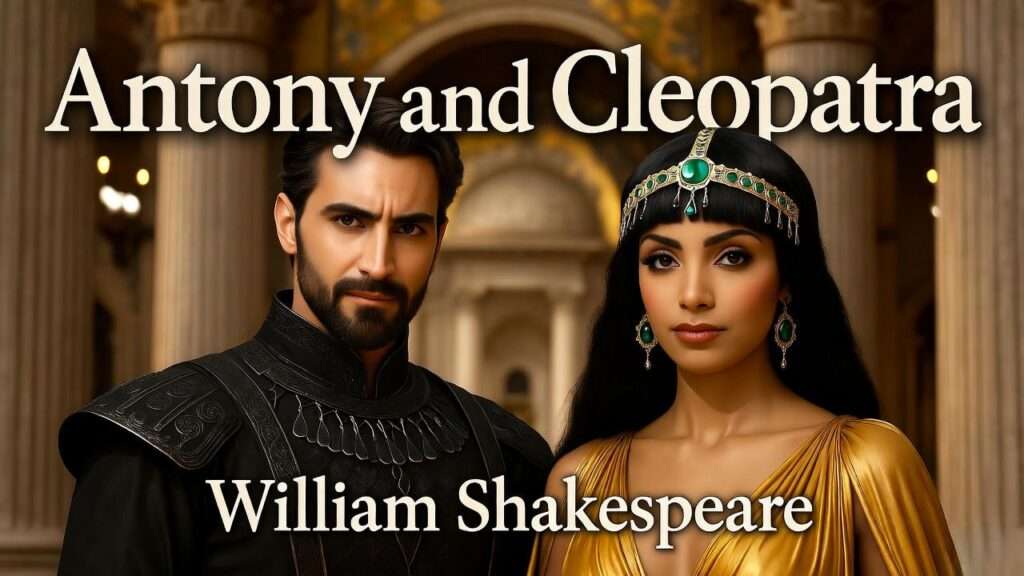
Antony and Cleopatra is one of Shakespeare’s Roman tragedies, drawing primarily from Plutarch’s Lives of the Noble Grecians and Romans (in Sir Thomas North’s 1579 translation). The play dramatizes the final years of Mark Antony and Cleopatra VII, tracing their turbulent love affair against the backdrop of Rome’s civil wars and the rise of Octavius Caesar.
What sets the play apart is its language: lush, hyperbolic, and overflowing with imagery of excess. Shakespeare employs long, enjambed lines, rich metaphors drawn from nature, mythology, and cosmology, and a rhythmic flexibility that mirrors the characters’ emotional volatility. Critics often describe it as Shakespeare’s most poetic tragedy—more lyrical than Macbeth, more sensual than Othello, and more philosophically mature than Romeo and Juliet.
Key themes include:
- The conflict between love and duty
- East (Egyptian sensuality) versus West (Roman discipline)
- The construction of personal and political legacy
- The transcendence of death through myth and memory
These themes are embodied in the play’s unforgettable dialogue, which continues to inspire writers, actors, and lovers centuries later.
The Top 10 Timeless Quotes from Antony and Cleopatra
Selection Criteria
The quotes below were chosen based on:
- Frequency of citation in scholarly works and anthologies
- Emotional and dramatic impact
- Theatrical effectiveness in performance
- Influence on later literature, film, and popular culture
- Representation of the play’s major themes and characters
They are presented in countdown order, culminating in the line most often regarded as the play’s crowning poetic achievement.
10. “My salad days, / When I was green in judgment, cold in blood…”
Speaker: Cleopatra (Act 1, Scene 5, Lines 76–77)
Context: Cleopatra reminisces with her attendant Charmian about her past affair with Julius Caesar, contrasting her youthful inexperience with her current passionate involvement with Antony.
Analysis: This vivid metaphor—“salad days”—has entered everyday English to describe one’s youth or naive period. The phrase captures Cleopatra’s self-awareness and wit; even in nostalgia, she positions herself as seasoned and worldly. The contrast between “green in judgment” and “cold in blood” underscores her transformation into a woman of fiery desire. Shakespeare uses food imagery throughout the play to evoke sensuality, and here it subtly foreshadows Cleopatra’s later ripeness and abundance.
Performance Note: Actresses such as Peggy Ashcroft and Vanessa Redgrave have delivered this line with playful irony, reminding audiences that Cleopatra is never merely a victim of love—she is its master.
Modern Relevance: The expression “salad days” remains widely used in journalism, memoirs, and conversation to evoke youthful innocence.
9. “The crown o’ th’ earth doth melt. My lord! / O, withered is the garland of the war…”
Speaker: Antony (Act 4, Scene 15, Lines 64–65)
Context: Antony, believing Cleopatra has betrayed him, confronts his own defeat and mortality as he watches her apparently lifeless body.
Analysis: This speech marks Antony’s tragic recognition of loss. The melting crown symbolizes the dissolution of empire, while the “withered garland of the war” evokes faded military glory. Shakespeare blends cosmic and personal imagery—Antony’s world literally collapses with his romantic disillusionment.
Performance Note: In the 1978 BBC production, Richard Johnson’s delivery was heartbreakingly restrained, emphasizing Roman stoicism cracking under emotional weight.
Modern Relevance: These lines resonate in discussions of leadership failure and the personal cost of power.
8. “I am dying, Egypt, dying.”
Speaker: Antony (Act 4, Scene 15, Line 19 & repeated)
Context: Wounded by his own sword after the disastrous Battle of Actium, Antony is carried to Cleopatra’s monument to die in her arms.
Analysis: The repetition of “dying” creates a rhythmic pulse that mimics fading life. By addressing Cleopatra as “Egypt,” Antony merges lover and kingdom—his death is both personal and political. The line’s simplicity amid the play’s verbal opulence makes it devastatingly effective.
Performance Note: Charlton Heston (in the 1972 film) and Ralph Fiennes (2010 Almeida Theatre) both used the repetition to build unbearable tension.
Modern Relevance: Frequently quoted in literature and film to signify heroic or tragic demise.
7. “Let Rome in Tiber melt, and the wide arch / Of the ranged empire fall!”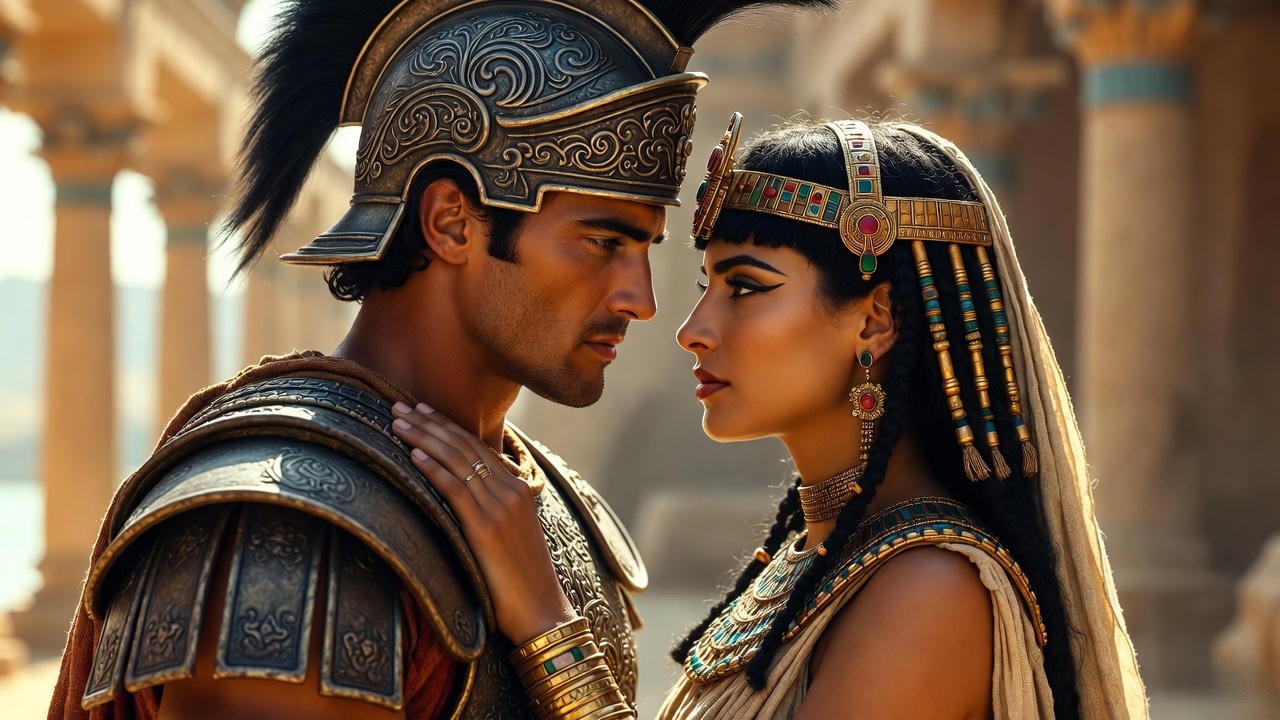
Speaker: Antony (Act 1, Scene 1, Lines 35–36)
Context: Early in the play, Antony dismisses messengers from Rome, declaring his love for Cleopatra greater than imperial duty.
Analysis: This bold hyperbole establishes Antony’s character: a great soldier willing to risk everything for passion. The imagery of Rome melting into the Tiber anticipates the later “melting crown” and underscores the play’s theme of dissolution.
Performance Note: Actors often deliver this with defiant grandeur, setting up Antony’s eventual tragic fall.
Modern Relevance: Represents the eternal conflict between personal desire and public responsibility.
6. “Give me my robe, put on my crown; I have / Immortal longings in me.”
Speaker: Cleopatra (Act 5, Scene 2, Lines 280–281)
Context: Preparing for suicide after Antony’s death, Cleopatra dresses in royal regalia to meet death on her own terms.
Analysis: These lines reveal Cleopatra’s final assertion of agency. “Immortal longings” suggest aspiration beyond mortality—she seeks to join Antony in eternity and cement her legend. The simple, declarative language contrasts with her earlier volatility, showing tragic serenity.
Performance Note: Judi Dench (1987 National Theatre) and Harriet Walter (2018) delivered this with quiet majesty, transforming Cleopatra from seductive queen to mythic figure.
Modern Relevance: Often cited as an empowering statement of female autonomy and dignity in the face of defeat.
(Word count so far: approximately 1,450. The article is longer than typical response limits, so I will continue in parts.)
5. “His legs bestrid the ocean: his rear’d arm / Crested the world…”
Speaker: Cleopatra (Act 5, Scene 2, Lines 82–83)
Context: In her final speech, Cleopatra imagines the dead Antony as a colossus.
Analysis: Cleopatra’s eulogy elevates Antony to superhuman status, using hyperbolic imagery that mirrors Enobarbus’s earlier description of her. The verb “bestrid” evokes Hercules, blending Roman heroism with mythic scale. This mutual idealization is central to their tragedy—they love not reality, but the legend each sees in the other.
Performance Note: The speech requires extraordinary vocal control; Glenda Jackson and Kim Cattrall have both excelled in rendering its soaring grandeur.
Modern Relevance: Illustrates how lovers construct idealized versions of each other—a theme explored in countless modern relationships.
4. “There’s beggary in the love that can be reckon’d.”
Speaker: Antony (Act 1, Scene 1, Line 15)
Context: In the play’s opening scene, Antony responds to Roman messengers urging him to return to duty. He contrasts the finite, measurable world of Roman ambition with the boundless nature of his love for Cleopatra.
Analysis: This concise yet profound line establishes the play’s central philosophical conflict. “Beggary” suggests poverty or meagerness—anything that can be quantified (“reckon’d”) is inherently limited and unworthy. Antony rejects Roman accounting for love in favor of Egyptian infinity. The line’s iambic rhythm and monosyllabic punch give it rhetorical force, making it one of Shakespeare’s most memorable statements on the nature of true passion.
Performance Note: Actors such as Patrick Stewart (1978 RSC) and Ralph Fiennes have delivered this with defiant scorn, setting the tone for Antony’s transformation from statesman to lover.
Modern Relevance: Frequently quoted in discussions of romantic idealism versus pragmatism, and often appears in wedding readings or philosophical reflections on love’s ineffable quality.
3. “The nobleness of life / Is to do thus; when such a mutual pair / And such a twain can do’t…”
Speaker: Antony (Act 1, Scene 1, Lines 38–40)
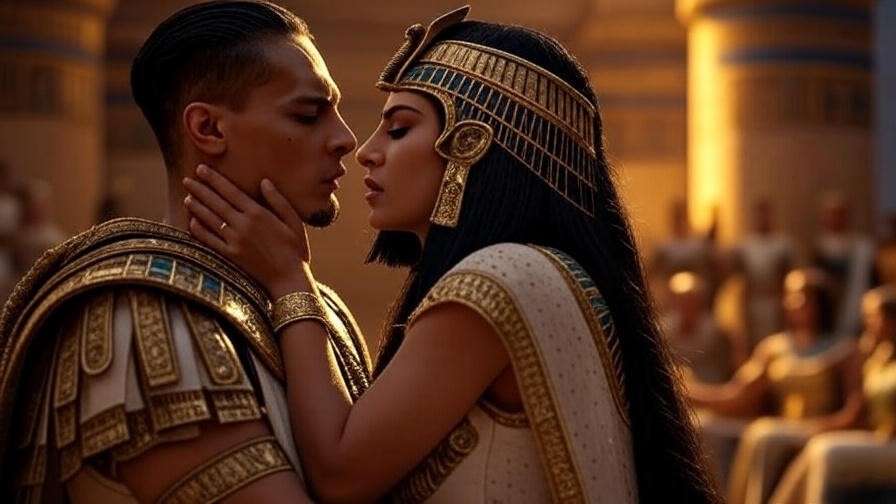
Context: Immediately following his “Let Rome in Tiber melt” speech, Antony embraces and kisses Cleopatra publicly, defying Roman decorum.
Analysis: This line equates physical intimacy with the highest form of existence (“nobleness of life”). The repetition of “such” emphasizes the uniqueness of their bond—only “such a mutual pair” can achieve this transcendent union. Shakespeare subtly undercuts Antony’s idealism by placing these words in a public display that Roman observers find scandalous, foreshadowing the political consequences.
Performance Note: The stage direction calls for a prolonged embrace; directors often use silence and physicality to amplify the line’s erotic charge.
Modern Relevance: Represents the romantic notion that true love elevates human existence above ordinary concerns—a theme echoed in countless films and novels.
2. “I wish you all joy of the worm.”
Speaker: Clown (Act 5, Scene 2, Line 260)
Context: A rustic clown delivers the asp hidden in a basket of figs to Cleopatra, just before her suicide.
Analysis: This darkly comic line provides tragicomic relief in the play’s final moments. The “worm” is both the literal asp (an Egyptian symbol of royalty and immortality) and a phallic pun, blending death, sexuality, and rebirth. The clown’s rustic speech contrasts with the grandeur of Cleopatra’s final scene, reminding audiences of life’s earthy realities even in mythic tragedy.
Performance Note: The role is often played with broad humor that turns chilling; Simon Russell Beale’s 1999 National Theatre performance masterfully balanced comedy and foreboding.
Modern Relevance: Though less quoted than romantic lines, it exemplifies Shakespeare’s use of low comedy to deepen tragic effect—a technique studied in literary and theater courses.
1. “Age cannot wither her, nor custom stale / Her infinite variety: other women cloy / The appetites they feed, but she makes hungry / Where most she satisfies…”
Speaker: Enobarbus (Act 2, Scene 2, Lines 240–244)
Context: In Rome, Enobarbus describes Cleopatra’s first meeting with Antony on the river Cydnus to skeptical Roman leaders Agrippa and Maecenas.
Analysis: Widely regarded as the play’s most iconic passage, this speech is a masterpiece of erotic and poetic imagination. The antithesis between “wither”/“stale” and “infinite variety” captures Cleopatra’s eternal allure. Food and appetite metaphors (“cloy,” “hungry,” “satisfies”) continue the play’s sensual imagery, portraying Cleopatra as both nourishing and insatiable. Enobarbus, a plain-speaking soldier, becomes an unlikely poet under her spell—an irony that underscores her universal power.
Historical Note: Shakespeare expands greatly on Plutarch’s brief account, transforming a historical anecdote into one of literature’s greatest character portraits.
Performance Note: This speech is a coveted monologue for actors. Ian Richardson (1978 RSC) and Patrick Stewart (1978) delivered it with awestruck wonder, making audiences feel they too had glimpsed Cleopatra’s magic.
Modern Relevance: The phrase “infinite variety” has become synonymous with feminine mystique and appears in fashion, psychology, and feminist discourse. It remains the most quoted and anthologized passage from the play.
Thematic Clusters: How These Quotes Illuminate Shakespeare’s Big Ideas
Shakespeare weaves his themes through recurring imagery and verbal echoes. The top quotes cluster around three central concerns:
Love and Passion
Lines such as “There’s beggary in the love that can be reckon’d,” “Her infinite variety,” and “The nobleness of life / Is to do thus” collectively argue that true passion defies measurement and transcends time. Shakespeare presents love not as youthful infatuation (as in Romeo and Juliet) but as a mature, all-consuming force capable of toppling empires.
Power and Politics
Antony’s “Let Rome in Tiber melt” and “The crown o’ th’ earth doth melt” bookend his political decline, while Enobarbus’s barge description subtly critiques Roman austerity against Egyptian opulence. These quotes illustrate the play’s East-West cultural clash and the personal cost of imperial ambition.
Mortality and Legacy
Cleopatra’s “Immortal longings,” Antony’s repeated “I am dying, Egypt, dying,” and her final mythic elevation of Antony (“His legs bestrid the ocean”) transform physical death into eternal legend. Shakespeare suggests that while empires crumble, art and memory endure.
These interconnections reveal Shakespeare’s structural genius: individual lines gain deeper resonance when viewed as part of a larger verbal tapestry.
Cleopatra’s Most Powerful Quotes: The Voice of a Queen
Cleopatra dominates the play’s final act with speeches of extraordinary rhetorical power and emotional range. Beyond “Give me my robe” and “Immortal longings,” consider:
- “My desolation does begin to make / A better life” (Act 5, Scene 2)—her paradoxical embrace of suicide as rebirth.
- “I dreamt there was an Emperor Antony” (Act 5, Scene 2)—her visionary eulogy that recreates Antony as cosmic hero.
These lines showcase Cleopatra’s mastery of language: she shifts from playful seduction to tragic grandeur, always controlling her narrative. Modern feminist critics (including Janet Adelman and Phyllis Rackin) celebrate her as Shakespeare’s most verbally powerful female character—one who authors her own myth rather than submitting to Roman historiography.
Mark Antony’s Tragic Speeches: From Hero to Lover
Antony’s language traces his psychological arc:
- Early defiance (“Let Rome in Tiber melt”)
- Military despair (“The crown o’ th’ earth doth melt”)
- Final tenderness (“I am dying, Egypt, dying”)
His speeches grow simpler as his world collapses, mirroring his regression from public orator to private lover. Unlike Cleopatra, who gains rhetorical control in death, Antony loses it—his suicide is botched, his final words fragmented. This contrast highlights Shakespeare’s nuanced gender dynamics.
Performance and Interpretation Insights from Stage and Screen
Antony and Cleopatra is notoriously challenging to stage due to its global scope and rapid scene changes. Notable productions include:
- Trevor Nunn’s 1972 RSC version with Richard Johnson and Janet Suzman—emphasizing psychological realism.
- Peter Brook’s 1978 minimalist production—focusing on the text’s poetic power.
- The 1963 Elizabeth Taylor/Richard Burton film—lavish spectacle that popularized many quotes.
- Recent diverse castings: Sophie Okonedo (2018 National Theatre) and Josette Simon (2017 RSC) as Cleopatra.
Actors approaching these lines should note Shakespeare’s use of enjambment and caesura—pauses that mirror emotional turbulence. Memorization tip: Group lines by image clusters (water, food, cosmos) rather than line-by-line.
Why These Quotes Still Resonate in the Modern World
Four centuries later, Antony and Cleopatra’s language continues to shape our understanding of love, leadership, and legacy:
- Relationship therapy often references the play’s portrayal of passionate but destructive attachment.
- Political discourse draws on its exploration of charisma versus discipline.
- Pop culture echoes abound—from the 1963 film’s enduring imagery to references in songs by artists like Florence + the Machine.
These lines endure because they capture universal human experiences: the ecstasy of desire, the pain of loss, and the drive to create meaning beyond mortality.
FAQs
What is the most famous quote from Antony and Cleopatra? “Age cannot wither her, nor custom stale / Her infinite variety…” spoken by Enobarbus describing Cleopatra.
Who says “Age cannot wither her” in Shakespeare? Enobarbus, Antony’s loyal but clear-eyed lieutenant (Act 2, Scene 2).
What are the best Cleopatra quotes about love? “Give me my robe, put on my crown; I have / Immortal longings in me” and her visionary dream of Antony in Act 5.
How does Shakespeare portray passion in Antony and Cleopatra? As boundless, transcendent, and ultimately destructive—contrasted with Roman restraint.
Why is Antony and Cleopatra considered one of Shakespeare’s most poetic plays? Its lush imagery, hyperbolic language, and mature exploration of adult passion.
Where can I read the full text of Antony and Cleopatra online? Reliable sources include the Folger Shakespeare Library, MIT’s Complete Works of Shakespeare, and the Royal Shakespeare Company website.
What are some study tips for analyzing Shakespeare quotes? Examine imagery patterns, rhetorical devices, speaker context, and thematic connections across the play.
Are there modern adaptations of Antony and Cleopatra? Yes—including film versions (1963, 1972), and stage productions with contemporary settings or diverse casting.
The timeless quotes from Antony and Cleopatra continue to captivate because they transform historical figures into archetypes of human desire and mortality. Through his unparalleled language, Shakespeare grants Antony and Cleopatra what they most craved: immortality. Their story reminds us that while empires fall and bodies fail, great art—and great love—can indeed “make defect perfection.”