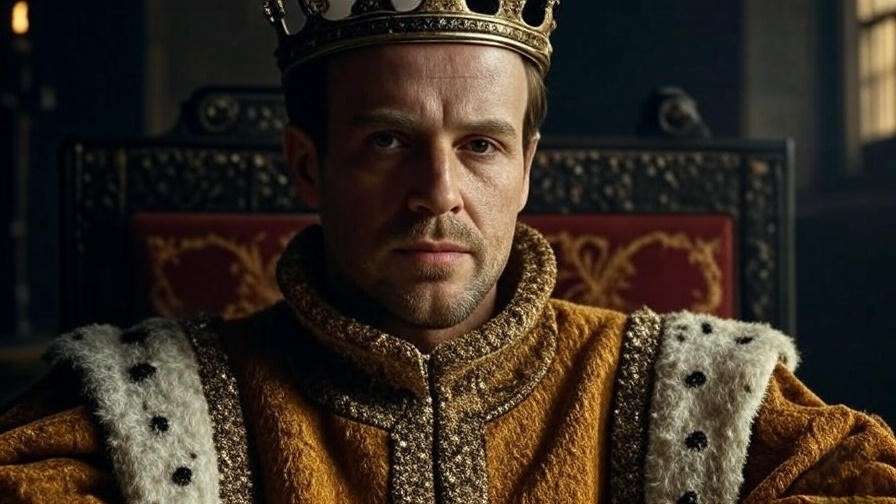
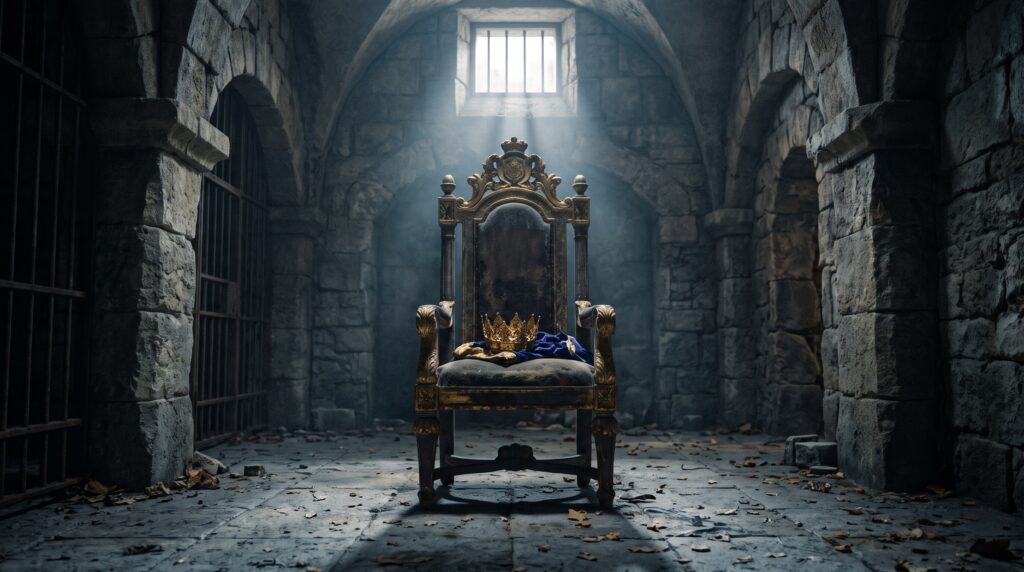
Picture a monarch, divested of gold and ermine, sitting alone in a damp, unyielding stone cell. He realizes too late that the crown was never a symbol of absolute power, but rather a beautifully crafted lock. For readers, actors, and students navigating the intricate politics of Elizabethan drama, a persistent question always arises: why are Shakespeare’s kings so consistently miserable despite having the world at their fingertips?
To understand this paradox is to understand the prisoners throne, a powerful metaphor that defines exactly how William Shakespeare viewed the English monarchy. In his histories and tragedies, the ruler is simultaneously the most powerful person in the realm and its most heavily guarded captive. By examining both literal imprisonment—such as Richard II wasting away at Pomfret Castle—and the suffocating psychological captivity of Macbeth’s paranoia, we can see how Shakespeare systematically dismantled the myth of absolute royal freedom.
If you have ever struggled to grasp the “heavy crown” trope, this comprehensive guide will demystify the claustrophobia of Shakespearean kingship, exploring how the throne room was, more often than not, a gilded cage.
The Historical Context: The Reality of the “Prisoners Throne”
Before diving into the text of the plays, it is vital to understand the cultural and political atmosphere in which Shakespeare was writing. The anxiety surrounding the crown wasn’t just a dramatic device invented for the stage; it was a reflection of the very real, very bloody history of the English monarchy.
Why Shakespeare’s Audience Feared the Throne
For the Elizabethan and Jacobean audiences packing into the Globe Theatre, the monarchy was a source of both divine awe and profound terror. The succession of the crown was rarely peaceful, and the physical threat to a monarch’s bodily autonomy was a present reality. To be a king was to have a target permanently painted on your back.
The Shadow of the Tower of London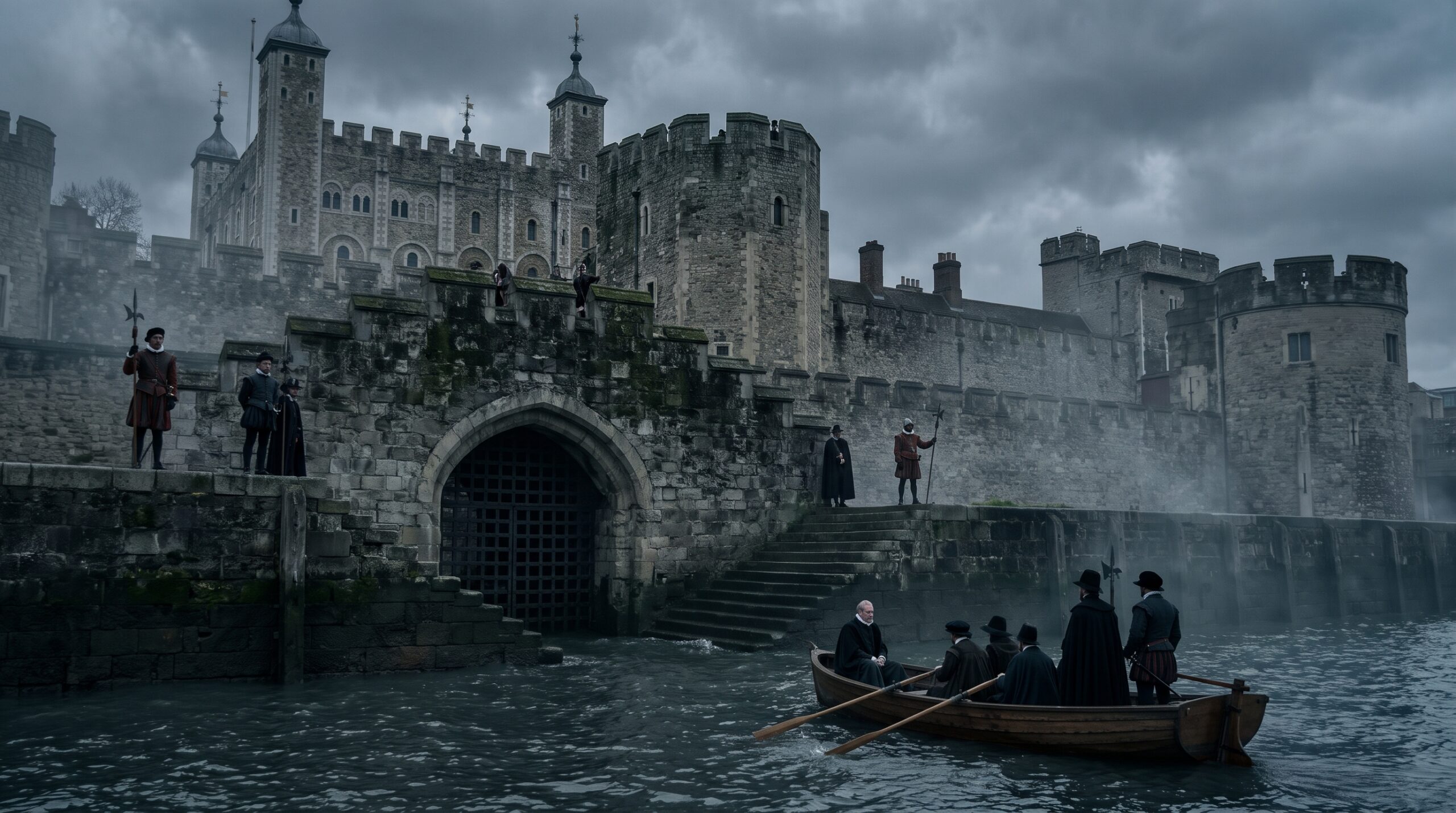
In Renaissance England, physical prisons—most notably the formidable Tower of London—were a looming reality for the political elite. The Tower was not just a fortress to keep enemies out; it was a mechanism to keep political rivals in.
For royalty, the transition from the throne room to a prison cell could happen overnight. The Tower cast a long, dark shadow over the English monarchy, serving as a grim reminder that the line between a reigning sovereign and an imprisoned traitor was razor-thin. When Shakespeare wrote about captive kings, his audience immediately thought of the cold stone walls of the Tower, a place where many legitimate heirs and deposed rulers met violent, secretive ends.
Treason, Rebellion, and the Tudor Myth
Shakespeare’s history plays are deeply influenced by the “Tudor Myth”—the narrative propagated by the Tudor dynasty (including Queen Elizabeth I) that the preceding century, known as the Wars of the Roses, was a dark age of chaos, rebellion, and divine punishment that was only resolved when the Tudors took control.
Because of this constant historical instability, Shakespearean kings are almost never shown enjoying their power. Instead, they are shown desperately fighting to maintain it. Their reigns are defined by suppressing rebellions, unearthing treasonous plots, and fighting off usurpers. They are prisoners of their own political survival, forced to sacrifice their humanity, personal relationships, and peace of mind on the altar of statecraft.
Expert Insight: The Anxiety of Power Leading Shakespearean scholars frequently note that Shakespeare lived in a surveillance state under Elizabeth I and later James I. The constant fear of assassination, Catholic plots, and disputed successions meant that the concept of the “safe monarch” was entirely foreign to Renaissance audiences. The throne was inherently viewed as a seat of profound vulnerability.
Physical Captivity: When the Throne Room Becomes a Dungeon
Shakespeare frequently explored the fragility of power by putting his anointed kings into literal chains. By physically stripping a monarch of their court, their armies, and their freedom of movement, Shakespeare forces the character—and the audience—to ask: what is a king without his crown?
Kings in Cages: Literal Royal Imprisonment
When a king is deposed in Shakespeare’s universe, he does not go into a quiet retirement. He goes into the dark.
Richard II and the Tragedy of Pomfret Castle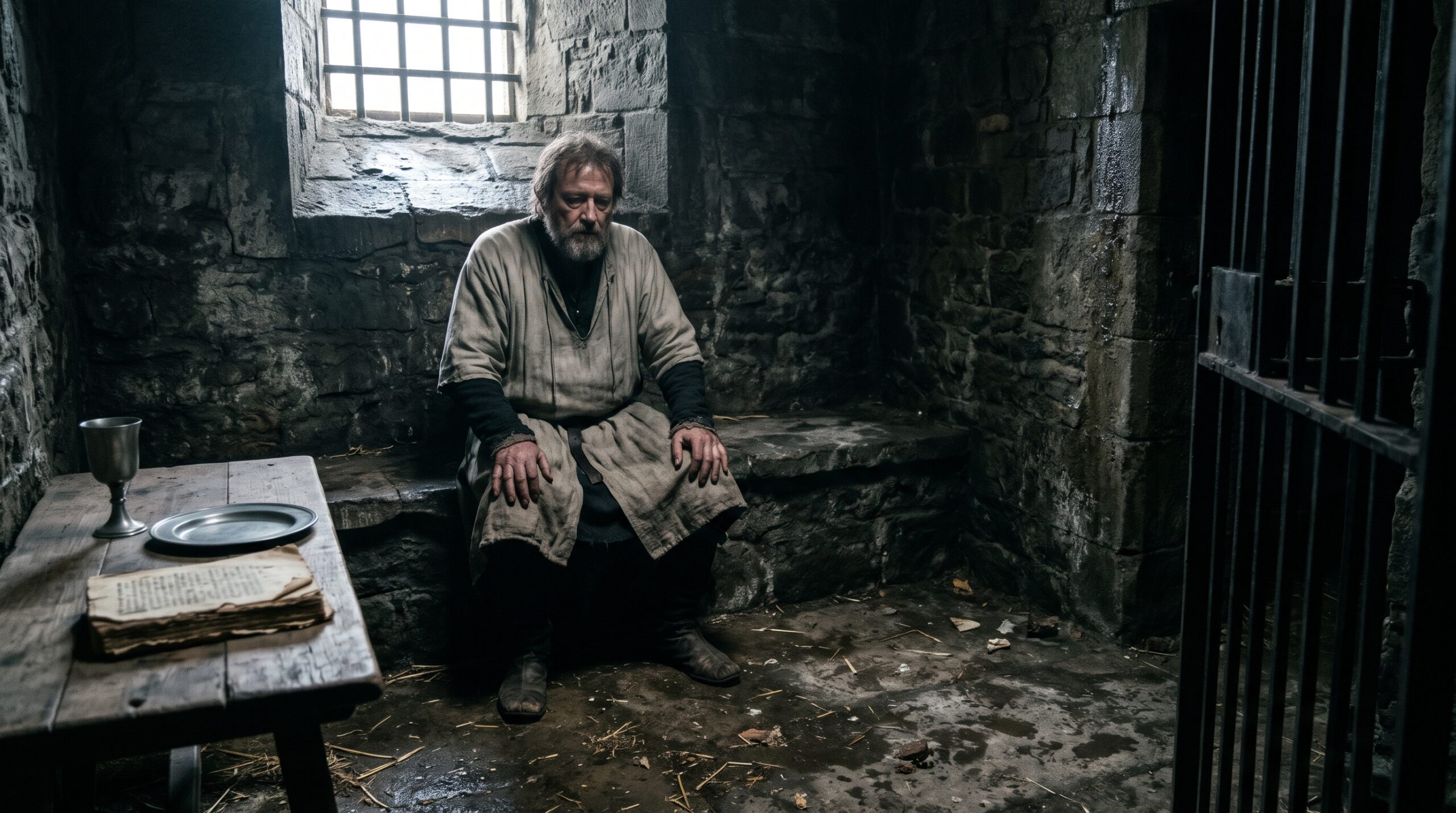
Perhaps no play better illustrates the literal “prisoners throne” than Richard II. Richard believes wholly in the Divine Right of Kings, convinced that angels will fight for him because God appointed him. Yet, he is easily outmaneuvered by the pragmatic Henry Bolingbroke (the future Henry IV).
In Act 5, Richard finds himself imprisoned in Pomfret Castle. Stripped of his title and his audience, Richard is forced to confront his own profound emptiness. In his famous dungeon soliloquy, he attempts to populate his lonely cell with his own thoughts, breeding “a generation of still-breeding thoughts” to serve as his imaginary subjects. The tragedy of Richard II is the jarring, violent shift from an untouchable, divine ruler to an isolated, vulnerable captive who realizes too late that without his royal title, he is merely a mortal man waiting to be murdered.
Henry VI and the Bloody Tower
King Henry VI represents a different kind of captive monarch. Deeply pious but entirely ineffective as a political leader, Henry is ill-suited for the ruthless machinations of the Wars of the Roses. He loses his kingdom, regains it, and loses it again, ultimately finding himself imprisoned in the Tower of London.
His imprisonment and subsequent murder at the hands of Richard, Duke of Gloucester (the future Richard III), cemented the Tower as the ultimate terminus for defeated royalty. Henry’s capture underscores a brutal Shakespearean truth: moral goodness and religious piety cannot protect a king from the prison cell if he lacks the Machiavellian ruthlessness required to hold the throne.
The Fate of the Princes in the Tower
The physical captivity of royalty reaches its most horrifying peak in Richard III with the young Edward V and his brother, Richard of Shrewsbury. Edward V is the rightful king, yet he never even reaches his coronation. His “throne” becomes a locked room in the Tower, which swiftly transitions into his tomb. The innocence of the princes highlights the inescapable gravity of the crown—merely being born next in line is a life sentence that, in their case, ends in premature death.
Psychological Captivity: The Invisible Chains of Kingship
While physical dungeons provide a visceral representation of a fallen monarch’s vulnerability, Shakespeare’s most profound explorations of captivity occur within the minds of his rulers. In many of his greatest tragedies and histories, the bars of the cell are not forged from iron, but from paranoia, guilt, and the crushing weight of duty. For these monarchs, the crown itself acts as a psychological prison, isolating them from their humanity and the people they rule.
Macbeth: Trapped in a Prison of Paranoia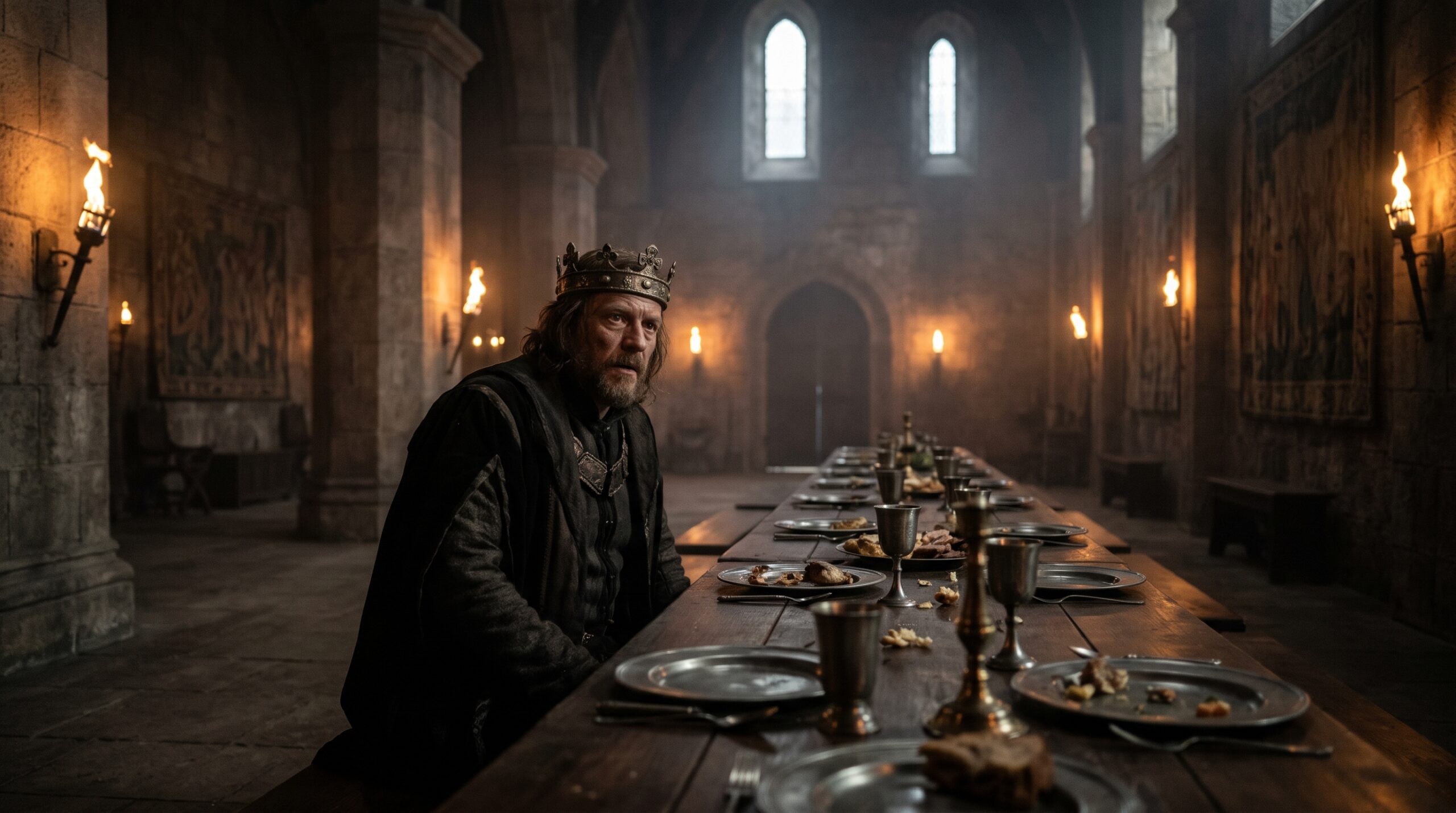
No character exemplifies the psychological claustrophobia of the throne quite like Macbeth. He seizes the Scottish crown through a bloody usurpation, assassinating King Duncan in his sleep. However, the very moment Macbeth achieves his ultimate ambition, his world violently shrinks.
He quickly realizes that “To be thus is nothing, but to be safely thus.” The throne offers him no freedom; instead, it binds him to a cycle of endless violence to protect his ill-gotten gains. Macbeth becomes a prisoner of his own paranoia, locked in a fortress of isolation at Dunsinane. He loses his ability to connect with his peers, his wife descends into guilt-ridden madness, and most tellingly, he is robbed of his ability to sleep. By murdering Duncan, Macbeth has “murdered sleep,” locking himself in an agonizing, waking nightmare where the throne room feels smaller and more threatening every day.
Henry IV and the Burden of Guilt
The usurper’s anxiety is also masterfully explored in the character of Henry IV. Having deposed Richard II and taken the crown by force, Henry spends his entire reign fighting off rebellions from the very nobles who helped him ascend. He is a king, yet he is entirely captive to the political instability he created.
It is Henry IV who delivers one of the most famous lines regarding the agonizing burden of kingship: “Uneasy lies the head that wears a crown.” In his soliloquies, Henry expresses deep envy for the poorest, most common of his subjects, who are able to enjoy a peaceful night’s rest in humble cottages. The King, meanwhile, is trapped in the lavish confines of his court, wide awake, imprisoned by the guilt of his past actions and the relentless demands of the state.
King Lear: The Confinement of Madness
If Macbeth and Henry IV are trapped by the crowns they wear, King Lear explores what happens when a monarch tries to escape the prison of the throne. Lear attempts a fatal compromise: he abdicates his power, dividing his kingdom between his daughters, but demands to retain the “name and all th’ addition to a king.”
He desires the perceived freedoms of royalty without the heavy chains of responsibility. Instead, this unnatural severing of power leads to catastrophic consequences. Stripped of his retinue and his authority, Lear is cast out into a brutal, raging storm. The physical tempest on the heath perfectly mirrors the chaotic deterioration of his own mind. Lear escapes the physical confines of the court, only to find himself trapped in the inescapable, suffocating confinement of his own madness.
The Paradox of Power: Why Ruling Means Losing Freedom
At the heart of Shakespeare’s political philosophy is a profound paradox: to gain absolute power over a nation is to lose absolute power over oneself. The monarch ceases to be a private individual and becomes property of the state.
Duty vs. Desire: The Loss of the Personal Self
To fully grasp this dynamic, we must look at the Renaissance legal concept of the “King’s Two Bodies.” Elizabethan jurists believed a monarch had two distinct entities: the Body Natural (the physical, flawed, mortal human being who gets sick, feels sorrow, and dies) and the Body Politic (the eternal, infallible institution of the crown).
When a monarch ascends to the throne, the Body Politic completely swallows the Body Natural. The human being is imprisoned inside the role. A king cannot marry for love; he must marry for political alliances. A king cannot grieve privately; his emotions are matters of state security. The human desires of the monarch are constantly subjugated to the brutal, unyielding demands of the crown.
Prince Hal’s Escape
Understanding this inevitable captivity perfectly contextualizes the behavior of Prince Hal (the future King Henry V) in Henry IV, Part 1. Audiences and historical figures alike marvel at why the heir apparent spends his youth drinking in squalid Eastcheap taverns with thieves and vagabonds like Sir John Falstaff.
Hal is not merely playing the fool; he is staging a desperate, temporary rebellion against his own destiny. He knows that the moment his father dies, the heavy, golden doors of the throne room will lock behind him forever. His time in the taverns is his last grasp at the freedom of the Body Natural before he is permanently incarcerated by the duties of the Body Politic.
The Monarch’s Reality: A Comparison
To clearly illustrate how the illusions of kingship clash with the grim reality of Shakespearean rule, consider the following breakdown of royal autonomy:
| The Illusion of Royal Power (Perceived Freedoms) | The Reality of the Throne (Actual Captivities) |
| Absolute Authority: The King’s word is final law. | Political Paralysis: Bound by the demands of powerful nobles and the constant threat of rebellion. |
| Boundless Wealth: Access to the nation’s entire treasury and riches. | Crushing Debt & Obligation: Responsible for financing endless wars and maintaining a fragile national economy. |
| Physical Safety: Surrounded by heavily armed guards and impenetrable castle walls. | Constant Paranoia: The guards themselves are often the assassins; the castle walls trap the king inside with his enemies. |
| Personal Freedom: The ability to do whatever one wishes, whenever one desires. | Rigid Protocol: Every public and private action, from marriage to sleeping, is dictated by statecraft and duty. |
Staging the Captivity: Modern Theatrical Interpretations
For centuries, the paradox of the captive king has challenged directors and actors: how do you visually represent a psychological prison on a stage meant to depict the grandeur of a royal court? Modern theatrical interpretations, particularly those by the Royal Shakespeare Company (RSC) and Shakespeare’s Globe, have found ingenious ways to bring the “prisoners throne” to life, ensuring audiences feel the claustrophobia of the crown.
Claustrophobic Set Designs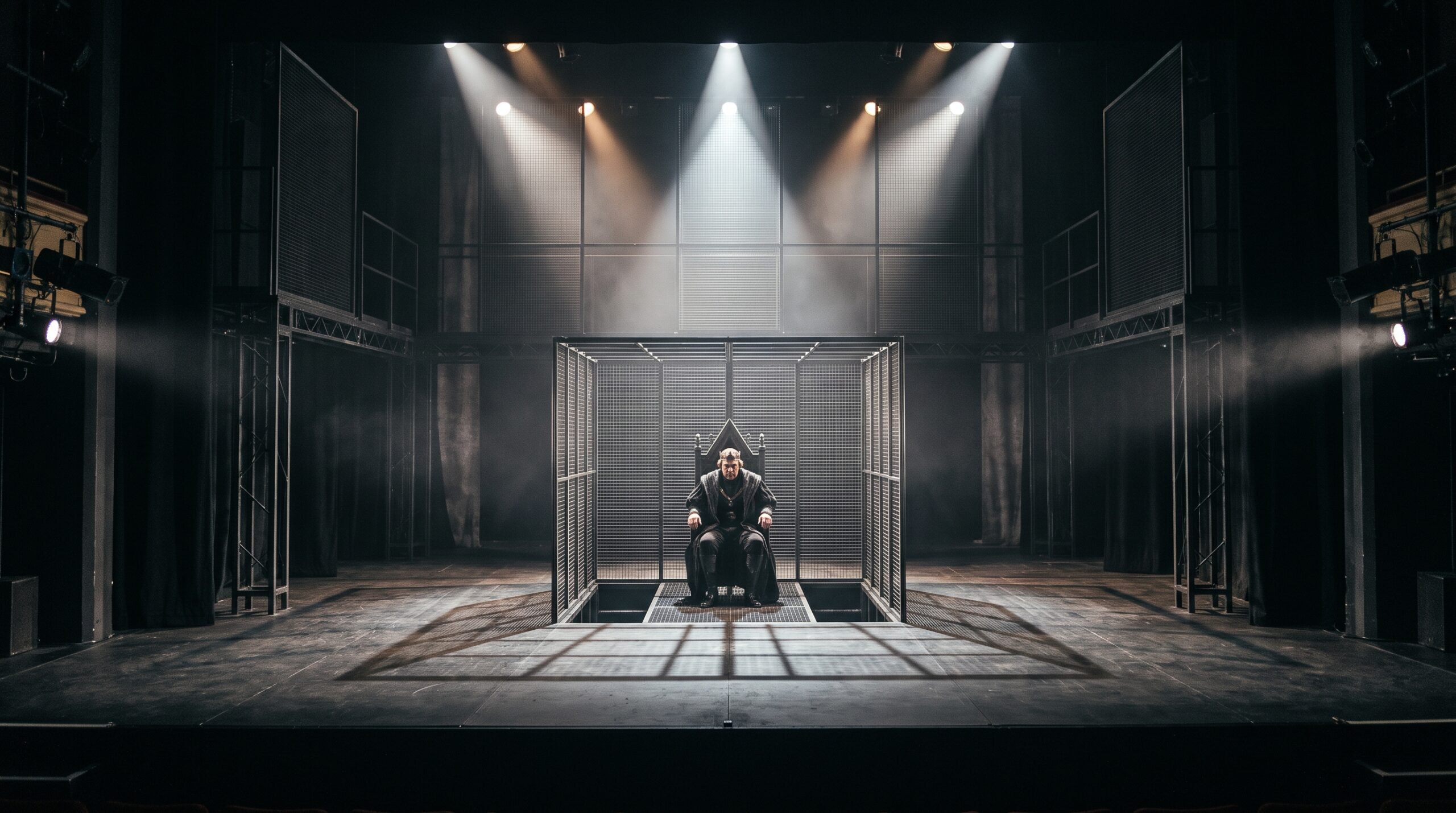
In contemporary productions, the throne room is rarely staged as an expansive, airy hall of power. Instead, set designers often utilize stark, minimalist aesthetics to emphasize confinement. By employing harsh, geometric lighting grids that cast shadows resembling prison bars, directors visually trap the monarch within their own domain.
In many modern stagings of Richard II or Macbeth, the throne itself is placed within a sunken pit or a tightly enclosed glass box, stripping away the romanticism of the monarchy. The physical space of the stage is deliberately shrunk as the play progresses, mirroring the shrinking world of the tragic king. The visual message is clear: the castle is not a sanctuary; it is a maximum-security facility where the king is the sole inmate.
Costume as Restraint
Costume designers also play a crucial role in staging this captivity. The regalia of state—the heavy velvet robes, the layered ermine collars, the oversized, jewel-encrusted crowns—are frequently designed to look and feel oppressively heavy.
When a Shakespearean king is dressed for court, they are often depicted as being swallowed by their own garments. The physical act of moving becomes labored, serving as a visceral representation of the suffocating weight of the Body Politic. By the time a monarch like King Lear tears off his royal garments on the stormy heath, the audience understands that this is not merely a sign of madness, but a desperate, physical attempt to break out of his royal restraints.
Conclusion: The Enduring Legacy of the Trapped Monarch
In William Shakespeare’s world, absolute power is never free; it is paid for with a total loss of autonomy. The prisoners throne remains one of the Bard’s most profound political observations, masterfully dismantling the illusion that kingship equates to liberty.
Whether it is Richard II waiting for the assassin’s blade in a literal dungeon, Macbeth pacing the halls of Dunsinane in a paranoid frenzy, or Henry IV wide awake beneath the crushing guilt of his stolen crown, Shakespeare’s monarchs are universally chained to the seats of their power. They are hostages to history, duty, and their own fatal ambitions.
This theme continues to resonate deeply with modern audiences. Long after the era of divine right has passed, our cultural fascination with the hidden miseries of the powerful remains intact. We see echoes of Shakespeare’s captive kings in modern political thrillers and corporate succession dramas, reminding us that the highest seats of power are often the most precarious places to sit.
What do you think? Which of Shakespeare’s monarchs do you believe was the most deeply trapped by their crown? Leave a comment below, and be sure to subscribe to our newsletter for more deep dives into the hidden themes and historical truths behind Shakespeare’s greatest masterpieces.
Frequently Asked Questions (FAQs) About Shakespeare’s Royal Captives
Which Shakespeare play features a king in a literal prison?
The most famous example is Richard II, where the deposed King Richard delivers his poignant soliloquy from a dungeon in Pomfret Castle. Additionally, the character of King Henry VI is depicted as a captive in the Tower of London in Henry VI, Part 3, before being murdered by the future Richard III.
What did Shakespeare mean by “uneasy lies the head that wears a crown”?
Spoken by King Henry IV in Henry IV, Part 2, this famous quote highlights the psychological and physical toll of leadership. It means that a ruler, burdened by the immense responsibilities, paranoia, and guilt of the state, can never find true rest or peace of mind, contrasting sharply with the peaceful sleep of commoners.
Were real English kings actually imprisoned in the Tower of London?
Yes. While the Tower of London was originally built as a royal residence and fortress, it became infamous as a prison for high-status captives. English monarchs such as Henry VI and the uncrowned boy-king Edward V (one of the “Princes in the Tower”) were held captive and ultimately died within its walls during the tumultuous Wars of the Roses.
How does the concept of the “King’s Two Bodies” explain royal captivity?
The “King’s Two Bodies” was a Renaissance political concept dividing the monarch into the mortal “Body Natural” and the eternal “Body Politic” (the state). Shakespeare illustrates that upon taking the throne, the duties of the Body Politic completely consume the Body Natural, imprisoning the human being inside the relentless demands of the crown.