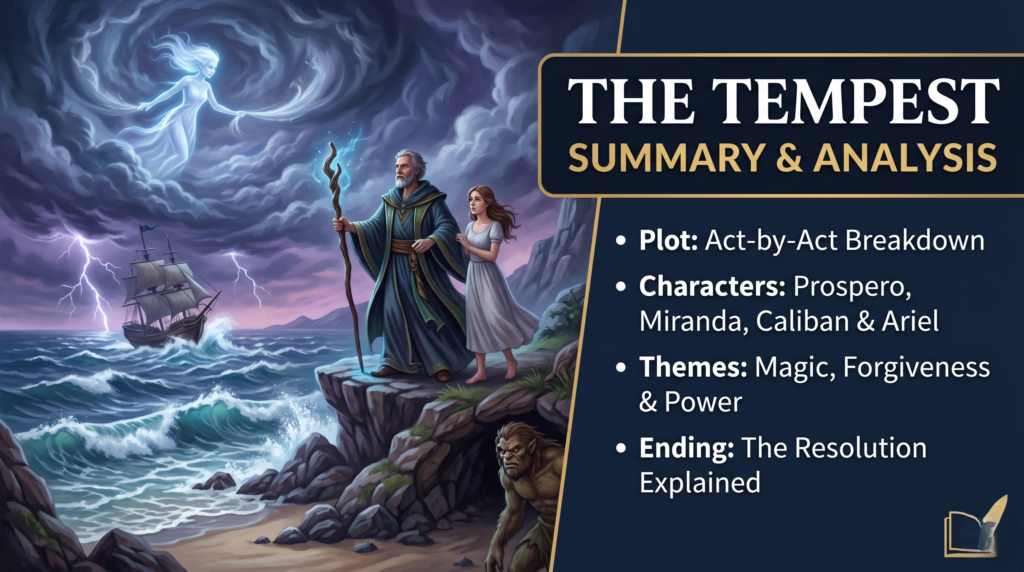
A violent tempest rages across the sea. Lightning splits the sky as a ship’s crew screams in terror. Yet this is no ordinary storm—it is a deliberate act of magic, summoned by a solitary figure on a remote island who has waited twelve long years for revenge. In a single opening scene, William Shakespeare introduces us to the unforgettable tempest characters who will redefine power, forgiveness, and humanity itself.
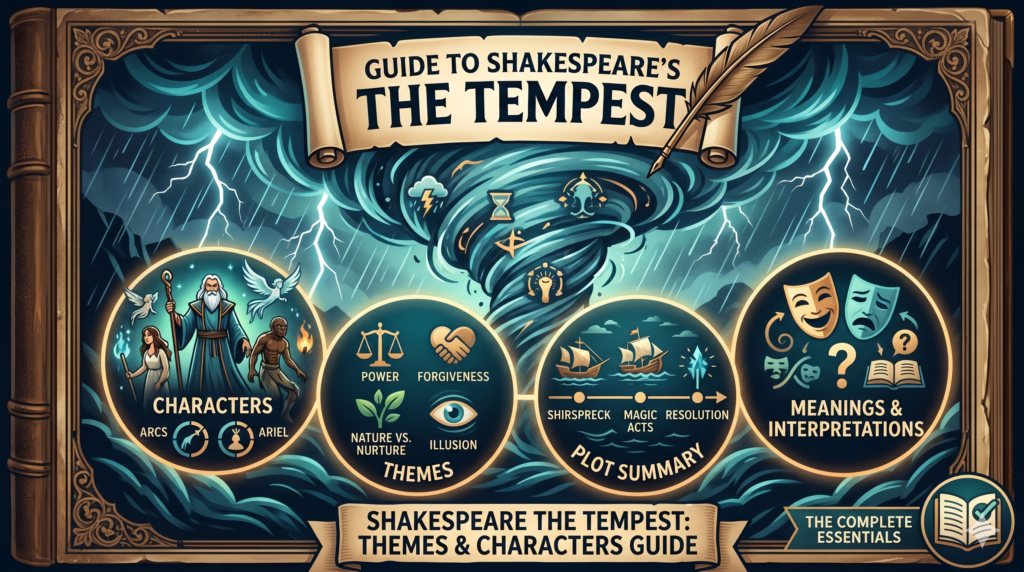
If you’re searching for the tempest characters, you’re likely looking for more than a dry list of names. You want to understand who they truly are, how they drive Shakespeare’s final masterpiece, and why they continue to captivate audiences, students, and scholars four centuries later. This complete guide delivers exactly that: in-depth profiles, original analysis, key quotes, relationships, themes, and practical study tools. Whether you’re writing an essay, preparing for an exam, directing a production, or simply deepening your appreciation of Shakespeare, you’ll find everything you need right here.
The Tempest (1611) stands as Shakespeare’s farewell to the stage—a “romance” play that blends magic, politics, and poetry in ways that feel strikingly modern. Its characters are not mere plot devices; they are richly layered embodiments of Renaissance ideas about colonialism, art, forgiveness, and the human condition. From the exiled duke Prospero to the enslaved spirit Ariel and the rebellious Caliban, each figure reveals something profound about the world Shakespeare left behind. Let’s meet them all.
The Tempest: Quick Context Every Reader Needs
Before diving into the individual tempest characters, a brief but essential backdrop helps everything fall into place.
When and Why Shakespeare Wrote The Tempest Scholars date the play to 1611, with its first recorded performance at court for King James I. It draws inspiration from real events: the 1609 shipwreck of the Sea Venture off Bermuda, which fascinated London with tales of a “tempestuous” island paradise. Shakespeare, then in his late forties and nearing retirement, wove these contemporary stories with classical sources (Ovid’s Metamorphoses, Virgil’s Aeneid) and his own lifelong fascination with magic and theater. Many critics, including Stephen Greenblatt in Will in the World, see The Tempest as Shakespeare’s self-portrait—an aging artist laying down his “rough magic.”
Genre Matters: A Romance, Not a Tragedy Unlike Hamlet or King Lear, The Tempest belongs to Shakespeare’s late romances. This genre allows for wonder, reconciliation, and happy endings rather than unrelenting doom. The characters reflect this shift: vengeance gives way to forgiveness, and the island itself becomes a liminal space where illusions dissolve into truth.
The Island as a Character Often called “the enchanted isle,” the setting is more than backdrop. Lush, mysterious, and full of strange noises, it mirrors the inner worlds of the tempest characters—Prospero’s controlled domain, Caliban’s wild homeland, Ariel’s airy freedom.
With this foundation, we can now explore the major tempest characters in depth.
Major Characters in The Tempest: In-Depth Profiles
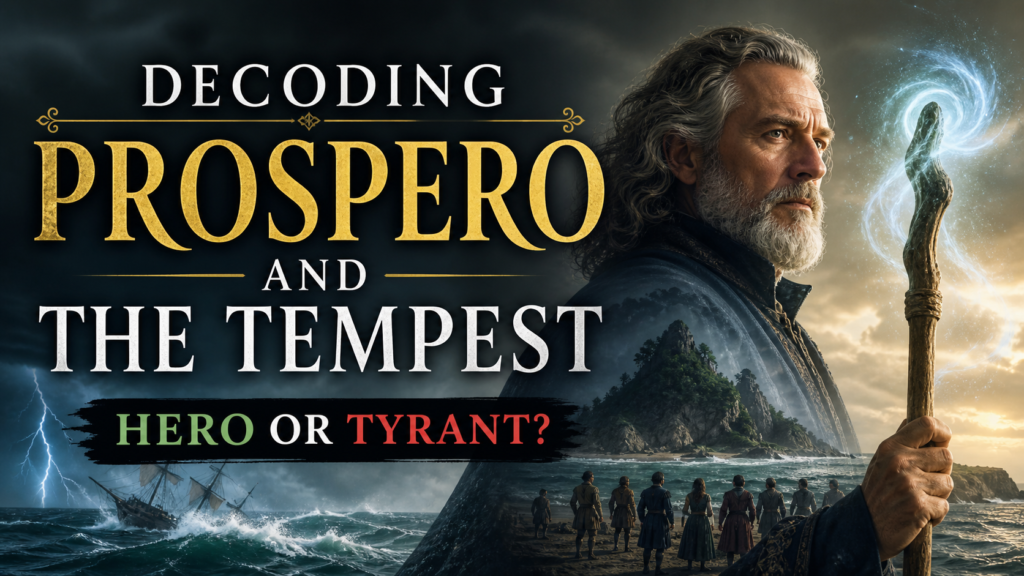
Prospero in The Tempest — The Ultimate Magician-Duke At the heart of The Tempest stands Prospero, the rightful Duke of Milan, usurped by his brother Antonio and exiled with his infant daughter Miranda. On the island, he has spent twelve years mastering the arts of magic, commanding spirits, and plotting his return.
Prospero’s character arc is the play’s emotional spine. He begins as a vengeful ruler, using his powers to shipwreck his enemies and manipulate events with god-like precision. Yet by the final act, he chooses forgiveness over retribution—an extraordinary evolution that many see as Shakespeare’s own meditation on mercy.
Key traits include:
- Intellectual power: Prospero’s “books” are his true source of strength, symbolizing knowledge as the ultimate magic.
- Fatherhood: His protective (and sometimes overbearing) love for Miranda reveals a deeply human side.
- Self-awareness: In one of Shakespeare’s most famous speeches, he declares, “Our revels now are ended… We are such stuff / As dreams are made on” (Act 4, Scene 1). This meta-theatrical moment blurs the line between Prospero the character and Shakespeare the playwright.
Expert insight: As literary scholar Jonathan Bate notes in The Genius of Shakespeare, Prospero’s renunciation of magic—“I’ll break my staff, / Bury it certain fathoms in the earth, / And deeper than did ever plummet sound / I’ll drown my book”—mirrors Shakespeare’s own farewell to his theatrical career. Prospero is not a flawless hero; his treatment of Caliban and Ariel raises uncomfortable questions about power and colonialism that modern readers rightly interrogate.
Pivotal quotes for study:
- “The rarer action is / In virtue than in vengeance” (Act 5, Scene 1) — the turning point of forgiveness.
- “This thing of darkness I / Acknowledge mine” (Act 5, Scene 1) — his complex admission about Caliban.
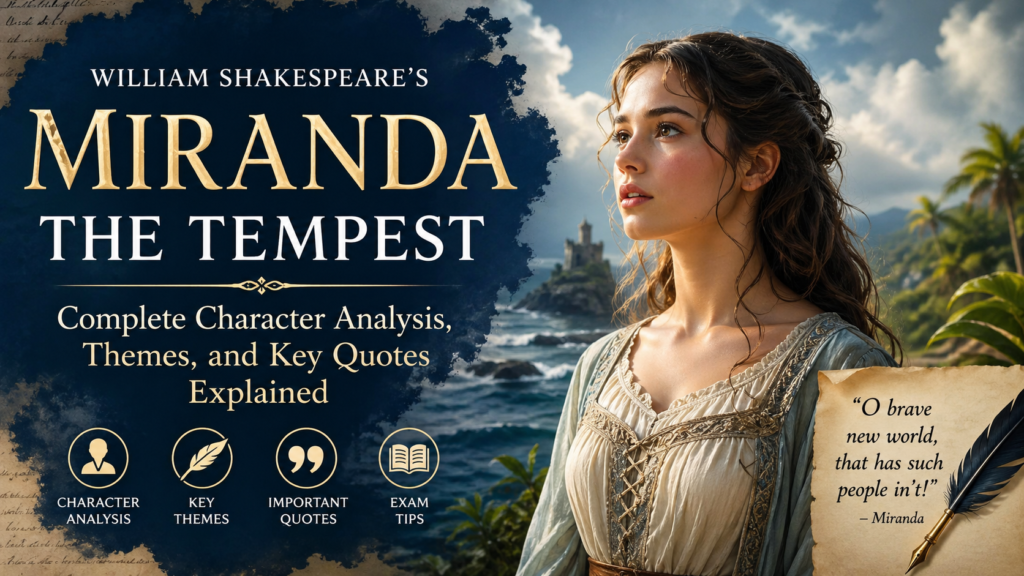
Miranda: The Island’s “Admired” Daughter and Symbol of Innocence Miranda, whose name means “she who is to be admired,” has grown up knowing only her father and the island. Her first encounter with other humans—especially the shipwrecked Ferdinand—produces one of Shakespeare’s most quoted lines: “O brave new world, / That has such people in’t!” (Act 5, Scene 1).
Her character represents purity and wonder in a corrupted world. Isolated from courtly intrigue, she falls in love instantly and honestly, challenging the cynical betrayals around her. Feminist readings highlight how Prospero controls her narrative, yet modern productions often emphasize Miranda’s quiet strength and agency.
Relationship dynamics:
- With Prospero: tender but occasionally stifling father-daughter bond.
- With Ferdinand: pure courtly love that restores hope and dynastic order.
Ariel: The Ethereal Spirit of Air and Freedom Ariel is no ordinary servant. This “airy spirit” was imprisoned in a cloven pine by the witch Sycorax until Prospero freed him—only to bind him to twelve years of service. Ariel’s gender is deliberately ambiguous in the text, allowing fluid interpretations across centuries of performance.
Ariel embodies imagination and artistry. He sings haunting songs, creates illusions, and serves as Prospero’s eyes and ears. His final liberation in the closing scene feels triumphant: “Then to the elements / Be free, and fare thou well!” (Act 5, Scene 1).
Performance history reveals Ariel’s evolution—from Victorian child actors to gender-nonconforming portrayals in 20th-century productions. Ariel also functions as Prospero’s conscience, gently reminding the duke of the limits of revenge.
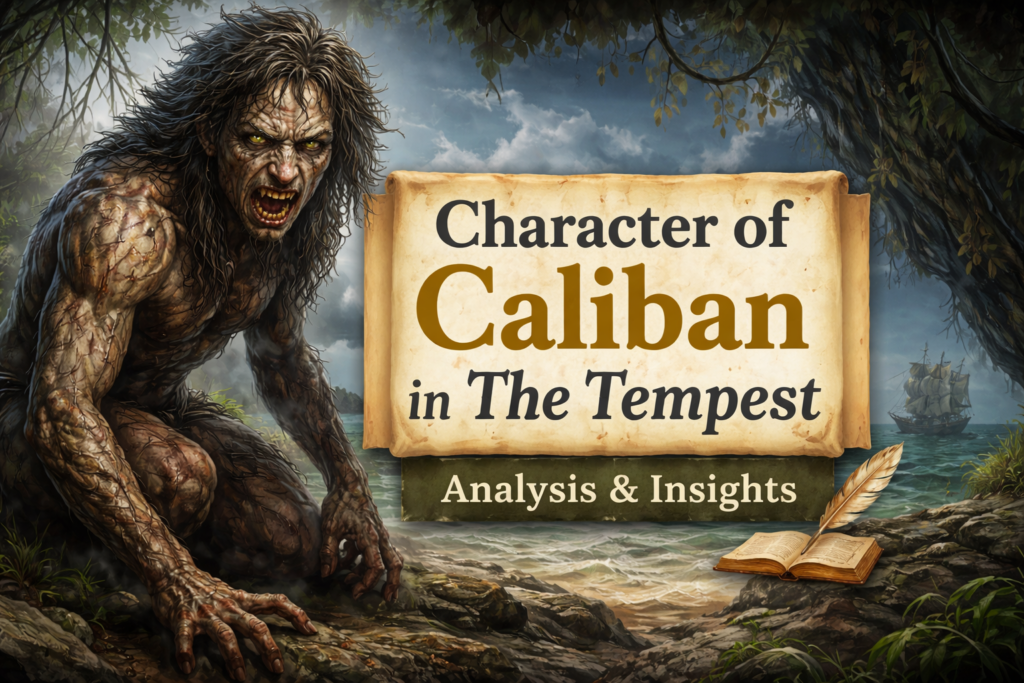
Caliban: The “Monster,” Slave, and Voice of the Colonized No discussion of the tempest characters is complete without Caliban, son of the witch Sycorax and the play’s most controversial figure. Prospero describes him as a “savage” and “misshapen knave,” yet Caliban’s own voice offers a powerful counter-narrative.
Educated by Prospero and Miranda, Caliban learns language—only to use it for cursing: “You taught me language, and my profit on’t / Is, I know how to curse” (Act 1, Scene 2). His attempted assault on Miranda and subsequent enslavement fuel debate: is he villain, victim, or both?
Postcolonial critics such as Aimé Césaire (in his 1969 adaptation Une Tempête) and Octave Mannoni have reframed Caliban as a symbol of the colonized “Other,” resisting European imposition. His claim to the island—“This island’s mine, by Sycorax my mother” (Act 1, Scene 2)—echoes indigenous land rights long before such language entered mainstream discourse.
Caliban’s complexity makes him one of Shakespeare’s most enduring creations. He is earthy, poetic, and rebellious, contrasting Ariel’s ethereal grace. Their master-servant relationship with Prospero forms the emotional and thematic core of the play.
Ferdinand and the Young Lovers Ferdinand, son of King Alonso of Naples, enters the play as the ideal Renaissance prince—brave, courteous, and instantly smitten with Miranda. Their courtship provides the play’s purest romantic thread, deliberately contrasting the political betrayals and resentments of the older generation.
Prospero tests Ferdinand’s worthiness by forcing him to perform menial labor, echoing the trials of classical lovers. Ferdinand’s willingness to endure hardship for Miranda proves his sincerity. Their union represents hope, renewal, and the restoration of political order through marriage.
Shakespeare uses the young lovers to explore themes of chastity, obedience, and idealized love. Miranda’s famous declaration, “I would not wish / Any companion in the world but you” (Act 3, Scene 1), radiates innocent passion rarely seen in the playwright’s earlier, more cynical romantic pairings.
The Nobles of Naples and Milan: Alonso, Antonio, Sebastian, and Gonzalo The shipwrecked courtiers form a microcosm of Renaissance court politics. King Alonso mourns the apparent loss of his son while grappling with guilt over his role in Prospero’s exile. His brother Sebastian and Prospero’s treacherous brother Antonio quickly plot to murder Alonso, revealing how easily power corrupts even in crisis.
Antonio stands as Prospero’s dark mirror—a cold, ambitious usurper who feels no remorse. His refusal to repent in the final scene underscores that not every character earns redemption.
In contrast, the honest old counselor Gonzalo offers a utopian vision of the island as a perfect commonwealth “with no kind of traffic” and “no sovereignty” (Act 2, Scene 1). Though mocked by the others, Gonzalo’s idealism provides moral grounding and foreshadows the play’s themes of forgiveness and new beginnings.
These noble tempest characters illustrate how political intrigue follows men even to a magical island, making their eventual reconciliation all the more powerful.
Supporting and Minor Characters
The Comic Low-Life Trio: Stephano, Trinculo, and the Drunken Rebellion Stephano (the drunken butler) and Trinculo (the jester) provide comic relief while parodying the courtiers’ power struggles. Their alliance with Caliban—complete with promises of freedom and alcohol—creates a grotesque subplot that mirrors the main action in low comedy.
Caliban’s misplaced trust in these “gods” who bring wine highlights his vulnerability and longing for liberation. The trio’s failed rebellion against Prospero adds humor while reinforcing the play’s exploration of authority, servitude, and false leadership. Their scenes are among the most performable and entertaining in Shakespeare, often stealing the show in modern productions.
The Boatswain, Mariners, and the Storm Scene Ensemble The opening scene’s anonymous Boatswain delivers some of the play’s most vigorous prose, defying the nobles with earthy pragmatism: “What cares these roarers for the name of king?” His irreverence establishes the theme that nature (and magic) levels all social hierarchies. These minor figures ground the fantastical elements in human realism and quickly disappear once the storm serves its purpose.
Character Relationships and Dramatic Dynamics
Power, Servitude, and Freedom: The Master-Servant Web The relationships between Prospero and his two servants form one of the most fascinating dynamics in all of Shakespeare.
| Aspect | Prospero & Ariel | Prospero & Caliban |
|---|---|---|
| Nature of Service | Voluntary debt for freedom | Forced enslavement after rebellion |
| Personality Contrast | Airy, artistic, obedient | Earthy, resentful, poetic |
| Language | Elegant verse | Curses mixed with vivid imagery |
| Resolution | Ariel is liberated | Caliban’s future left ambiguous |
This comparison reveals Prospero’s complex exercise of power. Ariel represents the creative, intellectual side of servitude, while Caliban embodies the physical, colonized body. Their interactions raise timeless questions about consent, exploitation, and the ethics of mastery.
Father–Daughter Bond and Its Emotional Core Prospero’s love for Miranda is tender yet possessive. He has shielded her from the world’s corruption, but his control sometimes borders on manipulation (as when he arranges her meeting with Ferdinand while pretending indifference). The play delicately balances paternal protection with the necessity of letting go.
Betrayal, Forgiveness, and Reconciliation The tempest characters’ arcs converge in Act 5. Prospero confronts his betrayers, stages a magical masque, and ultimately chooses mercy. The restoration of Milan and Naples through marriage and pardon offers a rare Shakespearean vision of healed political and familial wounds.
Love Across Social Boundaries: Ferdinand and Miranda Their union bridges Milan and Naples, symbolizing harmony restored. It also contrasts sharply with Caliban’s rejected desire for Miranda, highlighting issues of class, consent, and “civilized” versus “savage” love.
Themes Explored Through The Tempest Characters
Shakespeare uses his tempest characters as vehicles for profound thematic exploration, making the play far richer than a simple revenge story.
Colonialism and the “Other” Caliban and Ariel have become central to postcolonial readings. Caliban’s claim to the island and his subjugation by European knowledge and language anticipate centuries of imperial discourse. Ariel’s ambiguous servitude adds another layer—service that is intellectual rather than purely physical. Productions in former colonies often emphasize these tensions, transforming Caliban into a figure of resistance.
Magic, Art, and Illusion Prospero’s magic mirrors the power of theater itself. His books, staff, and spirits create illusions that ultimately give way to reality. The characters’ journeys from deception to truth parallel the audience’s experience in the playhouse.
Forgiveness vs. Revenge Prospero’s internal struggle and final choice embody the play’s moral center. As he says, “The rarer action is in virtue than in vengeance.” This theme resonates strongly in our own divided times.
Nature vs. Nurture Caliban’s famous speech challenges simplistic views of civilization: “You taught me language, and my profit on’t / Is, I know how to curse.” The play refuses easy answers, leaving audiences to debate whether Caliban’s “monstrosity” is innate or the result of mistreatment.
Gender and Patriarchy Miranda is the only woman physically present (Sycorax exists only in memory). Her limited agency and Prospero’s control reflect Renaissance gender norms, yet her wonder and moral clarity offer subtle critique. Modern feminist scholarship often pairs her with the absent but powerful witch Sycorax.
Symbolism, Literary Devices, and Shakespeare’s Craft
Shakespeare’s naming is rarely accidental. “Prospero” suggests prosperity and hope; “Miranda” means admirable; “Caliban” may derive from “cannibal”; “Ariel” evokes biblical airy spirits. Music and song—especially Ariel’s—create an otherworldly atmosphere, while sleep and dreams blur reality and illusion.
The contrast between verse (for nobles and spirits) and prose (for comics and Caliban’s rawer moments) reveals character status and emotional states with remarkable precision.
The Tempest Characters in Modern Culture and Adaptations
Shakespeare’s tempest characters have inspired countless reinterpretations:
- Julie Taymor’s 2010 film reimagined Prospero as Prospera (Helen Mirren), bringing fresh feminist energy.
- Derek Jarman’s 1979 punk-infused version emphasized Ariel and Caliban’s queer potential.
- The 1956 sci-fi classic Forbidden Planet transposed the story to space, with the “monster from the id” echoing Caliban’s darker impulses.
- Aimé Césaire’s Une Tempête gave Caliban explicit revolutionary voice, influencing global postcolonial theater.
From ballet to opera (Thomas Adès’ The Tempest), these characters continue to evolve while retaining their Shakespearean core.
Study Guide & Practical Resources
Essay Topics and Thesis Statements
- “To what extent is Caliban a victim rather than a villain in The Tempest?”
- “How does Prospero’s character embody Shakespeare’s farewell to the stage?”
- “Compare the treatment of servitude in Ariel’s and Caliban’s relationships with Prospero.”
Key Quotes Every Student Should Know
- “Hell is empty and all the devils are here.” (Act 1, Scene 2)
- “You taught me language…” (Caliban)
- “Our revels now are ended…” (Prospero)
- “O brave new world…” (Miranda)
Comparison Table: The Tempest Characters vs. Other Shakespeare Plays Prospero shares traits with The Winter’s Tale’s Leontes (jealousy and redemption) and Hamlet’s ghostly father (demands for justice), yet chooses a different path.
Frequently Asked Questions
Who is the protagonist of The Tempest? Prospero is widely regarded as the central protagonist, though the ensemble nature of the play allows multiple characters to share dramatic focus.
Is Caliban a villain or victim? Shakespeare deliberately leaves this ambiguous. Caliban commits violent acts but also suffers genuine oppression, making him one of literature’s great anti-heroes.
What happens to Ariel and Caliban at the end? Ariel is freed to the elements. Caliban’s fate is left open—Prospero acknowledges him but does not specify his future on the island.
Why is The Tempest considered Shakespeare’s last play? Its themes of renunciation, artistic farewell, and gentle resolution, combined with the epilogue’s direct address to the audience, strongly suggest it as Shakespeare’s final solo-authored work.
Conclusion
The tempest characters—Prospero with his rough magic, Miranda with her brave new world, Ariel with his airy grace, and Caliban with his defiant poetry—form one of Shakespeare’s most profound ensembles. They wrestle with power and its limits, with vengeance and forgiveness, with civilization and its discontents. In an age still grappling with colonialism’s legacy, gender dynamics, and the ethics of leadership, these figures speak with remarkable urgency.
Shakespeare ends The Tempest not with despair but with hope: an aging magician breaks his staff, frees his spirits, and asks the audience for gentle applause. In doing so, he leaves us not only a play but a mirror in which we see our own capacity for both darkness and redemption.
Whether you are a student analyzing character motivation, a theater lover preparing for a production, or simply a reader seeking deeper understanding, return to these tempest characters often. Their complexity rewards repeated visits. Pick up the text, read Prospero’s final speech aloud, and listen to the island’s strange music. You may discover, as Miranda did, an entirely brave new world waiting within these immortal pages.