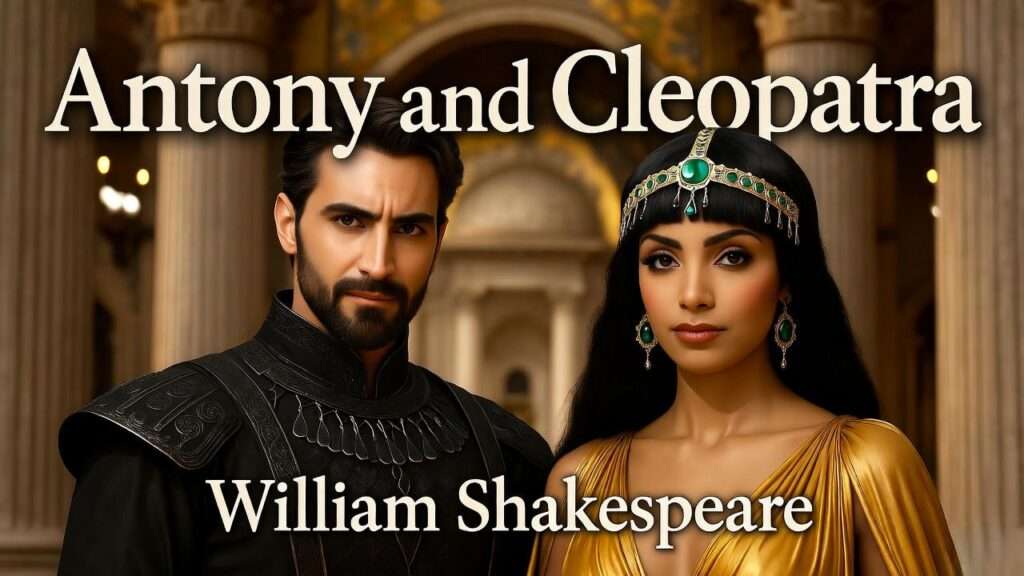
Imagine the eerie crack of thunder splitting the night sky as three witches materialize on a barren heath, their cauldron bubbling with chaos. This is no mere atmospheric flourish—it’s the opening stage direction of Macbeth: “[Thunder and lightning. Enter three Witches].” What do these stage directions help the reader understand in Shakespeare’s plays? Far more than simple actor cues, they unlock the atmospheric tension, supernatural dread, and thematic turmoil that propel the tragedy forward. In an instant, they transport us from the page to the Globe Theatre’s thrust stage, where Elizabethan audiences gasped amid real smoke and echoes.
Shakespeare’s stage directions are masterful bridges between script and spectacle, revealing layers of meaning often overlooked in casual readings. They illuminate character psychology, plot momentum, symbolic depth, and the practicalities of early modern performance. Whether you’re a student dissecting Hamlet for an essay, a teacher guiding high school analysis, an actor preparing for an audition, or a literature enthusiast craving deeper insight, understanding these directions transforms passive reading into vivid immersion. This comprehensive guide draws on scholarly authorities like Alan C. Dessen’s Recovering Shakespeare’s Theatrical Vocabulary and textual analyses from Folger, Arden, and Oxford editions to decode their functions. We’ll explore historical context, dissect iconic examples, debunk myths, and equip you with tools for your own analysis—ensuring you grasp how these terse notes enhance comprehension of plot, character, theme, setting, and staging in Shakespeare’s tragedies, comedies, histories, and romances.
What Are Stage Directions? A Quick Primer
Stage directions in Shakespeare’s plays—those italicized instructions like “Enter King Lear, disguised as a servant” or “Flourish. Exit”—are concise signals embedded in the text to orchestrate performance. Unlike modern playwrights who lavish pages on elaborate descriptions, Shakespeare’s originals, preserved in quartos (individual play pamphlets published between 1594 and 1619) and the landmark 1623 First Folio, are strikingly sparse. They typically limit themselves to entrances, exits, sound effects (e.g., “Alarum” for battle calls or “Sennet” for ceremonial trumpets), and essential props.
This brevity stems from the collaborative nature of Elizabethan and Jacobean theatre. As Alan C. Dessen explains in Recovering Shakespeare’s Theatrical Vocabulary, many directions reflect a shared “theatrical vocabulary” among playwright, actors, prompters (book-keepers), and scribes rather than the sole hand of Shakespeare. The First Folio, compiled by Shakespeare’s fellow actors John Heminges and Henry Condell, sought to preserve authoritative texts against “stol’n and surreptitious copies,” yet even it prioritizes practical functionality over descriptive detail.
In early printed texts, genuine stage directions appear in italics or centered on the page, focusing on essentials: who enters, with what props, and basic actions. Modern scholarly editions—such as the Folger Shakespeare Library series, the Arden Shakespeare Third Series, or the Oxford Shakespeare—distinguish original directions from editorial additions by placing the latter in brackets. These additions help contemporary readers visualize scenes on the minimalist Elizabethan stage, which relied on verbal cues, simple props, trapdoors, and the audience’s imagination rather than elaborate scenery.
Understanding this distinction is crucial: Shakespeare’s directions assume a bare wooden platform with two or three doors, an upper gallery, and a discovery space—inviting readers to reconstruct the vibrant theatrical world behind the words.
The Primary Functions: What Stage Directions Help Readers Understand
Far from mechanical notes, Shakespeare’s stage directions serve multiple overlapping purposes. They compensate for the lack of spoken exposition, guide the eye and ear, and embed interpretive clues. Scholars such as Mariko Ichikawa (Shakespearean Stage Directions) and Tiffany Stern (Documents of Performance) emphasize how these cues reveal embedded performance knowledge essential for full appreciation.
1. Setting the Physical and Atmospheric Scene
On a stage without painted backdrops or lighting rigs, directions create vivid sensory worlds through sound, movement, and implied action. The opening of The Tempest—”A tempestuous noise of thunder and lightning heard”—immediately plunges readers into chaos, foreshadowing Prospero’s magical control and the theme of illusion versus reality.
In King Lear, repeated notations like “Storm still” or “Storm and tempest” sustain the howling gale on the heath, mirroring Lear’s psychological disintegration and the play’s exploration of natural order gone awry. These cues help readers visualize how Elizabethan companies used drums, rolling cannonballs, and squibs to evoke storms, turning textual minimalism into immersive spectacle.
2. Revealing Character Emotions and Inner States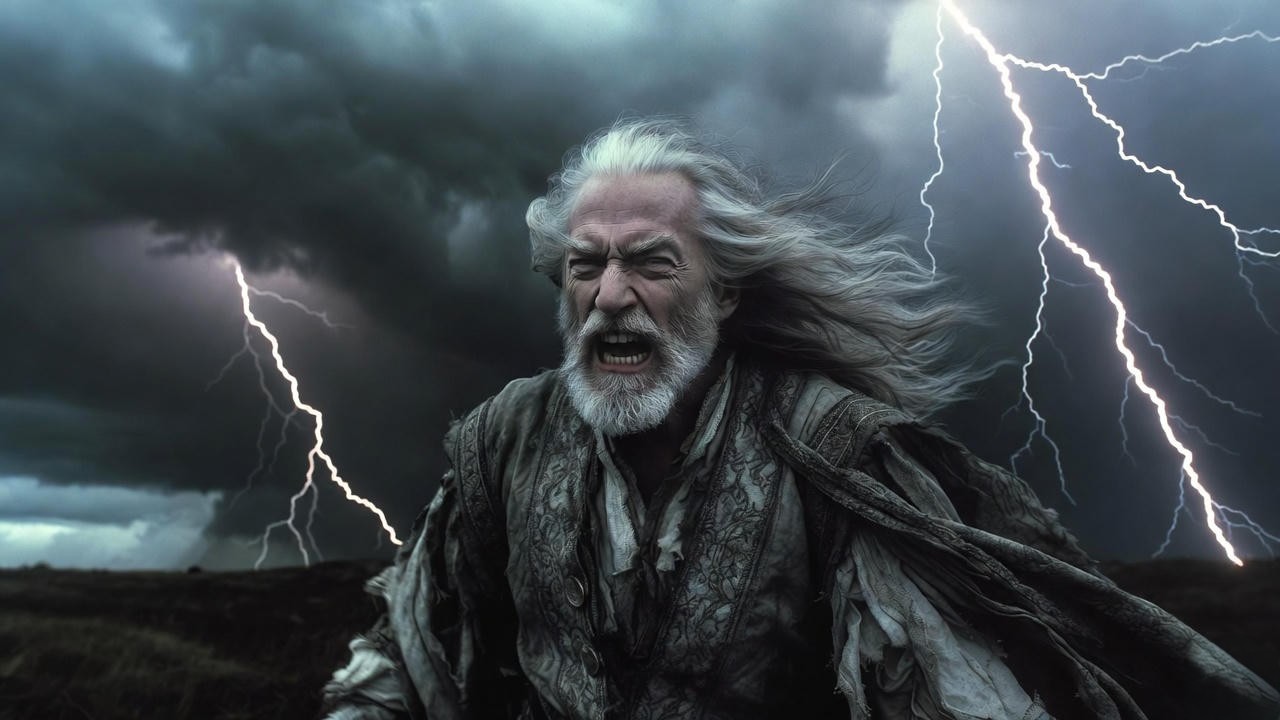
Actions often speak louder than words, and directions expose subtext that dialogue conceals. In Hamlet, frequent “Aside” notations mark private thoughts amid public performance, highlighting the prince’s fractured psyche and the theme of seeming versus being. Editorial additions like “[He takes the skull]” during the graveyard scene crystallize the memento mori moment.
Othello masterfully uses kneeling: when Iago kneels in false loyalty (Act 3, Scene 3), then manipulates Othello into kneeling, the visual reversal underscores shifting power dynamics and tragic manipulation. Similarly, Lady Macbeth’s entrance “with a taper” in the sleepwalking scene externalizes her tormented conscience, amplifying guilt that words alone cannot convey.
3. Driving Plot and Pacing
Entrances and exits choreograph narrative momentum. The distinction between “Exit” (singular departure, often secretive) and “Exeunt” (group exit, clearing the stage) controls rhythm—solitary exits invite intimate soliloquies, while mass departures signal scene transitions.
In Romeo and Juliet, implied actions like Romeo’s wall-climbing propel the lovers’ perilous meeting. Julius Caesar‘s precise “[They stab Caesar]” stages the chaotic assassination, ensuring readers track the conspiracy’s culmination amid rapid dialogue.
4. Highlighting Themes and Symbolism
Directions subtly reinforce central motifs. Fairy entrances and exits in A Midsummer Night’s Dream evoke magical disorder and the blurring of reality. The Ghost’s repeated appearances in Hamlet—often from below via the trapdoor—symbolize eruption from the underworld and corrupted Denmark.
Perhaps most famously, The Winter’s Tale‘s “Exit, pursued by a bear” blends comedy and tragedy, symbolizing arbitrary fate and the sudden shift from Sicilia to Bohemia.
5. Guiding Performance and Interpretation
These cues offer directors interpretive latitude. Modern productions at the reconstructed Globe or Royal Shakespeare Company often honor original sparsity, while film adaptations amplify for cinematic effect. This flexibility reminds readers that Shakespeare’s texts are scripts for performance, not fixed novels.
Comparing Original vs. Modern Stage Directions
| Aspect | Original Texts (Quarto/Folio) | Modern Scholarly Editions (Folger, Arden, Oxford) |
|---|---|---|
| Detail Level | Minimal and functional | Expanded with bracketed additions for clarity |
| Example (Hamlet 1.1) | “Enter Barnardo and Francisco, two Sentinels” | Often includes positional notes like “from opposite sides” |
| Authorship | Collaborative (author, prompter, scribe) | Editorial interventions clearly marked |
| Reader Impact | Preserves theatrical ambiguity | Aids visualization for non-specialists |
Reputable editions prioritize transparency: Folger for accessibility, Arden for exhaustive staging commentary, Oxford for textual conservatism.
Common Misconceptions About Shakespeare’s Stage Directions
- Shakespeare wrote every direction we read today. False. Many derive from prompters or scribes; some are purely editorial.
- They’re unimportant when reading, not watching. Wrong. They embed crucial visual and symbolic information lost without attention.
- Stage directions are solely for actors. They also guide literary analysis, revealing subtext and thematic depth.
Practical Tips: How to Analyze Stage Directions Effectively
- Identify the source—check footnotes for “original” vs. “editorial.”
- Ask: What does this add that dialogue omits? (Emotion, symbolism, pacing?)
- Consider Elizabethan stage practicality—no scenery changes, rapid flow.
- Compare editions to see interpretive variations.
- Watch performances (Globe on Screen, RSC streams) to see directions in action.
Case Studies: Deep Dives into Iconic Examples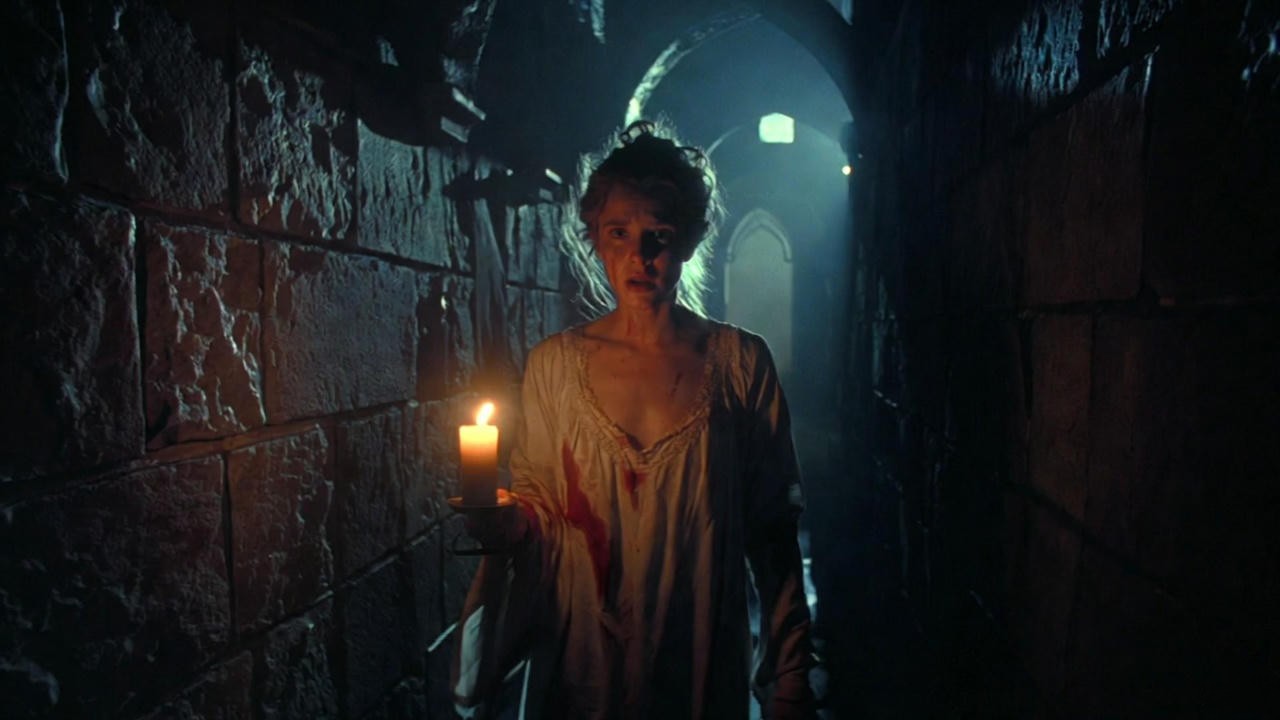
- “Exit, pursued by a bear” (The Winter’s Tale, 3.3) Antigonus flees an onstage bear (likely a real animal or actor in costume). This shocking direction pivots the play from tragedy to romance, symbolizing fate’s capriciousness.
- Ghost entrances (Hamlet) The Ghost’s appearances—often “from below”—visually manifest supernatural intrusion and Denmark’s rot.
- Lady Macbeth’s sleepwalking (Macbeth, 5.1) “Enter… with a taper” spotlights her fragile candle against encroaching darkness, embodying conscience and impending doom.
- The balcony scene (Romeo and Juliet, 2.2) Though directions are minimal, implied climbing and positioning heighten danger and passion.
Frequently Asked Questions
What do stage directions help the reader understand most? Atmosphere, character subtext, pacing, symbolism, and performance possibilities.
Did Shakespeare write his own stage directions? Some yes, many collaboratively or editorially shaped.
How do stage directions differ between tragedies and comedies? Tragedies favor ominous sounds and isolating exits; comedies emphasize chaotic group movements and magical entrances.
Are modern stage directions reliable? In scholarly editions, yes—always bracketed and justified.
Why are stage directions in italics? Early printing convention to distinguish non-spoken text.
Shakespeare’s stage directions—those seemingly modest cues—unlock profound layers of meaning. From thunder heralding fate in Macbeth to a bear’s absurd pursuit in The Winter’s Tale, they illuminate character depth, atmospheric power, thematic resonance, and theatrical vitality. Next time you open a Shakespeare play, pause at each italicized line: it may reveal more than pages of dialogue.
Revisit your favorite plays with fresh eyes, and share in the comments which stage direction transformed your understanding. For further reading, explore related articles on Shakespearean asides, soliloquies, or symbolism in individual plays.