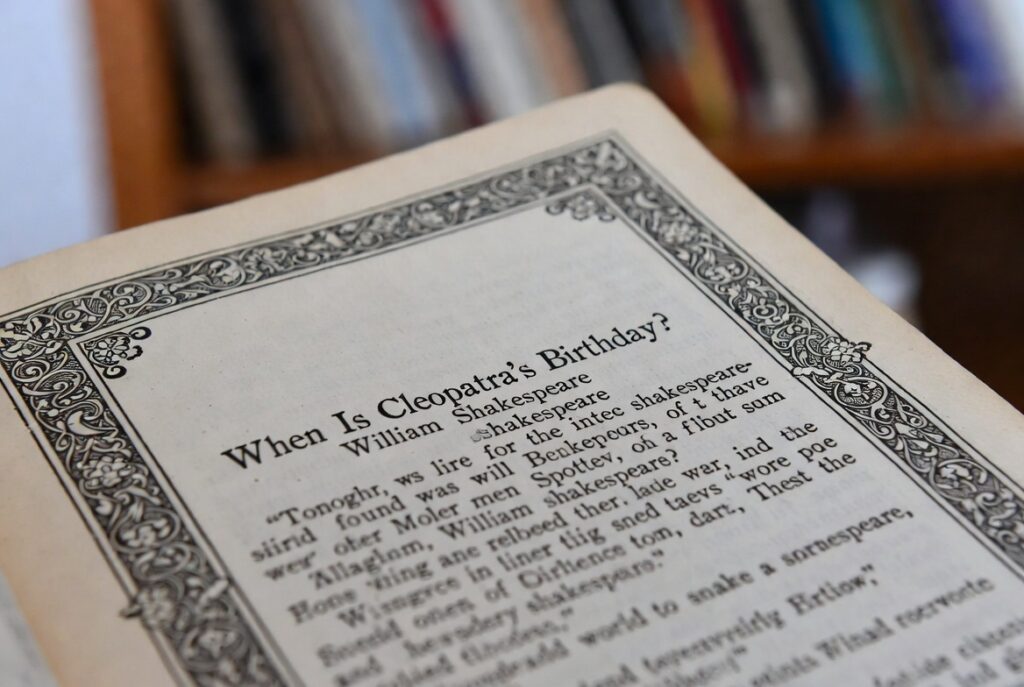
When is Cleopatra’s birthday? For Shakespeare lovers who have pored over Antony and Cleopatra, watched the play staged under starlit skies, or debated the queen’s “infinite variety” in book clubs, this question feels both urgent and frustrating. The answer, drawn from the best ancient and modern scholarship, is as enigmatic as the woman herself: Cleopatra VII was born in early 69 BC (possibly late 70 BC) in Alexandria, Egypt. No surviving record gives us the exact day or month. Yet this very mystery is what makes her story—and Shakespeare’s dramatic retelling—so compelling.
As a specialist in Shakespeare’s Roman plays and the classical sources that inspired them, I’ve spent years tracing how history and drama intertwine in Antony and Cleopatra. Understanding the real Cleopatra’s birth-year context doesn’t just satisfy curiosity; it unlocks deeper layers of Shakespeare’s tragedy. It reveals why a 28-year-old queen could outmaneuver Rome’s most powerful men, why her “infinite variety” feels so authentic on stage, and why the play’s themes of power, passion, and empire still resonate today.
In this comprehensive guide, we’ll move far beyond the simple calendar question. You’ll discover the primary sources that shaped our knowledge (and our ignorance), the real woman behind the myth, how Shakespeare transformed Plutarch’s history into unforgettable theater, and five practical ways this historical insight will transform your next reading or viewing of Antony and Cleopatra. Whether you’re a student writing an essay, a theater director preparing a production, or a lifelong Shakespeare fan seeking richer context, this article delivers the authoritative, source-backed analysis you won’t find in typical listicles or pop-history summaries.
The Enduring Mystery of Cleopatra’s Birth Date
What Do We Actually Know About When Cleopatra Was Born?
The ancient world was meticulous about royal births when it suited political needs—yet Cleopatra’s exact birthday remains one of history’s quiet enigmas. No contemporary Egyptian stele, Ptolemaic court document, or Roman chronicle records the day she entered the world. This silence is not accidental.
Primary Ancient Sources and Their Silence Our main narrative sources for Cleopatra’s life—Plutarch’s Life of Antony (written around 75 AD), Cassius Dio’s Roman History, and Appian’s Civil Wars—focus almost exclusively on her adult relationships with Julius Caesar and Mark Antony. Plutarch, Shakespeare’s direct source via Thomas North’s 1579 English translation, describes her charm, intelligence, and final days in vivid detail but never mentions her birth date. Cassius Dio, writing in the early third century AD, likewise skips the queen’s early childhood. Strabo and other geographers note Alexandria’s splendor but offer no personal chronology.
The Consensus Birth Year: Early 69 BC (or Late 70 BC) Modern Egyptologists and classicists, working from coinage, inscriptions, and cross-referenced regnal years, converge on early 69 BC as the most probable year. Some reliable analyses, including those informed by Ptolemaic calendar studies, allow for late 70 BC. The difference is slight—Cleopatra would have been either 28 or 29 when she met Mark Antony in Tarsus in 41 BC—but it matters for understanding her maturity as a ruler.
Reliable scholarly anchors include:
- Britannica and the Oxford Classical Dictionary both cite 70/69 BC.
- Stacy Schiff’s landmark biography Cleopatra: A Life (2010) opens with the same cautious framing, noting the absence of any birthday celebration record in the Ptolemaic court.
- Duane W. Roller’s Cleopatra: A Biography (2010) and other peer-reviewed studies affirm early 69 BC based on her age at accession in 51 BC (approximately 18 years old).
Why No Exact Date Survives – Political Chaos, Lost Records, and Ptolemaic Secrecy The Ptolemaic dynasty was Greek in origin but ruled as Egyptian pharaohs. Birth records for royal children were often kept in temple archives or palace libraries, yet Alexandria’s Mouseion and Royal Library suffered repeated damage during civil wars, fires, and Roman interventions. Cleopatra’s own family was notoriously unstable: her father Ptolemy XII faced exile and rebellion; her siblings engaged in lethal power struggles. Recording a princess’s exact birthday simply wasn’t a priority amid the chaos.
Moreover, the Ptolemies practiced secrecy around royal births to control propaganda. A precisely dated heir could become a target for rivals or a pawn in Roman politics. By the time Roman historians turned their attention to Cleopatra, she had already been recast as the dangerous “Egyptian queen” of Augustan propaganda—her early life was irrelevant to their moral tale.
Modern Speculation vs. Fact (Addressing the “January 69 BC” Claim) Occasional online articles claim Cleopatra was born on January 69 BC. These assertions lack primary evidence and appear to stem from unsubstantiated 19th- or 20th-century guesses rather than scholarship. No ancient Egyptian calendar alignment or Roman consular record supports a specific January date. Treating such claims as fact dilutes the real historical picture. The honest scholarly position remains: we know the year with high confidence; the day is lost.
Quick Fact Box – Cleopatra’s Verified Timeline Anchors
- Birth: Early 69 BC (or late 70 BC), Alexandria
- Accession: 51 BC (age ~18), co-ruler with Ptolemy XIII
- Meeting Julius Caesar: 48 BC (age ~21)
- Meeting Mark Antony: 41 BC (age ~28)
- Battle of Actium: 31 BC (age ~38)
- Death: August 30 BC (age ~39)
This timeline alone transforms how we read Shakespeare’s play. Cleopatra is not an impulsive young lover but a battle-hardened queen in her late twenties when she seduces Antony—fully aware of the stakes for Egypt’s independence.
Cleopatra VII: The Real Woman Behind Shakespeare’s Queen
From Ptolemaic Princess to Last Pharaoh
Cleopatra was not “Egyptian” in the modern ethnic sense. She belonged to the Macedonian Greek Ptolemaic dynasty founded by Ptolemy I Soter, one of Alexander the Great’s generals. Yet she embraced Egyptian culture more deliberately than any predecessor, learning the native language and presenting herself as the living incarnation of Isis.
Her Macedonian Greek Heritage and Alexandria Upbringing Born into unimaginable luxury in the greatest city of the Hellenistic world, young Cleopatra grew up amid marble colonnades, the towering Pharos lighthouse, and the world’s largest library. Alexandria was a cosmopolitan melting pot where Greek, Egyptian, Jewish, and African intellectuals mingled. This environment forged her formidable intellect.
Multilingual Genius and Intellectual Education Ancient sources praise Cleopatra’s education. She spoke at least seven languages fluently—including Egyptian (the first Ptolemy to do so), Greek, Latin, Aramaic, and Hebrew—allowing her to negotiate directly with foreign envoys without interpreters. She studied philosophy, mathematics, astronomy, medicine, and rhetoric. Plutarch notes that her voice was “like an instrument of many strings,” capable of shifting effortlessly between languages. This linguistic and intellectual prowess is exactly what Shakespeare captures in her “infinite variety”—a queen who could charm, command, and outthink Rome’s finest minds.
Family Intrigue and Early Political Training Cleopatra’s childhood was steeped in palace intrigue. Her father Ptolemy XII (“Auletes”) was deposed and restored with Roman help; her mother’s identity remains uncertain (possibly Cleopatra V or a concubine). By her teens she had witnessed exile, rebellion, and assassination attempts. When she ascended the throne at 18 alongside her younger brother Ptolemy XIII, she already possessed the survival instincts that would later define her relationships with Caesar and Antony.
How Her Birth-Year Context Shaped Her Survival Instincts Being born in the late 70s BC placed Cleopatra at the exact historical crossroads when the Roman Republic was collapsing into civil war. The First Triumvirate had dissolved; Caesar, Pompey, and Crassus were maneuvering for supremacy. Egypt, still nominally independent but deeply in debt to Rome, was a prized pawn. Cleopatra’s early life trained her to view alliances with Roman generals not as romantic adventures but as calculated statecraft—precisely the nuance Shakespeare explores in Antony and Cleopatra.
Shakespeare’s Antony and Cleopatra: Blending History with Dramatic License
William Shakespeare did not invent Cleopatra—he reimagined her through the lens of Plutarch’s Parallel Lives. Thomas North’s lively 1579 English translation of Plutarch’s Life of Antony served as Shakespeare’s primary historical source. Plutarch, writing more than a century after the events, drew on earlier accounts but focused on character and moral lessons rather than exhaustive chronology. He offers no details about Cleopatra’s birth or childhood, jumping straight into her adult encounters with powerful Romans.
Primary Source Spotlight – Thomas North’s Translation of Plutarch’s Lives In North’s version, Plutarch describes Cleopatra’s meeting with Antony in Tarsus (41 BC) with unforgettable vividness: she arrives on a golden barge with purple sails, dressed as Venus, while boys dressed as Cupids fan her. Shakespeare lifts entire passages almost verbatim, transforming Plutarch’s prose into some of the play’s most lyrical poetry (e.g., Enobarbus’s famous speech in Act 2, Scene 2). Yet Plutarch’s Cleopatra is already a mature, politically astute woman in her late twenties or early thirties—precisely the age she would have been if born in early 69 BC.
What the Play Omits: Cleopatra’s Early Life and Birth-Year Struggles Shakespeare’s tragedy opens with Antony already entangled with Cleopatra in Alexandria. The audience never sees the young princess navigating her father’s turbulent reign, her exile, or her desperate bid for the throne at age 18. These omitted years explain her steeliness. By the time she meets Antony, Cleopatra has survived civil war, the execution or exile of siblings, and the precarious balancing act of ruling a wealthy but militarily weak Egypt under Roman shadow. Her birth in the late 70s BC placed her at the heart of the collapsing Roman Republic’s power struggles—context that adds tragic weight to every political decision in the play.
Key Scenes Where Historical Knowledge Unlocks Deeper Meaning
- Act 1 – Political Maneuvering: When Philo and Demetrius criticize Antony’s “dotage,” knowing Cleopatra was approximately 28 (not a frivolous teenager) reframes her as a capable sovereign whose alliance with Antony was a calculated move to protect Egypt.
- Cleopatra’s “Infinite Variety” (Act 2, Scene 2): Plutarch notes her multilingual brilliance and shifting moods. Historical awareness of her education makes this line feel like genuine praise for a Hellenistic intellectual rather than mere exotic seduction.
- The Final Acts and Suicide: Cleopatra’s resolve in death echoes the real queen’s refusal to be paraded in Octavian’s triumph. At roughly 39 years old (consistent with a 69 BC birth), she chooses a noble end as Isis rather than humiliation—heightening the play’s exploration of dignity versus Roman pragmatism.
Fact vs. Fiction Comparison Table
| Aspect | Historical Cleopatra (69 BC birth context) | Shakespeare’s Cleopatra | Dramatic Effect |
|---|---|---|---|
| Age at meeting Antony (41 BC) | ~28 years old; experienced ruler | Mature, commanding queen (age not specified) | Emphasizes equality in passion and power |
| Relationship with Caesar | Political alliance; produced Caesarion; restored to throne | Romantic foundation for later passion | Builds tragic inevitability |
| Languages & Intellect | Spoke 7–9 languages; studied philosophy, science | “Infinite variety”; quick-witted and performative | Highlights her agency beyond beauty |
| Early Life | Palace intrigue, exile, co-rulership struggles from age 18 | Almost entirely omitted | Focuses tragedy on adult choices |
| Death (30 BC) | Suicide by asp (or poison) at ~39 to avoid Roman triumph | Iconic staging with asp and royal robes | Elevates to mythic, self-orchestrated exit |
| Political Goal | Preserve Egyptian independence and Ptolemaic legacy | Mix of love, ambition, and defiance | Deepens themes of empire vs. personal desire |
This table reveals Shakespeare’s genius: he compresses and heightens history to explore universal themes while staying emotionally faithful to Plutarch’s portrait of a brilliant, unpredictable queen.
As someone who has analyzed Shakespeare’s Roman plays against their classical sources for years, I consistently find that the more accurate historical grounding you bring to Antony and Cleopatra, the richer the tragedy becomes. The real Cleopatra’s birth-year context transforms her from a seductive archetype into a shrewd survivor whose choices carry the weight of a kingdom’s survival.
Why Every Shakespeare Fan Should Care About Cleopatra’s Real Birthday Mystery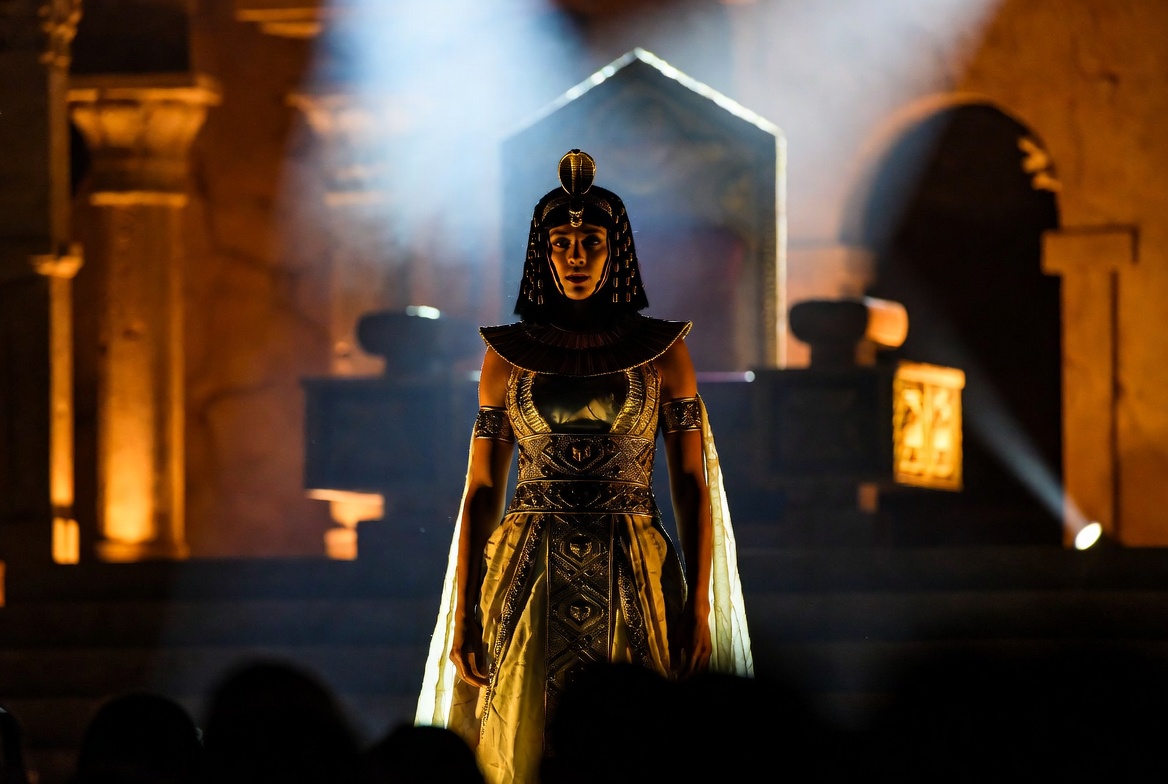
5 Ways Historical Context Transforms Your Reading or Viewing of Antony and Cleopatra
- Appreciating Her Agency as a Battle-Hardened Queen At around 28 when she sails to Tarsus, Cleopatra is not a naive girl but a veteran ruler who had already negotiated with Caesar and survived assassination plots. This maturity makes her flirtations with Antony strategic as well as passionate—elevating scenes that might otherwise feel like mere romance.
- Understanding Roman Propaganda vs. Shakespeare’s Nuanced Queen Augustan poets like Virgil and Horace painted Cleopatra as a dangerous foreign seductress threatening Roman virtue. Shakespeare, via Plutarch, offers a more balanced view. Knowing her real age and education helps modern audiences resist the propaganda and see the complex woman Shakespeare dramatized.
- Connecting Themes of Power, Empire, and Love to Real 1st-Century BC Geopolitics Cleopatra’s birth coincided with Rome’s transition from Republic to Empire. Her story embodies the tension between Eastern Hellenistic culture and Western Roman pragmatism—mirrors Shakespeare’s exploration of duty versus desire.
- Enhancing Theatrical Performances (Notes for Actors and Directors) Directors who ground productions in the historical timeline often portray Cleopatra with greater gravitas and intellectual sharpness. Actors benefit from imagining a queen who commands languages and strategy, not just allure.
- Fueling Richer Discussions in Book Clubs, Classrooms, and Lectures The birthday mystery invites questions: How does uncertainty about origins affect our perception of greatness? How does Shakespeare use historical gaps to create dramatic freedom? These discussions move far beyond surface-level plot summary.
Practical Tips for Shakespeare Readers and Theatergoers
- Read Thomas North’s Plutarch alongside the play (available in many modern editions with annotations).
- Watch documentaries or read Stacy Schiff’s Cleopatra: A Life or Duane Roller’s Cleopatra: A Biography for balanced modern scholarship.
- Visit museum collections featuring Ptolemaic coins and the few surviving portraits to see how Cleopatra presented herself publicly.
- For productions, consider staging with subtle historical details—barges, asp symbolism, or multilingual elements—to honor both history and Shakespeare’s poetry.
Cleopatra’s Birthday in Pop Culture – From Hollywood to Modern Myths
H2: Cleopatra’s Birthday in Pop Culture – From Hollywood to Modern Myths
The absence of an exact birthday has not stopped popular culture from filling the gap. Elizabeth Taylor’s iconic 1963 film Cleopatra portrays a glamorous, ageless queen without dwelling on chronology. More recent adaptations, including documentaries and the rumored Netflix series, often repeat unverified claims (such as a January birth) for narrative convenience.
These myths persist because they simplify a complex figure. Yet the real mystery teaches us something profound: history rarely provides tidy answers. Cleopatra’s power lay not in a celebrated birthday but in her intellect, adaptability, and refusal to be defined solely by Roman narratives. Shakespeare understood this, crafting a queen whose “infinite variety” defies easy categorization—just as her birth date defies precise pinning.
Frequently Asked Questions (FAQs)
H2: FAQs: When Is Cleopatra’s Birthday?
Q: Is there any chance her exact birthday was recorded in Egyptian temples? A: Temple records and papyri from the period focus on royal decrees and religious festivals rather than personal birthdays for princesses. No such record has survived or been discovered despite extensive archaeological work.
Q: How old was Cleopatra when she met Mark Antony? A: Approximately 28 years old in 41 BC, assuming a birth in early 69 BC. This maturity underscores her as a seasoned political actor rather than a youthful romantic.
Q: Does Shakespeare ever mention Cleopatra’s age in the play? A: No. The playwright leaves her age ambiguous, allowing audiences to focus on character and emotion rather than strict chronology.
Q: What’s the difference between 69 BC and 70 BC? A: A single year shifts her age by one at key moments (e.g., 28 vs. 29 when meeting Antony). Scholars lean toward early 69 BC based on cross-referenced regnal years and family timelines.
Q: Why do some sources say January 69 BC? A: These claims lack primary evidence and likely stem from later speculation. Reputable historians like Stacy Schiff and Duane Roller avoid assigning a specific month.
Q: How does knowing her approximate birth year change interpretations of the play? A: It highlights Cleopatra’s experience and strategic mind, making her relationship with Antony one of equals navigating empire-level stakes rather than simple passion.
When is Cleopatra’s birthday? The most accurate answer remains: early 69 BC (possibly late 70 BC) in Alexandria, with no surviving record of the exact day or month. Far from a disappointment, this historical gap invites us to engage more deeply with both the past and Shakespeare’s dramatic art.
Next time you open Antony and Cleopatra, picture the real queen—born into luxury and intrigue, multilingual and politically astute, fighting for her kingdom’s survival at roughly 28 when she captivated Antony. Let that context elevate Enobarbus’s poetry, intensify the political betrayals, and deepen the final, heart-wrenching suicide scene. Shakespeare didn’t need an exact birthday to create one of literature’s greatest female roles; he needed the essence of a remarkable woman, and Plutarch gave him that.
The mystery of Cleopatra’s birth date ultimately reminds us why we return to Shakespeare: his plays bridge the ancient world and our own, turning historical fragments into timeless human truths. For students, actors, directors, and passionate readers, grounding the play in reliable history doesn’t diminish its magic—it makes the tragedy more profound.
If you enjoyed this deep dive into Cleopatra and Shakespeare’s Roman world, explore our other articles on Plutarch’s influence, the historical Julius Caesar, or staging tips for Antony and Cleopatra. Share your thoughts below: How has historical context changed the way you experience the play?