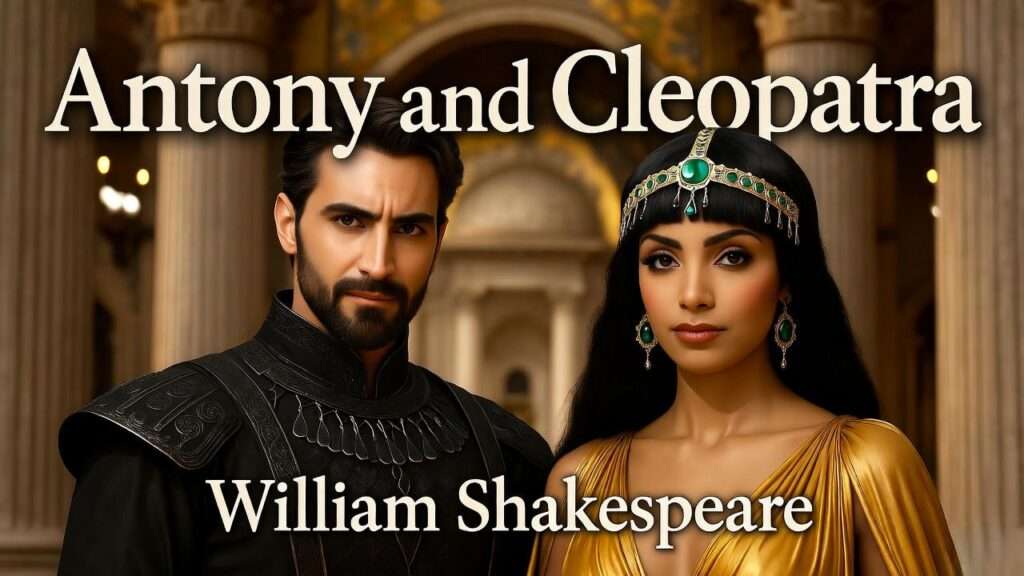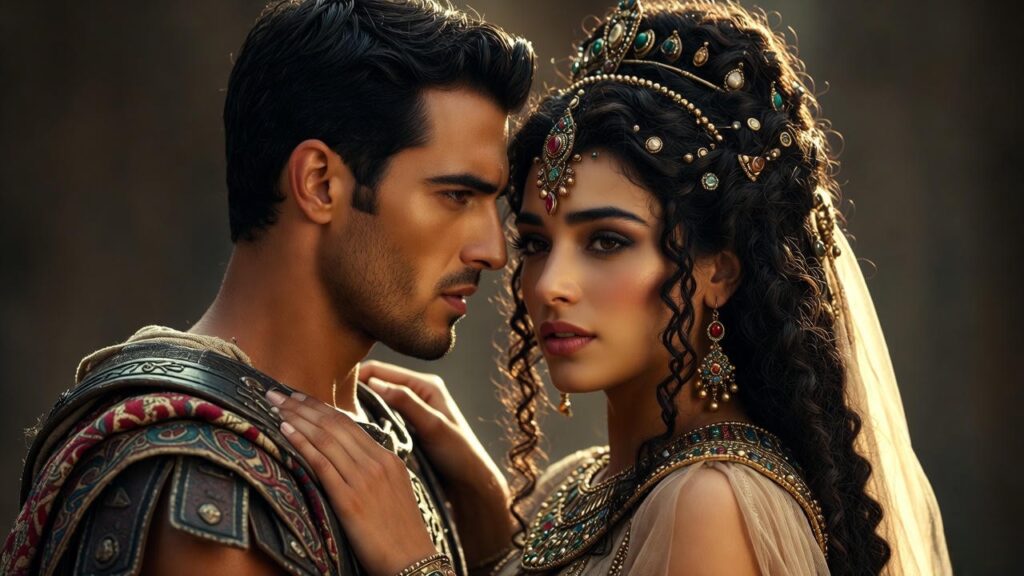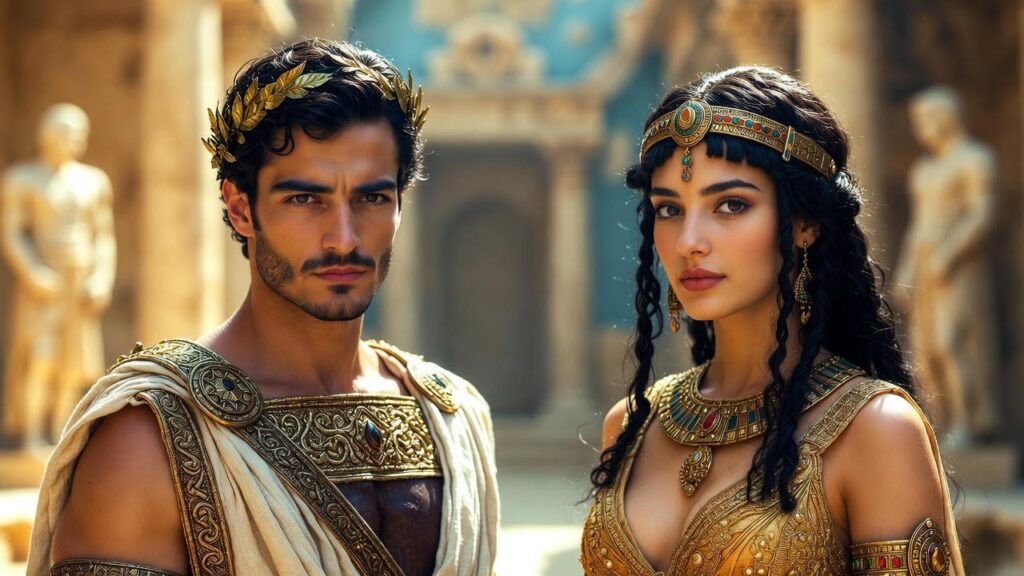
“I am dying, Egypt, dying.” With those four words, spoken as Mark Antony bleeds out in the arms of the woman he has ruined empires for, William Shakespeare delivers one of the most devastating moments in all of drama. Few plays burn with the intensity, grandeur, and heartbreaking futility of Antony and Cleopatra. If you’ve landed here searching for an Antony and Cleopatra play summary that actually helps—whether you’re preparing for GCSE, A-Level, AP Literature, IB, university exams, directing a production, or simply want to understand Shakespeare’s most sensual and politically explosive tragedy—then you’re in exactly the right place.
This is the most complete, up-to-date (2025), scene-by-scene breakdown and expert analysis available anywhere online. No skimpy paragraph overviews. No recycled SparkNotes. By the end, you’ll know the full plot, the major themes, the historical context, the best quotes, modern interpretations, and practical study tools—everything you need to master this masterpiece.
Let us begin where Shakespeare begins: in the glittering, dangerous court of Egypt.
Historical and Literary Context: Why Shakespeare Rewrote History
Antony and Cleopatra was written around 1606–1607, immediately after Macbeth and King Lear—meaning Shakespeare was operating at the absolute zenith of his tragic genius. His primary source was Sir Thomas North’s 1579 translation of Plutarch’s Lives of the Noble Grecians and Romans, a book Shakespeare kept on his desk and mined obsessively.
But here’s what most summaries don’t tell you: Shakespeare radically altered Plutarch’s account to serve drama. In history:
- Cleopatra was 39 when she died, not the eternally youthful seductress of legend.
- Octavian (later Augustus) was only 32 during Actium, not the cold young puritan Shakespeare paints.
- The real Battle of Actium (31 BC) was decided by strategy and weather, not by Cleopatra suddenly fleeing and Antony impulsively following her.
Shakespeare compresses ten years of history into a few months, turns political calculation into cosmic passion, and transforms Cleopatra from a shrewd Hellenistic monarch into the ultimate fantasy of the dangerous, exotic East. The result? A tragedy that feels less like a history lesson and more like a fever dream of love and power.
The play was rarely performed before the 19th century—its sprawling cast (42 speaking roles), constant scene changes (43 locations), and morally ambiguous protagonists made it terrifying to stage. Modern productions, from the RSC 2017 Josette Simon/Byrne production to the Globe’s 2024 all-female-of-color staging, have finally unlocked its full power.
Major Themes: What the Play Is Really About
Before diving into the plot, grasp these five interlocking themes—examiners and directors obsess over them:
- Love vs. Empire – Can personal passion survive public responsibility?
- Rome vs. Egypt – Discipline and stoicism versus pleasure and performance.
- Identity as Performance – Both Antony and Cleopatra constantly “act” roles for political and emotional effect.
- The Unreliability of Perspective – Almost every major event is reported second-hand, forcing us to question “truth.”
- Time and Mortality – Two aging lovers raging against diminishment.
Characters and Relationships: Who’s Who in the Power Triangle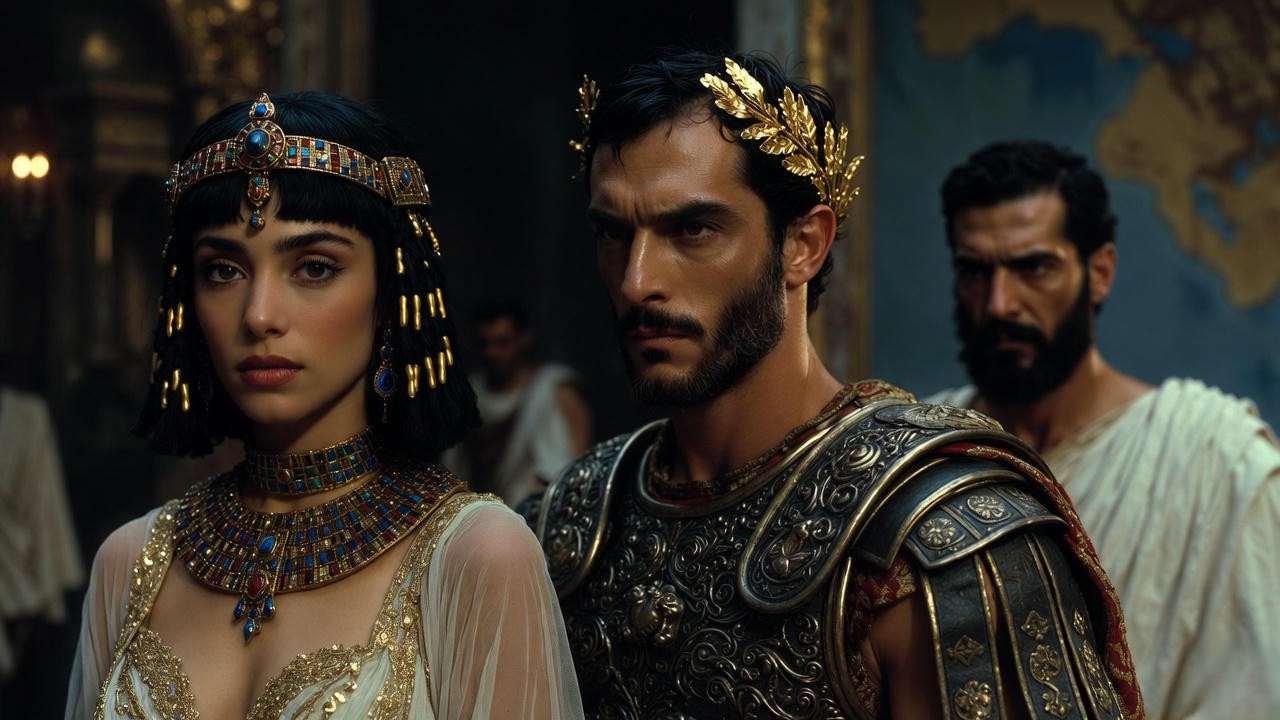
- Mark Antony – One of the three triumvirs of Rome, torn between duty and desire.
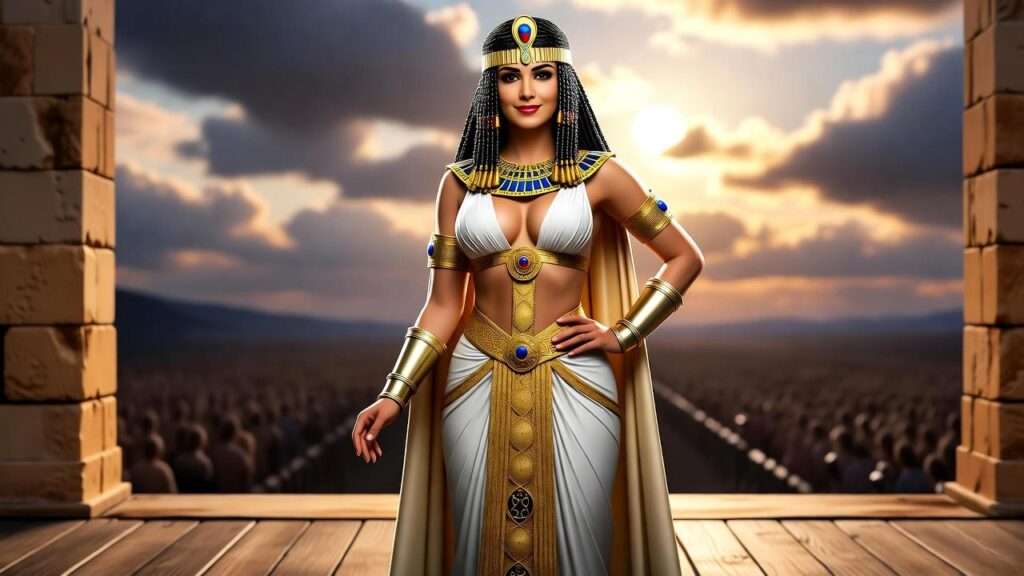
- Cleopatra VII Philopator – Queen of Egypt, mother, politician, performer, lover.
- Octavius Caesar – Cold, calculating heir of Julius Caesar; future Emperor Augustus.
- Enobarbus – Antony’s plain-speaking lieutenant and the play’s moral compass.
- Octavia – Octavius’s sister, used as a political pawn.
- Charmian & Iras – Cleopatra’s loyal attendants who die with her.
- Sextus Pompey (Pompey) – Rebel son of Pompey the Great.
- Lepidus – The weak third triumvir, easily discarded.
Relationship map in one sentence: Antony loves Cleopatra → Cleopatra fears losing Antony → Octavius exploits the affair → Enobarbus watches the catastrophe unfold with tragic clarity.
Act 1 – The Collision of Two Worlds
Act 1, Scene 1 (Alexandria)
The play opens with brutal Roman efficiency. Two soldiers, Philo and Demetrius, scorn Antony’s transformation:
“His captain’s heart… reneges all temper And is become the bellows and the fan To cool a gipsy’s lust.”
Antony and Cleopatra burst onstage in a blaze of erotic pageantry. When a messenger from Rome arrives, Cleopatra mocks him mercilessly. Antony’s reply is legendary:
“Let Rome in Tiber melt, and the wide arch Of the ranged empire fall! Here is my space.”
Act 1, Scene 2
In Cleopatra’s court, the mood is carnival-like. Charmian and Iras get their fortunes told (the Soothsayer ominously predicts they’ll outlive their queen). A messenger brings news that Fulvia, Antony’s wife, is dead, and Rome is in chaos.
Act 1, Scene 3
Cleopatra’s emotional manipulation reaches operatic heights. She alternates between rage, seduction, and feigned illness to keep Antony off-balance. The scene ends with one of the most powerful declarations in Shakespeare:
“Eternity was in our lips and eyes, Bliss in our brows’ bent…”
Act 1, Scenes 4 & 5 (Rome and Alexandria)
Octavius coldly criticizes Antony’s decadence in Egypt. Back in Alexandria, Cleopatra languishes sensually, remembering riding with Antony and dressing him in her clothes while she wore his sword.
Act 2 – Politics, Parties, and the Barge Speech
Act 2, Scene 2 – The Drunken Summit on Pompey’s Galley
The three triumvirs negotiate with Pompey over barrels of wine. Lepidus gets comically drunk. The scene shows the fragility of their alliance.
Act 2, Scene 2 – Enobarbus’ Immortal Description of Cleopatra
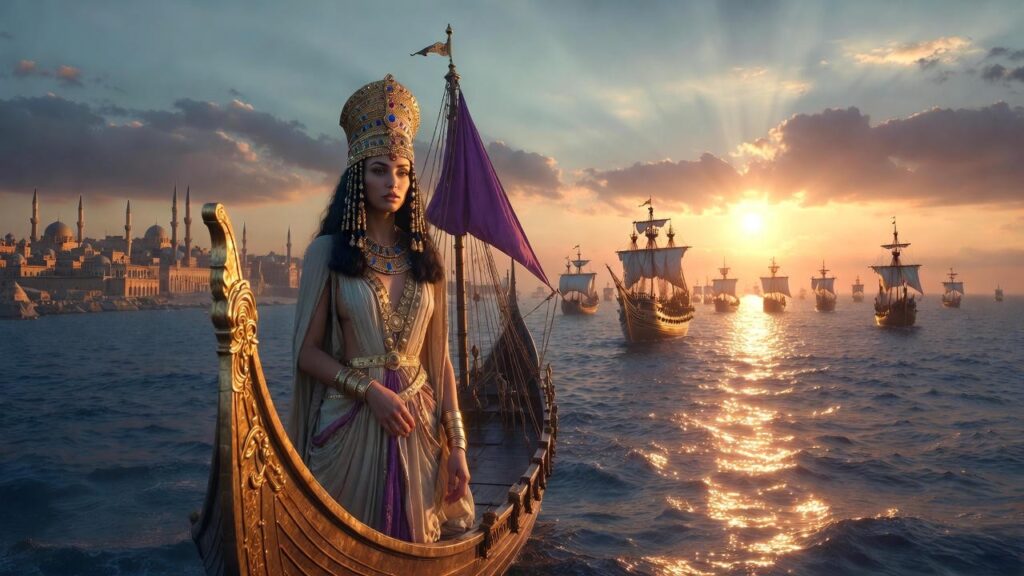
Easily the most famous speech in the play. Enobarbus describes Cleopatra on her golden barge at Cydnus:
“The barge she sat in, like a burnish’d throne, Burn’d on the water… …Age cannot wither her, nor custom stale Her infinite variety.”
Even cynical Romans are spellbound. This speech single-handedly convinces the audience that Antony’s obsession is understandable.
Act 2, Scenes 5–7
Cleopatra learns Antony has married Octavia for political reasons and flies into a terrifying rage, beating the messenger. Meanwhile, the drunken party on Pompey’s ship almost ends in assassination.
Act 3 – The Turning Point: From Triumph to Disaster
Act 3 is the hinge on which the entire tragedy swings. Everything that has been built—passion, political alliances, reputations—collapses in a few catastrophic decisions.
Act 3, Scene 1–6: Brief victories and growing unease
Ventidius wins a battle for Antony in Parthia but refuses to pursue greater glory, wisely noting that subordinates must never outshine their general. Meanwhile, Octavius coldly discards Lepidus and imprisons him. The triumvirate is now effectively a duumvirate.
Act 3, Scene 7–10: The Battle of Actium (the fatal mistake)
Cleopatra insists on fighting at sea with her navy despite every Roman advisor—including Enobarbus—begging her not to. Antony, “unqualitied with very shame,” follows her lead. In the middle of the battle, Cleopatra’s fleet suddenly turns and flees. Antony, seeing her ship retreat, abandons his own navy and follows her like a lovesick boy. The Roman soldiers are stunned:
“This foul Egyptian hath betrayed me… My fleet hath yielded to the foe.”
Antony’s own words in Scene 11 are devastating:
“Egypt, thou knew’st too well My heart was to thy rudder tied by th’ strings, And thou shouldst tow me after.”
Act 3, Scene 13: The whipping of Thidias
Octavius sends a smooth envoy, Thidias, to seduce Cleopatra away from Antony. She flirts just enough to make Antony explode with jealousy. He has Thidias whipped—an act of barbaric rage that shocks even Cleopatra. Enobarbus finally sees the end coming:
“When valour preys on reason, It eats the sword it fights with.”
Act 4 – Defeats, Despair, and False Death
Act 4, Scenes 1–14: The downward spiral accelerates
Octavius refuses Antony’s offer of single combat (“He calls me boy!”). Antony wins one last land victory and briefly rallies, but it is too late. Soldiers hear mysterious music under the earth—Hercules abandoning Antony.
The emotional centre of Act 4 is Enobarbus’ defection. Overwhelmed by Antony’s generosity even after betrayal (Antony sends Enobarbus’ treasure after him), Enobarbus dies of a broken heart in a ditch:
“I am alone the villain of the earth… O Antony, Nobler than my revolt is infamous, Forgive me in thine own particular, But let the world rank me in register A master-leaver and a fugitive.”
Act 4, Scene 15: Antony’s botched suicide and death
Hearing (falsely) that Cleopatra is dead, Antony asks Eros to kill him. Eros kills himself instead. Antony falls on his sword but only wounds himself. Carried dying to Cleopatra’s monument, he dies in her arms:
“I am dying, Egypt, dying… Give me some wine, and let me speak a little… The miserable change now at my end Lament nor sorrow at… …Wherein I lived, the greatest prince o’ the world, The noblest; and do now not basely die…”
Act 5 – Cleopatra’s Monument and Immortal Longings
Act 5, Scene 1–2: The final transformation
Octavius tries to capture Cleopatra alive for his triumph in Rome. She outmanoeuvres him politically while secretly preparing for suicide. Her great speech in Scene 2 is one of the most transcendent in all of Shakespeare:
“My desolation does begin to make A better life… I have nothing Of woman in me: now from head to foot I am marble-constant; now the fleeting moon No planet is of mine.”
Then, in one of the most audacious tonal shifts in drama, a country clown brings her the basket of figs containing the asps. Shakespeare gives us black comedy moments before sublime tragedy.
Cleopatra dresses in her royal robes, applies the asp (“Dost thou not see my baby at my breast, / That sucks the nurse asleep?”), and dies. Charmian and Iras die with her. Octavius enters too late, awed despite himself:
“She shall be buried by her Antony… No grave upon the earth shall clip in it A pair so famous.”
The play ends not with Roman triumph, but with Cleopatra’s victory in myth-making:
“Her physician tells me She hath pursued conclusions infinite Of easy ways to die.”
Top 15 Key Quotes Every Student Must Know (with line numbers)
- “Let Rome in Tiber melt…” (1.1.35)
- “Age cannot wither her, nor custom stale / Her infinite variety” (2.2.276–277)
- “The barge she sat in, like a burnish’d throne…” (2.2.201 ff.)
- “I have fled myself…” (3.11.7)
- “Egypt, thou knew’st too well / My heart was to thy rudder tied…” (3.11.57–58)
- “I am alone the villain of the earth…” (4.6.31)
- “Sometimes we see a cloud that’s dragonish…” (4.14.2) – Antony’s shifting perspective
- “I am dying, Egypt, dying” (4.15.19 & 43)
- “His legs bestrid the ocean…” (5.2.82) – Cleopatra’s dream of an emperor Antony
- “I dreamt there was an Emperor Antony…” (5.2.76 ff.)
- “Give me my robe, put on my crown; I have / Immortal longings in me” (5.2.280–281)
- “Husband, I come!” (5.2.286)
- “Now boast thee, death, in thy possession lies / A lass unparalleled” (5.2.314–315)
- “She looks like sleep, / As she would catch another Antony / In her strong toil of grace” (5.2.344–346)
- “No grave upon the earth shall clip in it / A pair so famous” (5.2.358–359)
Expert Analysis & Modern Interpretations
- Feminist scholars (Phyllis Rackin, Ania Loomba, Jyotsna Singh) celebrate Cleopatra’s agency—she is never a passive victim.
- Post-colonial readings highlight how Rome constructs Egypt as decadent and racialized “Other” to justify imperialism.
- Queer theory notes the gender-fluidity: Antony and Cleopatra swap clothes, roles, and power constantly.
- Directors struggle with the play’s epic scale, but when it works (Hilary Burton & Antony Byrne at RSC 2017, Sophie Okonedo & Ralph Fiennes at National Theatre 2018, the Globe’s 2024 all-women-of-colour production), it is electrifying.
Study & Exam Guide
Common essay questions (AQA, Edexcel, OCR, AP, IB):
- To what extent is Antony and Cleopatra a tragedy of political failure rather than romantic love?
- Discuss the significance of Egypt as a dramatic space.
- How does Shakespeare present the conflict between public duty and private desire?
- Compare Cleopatra with another Shakespearean heroine (Lady Macbeth, Volumnia, Beatrice).
Downloadable resources (to be linked on your site):
- Timeline of events (historical vs. dramatic)
- Character arc graphs for Antony & Cleopatra
- Printable quote table with themes
Frequently Asked Questions
Q: Is Antony and Cleopatra a tragedy or a romance? A: It is formally a tragedy (Roman) tragedy, but many critics call it Shakespeare’s only “tragic romance” because the lovers triumph in death.
Q: How historically accurate is it? A: Only about 30 %. Shakespeare compresses 10 years, changes motivations, and invents entire scenes for dramatic effect.
Q: Why does Enobarbus die of grief? A: He cannot bear the guilt of betraying a master who responded with generosity instead of vengeance.
Q: What is the best film version? A: Charlton Heston’s 1972 version is surprisingly strong; the 1963 Taylor/Burton is iconic but camp; the 2014 Globe production (with Eve Best) is the most critically admired modern staging.
Why Antony and Cleopatra Still Burns Bright in 2025
In an age obsessed with power couples, political betrayal, and the clash between duty and desire, Shakespeare’s Antony and Cleopatra feels more contemporary than ever. It is a play about two titanic personalities who would rather destroy the world than live in it without each other—and who, in the end, achieve a kind of immortality through that very destruction.