“O for a Muse of fire, that would ascend / The brightest heaven of invention!” These immortal words open William Shakespeare’s Henry V, igniting the imagination and setting the stage for one of the most stirring history plays in the English language. If you’re searching for a Henry V plot summary, you’ve come to the right place. This comprehensive guide offers a detailed act-by-act breakdown of Shakespeare’s masterpiece, enriched with historical context, thematic analysis, iconic speeches, character insights, and notable adaptations. Whether you’re a student preparing for an exam, a theater enthusiast planning to see a production, or a reader seeking deeper understanding of Shakespeare’s exploration of kingship and war, this article will equip you with everything you need—and more.
Written around 1599, Henry V chronicles the remarkable transformation of the once-wayward Prince Hal into England’s heroic king, culminating in the miraculous victory at the Battle of Agincourt in 1415. Shakespeare blends rousing patriotism with subtle questions about the cost of glory, making the play as relevant today as it was in Elizabethan England. Let’s dive into this epic tale of leadership, national identity, and the human spirit.
Table of Contents
- Historical Context and Shakespeare’s Sources
- Prologue and the Chorus: Shakespeare’s Unique Framing Device
- Detailed Plot Summary by Act
- Major Themes in Henry V
- Key Characters and Their Arcs
- Famous Speeches and Quotes
- Stage and Screen Adaptations
- Frequently Asked Questions
- Conclusion
Historical Context and Shakespeare’s Sources
To fully appreciate Shakespeare’s Henry V, it’s essential to understand the real events and sources that inspired it. The play is the final installment in the Henriad tetralogy (Richard II, Henry IV Part 1, Henry IV Part 2, and Henry V), tracing the rise of the Lancastrian dynasty during the Hundred Years’ War (1337–1453) between England and France.
The Real Henry V and the Hundred Years’ War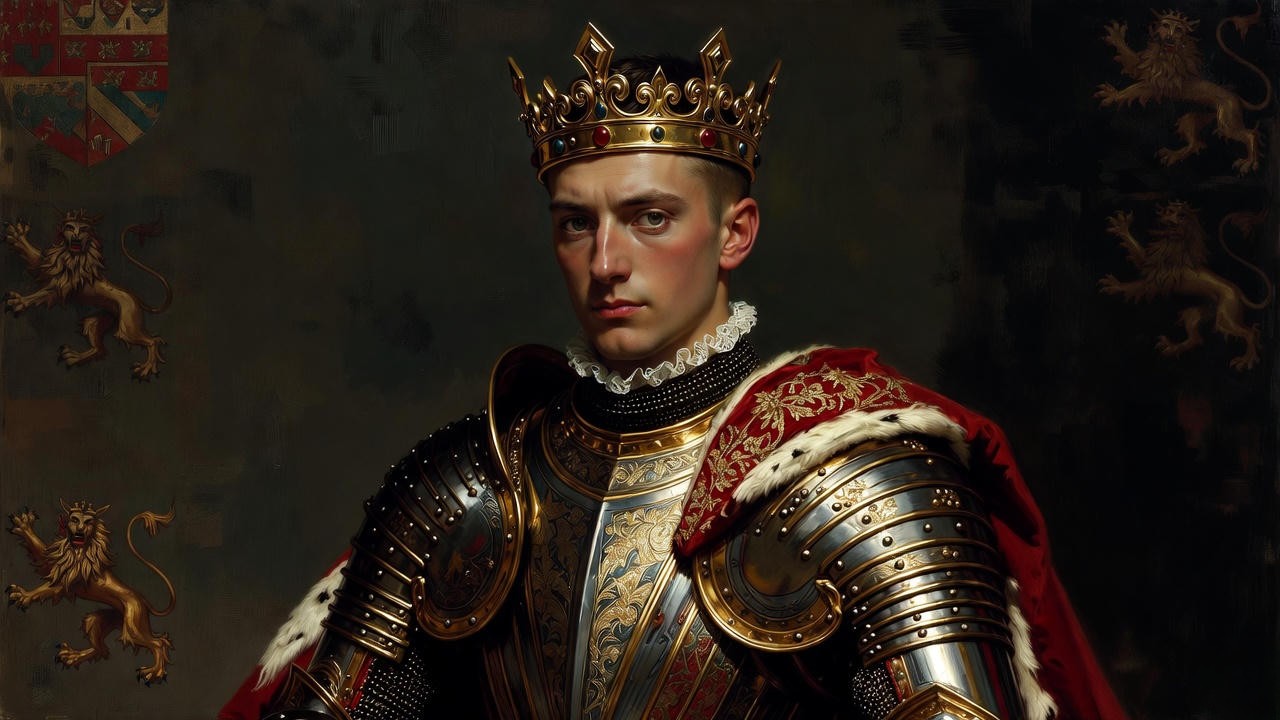
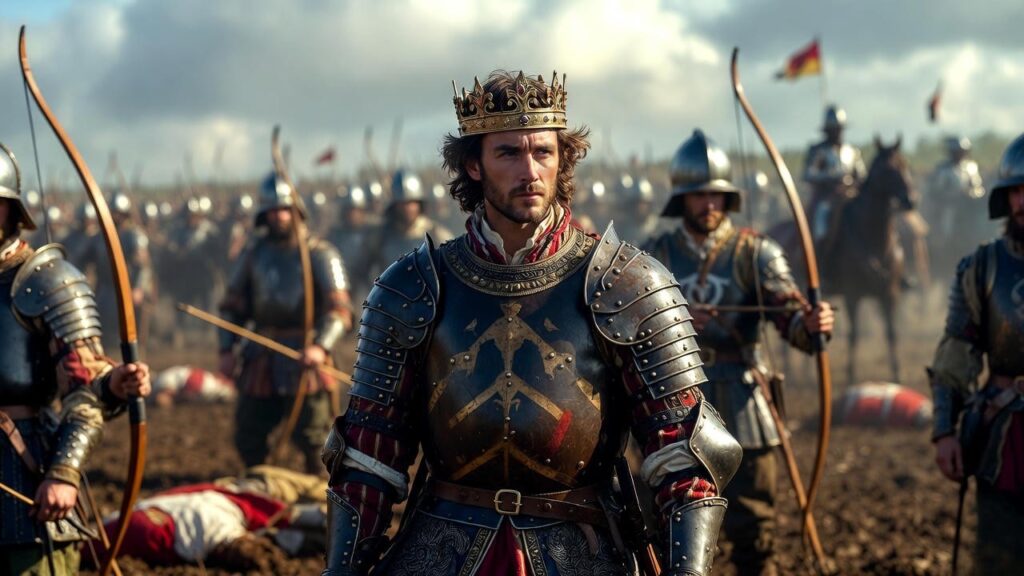
The historical Henry V (1386–1422) was a skilled military leader who reopened hostilities with France in 1415, claiming the French throne through his great-grandfather Edward III. His most famous victory came at Agincourt, where a vastly outnumbered English army—weakened by disease and exhaustion—defeated the French through superior tactics and the devastating power of the longbow. Historical estimates suggest ratios of roughly 6,000–9,000 English against 12,000–36,000 French, though Shakespeare dramatically exaggerates the odds for theatrical effect.
Shakespeare’s Primary Sources
Shakespeare drew heavily from Raphael Holinshed’s Chronicles (1587 edition), Edward Hall’s The Union of the Two Noble and Illustre Families of Lancaster and York, and likely the anonymous play The Famous Victories of Henry the Fifth. These sources portrayed Henry as an ideal Christian king who reformed after a misspent youth—a narrative Shakespeare embraced but added nuance to.
Why Shakespeare Dramatized This Story in 1599
Performed during Queen Elizabeth I’s reign, the play resonated with contemporary concerns. England faced threats from Spain and rebellion in Ireland (the Earl of Essex’s campaign paralleled Henry’s invasion). The Chorus’s patriotic appeals may have served as subtle propaganda, reinforcing Tudor myths of divine favor toward English monarchs.
Differences Between History and Shakespeare’s Version
Shakespeare compresses timelines, invents dramatic devices like the Dauphin’s tennis balls insult, and omits harsher historical actions (such as Henry’s execution of all French prisoners). The play ends on a triumphant note with Henry’s marriage, downplaying his death in 1422 at age 35 and the rapid loss of French territories under his infant son Henry VI.
Prologue and the Chorus: Shakespeare’s Unique Framing Device
One of Henry V’s most distinctive features is the Chorus—a single speaker who appears before each act to set the scene and advance the narrative. The famous opening Prologue apologizes for the limitations of the stage:
“O for a Muse of fire, that would ascend The brightest heaven of invention! A kingdom for a stage, princes to act, And monarchs to behold the swelling scene!”
The Chorus urges the audience to “piece out our imperfections with your thoughts,” transforming the simple wooden stage into vast battlefields and royal courts. This device heightens the epic scope while reminding viewers that history itself is a constructed story.
The Chorus returns before every act, describing off-stage events (such as the English fleet’s departure) and building anticipation. In the Epilogue, it delivers a sobering reminder that Henry’s triumphs were short-lived, leading directly into the wars depicted in the Henry VI plays.
Detailed Plot Summary by Act
Act 1 – The Making of a King
The play opens in the royal court, where the Archbishop of Canterbury and Bishop of Ely discuss a proposed bill that would seize Church lands. To distract King Henry V, they encourage his claim to the French throne by offering a lengthy (and deliberately convoluted) explanation of the Salic Law, which supposedly prevents succession through female lines.
Now portrayed as pious and decisive—far removed from the tavern-haunting Prince Hal—Henry consults his advisors and resolves to invade France. French ambassadors deliver a mocking gift from the Dauphin: tennis balls, alluding to Henry’s youthful frivolity. Henry responds with calm menace, promising to turn the “balls” into cannonballs that will devastate France.
The act closes with the revelation of a treasonous plot by three nobles (Richard Earl of Cambridge, Henry Lord Scroop, and Sir Thomas Grey), bribed by France to assassinate Henry.
Act 2 – Departure and Betrayal
The Chorus describes national enthusiasm for the war and warns of lingering traitors. In London’s Eastcheap district, we revisit Henry’s former companions: the bombastic Pistol (now married to Mistress Quickly), Corporal Nym, and Ancient Bardolph. They learn that Sir John Falstaff has died off-stage, broken-hearted after Henry rejected him in Henry IV Part 2.
At Southampton, Henry confronts and sentences the three traitors to death. His speech to the once-close friend Scroop is especially poignant, emphasizing personal betrayal. The English army then sails for France.
Act 3 – The Siege of Harfleur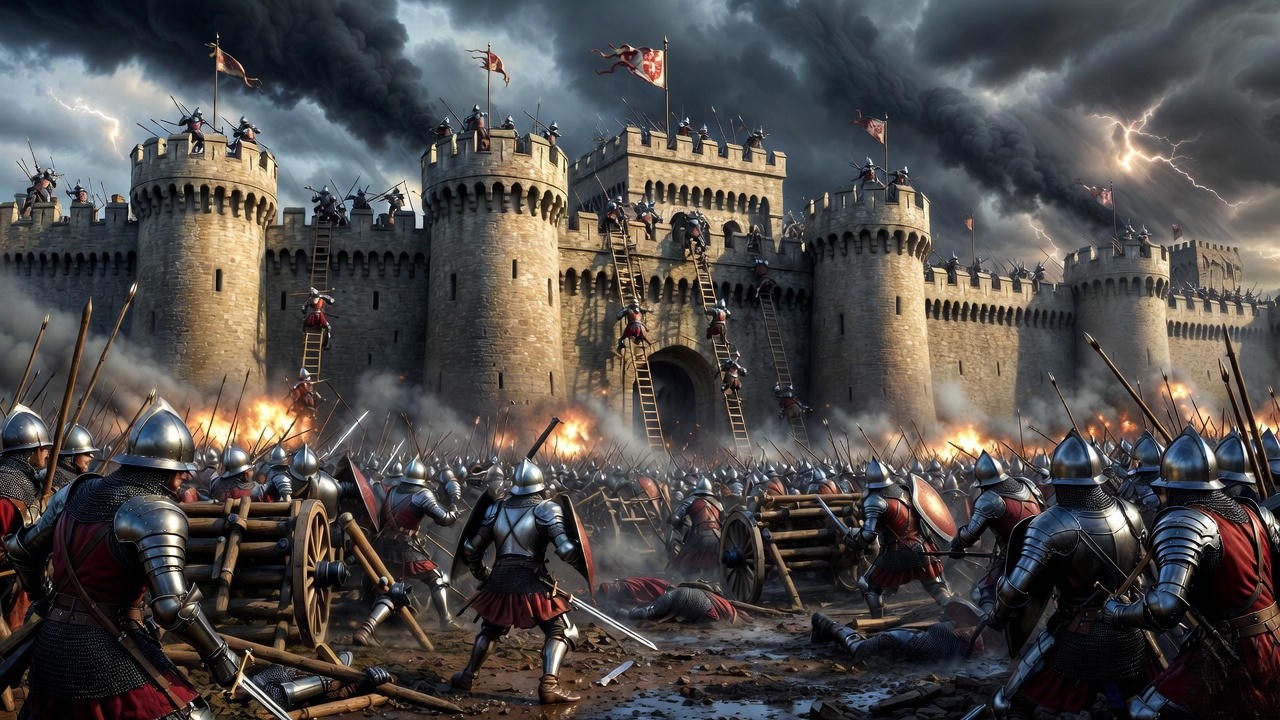
The Chorus vividly evokes the fleet crossing the Channel. The English lay siege to Harfleur, where Henry delivers his first great motivational speech:
“Once more unto the breach, dear friends, once more; Or close the wall up with our English dead!”
The town surrenders after Henry threatens brutal reprisals against civilians—a darker glimpse of war’s moral cost. We meet the multinational captains: pedantic Welsh Fluellen, hot-tempered Irish Macmorris, and Scottish Jamy.
In a lighter scene, Princess Katherine of France takes an English lesson from her lady-in-waiting, comically misunderstanding body-part vocabulary and foreshadowing her future encounter with Henry.
Act 4 – The Night Before Agincourt and the Battle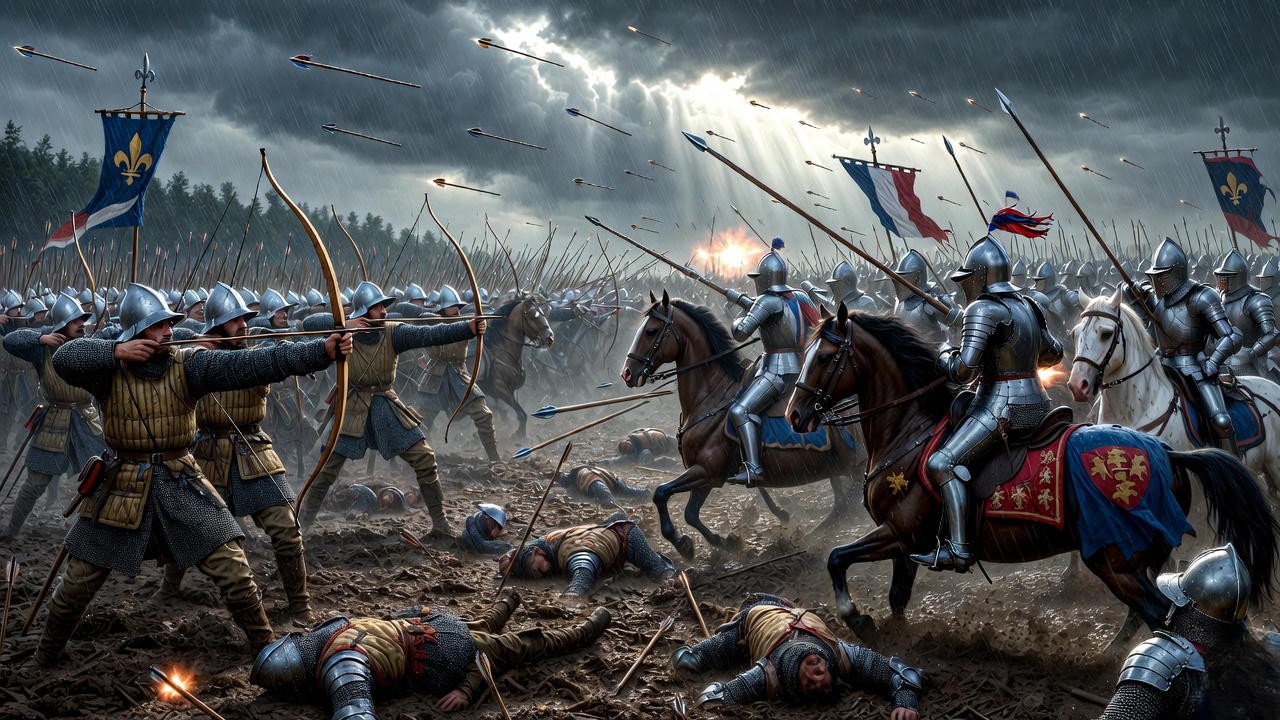
The Chorus contrasts the confident French camp with the weary, outnumbered English. Disguised as a common soldier, Henry walks among his men and debates the justice of the king’s war with Michael Williams—a rare moment of democratic discourse.
Alone, Henry reflects on the heavy burdens of kingship in his “Upon the king” soliloquy. On St. Crispin’s Day morning, facing overwhelming odds, he delivers the immortal rallying speech (detailed below).
Miraculously, the English win through longbow volleys and muddy terrain that bogged down French armored knights. Henry orders the execution of prisoners (a pragmatic but controversial decision), and Pistol comically “captures” a French soldier for ransom.
Act 5 – Peace and Wooing
The Chorus summarizes Henry’s triumphant return to London and the continuation of the campaign. Comic subplots resolve: Fluellen forces Pistol to eat a leek after he mocks Welsh customs, effectively ending Pistol’s boasting career.
In the French court, Henry negotiates peace terms and personally woos Princess Katherine in a charming, halting bilingual scene that reveals his humility and humor. The treaty is sealed: Henry will marry Katherine and become heir to the French throne. The Epilogue, spoken by the Chorus, reminds the audience that this hard-won peace was fleeting—Henry died young, and his son lost everything in France.
Major Themes in Henry V
Shakespeare balances celebration with critique, creating a richly ambiguous work.
Leadership and Kingship
Henry’s transformation raises timeless questions: What makes a great ruler? Piety and eloquence, or pragmatism and ruthlessness?
War and Its Cost
Glory is tempered by scenes of disease, betrayal, threatened civilian atrocities, and soldiers’ doubts.
Nationalism and Propaganda
The play unites English, Welsh, Irish, and Scottish voices under one banner, yet subtly questions blind patriotism.
Language and Rhetoric
Henry’s speeches demonstrate the power of words to inspire armies and justify war.
Honor, Mercy, and Justice
Henry shows mercy to a drunken soldier but executes his old friend Bardolph for looting a church—illustrating the lonely demands of justice.
Key Characters and Their Arcs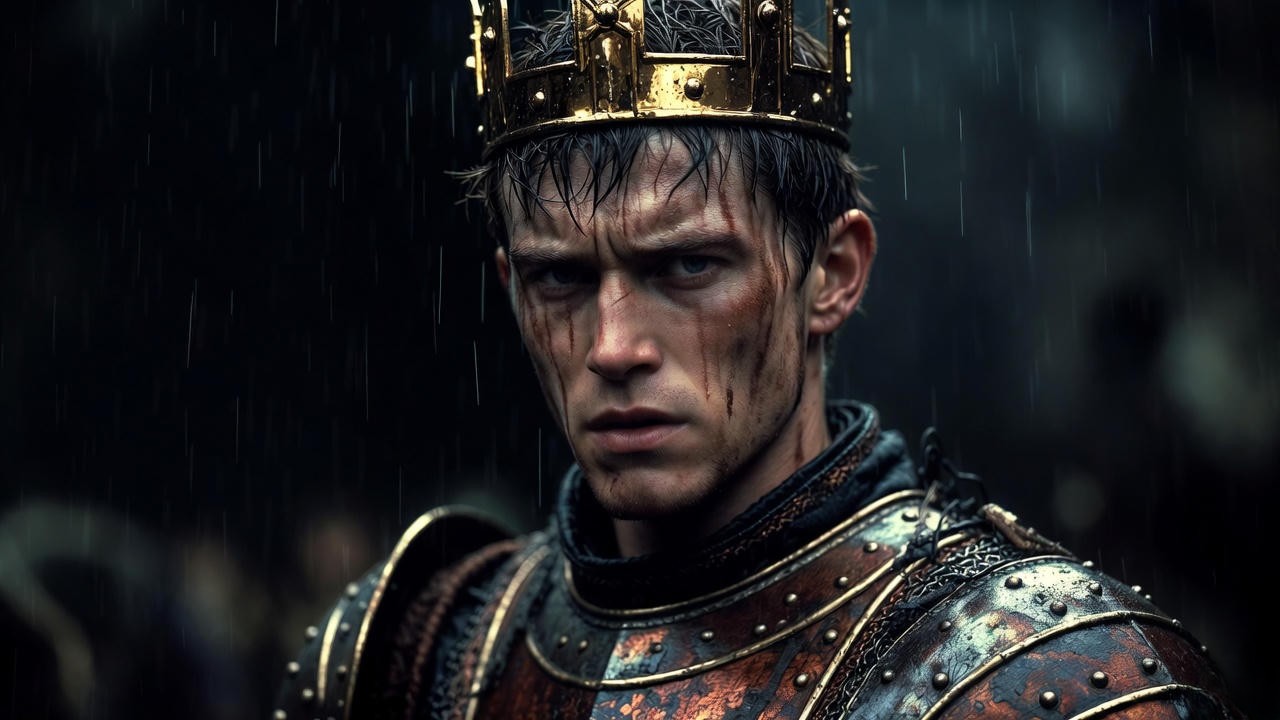
- King Henry V: The central figure evolves from cautious claimant to charismatic leader, yet moments of doubt and severity reveal his complexity.
- The Chorus: Acts as storyteller and commentator, shaping audience perception.
- Captain Fluellen: Represents disciplined honor and Welsh pride; provides comic yet insightful commentary.
- Pistol: Comic braggart whose decline mirrors the harsh realities faced by common soldiers.
- Michael Williams: Ordinary soldier whose debate with disguised Henry highlights class tensions.
- Princess Katherine: More than a trophy; her language struggles symbolize cultural barriers overcome by peace.
- Falstaff (absent): His off-stage death lingers as a reminder of the personal cost of Henry’s reformation.
Famous Speeches and Quotes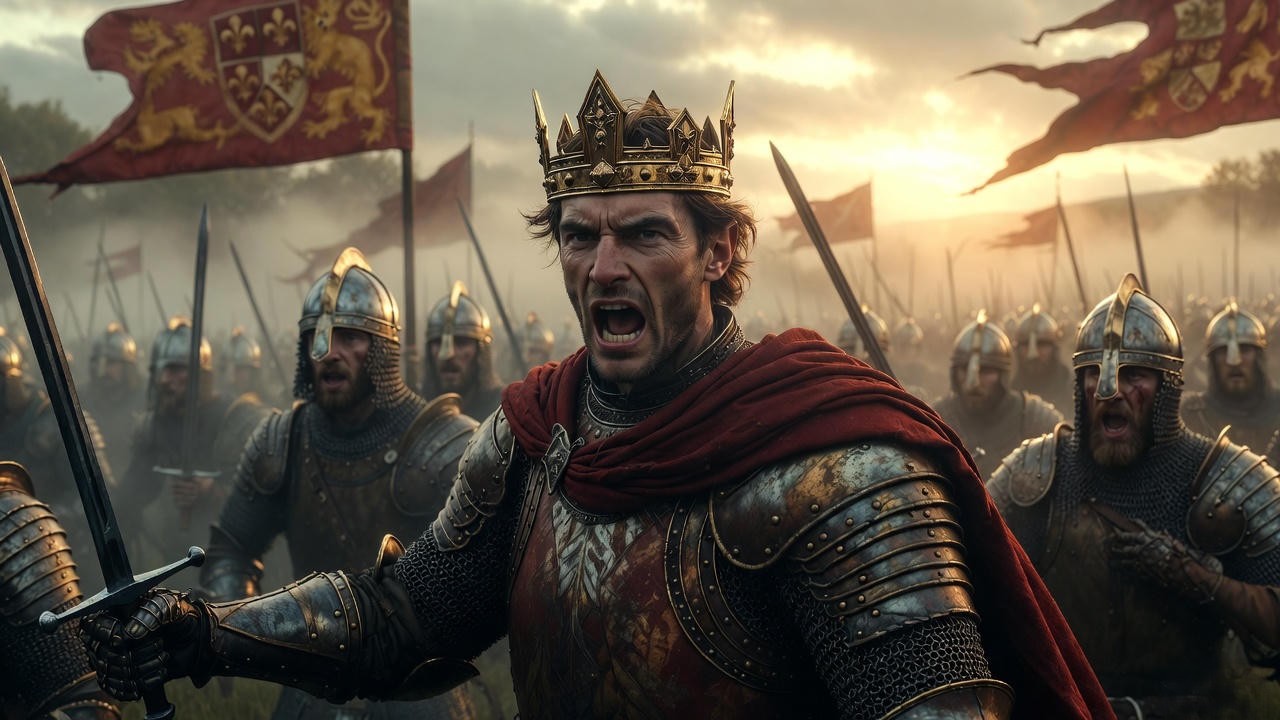
- Opening Prologue: “O for a Muse of fire…”
- Harfleur: “Once more unto the breach, dear friends, once more…”
- Soliloquy on Ceremony (Act 4, Scene 1): “Upon the king! … What infinite heart’s ease / Must kings neglect that private men enjoy!”
- St. Crispin’s Day Speech (Act 4, Scene 3): “We few, we happy few, we band of brothers; For he today that sheds his blood with me Shall be my brother; be he ne’er so vile, This day shall gentle his condition.”
This speech has inspired leaders and soldiers for centuries.
- Wooing Scene: Henry’s humble “I am glad thou canst speak no better English” reveals his human side.
Stage and Screen Adaptations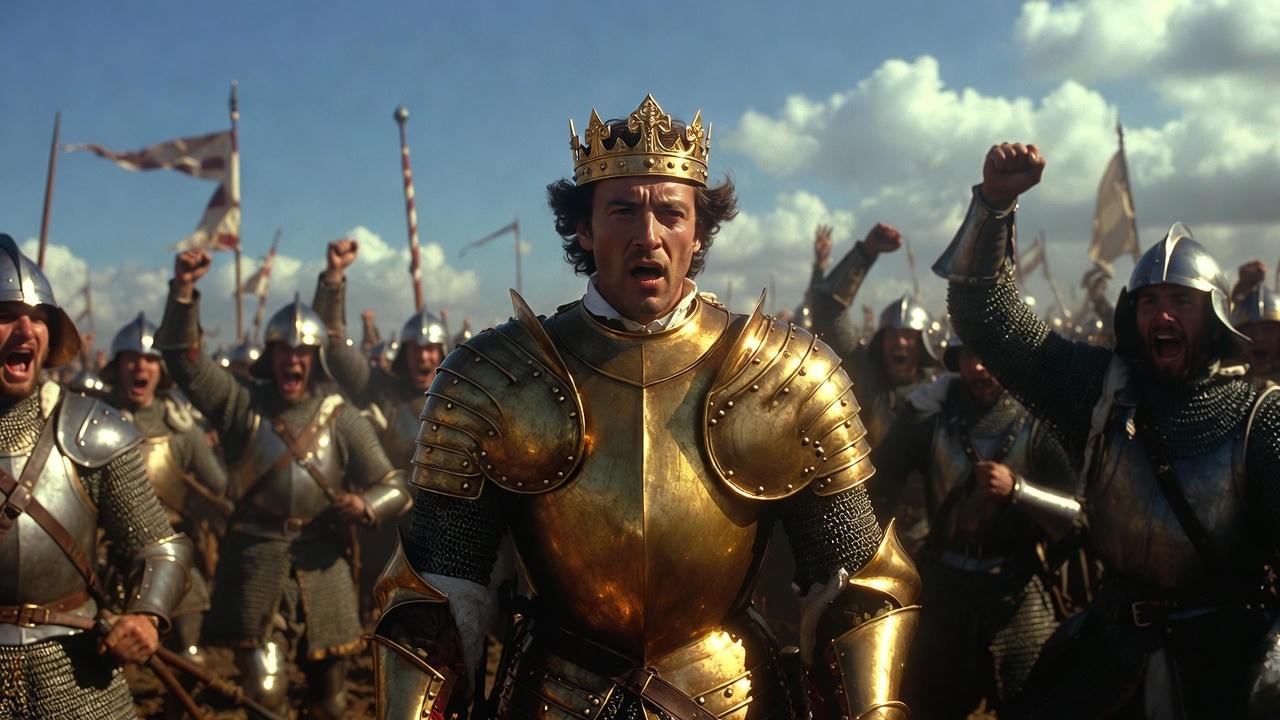
Notable Stage Productions
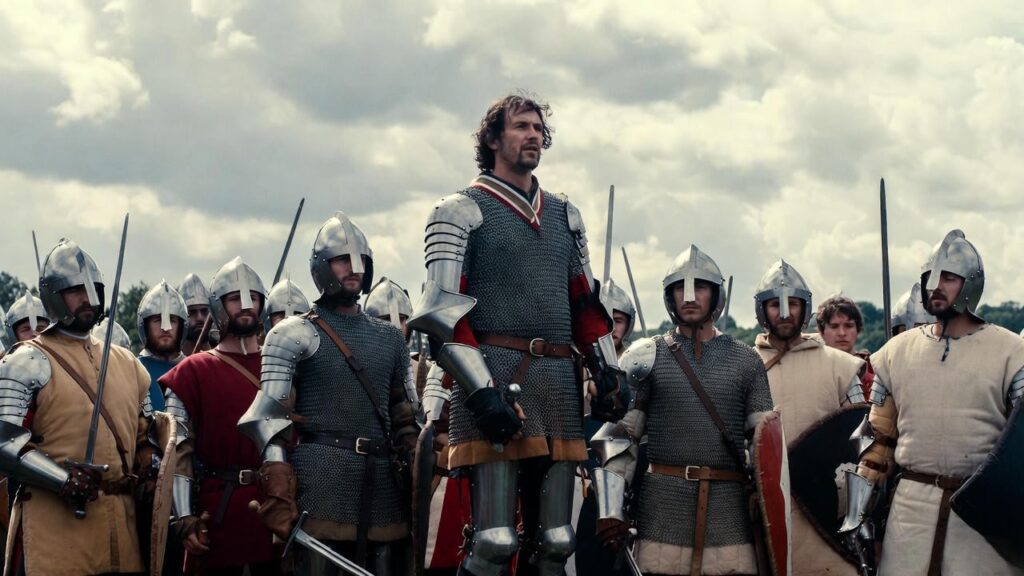
Directors grapple with the play’s tonal shifts. Laurence Olivier’s 1944 film began as a stylized stage recreation before opening into realistic battle. Kenneth Branagh’s 1989 film took a grittier, more intimate approach.
Laurence Olivier’s 1944 Film
Made during World War II, it served as morale-boosting propaganda, emphasizing heroism and cutting darker elements.
Kenneth Branagh’s 1989 Film
Post-Falklands and more cynical, Branagh highlighted mud, blood, and moral ambiguity while retaining the inspirational speeches.
Modern Interpretations
Recent productions (Royal Shakespeare Company, Globe Theatre, National Theatre) often explore anti-war readings, imperialism, or contemporary parallels to modern conflicts.
Frequently Asked Questions
What is the main plot of Henry V? The play follows King Henry V’s invasion of France, his victory at Agincourt, and the subsequent peace treaty sealed by his marriage to Princess Katherine.
Is Henry V based on a true story? Yes. It dramatizes real events from 1415, though Shakespeare took significant artistic liberties.
Why is the St. Crispin’s Day speech famous? Its celebration of camaraderie and underdog triumph has been quoted in wartime and sports contexts worldwide.
How does Henry V connect to the earlier Henry IV plays? It completes Prince Hal’s arc from reckless youth to responsible monarch.
Is Henry V patriotic propaganda or a critique of war? Both. It celebrates English victory while subtly questioning war’s justifications and costs.
How long is the play and how many acts does it have? Five acts plus Prologue and Epilogue; uncut performances run about three hours.
Shakespeare’s Henry V remains a towering exploration of leadership, national identity, and the bittersweet nature of victory. From the rousing call to imagine epic battles on a bare stage to the quiet intimacy of Henry’s courtship of Katherine, the play captures both the glory and the grave responsibility of power.
Whether you’re revisiting the text, preparing for a performance, or simply curious about one of history’s most celebrated monarchs, this epic tale continues to resonate. I encourage you to read the full play, watch a strong production, or share your favorite speech in the comments below.