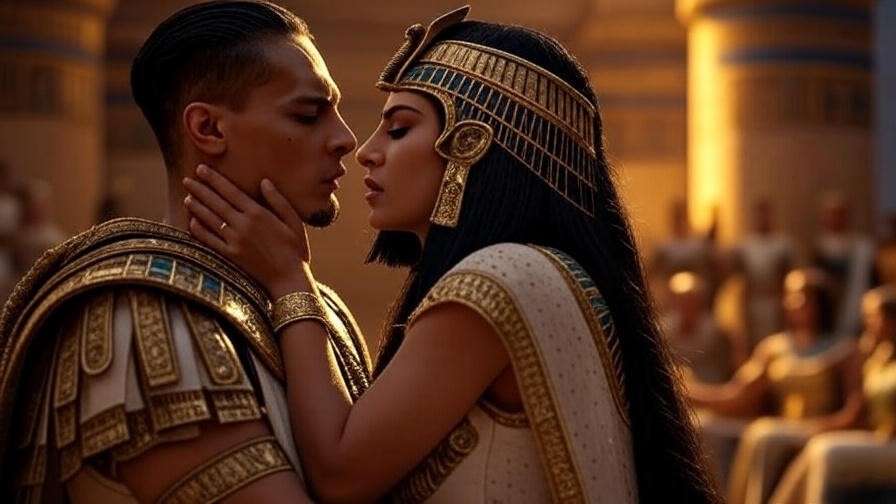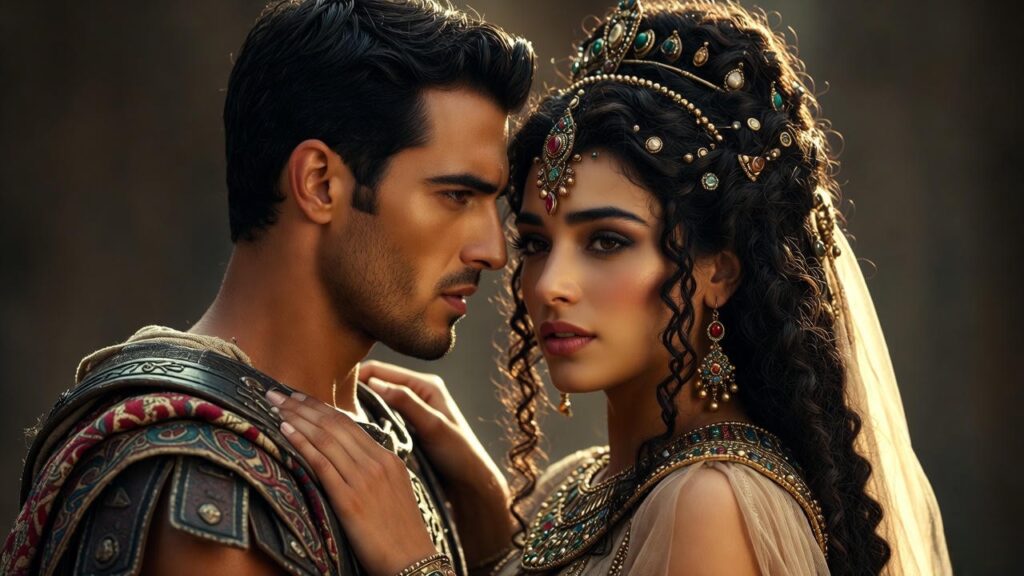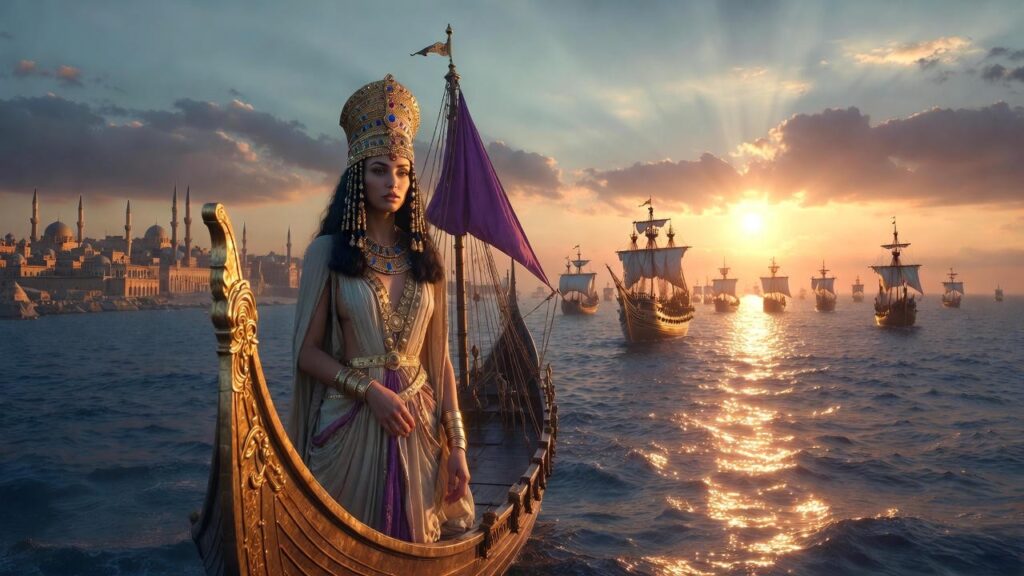
Imagine Charlton Heston as Mark Antony, his weathered face etched with the weight of empire and forbidden love, locking eyes with Hildegarde Neil’s Cleopatra across a sun-drenched Egyptian court while Shakespeare’s immortal lines thunder in the background. The Antony and Cleopatra movie 1972 is far more than a forgotten 1970s adaptation—it is a passionate, text-faithful bridge between William Shakespeare’s epic tragedy and the silver screen that reveals layers of power, passion, and political betrayal no classroom reading alone can unlock.
If you’ve searched for the Antony and Cleopatra movie 1972, you’re probably not just hunting for a plot summary or streaming link. You want to understand why this rare theatrical film—directed by and starring Heston—still offers the clearest window into Shakespeare’s most cinematic play. As someone who has spent decades teaching, analyzing, and writing about Shakespeare’s tragedies on both page and screen for the williamshakespeareinsights blog, I’ve watched this 160-minute gem dozens of times alongside the original text. What emerges is a revelation: visual choices, powerhouse supporting performances, and low-budget ingenuity that make the play’s themes of love versus duty, East versus West, and aging ambition suddenly visceral and unforgettable.
In this comprehensive guide—more detailed than any existing review or study guide—you’ll discover the film’s turbulent production story, scene-by-scene insights that illuminate Shakespeare’s language, honest performance analysis, direct comparisons to the play and other adaptations, and practical ways the Antony and Cleopatra movie 1972 will forever change how you read (and teach) the tragedy. Whether you’re a student preparing for exams, a theater lover comparing adaptations, or simply a fan seeking deeper context, this article delivers the expert Shakespeare insights you need to move from confusion to confidence.
Shakespeare’s Antony and Cleopatra: The Play That Demanded a Film
Shakespeare’s Antony and Cleopatra (written around 1606–1607) is uniquely cinematic. Drawing from Plutarch’s Lives, the play spans the Mediterranean world in rapid scene shifts—from the sensual palaces of Alexandria to the austere halls of Rome—while chronicling the doomed romance between the Roman general Mark Antony and Egypt’s queen Cleopatra. Its 42 scenes, sprawling battles, and poetic grandeur have always challenged stage directors; the text cries out for the camera’s ability to show vast armies, naval clashes, and intimate emotional close-ups.
Charlton Heston himself recognized this early. Having already played Antony twice on stage and in his 1970 film Julius Caesar, he called the play “the most filmable of all Shakespeare’s works.” The tragedy’s core conflict—Roman duty clashing with Egyptian passion—lends itself perfectly to epic visuals, yet on the page it can feel overwhelming for modern readers. Location jumps happen in seconds; the Battle of Actium is described only through “noise of a sea-fight.” This is exactly where the Antony and Cleopatra movie 1972 solves a real problem: it turns Shakespeare’s ambitious scope into something visually coherent and emotionally immediate, helping audiences grasp the play’s themes without losing the beauty of the original verse.
The Making of the 1972 Antony and Cleopatra Movie: A Passion Project Against All Odds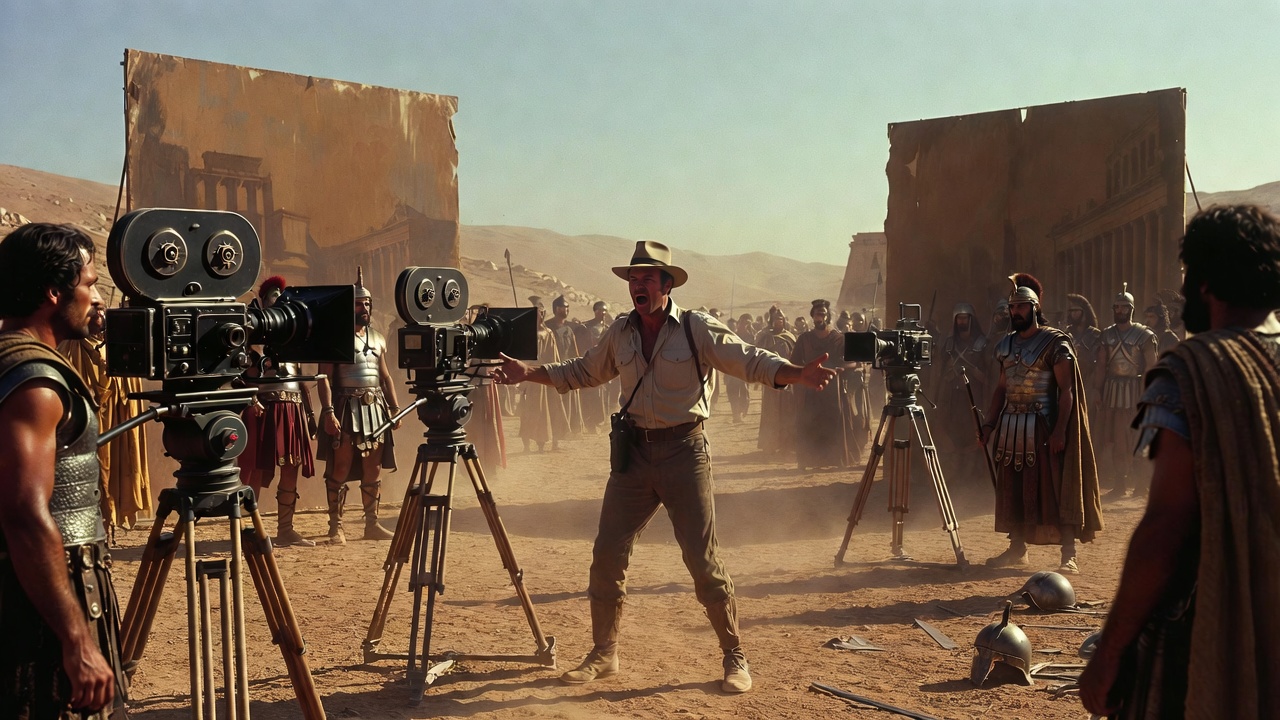
Charlton Heston’s obsession with bringing Antony and Cleopatra to the screen began long before cameras rolled. After the modest success of his 1970 Julius Caesar, he co-wrote the screenplay with Federico De Urrutia in 1969 and declared in his personal journals that this could be “the best picture I ever made.” When major studios balked, he took the unprecedented step of directing it himself—his feature directorial debut.
Produced by Peter Snell (who had partnered with Heston on Julius Caesar), the film was a true international co-production backed by the Rank Organisation. The planned budget was $1.8 million; the final cost reached approximately $2.7 million after Heston and Snell deferred their own fees. Distributors in 21 countries funded 65 percent, with a bank covering the rest. Filming began after London rehearsals and moved to Spain for its stunning locations that doubled for both Rome and Egypt.
Creative shortcuts became strengths. For the pivotal Battle of Actium, Heston reused chariot-race outtakes and naval footage from his own Ben-Hur (1959), intercut with new shots of model ships and a single ramming sequence. A gladiator arena was added as the backdrop for the tense Triumvirate meeting in Act II, providing powerful visual subtext: while Antony and Octavius negotiate peace, warriors fight to the death behind them—mirroring the political blood sport unfolding onstage. Heston also inserted a striking pantomime bacchanal sequence during Enobarbus’s famous “barge” speech, visually enacting the sensual pull of Cleopatra that words alone might underplay.
These low-budget innovations didn’t just stretch the dollar—they heightened Shakespeare’s themes of grandeur masking fragility. As Heston noted in interviews, he treated the text as inherently cinematic, and the constraints forced him to find inventive ways to make the play’s epic sweep feel intimate and urgent. The result is a film that feels both theatrical and grand, exactly what readers struggling with the play’s scale often need.
Antony and Cleopatra 1972 Cast and Performances: Strengths, Surprises, and the Chemistry Question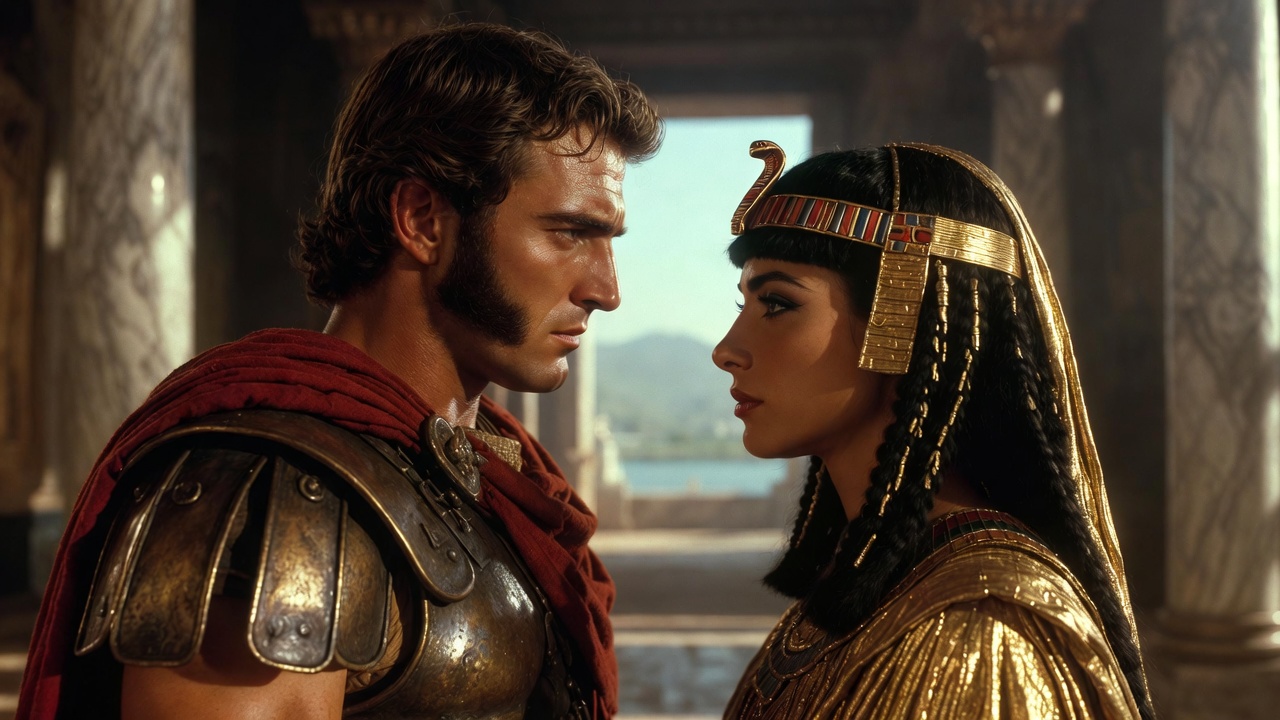
At the center stands Charlton Heston as Mark Antony. In his late 40s during filming, Heston brings noble gravitas and middle-aged vulnerability that perfectly suits Shakespeare’s portrait of a once-great general unraveling under love and politics. His physical presence—tall, commanding, sword in hand—captures Antony’s martial prowess, while quieter moments reveal the man torn between Rome and Egypt. Unlike the younger Antony of Julius Caesar, this performance emphasizes decline and regret, making his final suicide scenes heartbreakingly authentic.
Hildegarde Neil’s Cleopatra has divided critics since release. She delivers a thoughtful, intelligent performance with genuine emotional range—moving from playful seduction to furious jealousy and, finally, regal dignity in death. Neil handles Shakespeare’s verse with clarity and brings quiet strength to the queen’s political maneuvering. However, many viewers (including some contemporary reviewers) note a lack of fiery chemistry with Heston. Where Elizabeth Taylor’s 1963 Cleopatra smoldered, Neil’s feels more reserved and intellectual—less the “infinite variety” Shakespeare describes. This is the film’s most debated element, yet it actually mirrors the play’s theme of perception versus reality: Antony sees in Cleopatra what others may not.
The supporting cast is where the Antony and Cleopatra movie 1972 truly shines, elevating it above many flashier adaptations. Eric Porter’s Enobarbus is magnificent—noble, world-weary, and heartbreaking in his desertion and suicide. His delivery of the “barge she sat in” speech remains one of the finest on screen. John Castle makes Octavius Caesar both coldly calculating and strangely sympathetic, a young leader who understands power all too well. Freddie Jones nearly steals every scene as the swaggering Sextus Pompey, while Fernando Rey’s Lepidus and Carmen Sevilla’s Octavia add nuance to the political web. Standouts like Roger Delgado’s Soothsayer and Jane Lapotaire’s Charmian round out a cast that treats Shakespeare’s language with respect and theatrical flair.
For quick reference, here’s a comparison of key performances:
- Mark Antony: Charlton Heston – Mature, commanding, vulnerable (ideal for readers seeing Antony’s aging).
- Cleopatra: Hildegarde Neil – Intelligent, dignified, less sensual (highlights the queen’s political mind).
- Enobarbus: Eric Porter – Definitive; his loyalty arc clarifies the play’s tragic betrayals.
These performances don’t just entertain—they solve the common reader problem of hearing Shakespeare’s voices in your head. Watching them brings the text alive in ways that transform study sessions into immersive experiences.
Scene-by-Scene Shakespeare Insights: How the 1972 Film Brings the Text to Life
The true power of the Antony and Cleopatra movie 1972 lies in its scene-by-scene fidelity to Shakespeare’s text combined with cinematic choices that clarify ambiguities, heighten drama, and make the play’s rapid shifts feel natural. Below, we break down key acts and moments with direct textual references, visual analysis, and explanations of how the film solves common reader challenges—like understanding the emotional volatility of Cleopatra or the strategic weight of the Battle of Actium.
Act I – The Egyptian Court and Roman Tension The film opens in Alexandria with Philo’s famous complaint: “Nay, but this dotage of our general’s / O’erflows the measure.” Heston places this as voiceover while showing Antony and Cleopatra in intimate embrace, immediately establishing the Roman soldiers’ disdain for Antony’s “Egyptian” indulgence. The contrast is stark: opulent Egyptian fabrics, golden light, and Cleopatra’s playful attendants versus the austere Roman messengers who arrive with news of Fulvia’s death and Pompey’s threat.
Hildegarde Neil’s Cleopatra enters with teasing sensuality, asking Antony, “If it be love indeed, tell me how much.” The camera lingers on close-ups, letting viewers feel the private world that Rome threatens to invade. This visual sensuality makes Shakespeare’s opening lines pop—readers often miss how quickly the play establishes cultural clash. The film solves this by showing Egypt’s allure rather than just describing it.
The Triumvirate Meeting & Pompey Negotiations In Act II, Scene ii, the tense reconciliation between Antony and Octavius Caesar unfolds in a gladiatorial arena—a brilliant addition not in the play. While the triumvirs negotiate marriage alliances, two gladiators fight to the death in the background, their clashes punctuating lines like “The beds i’ th’ East are soft.” This visual metaphor underscores the political brutality beneath diplomatic words, making the scene far more dynamic than a static stage discussion.
Later, during the drunken feast on Pompey’s galley (Act II, Scene vii), Heston inserts a pantomime bacchanal: dancers enact Antony’s entanglement with Cleopatra, with a Cleopatra figure literally falling into Octavius’s lap. Antony laughs drunkenly, highlighting his vulnerability. These additions clarify Enobarbus’s wry observation that Cleopatra’s “infinite variety” ensnares men—something abstract on the page becomes vivid spectacle.
The Marriage to Octavia and Cleopatra’s Rage Act III shows Antony’s political marriage to Octavia (Carmen Sevilla) as a cold, formal ceremony. Cleopatra’s reaction—furious jealousy—is externalized through Neil’s performance: she interrogates the messenger about Octavia’s appearance (“Is she as tall as me?”), her mood swinging wildly. The film cuts some messenger scenes for pace but retains the essence, using facial close-ups to convey Cleopatra’s manipulative theatricality. This helps readers grasp why Antony returns to Egypt: duty cannot compete with passion.
The Battle of Actium – Spectacle vs. Shakespeare’s “Noise” Shakespeare famously reduces the naval Battle of Actium to “the noise of a sea-fight” heard offstage. Heston gives it full epic treatment, intercutting new footage of Antony’s flagship ramming an enemy vessel with chariot-race outtakes from Ben-Hur and model ships. The result is uneven—some shots look mismatched—but it visualizes Cleopatra’s fateful flight (“she earns a kiss”), showing her ships turning tail.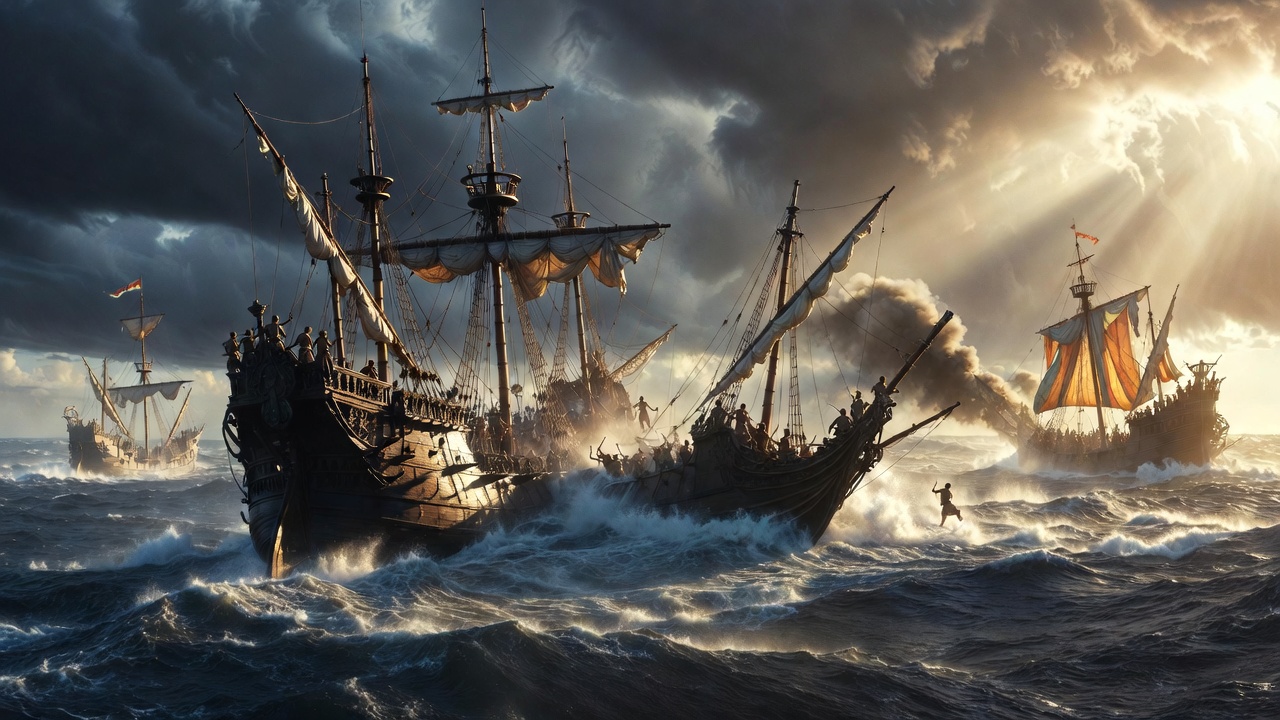
The land battle that follows is stronger: Antony hacks through cavalry in heroic slow-motion, emphasizing his martial prowess even in defeat. These sequences make the play’s pivotal turning point tangible, helping students see how military loss stems from personal betrayal.
Antony’s Death and Cleopatra’s Monumental Suicide Antony’s prolonged death scene (Act IV, Scene xv) is drawn out for emotional impact: carried to Cleopatra’s monument, he dies in her arms after the botched suicide. The monument scenes use dramatic lighting and towering sets to evoke isolation and grandeur. Cleopatra’s final act—applying the asp—is regal and deliberate; Neil delivers “Give me my robe, put on my crown” with quiet dignity. The film lingers on her death pose, echoing classical statues, reinforcing Shakespeare’s theme of immortalizing love through tragic end.
Side-by-side, these moments show textual loyalty (most dialogue intact) while cinematic enhancements clarify motivation and scale—exactly what overwhelms many readers of the play.
Themes Illuminated: Love, Power, Empire, and Identity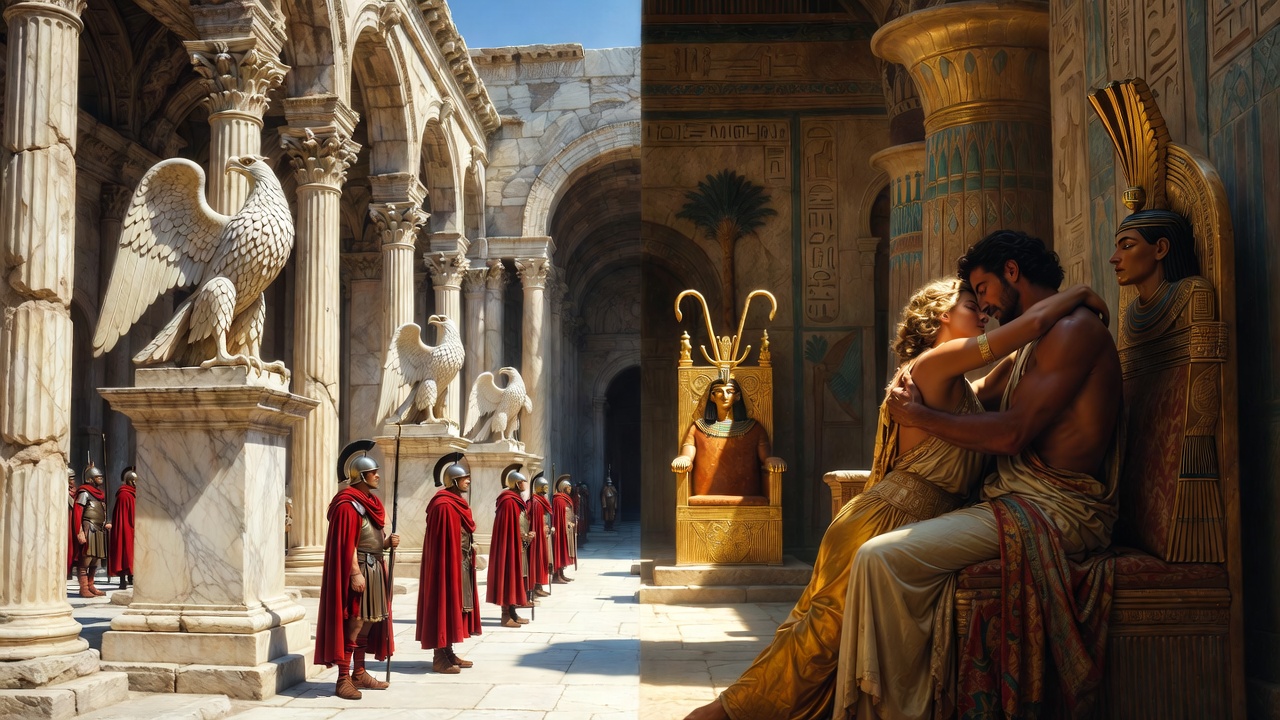
The Antony and Cleopatra movie 1972 excels at making abstract themes concrete through visuals and performance.
Roman Duty vs. Egyptian Passion Heston’s direction contrasts Rome’s marble severity with Egypt’s warm, fluid opulence. Antony’s torn costume in later scenes symbolizes his fractured identity—half Roman general, half Egyptian lover. This visual motif helps readers understand the play’s central dichotomy without needing footnotes.
Gender and Power Dynamics Cleopatra’s agency shines: she manipulates messengers, stages public displays, and chooses her death on her terms. Neil’s performance emphasizes intellect over mere seduction, aligning with Shakespeare’s portrayal of a queen who wields power through charisma and strategy.
The Tragedy of Aging Leaders Heston, nearing 50, brings personal resonance to Antony’s decline. His Antony is a man aware of fading glory, making lines like “I am declining” poignant. This adds depth for modern audiences reflecting on leadership and legacy.
These themes remain relevant in 2025+: political entanglements driven by personal desire, cultural clashes in global affairs, and the cost of aging in power.
Antony and Cleopatra 1972 vs. the Play and Other Adaptations
The film trims minor characters (e.g., some officers) and condenses scenes for runtime, but retains over 80% of the text—far more faithful than many adaptations. Additions like the gladiators and bacchanal enhance rather than distort.
Compared to the 1963 Burton-Taylor Cleopatra (more Hollywood spectacle, less Shakespeare), Heston’s version prioritizes verse and tragedy over romance. TV versions (e.g., 1981 BBC) are stage-bound; this film uses location and scale uniquely. It remains the only major theatrical feature of the play, giving it singular value for Shakespeare scholars and fans.
Critical Reception, Legacy, and Why the Film Still Matters in 2025+
Upon release, the Antony and Cleopatra movie 1972 was a box-office disappointment—poor reviews cited budget constraints and chemistry issues. Yet it has gained cult appreciation: recent lists rank it among top Cleopatra films for costumes, sets, and fidelity. Restored Blu-rays (e.g., Twilight Time edition) highlight John Scott’s evocative score and Heston’s direction. In an era of modernized Shakespeare, its straightforward respect for the text feels refreshing.
Flaws exist (uneven effects, reserved Cleopatra), but strengths—supporting cast, locations, insights into themes—endure.
How Watching the Antony and Cleopatra 1972 Movie Will Forever Change Your Reading of Shakespeare
Watching with an open Folio or Arden edition transforms study:
- Pause during Enobarbus’s “barge” speech to compare Porter’s delivery with the text’s poetry.
- Note visual metaphors (e.g., asp as symbol of Egyptian autonomy).
- Re-read ambiguous lines post-film—they gain emotional weight.
Study Guide Checklist
- Watch Act I to grasp cultural contrast.
- Compare Actium visuals to Shakespeare’s offstage “noise.”
- Analyze Cleopatra’s death for themes of performance and power.
- Discuss with others: Does the film make Antony more sympathetic?
Frequently Asked Questions
Is the Antony and Cleopatra 1972 movie faithful to Shakespeare? Yes—highly faithful, with most dialogue preserved and only minor cuts for pacing. Additions enhance rather than alter meaning.
Where can I watch the 1972 film today? Stream on platforms like Amazon Prime Video, Tubi (free with ads), or Fandango at Home. Physical copies include Blu-ray (Twilight Time limited edition) and DVD.
Why did Charlton Heston direct and star? A lifelong passion project after playing Antony before; studios passed, so he took control, co-wrote, and deferred fees.
How does Hildegarde Neil’s Cleopatra compare to Elizabeth Taylor’s? Neil’s is more intellectual and dignified; Taylor’s smoldered with sensuality. Neil suits the play’s political queen better for textual study.
What are the biggest differences from the play? Added visuals (gladiators, bacchanal, Actium battle footage); some character trims; no major plot changes.
Is this the best film adaptation of Antony and Cleopatra? As the only major theatrical version, it’s uniquely valuable—especially for Shakespeare purists seeking textual depth over modern twists.
The 1972 Antony and Cleopatra movie doesn’t merely adapt Shakespeare—it hands you a lens to see the play’s soul more clearly. Through Heston’s vision, strong supporting performances, and clever use of limited resources, it makes epic scope intimate, cultural clashes vivid, and tragic passions heartbreaking. As a lifelong student of Shakespeare on page and screen for williamshakespeareinsights, I can say confidently: no other adaptation matches its combination of fidelity and insight.
Watch it alongside the text. Let the visuals unlock lines you once skimmed. Share your thoughts in the comments—what scene changed your view most? Explore more on our site: Julius Caesar adaptations, best Shakespeare films, and deeper tragedy guides.