What if the most innocent character in a tragedy is the one who suffers the most—and is least understood?
In Othello, few figures are as emotionally powerful and critically debated as Desdemona. The keyword desdemona othello often leads students and literature lovers to a simple conclusion: she is a tragic victim. But that interpretation barely scratches the surface.
Desdemona is not just a passive figure caught in the destructive jealousy of Othello—she is a complex, courageous, and symbolically rich character whose role drives the emotional and moral core of the play.
Many readers struggle with key questions:
- Is Desdemona truly innocent, or is she naïve?
- Does she have agency, or is she simply a victim of patriarchy?
- Why does her death feel so devastating—and what does it actually represent?
This comprehensive guide answers those questions and more. You’ll gain:
- A deep character analysis grounded in textual evidence
- Clear explanations of themes like love, jealousy, and gender roles
- Key quotes with expert-level interpretation
- Exam-ready insights and critical perspectives
By the end, you won’t just understand Desdemona—you’ll see why she remains one of Shakespeare’s most tragic and misunderstood heroines.
Who Is Desdemona in Othello? (Quick Overview)
Basic Character Profile
Desdemona is introduced as the daughter of the Venetian senator Brabantio, placing her firmly within the upper class of Venetian society. Despite her privileged upbringing, she defies social expectations by secretly marrying Othello, a Moorish general.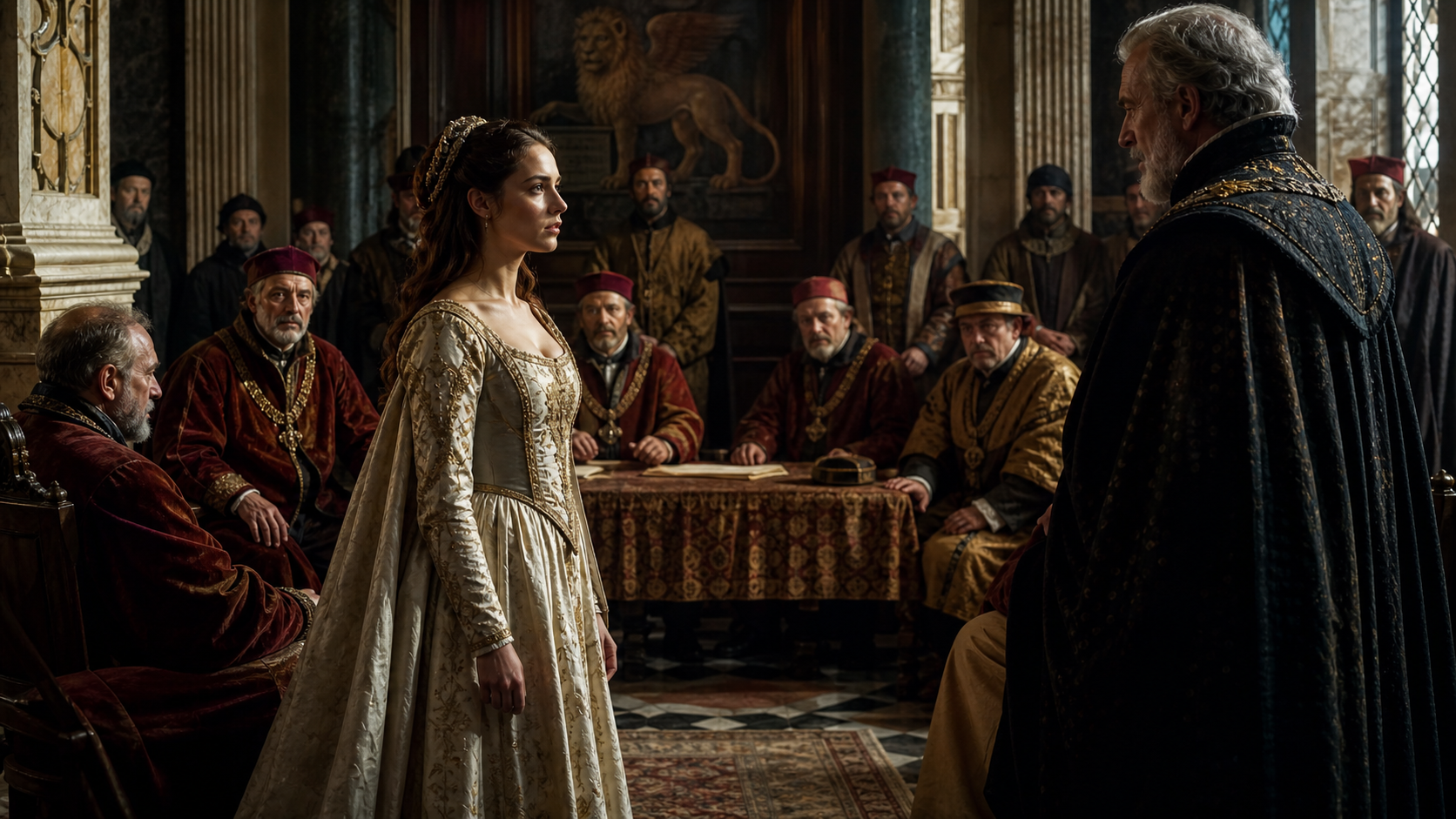
Her identity can be summarized as:
- A noblewoman of high status
- A devoted wife
- A symbol of purity and love
Role in the Plot
Desdemona is not just a background figure—she is central to the entire narrative:
- Her marriage to Othello triggers conflict with Brabantio
- She becomes the target of Iago’s manipulation
- Her perceived “infidelity” fuels Othello’s tragic jealousy
Without Desdemona, the tragedy simply would not exist.
Why Desdemona Matters
Desdemona represents the emotional heart of the play. While Iago embodies deception and Othello embodies internal conflict, Desdemona represents:
- Truth
- Innocence
- Unconditional love
Her presence—and ultimate destruction—amplifies the tragedy’s emotional intensity.
Desdemona’s Character Traits (In-Depth Analysis)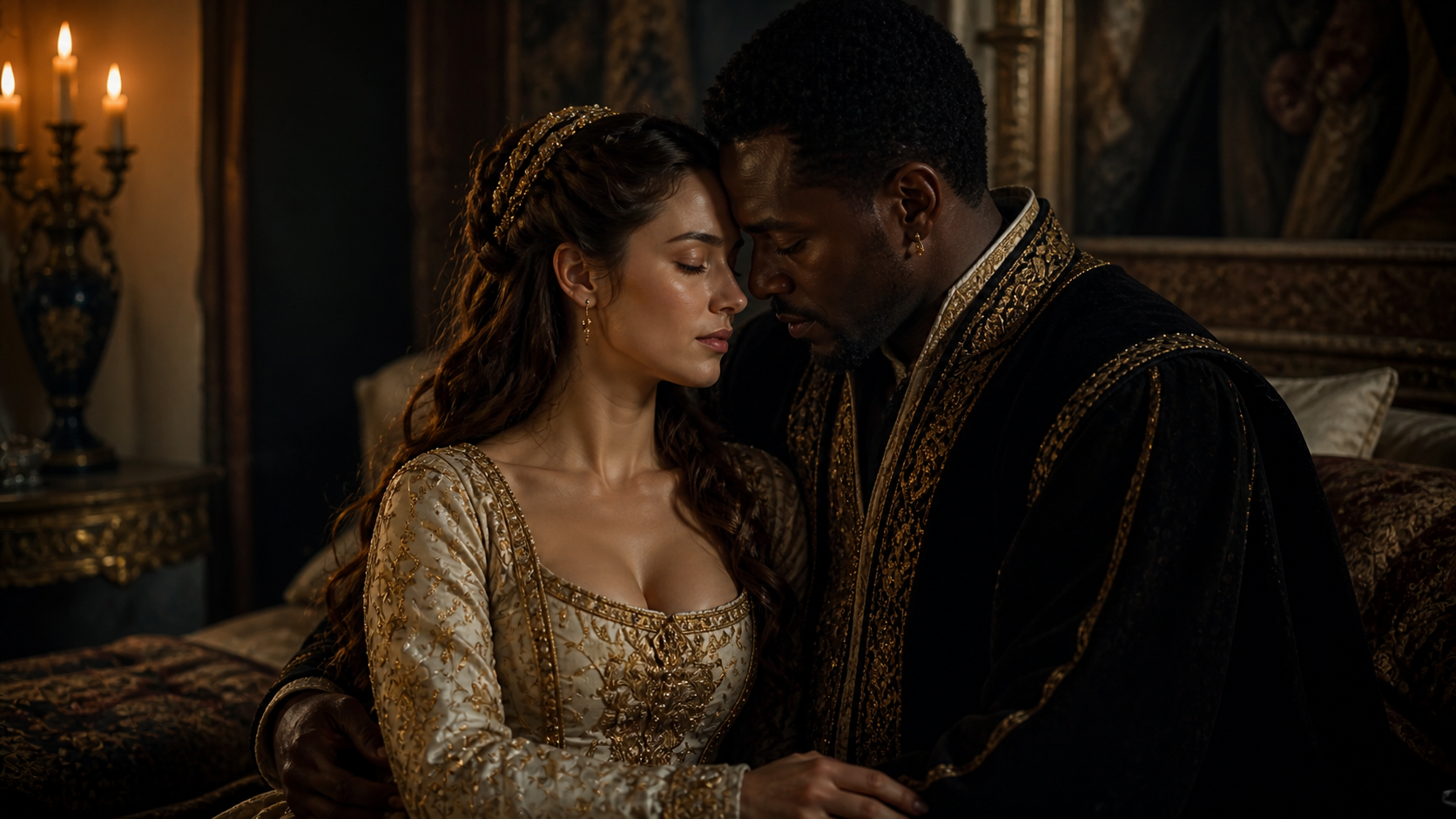
Innocence and Purity
Desdemona is often described as the purest character in Othello. She is honest, kind, and incapable of deceit.
Her innocence is evident in:
- Her unwavering trust in Othello
- Her inability to suspect Iago’s schemes
- Her consistent moral integrity
However, this innocence is also what makes her vulnerable. In a world driven by suspicion and manipulation, purity becomes a liability.
Loyalty and Devotion
One of Desdemona’s defining traits is her deep loyalty to Othello.
Even when he accuses her of infidelity, she remains:
- Faithful
- Loving
- Forgiving
This unwavering devotion is both admirable and tragic. It highlights the depth of her love but also raises questions about self-sacrifice and emotional vulnerability.
Courage and Independence
Contrary to the idea that Desdemona is weak, she demonstrates remarkable courage.
Consider:
- She defies her father to marry Othello
- She publicly defends her marriage before the Venetian court
- She speaks confidently about her choices
Her famous declaration of a “divided duty” shows her awareness of her role as both daughter and wife. This is not passivity—it is conscious decision-making.
Naivety and Vulnerability
Despite her strengths, Desdemona has a critical flaw: she is too trusting.
She fails to:
- Recognize Iago’s manipulation
- Understand the depth of Othello’s jealousy
- Protect herself from escalating danger
Her naivety is not stupidity—it is a reflection of her pure worldview. She cannot imagine evil because she does not possess it.
Desdemona’s Role in the Tragedy
The Tragic Victim
Desdemona ultimately becomes the victim of Othello’s jealousy—a jealousy carefully engineered by Iago.
Her tragedy lies in:
- Being falsely accused
- Being unable to defend herself effectively
- Remaining loyal even in the face of death
She embodies the classic tragic victim: innocent, undeserving, and destroyed by forces beyond her control.
The Catalyst of Conflict
Desdemona’s marriage sets the entire plot in motion.
It:
- Angers Brabantio
- Creates tension within Venetian society
- Provides Iago with the opportunity to manipulate Othello
In this sense, she is not just a victim—she is also a catalyst.
Symbol of Moral Goodness
Throughout the play, Desdemona represents moral purity.
She stands in stark contrast to Iago:
- Desdemona = honesty, love, innocence
- Iago = deceit, hatred, manipulation
Her death symbolizes the destruction of goodness in a corrupt world.
Relationship with Othello
The relationship between Desdemona and Othello is central to the tragedy.
At the beginning:
- Their love is strong and genuine
- They respect and admire each other
But as the play progresses:
- Trust is replaced by suspicion
- Love is overshadowed by jealousy
- Communication breaks down completely
This transformation is what makes the tragedy so powerful.
Key Themes Represented by Desdemona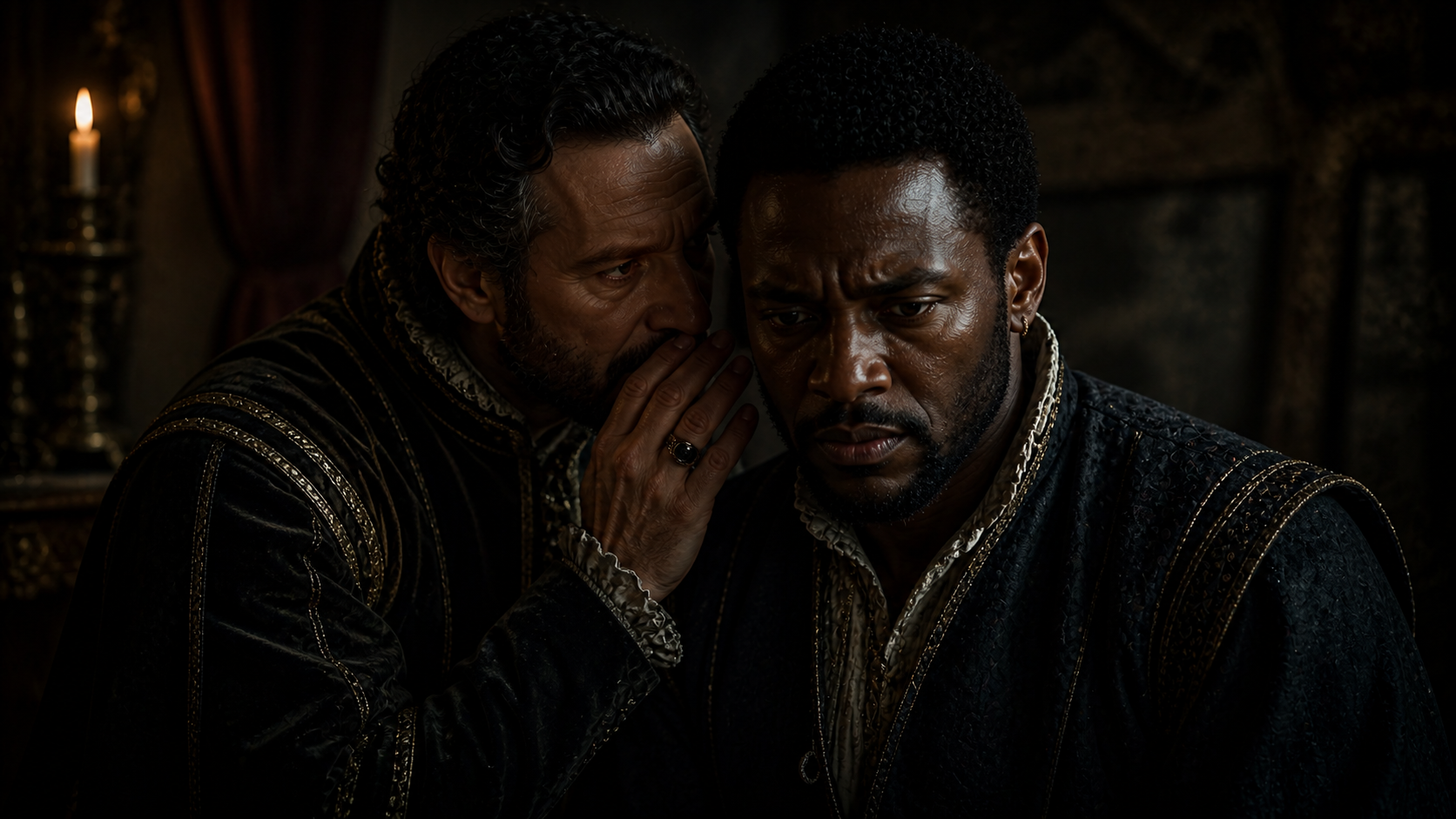
Love vs Jealousy
Desdemona represents pure, unconditional love. Othello’s jealousy, however, corrupts that love.
This contrast highlights:
- The fragility of trust
- The destructive power of suspicion
Innocence vs Corruption
Desdemona’s innocence is constantly under attack by the corrupt forces around her.
Her character raises an important question:
Can innocence survive in a world dominated by deceit?
Gender Roles and Patriarchy
Desdemona’s story is deeply tied to the expectations placed on women in Venetian society.
She is expected to:
- Obey her father
- Serve her husband
- Remain silent and submissive
Yet she challenges these norms by choosing her own partner and speaking her mind.
Appearance vs Reality
Desdemona appears guilty in Othello’s eyes, but the reality is entirely different.
This theme drives the tragedy:
- Othello believes what he sees (or thinks he sees)
- He ignores the truth of Desdemona’s character
Important Quotes by Desdemona (With Analysis)
“I do perceive here a divided duty”
This line reflects Desdemona’s awareness of her conflicting responsibilities.
- She acknowledges her duty to her father
- She asserts her loyalty to her husband
This moment highlights her intelligence and emotional maturity.
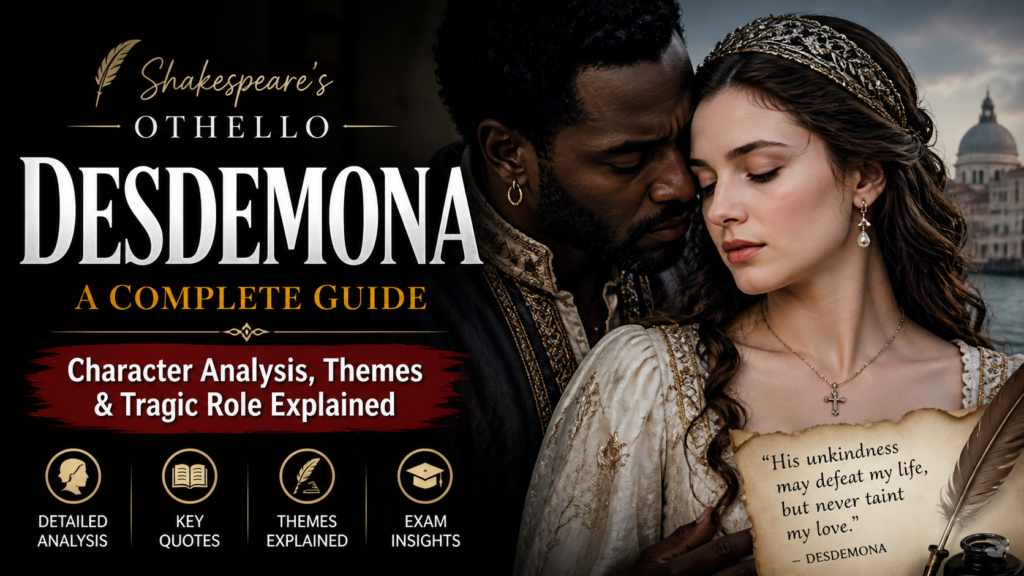
“His unkindness may defeat my life, but never taint my love”
This quote reveals the depth of her devotion.
Even in suffering:
- She refuses to hate Othello
- She maintains her love and loyalty
“Nobody; I myself”
Her final words are among the most tragic in literature.
- She takes responsibility for her own death
- She protects Othello even in her final moments
This act raises powerful questions about love, sacrifice, and identity.
How to Use These Quotes in Exams
To score high:
- Always explain the context
- Link quotes to themes
- Analyze language and emotional impact
Is Desdemona Just a Victim? (Critical Interpretations)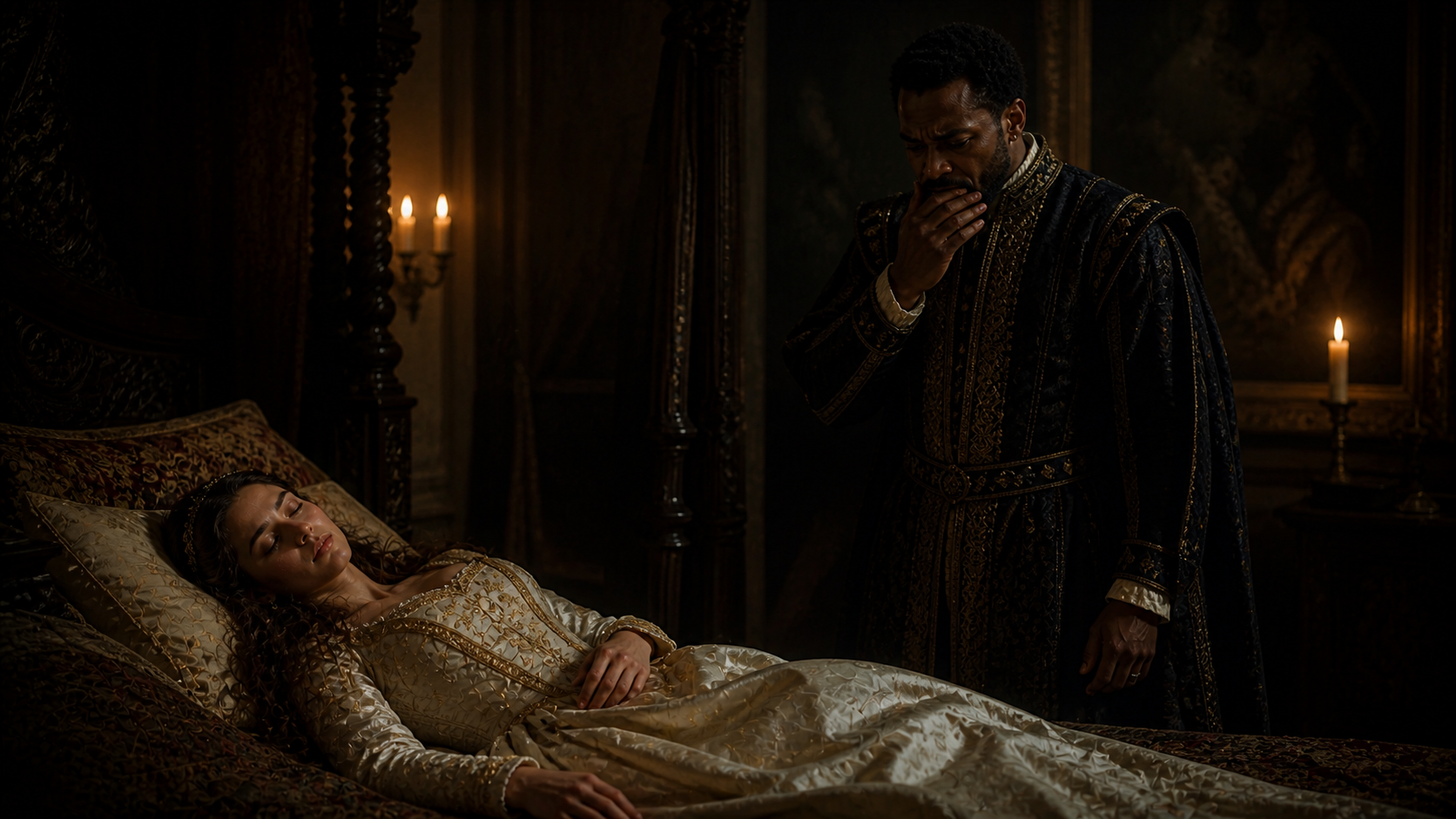
Traditional View
Desdemona is often seen as a passive victim—innocent and powerless.
Feminist Perspective
Modern critics argue that Desdemona is more complex.
She:
- Exercises choice in marriage
- Speaks confidently
- Challenges authority
Modern Interpretation
Today, Desdemona is viewed as:
- Strong yet vulnerable
- Independent yet constrained by society
Scholarly Debate
The key question remains:
Is Desdemona weak—or morally powerful?
The answer lies in interpretation.
Desdemona and Other Characters (Comparative Insight)
Desdemona vs Emilia
- Desdemona = idealistic and innocent
- Emilia = realistic and outspoken
Desdemona vs Iago
- Desdemona = truth
- Iago = deception
Desdemona vs Othello
- Desdemona = trust
- Othello = insecurity
Desdemona’s Death and Its Significance
Desdemona’s death is the emotional climax of Othello.
It represents:
- The triumph of jealousy over love
- The destruction of innocence
- The irreversible consequences of manipulation
Her death leaves the audience with a profound sense of loss.
Advanced Exam Strategies: How to Write High-Scoring Answers on Desdemona
For many students, understanding Desdemona is only half the battle—the real challenge is translating that understanding into clear, analytical, high-scoring exam responses. Below are expert strategies used by top-performing literature students.
1. Build a Strong Thesis Statement
Examiners look for a clear argument—not just a summary.
Weak approach:
“Desdemona is an innocent character in Othello.”
Strong approach:
“Desdemona embodies both innocence and quiet strength, making her not merely a tragic victim but a moral center whose destruction exposes the dangers of jealousy and patriarchal control.”
👉 Always take a position and defend it.
2. Use the PEEL Method for Paragraphs
Structure each paragraph effectively:
- P (Point): State your argument
- E (Evidence): Use a quote
- E (Explain): Analyze the quote
- L (Link): Connect back to the question/theme
Example:
- Point: Desdemona demonstrates emotional resilience
- Evidence: “His unkindness may defeat my life…”
- Explain: Shows unwavering love despite suffering
- Link: Reinforces theme of love vs jealousy
3. Integrate Context Naturally
Show awareness of:
- Elizabethan gender roles
- Expectations of obedience and chastity
- Social hierarchy in Venice
This strengthens your AO3 (contextual understanding) marks.
4. Compare Characters for Deeper Insight
High-level answers often include comparisons:
- Desdemona vs Emilia → innocence vs realism
- Desdemona vs Iago → truth vs deception
👉 This shows analytical depth and earns higher marks.
5. Address Multiple Interpretations
Top essays don’t give one-sided views.
For example:
- Traditional: Desdemona is passive
- Feminist: She is quietly rebellious
👉 Acknowledge both, then present your own conclusion.
6. Use Keywords Examiners Expect
Naturally include terms like:
- tragic victim
- innocence
- agency
- patriarchy
- moral integrity
- dramatic irony
These signal strong literary understanding.
7. Practice High-Value Essay Questions
Some powerful prompts include:
- “Is Desdemona a victim or a heroine?”
- “How does Shakespeare present innocence through Desdemona?”
- “To what extent is Desdemona responsible for her fate?”
Common Mistakes Students Make About Desdemona
Even strong students lose marks by oversimplifying her character. Avoid these common pitfalls:
1. Calling Her “Weak” Without Analysis
Desdemona is often labeled as weak—but this ignores:
- Her defiance of her father
- Her confidence before the court
👉 Always support claims with evidence.
2. Ignoring Her Agency
Many students forget that she:
- Chooses to marry Othello
- Speaks openly about her decisions
👉 She is not merely controlled—she makes choices.
3. Overlooking Key Themes
Failing to connect Desdemona to major themes like:
- Love vs jealousy
- Innocence vs corruption
- Gender roles
👉 Theme integration is essential for high marks.
4. Misinterpreting Her Relationship with Othello
Some assume she is blindly submissive.
In reality:
- She is emotionally strong
- She attempts to restore harmony
- She believes in love even under pressure
5. Not Analyzing Quotes Deeply
Simply quoting is not enough.
❌ Weak: “This shows she is loyal.”
✅ Strong: “The phrase ‘never taint my love’ suggests a moral purity that contrasts sharply with Othello’s growing corruption.”
Frequently Asked Questions (FAQs)
Who is Desdemona in Othello?
Desdemona is the wife of Othello and the daughter of Brabantio. She represents love, innocence, and moral integrity within the play.
Why is Desdemona important in Othello?
She is central to the plot:
- Her marriage triggers conflict
- Her perceived betrayal fuels Othello’s jealousy
- Her death represents the destruction of innocence
Is Desdemona innocent or naive?
She is both:
- Innocent in her intentions and morality
- Naive in her inability to detect manipulation
What does Desdemona symbolize?
She symbolizes:
- Pure love
- Truth
- Moral goodness
Her death highlights the triumph of corruption over innocence.
How does Desdemona die?
Desdemona is tragically killed by Othello, who falsely believes she has been unfaithful. Her death is one of the most heartbreaking moments in Shakespearean tragedy.
Is Desdemona a strong character?
Yes—though not in a conventional way.
Her strength lies in:
- Emotional resilience
- Moral integrity
- Courage to choose her own path
Why Desdemona Still Matters Today
At first glance, Desdemona may seem like a simple tragic figure—an innocent woman destroyed by jealousy. But a deeper reading reveals something far more powerful.