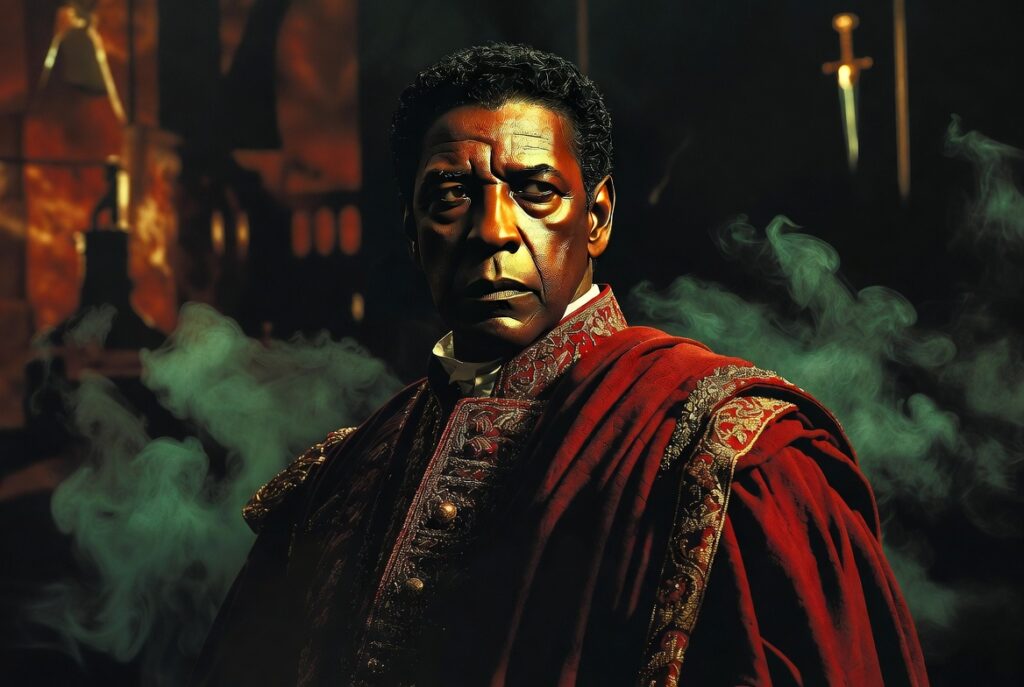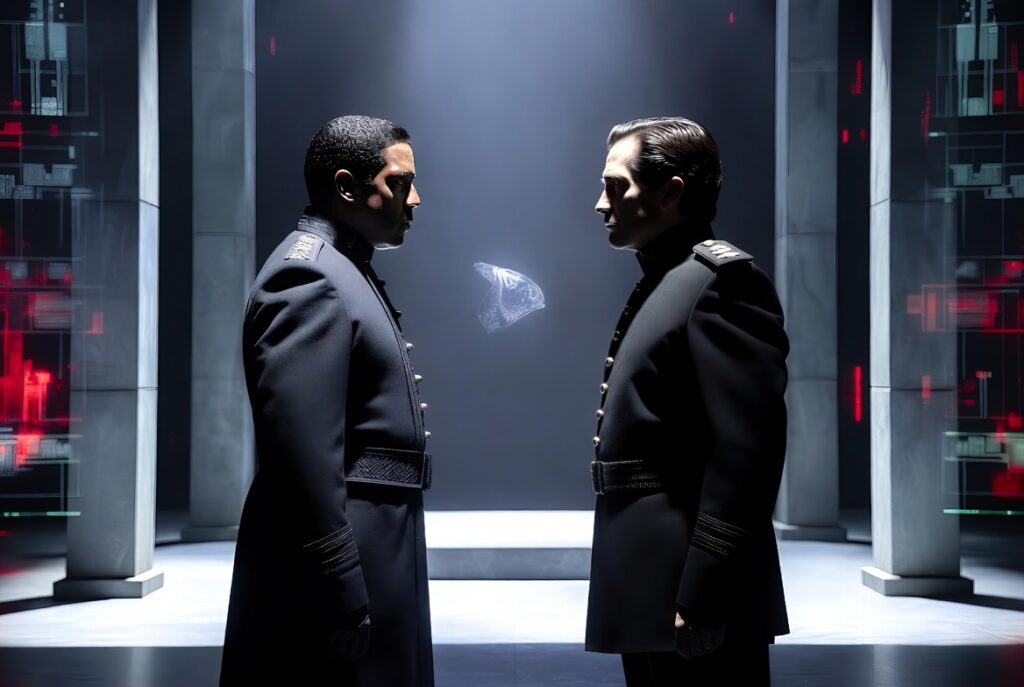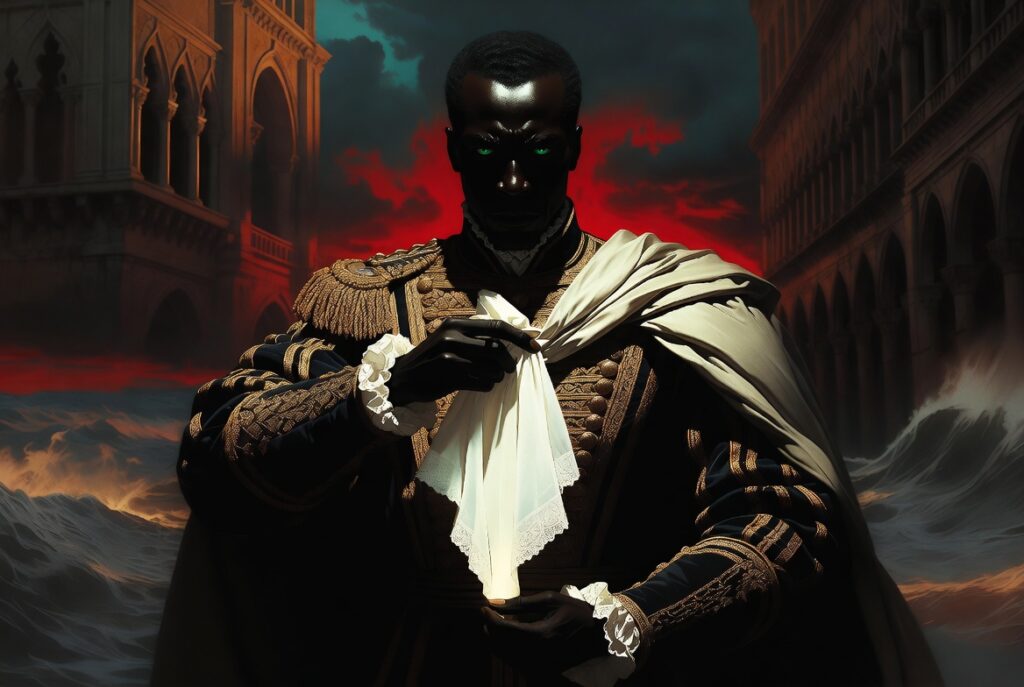
“O, beware, my lord, of jealousy; It is the green-eyed monster which doth mock the meat it feeds on.”
These chilling words from William Shakespeare’s Othello capture the destructive power of suspicion and manipulation that still resonates deeply today. If you’re searching for an Othello play PDF with the full text, reliable analysis, and study resources, you’ve come to the right place. This comprehensive guide offers the complete public domain text of Shakespeare’s masterful tragedy alongside expert insights, historical context, character breakdowns, and practical tools for students, teachers, theater lovers, and literature enthusiasts.
Othello, the Moor of Venice stands as one of Shakespeare’s most powerful and performed tragedies. Written around 1603–1604, it explores themes of jealousy, betrayal, racism, love, and deception with unmatched psychological depth. Whether you need the Othello full text for class, rehearsal, or personal reading, this article serves as your definitive one-stop resource.
Why Read Othello Today? Relevance in the 21st Century
In an era of misinformation, racial tension, toxic relationships, and workplace intrigue, Othello feels strikingly modern. The play dissects how a seemingly noble hero can be undone by planted doubts and how “honest” appearances can mask profound evil. Iago’s calculated gaslighting mirrors contemporary manipulation tactics seen in politics, social media, and personal betrayals.
Readers gain profound insights into human nature. Students benefit from rich material for essays and exams. Teachers find discussion prompts and teaching aids. Theater practitioners discover layers for performance. Casual readers encounter a gripping story that rivals any modern thriller. By engaging with the Othello play PDF, you don’t just read a classic — you confront timeless questions about trust, identity, and the fragility of reputation.
Brief Background and Historical Context of Othello
When and Where Shakespeare Wrote Othello
Scholars date the composition of Othello to 1603–1604, during the reign of King James I. It was first performed on November 1, 1604, at Whitehall Palace for the king. The play moves from the sophisticated, political world of Venice to the isolated, military outpost of Cyprus, heightening dramatic tension.
Sources and Inspiration
Shakespeare primarily drew from Giraldi Cinthio’s 1565 Italian novella Un Capitano Moro (A Moorish Captain) in his collection Hecatommithi. In Cinthio’s tale, a Moorish captain marries Disdemona, and his ensign (Iago equivalent) plots their downfall out of unrequited lust. Shakespeare transformed this cautionary story by adding depth to characters, inventing Roderigo, and shifting the moral focus. He likely also drew inspiration from Leo Africanus’s A Geographical Historie of Africa for Othello’s background.
First Performances and Publication History
The play appeared in quarto form in 1622 and in the First Folio of 1623. Variations exist between versions, offering fascinating textual study opportunities. As a work published before 1929, Othello is firmly in the public domain, meaning you can freely download, share, and use the Othello play PDF without copyright restrictions.
Public Domain Status
This allows educators and readers worldwide to access high-quality editions easily. Reputable sources like Project Gutenberg, MIT Shakespeare, and Folger Shakespeare Library provide clean texts.
Complete Plot Summary of Othello
Here is a detailed yet spoiler-aware overview, followed by act-by-act breakdowns for deeper study.
Spoiler-Free Overview A respected Moorish general in Venetian service secretly marries the beautiful Desdemona. Promoted over the ambitious Iago, Othello faces manipulation that turns his love into murderous jealousy, leading to devastating tragedy.
Act-by-Act Summary
Act 1 In Venice, Iago reveals his hatred for Othello, who has chosen Cassio as lieutenant. Iago and Roderigo alert Desdemona’s father, Brabantio, to the secret marriage. Brabantio accuses Othello of witchcraft, but the Duke summons Othello for a military mission to Cyprus against the Turks. Desdemona defends her love, and the couple departs for Cyprus.
Act 2 A storm destroys the Turkish fleet. In Cyprus, Iago manipulates Roderigo into provoking Cassio, leading to Cassio’s demotion. Iago begins sowing seeds of doubt about Desdemona’s fidelity.
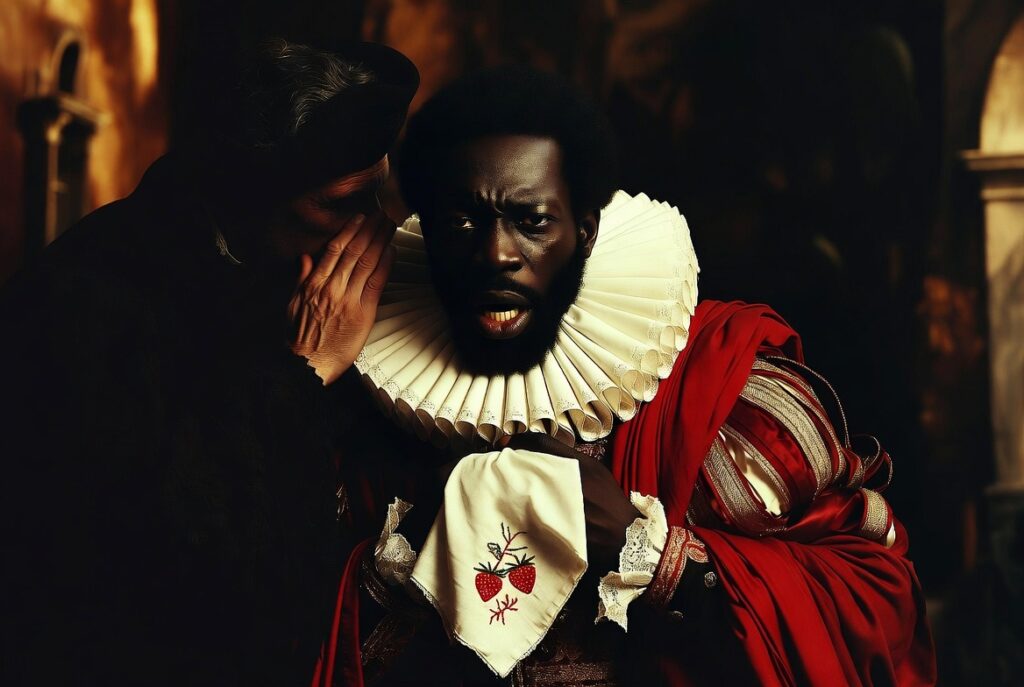
Act 3 The pivotal “temptation scene.” Iago expertly poisons Othello’s mind with insinuations about Cassio and Desdemona. The famous handkerchief — a token of Othello and Desdemona’s love — becomes central evidence in Iago’s scheme. Othello demands proof and vows revenge.
Act 4 Othello’s jealousy escalates into rage. He publicly humiliates Desdemona. Iago arranges further “proof” and plots Cassio’s murder with Roderigo.
Act 5 In a night of violence, Roderigo attacks Cassio but is killed. Othello smothers Desdemona in her bed. Emilia exposes Iago’s treachery, leading to revelations, deaths, and Othello’s suicide. Iago is arrested but remains defiantly silent.
These summaries highlight Shakespeare’s masterful dramatic structure: rapid exposition, rising action fueled by Iago’s soliloquies, a crushing climax, and a bleak resolution.
Full Text of Othello Play PDF (Public Domain Edition)
The complete text of Othello is available below in a clean, readable format. For the best experience, I recommend downloading a properly formatted Othello play PDF (links provided at the end of this section or via reputable public domain hosts).
Act I, Scene I – Venice. A Street. Enter RODERIGO and IAGO
RODERIGO Tush! never tell me; I take it much unkindly That thou, Iago, who hast had my purse As if the strings were thine, shouldst know of this.
IAGO ’Sblood, but you will not hear me: If ever I did dream of such a matter, Abhor me.
Subsequent Acts Navigation
- Act I, Scenes II & III: The Senate and Marriage Defense
- Act II: Arrival in Cyprus and the Brawl
- Act III: The Handkerchief and Jealousy’s Birth
- Act IV: Public Shame and Further Plots
- Act V: The Tragic Climax and Resolution
Highlighted Key Passages
- Iago’s Credo (Act 1, Scene 3): “I am not what I am.”
- Othello’s Defense: “She loved me for the dangers I had passed…”
- Temptation Scene (Act 3, Scene 3): “O, beware, my lord, of jealousy…”
- Othello’s Final Speech: “Speak of me as I am…”
For the full Othello play PDF with modern spelling, line numbers, and annotations, visit trusted sources or download the clean version hosted here [internal link placeholder]. You can print it, annotate digitally, or use it for rehearsals.
In-Depth Character Analysis
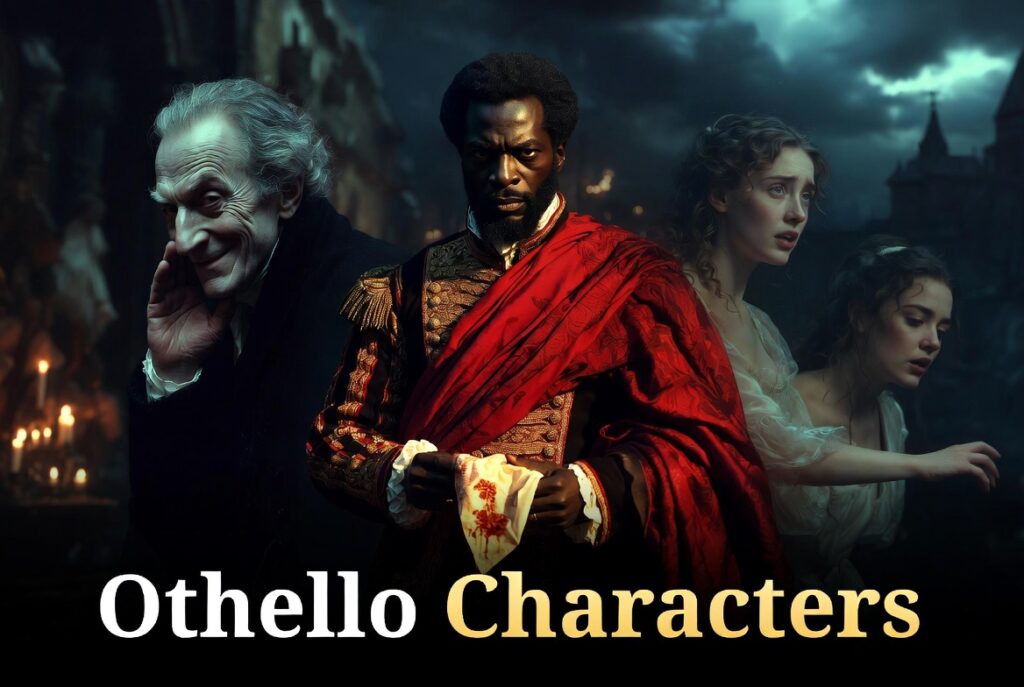
Othello – The Noble Moor A successful military leader, Othello embodies honor, eloquence, and vulnerability. His “otherness” as a Black Moor in white Venetian society makes him both admired and distrusted. His tragic flaw — trusting too readily and acting decisively on incomplete evidence — leads to his downfall. Othello’s arc from composed general to jealous murderer is one of literature’s most heartbreaking.
Iago – Shakespeare’s Greatest Villain Often called the most diabolical character in Shakespeare, Iago manipulates everyone through lies, half-truths, and psychological insight. His motives (passed over for promotion, possible jealousy over Emilia, racism) remain partially enigmatic, making him endlessly fascinating. Iago’s soliloquies give the audience privileged access to his schemes, creating dramatic irony.
Desdemona – Virtue and Victimhood Loyal, courageous, and loving, Desdemona defies her father to marry Othello. Her innocence and persistence in defending Cassio ironically fuel the tragedy. Modern readings emphasize her agency and the patriarchal constraints she faces.
Supporting Characters
- Emilia: Iago’s wife whose final act of defiance provides moral clarity.
- Cassio: Honest but flawed lieutenant whose reputation Iago destroys.
- Roderigo: Gullible pawn who funds Iago’s plots.
- Brabantio: Represents societal prejudice against interracial marriage.
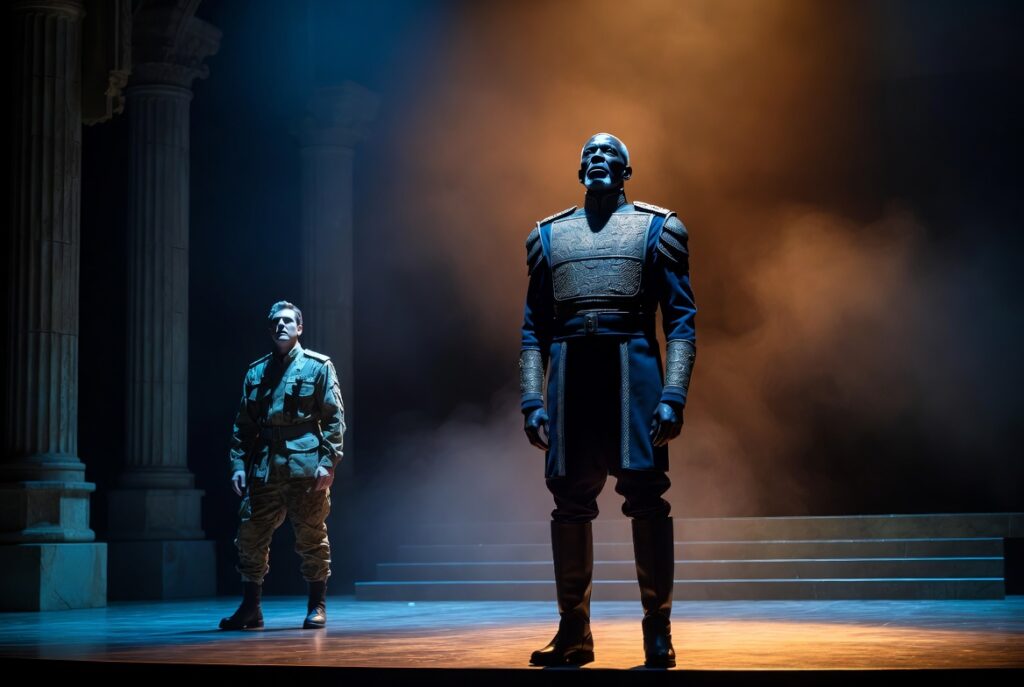
Expert Insight: Performances have evolved significantly. While early productions often used blackface, contemporary casting frequently features Black actors as Othello, highlighting themes of race and identity more powerfully.
Major Themes in Othello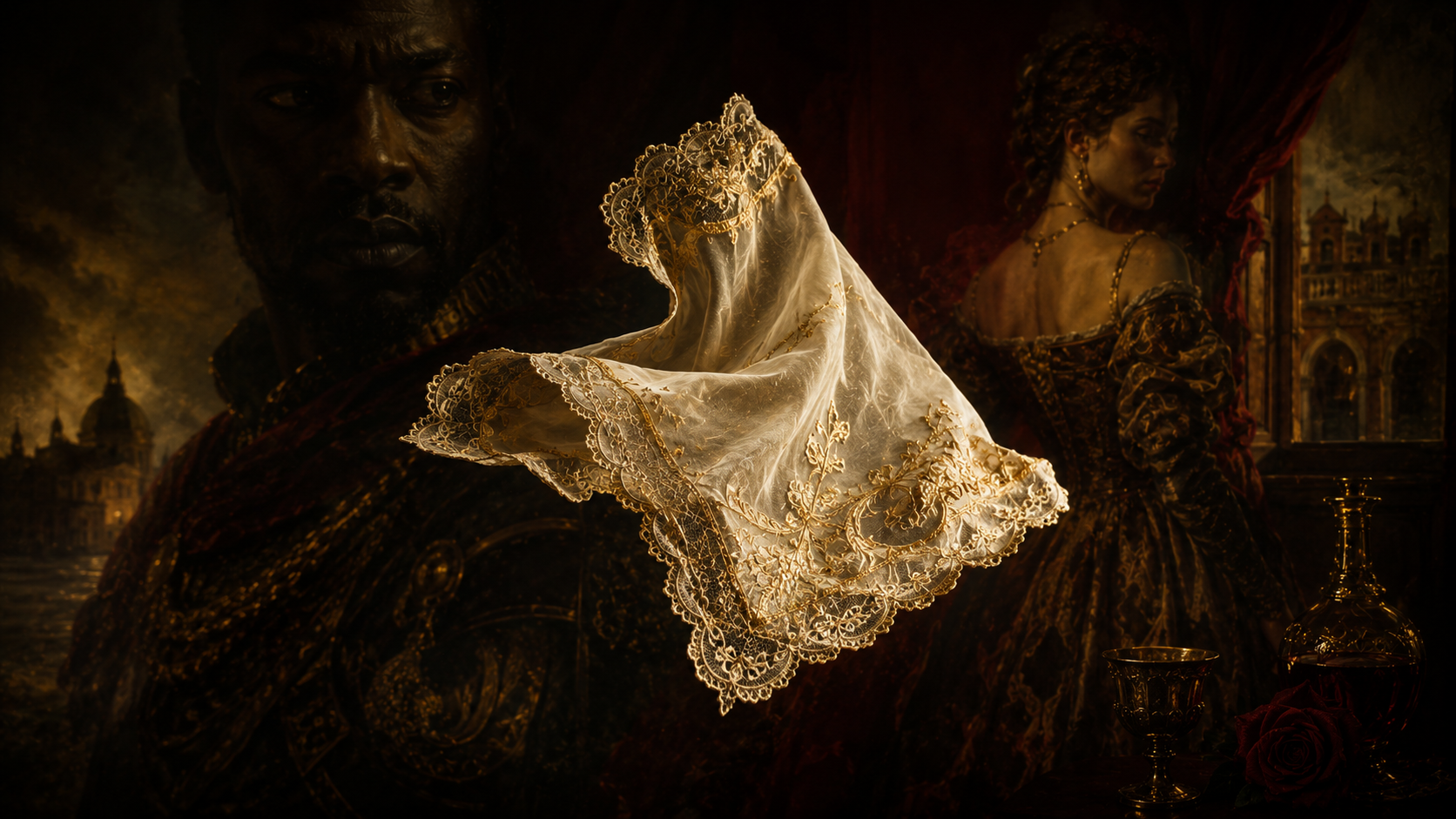
Jealousy and Deception The “green-eyed monster” drives the action. Shakespeare shows both sexual jealousy and professional envy with devastating realism.
Racism and Otherness The play repeatedly confronts Venetian prejudice against Othello’s race and culture. Terms like “Moor,” “thick-lips,” and “Barbary horse” reveal deep biases that Iago exploits.
Honesty, Reputation, and Appearance vs Reality Iago is repeatedly called “honest,” while true honesty (Desdemona, Emilia) is punished. The gap between seeming and being is central.
Gender, Power, and Patriarchy Women have limited agency. Desdemona and Emilia’s fates underscore the dangers women face in a male-dominated world.
Love, Loyalty, and Betrayal The play questions whether pure love can survive in a corrupt society.
Literary Devices and Shakespeare’s Craftsmanship
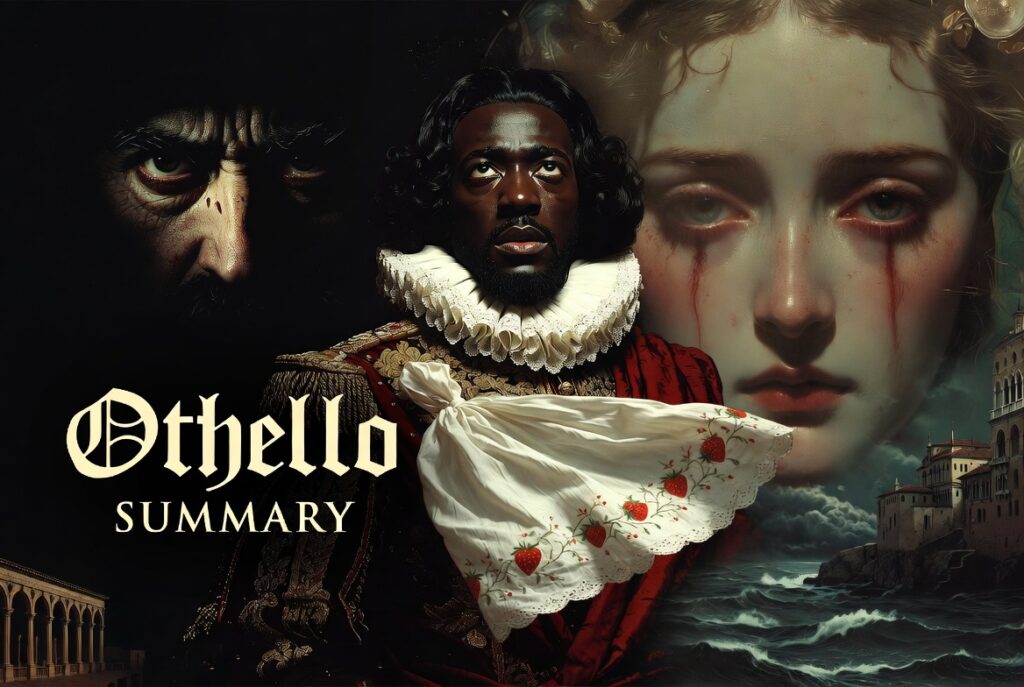
Shakespeare masterfully employs dramatic irony — the audience knows Iago’s plans while characters do not. Animal imagery (Iago compares people to beasts), the symbolism of the handkerchief, light/dark contrasts, and shifts between verse and prose all enrich the text. The handkerchief, gifted by Othello’s mother, represents fidelity, heritage, and proof — its loss is catastrophic.
Literary Devices and Shakespeare’s Craftsmanship
The handkerchief serves as the play’s central tragic symbol. Described as a magical talisman woven by an Egyptian sorceress with “hallowed” silk and dyed in “mummy” (embalmed maiden’s blood), it carries deep emotional and cultural weight. Its physical movement through the plot — from Desdemona to Cassio via Iago’s scheming — mirrors the movement of suspicion and falsehood.
Shakespeare’s language mastery shines through his use of blank verse (unrhymed iambic pentameter) for noble characters and prose for lower-class or chaotic moments. Iago often switches to prose when manipulating others, reflecting his deceptive, everyday persona. Othello’s speech deteriorates from elevated, poetic grandeur to fragmented, repetitive outbursts as jealousy consumes him — a brilliant linguistic reflection of his psychological collapse.
Imagery and Motifs
- Animals: Iago repeatedly dehumanizes Othello (“an old black ram,” “Barbary horse”) and others, reducing people to base instincts.
- Poison and Disease: Manipulation is described as poisoning the ear or infecting the mind.
- Light and Darkness: Othello’s blackness is both literal and metaphorically twisted by prejudice.
- Sight and Blindness: References to eyes, seeing, and ocular proof underscore the irony of characters who “see” falsely.
These devices create a tightly woven dramatic tapestry that rewards multiple readings and viewings.
Historical and Cultural Significance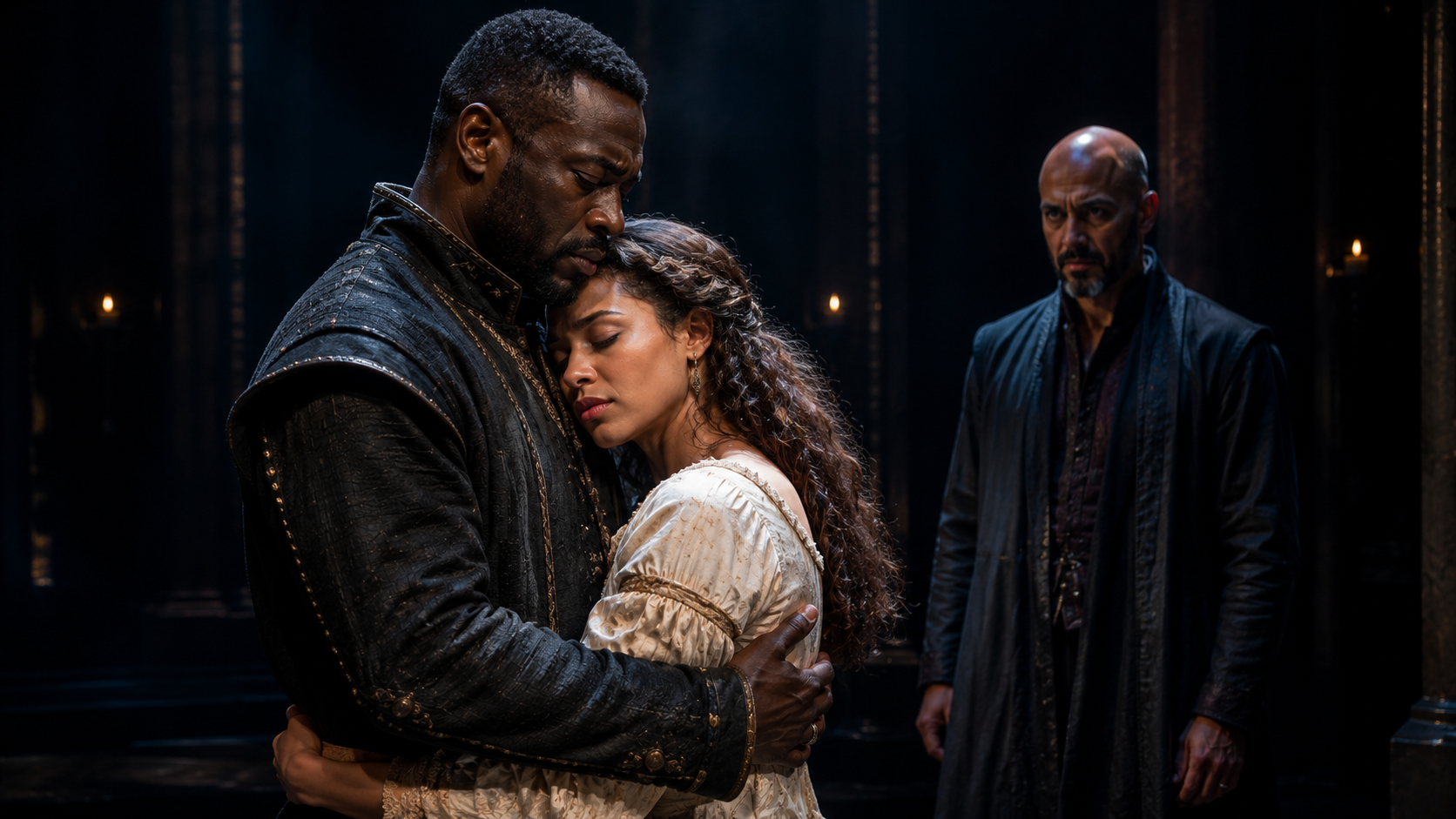
Othello emerged during a period of expanding English contact with the wider world. The Elizabethan and Jacobean eras saw increased presence of Africans in London, including Moors, some in service at court. Shakespeare’s portrayal reflects both fascination and the era’s complex racial attitudes.
Early performances featured white actors in blackface or dark makeup. The role became a showcase for leading tragedians: Edmund Kean, Edwin Booth, and later Paul Robeson, whose 1943 performance as Othello broke barriers as the first major Black actor in the role on Broadway in the 20th century.
Modern productions frequently explore postcolonial and racial themes. Directors like Janet Suzman (South Africa, 1987) and those featuring actors such as Laurence Fishburne, Chiwetel Ejiofor, and John David Washington have offered powerful interpretations. Contemporary scholarship, influenced by thinkers like Edward Said and postcolonial theory, examines how the play both critiques and reflects early modern racism.
The tragedy also speaks to universal issues of otherness — anyone who has felt like an outsider in a dominant culture can relate to Othello’s position.
Study Guide and Educational Resources
Key Quotes with Analysis
- “I am not what I am.” (Iago, Act 1) — This paradoxical statement reveals his duplicitous nature and rejection of fixed identity.
- “She loved me for the dangers I had passed, And I loved her that she did pity them.” (Othello, Act 1) — Establishes the foundation of their relationship based on admiration and empathy.
- “O, beware, my lord, of jealousy; It is the green-eyed monster…” (Iago, Act 3) — One of Shakespeare’s most famous metaphors, ironically spoken by the very person creating the jealousy.
- “I kissed thee ere I killed thee. No way but this, Killing myself, to die upon a kiss.” (Othello, Act 5) — A heartbreaking final line that circles back to love amid tragedy.
Essay Topics and Discussion Questions
- To what extent is Othello responsible for his own downfall?
- Is Iago a believable villain or a theatrical device?
- How does race function in the play — is Othello racist or anti-racist?
- Compare the roles of women in Othello and Hamlet.
- How do modern adaptations change the play’s meaning?
Comparison with Other Shakespeare Tragedies Unlike Hamlet’s introspective delay, Othello acts decisively once convinced. Where King Lear explores ingratitude and madness in old age, Othello focuses on marital trust destroyed in mid-life. Macbeth’s ambition is internal; Othello’s destruction is externally engineered by Iago.
Tips for Reading Shakespearean English
- Read aloud — the rhythm helps meaning emerge.
- Use facing-page modern translations initially, then move to original.
- Note unfamiliar words (e.g., “moiety,” “beseech,” “anon”).
- Pay attention to when characters switch from “you” to “thou” (intimacy or contempt).
Recommended Adaptations
- Orson Welles’ 1952 film (atmospheric classic).
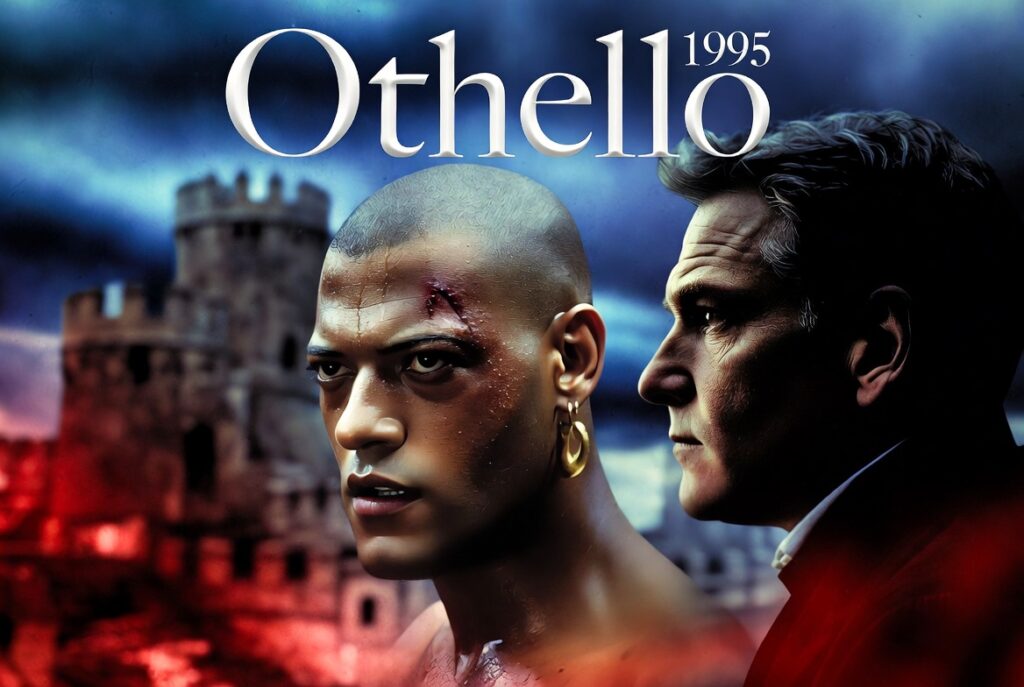
- Oliver Parker’s 1995 version with Laurence Fishburne and Kenneth Branagh.
- National Theatre or RSC stage productions available on streaming.
- The 2020s jazz-infused or modern-dress interpretations.
How to Download and Use the Othello Play PDF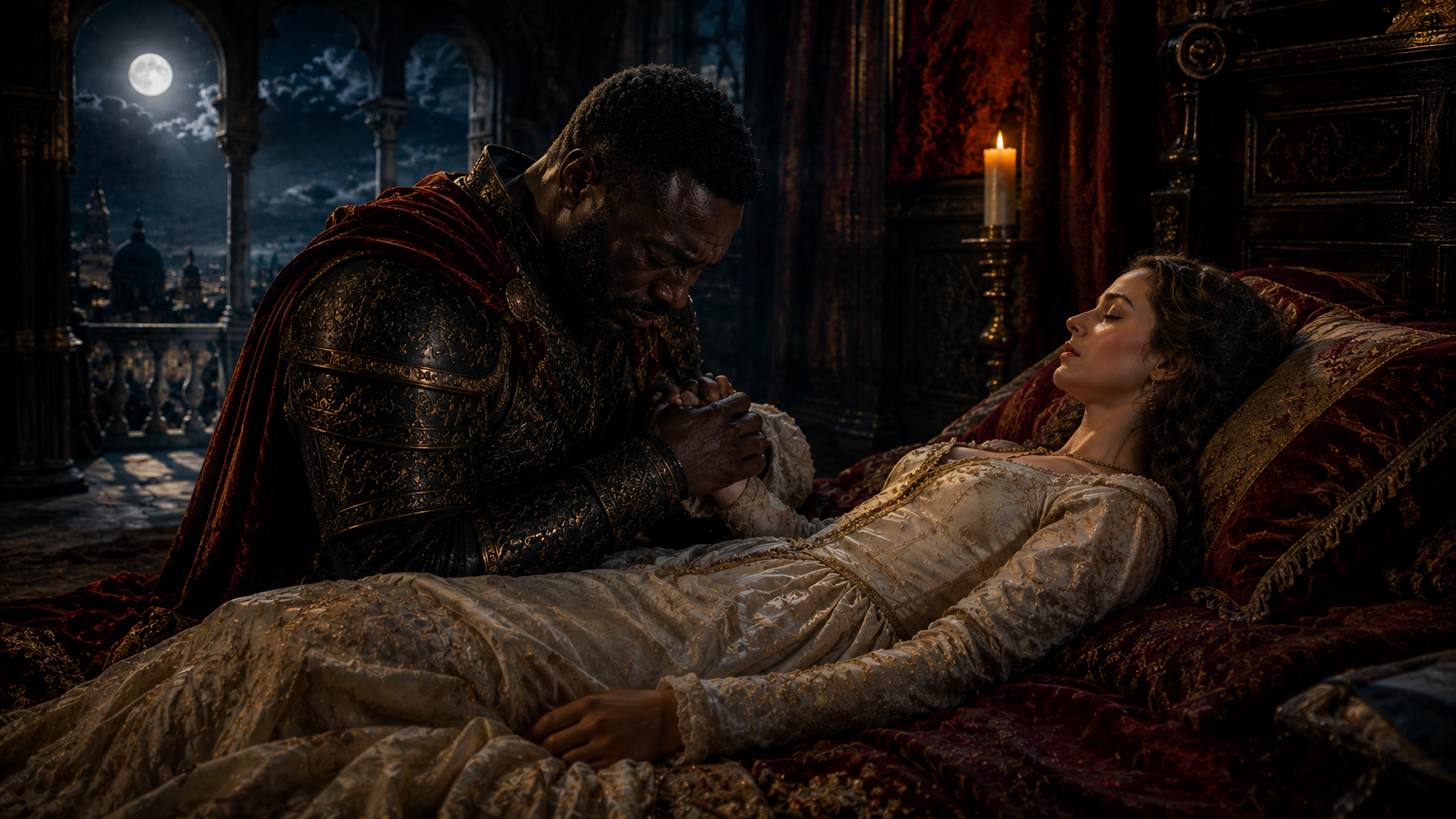
- Scroll to the end of this article or visit the dedicated download section on this site for a clean, searchable Othello play PDF with modernized spelling or original Folio/Quarto variants.
- Choose between plain text (best for rehearsals) or annotated version (ideal for students).
- The file is optimized for mobile, tablet, and print.
- Legal note: As a public domain work, you may freely use, quote, perform, and distribute the text. Always credit Shakespeare and your source when publishing.
Suggested uses include classroom annotation, highlighting themes, preparing for exams, directing or acting rehearsals, and personal literary appreciation. Many readers print the PDF and keep a physical copy alongside digital notes.
Common Questions About Othello (FAQ)
Is Othello based on a true story? No, but it draws from Italian novellas and real cultural encounters of the period. Shakespeare fictionalized and deepened the source material significantly.
Why does Iago hate Othello? Shakespeare provides multiple possible motives — professional resentment (being passed over for promotion), racial hatred, suspicion that Othello slept with Emilia, and sheer love of manipulation. The ambiguity makes Iago more terrifying.
What is the significance of the handkerchief? It symbolizes Othello’s love, cultural heritage, and fidelity. Its loss becomes “proof” of betrayal in Iago’s scheme.
Is Othello a racist play? This remains hotly debated. The play portrays racist attitudes in Venetian society while giving Othello great dignity and eloquence. Many scholars view it as a critique of prejudice rather than an endorsement.
Best modern translations or editions? For study: Folger Shakespeare Library, Arden Shakespeare, or Norton editions. For plain reading: MIT Shakespeare or Project Gutenberg public domain texts.
Where can I watch Othello for free? Public domain films or performances are available on YouTube, archive.org, and some library streaming services.
Othello endures because it holds a mirror to our deepest vulnerabilities: the fear of being unloved, the ease with which trust can be shattered, and the destructive power of unchecked emotion. In providing the complete Othello play PDF, detailed analysis, historical context, and study resources, this guide aims to be your essential companion to one of Shakespeare’s greatest achievements.
Download the full text today, read it slowly, and let the words work on you. Whether for academic success, theatrical preparation, or personal enrichment, engaging deeply with Othello rewards every reader with greater understanding of both literature and the human heart.
Shakespeare’s tragedy reminds us that even the strongest among us can fall prey to manipulation — and that true wisdom lies in questioning easy “proofs” and guarding against the green-eyed monster.
Explore more of William Shakespeare’s works on this site, including full texts and guides for Hamlet, Romeo and Juliet, Macbeth, and King Lear. Share your thoughts on Othello in the comments — which character fascinates you most, and why does this play still feel so relevant?