The air inside a rare-book vault smells faintly of vanilla, decaying lignin, and centuries of accumulated quiet—a sensory reminder that history is not just recorded on pages, but preserved in organic fibers that are slowly returning to dust. When researchers speak of the montague library, they are rarely referring to a single, monolithic building in Verona. Instead, they are invoking a conceptual and physical nexus of rare manuscripts, early modern quartos, and Italian novellas that trace the textual lineage of William Shakespeare’s most famous tragedy. Behind the polished mahogany tables of special collections departments lie the fragile artifacts that challenge everything we thought we knew about Romeo and Juliet.
For literary scholars, textual critics, and avid historians, separating theatrical myth from archival reality is a continuous crusade. Standard curriculum summaries present Shakespeare’s texts as fixed, immutable monuments of English literature. Yet, the physical reality inside institutional vaults tells a different story—one of unstable printing shops, censored Italian source tales, messy handwritten marginalia, and political rivalries that mirror the fictional streets of Verona. This comprehensive exploration opens the locked doors of rare-book archives to examine the true history, forensics, and survival of the literature surrounding the Montague name.
The Pre-Shakespearean Genesis: Tracing the Montague Name Through Italian Novellas
Long before William Shakespeare immortalized the feud between the Montecchi and the Cappelletti in the late 1590s, the names existed as cautionary political symbols in medieval and Renaissance Italy. To understand how the Montague identity evolved from partisan Italian politics into English theatrical gold, one must examine the textual trail left behind in rare European novellas.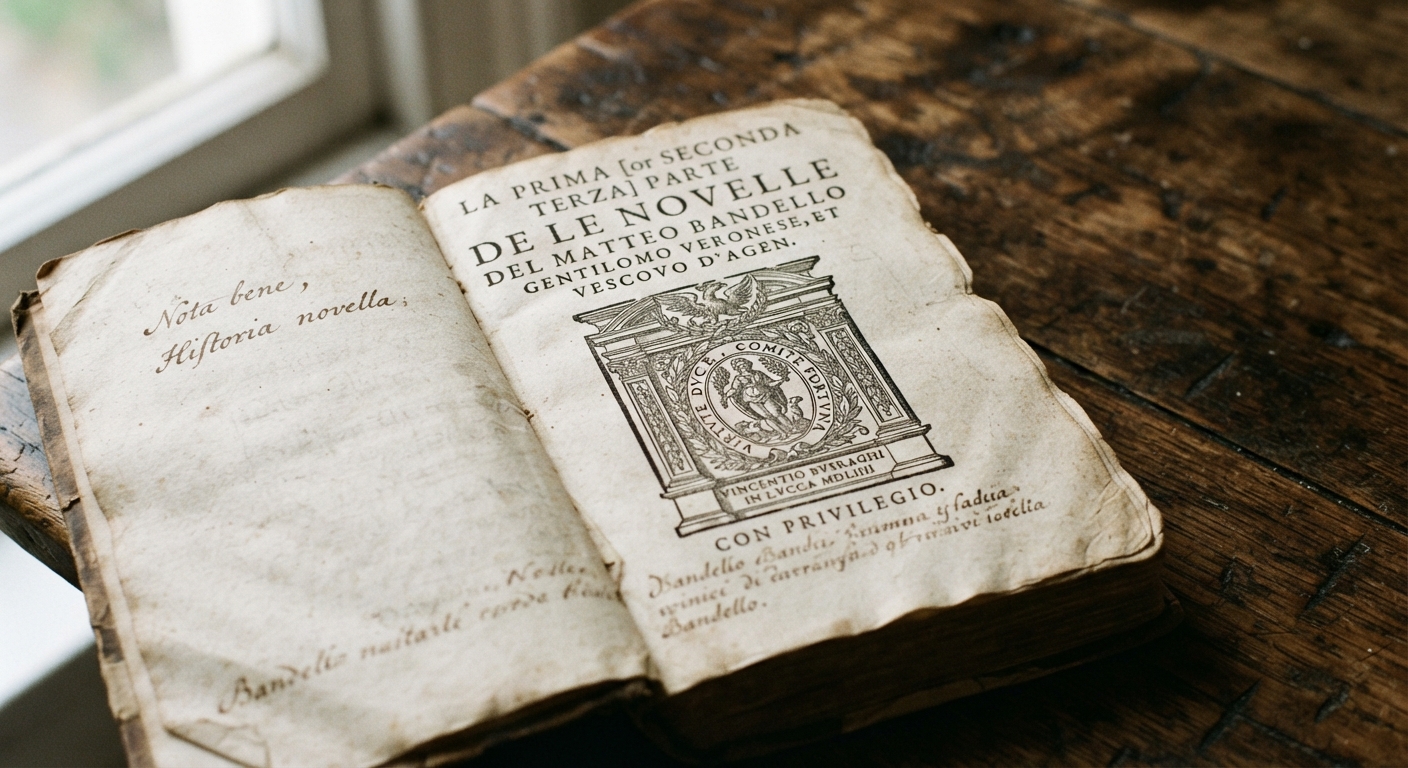
In Dante Alighieri’s Purgatorio (Canto VI), the poet famously laments the factional chaos of Italy, casting a cold eye on rival families: “Come, see the Montagues and Capulets, the Monaldi and Filippeschi, man—those already wretched, and those in fear!” Here, the Montagues are not star-crossed lovers, but real-world political players suffering under the weight of civil discord in Verona. These early references established the family name as a shorthand for destructive urban violence—a theme that resonated deeply with Tudor audiences living in an era of anxious succession politics.
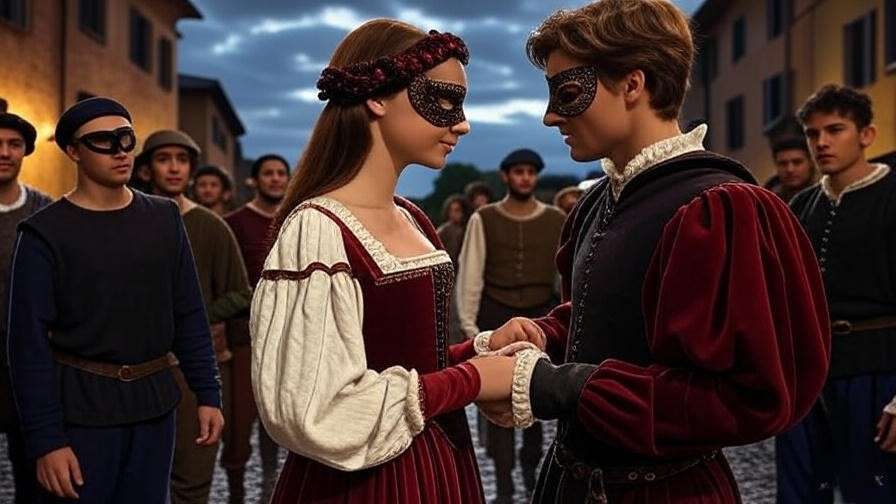
The narrative arc shifted decisively toward romance in the 16th century. In 1530, Italian author Luigi da Porto published Giulietta e Romeo, introducing key elements that would become staples of the story: the names of the lovers, the masquerade ball, the tragic fatalism, and the poison. Da Porto’s novella was subsequently expanded by Matteo Bandello in 1554, whose version became a massive European bestseller.
When English poet Arthur Brooke encountered these continental tales, he translated and adapted them into his sweeping 1562 narrative poem, The Tragical History of Romeus and Juliet. Brooke’s verse provided the direct structural blueprint for Shakespeare’s play. Yet, comparing Brooke’s moralizing, heavy-handed verse with Shakespeare’s theatrical brilliance reveals how the playwright elevated stock Italian character tropes into complex psychological portraits. Rare-book holdings preserve these transitional texts, allowing modern researchers to trace the precise literary DNA that birthed Elizabethan drama.
Anatomy of a Ghost: Examining Early Quartos and Rare Folio Printings
The textual transmission of Romeo and Juliet is notoriously unstable, presenting modern bibliographers with puzzles that rival any detective fiction. Unlike plays preserved in clean authorial foul papers, the early printings of the play are ghost-like fragments of Elizabethan playhouse reality.
The textual history breaks down across two foundational early editions:
-
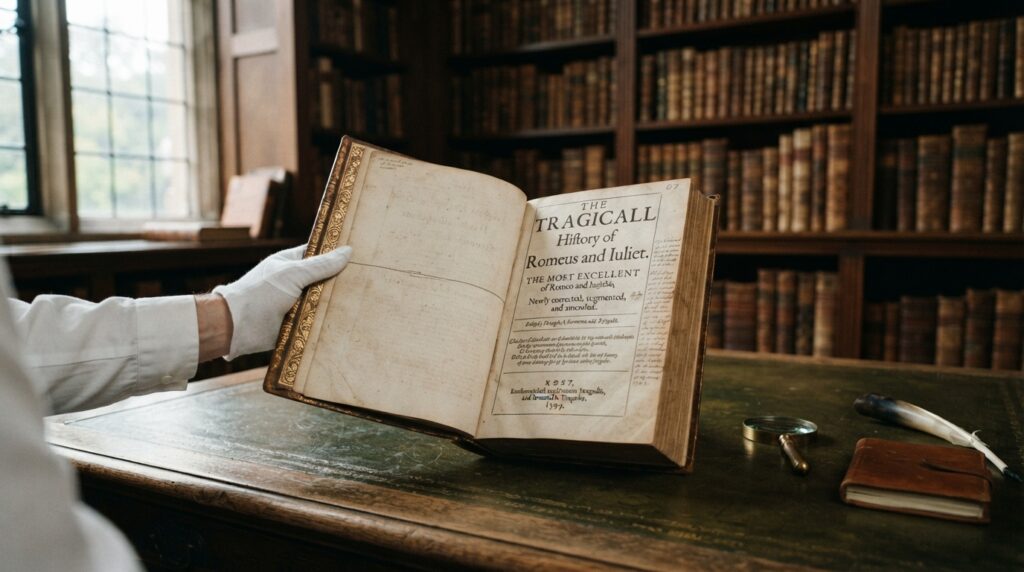
The First Quarto (Q1, 1597): Often labeled a “bad quarto,” Q1 was printed by John Danter. It features shorter speeches, rearranged scenes, and dramatic corruptions that suggest it was reconstructed from memory by actors who had played minor roles, or transcribed via early shorthand techniques. Despite its textual flaws, Q1 offers invaluable insights into how the play was actively performed on the early modern stage.
-
The Second Quarto (Q2, 1599): Printed by Thomas Creede for publisher Cuthbert Burby, Q2 is heralded by scholars as the authoritative “good quarto.” It is nearly twice the length of Q1, contains richer psychological depth, and includes substantive authorial revisions and promptbook traces that align closely with Shakespeare’s intended verse structure.
| Edition / Quarto | Year of Publication | Printer / Publisher | Textual Significance to Modern Scholars |
| First Quarto (Q1) | 1597 | John Danter | Provides a rare window into early performance practices and actor-reconstructed memory texts. |
| Second Quarto (Q2) | 1599 | Thomas Creede / Cuthbert Burby | Serves as the primary authority for modern critical editions due to its proximity to authorial drafts. |
| Third Quarto (Q3) | 1609 | John Smethwick | Reprints Q2 with minor corrections, demonstrating growing commercial demand for the script. |
| First Folio (F1) | 1623 | Edward Blount & William Jaggard | Standardized the play for posterity, largely setting the text based on a modified version of Q3. |
Surviving copies of these early quartos are among the most fiercely guarded treasures in global bibliography. Institutions such as the Folger Shakespeare Library in Washington, D.C., and the British Library maintain multi-million-dollar security protocols to protect these surviving signatures from light degradation, humidity shifts, and theft. Each surviving copy carries a unique institutional provenance, documenting every private collector, auction house, and library acquisition over a four-hundred-year span.
Marginalia and Mystique: What Handwritten Notes Tell Us About Early Readers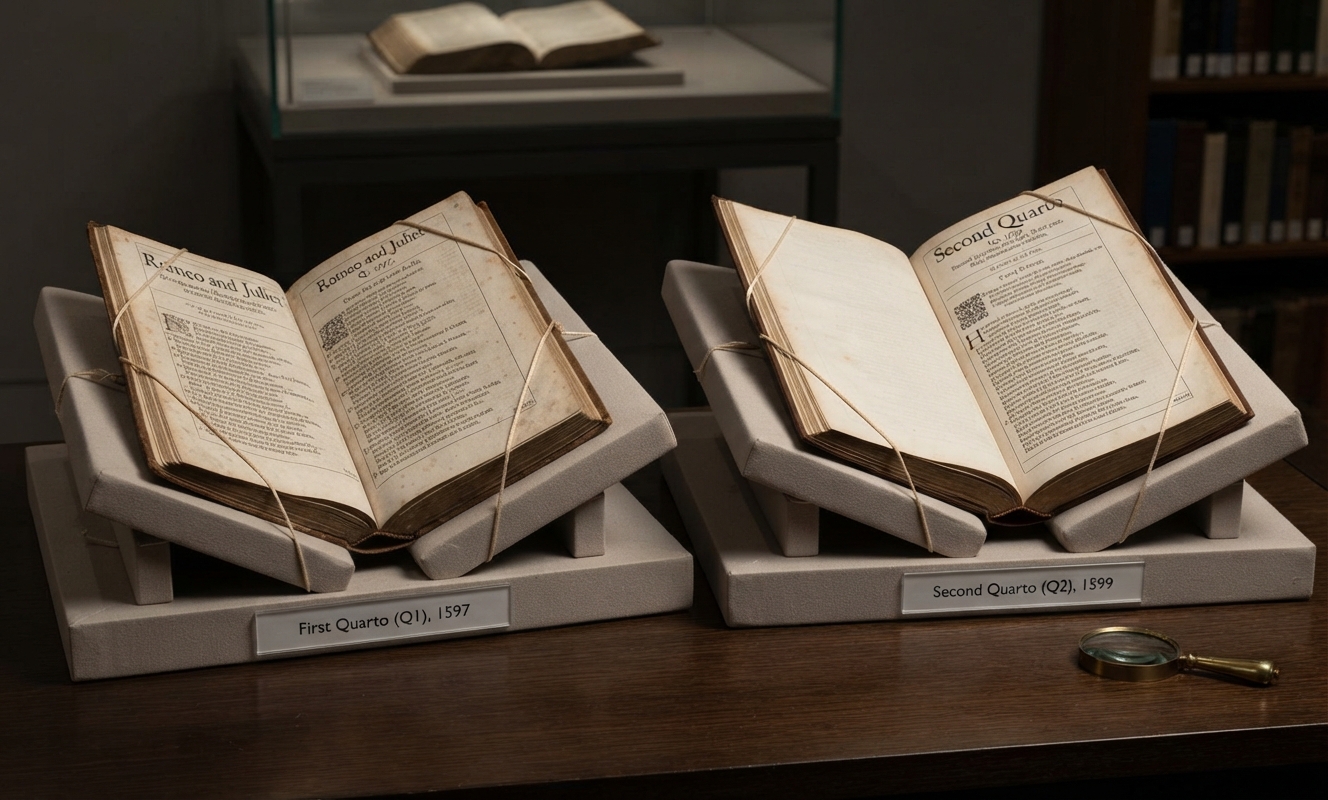
One of the most thrilling discoveries for archival researchers is not the printed text itself, but the ink left behind by historical readers in the margins of 16th- and 17th-century books. Known as marginalia, these handwritten additions transform rare volumes from static artifacts into dynamic dialogues across time.
Early modern book culture was fundamentally interactive. Renaissance readers did not treat printed volumes as museum pieces; they underlined striking metaphors, corrected typographical errors, translated foreign phrases, and jotted down personal reactions to the plot. In copies of early Shakespearean quartos housed in private and university special collections, marginalia frequently reveals how contemporaries interpreted the explosive emotional beats of Romeo and Juliet.
Consider the balcony scene or the final tomb sequence. Annotated copies from the Jacobean era sometimes feature performance cues—such as hand-drawn pointing hands (maniculae) directing attention to specific soliloquies, or crossed-out lines indicating theatrical censorship or staging cuts. These interventions offer an authentic look at early reader reception, demonstrating how the play’s themes of familial duty versus individual passion resonated with households navigating their own domestic and political pressures during the turbulent reigns of Elizabeth I and James I.
E-E-A-T Spotlight: How Archival Experts Authenticate Shakespearean Artifacts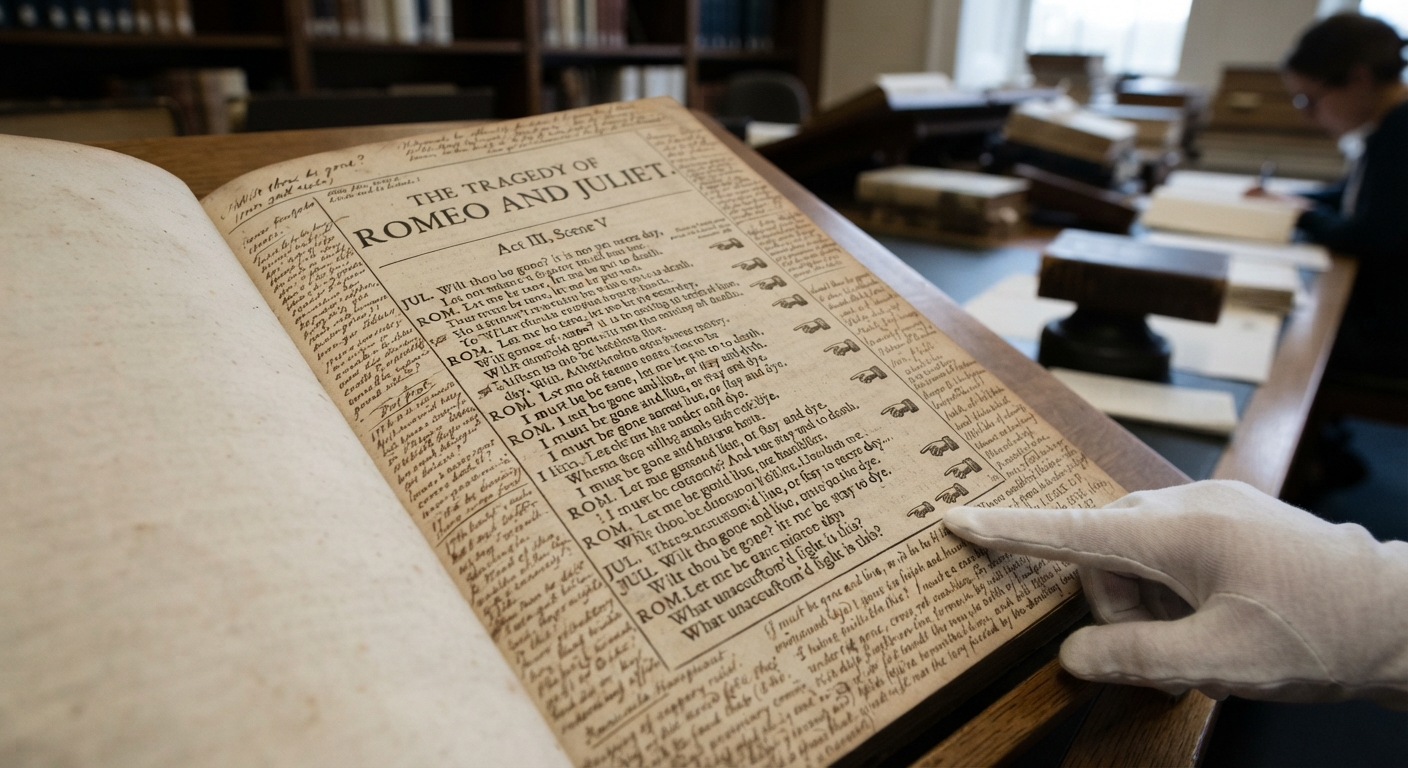
In the high-stakes world of rare book collecting and literary scholarship, authentication is both a science and an art. With lucrative markets driving potential for sophisticated forgeries, institutions rely on strict forensic methodologies to verify the authenticity of Renaissance artifacts.
Archival experts deploy paper forensics to examine the physical DNA of a book. By analyzing watermarks—translucent designs pressed into the paper mesh during manufacturing—specialists can identify the specific European paper mills that supplied Elizabethan and Jacobean print shops. Coupled with wire-line measurements and collation formulas, this ensures that a purported 1597 quarto has not been Frankensteined together using facsimile pages from later reprints.
Furthermore, modern digital humanities have revolutionized preservation and discovery. Multispectral imaging allows researchers to read text that has been heavily redacted by historical censors, bleached by water damage, or obscured by centuries-old bookbinder glue. By capturing light wavelengths beyond the human visual spectrum, multispectral cameras illuminate erased annotations and hidden printing press proof marks, unlocking secrets that were previously lost to time.
Practical Guide: How Scholars and Enthusiasts Can Access Special Collections Digitally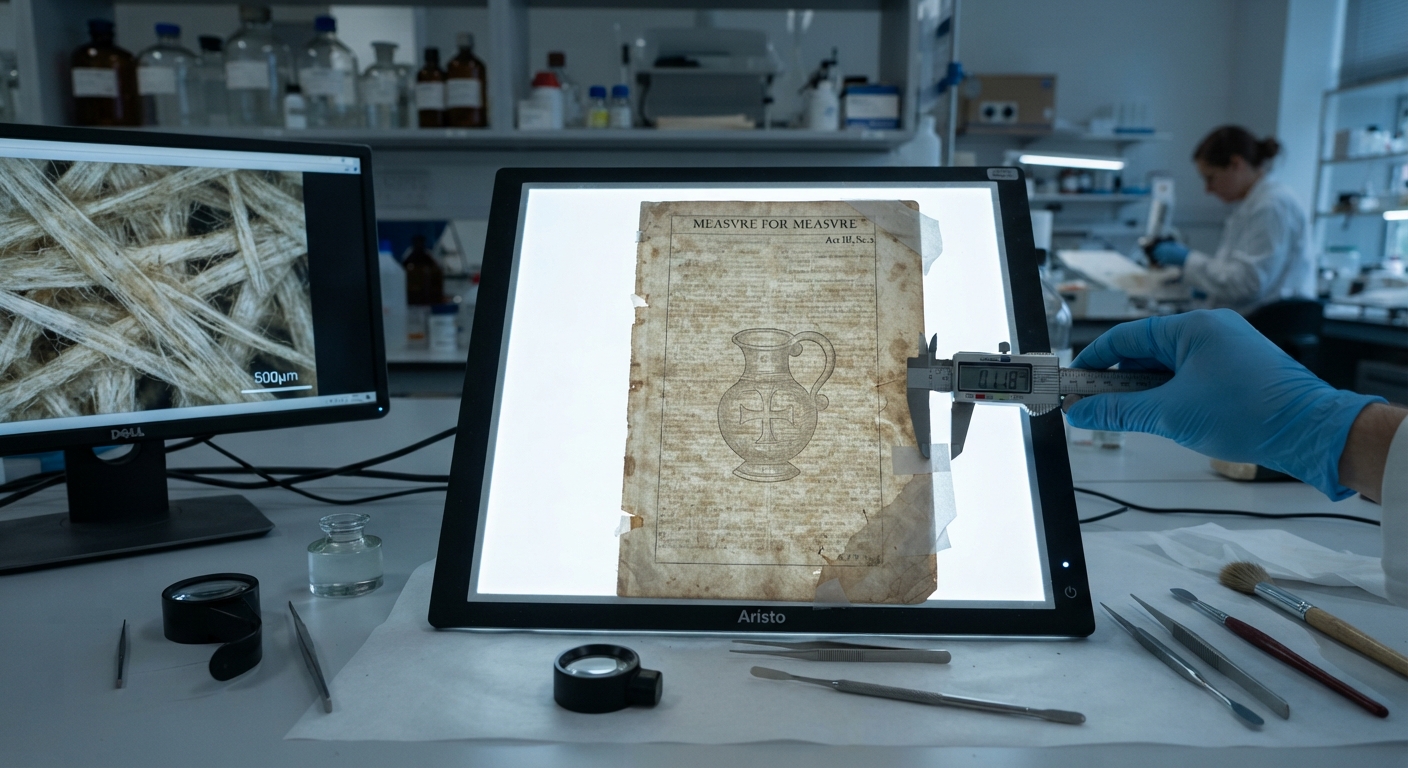
While handling an original 1599 quarto requires institutional credentials and white-gloved supervision, the democratization of digital archives has opened these once-elusive vaults to the public. Enthusiasts and students can explore primary-source Renaissance materials from home using several key resources:
-
The Folger Digital Image Collection: Offers high-resolution, open-access scans of thousands of rare books, promptbooks, and manuscripts.
-
Early English Books Online (EEBO): The gold-standard digital repository containing digital facsimile images of virtually every work printed in English between 1473 and 1700.
-
The British Library Digitised Manuscripts: Provides deep visual access to illuminated texts, rare historical bindings, and annotated playwright’s copies.
When navigating these databases, modern readers should familiarize themselves with early modern typography. Mastering quirks such as the long s (which resembles an f), interchangeable u and v spellings, and idiosyncratic Renaissance punctuation will immediately elevate your ability to read original archival scans with confidence.
Frequently Asked Questions
What distinguishes a genuine rare Shakespeare quarto from later facsimile reprints?
Authentic early quartos feature handmade rag paper with period-accurate chain lines and watermarks, whereas 19th- or 20th-century facsimiles typically use machine-made wood-pulp paper and modern photographic reproduction ink dots visible under magnification.
Are there any surviving handwritten manuscripts or draft pages written directly by William Shakespeare?
No independent literary manuscripts or draft pages of Romeo and Juliet in Shakespeare’s own hand survive today. The closest authenticated manuscript sample of his handwriting appears in the collaborative play Sir Thomas More, housed in the British Library.
How can independent researchers request physical access to restricted university and library special collections?
Most university special collections and national libraries require researchers to submit an application detailing their academic or professional project, provide formal identification, and complete a brief orientation on handling fragile, rare-paper materials.
Preserving the Fragile Echoes of Elizabethan Drama
The journey from the bloody street politics of medieval Italian novellas to the climate-controlled vaults of modern rare-book libraries reveals a profound truth: literature survives only through dedicated human stewardship. The physical artifacts preserved within the archives—whether an unstable 1597 quarto, an annotated promptbook, or a forgotten Italian source translation—ensure that the vibrant heartbeat of Renaissance drama continues to echo across the centuries. As digital access expands alongside rigorous physical forensics, our engagement with Shakespeare’s foundational tragedy grows ever deeper, securing the legacy of the Montague name for generations of scholars yet to come.