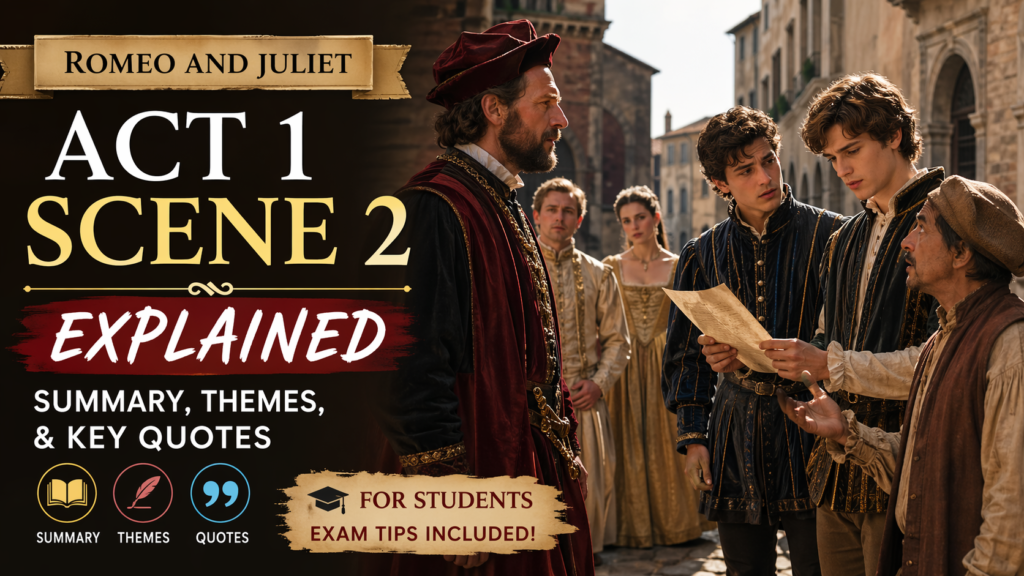
Many students skip over Act 1 Scene 2 of Romeo and Juliet, assuming it’s just a minor setup scene—but that’s a mistake that can cost marks in exams. This short scene quietly triggers one of the most important events in all of literature: the first meeting between Romeo and Juliet. Without it, the entire tragedy would unfold differently.
If you’ve ever struggled to understand why this scene matters, what actually happens, or how to write about it in exams, this guide is built for you. You’ll get a clear summary, deep analysis, key quotes, themes, and exam-ready insights—all explained in a simple yet expert way.
By the end, you won’t just understand this scene—you’ll know how to use it to score higher in essays and exams on Romeo and Juliet by William Shakespeare.
Quick Overview of Act 1 Scene 2 of Romeo and Juliet
Scene Snapshot
- Setting: A street in Verona
- Main Characters: Lord Capulet, Paris, a servant, Romeo, Benvolio
- Key Event: Invitation to the Capulet feast
Why This Scene Matters
At first glance, this scene seems calm compared to the violence of Act 1 Scene 1. But beneath the surface, it sets everything in motion. Paris seeks to marry Juliet, Capulet organizes a party, and through a twist of fate, Romeo learns about the event. This single moment leads Romeo to attend the party—where he meets Juliet. In other words, this scene is the bridge between introduction and destiny.
Act 1 Scene 2 of Romeo and Juliet Summary (Simple and Clear)
Paris Asks to Marry Juliet
The scene begins with Paris, a nobleman, asking Lord Capulet for permission to marry Juliet. Capulet responds cautiously, explaining that Juliet is still very young. He suggests that Paris should wait before rushing into marriage.
However, Capulet doesn’t completely reject the idea. Instead, he invites Paris to a party at his house, where he can observe Juliet and try to win her affection.
The Capulet Feast Invitation
Capulet plans a grand feast and gives a servant a list of guests to invite. This is where the scene takes an unexpected turn—the servant cannot read the list.
This small detail might seem unimportant, but it becomes a major turning point in the plot.
The Illiterate Servant and Romeo’s Role
The servant, struggling with the guest list, encounters Romeo and Benvolio on the street. He asks Romeo to read the names for him.
This moment is crucial because:
- It’s completely accidental
- It introduces the theme of fate and chance
- It directly connects Romeo to the Capulet party
Romeo Learns About the Party
As Romeo reads the list, he realizes that Rosaline—the woman he is currently obsessed with—will be at the party.
Benvolio immediately encourages Romeo to attend. He believes that seeing other beautiful women will help Romeo forget Rosaline.
End of Scene Turning Point
Romeo agrees to go to the party—not because of Juliet, but because of Rosaline.
This decision changes everything.
It leads directly to:
- Romeo entering the Capulet household
- Romeo meeting Juliet
- The beginning of the central love story
Key Characters in Act 1 Scene 2
Lord Capulet
Capulet is portrayed as a careful and somewhat protective father. Unlike many parents of the time, he does not rush Juliet into marriage.
Key traits:
- Practical and strategic
- Concerned about Juliet’s youth
- Socially aware (wants a good match for his daughter)
Paris
Paris represents the ideal noble suitor:
- Wealthy
- Respectable
- Approved by society
However, his approach to marriage feels more formal than emotional, highlighting a contrast with Romeo’s passionate nature.
Romeo
At this point in the play, Romeo is:
- Deeply emotional
- Obsessed with Rosaline
- Immature in his understanding of love
His decision to attend the party shows how easily he is influenced by others.
Benvolio
Benvolio acts as the voice of reason:
- Calm and logical
- Supportive of Romeo
- Encourages him to move on
Ironically, his advice leads Romeo straight to Juliet.
The Servant
Though a minor character, the servant plays a major role in the plot.
He represents:
- The power of chance
- How small actions can have huge consequences
Major Themes in Act 1 Scene 2 of Romeo and Juliet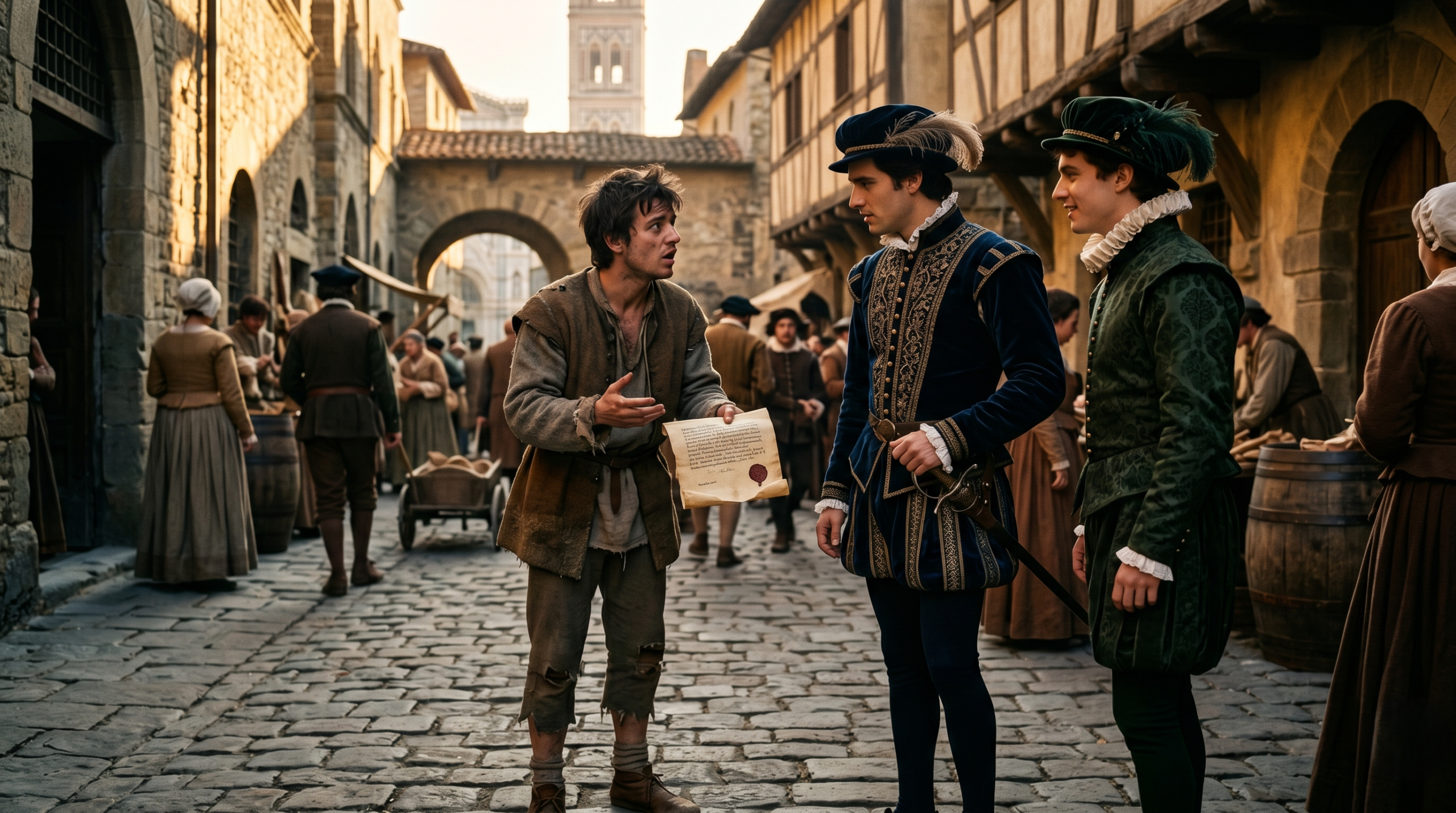
Fate vs Chance
This scene is one of the clearest examples of fate at work.
Think about it:
- The servant cannot read
- He randomly meets Romeo
- Romeo learns about the party
These coincidences feel accidental—but in a tragedy, they often suggest fate is guiding events.
Love and Infatuation
Romeo’s love for Rosaline is not genuine—it is infatuation.
Signs of this include:
- His dramatic emotions
- His quick willingness to move on
- His attraction based on appearance
This contrasts sharply with his later love for Juliet.
Youth and Marriage
Capulet’s hesitation shows that Juliet is still very young.
This reflects:
- Elizabethan attitudes toward marriage
- Concerns about maturity and readiness
It also adds tension, as Juliet will soon be caught in a rushed and tragic relationship.
Social Status and Class
The contrast between Paris and the servant highlights class differences:
- Paris = noble and powerful
- Servant = illiterate and lower-class
Yet, ironically, the servant’s actions shape the entire story.
Important Quotes from Act 1 Scene 2 (With Explanation)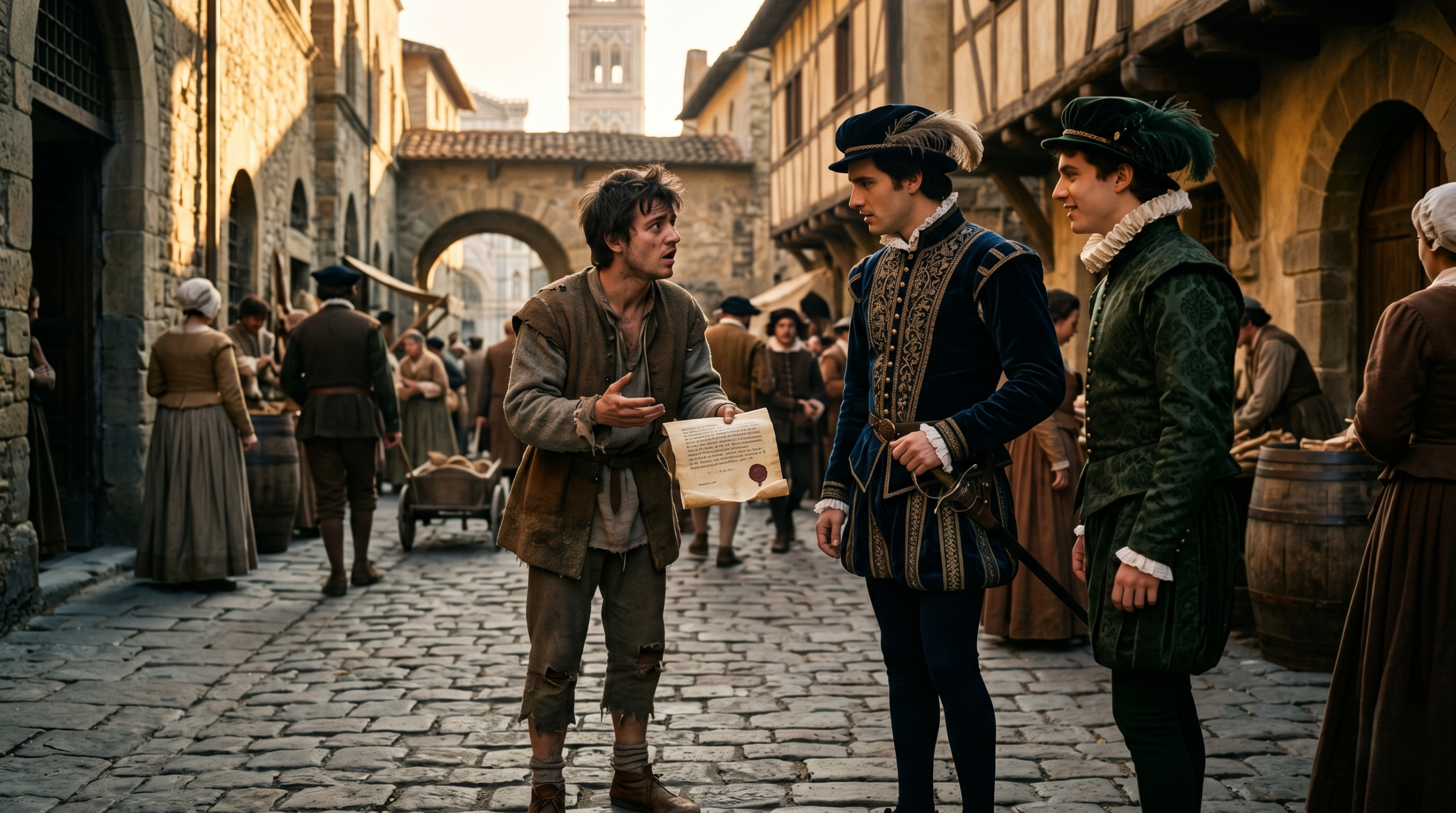
“My child is yet a stranger in the world…”
Capulet acknowledges Juliet’s youth.
Why it matters:
- Shows parental concern
- Highlights Juliet’s innocence
- Foreshadows future conflict
“Compare her face with some that I shall show…”
Benvolio advises Romeo to look at other women.
Why it matters:
- Encourages Romeo to move on
- Leads directly to the party
- Shows Benvolio’s practical mindset
“Find them out whose names are written here…”
The servant asks Romeo for help.
Why it matters:
- Key turning point
- Introduces fate and coincidence
- Drives the plot forward
Exam Tip: How to Use These Quotes
To score high marks:
- Always explain the quote’s meaning
- Link it to a theme
- Connect it to the overall play
Example:
Instead of just quoting, explain how it relates to fate, love, or social expectations.
Literary Devices Used in Act 1 Scene 2
Dramatic Irony
The audience knows something Romeo does not:
- He will meet Juliet at the party
This creates tension and anticipation.
Foreshadowing
The party is more than a social event—it foreshadows:
- Love at first sight
- The beginning of tragedy
Prose vs Verse
- Nobles speak in verse
- The servant speaks in prose
This reflects class differences and adds realism.
Why Act 1 Scene 2 Is Crucial to the Plot
The Turning Point Before the Party
This scene acts as a gateway:
- Without it, Romeo wouldn’t attend the party
- Without the party, Romeo wouldn’t meet Juliet
The Role of Coincidence in Tragedy
Shakespeare shows how small events can lead to major consequences.
This idea is central to tragedy:
- One chance meeting → lifelong consequences
Connection to the Play’s Tragic Outcome
This scene quietly sets the stage for everything that follows:
- Love
- Conflict
- Death
Act 1 Scene 2 Analysis (Deep Dive for Students)
Capulet’s Parenting Style
Capulet is not overly strict at this point. He:
- Respects Juliet’s age
- Encourages Paris to win her naturally
This makes his later behavior more shocking.
Romeo’s Emotional Instability
Romeo quickly shifts from despair to hope.
This suggests:
- Immaturity
- A tendency toward impulsive decisions
Benvolio as a Rational Influence
Benvolio’s advice seems logical:
- Forget Rosaline
- Meet new people
But in a tragic twist, it leads Romeo to Juliet.
Exam-Focused Insights and Essay Tips
If you want to score high in exams, simply understanding Act 1 Scene 2 of Romeo and Juliet is not enough—you need to analyze it effectively and present your ideas clearly. This section will help you turn your knowledge into top-grade answers.
Common Exam Questions
Here are some frequently asked questions based on this scene:
- “How does Shakespeare present fate in Act 1 Scene 2?”
- “Why is Act 1 Scene 2 important in Romeo and Juliet?”
- “How is love presented in this scene?”
- “What is the role of minor characters in Act 1 Scene 2?”
💡 Pro Tip: Examiners often focus on importance, themes, and character development, so always link your answer to the bigger picture of the play.
Example (Model Insight)
Question: Why is Act 1 Scene 2 important?
Answer Idea:
Act 1 Scene 2 is crucial because it sets the main plot in motion. The servant’s accidental meeting with Romeo introduces the theme of fate, as this coincidence leads Romeo to attend the Capulet party, where he meets Juliet. This moment begins the central love story and ultimately contributes to the tragic ending.
High-Scoring Writing Tips
- Use phrases like “This suggests…” and “This highlights…”
- Always connect quotes to themes
- Avoid retelling the story—focus on analysis
- Mention William Shakespeare’s purpose where possible
Common Mistakes Students Make
Even strong students lose marks by overlooking key details. Avoid these common errors:
1. Ignoring the Servant’s Importance
Many students treat the servant as irrelevant—but he is actually the trigger of the entire plot.
2. Thinking the Scene Is “Not Important”
This is one of the biggest mistakes.
Without this scene:
- Romeo wouldn’t attend the party
- Romeo wouldn’t meet Juliet
3. Confusing Rosaline with Juliet
At this stage, Romeo is in love with Rosaline—not Juliet.
Understanding this contrast is essential for analyzing his character.
4. Not Linking to Later Events
Always connect this scene to:
- The party (Act 1 Scene 5)
- Romeo and Juliet’s relationship
- The tragic ending
Quick Revision Notes (Last-Minute Summary)
Need a fast recap before an exam? Here’s everything you need:
- Paris asks to marry Juliet
- Capulet says she is too young but invites Paris to a party
- A servant cannot read the guest list
- He meets Romeo and Benvolio
- Romeo learns about the party
- Benvolio convinces Romeo to attend
- Romeo goes to see Rosaline—but meets Juliet instead
👉 Key Idea: A simple accident leads to a life-changing event.
FAQs About Act 1 Scene 2 of Romeo and Juliet
Why is Act 1 Scene 2 important?
It sets up the main event of the play—Romeo attending the Capulet party, where he meets Juliet. Without this scene, the love story would not begin.
How does Romeo find out about the party?
Romeo learns about the party when a servant asks him to read a guest list. This accidental meeting introduces the theme of fate.
What is Capulet’s attitude toward Juliet’s marriage?
Capulet is cautious. He believes Juliet is too young and wants Paris to win her affection naturally rather than forcing the marriage.
What role does fate play in this scene?
Fate is shown through coincidence. The servant’s inability to read leads him to Romeo, which ultimately brings Romeo and Juliet together.
The Scene That Quietly Changes Everything
At first glance, Act 1 Scene 2 of Romeo and Juliet may seem like a simple conversation and a minor event—but in reality, it is one of the most important scenes in the entire play.
It introduces:
- The idea of fate guiding events
- The contrast between infatuation and true love
- The chain of events that leads to tragedy
Most importantly, it answers a crucial question:
How do Romeo and Juliet meet?
The answer lies here—in a moment of pure coincidence that changes everything.
For students studying Romeo and Juliet, mastering this scene means more than just understanding the plot. It means recognizing how William Shakespeare carefully builds his tragedy, one small moment at a time.