What if the downfall of a man was not just written in his character—but in the very cities he moves through? The idea of the city of Othello is not a literal place, but a powerful interpretive lens that helps us understand how William Shakespeare constructed one of his greatest tragedies.
In Shakespeare’s Othello, the journey from Venice to Cyprus is not just geographical—it is psychological, political, and deeply symbolic. These two locations shape the emotional trajectory of the play, transforming a respected general into a tragic figure consumed by jealousy and manipulation. Understanding the city of Othello means understanding how setting itself becomes a driving force in tragedy.
This article provides a deep, expert-level literary analysis of Venice and Cyprus, revealing how Shakespeare uses space, politics, and isolation to construct meaning, conflict, and collapse.
Understanding the Term “City of Othello”
Is There Really a City of Othello?
Despite the phrase’s growing popularity in literary discussions, there is no real-world city called the “City of Othello.” Instead, the term refers to the combined symbolic environments of Venice and Cyprus in Shakespeare’s tragedy Othello.
The phrase is used by scholars and readers to describe how these two locations function almost like “characters” themselves—shaping behavior, influencing decisions, and accelerating tragedy.
In other words, the city of Othello is a conceptual space where:
- Venice represents order, reputation, and political control
- Cyprus represents isolation, chaos, and psychological breakdown
Literary Context of the Phrase
Shakespeare rarely uses setting as mere background. In Othello, geography becomes dramaturgy—meaning the story’s structure depends heavily on where events unfold.
The shift from Venice to Cyprus is one of the most important transitions in the play. It signals a movement from:
- Public life → private emotion
- Social order → psychological disorder
- Political structure → emotional vulnerability
Overview of Shakespeare’s Othello
Brief Plot Summary
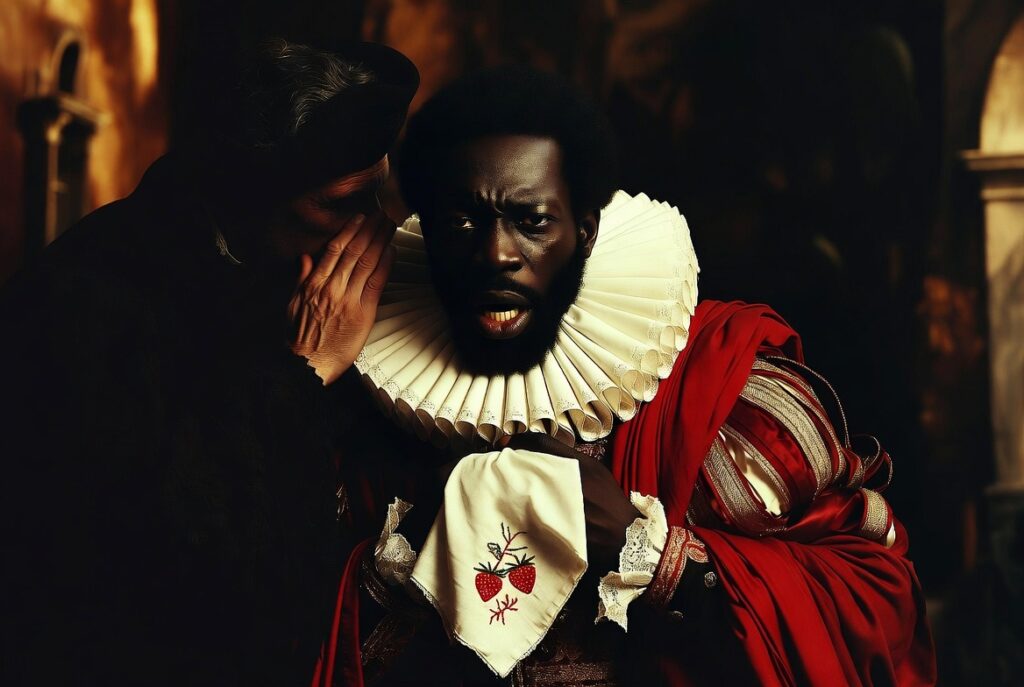
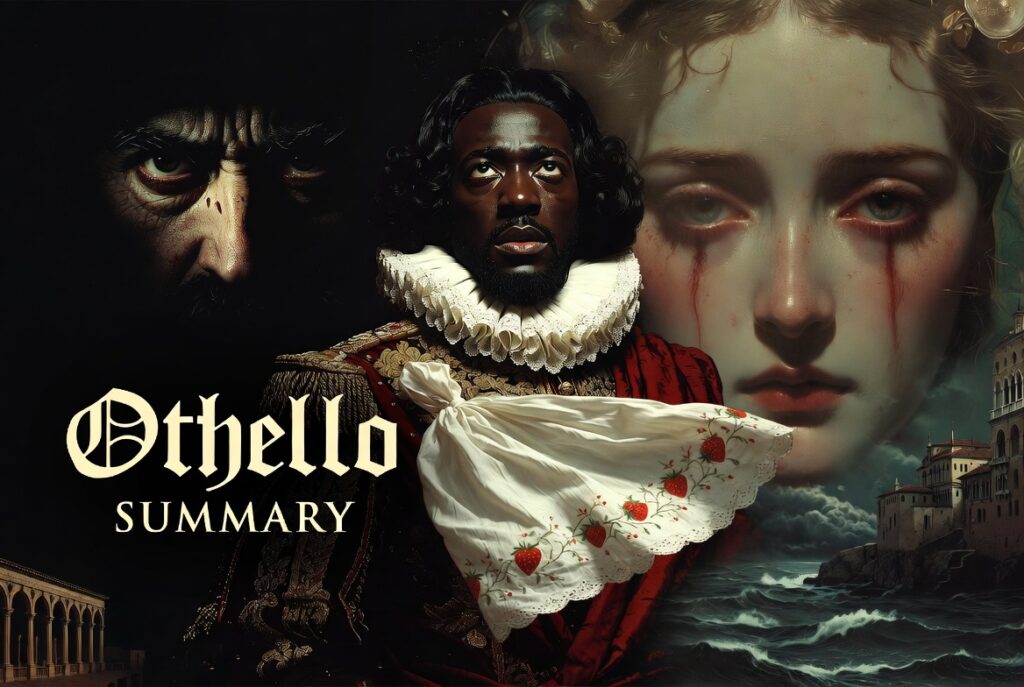
Othello tells the story of Othello, a respected military general in Venice, who is manipulated by his ensign Iago into believing that his wife Desdemona is unfaithful.
Through lies, insinuations, and psychological manipulation, Iago plants the seeds of jealousy that ultimately destroy Othello’s trust, identity, and life.
The tragedy unfolds in two key locations:
- Venice (political order and reputation)
- Cyprus (military isolation and emotional chaos)
Key Characters
- Othello – A noble general, outsider, and tragic hero
- Desdemona – Loyal wife, symbol of innocence
- Iago – Master manipulator driven by resentment
- Cassio – Othello’s trusted lieutenant
- Emilia – Desdemona’s maid, moral truth-teller
- Roderigo – Foolish admirer manipulated by Iago
Core Themes
- Jealousy as a destructive force
- Racism and otherness
- Manipulation and deception
- Identity and insecurity
- Trust and betrayal
These themes are intensified and shaped by the movement between Venice and Cyprus.
Venice – The City of Order, Politics, and Civilization
Venice opens the play as a structured, politically governed society where reputation and law matter deeply.
Venice as a Space of Control
Venice represents:
- Political stability
- Diplomatic order
- Military discipline
- Social hierarchy
Othello is initially respected here. He is not just a soldier but a symbol of controlled power within Venetian society.
Yet beneath this order lies tension—particularly racial and cultural prejudice against Othello as an outsider.
Social Hierarchy and Hidden Racism
Although Othello holds a high military position, he is still viewed as “other.” This tension is revealed in subtle but powerful ways:
- Doubts about his marriage to Desdemona
- Racist insinuations from Brabantio
- Social unease about his identity
Venice is therefore not purely civilized—it is controlled, but not free of bias.
Venice as Rationality and Public Identity
In Venice:
- Reputation is everything
- Decisions are logical and political
- Emotions are restrained
Othello’s identity here is stable because it is externally validated. However, this stability depends on social trust—something fragile and easily broken.
Cyprus – The City of Chaos and Psychological Collapse
Cyprus represents the dramatic turning point in the play.
Once the characters arrive in Cyprus, everything changes.
Why Shakespeare Moves the Action to Cyprus
Cyprus is a military outpost far from Venice’s political structure. This shift is intentional:
- Removes social oversight
- Isolates characters emotionally
- Intensifies conflict and paranoia
In dramatic terms, Cyprus is where internal emotions become external destruction.
Cyprus as Psychological Breakdown
In Cyprus:
- Iago’s manipulation intensifies
- Othello becomes increasingly insecure
- Trust deteriorates rapidly
- Violence becomes inevitable
Without Venice’s structure, emotional instability dominates.
The Island Effect: Isolation and Control
Cyprus functions like a psychological pressure chamber:
- No civic oversight
- No stabilizing authority
- No social correction of misinformation
This isolation allows Iago to fully control perception, especially Othello’s.
Venice vs Cyprus – A Structural Contrast
Shakespeare builds Othello on a powerful binary system.
Order vs Chaos
- Venice = law, logic, reputation
- Cyprus = emotion, instability, manipulation
Public Identity vs Private Emotion
- Venice = Othello the respected general
- Cyprus = Othello the jealous husband
Stability vs Psychological Collapse
The transition between cities mirrors Othello’s internal breakdown:
- Confidence → doubt
- Trust → suspicion
- Love → obsession
The Role of Setting in Character Development
Othello’s Identity Crisis
Othello’s identity depends on external validation. In Venice, he is secure. In Cyprus, he becomes vulnerable.
This shift reveals a core truth:
His self-worth is socially constructed, not internally stable.
Iago’s Manipulation Strategy
Iago thrives in Cyprus because:
- Isolation reduces resistance
- Lack of witnesses increases deception
- Emotional intensity weakens logic
Cyprus becomes the perfect environment for psychological warfare.
Desdemona’s Vulnerability
Desdemona’s innocence remains constant, but her environment becomes hostile. She is:
- Misunderstood
- Misjudged
- Ultimately silenced
The setting amplifies her tragic fate.
Historical and Cultural Context
Shakespeare wrote Othello during a time when:
- Venice symbolized sophistication and diplomacy
- Cyprus represented frontier conflict with the Ottoman Empire
For Elizabethan audiences, this contrast immediately signaled:
- Civilization vs frontier danger
- Order vs unpredictability
Literary Techniques Behind the “City of Othello” Concept
Geographical Symbolism
Shakespeare uses location to mirror emotional states:
- Venice = structured mind
- Cyprus = fractured psyche
Dramatic Irony
The audience knows Iago’s deception, but Othello does not. This gap intensifies tragedy, especially in isolated Cyprus.
Contrast and Juxtaposition
The shift between cities creates dramatic tension:
- Calm political Venice
- Storm-like emotional Cyprus
Psychological Interpretation of Venice and Cyprus
Venice as the Conscious Mind
Venice represents:
- Logic
- Order
- Reputation
Cyprus as the Subconscious Mind
Cyprus represents:
- Fear
- Jealousy
- Insecurity
Othello’s descent can be read as a movement from conscious control into subconscious chaos.
Mental Breakdown as Spatial Transition
The geography reflects psychology:
- Leaving Venice = leaving stability
- Entering Cyprus = entering emotional distortion
Modern Relevance of the “City of Othello”
The idea of the city of Othello is still relevant today.
Workplace and Social Dynamics
Modern “Venices”:
- Structured workplaces
- Professional reputations
Modern “Cyprus-like spaces”:
- Isolated environments
- Online misinformation spaces
Lessons on Trust and Manipulation
The play warns about:
- How misinformation spreads
- How isolation increases vulnerability
- How trust can be psychologically manipulated
Expert Literary Insights (E-E-A-T Section)
Scholars widely agree that Othello is not only a tragedy of jealousy, but also a tragedy of environment.
Key academic insights include:
- Setting functions as narrative driver, not backdrop
- Cyprus is structurally essential to tragedy
- Venice represents fragile civilization masking prejudice
Common misunderstanding:
- The play is only about jealousy → incorrect
- It is equally about social pressure, isolation, and perception control
Key Themes Reinforced by Venice and Cyprus
- Jealousy destroys rational thought
- Identity is socially fragile
- Manipulation thrives in isolation
- Reputation can be weaponized
- Truth is vulnerable to perception
Frequently Asked Questions (FAQ)
Is there a real City of Othello?
No. It refers symbolically to Venice and Cyprus in Shakespeare’s play.
Why does Shakespeare use Cyprus?
To isolate characters and intensify psychological conflict.
What does Venice represent?
Order, civilization, politics, and reputation.
What is the main message of the setting?
Environment shapes psychology and can determine tragedy.
How does Cyprus affect Othello?
It removes external stability, allowing jealousy and manipulation to grow unchecked.
Why the City of Othello Defines the Tragedy
The city of Othello is not a place on a map—it is a literary framework that explains how Shakespeare builds tragedy through space.
Venice gives Othello identity.
Cyprus destroys it.
Together, they form a psychological journey from order to chaos, trust to suspicion, and love to destruction.
Understanding this spatial design allows readers to see Othello not just as a story of jealousy, but as a masterclass in how environment shapes human psychology and fate.