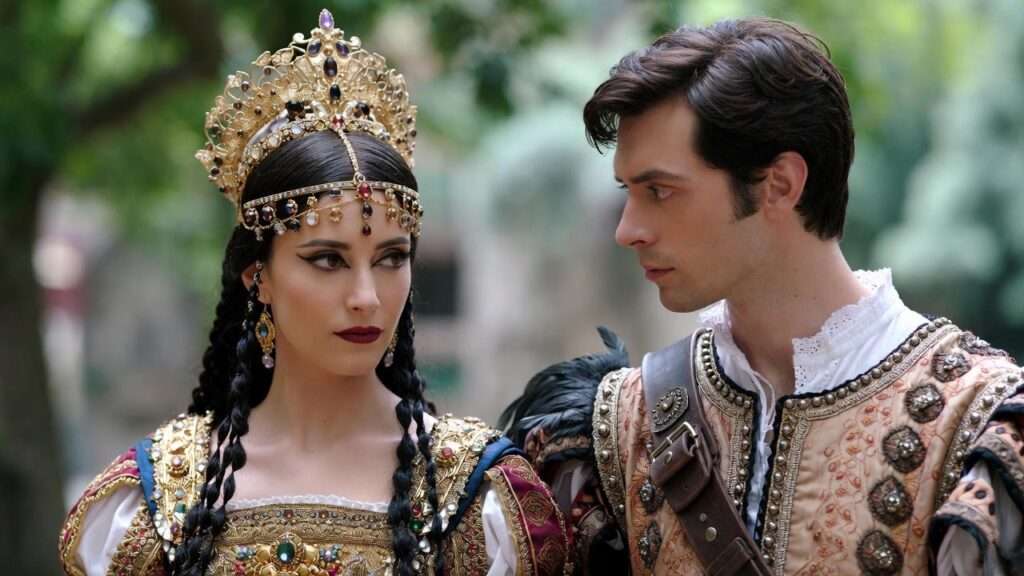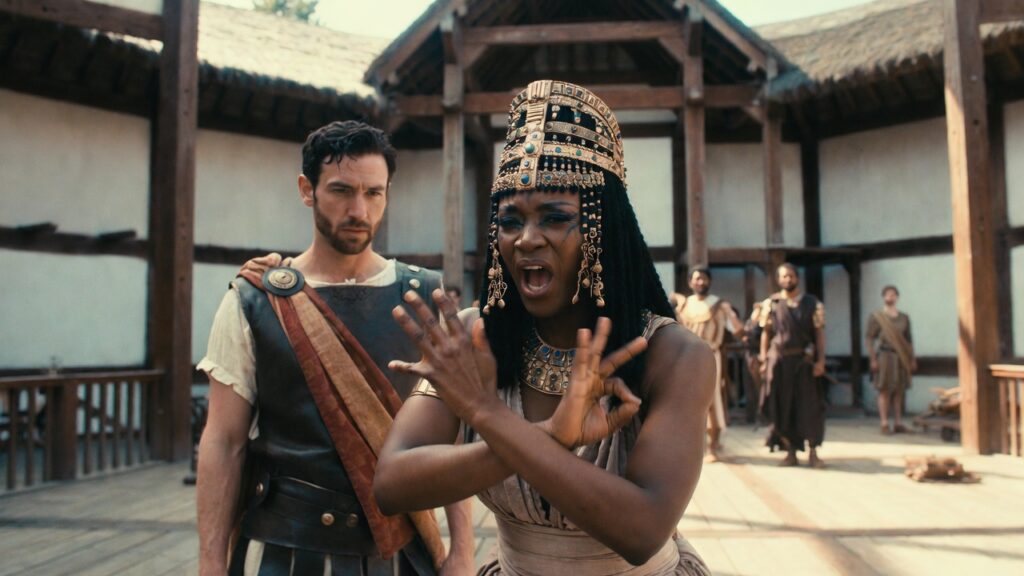
Imagine the timeless wooden stage of Shakespeare’s Globe Theatre bathed in sunlight, where the clash of empires unfolds not just in words, but in the elegant sweep of hands and the resonant timbre of voices. One world speaks in measured English; the other expresses itself through the fluid poetry of British Sign Language (BSL). Passion, betrayal, and tragedy collide across linguistic divides, mirroring the very cultural chasms at the heart of Shakespeare’s text. This is Antony and Cleopatra at the Globe—specifically the revolutionary 2024 bilingual production that reimagined one of the Bard’s most epic tragedies for a modern, inclusive audience.
Directed by Blanche McIntyre, this landmark staging marked the first full revival of the play at the Globe in a decade. It featured Deaf actress Nadia Nadarajah in a commanding performance as Cleopatra, alongside John Hollingworth as the conflicted Mark Antony. By assigning Spoken English to the Roman characters and BSL to the Egyptian court, the production didn’t just enhance accessibility—it deepened the play’s exploration of love transcending barriers, power dynamics, and cultural misunderstanding. Whether you’re a longtime Shakespeare scholar, a theater enthusiast seeking fresh interpretations, or someone interested in inclusive arts, this article provides a comprehensive deep dive: historical context, production innovations, performance highlights, critical insights, thematic analysis, and practical ways to experience it today via Globe Player streaming.
Shakespeare’s Antony and Cleopatra remains one of his most ambitious works, blending history, romance, and politics into a sprawling tragedy. The bilingual approach brought new clarity and intimacy to its complexities, earning widespread praise for its boldness and relevance.
The Play in Context – Shakespeare’s Antony and Cleopatra
William Shakespeare’s Antony and Cleopatra, likely written around 1606–1607, draws heavily from Plutarch’s Lives (via Sir Thomas North’s translation). It chronicles the tumultuous romance between Roman triumvir Mark Antony and Egyptian queen Cleopatra VII amid the power struggles following Julius Caesar’s assassination. The story spans the Mediterranean world: from Rome’s rigid political arena to Egypt’s sensual, opulent court.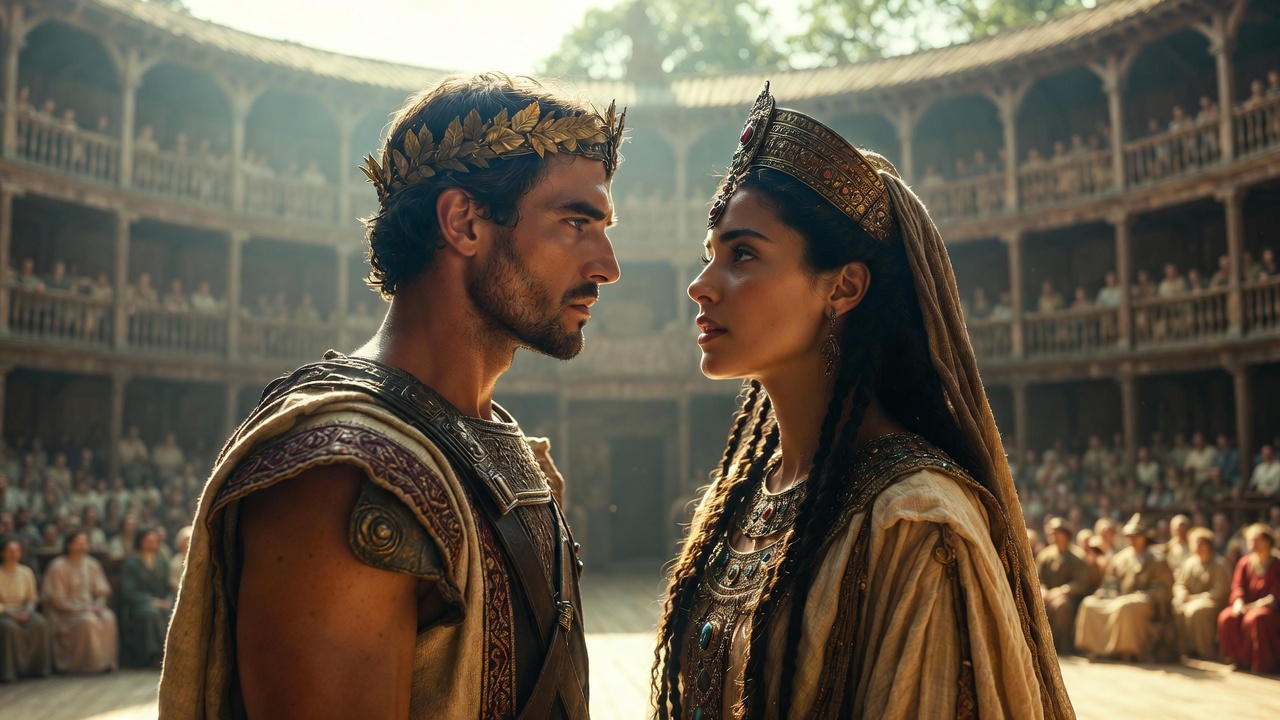
The plot follows Antony’s entanglement with Cleopatra, which distracts him from his duties as co-ruler of the Roman Empire alongside Octavius Caesar and Lepidus. Jealousy, betrayal, naval battles (notably Actium), and shifting alliances culminate in devastating defeats. Antony, believing Cleopatra dead, falls on his sword; Cleopatra, in turn, chooses death by asp bite rather than face humiliation in Rome. Their suicides affirm a defiant love that defies political calculation.
Key themes include:
- Love versus duty — Antony’s passion for Cleopatra erodes his Roman honor.
- East versus West — Egypt represents sensuality, femininity, and fluidity; Rome embodies discipline, masculinity, and empire.
- Gender and power — Cleopatra wields immense agency through intellect, seduction, and performance.
- Mortality and legacy — The lovers seek immortality through myth-making, famously captured in Enobarbus’s description of Cleopatra’s barge.
Staging this play poses challenges: its 42 scenes shift rapidly across locations, demanding fluid transitions. The Globe’s thrust stage and groundling yard naturally suit this epic scope, immersing audiences in the action as Shakespeare intended—no proscenium barriers, just direct engagement.
Evolution of Antony and Cleopatra at Shakespeare’s Globe
Shakespeare’s Globe has a rich history with Antony and Cleopatra. The 2006 production, directed by Dominic Dromgoole, featured Frances Barber as a vivacious Cleopatra and Nicholas Jones as Antony, emphasizing the play’s sensuality and humor during the Edges of Rome season.
The 2014 revival, starring Eve Best as Cleopatra and Clive Wood as Antony, brought cinematic sweep to the open-air venue, highlighting the lovers’ chemistry and the tragedy’s grandeur. Available on Globe Player, it remains a benchmark for traditional interpretations.
After a decade’s absence—delayed by the pandemic and artistic priorities—the 2024 production arrived as a bold reinvention. Originally planned for 2020 with Nadarajah as Cleopatra (potentially in a different capacity), the concept evolved into full bilingual integration. This shift aligned perfectly with the Globe’s commitment to accessibility and innovation, transforming a classic into a contemporary dialogue on language, culture, and inclusion.
Inside the 2024 Groundbreaking Bilingual Production
Blanche McIntyre’s direction, with associate director Charlotte Arrowsmith and BSL consultant Daryl Jackson, created a seamless fusion of languages. Romans spoke Shakespeare’s verse in English; Egyptians signed in BSL, with creative captioning (designed by Ben Glover and others) projecting translations in distinct fonts—red and white for Egypt, ensuring readability from any seat.
Directorial Vision – Blanche McIntyre and Team
McIntyre envisioned the language divide as a literal embodiment of the play’s cultural clash. “Rome is an empire ruled by men. Egypt is a kingdom governed by a woman,” the production notes state. BSL for Egypt amplified Cleopatra’s otherness while making her court vivid and physical. The team avoided constant translation, using it only when narratively justified (e.g., messengers bridging worlds), preserving dramatic tension.
The Bilingual Concept in Action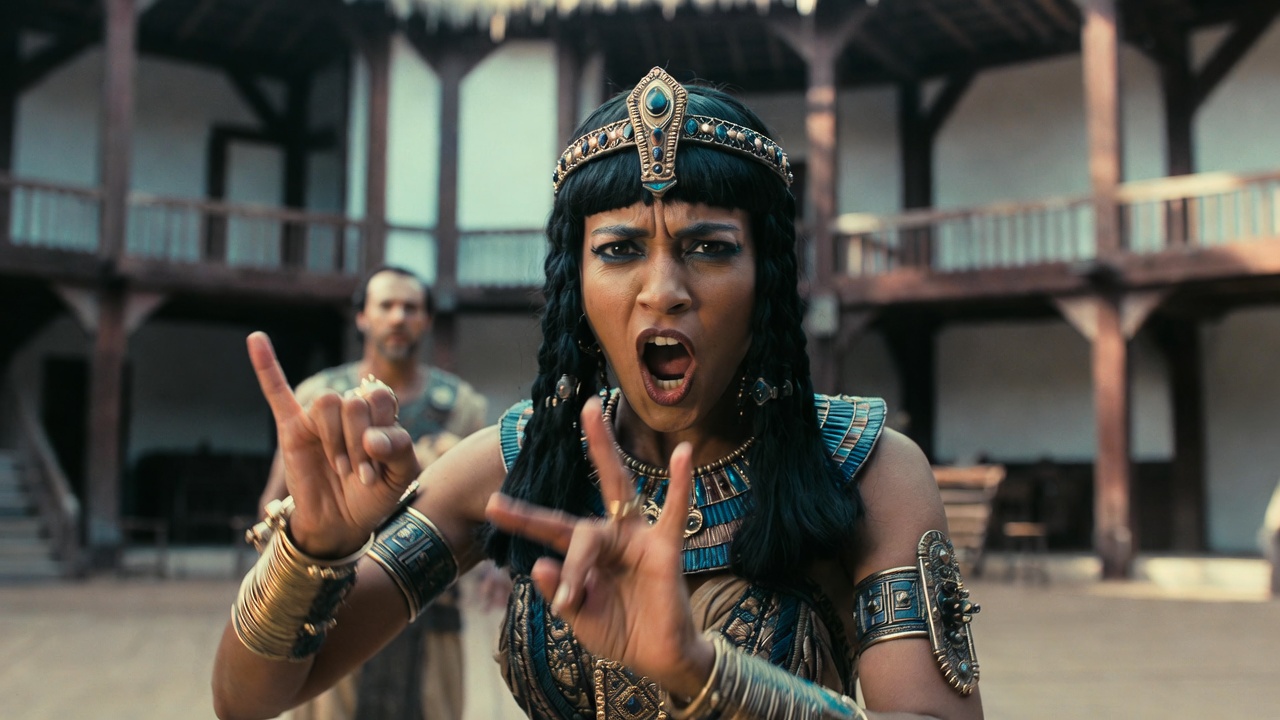
Scenes alternated or overlapped languages: Cleopatra’s court signed expressively, adding layers of physicality to Shakespeare’s poetry. Romans delivered crisp, authoritative speech. Intimate moments—Antony learning to sign for Cleopatra—conveyed vulnerability and connection. Critics noted how this added “intimacy and clarity” (The Guardian), making misunderstandings feel visceral.
Set, Costumes, and Staging in the Globe Theatre
Designer Simon Daw kept the set minimalistic, allowing the Globe’s architecture to shine. Costumes evoked ancient worlds with modern flair—flowing robes for Egypt, structured tunics for Rome. Battles used stylized movement; Pompey’s boat party on the balcony became a highlight, with projections enhancing the spectacle.
Accessibility Features
Every performance was captioned, with BSL integration ensuring Deaf audiences experienced the play authentically. This wasn’t mere accommodation—it enriched the storytelling for all.
Standout Performances and Cast Highlights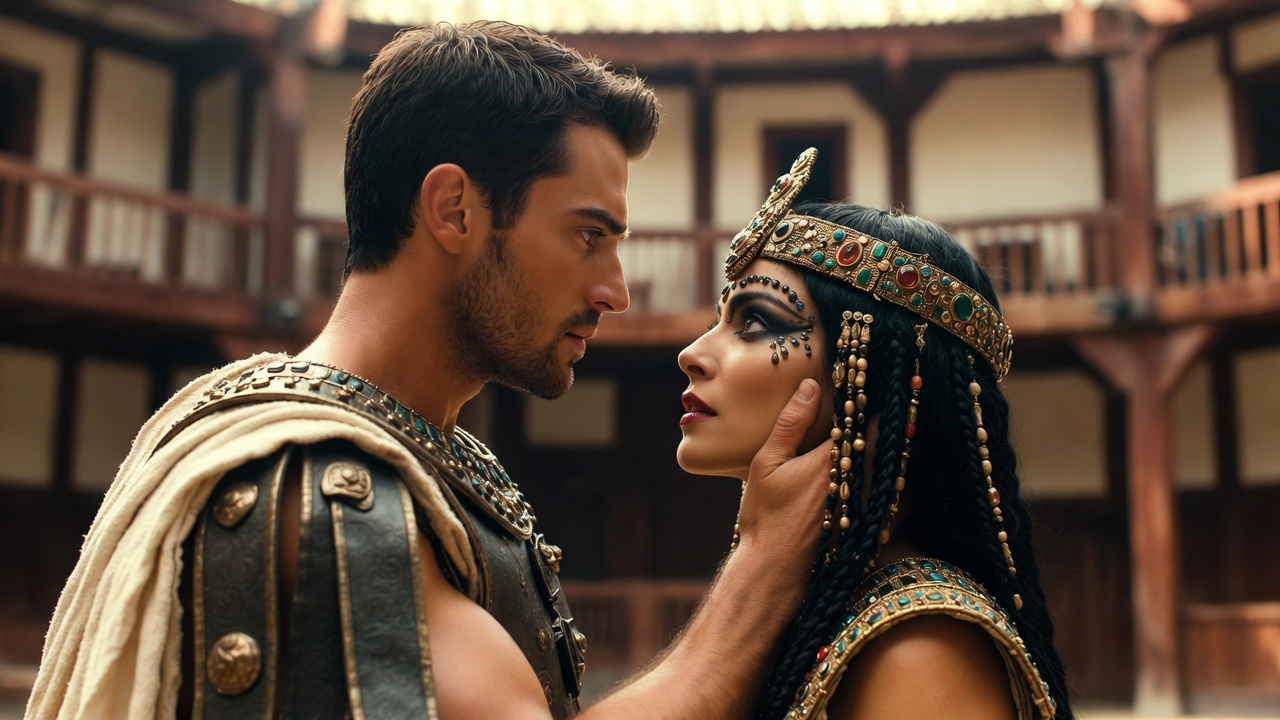
At the heart of any successful Shakespeare production lies the alchemy between text and performer, and the 2024 Globe staging of Antony and Cleopatra delivered exceptional chemistry and individual brilliance.
Nadia Nadarajah’s Cleopatra stands as one of the most memorable interpretations in recent years. As a Deaf actress making her professional Shakespeare debut in a lead role, Nadarajah brought an extraordinary physical and emotional range to the Egyptian queen. Her performance was lauded for its commanding presence, sensuality, and vulnerability. The physicality inherent in BSL allowed her to convey Cleopatra’s mercurial moods—playful, regal, despairing, defiant—with breathtaking precision. When she signed lines such as “Age cannot wither her, nor custom stale / Her infinite variety,” the gestures themselves seemed to embody that infinite variety, making Enobarbus’s famous speech feel newly alive. Critics repeatedly highlighted her ability to dominate the vast Globe stage even in silence, proving that Cleopatra’s power transcends spoken language.
John Hollingworth as Mark Antony provided the perfect counterpoint. His Antony was a man visibly torn—between Roman duty and Egyptian passion, between public honor and private desire. Hollingworth’s delivery of the verse was muscular yet tender, and his growing attempts to communicate in BSL with Cleopatra created some of the production’s most poignant moments. The chemistry between Nadarajah and Hollingworth felt genuine and urgent; their final scenes, particularly the botched suicides, carried raw emotional weight that left audiences hushed.
The supporting ensemble deserves equal praise for their versatility. Will Attenborough’s Octavius Caesar was coldly calculating yet convincingly young and ambitious. Caroline Faber’s Enobarbus delivered the barge speech with wry admiration, while the bilingual Pompey (Daniel Lapaine) and his drunken boat party became one of the evening’s liveliest sequences. The ensemble’s ability to shift seamlessly between spoken English and BSL—sometimes within the same scene—demonstrated remarkable discipline and added layers of meaning to group dynamics.
Critical Reception and Audience Impact
The 2024 production received overwhelmingly positive notices, with many reviewers hailing it as a triumph of inclusive theatre-making.
The Guardian described the bilingual approach as adding “intimacy and clarity” to the text, noting that the language divide “makes the cultural chasm between Rome and Egypt feel visceral.” The Stage awarded four stars, calling it a “clever, bilingual epic” that “never feels like a gimmick.” Broadway World praised the “excellent leads” and the production’s “radical yet respectful” reinvention. Time Out highlighted Nadarajah’s “superb physicality” and the overall “electrifying” energy.
Not every review was unqualified. A few critics observed that the bilingual structure could occasionally distance newcomers unfamiliar with the plot or with BSL, making emotional connections harder in certain scenes. Others felt the ambition sometimes outpaced accessibility for hearing audiences unaccustomed to reading captions while following live action. Yet even these reservations tended to conclude that the gains—in representation, thematic depth, and theatrical innovation—far outweighed any challenges.
Audience response mirrored this enthusiasm. Social media posts and post-show conversations frequently described the experience as “transformative,” “moving,” and “eye-opening.” Many Deaf and hard-of-hearing patrons expressed gratitude for finally seeing themselves represented as central rather than peripheral to a Shakespeare tragedy. Hearing audience members often reported newfound appreciation for the physical expressiveness of sign language and the way it illuminated Shakespeare’s language.
Timeless Themes Explored Through a Modern Lens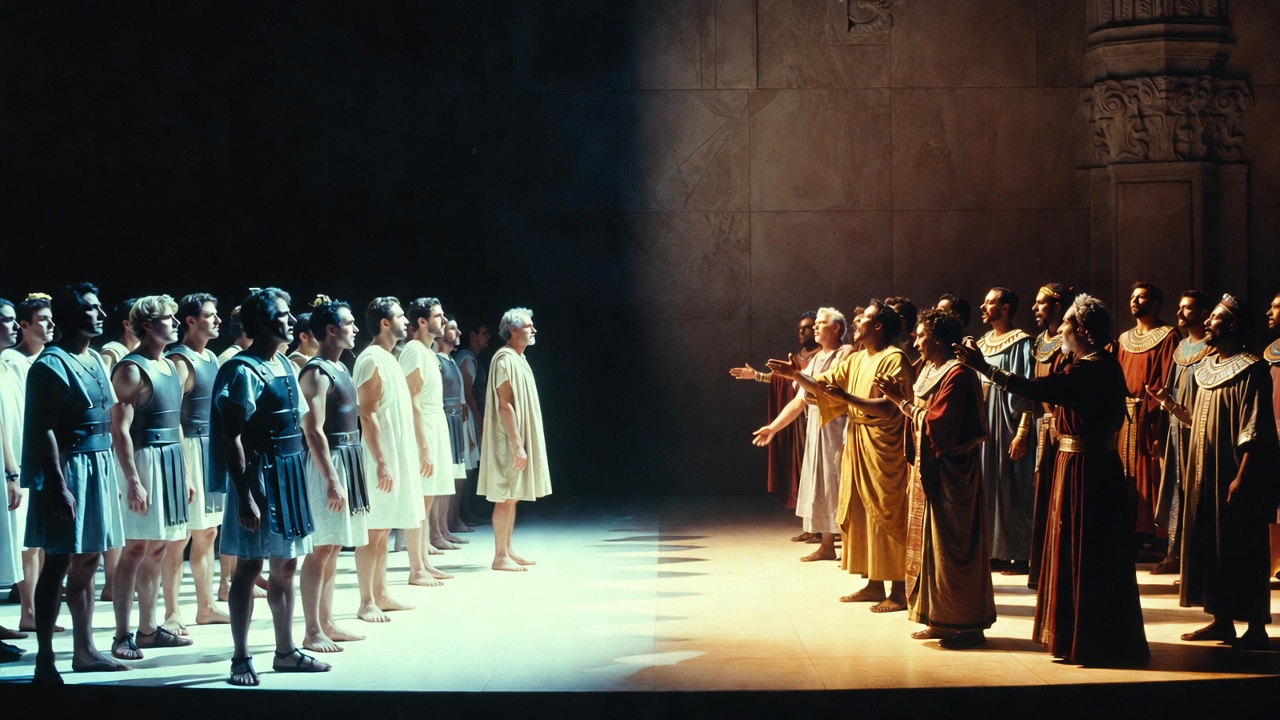
Shakespeare’s Antony and Cleopatra has always been a play about borders—geographical, political, emotional, and cultural. The 2024 Globe production made those borders literal and visible through its bilingual structure, offering fresh insight into several enduring themes.
Love transcending barriers — The lovers’ passion persists despite language, politics, and eventual death. Antony’s halting attempts to sign to Cleopatra became a powerful metaphor for love’s willingness to cross divides. In an era when communication across cultures and abilities remains fraught, this staging felt strikingly contemporary.
East versus West / cultural otherness — Shakespeare’s text already stereotypes Egypt as sensual and chaotic compared to disciplined Rome. By giving Egypt BSL and Rome spoken English, the production mirrored this binary while simultaneously subverting it. Cleopatra’s court appeared vibrant, expressive, and fully human; Rome’s speech, by contrast, could feel rigid and cold. The result was a more nuanced exploration of cultural clash than many traditional productions achieve.
Gender, power, and agency — Cleopatra has long been interpreted as the ultimate femme fatale. Nadarajah’s performance emphasized her strategic intelligence and performative mastery. Her Cleopatra was never merely seductive—she was a ruler who understood spectacle as power. The BSL dimension amplified her physical command of space, reinforcing her as a figure who shapes perception.
Mortality and myth-making — The final act, with its botched suicides and defiant declarations, underscores the lovers’ desire to control their legacy. The production’s intimacy—heightened by the Globe’s architecture—made their deaths feel personal rather than operatic, reminding us that even mythic figures are painfully human.
In 2024–2025, as conversations about inclusion, cross-cultural understanding, and authentic representation dominate the arts, this staging felt urgently relevant.
How to Experience Antony and Cleopatra at the Globe Today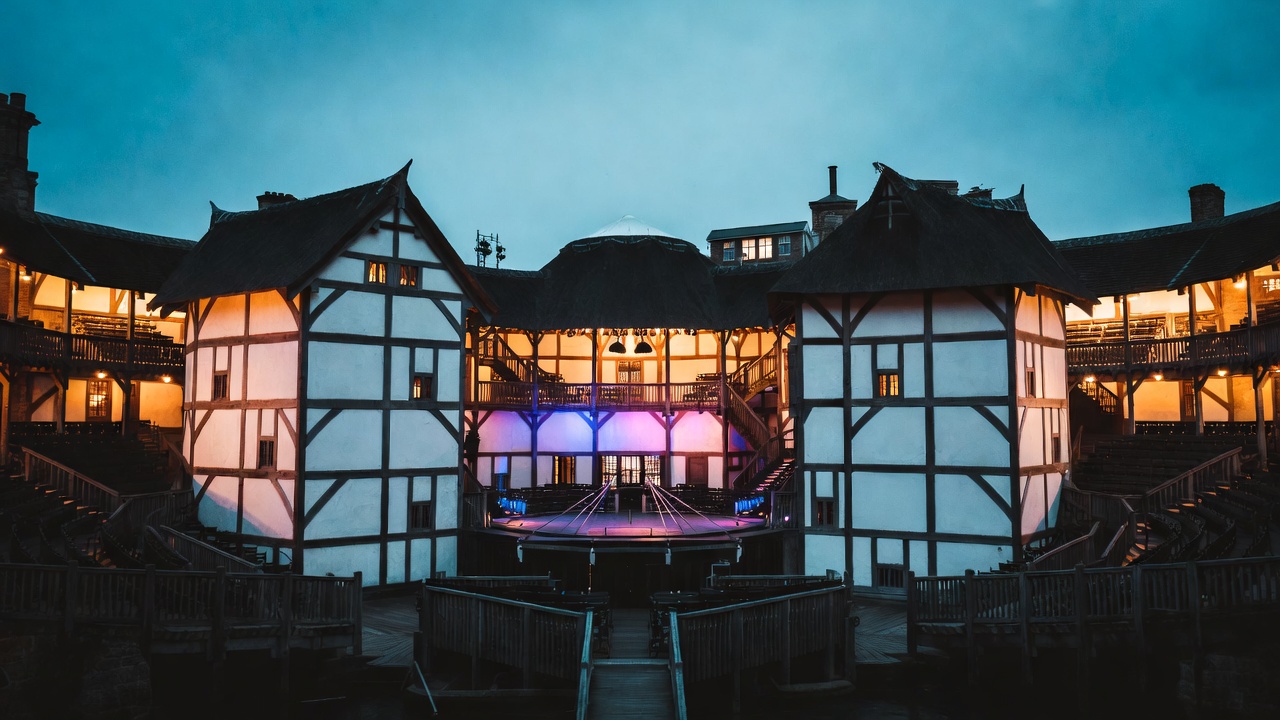
The live run concluded in September 2024, but you can still experience this landmark production through Globe Player, the Shakespeare’s Globe streaming platform.
- Streaming details — The full performance is available on-demand with high-quality video, integrated captions, and clear sightlines to both spoken and signed dialogue. Globe Player subscriptions start at affordable rates, with many libraries and educational institutions offering free access.
- Viewing tips — Watch on the largest screen possible to appreciate the physicality of BSL and the scale of the Globe stage. Subtitles are always on and well-timed; consider a first viewing with plot familiarity (a quick synopsis helps). Pause during key monologues to savor the interplay between speech and sign.
- Related content — Globe Player also hosts the 2014 production for comparison, plus behind-the-scenes talks, interviews with Nadia Nadarajah and Blanche McIntyre, and educational resources.
If you’re ever in London, the Globe offers regular tours of the theatre itself, allowing you to stand on the stage where this history was made.
FAQs About Antony and Cleopatra at the Globe
Is the 2024 bilingual production still available to watch? Yes—stream it anytime on Globe Player with full captions and high-definition video.
Why was BSL chosen specifically for Egypt? The directorial team wanted to make the cultural and linguistic divide tangible. BSL for Egypt mirrored the play’s portrayal of Egypt as “other” to Rome while simultaneously celebrating Deaf culture and making the production accessible to Deaf audiences.
Is this production suitable for Shakespeare beginners? It’s rewarding but benefits from plot familiarity. The captions help, and the physical storytelling is exceptionally clear, but first-time viewers may find a quick summary useful.
How does it compare to other recent adaptations? Unlike film versions (e.g., the 1972 Burton/Taylor epic or the 2018 National Theatre staging), this production emphasizes live intimacy, inclusivity, and linguistic innovation, making it uniquely suited to the Globe’s space.
The 2024 bilingual production of Antony and Cleopatra at the Globe will be remembered as a watershed moment in Shakespearean performance. By weaving British Sign Language into the fabric of the tragedy, Blanche McIntyre and her extraordinary cast did more than stage a play—they expanded the boundaries of who Shakespeare belongs to and how his words can speak across divides.
In an age hungry for connection amid difference, this staging reminds us that love, power, and mortality remain universal—even when expressed in different languages, different modalities, different hands. Eternity, as Cleopatra declares, can indeed lie in “lips, eyes, and hands.”
Whether you stream it tonight on Globe Player or simply carry its insights forward, this production proves that Shakespeare’s greatest works are never finished—they continue to evolve, just as we do.