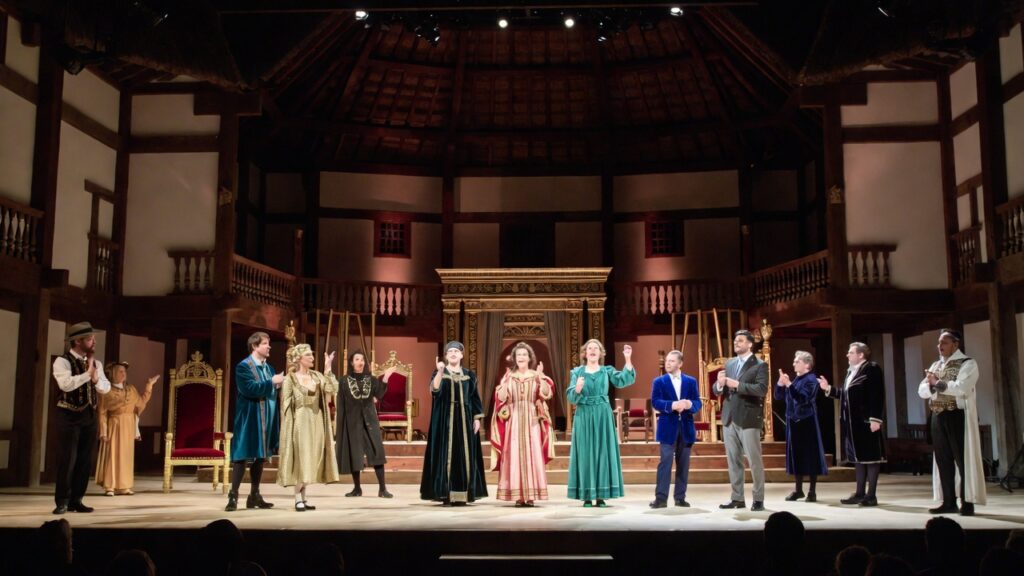
Imagine standing in the iconic wooden ‘O’ of Shakespeare’s Globe Theatre as the summer sun sets over the Thames, the open sky above mirroring the vast empires of Rome and Egypt. Suddenly, the ancient tragedy of love, power, and betrayal unfolds not just in words, but in a revolutionary fusion of spoken English and British Sign Language (BSL). This is the Antony and Cleopatra Globe experience of 2024 — a landmark production that ran from August 4 to September 15, 2024, marking the first time in a decade that Shakespeare’s epic romance returned to the Globe, and the first major bilingual staging of the play in its history.
Directed by Blanche McIntyre with associate direction from Deaf artist Charlotte Arrowsmith, this innovative interpretation brought Deaf and hearing actors together on stage, using BSL for the Egyptian court and spoken English for the Romans. With captions projected around the theater, the production didn’t just perform Shakespeare’s text — it reimagined it, highlighting themes of cultural clash, miscommunication, and the barriers that love can (and cannot) overcome. For theatergoers, students, Shakespeare enthusiasts, and members of the Deaf community, this Antony and Cleopatra at Shakespeare’s Globe offered fresh accessibility, deeper emotional resonance, and a powerful statement on inclusive storytelling.
As a longtime scholar and enthusiast of Shakespeare in performance, I’ve followed the evolution of Globe productions closely. This bilingual approach stands out as one of the most significant advancements in making the Bard’s works truly universal.
Historical Context of Antony and Cleopatra at Shakespeare’s Globe
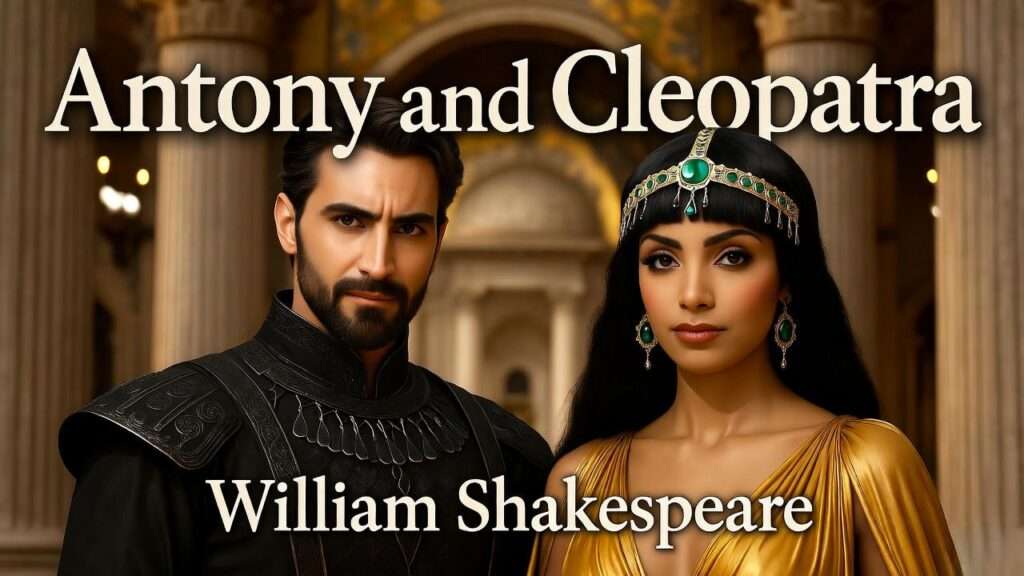
Shakespeare’s Antony and Cleopatra (written around 1606–1607) is one of his most ambitious tragedies, blending grand historical spectacle with intimate psychological drama. Drawing from Plutarch’s Lives, it chronicles the passionate, doomed romance between Roman general Mark Antony and Egyptian queen Cleopatra amid the power struggles of the Roman Empire. The play explores timeless conflicts: duty versus desire, empire versus sensuality, masculinity versus femininity, and the destructive force of political ambition.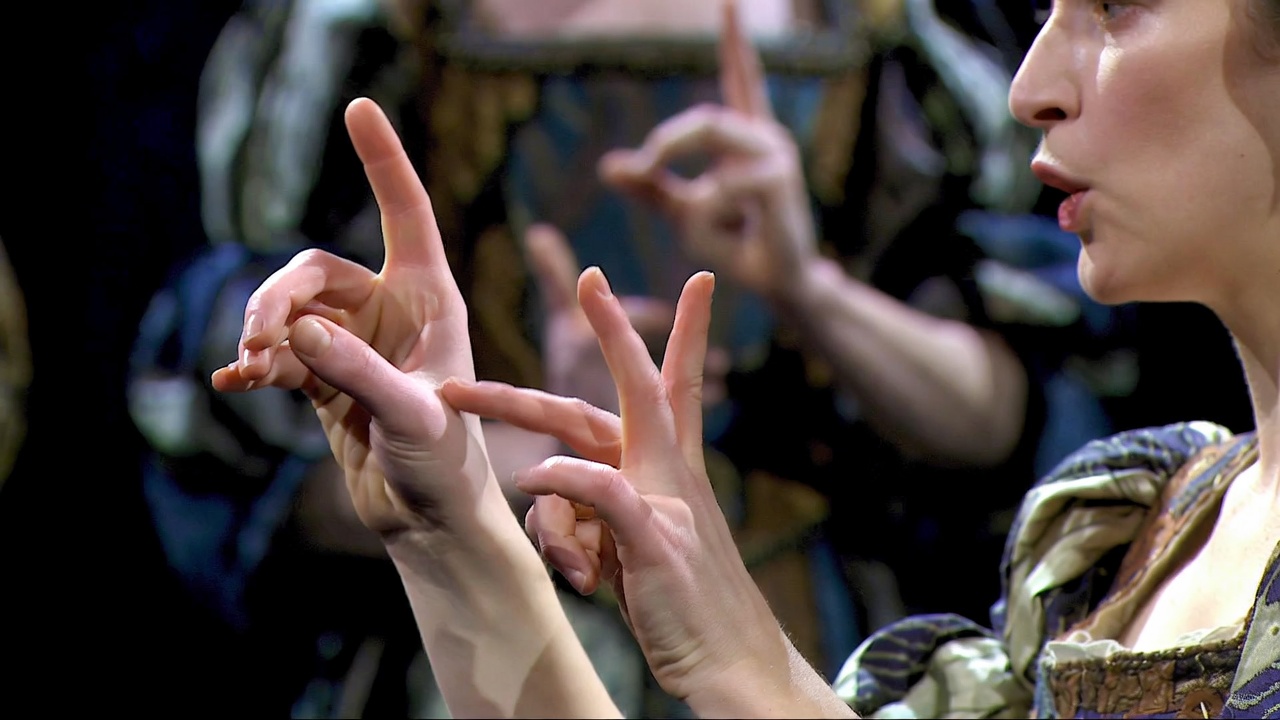
At Shakespeare’s Globe, the play has a rich but sporadic performance history. The last major staging before 2024 was in 2014–2015, featuring Eve Best as a commanding Cleopatra opposite Michael Marcus’s Antony. That production was later filmed and remains available for study. The 10-year gap reflects the play’s challenges: its large cast, epic scope (spanning battles across continents), and demands for spectacle suit the Globe’s thrust stage and groundling yard perfectly, yet require careful handling to avoid overwhelming the intimate space.
The Globe has long pioneered innovative approaches, from original practices (using period costumes and no artificial lighting) to modern inclusivity. Past productions have incorporated diverse casting and accessibility features, but the 2024 bilingual version elevated this ethos to new heights, aligning with contemporary movements toward Deaf representation in classical theater.
The 2024 Production: Concept, Creative Team, and Innovative Bilingual Approach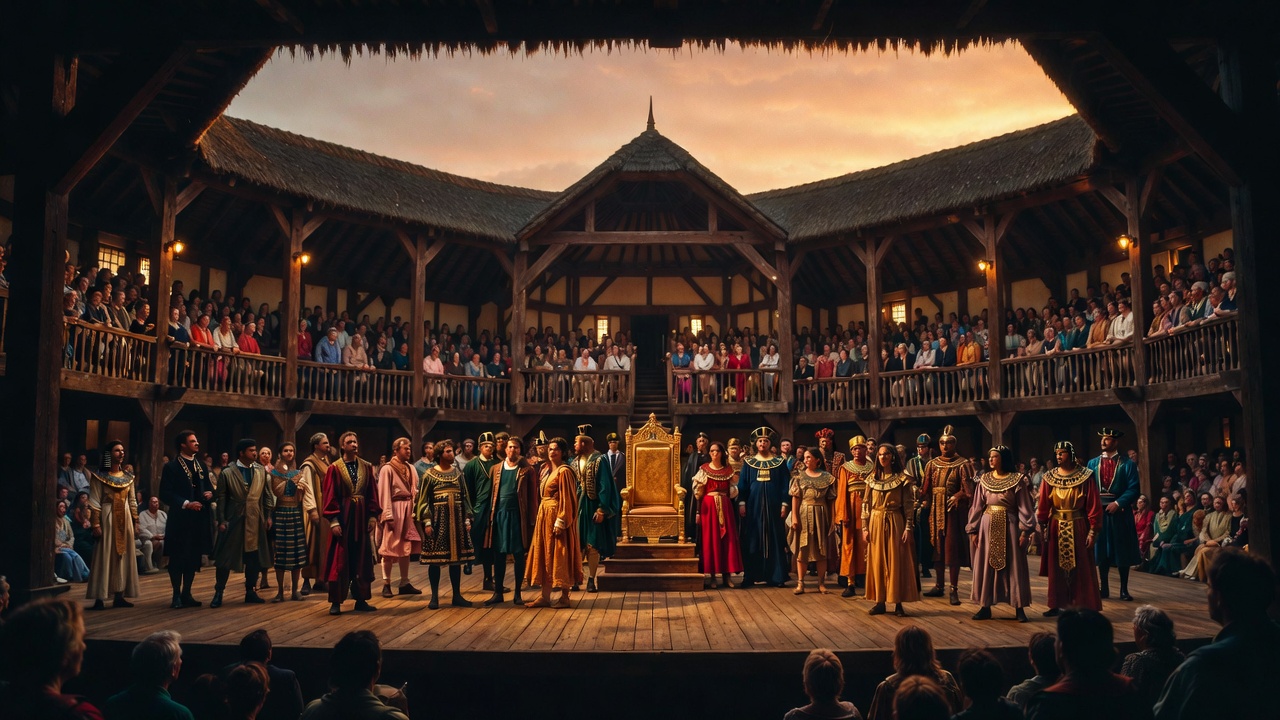
Director Blanche McIntyre’s vision contrasted the “young, macho, emotionally repressed” world of Rome (spoken in English) with the “ancient, playful, gender-equal” realm of Egypt (primarily in BSL). This linguistic divide mirrored the play’s core tension: two cultures colliding, with misunderstandings fueling tragedy.
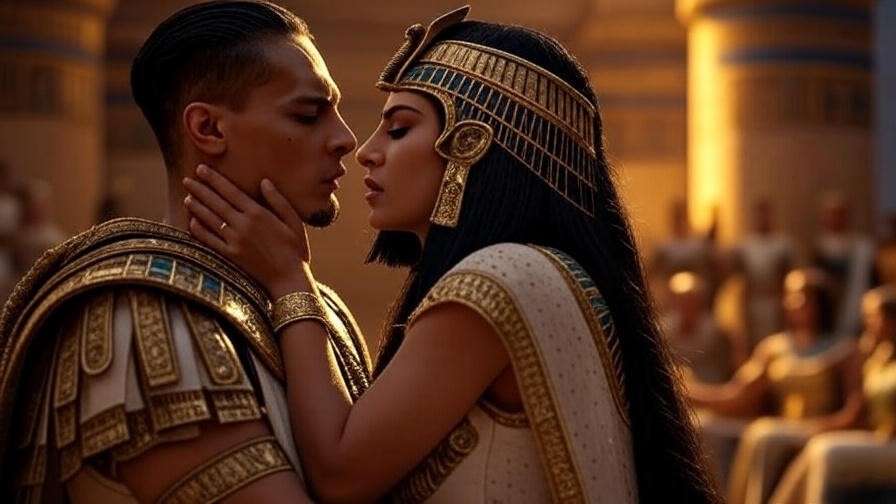
Associate Director Charlotte Arrowsmith (a Deaf artist known for work on BBC’s This is Going to Hurt) and BSL Consultant Daryl Jackson ensured authenticity. The Egyptians used a blend of BSL, Sign Shakespeare (a stylized form adapted for Shakespeare’s verse), sign theater, and home signs. Romans spoke English, but key intimate moments saw Antony and Cleopatra sharing bilingual exchanges — even inventing a private “home language” to symbolize love transcending barriers.
The cast was stellar. Deaf actor Nadia Nadarajah delivered a regal, tempestuous Cleopatra — commanding the stage with expressive gestures, wide-eyed intensity, and physical poetry that brought Shakespeare’s language to vivid life. John Hollingworth portrayed Antony as a confident yet conflicted warrior, gradually loosening his Roman rigidity to sign with Cleopatra. Standouts included Nadeem Islam’s hilarious, slapstick messenger (signing vivid, scatological descriptions), Zoë McWhinney’s vivacious Charmian, and Gabriella Leon’s conspiratorial Iras.
Design by Simon Daw featured blue cloth hangings evoking the Nile, Renaissance-Roman costumes, heavy drums for battle scenes, and slow-motion fight choreography by RC Annie. Tim Sutton’s composition enhanced the emotional layers. Every performance was fully captioned, with different fonts distinguishing Roman and Egyptian dialogue for visual clarity.
This setup didn’t just aid accessibility — it deepened the text. Misheard orders, misleading messengers, and cultural “othering” became literal, reflecting real-world barriers while celebrating passion’s ability to override them.
How BSL Enhances Shakespeare’s Text and Themes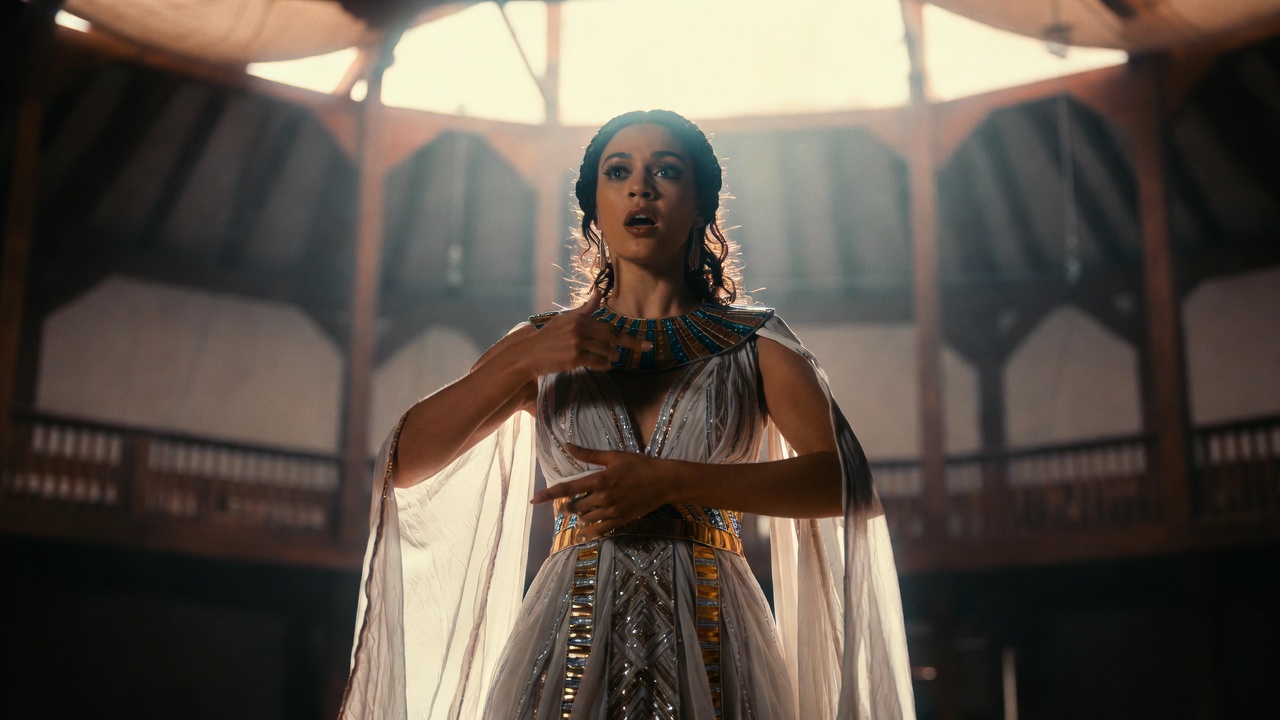
Shakespeare’s language is famously dense, rich with metaphor, double entendres, and visual imagery. BSL added physical shape and clarity: the soothsayer’s serpentine arm movements and forked fingers at Charmian’s throat made predictions visceral. Entendres doubled in impact through layered signing over spoken words.
Thematically, the bilingual approach resonated profoundly. The play’s exploration of cultural divide — Rome’s discipline versus Egypt’s sensuality — gained new depth through linguistic separation. Antony and Cleopatra’s bilingual intimacy highlighted love as a bridge across divides, while war scenes underscored the consequences of misunderstanding.
For Deaf audiences, this was transformative inclusivity. Hearing viewers gained layered interpretation, often finding Shakespeare’s poetry more accessible through visual storytelling. As experts note, this aligns with Shakespeare’s metatheatrical elements and original boy-actor context, where performance transcended spoken word.
Critical Reception and Audience Impact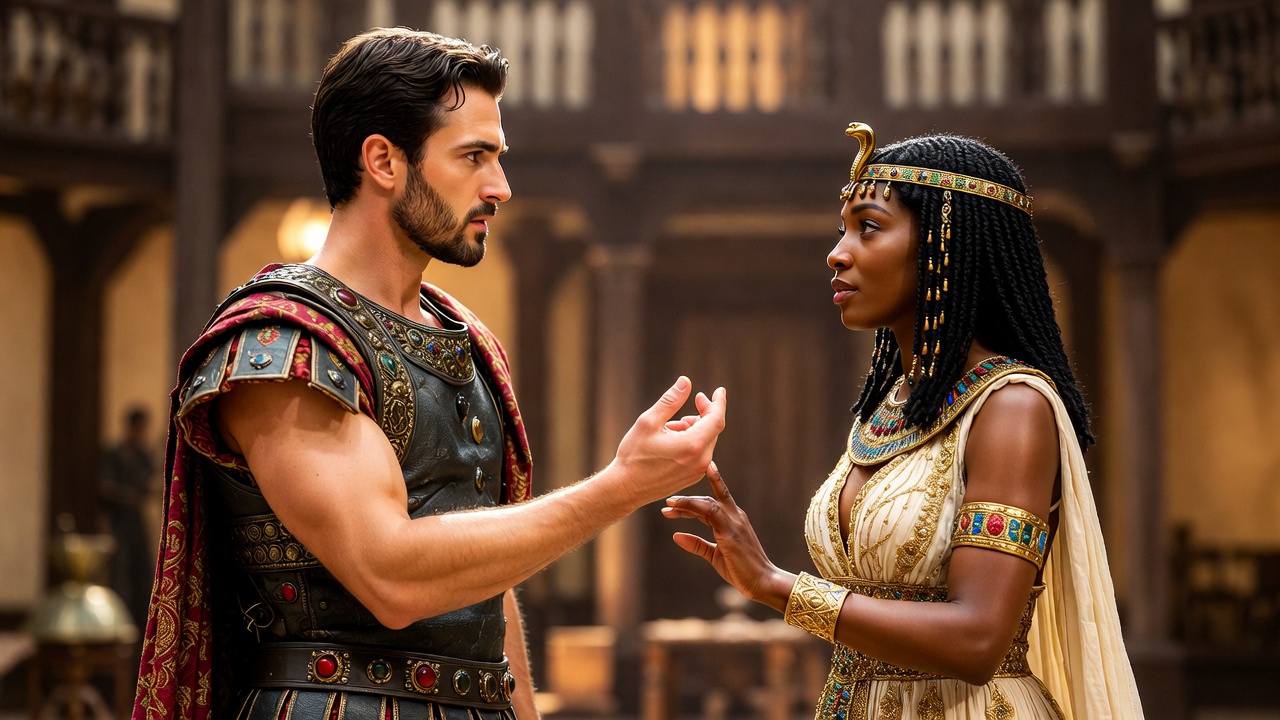
Reviews were largely positive, praising the production’s innovation and performances.
The Guardian (★★★★) lauded how BSL added “intimacy and clarity,” noting Nadarajah’s regal Cleopatra and the value of captions as a potential permanent fixture. The Stage (★★★★) called it a “cleverly constructed bilingual epic,” highlighting excellent leads and amplified humor.
The Telegraph offered a more mixed view (★★), critiquing caption reliance as distracting for hearing audiences and noting chemistry challenges between leads. Time Out praised Nadarajah’s passionate physicality but felt tonal shifts between languages cumbersome.
Overall, the production was hailed as a technical triumph advancing diverse Shakespeare. It sparked discussions on inclusion, with many calling for more bilingual stagings.
Practical Guide: Experiencing Antony and Cleopatra at the Globe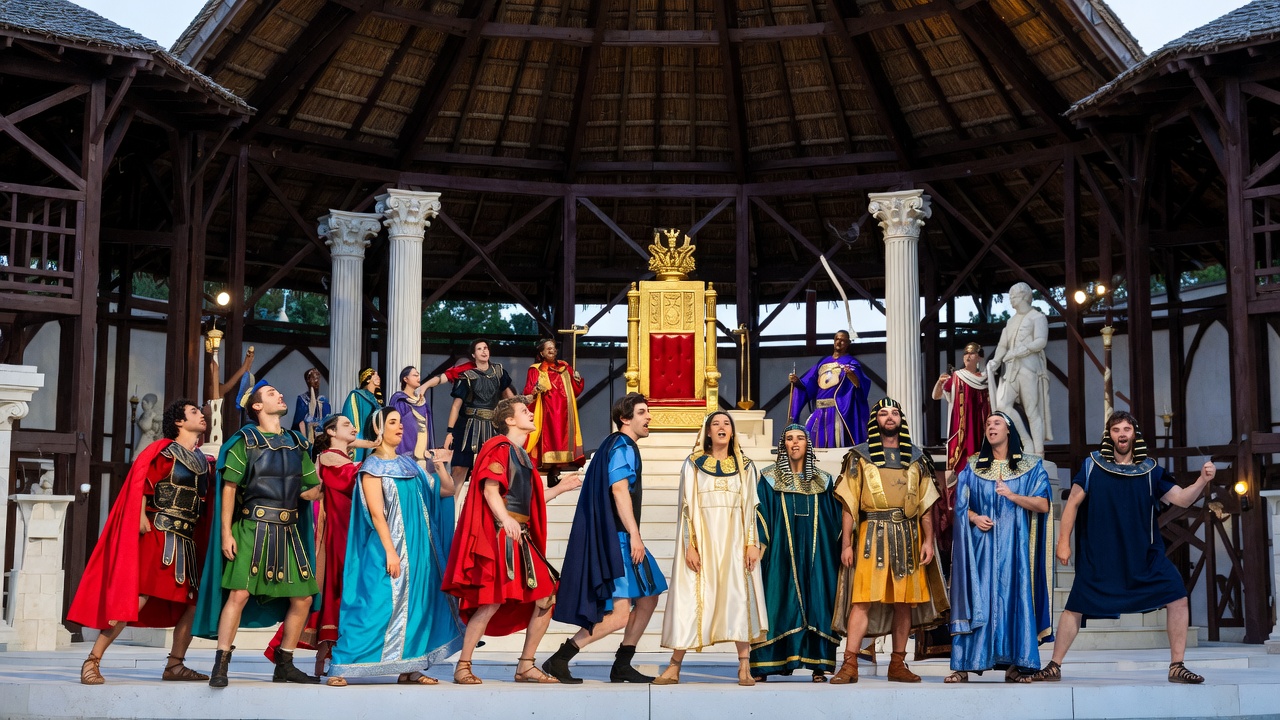
Though the live run ended in September 2024, you can still engage deeply.
Watch the full recording on Globe Player (available for streaming) — ideal for studying the bilingual elements. Best viewing tips: Focus on visual cues first, then captions; note how BSL enhances comedy (messenger scene) and tragedy (final speeches).
The 2024 Antony and Cleopatra Globe production was more than a revival — it was a bold reimagining that proved Shakespeare’s universality through inclusion. By bridging spoken and signed worlds, it illuminated the play’s exploration of love overriding barriers while challenging audiences to confront real-world divisions.
This groundbreaking work sets a new standard for accessible theater. Whether you’re a longtime Shakespeare lover or discovering the Bard anew, it reminds us why his stories endure: they speak to the human heart across languages, cultures, and abilities.
What did you think of this innovative approach? Share your thoughts below — and consider watching on Globe Player to experience the magic yourself.
FAQs
What makes the 2024 Antony and Cleopatra Globe production unique? It was the first bilingual staging at the Globe, using spoken English for Romans and BSL for Egyptians, with full captions — a landmark in inclusive Shakespeare.
Who plays Cleopatra in the bilingual version? Deaf actor Nadia Nadarajah delivered a commanding, physically expressive performance praised for its regal intensity and visual poetry.
Is the production accessible for Deaf audiences? Yes — every show was captioned, with BSL as the primary language for Egyptian characters, making it profoundly inclusive.
How does BSL change the experience of Shakespeare’s language? It adds physical depth, clarity to metaphors, and layered meaning to double entendres, while mirroring the play’s themes of cultural and communicative barriers.
Where can I watch the 2024 production? The full performance is available on Shakespeare’s Globe Player for streaming, along with related talks featuring the cast and creative team.