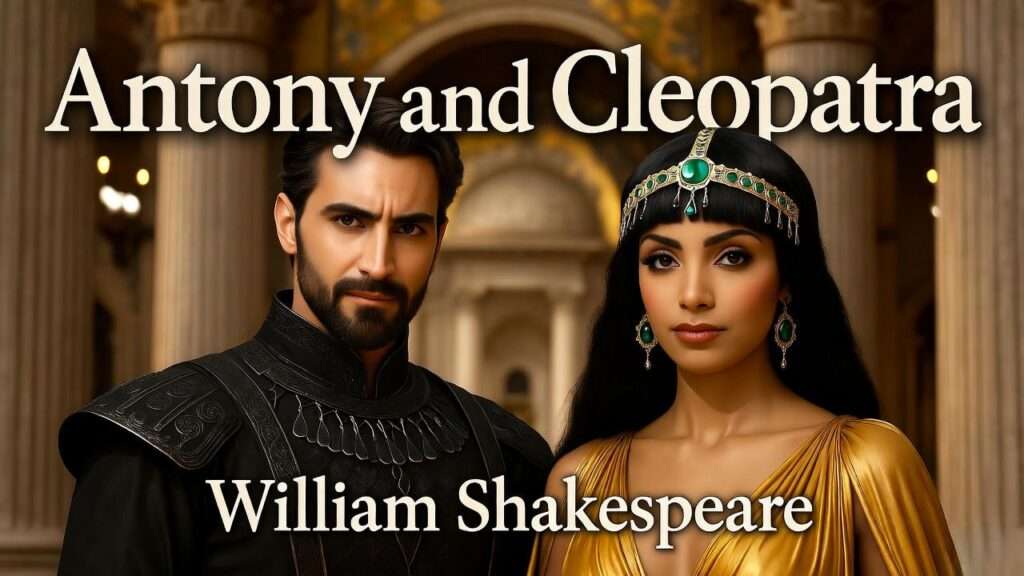
In the opening lines of William Shakespeare’s Antony and Cleopatra, a Roman soldier named Philo laments the transformation of his once-mighty general: “Nay, but this dotage of our general’s / O’erflows the measure.” Mark Antony, the “triple pillar of the world,” has become a “strumpet’s fool,” his legendary valor reduced to fawning devotion. This is Antony love at its most vivid and controversial—a consuming passion for Cleopatra that defies Roman restraint, ignites political chaos, and ultimately reshapes history. Yet what makes this love so compelling? Why does it captivate audiences centuries later, even as it leads to ruin?
Shakespeare’s tragedy, drawn from Plutarch’s Lives, is far more than a historical romance. It probes the explosive tension between private desire and public duty, where Antony love becomes both a liberating force and a fatal flaw. Unlike the youthful idealism of Romeo and Juliet, this is a mature, flawed, and fiercely mutual bond—one that “makes hungry / Where most she satisfies,” as Enobarbus memorably observes. Readers, students, and Shakespeare enthusiasts frequently search for deeper insight into this dynamic: Is Antony’s devotion genuine greatness or destructive indulgence? How does it clash with Roman values? And why does Shakespeare grant the lovers tragic dignity in defeat?
This article offers a comprehensive, text-grounded exploration of Antony love—its nature, its conflicts, its devastating consequences, and its enduring lessons. By examining key scenes, language, historical context, and major critical perspectives, we go beyond surface summaries to reveal why this passion not only topples an empire but also immortalizes two deeply human figures in mythic splendor. Whether you are preparing for an exam, directing a production, teaching the play, or simply drawn to Shakespeare’s most mature portrayal of romantic passion, you will find here richer, more layered analysis than most existing online discussions provide.
The Nature of Antony’s Love: Passion, Excess, and Infinite Variety
From Roman Hero to Egyptian Captive
Antony enters the play already diminished in Roman eyes. Once a warrior whose “legs bestrid the ocean,” he now lingers in Alexandria, entangled in Cleopatra’s world. His declaration in Act 1, Scene 1—“Let Rome in Tiber melt, and the wide arch / Of the ranged empire fall! Here is my space”—is one of the most radical statements in all of Shakespeare. It marks a deliberate, almost ecstatic rejection of imperial duty for personal fulfillment.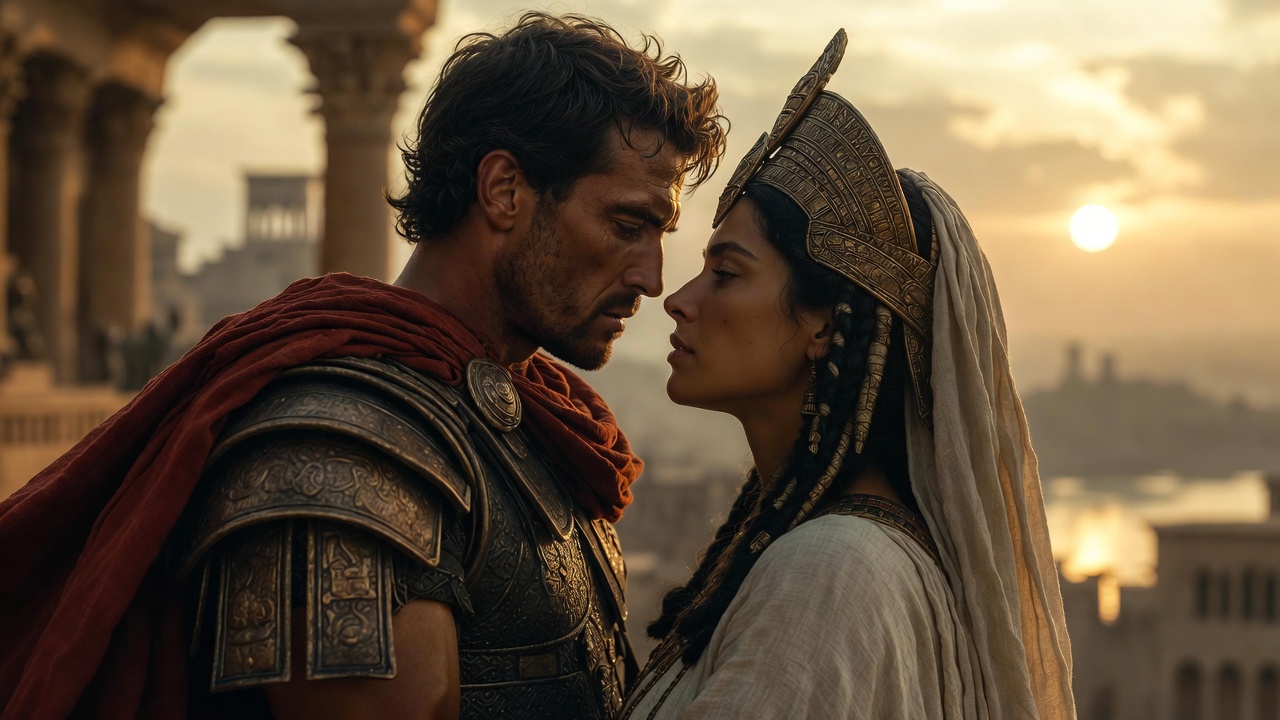
Yet Shakespeare refuses to present this as simple moral collapse. Antony’s love is a rebellion against Roman emotional austerity. In Egypt he rediscovers vitality through sensuality, playfulness, and emotional depth—qualities that Roman discipline suppresses. The play repeatedly contrasts the two worlds: Rome as order, hierarchy, masculine restraint; Egypt as fluidity, pleasure, feminine power. Antony, caught between them, embodies the central tragic tension.
The Hunger That Never Satisfies
Enobarbus’s famous speech in Act 2, Scene 2 captures the addictive essence of Antony love:
“Age cannot wither her, nor custom stale Her infinite variety. Other women cloy The appetites they feed, but she makes hungry Where most she satisfies.”
Cleopatra’s “infinite variety” is not mere sexual allure; it is theatrical, intellectual, emotional unpredictability. She teases, rages, feigns death, mocks, reconciles—each shift renewing Antony’s desire. This is love as perpetual appetite, never fully sated, always renewing itself. It stands in stark opposition to Roman ideals of moderation and control, embodied most clearly by the young Octavius Caesar.
Mature vs. Idealized Love
Shakespeare deliberately contrasts this relationship with his earlier tragic loves. Romeo and Juliet’s passion is pure, idealistic, and destroyed by external forces. Antony and Cleopatra’s bond is seasoned by middle age, politics, jealousy, betrayal, and mutual manipulation—yet it remains profoundly reciprocal. Antony addresses Cleopatra as “my queen,” “my partner,” “Egypt,” embracing her as an equal in passion if not in formal power. Their love is knowingly flawed and still fiercely chosen, making it one of Shakespeare’s most psychologically realistic portraits of adult romantic attachment.
The Conflict: Love vs. Duty in a Divided World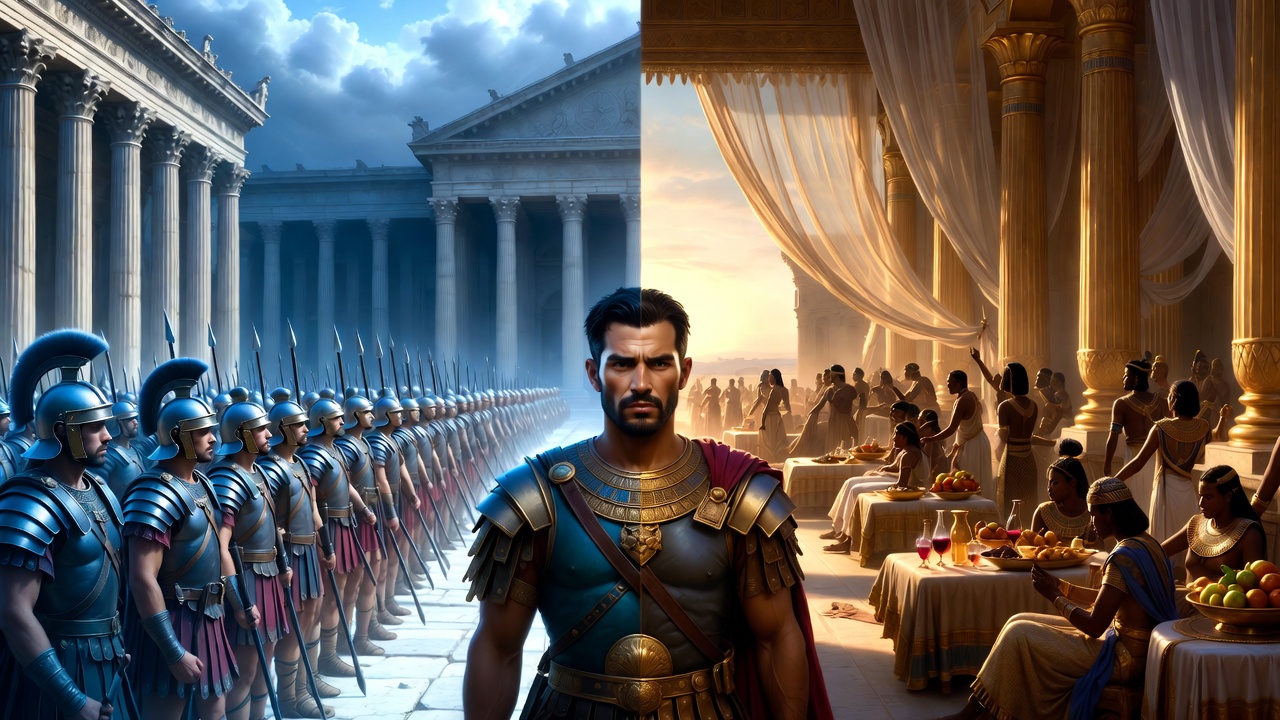
Rome and Egypt – The Clash of Values
The play’s geography is symbolic. Rome represents masculine order, military discipline, rational statecraft. Egypt represents sensual abundance, emotional freedom, feminine agency. Antony is the living bridge—and the living fracture—between these worlds. Every major decision he makes is shaped by which value system he privileges at that moment.
Modern criticism, especially feminist and postcolonial readings, has emphasized how Cleopatra’s Egypt challenges Roman (and by extension Western) binaries. Her power lies not in military might but in language, performance, and emotional command—qualities that destabilize Octavius’s rigid worldview.
Key Moments of Divided Loyalty
Antony’s oscillation between Rome and Egypt drives the tragedy’s momentum:
- He marries Octavia for political expediency (Act 3), yet returns to Cleopatra almost immediately.
- At Actium (Act 3, Scene 10), he chooses to fight by sea rather than land—against sound military advice—and then follows Cleopatra’s fleeing galley, abandoning his fleet.
- After defeat, he rages at Cleopatra (“triple-turned whore”), yet forgives her within moments.
These swings are not signs of weakness but of the unbearable tension between two irreconcilable imperatives: Roman honor demands he sacrifice Cleopatra; his love demands he sacrifice Rome. Shakespeare shows both choices as partially valid—and both as ruinous.
The Tragic Consequences: How Antony Love Toppled an Empire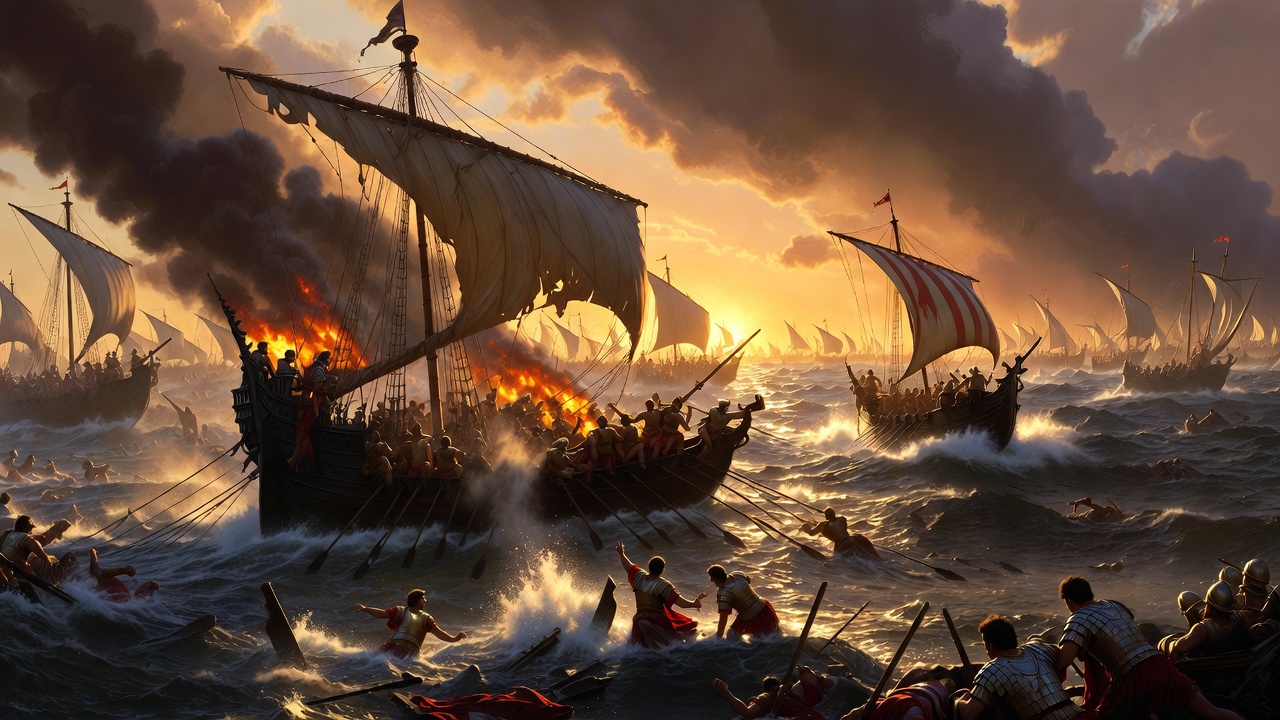
Political Downfall and the End of the Republic
The Battle of Actium is the decisive hinge. Antony’s decision to follow Cleopatra’s ship is not merely tactical folly; it is the moment when private passion visibly overrides public responsibility. Enobarbus’s bitter line—“When valor preys on reason, / It eats the sword it fights with”—sums up the Roman verdict. The desertion of allies accelerates: Enobarbus himself switches sides (only to die of shame), and Antony’s remaining forces melt away.
Octavius exploits the spectacle with devastating propaganda: Antony is not a defeated general but a man enslaved by lust. The narrative victory is as important as the military one. By the final act, Octavius stands as sole ruler—the first Roman emperor—because he has mastered desire while Antony has been mastered by it. Antony love thus becomes the historical fulcrum on which the Republic falls into Empire.
Personal Ruin and Transcendent Death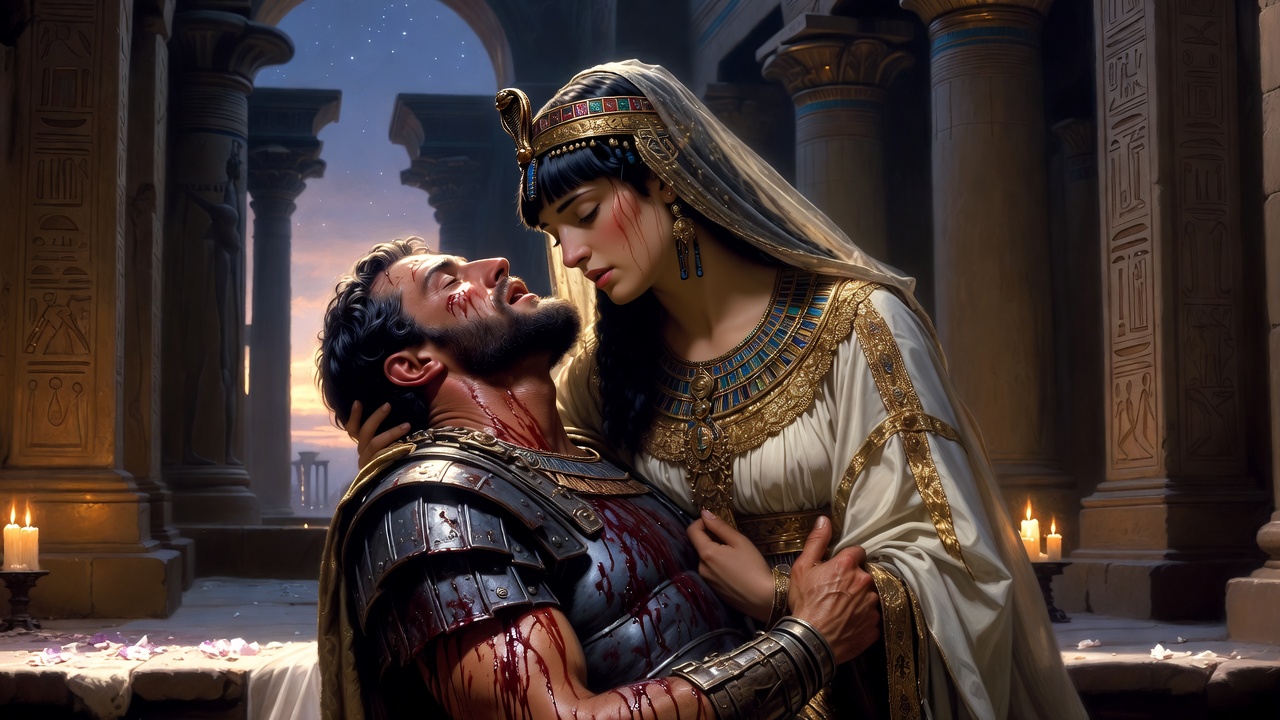
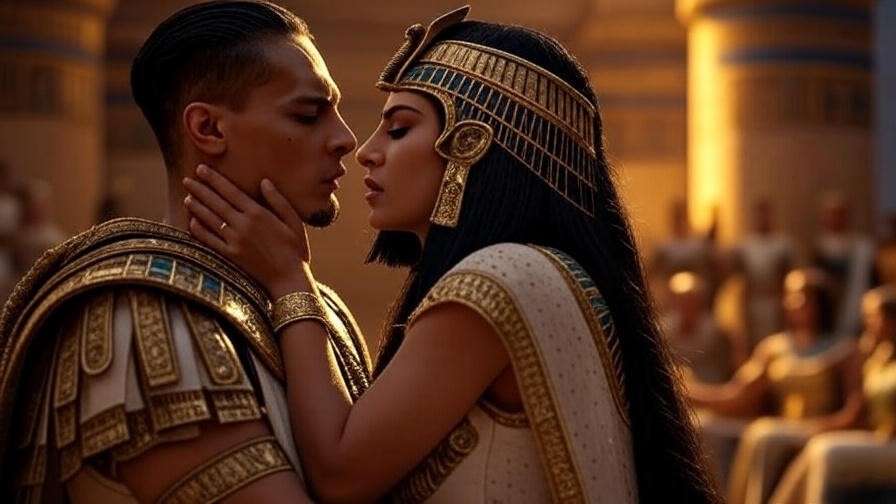
The closing acts shift from grand politics to intimate tragedy. Antony’s botched suicide (Act 4, Scene 15) leaves him alive long enough to be carried to Cleopatra’s monument. His dying words—“I am dying, Egypt, dying”—are intimate and tender. Cleopatra’s response is equally layered: she stages her own death with the asp, declaring “Husband, I come!” In Shakespeare’s hands, their suicides are not acts of despair but assertions of autonomy. They escape Caesar’s triumph and achieve a form of victory: dying as mythic lovers rather than defeated captives.
Cleopatra’s final vision of Antony—“His face was as the heavens”—transforms private passion into cosmic scale. Their love, though it destroyed an empire, wins a different kind of immortality.
Critical Perspectives: Is Antony’s Love Destructive or Redemptive?
The Traditional / Plutarchian View Early and conservative readings see Antony love as fatal dotage—a great man unmanned by sensuality, echoing Plutarch’s moralizing account of Hercules enslaved by Omphale.
The Modern / Transcendent View Twentieth- and twenty-first-century criticism frequently celebrates the lovers’ refusal to conform. Their passion is read as a life-affirming alternative to Roman sterility, a deconstruction of patriarchal and imperial binaries, and a tribute to the value of intense lived experience.
Shakespeare occupies a deliberately ambiguous position. He allows both condemnations and glorifications to coexist. The Roman characters scorn the lovers; the poetry elevates them. The final scene belongs not to Caesar’s victory but to Cleopatra’s mythic reimagining of Antony.
Timeless Lessons from Antony Love
The play remains urgently relevant. In an era of public figures whose private passions collide with political responsibility, Antony and Cleopatra asks timeless questions:
- Can intense personal desire and public duty ever coexist without one destroying the other?
- Is a life of measured restraint superior to one of passionate excess?
- Does choosing heart over empire represent failure—or courage?
Shakespeare offers no easy answers. He shows the catastrophic cost of Antony’s choice, yet he also grants the lovers tragic grandeur. Their story reminds us that love at its most profound is rarely convenient, safe, or moderate—and that some experiences are worth the ruin they bring.
Antony love in Shakespeare’s tragedy is neither simple romance nor mere moral failure. It is a tragic force—destructive in the realm of power, yet gloriously affirming in the realm of human experience. The lovers lose empire, honor, life itself. Yet in losing they gain something Rome can never claim: immortality through passion.
In a world increasingly governed by calculation, control, and optics, Shakespeare’s final gift is his refusal to apologize for intensity. Antony and Cleopatra die, but their love refuses to be extinguished with them.
If you have read the play, seen a performance, or wrestled with its contradictions, I invite you to share your thoughts in the comments. What does Antony love mean to you—ruin, redemption, or something in between?
FAQs
What does “Antony love” mean in Shakespeare’s play? It refers to Mark Antony’s all-consuming, passionate devotion to Cleopatra—a love so powerful that it overrides Roman duty, military strategy, and political survival, driving both personal fulfillment and catastrophic downfall.
Is Antony and Cleopatra a love story or a political tragedy? It is both, inseparably. The political tragedy is caused by the love story; the love story is intensified and tested by the political stakes.
How does Antony’s love differ from Romeo’s? Romeo’s love is youthful, idealistic, and destroyed by external forces. Antony’s is mature, knowingly flawed, mutual, and self-destructive—yet it achieves mythic scale and dignity in defeat.
Why did Antony ultimately choose Cleopatra over Rome? Shakespeare presents it as an existential choice: Rome offers power, honor, and emotional restraint; Cleopatra offers vitality, emotional depth, and “infinite variety.” Antony chooses the intensity of lived experience over the security of empire.
Thank you for reading this in-depth exploration. If you found it valuable, explore related articles on Cleopatra’s language of power, Shakespeare’s Roman plays, or the theme of passion versus reason across the tragedies.