What if the most powerful character in The Tempest isn’t Prospero—the sorcerer who commands the island—but an unseen spirit who moves like the wind, sings like music itself, and quietly shapes every major event?
When readers search for “ariel the tempest,” they’re often looking for more than a simple character summary. They want to understand who Ariel truly is, what makes this spirit so powerful, and why this seemingly obedient servant holds such deep symbolic meaning.
Ariel is not just a magical helper. He is the engine of the plot, the voice of conscience, and perhaps even a reflection of Shakespeare’s own artistic imagination. From conjuring storms to guiding human emotions, Ariel’s presence is subtle yet transformative.
In this comprehensive guide, you’ll discover:
- Ariel’s powers and abilities (and why they matter)
- The complex relationship with Prospero
- The symbolic depth behind the character
- And why Ariel remains deeply relevant today
Whether you’re a student preparing for exams or a reader seeking deeper literary insight, this article will give you a clear, expert-level understanding of one of Shakespeare’s most fascinating creations.
Who Is Ariel in The Tempest?
Ariel’s Role in the Play
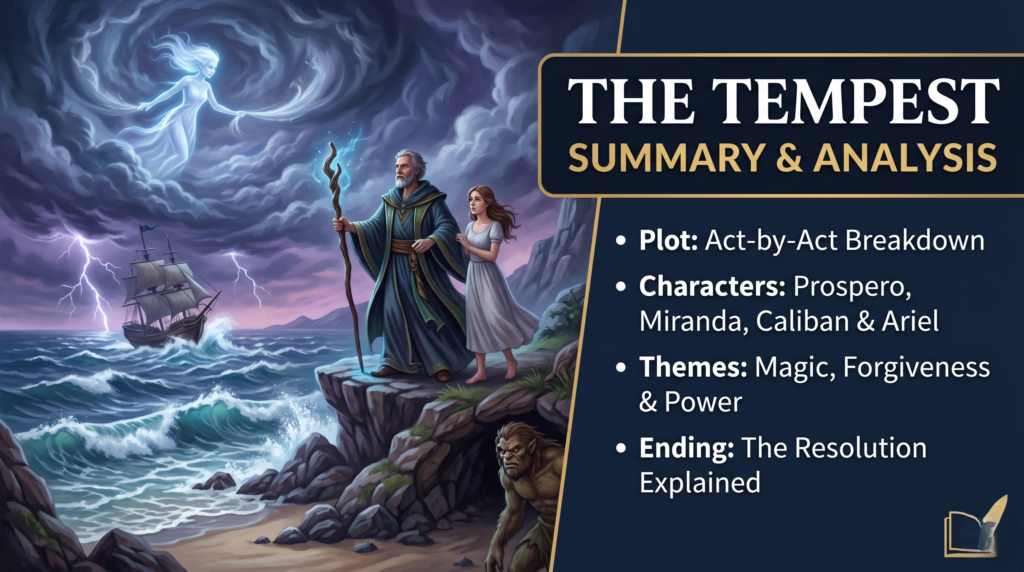
Ariel is a supernatural spirit of air who serves Prospero, the rightful Duke of Milan. From the very first scene, Ariel demonstrates immense power by creating the storm that shipwrecks Prospero’s enemies on the island.
However, Ariel is not just a tool. He is:
- A magical agent executing Prospero’s plans
- A messenger and manipulator influencing other characters
- A subtle moral guide who shapes the play’s emotional arc
Without Ariel, the story simply would not unfold.
Ariel’s Origins and Background
Before serving Prospero, Ariel was imprisoned by the witch Sycorax, who trapped the spirit inside a tree for refusing to obey her cruel commands.
Prospero frees Ariel from this imprisonment—but in doing so, he creates a new form of bondage. Ariel becomes obligated to serve him until granted freedom.
This backstory is crucial because it establishes:
- Ariel’s desire for liberty
- His reluctant obedience
- The central theme of freedom vs. control
Key Traits at a Glance
Ariel is a uniquely layered character, defined by contrasting qualities:
- Obedient yet independent-minded
- Powerful yet restrained
- Invisible yet deeply influential
- Playful, musical, and intelligent
Unlike human characters, Ariel operates on a different emotional and physical plane—yet often shows more humanity than the humans themselves.
Ariel’s Powers in The Tempest Explained
Control Over Nature and Elements
Ariel’s most dramatic display of power is the tempest itself—a violent storm that appears destructive but is carefully controlled to harm no one.
This ability reveals:
- Mastery over wind, water, and fire
- Precision in executing complex magical tasks
- A role as the architect of illusion
Importantly, Ariel’s power is not chaotic—it is disciplined and purposeful, reflecting Prospero’s control.
Shape-Shifting and Invisibility
Ariel can transform into multiple forms, including:
- A harpy (to confront the guilty nobles)
- A nymph (to entertain and enchant)
- Flames or invisible presences
This fluid identity allows Ariel to:
- Move undetected
- Influence events without direct confrontation
- Create psychological tension among characters
Magical Music and Psychological Influence
One of Ariel’s most fascinating abilities is the use of music and song.
His songs:
- Lure Ferdinand across the island
- Create emotional responses
- Blur the line between reality and illusion
Ariel doesn’t just control the environment—he controls perception and emotion, making him a master of psychological influence.
Supernatural Speed and Mobility
Ariel can travel across the island instantly, carrying out multiple tasks with astonishing efficiency.
This ability emphasizes:
- His non-human nature
- His role as Prospero’s perfect instrument
- The contrast between spirit and human limitation
Why Ariel’s Powers Matter to the Plot
Ariel is not just powerful—he is essential.
He:
- Initiates the central conflict (the storm)
- Keeps characters separated or united as needed
- Creates illusions that lead to self-realization
- Ultimately helps bring about reconciliation
Without Ariel, Prospero’s plans would fail entirely.
The Relationship Between Ariel and Prospero
Master and Servant Dynamic
At first glance, Ariel and Prospero share a straightforward relationship: master and servant.
Prospero:
- Commands
- Sets tasks
- Promises eventual freedom
Ariel:
- Obeys
- Executes with precision
- Occasionally questions authority
But beneath this structure lies tension.
Ariel’s Desire for Freedom
Ariel frequently reminds Prospero of his promise:
“Remember I have done thee worthy service…”
This repetition highlights:
- Ariel’s growing impatience
- His awareness of injustice
- His longing for independence
Unlike a passive servant, Ariel is conscious of his situation.
Is Prospero Just or Manipulative?
This relationship raises a critical question:
Is Prospero a benevolent master—or a controlling figure?
Different interpretations suggest:
- Prospero as a just ruler restoring order
- Prospero as a colonial figure exerting dominance
Ariel’s obedience becomes morally complex, inviting readers to question authority and power.
Turning Point: Ariel Inspires Mercy
One of the most profound moments occurs when Ariel expresses compassion for the suffering humans:
“Mine would, sir, were I human.”
This line is remarkable because:
- A spirit shows more empathy than a human
- Ariel indirectly challenges Prospero
- It leads to Prospero choosing forgiveness over revenge
In this moment, Ariel becomes the moral compass of the play.
Symbolism of Ariel in The Tempest
Ariel as the Spirit of Air and Freedom
Ariel represents:
- Lightness and movement
- Freedom and transcendence
- The opposite of physical confinement
Unlike grounded characters, Ariel exists in a state of near-pure liberty, even while bound.
Ariel as Imagination and Art
Many scholars interpret Ariel as a symbol of:
- Creative imagination
- Theatrical illusion
- Shakespeare’s artistic voice
Ariel creates experiences that feel real but are ultimately controlled—just like theatre itself.
Ariel as a Moral Voice
Despite lacking human form, Ariel demonstrates:
- Empathy
- Emotional intelligence
- Ethical awareness
This positions him as a guide toward compassion, influencing Prospero’s transformation.
Ariel vs. Caliban: A Symbolic Contrast
Ariel and Caliban represent two opposing forces:
| Ariel | Caliban |
|---|---|
| Air | Earth |
| Freedom | Physical bondage |
| Spirit | Body |
| Grace | Raw instinct |
This contrast deepens the play’s exploration of human nature, civilization, and control.
Why Ariel Still Matters Today
Themes of Freedom and Autonomy
Ariel’s desire for freedom resonates strongly in modern contexts:
- Personal independence
- Workplace power dynamics
- Social and political freedom
His story reflects a universal human need: to be free.
Power, Control, and Ethical Leadership
The relationship between Ariel and Prospero mirrors real-world leadership challenges:
- When does authority become exploitation?
- What responsibilities come with power?
These questions remain highly relevant today.
Identity and Voice
Ariel’s invisibility can symbolize:
- Marginalized voices
- Hidden labor
- The struggle to be seen and heard
Despite being unseen, Ariel shapes everything—just like many overlooked contributors in society.
Ariel in Modern Adaptations
In contemporary performances:
- Ariel is often portrayed as gender-fluid
- Directors emphasize themes of freedom and identity
- Technology enhances Ariel’s magical presence
This adaptability keeps the character fresh and meaningful.
Key Quotes from Ariel in The Tempest (With Analysis)
“All hail, great master…”
- Shows obedience
- But may carry subtle irony or distance
“Mine would, sir, were I human.”
- Highlights empathy
- Marks a turning point in the narrative
“Where the bee sucks, there suck I…”
- Celebrates freedom
- Reflects joy and harmony with nature
Common Questions About Ariel the Tempest (FAQ)
Is Ariel male or female?
Ariel is typically portrayed as male but is fundamentally genderless, allowing for flexible interpretation.
Why does Ariel serve Prospero?
Because Prospero freed him from imprisonment, creating a debt of service.
What does Ariel symbolize?
Ariel symbolizes freedom, imagination, morality, and the power of the unseen.
How powerful is Ariel compared to Prospero?
Ariel has immense natural power, but Prospero controls him through knowledge and authority.
What happens to Ariel at the end of the play?
Prospero finally grants Ariel freedom, fulfilling his long-awaited promise.
Expert Insights and Critical Interpretations
Historical Interpretations
Early critics viewed Ariel as a pure spirit of obedience and grace.
Postcolonial Readings
Modern scholars examine Ariel as:
- A figure of controlled labor
- A symbol of soft resistance
Performance Interpretations
Actors often shape Ariel as:
- Playful and light
- Or emotionally complex and restrained
Each portrayal reveals new dimensions.
Practical Study Tips for Understanding Ariel
- Focus on themes of freedom and control
- Analyze key quotes deeply
- Compare Ariel with Caliban
- Pay attention to language and imagery
Common mistake: Treating Ariel as a simple servant instead of a complex symbolic figure.
Final Thoughts: Why Ariel Is the Heart of The Tempest
Ariel may not rule the island, but he defines its spirit.
He is:
- The force that drives the plot
- The voice that awakens compassion
- The symbol that elevates the play beyond a simple story
In many ways, Ariel represents the best of what it means to be human—even without being human at all.
And perhaps that’s why, centuries later, Ariel still captivates readers, performers, and scholars alike.